
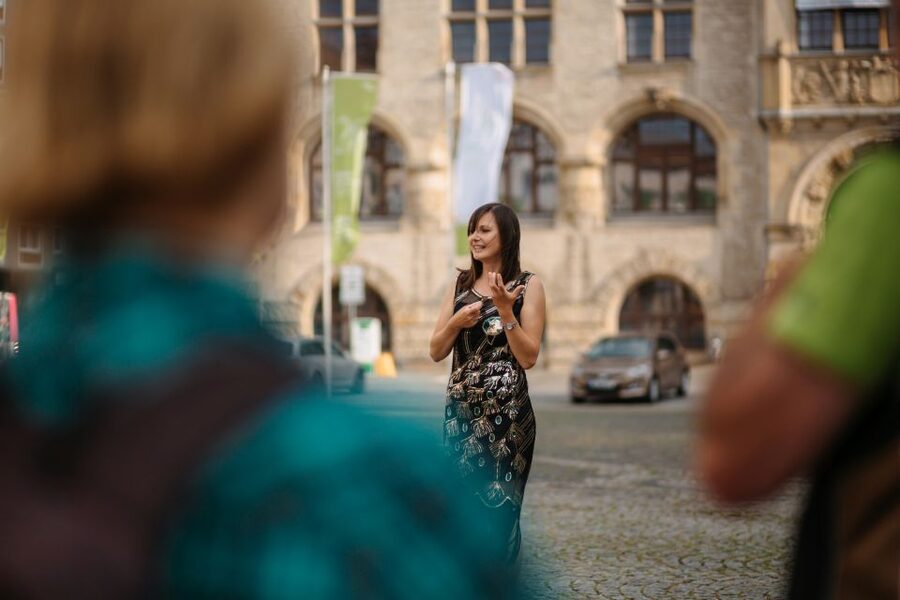
Review · GERMANY
Dessau: Guided Walking Tour through History
Dessau’s story is far bigger than Bauhaus. This 90-minute walk links the city’s eight centuries to figures as different as Walter Gropius, Moses Mendelssohn, Kurt Weill, Hugo Junkers, and Prince Leopold III. Friedrich Franz. I like that mix: you get design, music, politics, industry, and local character in one compact tour.
I also like the small anecdotes. They give a city tour a human voice, and local residents have found that the walk can teach them something new about their own hometown. The main drawback is simple: the tour is in German, and the exact route and guide name are not provided in advance.
Key points to know
- Dessau beyond Bauhaus: Connect the famous design school with the city’s older princely, cultural, and industrial past.
- A story-led walk: Expect anecdotes and historical characters rather than a quick list of dates.
- Central Dessau in 90 minutes: The tour is short enough to fit into a busy day of sightseeing.
- A surprising political link: Learn what Dessau has to do with Germany’s Basic Law.
- German-speaking guide: The tour is led by a trained guide in German only.
- Good practical flexibility: You can cancel up to 24 hours ahead for a full refund, and wheelchair access is available.
Why Dessau needs more than a Bauhaus visit
Many people come to Dessau for Bauhaus and stop there. That would miss much of the city’s character. This walk places Bauhaus inside a longer story, one that reaches back eight hundred years and includes court life, philosophy, music, engineering, aviation, architecture, and German democracy.
I like this approach because it prevents the usual narrow picture of Dessau as only a modern-design center. The city’s identity comes from contrasts. A princely ruler and an avant-garde architect belong in the same story here. So do a philosopher, a composer, industrial pioneers, and artists linked with the Bauhaus.
The tour also helps explain how Bauhaus came to Dessau. That question matters because the school is not simply a building or a design style. Its arrival changed the city’s place in modern European culture. You’ll hear the local connection rather than encountering Bauhaus as an isolated attraction.
More History Walking Tours in Germany
- Berlin: Third Reich & Cold War Guided Walking Tour
★ 4.9 · 8,378 reviews - Munich: Third Reich & WWII Walking Tour
★ 4.6 · 6,181 reviews - Berlin’s Best: 2 Hour Walking Tour Third Reich and the Cold War
★ 5.0 · 5,486 reviews
A 90-minute walk through changing urban spaces
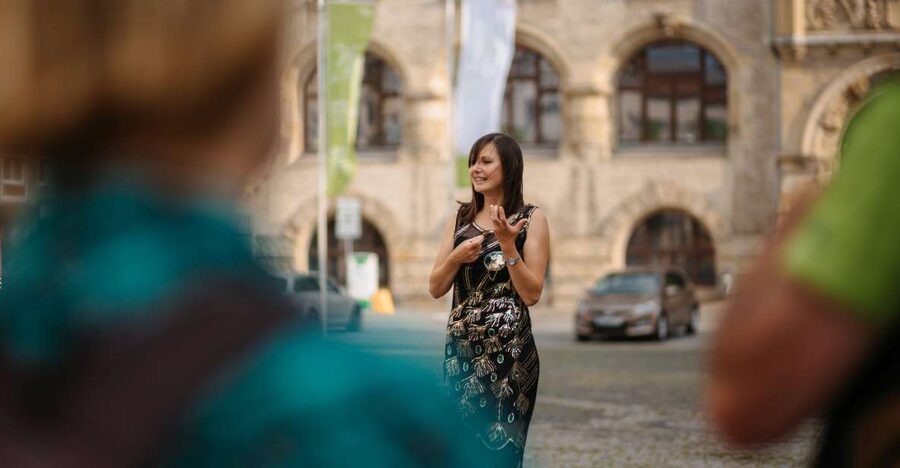
The route takes place in and around the city center, where the guide uses public spaces to bring different periods to life. You should expect a walking tour built around historical connections, not a long indoor museum visit.
The precise stops are not listed, so I would not book this expecting a fixed checklist of named monuments. Instead, think of the experience as a guided reading of Dessau itself. Streets, squares, buildings, and overlooked corners become clues to the city’s past.
That format has a real advantage. A museum can explain one subject well, but a city walk shows how different stories occupy the same place. As you move through the center, the guide can connect older urban life with the changes brought by industry, modern architecture, and twentieth-century politics.
The 1.5-hour length is well judged for this kind of introduction. It gives the guide enough time to develop several themes without turning the walk into an endurance test. You’ll still want comfortable shoes, since the experience takes place rain or shine.
The people who give Dessau its character

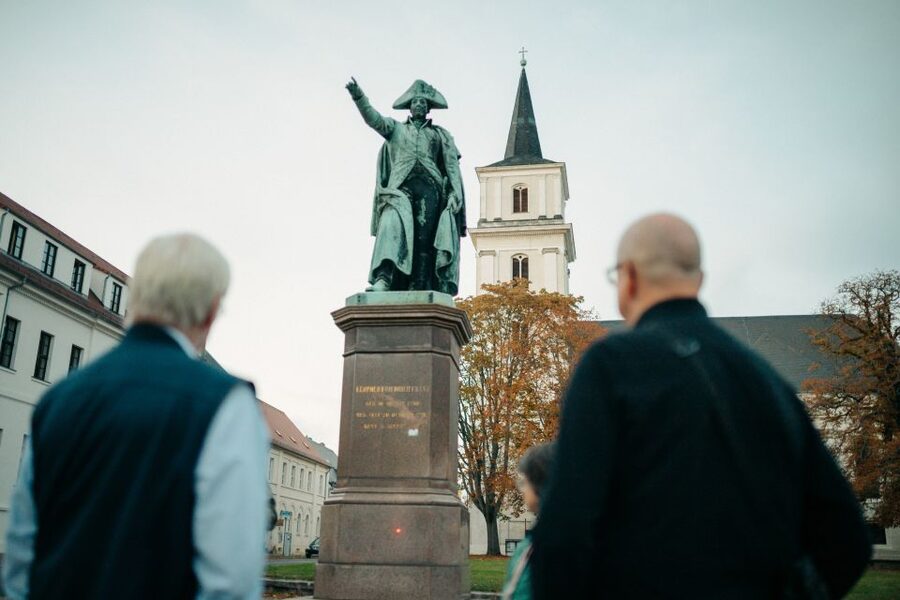
A good historical walk needs memorable people, and this one has plenty. Prince Leopold III. Friedrich Franz represents the city’s princely past. Friedrich Wilhelm Erdmannsdorff adds another layer of cultural and architectural history.
Moses Mendelssohn brings philosophy and Jewish intellectual life into the picture. Kurt Weill connects Dessau with music and with a cultural legacy that became better known far beyond the city. These are not interchangeable names. Each points to a different kind of influence, and together they make Dessau harder to reduce to a single identity.
The tour also includes Max and Wilhelm Müller, Hugo Junkers, Walter Gropius, and Wassily Kandinsky. Their fields range from industry and engineering to architecture and art. I find that breadth especially useful if you are new to Dessau. You do not need to arrive with a detailed knowledge of Bauhaus or German history to understand why the city mattered.
The reference to people who became better known abroad than in their birthplace is also a useful prompt. Dessau’s story is not only about famous names. It is about the gap between international fame and local memory, and about how a city can shape people whose work later travels far beyond it.
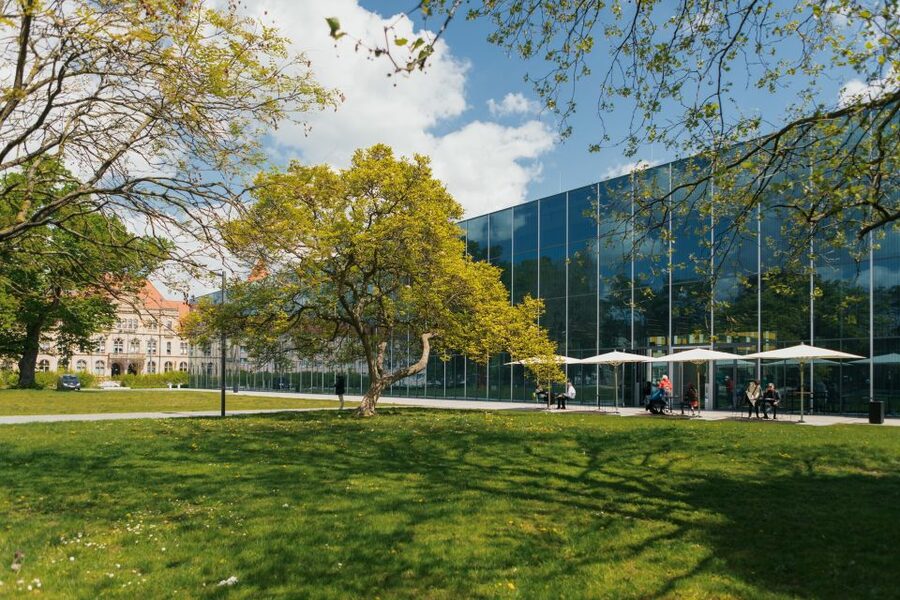
The Bauhaus connection, explained locally
Bauhaus is the best-known reason to visit Dessau, but its local story deserves context. On this walk, you learn how the school came to the city and what that move meant for Dessau.
That is valuable because Bauhaus can otherwise feel detached from its setting. You see a famous building, admire the clean lines, and move on. A guide can explain how the school became part of Dessau’s wider development and how modern design fit into a city with much older roots.
The tour’s broader cast also helps. Walter Gropius and Wassily Kandinsky are not presented as lone artistic celebrities. They appear alongside figures from politics, music, philosophy, and industry. That makes the Bauhaus story feel less like a separate chapter and more like one strand in Dessau’s changing life.
If your main aim is a detailed study of Bauhaus architecture, this short walk should not replace a dedicated Bauhaus visit. It works better as an introduction or companion. You get the setting and the connections, then you can explore the specialist sites with a clearer sense of place.
Same city, a different century:
- Leipzig: City History Canal Sightseeing Tour on a Motorboat
★ 4.7 · 7,671 reviews - Third Reich Berlin: Hitler and WWII Walking Tour
★ 5.0 · 3,301 reviews - Leipzig: 1.5-Hour Historical Walking Tour in German
★ 4.7 · 2,217 reviews - Nuremberg: Medieval Dungeons Guided Tour
★ 4.8 · 2,214 reviews
The Basic Law surprise
One of the most useful promises of this walk is its explanation of Dessau’s connection with Germany’s Basic Law. That is the sort of local detail many visitors would not discover by simply walking around with a guidebook.
The Basic Law is central to modern German civic life, so this topic gives the tour a political edge. It also widens the experience beyond architecture and personalities. Dessau becomes part of the story of postwar Germany and the principles that shaped the country’s modern constitutional order.
The supplied information does not give the exact location or event involved, so you should expect the guide to provide the context during the walk rather than plan around a specific monument. For me, that is one of the strongest reasons to take the tour. It promises a connection between an ordinary city center and a major national story.
Small anecdotes are the real strength
The clearest praise for this experience centers on its anecdotes. That matters. Dates and names give you structure, but small stories help you remember a place after you leave.
One local participant found the walk pleasant and learned new things about Dessau despite already living there. That tells you something important about the tour’s likely appeal. It is not limited to first-time visitors. A well-told local story can reveal a familiar street in a new way.
Another positive response described the experience as very informative and pointed to the interesting places along the route. The overall rating is 4.6 from 40 reviews, with especially strong appreciation for the informative content and the personal touches.
I would keep your expectations realistic. The available comments are brief, and no individual guide is named. That means the exact tone may depend on who leads your walk. Still, the design of the tour clearly favors stories and connections, not a dry recital of facts.
What the price gives you
At $13 per person, this is an easy-value purchase if you want a fast orientation to Dessau. You are paying for 90 minutes with a trained guide, but the real value is the time saved in making sense of a city with many separate historical threads.
You could walk through the center alone and see some of the same streets. What you would miss is the link between Prince Leopold III. Friedrich Franz, Mendelssohn, Weill, Junkers, Gropius, Kandinsky, and the Basic Law. The fee is modest for that explanation, particularly if this is your first visit.
The value is strongest for curious general visitors, families with older children, and anyone who wants context before visiting Bauhaus sites. It is less essential if you already have a deep understanding of Dessau’s history or want a specialist architecture tour.
The price also works well as an add-on. You can use the walk to get your bearings, note places you want to revisit, and then spend the rest of your day on the subjects that catch your interest.
Language, pace, and access
The live tour guide speaks German, and German is the only language listed. You should be comfortable following spoken German for 90 minutes, including historical names and political references. If you do not speak German, this is not the right choice unless you have a reliable way to translate along the way.
The activity is wheelchair accessible, which is useful for visitors who need an accessible city experience. Since the route is outdoors and takes place rain or shine, check the forecast and dress for changing conditions. The description does not provide details about step-free access at every point, pavement conditions, or restroom stops, so those questions should be confirmed before booking if they matter for your plans.
Before the tour begins, show your voucher at the ticket counter. You can reserve now and pay later, and cancellation is free up to 24 hours in advance. Those terms are helpful when your German itinerary includes changing train times or uncertain weather.
Who should take this Dessau tour?
I would recommend it most strongly if you want a broad first look at Dessau rather than a specialist lecture. It suits visitors who enjoy history told through people and places, especially those interested in how art, industry, politics, and local life overlap.
It is also a good choice for repeat visitors and residents. The local response shows why: familiar streets can hold details you have never heard. The anecdotes are likely to be more useful to you than another list of grand dates.
Families may appreciate the short duration and the variety of subjects. A child who is not interested in architecture might still connect with music, inventions, famous personalities, or the story of Germany’s Basic Law. The tour is not advertised as child-focused, so keep that recommendation flexible.
I would skip it if you need an English-language tour, a guaranteed list of specific monuments, or an in-depth examination of Bauhaus design. The walk offers breadth and local context, not a full academic treatment of one topic.
Should you book it?
Book this tour if you want Dessau to make sense as a whole city, not just as the home of Bauhaus. For $13, the 90-minute German-language walk gives you a practical introduction to eight centuries of change, with useful links to the Basic Law, local industry, music, philosophy, and modern design.
The strongest reason to go is the storytelling. The small anecdotes and unusual connections can add life to places you might otherwise pass without a second thought. Just confirm that German works for you, expect an outdoor walk in any weather, and treat it as a broad city introduction rather than a specialist Bauhaus tour.
FAQ
How long does the Dessau history walking tour last?
The tour lasts 1.5 hours, or 90 minutes.
What language is the tour conducted in?
The live guide conducts the tour in German. German is the only listed tour language.
What subjects does the tour cover?
The walk covers Dessau’s eight hundred years of history, including the arrival of Bauhaus, the city’s connection with Germany’s Basic Law, and figures such as Moses Mendelssohn, Kurt Weill, Hugo Junkers, Walter Gropius, and Wassily Kandinsky.
Where do I show my voucher?
Show your voucher at the ticket counter before the tour begins.
Is the tour wheelchair accessible?
Yes, the activity is listed as wheelchair accessible.
Can I cancel the tour for a refund?
Yes. You can cancel up to 24 hours before the tour for a full refund.
Just added around Germany
- Berlin Food & Cultural Tour: Must-Try German & Berliner Classics★ 5.0 · 51 reviews
- Berlin Half-Day World War II Walking Tour★ 4.5 · 48 reviews
- Small-Group Historical Bike Tour in Berlin★ 4.5 · 103 reviews
- Historic center of Berlin – Tour in Italian★ 5.0 · 143 reviews
- Berlin Cold War & World War II Third Reich Walking Tour★ 4.5 · 30 reviews
- Private Taxi Tour City East & West History and Architecture 3-4h★ 5.0 · 42 reviews
- Berlin Wall and Cold War Bike Tour in Small Groups★ 5.0 · 114 reviews
- Private Tour: Jewish Heritage Walking Tour of Berlin★ 5.0 · 29 reviews
Germany History Tours, compared.

Berlin: Third Reich & Cold War Guided Walking Tour
Read our review →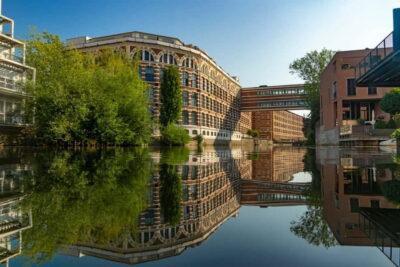
Leipzig: City History Canal Sightseeing Tour on a Motorboat
Read our review →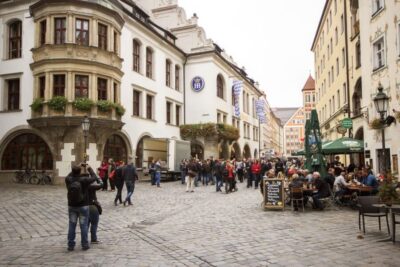
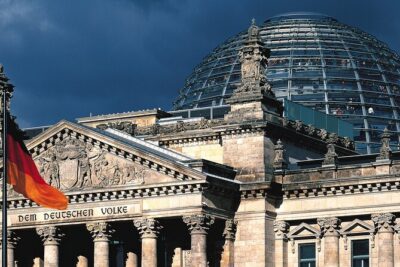
Berlin’s Best: 2 Hour Walking Tour Third Reich and the Cold War
Read our review →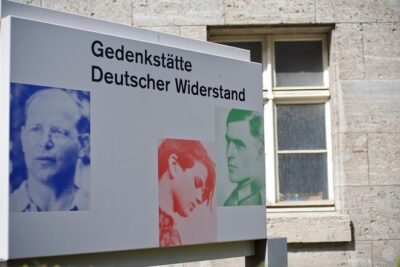
Third Reich Berlin: Hitler and WWII Walking Tour
Read our review →
Leipzig: 1.5-Hour Historical Walking Tour in German
Read our review →
Berlin: Third Reich, Hitler, and WWII Walking Tour
Read our review →Browse the lists this tour appears in