
Review · ITALY
Genoa: Historic Guided Tour of Christopher Columbus’ House
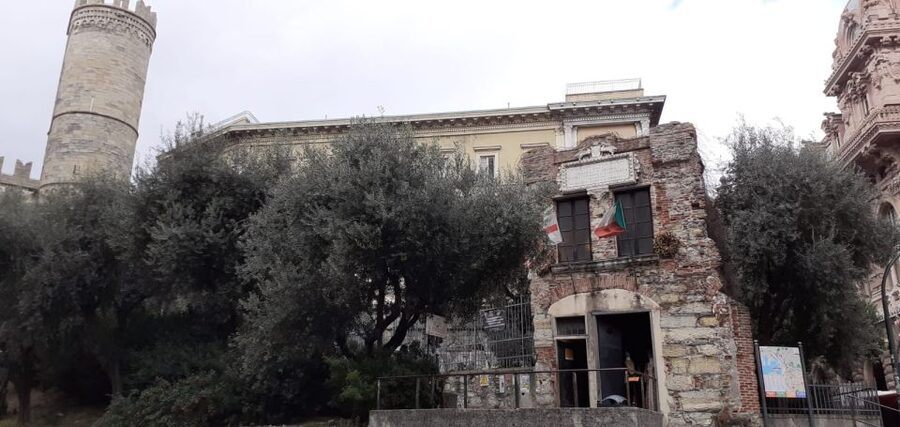
Christopher Columbus’ childhood home is a small, plain building, but it gives you a close look at how a Genoese family lived and worked in the 15th century. The ground-floor workshop is the most telling detail: this was not just a private residence, but a working household near Genoa’s medieval walls.
I like the small groups of up to six, which make it easy to hear the guide and ask questions. I also like that the visit includes the Sant’Andrea Cloister and nearby Porta Soprana, so you get more than a quick look inside one building. The main drawback is the short and slightly unclear timing: the activity is sold as 20 minutes, while the itinerary also gives 30 minutes, and some guides may spend much longer.
Key points
- Columbus’ early home: See the house where Christopher lived as a child after his father moved there in 1455.
- A working household: The ground floor functioned as a workshop, with an attic and wooden beams separating it from the family rooms.
- Three medieval landmarks: The visit links Casa di Colombo, the Sant’Andrea Cloister, and Porta Soprana.
- Small-group format: With no more than six people, you should hear the guide clearly.
- Strong local interpretation: Guides such as Luisa and Georgia have been praised for explaining archaeology, building changes, and Genoese history.
- Low-cost city stop: At $12 per person, this is an inexpensive way to add context to a walk around Genoa’s old center.
A Small House With a Large Name
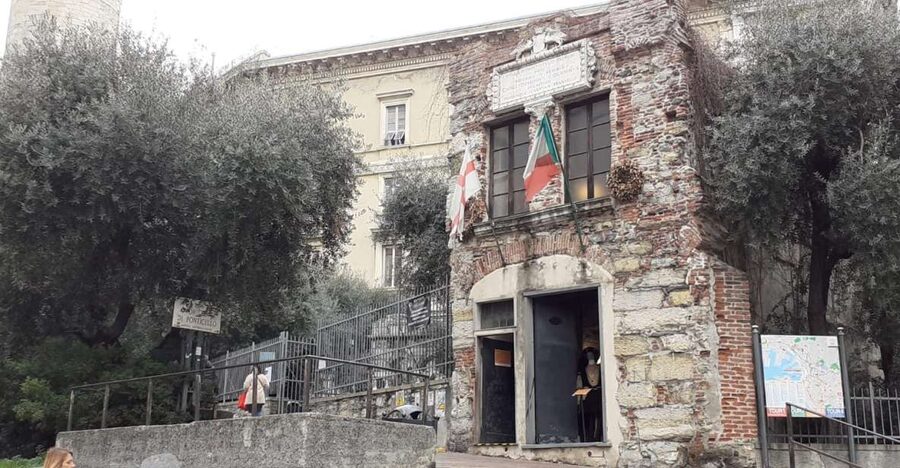
Casa di Colombo sits just outside Genoa’s ancient medieval walls, close to Porta Soprana. Its fame comes from the family associated with it, but the building itself is valuable for another reason: it shows the practical shape of an ordinary urban home and workplace.
Archival records place Domenico Colombo, Christopher’s father, in the house from 1455, when Christopher was four years old. That makes the visit less about the explorer’s later voyages and more about his first years in Genoa.
I like that distinction. You are not being asked to treat the house as a grand palace or a grand museum. It is a modest site connected to a famous figure, and the guide’s job is to explain what can reasonably be known about the building and its occupants.
The structure has a workshop on the ground floor. An attic with wooden beams separates that working space from the upper floor, where the family’s private rooms were located. That arrangement gives you a useful picture of daily life: business below, domestic life above, and very little wasted space.
The house has also been rebuilt and altered over time. Several guides have focused on the structure itself, not only on Columbus. That is a real benefit if you enjoy buildings, archaeology, and the way a city changes over centuries.
More Guided Tours in Italy:
- Pompeii: Entry Ticket and Guided Tour with an Archaeologist
★ 4.8 · 19,459 reviews - Rome: Colosseum with Arena, Roman Forum and Palatine Guided Tour
★ 4.0 · 5,598 reviews - Venice: St. Mark’s Basilica Guided Tour & VR History Intro
★ 3.9 · 4,880 reviews
What You See Inside Casa di Colombo
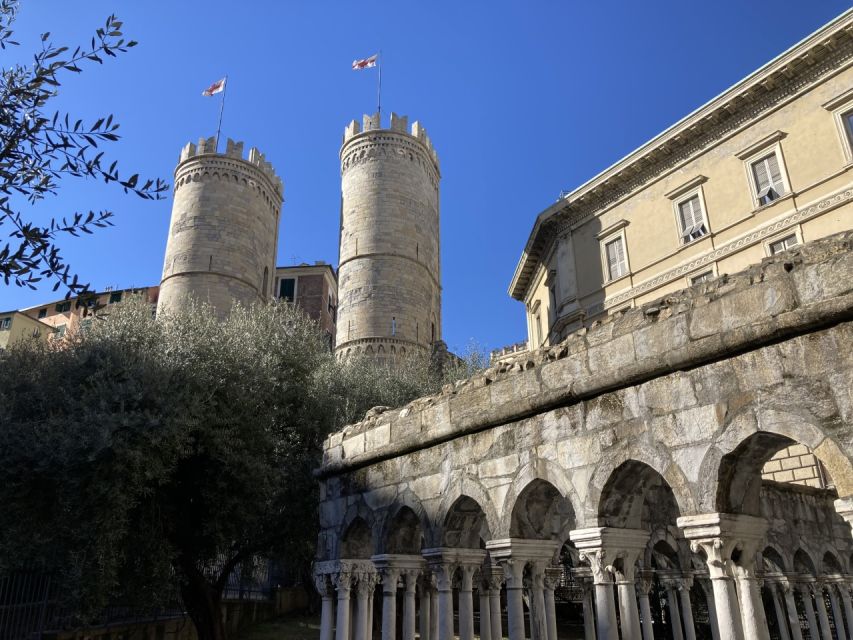
The indoor portion is short and focused. The published duration is 20 minutes, although the itinerary also describes a 30-minute visit. In practice, timing can depend on the guide and the questions in your group.
You enter the house with an escort rather than simply wandering through on your own. The guide explains the relationship between the workshop, attic, and upper living area, helping you read the building as a working home rather than a collection of bare rooms.
The house is not packed with a large number of displays. Its value comes from the setting and the explanation. Without a guide, you could look around quickly and miss why the building is arranged as it is. With a good explanation, the simple layout becomes the main exhibit.
This is where the small group matters. A limit of six people means you are less likely to lose the guide’s voice in a tight room. It also gives you a better chance to ask about the house, Columbus’ family, or the rebuilding of the structure.
Guides named Luisa and Georgia have received special praise for clear, thorough explanations. Other guides have brought training in archaeology and a careful approach to historical evidence. You should not assume you will get a particular guide, but the strongest part of this experience is clearly the human interpretation.
The short length will suit you if you are fitting the house between other Genoa sights. It may feel too brief if you want a large museum with many objects, long galleries, or a detailed account of Columbus’ entire career.
The Workshop Tells You More Than the Famous Name
The ground floor is the detail I would pay closest attention to. It was used as a workshop, which changes the way you understand the house.
A workshop means the building was tied to work and income, not simply family life. The house belonged to the everyday fabric of medieval Genoa, a city where homes, trades, streets, walls, and commerce were closely linked.
The attic with wooden beams is another useful feature. It divides the workshop from the upper floor and helps you picture the vertical arrangement of the home. You can imagine how sound, work, and family life shared the same compact building, even though the tour does not claim to recreate every part of daily life.
This is also a good reminder to keep expectations in check. The house is important because of its association with Columbus and because it preserves a sense of the area’s older structure. It is not presented as a perfectly untouched time capsule.
Several guides have explained the rebuilding and physical changes with care. That approach is better than pretending every detail is certain. If you appreciate archaeology and old buildings, ask about what is original, what was reconstructed, and how the site has been interpreted.
Sant’Andrea Cloister Adds Needed Context
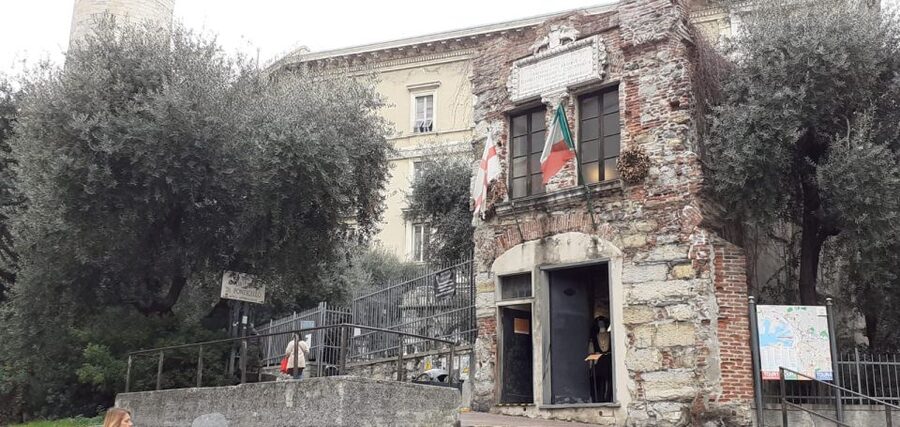
The tour continues beyond the house to the Cloister of Sant’Andrea, rebuilt in the area behind Casa di Colombo and Porta Soprana. This gives the visit a wider frame.
The cloister is not just an extra stop added to fill time. It helps you see the house as part of a larger medieval area. A guide can point out details that you might pass without noticing, especially if you are walking through the district on your own.
The cloister also gives the experience a better rhythm. After a short indoor visit, you move into an open historic setting where the guide can connect the house to Genoa’s old walls and surrounding streets.
Some guides spend extra time here, explaining small features and the way several periods of the city meet in one compact area. That can make the tour feel longer and more useful than the basic 20-minute description suggests.
Still, you should not book this expecting a long architectural walk. The focus remains Casa di Colombo, with the cloister and Porta Soprana providing added context. The amount of detail depends on the guide and the pace of your group.
More History Tours in Italy:
- Colosseum: Underground and Ancient Rome Tour
★ 4.7 · 12,691 reviews - Pompeii: Small Group Tour with an Archaeologist
★ 4.8 · 12,264 reviews - Pompeii Small Group Tour with an Archaeologist
★ 5.0 · 6,593 reviews - Colosseum with Arena, Roman Forum and Palatine Hill Guided Tour
★ 4.5 · 3,526 reviews
Porta Soprana and Genoa’s Medieval Heart
Porta Soprana is close to the house and forms part of the wider setting. The site is just outside the old medieval walls, so you get an immediate sense of how the house fits into Genoa’s historic core.
This location is one of the experience’s biggest advantages. You do not need to travel across the city for a single small attraction. You can pair the visit with a walk through the medieval center and use the tour as an introduction to the area.
The guide’s local knowledge matters here. A short explanation of the walls, the cloister, and the house can help you notice how the district developed. One guide has been especially praised for showing how three centuries of history meet in this part of town.
I would plan to keep walking after the tour. The experience gives you a useful starting point, but it does not attempt to cover every major sight in Genoa. If this is your first visit, consider placing it near other old-town stops rather than treating it as a separate excursion.
How Much Time Should You Allow?
The stated duration is 20 minutes, while the itinerary says 30 minutes for the house visit. That difference is worth noting when you plan your day.
Some visits may finish close to the advertised time. Others can run longer if the guide explains the cloister, Porta Soprana, the house’s rebuilding, or questions from the group. One recorded visit lasted nearly an hour and included the house, cloister, and the Barbarossa Wall.
You should not count on an hour, but you also should not schedule another activity immediately afterward. I would allow at least 30 minutes, with extra breathing room if your day is tightly arranged.
The short format makes this easy to add to a Genoa walking day. It is especially useful if you want a quick historical stop before lunch, after arriving in the city, or between larger attractions.
Why the $12 Price Can Be Good Value
At $12 per person, this is a low-cost guided experience. The price covers entry and a live guide in Italian or English, plus the explanation of the house, cloister, and nearby medieval setting.
The value does not come from the size of the house. It comes from the context. A self-guided look may take only a few minutes, while a good guide can explain the workshop, family rooms, rebuilding, archaeology, and the connection to Genoa’s walls.
The small group also improves the value. A maximum of six people is a much better setup for a compact site than a large crowd. You should be able to hear the explanation and follow up with a question.
The tour is less suitable if you want a full account of Columbus’ voyages or a large collection of objects. For that, you would need a broader museum visit. This is a targeted stop about a home, a family, and a medieval neighborhood.
Meeting the Guide Without Confusion
The meeting instruction is important: meet the guide inside the venue. Do not wait outside or in the nearby area.
This detail has caused confusion for some people, so read the meeting directions carefully before arriving. The ticket is valid only on the date booked, and the activity uses a set starting time.
The guide speaks Italian or English. If you want the English tour, check the available time and language when booking. The group limit is six participants, which keeps the experience personal but also means a chosen time may have limited space.
The activity allows cancellation up to 24 hours in advance for a full refund, and you can reserve now and pay later. Those terms are useful if your Genoa plans depend on train times or changing city arrangements.
Who Will Enjoy This Visit Most?
I would recommend this tour to you if you like:
- Small historic buildings with a clear local connection
- Archaeology and the way old structures are rebuilt
- Short guided stops during a walking day
- Medieval city walls, cloisters, and old neighborhoods
- Guides who explain evidence rather than simply repeat a legend
- Low-cost activities with a small group
Families can also find it manageable because the indoor visit is brief. The site may be less satisfying for anyone who needs step-free access, since it is not suitable for wheelchair users or people with mobility impairments.
You should also consider your interest in Columbus. The tour concerns his early life and family home, not the full story of his later voyages. That narrower focus is a strength if you want local context, but a limitation if you are seeking a major Columbus museum.
Practical Tips for a Better Visit
Read the meeting instructions twice and go inside the venue to find the guide. Do not assume the guide will be waiting outside Porta Soprana.
Allow more time than the advertised 20 minutes. The official itinerary also gives 30 minutes, and a guide may continue into the cloister and nearby medieval area.
Keep your group small when possible. The house is compact, and a group of six or fewer makes it easier to hear details about the workshop, wooden beams, and rebuilding.
Ask about the structure, not only Columbus. Questions about what was reconstructed, how the house was used, and why the site sits outside the medieval walls can make the visit more rewarding.
If you are using the tour as part of a longer Genoa walk, plan nearby old-town sights afterward. The location makes that easy, but the activity itself is not a full city tour.
Should You Book Casa di Colombo?
Book it if you want a short, inexpensive introduction to Genoa’s medieval center and you value a guide’s explanation more than a large museum collection. The combination of Casa di Colombo, the Sant’Andrea Cloister, and Porta Soprana gives you a useful sense of the area for only $12.
I would be especially inclined to book if you enjoy archaeology, old buildings, or small-group tours. Guides such as Luisa and Georgia have added real detail by explaining the structure, local history, and evidence behind the site.
Skip it if you need full wheelchair access, want a long tour, or are looking for an extensive account of Columbus’ later life. For everyone else, this is a compact stop with a strong setting and a better payoff than its small size suggests.
FAQ
How long does the tour last?
The activity is advertised as 20 minutes, while the itinerary describes a 30-minute visit. Some guides may spend longer on the house, cloister, and nearby medieval area.
What does the tour include?
It includes entry and a guided visit to Casa di Colombo, the Sant’Andrea Cloister, and Porta Soprana in the medieval heart of Genoa.
What languages are available?
The live tour guide speaks Italian or English.
How many people can join the group?
The tour is limited to six participants.
Where do I meet the guide?
You meet the guide inside the venue. You should not wait outside or in the nearby area.
Is the ticket valid on another date?
No. The ticket is valid only on the date booked.
Can I cancel the booking?
Yes. You can cancel up to 24 hours in advance for a full refund.
Is the tour suitable for wheelchair users?
No. The activity is not suitable for wheelchair users or people with mobility impairments.
Just added around Italy
- Guided Cultural Tour of the Godfather Film in Messina★ 5.0 · 31 reviews
- Guided tour of the Riace Bronzes and the Archaeological Museum of Reggio Calabria★ 5.0 · 44 reviews
- SU NURAXI BARUMINI Unesco World Heritage Site★ 5.0 · 129 reviews
- Brescia the Unexpected: History, Local Stories & a drink★ 5.0 · 31 reviews
- Bolognese Cooking Class with Margherita in the Historic Center★ 5.0 · 26 reviews
- Tower and Power, Virtual tour in Medieval Bologna★ 4.5 · 54 reviews
- Bologna historical art walking tour with hidden gems and tastings★ 5.0 · 108 reviews
- Best of Bologna in one day : Food, architecture, art and history★ 5.0 · 27 reviews
Italy History Tours, compared.
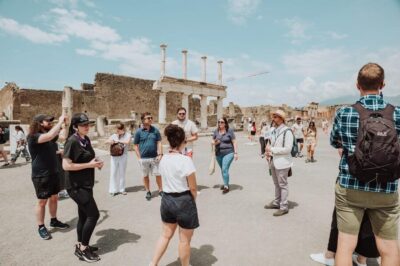
Pompeii: Entry Ticket and Guided Tour with an Archaeologist
Read our review →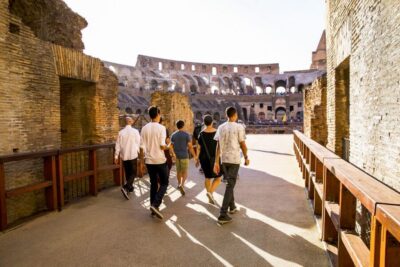
Colosseum: Underground and Ancient Rome Tour
Read our review →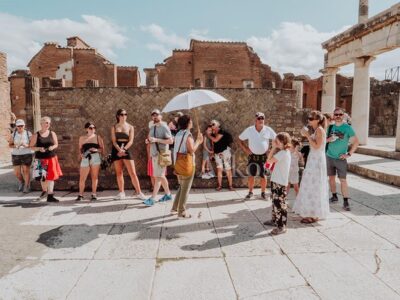
Pompeii: Small Group Tour with an Archaeologist
Read our review →Pompeii Small Group Tour with an Archaeologist
Read our review →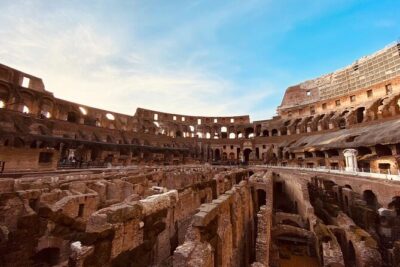
Rome: Colosseum with Arena, Roman Forum and Palatine Guided Tour
Read our review →
Venice: St. Mark’s Basilica Guided Tour & VR History Intro
Read our review →
Colosseum with Arena, Roman Forum and Palatine Hill Guided Tour
Read our review →
Herculaneum: Skip-the-Line Guided Tour with Archaeologist
Read our review →Browse the lists this tour appears in