
Review · BERLIN
Private Walking Tour Berlin Third Reich Hitler and World War II
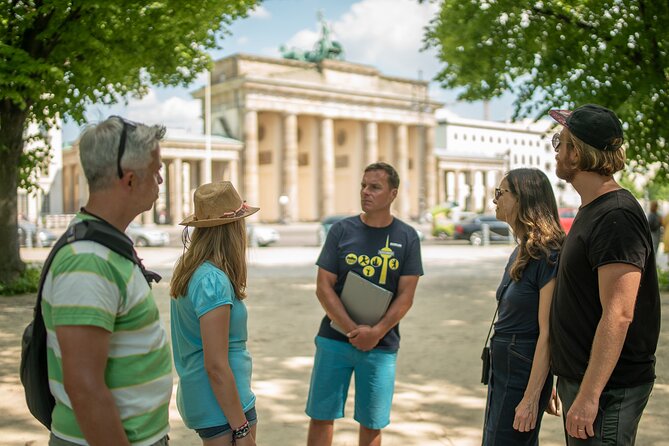
Berlin’s Nazi past is easiest to understand when you connect the scattered sites into one story. This private tour does that, linking the Reichstag Fire, the machinery of repression, the July 20 resistance, the Holocaust, and Hitler’s final days beneath the city.
I like the private format, which lets your guide adjust the pace and answer your family’s questions without a large group slowing things down. I also like the hotel pickup, especially because the route covers a wide stretch of central Berlin and may include public transport between stops.
The main drawback is that the tour lists many sites in only three to four hours. Several stops last just 10 or 15 minutes, so you get a strong overview rather than a full museum visit. Plan to return on your own to places such as the Topography of Terror or the Holocaust Memorial if you want more time.
Key points to know before booking
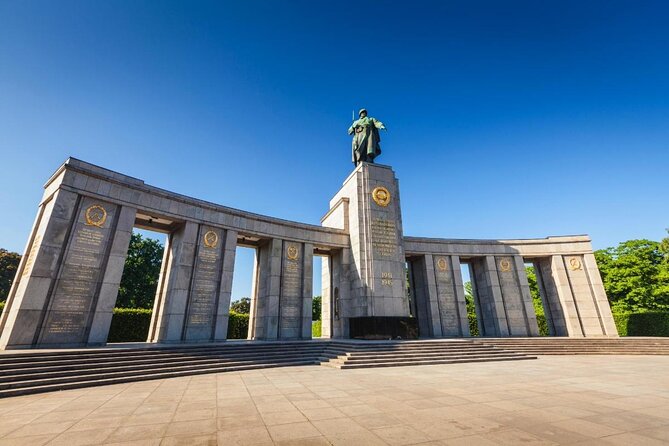
- The route covers 12 major sites, from the Soviet Memorial in Tiergarten to Moltkebrücke and Wilhelmstraße.
- Hotel pickup and drop-off are included, with the exact route shaped around your group and guide.
- Guides tailor the experience well, with Daniel, Jimmy, Emma, Jasper, Simon, Georgia, and others praised for clear explanations and flexible pacing.
- This is a serious history tour, focused on dictatorship, war, persecution, resistance, and remembrance.
- The price is $192.97 per person, a high cost for one person but more reasonable when shared among a private group.
- You should expect plenty of walking, outdoor exposure, and possible public transport between widely spaced sites.
What this private Berlin history tour really offers
This is not a quick photo tour of famous buildings. It is a guided attempt to explain how Berlin became the center of Nazi power, how the regime used fear and bureaucracy, and how the city remembers its victims today.
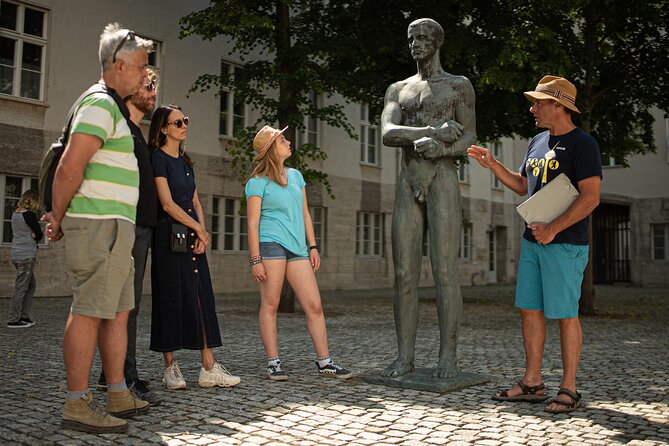
The tour is offered in English and lasts about three to four hours. Since it is private, only your group takes part. That matters here. The subject is heavy, and a private guide can pause when a question comes up, skip a place you have already seen, or spend more time on the parts that matter most to you.
Guides named in the feedback include Daniel, Jimmy, Emma, Jasper, Simon, Georgia, Oren, Tobi, Martin, Xavier, Maria, Ariel, Callum, and Artie. The strongest pattern is clear: the best part of the tour depends on the individual guide’s ability to explain difficult material in human terms. Daniel is praised for building a quick plan around a group’s interests. Jimmy is often described as engaging with children and telling strong stories. Emma is noted for setting a comfortable pace, while Jasper is praised for his passion and clear answers.
One practical point is worth making. The published stops add up to about 160 minutes of site time, before you count travel between them. That explains the three to four hour length. You are not spending an hour at each attraction. You are moving through Berlin, stopping for context, then continuing to the next piece of the story.
More History Walking Tours in Berlin
- Berlin: Third Reich & Cold War Guided Walking Tour
★ 4.9 · 8,378 reviews - Berlin’s Best: 2 Hour Walking Tour Third Reich and the Cold War
★ 5.0 · 5,486 reviews - Third Reich Berlin: Hitler and WWII Walking Tour
★ 5.0 · 3,301 reviews
Starting with the Soviet victory in Tiergarten
The Soviet Memorial Tiergarten provides an unusual opening. The large statue of a Soviet soldier holding a sword and shield commemorates Soviet troops killed during the Battle of Berlin. The memorial opened in 1949, only a few years after the fighting ended.
Your guide uses the site to explain the final battle, the Soviet role in defeating Nazi Germany, and the complicated memory of the war in Berlin. It is a useful reminder that this story is not only about Hitler and German institutions. The city was also the scene of a brutal military assault that left enormous destruction behind.
The planned stop is about 10 minutes, so expect a concise explanation rather than a long inspection of the memorial. It works best as a starting point that gives the rest of the tour a clear wartime setting.
Wilhelmstraße and the offices of Nazi power
Wilhelmstraße was the administrative core of the Nazi government. Walking along it, you learn how ministries and offices turned ideology into policy, military plans, propaganda, and persecution.
The Detlev-Rohwedder-Haus is one of the clearest examples. Built in the 1930s as the Reichsbank headquarters, it later housed the Ministry of Aviation under Hermann Göring. After the war, it became the German Federal Treasury. That change of use reflects Berlin’s constant rewriting of its political identity, but the building still carries the memory of the regime that once worked inside it.
The Aviation Ministry stop lasts about 10 minutes, followed by roughly 20 minutes along Wilhelmstraße. Your guide can point out the relationship between government buildings and explain how decisions made in these offices affected people far beyond Berlin.
The drawback is that much of this is an exterior explanation. You are learning from the street and the surviving buildings, not touring former Nazi offices as preserved interiors.
The Topography of Terror and the mechanics of repression
The Topography of Terror is one of the most important stops because it moves from political history to the machinery of terror. The indoor and outdoor exhibition occupies the grounds of the former SS and Gestapo headquarters.
Here, your guide explains the rise of the Nazi regime, political repression, surveillance, and violence against opponents. Photographs, documents, and personal accounts help show how state terror affected ordinary lives.
The scheduled visit is only about 20 minutes. That is enough for orientation and for your guide to identify the most important themes, but not enough to read the displays at length. I recommend treating this as a preview. If the subject grips you, return later and allow much more time.
This is also where a strong guide matters most. A simple list of crimes can become numbingly abstract. The better approach is to connect the institutions to individual victims and explain how a modern government used law, police, records, and propaganda to persecute people.
More History Walking Tours in Germany
- Berlin: Third Reich, Hitler, and WWII Walking Tour
★ 4.9 · 1,757 reviews - Berlin: History of the Third Reich Guided Walking Tour
★ 4.7 · 791 reviews - Berlin Historical Highlights Walking Tour
★ 4.9 · 657 reviews - Berlin Private Complete History All Day Walking Tour
★ 5.0 · 474 reviews
The German Resistance Memorial Center at Bendlerblock
At the Bendlerblock, the focus shifts from government power to opposition within Germany. The German Resistance Memorial Center honors people who resisted the Nazi regime for many different reasons.
The best-known figure is Claus von Stauffenberg, linked to the July 20, 1944, attempt to kill Hitler. Your guide also places that event within the wider range of resistance movements and explains the risks faced by those who opposed the dictatorship.
The stop is scheduled for about 20 minutes. That gives you a useful introduction, but the exhibits deserve longer if you have an interest in the subject. You may want to return independently after the tour.
I value this stop because it avoids the easy idea that all Germans supported Hitler or that resistance began only at the very end. It also raises hard questions about courage, compromise, military loyalty, and the price of acting against a criminal government.
Bebelplatz and the destruction of books
Bebelplatz offers a compact lesson in censorship. On May 10, 1933, Nazi supporters burned thousands of books considered un-German. The square is framed by major buildings, including the State Opera House and Humboldt University, which makes the event feel tied to Berlin’s intellectual and cultural life rather than to some distant political stage.
Below the square, an underground memorial shows empty bookshelves. The design is simple and unsettling. It represents the literature that was removed and the voices the regime tried to silence.
The stop lasts around 10 minutes. That is enough to understand the book burning and see the memorial, though the underground installation can be easy to miss if you are rushing. Ask your guide to point it out clearly.
This is one of the tour’s most accessible stops for families and younger visitors. It offers a direct way to discuss freedom of expression, censorship, and the danger of allowing a government to decide which ideas may exist.
The Reichstag Fire and the modern parliament
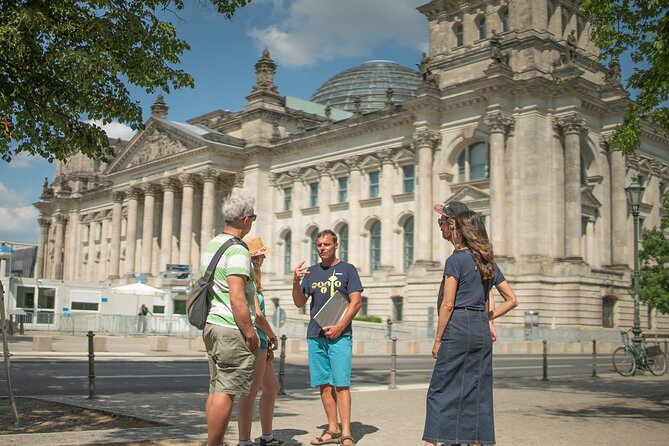
The Reichstag Building brings the story into Germany’s national political center. Completed in 1894, the building became especially important after the Reichstag Fire in 1933. The Nazis used the fire to justify emergency measures, suppress opponents, and tighten their hold on power.
Your guide explains how a political crisis became a tool for dictatorship. You also hear about the building’s severe wartime damage and its later restoration as a symbol of democratic government.
The scheduled stop is about 15 minutes, and admission is not included. This tour focuses on the exterior and historical context, not on a guaranteed visit inside the parliament building or its glass dome.
That limitation is worth noting. If you want to visit the Reichstag interior, you need to arrange that separately. Still, the stop is valuable because it connects the Nazi era with present-day Germany’s effort to build a more open political system.
The Holocaust Memorial and the meaning of public memory
The Memorial to the Murdered Jews of Europe is made up of 2,711 concrete slabs arranged in rows across a large open field. The slabs vary in height, and the ground changes as you walk among them. The effect can feel disorienting and isolating.
Your guide explains the memorial’s design and the history of Nazi persecution of European Jews. You also have a chance to consider the difficult role of a public memorial. It cannot recreate the Holocaust, but it can make absence, scale, and loss part of the city’s daily life.
The planned stop lasts about 15 minutes. That is a brief introduction to a place that deserves quiet time. You may want to walk through it again alone after the tour, without trying to take in another site at the same time.
The memorial should be approached respectfully. It is not simply an unusual architectural setting for photographs. The point is remembrance, and your guide helps place the design within the history of the people who were murdered.
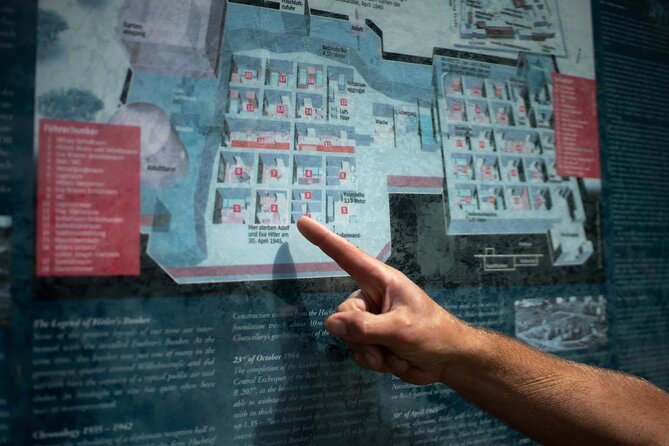
The Führerbunker and Hitler’s final days
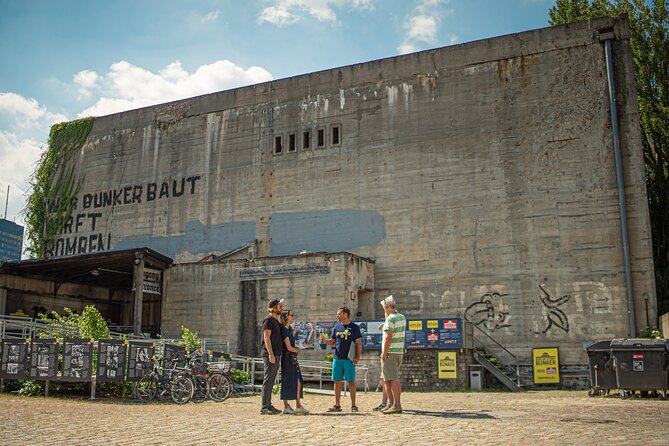
At the Führerbunker, you do not enter a preserved underground complex. You stand above the former location, much of which was destroyed after the war.
The guide explains the bunker’s layout, its role as Hitler’s final refuge, and the decisions made as Allied forces closed in on Berlin. The setting is deliberately plain. There is no grand ruin to admire and no dramatic interior tour. That absence is part of the lesson.
The stop takes about 10 minutes. It works best when your guide avoids treating Hitler’s final days as a spectacle. The useful question is not what happened to one dictator in his last refuge, but how a political system built on total control ended in destruction for the country it claimed to serve.
Anhalter Bahnhof and the human cost of deportation
Anhalter Bahnhof was once one of Berlin’s major railway terminals. During the Nazi period, the station became connected with the deportation of Jews to concentration camps.
Only part of the old station remains, including a large section of its historic façade. Your guide explains how a normal transport network became part of persecution and deportation. That shift from ordinary travel to organized removal is one of the most sobering ideas on the route.
The stop lasts about 10 minutes. You will not get a long museum visit here, but the location adds an important practical detail to the history. Deportation required trains, schedules, paperwork, police, and cooperation from institutions that served everyday life.
The site is especially useful after the Holocaust Memorial. One memorial presents absence and memory in abstract form. Anhalter Bahnhof helps you picture the physical process by which families were separated and sent away.
The T4 Memorial and Nazi crimes against disabled people
The T4 Memorial on Tiergartenstraße 4 addresses the Nazi euthanasia program, which targeted people with disabilities and mental illnesses. The program was based on the idea that some lives were unworthy of living and involved systematic killing.
Your guide explains the victims, the program’s organization, and the ethical questions raised by medical authority being placed in service of mass murder. The site also helps show that Nazi persecution did not begin with the Holocaust alone. Disabled people were among those targeted early by the regime.
The stop is about 10 minutes. It is short, but the subject is essential. If you are traveling with children or teenagers, your guide can help you decide how much detail is appropriate. The memorial offers a direct lesson in the danger of discrimination and the need to protect human dignity.
Moltkebrücke and the final battle for Berlin
The walk across Moltkebrücke brings the tour back to the last days of the war. Soviet forces crossed the bridge in 1945 during their assault on Berlin, making it an important route in the final fighting.
Your guide recounts the battles nearby and explains how the Soviet advance changed the city’s immediate future. The bridge is not a museum, so the value comes from standing in a normal urban setting while learning what happened there.
The stop lasts about 10 minutes. It is a good example of why a walking tour can add something a bus tour cannot. You see the streets and bridges as part of the living city, then connect them to the violence that took place there.
How the price works for a private group
The listed price is $192.97 per person. That is expensive if you are alone or a couple comparing it with a large group walking tour. It becomes more reasonable when divided among a family or group, since you are paying for a private guide rather than a seat on a standard public tour.
The real value lies in flexibility. Guides have adjusted routes for people who already visited certain places, changed the pace, answered many questions, and added practical suggestions for later days in Berlin. One group began at its hotel and finished near the Berlin Wall after a personalized route, although you should confirm your own pickup and endpoint when booking.
Hotel pickup and drop-off are included. Food and drinks are not. The tour operates in all weather, so wear shoes suitable for several hours outside and bring clothing for rain or cold. One cold-weather booking involved three hours outdoors, and the experience was worthwhile only because the group was prepared.
Who should book this tour?
I would choose this tour if you want a clear overview of Nazi Berlin and prefer a private guide who can adapt the story to your interests. It suits families, first-time visitors, history students, and anyone who wants to connect sites that are spread around central Berlin.
It is especially useful early in a Berlin stay. The route can help you identify museums and memorials worth revisiting. The Topography of Terror and Holocaust Memorial are the clearest examples, since the short tour visits cannot replace a slower, independent visit.
I would hesitate if you want long indoor museum sessions, a relaxed pace, or a tour devoted only to Hitler. This experience covers the wider system: victims, resistance, government, war, deportation, and remembrance. It also includes substantial walking and outdoor time.
The overall rating is 5 out of 5 from 360 reviews, with 99 percent recommending it. That strong response matches the tour’s best qualities: skilled guides, private attention, flexible pacing, and a serious approach to difficult history. Book it if those matter more to you than a low price or extended time inside each museum.
FAQ
How long does the private Berlin Third Reich tour last?
The tour lasts approximately three to four hours.
What is the price per person?
The listed price is $192.97 per person.
Is hotel pickup included?
Yes. Hotel pickup and hotel drop-off are included.
Is this a private activity?
Yes. Only your group participates in the tour.
What language is the tour offered in?
The tour is offered in English.
Does the tour include food or drinks?
No. Food and drinks are not included.
Is admission to the Reichstag included?
No. Admission to the Reichstag is not included.
Does the tour run in bad weather?
Yes. The tour operates in all weather conditions, so you should dress appropriately.
Can I cancel for a full refund?
Yes. You can cancel at least 24 hours before the start time for a full refund. Cancellations or changes made less than 24 hours before the start time are not accepted for a refund.
More Private History Tours in Germany
- Private Walking Tour: Berlin Wall, Cold War and Checkpoint Charlie
★ 5.0 · 37 reviews - PRIVATE BEHIND THE BERLIN WALL and COLD WAR BERLIN TOUR
★ 5.0 · 36 reviews - Private Tour: Jewish Heritage Walking Tour of Berlin
★ 5.0 · 29 reviews - Private Berlin WWII and Cold War History Tour with Local Expert Guide
★ 5.0 · 28 reviews
More Private History Tours in Berlin
- Berlin Private Half-Day Walking Tour: Discover the German Capital’s History
★ 5.0 · 244 reviews - Private Walking Tour: World War 2 and Cold War Sites in Berlin
★ 5.0 · 230 reviews - The History of Berlin: WWII PRIVATE Walking Tour With Locals
★ 5.0 · 209 reviews - Private Taxi Tour City East & West History and Architecture 3-4h
★ 5.0 · 42 reviews
Just added around Berlin
- Berlin Food & Cultural Tour: Must-Try German & Berliner Classics★ 5.0 · 51 reviews
- Berlin Half-Day World War II Walking Tour★ 4.5 · 48 reviews
- Small-Group Historical Bike Tour in Berlin★ 4.5 · 103 reviews
- Historic center of Berlin – Tour in Italian★ 5.0 · 143 reviews
- Berlin Cold War & World War II Third Reich Walking Tour★ 4.5 · 30 reviews
- Private Taxi Tour City East & West History and Architecture 3-4h★ 5.0 · 42 reviews
- Berlin Wall and Cold War Bike Tour in Small Groups★ 5.0 · 114 reviews
- Private Tour: Jewish Heritage Walking Tour of Berlin★ 5.0 · 29 reviews
Berlin History Tours, compared.

Berlin: Third Reich & Cold War Guided Walking Tour
Read our review →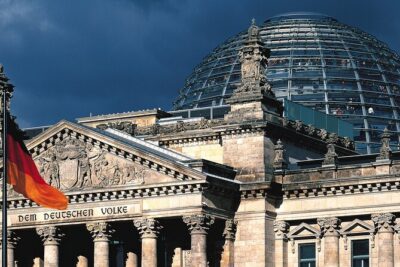
Berlin’s Best: 2 Hour Walking Tour Third Reich and the Cold War
Read our review →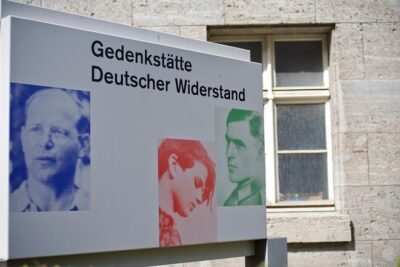
Third Reich Berlin: Hitler and WWII Walking Tour
Read our review →
Berlin: Third Reich, Hitler, and WWII Walking Tour
Read our review →
Berlin: 3-Hour World Heritage Cruise to Potsdam
Read our review →
Cold War, Berlin Wall, Spies and the East Side Gallery
Read our review →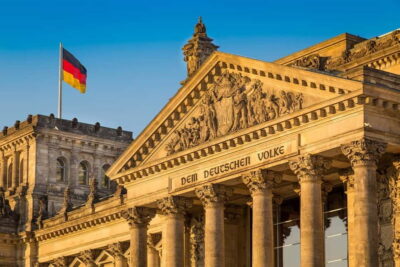
Berlin: History of the Third Reich Guided Walking Tour
Read our review →
Browse the lists this tour appears in