Review · ROME
Rome: Trastevere street food and history tour – small group
Rome’s best food lessons often happen away from the grand monuments. This small-group walk links the Jewish Ghetto and Trastevere, pairing fried artichoke, Roman pizza, supplì, and gelato with stories about the streets around you. It is a useful way to see two central neighborhoods while building a short list of places to eat later.
I like the small group of no more than 12 because guides such as Christian, Virginia, Daniel, and Serena can answer questions and adjust the pace. I also like the mix of savory and sweet stops, including a bakery known locally for decades. The main drawback is that the first hour can feel more like a history walk than a food tour, with several stops close together toward the end.
Key points to know before booking
- Fried artichoke in the Jewish Ghetto: A classic Roman-Jewish specialty and one of the most memorable tastings.
- Two neighborhoods in one walk: You move from the Ghetto across Tiber Island and into medieval Trastevere.
- Small group format: The maximum is 12 people, with especially personal tours possible when bookings are light.
- Food comes in a set progression: Expect artichoke, sliced pizza, supplì, gelato, and other bites, with alcohol available to buy separately.
- Useful first-day orientation: Guides share restaurant and gelato advice that can help shape the rest of your Rome visit.
- Uneven streets and steps: The route is manageable for most people, but it is not designed around reduced mobility.
Why this Rome food walk works
At $66.38 per person, this is not simply a snack run. You are paying for roughly two and a half hours of guiding, neighborhood context, and several tastings in some of Rome’s most atmospheric streets.
I see the value in the combination. A plate of Roman food tells you something, but learning why a Jewish-Roman artichoke is prepared differently from a standard Roman artichoke makes the bite more memorable. The walk also helps you locate small shops, bakeries, restaurants, and gelaterias that you might pass without noticing.
The format suits you best if you want a gentle introduction to Roman food rather than a huge meal. One particularly useful aspect is the chance to note your favorite stops and return later. A food tour can be expensive if you judge it only by volume, and one person found the amount of food lighter than on another food tour. Still, the tastings are intended as samples, not a replacement for lunch or dinner.
The tour is offered in English and normally runs with a maximum of 12 people. A group of four or seven can feel almost private, while a full group will require you to stay close to the guide on narrow streets.
More Food and History Tours in Italy
- Rome Food Tour in the Historic Centre with 8+ Food Tastings
★ 5.0 · 1,000 reviews - Private Rome Food Tour in the Historic Centre with 8+Tastings
★ 5.0 · 135 reviews - Rome: Ultimate Street Food Tour in the Old Town by Do Eat Better
★ 5.0 · 73 reviews
Starting in the Jewish Ghetto
The meeting point is Piazza Benedetto Cairoli, 118. From there, the route heads toward the Jewish Ghetto, one of the most distinctive parts of central Rome.
The Ghetto remains an important center for Rome’s Jewish community, with the main synagogue and a strong local food tradition. Your guide explains the area as you walk, then introduces you to Roman-Jewish specialties. The famous fried artichoke is the obvious highlight, and several people singled it out as a favorite bite.
I like starting here because the food has a clear connection to place. You are not just eating a generic fried vegetable in an old neighborhood. You are tasting something tied to the cooking traditions of the Roman Jewish community.
The Ghetto section is not long, around 20 minutes as a listed stop. If this neighborhood is your main interest, keep your expectations in check. The food and the setting get a good introduction, but this is not a full Jewish Ghetto history tour. You will have time to see the main points, not to examine every street or spend an extended period inside the synagogue.
Crossing Tiber Island
The walk then continues to Tiber Island, an unusual piece of land in the center of the Tiber River. The stop lasts about 15 minutes.
This part helps connect the two neighborhoods. Instead of taking transport from one food district to another, you walk across a central Roman landmark and hear about its place in the city. It also gives the route a pleasant change of pace after the Ghetto.
You should treat Tiber Island as a short scenic and historical pause rather than a major sightseeing visit. Admission is free, and the tour does not include a separate attraction ticket. The value comes from seeing how close Rome’s different districts are when you move on foot.
Entering medieval Trastevere at Piazza in Piscinula
Piazza in Piscinula marks your first approach to Trastevere, beginning with its medieval side. This is where the route starts to feel less formal and more like a neighborhood walk.
The square and nearby lanes offer the kind of details that make Trastevere appealing: old façades, compact streets, and small views that appear as you turn a corner. Your guide uses the setting to explain how the district developed and how it differs from the grander parts of central Rome.
This is also a useful point to settle into the walking rhythm. The route covers several stops, but each one is short. You are not standing in one place for a long lecture. Instead, the guide gives information in pieces as you move.
More Food and History Tours in Rome
- Rome: Food Tour of the Historic Center with Rooftop Spritz
★ 4.7 · 43 reviews
San Francesco a Ripa and the first food stops
At Chiesa di San Francesco a Ripa Grande, the group walks through the surrounding lanes and stops for food. The church itself is part of the route, but the appeal here comes from the combination of streets, local businesses, and tasting time.
This is where the experience begins to balance more fully between history and food. You might find the schedule a little uneven. One person found there was a long stretch of walking before much eating, followed by several food stops closer together. That pattern is worth knowing if you expect a bite at every landmark.
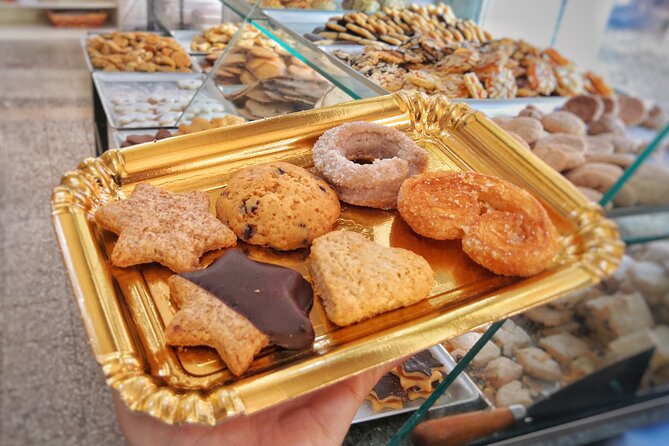
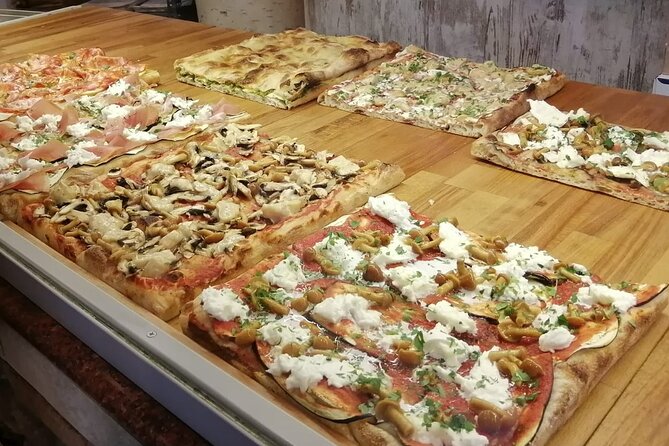
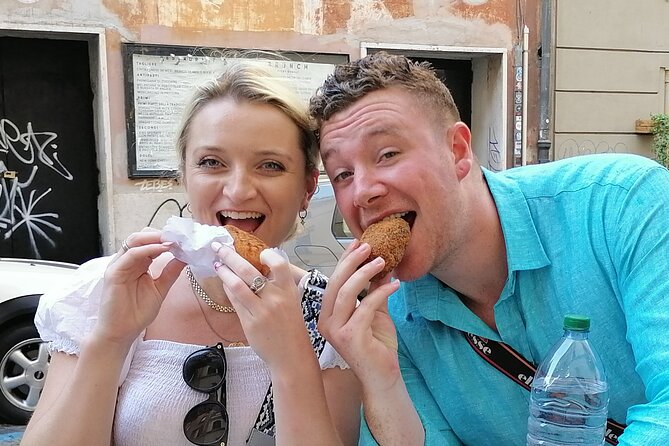
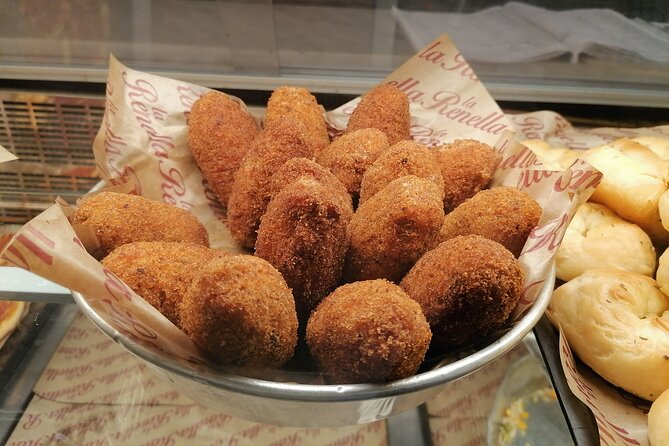
The food selection gives you a broad introduction to Roman casual eating. Sliced pizza shows you the city’s quick, everyday side. Supplì, the fried rice croquette usually associated with Roman street food, adds another savory texture. Artichoke brings the Jewish-Roman connection, while gelato supplies the sweet finish.
The tour is planned with vegetarian preferences in mind. If you are vegetarian, tell the operator when booking so the tastings can be arranged appropriately. Vegans and people avoiding gluten or lactose can join, but every tasting cannot be guaranteed. These restrictions must be shared at booking, not at the last minute.
Via della Lungaretta, Trastevere’s main thread
Via della Lungaretta acts as the main street through much of Trastevere. It is lined with climbing plants, shop windows, and small businesses, making it one of the more enjoyable stretches for simply looking around.
The route gives you a practical sense of the district. Instead of seeing only a famous piazza, you move along a street used to connect different parts of Trastevere. The guide points out local details and places you may want to remember for later.
One useful feature is the flexibility around browsing. A food-focused walk is not usually built for shopping stops, but a guide may accommodate a brief request when the schedule allows. Keep it brief and stay aware of the group, since a small delay can affect the later tastings.
The Fontana della Botte and Roman wine culture
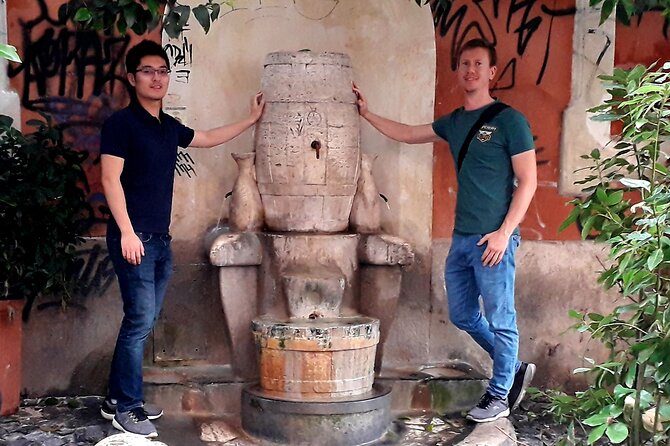
The Fontana della Botte is a small fountain shaped like a wine measure. The stop lasts around 15 minutes and gives the guide another way to connect the streets with everyday Roman customs.
It is a good example of the small-scale sights this tour favors. You are not visiting Rome’s headline monuments. You are stopping for details that explain how the neighborhoods have worked and what people valued in daily life.
Alcoholic drinks are not included in the tour price, but you can buy them separately according to your preference. That arrangement keeps the base price clear and lets you decide if a drink belongs in your afternoon. You should not assume alcohol is part of the tasting package.
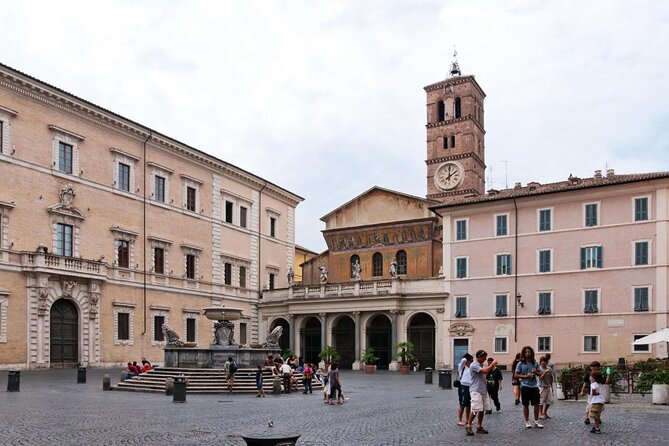
Piazza di Santa Maria in Trastevere
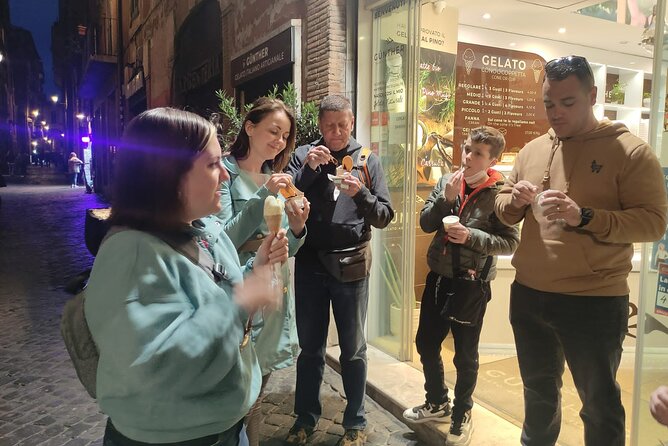
The route reaches Piazza di Santa Maria in Trastevere, one of the district’s key gathering places. You see the square and go inside the church.
This is one of the stronger historical pauses because the setting gives the walking tour a clear focal point. The square offers a chance to stop, look around, and understand the center of Trastevere before returning to the smaller lanes.
The church visit is included as part of the walk, with no separate admission charge listed. Dress and behavior should be respectful, as they should be at any active place of worship, though the tour information does not specify a formal dress code.
Finishing through Trastevere’s side streets
The final portion takes you through Trastevere’s alleys, including less direct paths and small views away from the main route. This is where the experience feels most like a local orientation walk.
I find this part especially useful for a first visit because it helps you understand the district’s shape. You can see where the main street gives way to quieter lanes, and you can mark places to revisit for dinner, gelato, or another walk.
The listed food includes gelato, and the sweet stop often works as the natural finish. You also get advice on choosing good gelato, which is practical in a city where appearance alone can be misleading. The tour ends on Via dei Pettinari, 45, near the center of Rome.
What the food amounts to
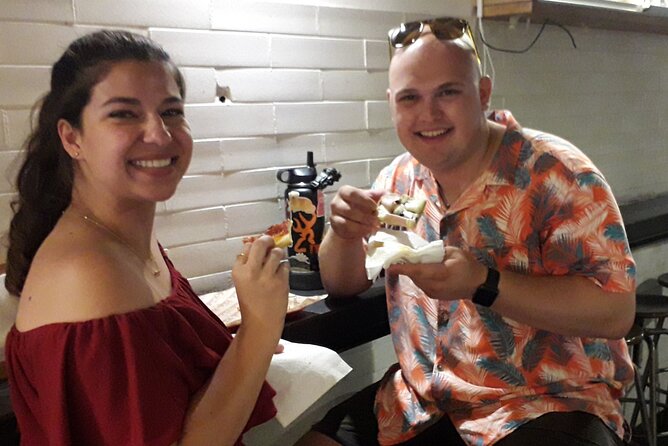
The included tastings are artichoke, sliced pizza, supplì, gelato, and more. The exact shop lineup is not fixed in the information provided, so you should think of the list as the food style rather than a guaranteed menu from named businesses.
The sequence generally gives you both savory and sweet food. One guide described the stops as two appetizers, Roman pizza, and two desserts, while another route included a bakery with more than 60 years of local reputation and no prominent business name outside. Details can vary by guide and day.
I would plan a normal meal around this tour rather than counting on it to fill you completely. Some people finish feeling satisfied, while others want more food. At $66.38, the price makes more sense if you value the guide’s explanations and the chance to find good places for later, not if you are seeking the greatest possible quantity.
The guide can make or break the walk
The strongest part of this experience is the guide-led connection between food and place. Guides named in the feedback include Christian, Virginia, Daniel, Serena, Marco, Emanuel, Sabrina, Daniele, Manuele, and Victoria. You will not necessarily have one of them, but the range of comments shows that the experience depends heavily on who leads your departure.
The best guides keep the history clear, explain unfamiliar foods, answer questions, and share restaurant suggestions without turning the walk into a lecture. Daniel was praised for his enthusiasm for history, while Virginia was noted for her pace, food advice, and ability to keep teenagers interested. Christian was described as personable and strong on both food and local history.
English ability can vary by guide. One person had trouble following a guide who spoke quickly and softly with a strong accent. That is a fair concern for a history-heavy tour. If you cannot hear or understand, move closer and ask the guide to slow down or speak up.
Walking conditions and who should book
Most people can take part, but expect walking on uneven Roman streets and some steps. The tour runs in sun or rain except in extreme weather, so wear shoes with a firm sole and carry weather protection. Rain alone does not qualify for a last-minute refund.
The route may work for an older person who walks comfortably, especially if the guide knows in advance and keeps the pace sensible. Reduced-mobility visitors are advised to choose a private tour so the route can be adjusted without affecting the rest of the group.
This tour suits you if you:
- Want food and local history in one short experience
- Prefer a small English-speaking group
- Are visiting Rome for the first time and want restaurant ideas
- Have already seen the major monuments and want neighborhood life
- Enjoy trying foods you might not order on your own
- Can handle uneven streets, steps, and a steady walk
It is less suitable if you want a sit-down meal, a full lecture on the Jewish Ghetto, or a completely accessible route.
Timing, booking, and cancellation details
The tour lasts about two hours and 30 minutes and is often booked well ahead, around 46 days in advance on average. That suggests you should reserve early for a particular date, especially if you need vegetarian substitutions or have dietary restrictions.
Confirmation is provided when you book, and the start is near public transportation. Special rates are available for people under 18 and for groups. The tour requires a minimum number of participants, so an operator cancellation for that reason brings a choice of another date or experience, or a full refund.
You can cancel for a full refund up to 24 hours before the start time. Inside that window, the amount paid is not refunded, and changes are not accepted. This is important for anyone managing a trip with uncertain plans or health concerns.
Should you book this Trastevere food tour?
I would book it early in a Rome visit, not on the final day. The walk gives you a useful map of the Jewish Ghetto and Trastevere, introduces several Roman foods, and offers restaurant and gelato advice you can use afterward.
Book it if you want a friendly neighborhood introduction with real tastings and a guide who can explain the stories behind them. Skip it if your priority is a large meal, a fully accessible route, or a long, detailed visit focused only on the Ghetto.
For most visitors, the best value is not the number of bites. It is the chance to understand why the artichoke matters, where Trastevere’s main streets lead, and which small food stops deserve a return visit.
FAQ
How long does the Rome street food and history tour last?
The tour lasts approximately two hours and 30 minutes.
How many people can join the tour?
The tour has a maximum of 12 participants.
What food is included?
Included tastings include artichoke, sliced pizza, supplì, gelato, and other street food items.
Are alcoholic drinks included?
No. Alcoholic drinks can be purchased separately according to your preference.
Is the tour suitable for vegetarians?
The tour is planned to suit vegetarian preferences. You must communicate your preference when booking.
Can people with vegan, gluten-free, or lactose-free diets join?
They can participate, but not every tasting can be guaranteed for these restrictions. You must communicate the restriction at the time of booking, since last-minute requests are not accepted.
Where does the tour start and finish?
The tour starts at Piazza Benedetto Cairoli, 118, in Rome. It ends at Via dei Pettinari, 45.
What happens if I need to cancel?
You receive a full refund if you cancel at least 24 hours before the scheduled start time. Cancellations or changes made less than 24 hours before the start are not refunded.
More Food and Drink Trips in Rome
- Roman countryside Food & Wine Tasting in a medieval winery
★ 4.5 · 220 reviews - Amsterdam Food and Cultural Tour with Tastings
★ 5.0 · 4,315 reviews - Barcelona: Tapas Walking Tour with Food, Wine, and History
★ 4.8 · 4,261 reviews - Sevilla Food Tour: Tapas, Wine, History & Traditions
★ 5.0 · 3,468 reviews
More Small-Group History Tours in Rome
- Secrets of Rome: Historical True Crime Small Group Tour
★ 4.9 · 85 reviews - Rome: Colosseum and Ancient Rome Small Group Guided Tour
★ 4.5 · 70 reviews - Pompeii: Small Group Tour with an Archaeologist
★ 4.8 · 12,264 reviews - London Small Group Tour of Historical Pubs
★ 5.0 · 10,422 reviews
Just added around Rome
- Rome: Colosseum and Ancient Rome Guided Walking Tour★ 4.5 · 95 reviews
- Secrets of Rome: Historical True Crime Small Group Tour★ 4.9 · 85 reviews
- Rome: Rome at Night Evening Historical Walking Tour★ 4.9 · 24 reviews
- Rome Secrets: Dark History & Tasty Bites Tour★ 5.0 · 37 reviews
- Rome: Introduction to the Colosseum and Ancient City Tour★ 4.8 · 75 reviews
- Rome Pantheon Semi-Private Guided Tour with an Archaeologist★ 5.0 · 60 reviews
- Rome: Ostia Antica Archaeological Park Ticket & Audio App★ 4.6 · 146 reviews
- Rome: Guided Tour of Colosseum and Ancient Rome★ 4.9 · 74 reviews
Rome History Tours, compared.
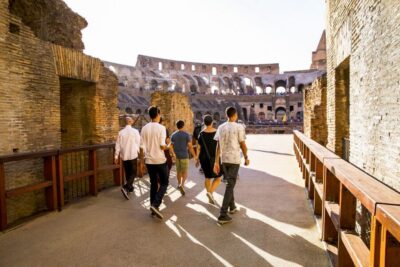
Colosseum: Underground and Ancient Rome Tour
Read our review →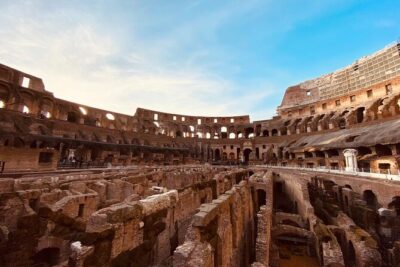
Rome: Colosseum with Arena, Roman Forum and Palatine Guided Tour
Read our review →
Colosseum with Arena, Roman Forum and Palatine Hill Guided Tour
Read our review →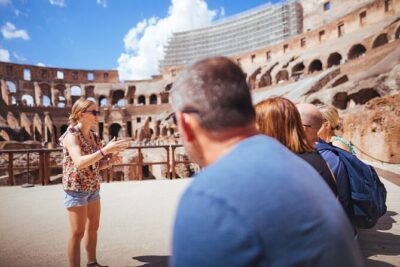
Colosseum & Ancient Rome with Arena Floor Option I Max 6 People
Read our review →
Rome: Colosseum, Ancient Rome Tour or AudioGuided Tour
Read our review →
Colosseum Underground & Ancient Rome Guided Tour
Read our review →
Rome: Colosseum Arena, Roman Forum & Palatine Hill Tour
Read our review →