
Review · CHARLESTON
Small Group Historic Charleston walking Tour
Charleston’s story comes into focus best on foot, and this tour keeps you in the city’s historic heart. Over about 90 minutes, longtime local guide Mike Frederick leads you from White Point Garden along the Battery and into streets lined with 18th- and 19th-century homes.
I like the small group limit of 10, which gives you a real chance to ask questions. I also like the route’s mix of architecture and military history, including Rainbow Row, Battery Wagner, and the cannonball still lodged on the Roper House roof.
The main consideration is historical focus. You can request slavery-related history, but you should make that request clear at the start, since the tour may otherwise lean more heavily toward architecture, Civil War events, and Charleston’s prominent residents.
Key points at a glance
- See Charleston’s most famous waterfront homes: The Battery and Rainbow Row anchor the route.
- Walk streets from the original walled city: Tradd Street brings early Charleston architecture and Catfish Row into the story.
- Ask for the history you want: The tour can focus on the Civil War or slavery in Charleston.
- Expect a personal guide: Mike Frederick draws on decades of living in the historic district.
- Allow extra time if possible: The advertised visit lasts about 1.5 hours, but some tours run closer to two hours or longer.
- Pay for a focused introduction: At $47 per person, the tour offers a useful first look at central Charleston without the cost of a private full-day outing.
Why this walk works so well in Charleston
Charleston is easy to admire and surprisingly easy to misunderstand. A row of pastel houses, a church steeple, or a grand porch can look like a pretty backdrop unless someone explains who built it, how the city grew, and where the money came from.
This walk gives you that context while keeping the pace manageable. You cover a compact section of the historic district rather than trying to see every corner of the city. That is a sensible choice if you have one day in Charleston, want an orientation early in your visit, or prefer history with plenty of time for questions.
The group size matters. With no more than 10 people, Mike can adjust the conversation instead of delivering a fixed speech. His strongest subjects appear to be the Civil War, Charleston architecture, local personalities, and the small details that are easy to miss when you explore alone.
I would treat this as a conversation-led neighborhood walk, not a museum tour. You do not go inside the homes along the route, and admission to the stops is not part of the experience. The reward is the setting, the stories, and the chance to connect several parts of Charleston’s past.
More History Walking Tours in Charleston
- Historic Charleston Guided Sightseeing Walking Tour
★ 5.0 · 6,216 reviews - Hidden Alleyways and Historic Sites Small-Group Walking Tour
★ 5.0 · 2,335 reviews - Charleston historical walking tour with a Professor of History at The Citadel
★ 5.0 · 1,284 reviews
White Point Garden and the beginning of Charleston
The walk begins at White Point Garden, a pleasant waterfront park at the southern end of the historic district. This is where you get the city’s founding story, including the 1680 arrival of settlers and the role of King Charles II and the eight Lord Proprietors.
That opening gives you a basic map of Charleston’s origins before the group turns toward the homes and defenses around the Battery. It also places the city within the English colonial system, rather than treating Charleston as a collection of attractive old buildings.
One notable stop here is the Stevens-Lathers House, described as a 17,000-square-foot residence and the second-largest home in Charleston. The building also connects to the American preservation movement. In 1920, the Society for the Preservation of Old Dwellings was formed in its ballroom, making it the first preservation society in the country.
I like this detail because it changes the way you view the street. Charleston’s old buildings did not survive by accident. Local people eventually organized to protect them, and that effort helped shape the historic district you see today.
You spend about 20 minutes in this area. White Point Garden is open and exposed, so the heat can matter, especially in summer. One recent experience was praised for its content but described as difficult in hot weather. Bring water, wear a hat, and choose light clothing if the forecast is warm.
The Battery, Civil War stories, and Rainbow Row
From White Point Garden, the route follows the East Battery. This is one of Charleston’s best places for combining views, architecture, and military history in a short stretch.
The Battery was part defensive wall and part waterfront promenade. Here, the guide discusses both the Revolutionary War and the Civil War, with particular attention to Battery Wagner, the battle made famous by the film Glory. If Civil War history is your main reason for booking, tell Mike at the outset so he can give that subject more room.
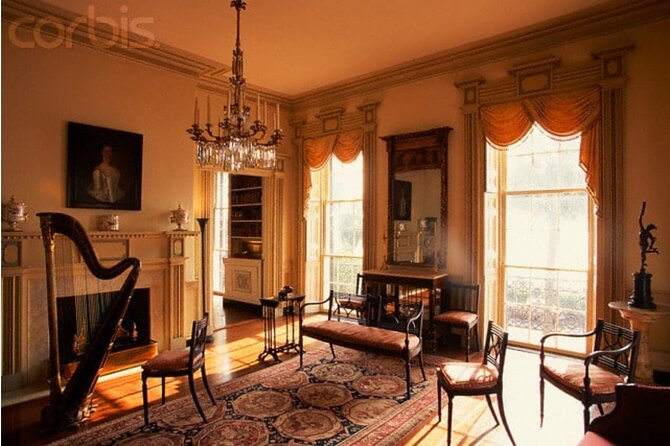
The architecture comes with plenty of memorable details. You will see antebellum homes, the Carolina Yacht Club, Rainbow Row, and the Roper House. One of the tour’s more unusual facts concerns a 900-pound cannonball that struck the roof of the Roper House in 1864 and remains there.
That kind of detail is useful because it turns a static façade into evidence. You are not just looking at an old house. You are looking at a building that still carries a physical mark from the war.
The East Battery section lasts about 25 minutes, though the actual time may vary with questions and the group’s pace. It is also one of the more exposed parts of the walk. The waterfront views are lovely, but shade can be limited. If you are sensitive to heat or have mobility concerns, tell the guide early. The route is generally manageable, and the guide has adjusted the pace for people with physical restrictions, but Charleston’s old sidewalks and summer weather can still take effort.
Rainbow Row is a natural photo stop, but the tour’s value is not limited to photographs. The guide can explain how these houses fit into the larger pattern of Charleston’s development, trade, and social divisions. That context is what makes the stop worth more than a quick picture from the sidewalk.
Tradd Street and the old walled city

The walk then moves to Tradd Street, within what was once Charleston’s original walled city. This part of the route shifts from broad waterfront views to a closer look at residential architecture.
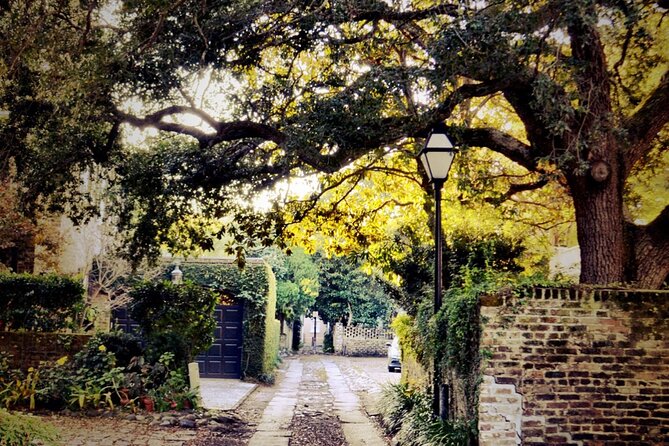
Many of the homes here date from the 1740s and 1750s. Tradd Street is especially appealing for its window boxes and quieter residential character. It is the kind of street where an informed guide helps you notice proportions, entrances, porches, and the way homes face the narrow lots.
You also pass Catfish Row, the stretch of Church Street between Tradd and Broad Streets. Before the Civil War, this was a Black neighborhood, and it later became associated with the setting of Porgy and Bess.
This is an important point in the tour because it shows that Charleston’s history is not only the story of wealthy homeowners, military commanders, and colonial founders. Streets that look elegant today also carry stories about Black residents, labor, freedom, and the limits placed on people by law and custom.
If learning about slavery is central to your visit, I would say so plainly before the walk begins. The experience allows you to request that focus, but the guide may otherwise spend more time on the Civil War and homes connected to prominent white residents. One piece of feedback described disappointment when slavery received little attention, so this is the clearest question to settle before you start.
The Tradd Street segment takes about 20 minutes. It is a good place for questions because the buildings are close together and the route is less about sweeping views than about reading the city block by block.
More History Walking Tours in the USA
- Charleston: Old Walled City Historical Walking Tour
★ 4.7 · 705 reviews - Historic Charleston Walking Tour: Rainbow Row, Churches, and More
★ 5.0 · 691 reviews - Charleston: History and Architecture Guided Walking Tour
★ 4.8 · 349 reviews - Charleston History and Hops Tour: Bar and History Walk
★ 5.0 · 316 reviews
Meeting Street and Charleston’s grand houses
Meeting Street brings the tour to more examples of pre-Revolutionary architecture and to several homes tied to Charleston’s later history.
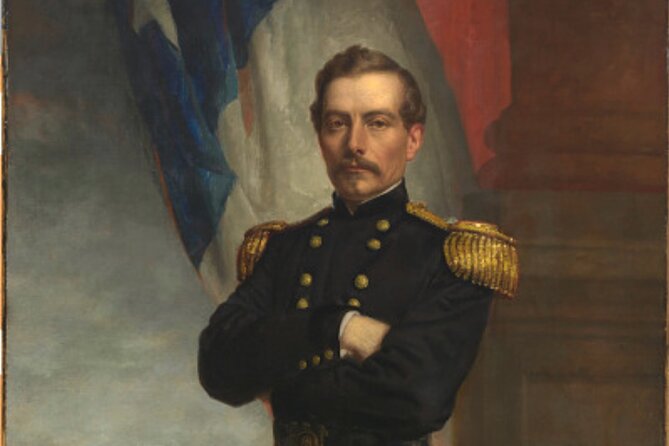
The James Simmons House served as General Beauregard’s headquarters during the Civil War. That gives the building a direct military connection, rather than a purely architectural one. You also see the Nathaniel Russell House, one of the city’s finest museum homes, although this walking tour does not include an interior visit.
The Charleston single house is another key architectural idea explained along the route. These narrow homes are built on long lots, with rooms arranged beside a side piazza. Once you understand the form, you will begin spotting it throughout the historic district.
The final major house is the Williams Mansion, a 24,000-square-foot residence described as Charleston’s largest home. George Williams built it after the Civil War in the Italianate style, after making his fortune as a blockade runner.
The house also connects to Margaret Mitchell, author of Gone with the Wind. She visited it at age 13, and the story suggests that the visit may have helped inspire her book. Treat that as an interesting local connection rather than the main reason to see the building. The stronger takeaway is how Charleston’s architecture reflects different eras, from colonial homes to postwar displays of wealth.
This section takes about 20 minutes. By now, the route has moved from founding stories to war, preservation, Black history, domestic architecture, and postwar ambition. That broad range is a major strength, as long as you ask for the subjects that matter most to you.
A tour shaped by Mike Frederick’s local connection

The guide can make or break a walking tour, and Mike Frederick’s local ties are central to this experience. He has lived in the Battery area for decades, which gives him a close view of the neighborhood beyond its official landmarks.
His role is not limited to dates. He can explain how the area functions today, add personal stories, answer questions, and suggest places to eat or things to do afterward. He has even helped some visitors with restaurant choices and transportation after the walk.
That personal attention is especially useful for families. The tour has held the interest of children as young as six, nine, and ten, according to the supplied details, and the guide has been praised for keeping younger members involved. Still, this is a history walk, so children who need constant activity may find the architecture-heavy sections slow.
The pace is another plus. Several tours have run beyond the advertised 90 minutes, sometimes approaching two hours or more. That can be wonderful if you enjoy questions and stories, but it may be inconvenient if you have a dinner reservation, a cruise departure, or another timed activity.
I would schedule the walk earlier in your Charleston visit. That way, the guide’s suggestions for restaurants and other activities can help shape the rest of your stay. If your schedule is tight, ask how long the day’s group is expected to stay before making a hard reservation.
What $47 gets you

At $47 per person, this is not the cheapest way to walk around Charleston, but it offers good value for a small-group experience. You get roughly 90 minutes of guided time, a route through the Battery and central historic district, and access to a local guide who can adapt the conversation.
The value is strongest if you want interpretation rather than simple sightseeing. You could walk past White Point Garden, Rainbow Row, Tradd Street, and Meeting Street on your own, but you would miss many of the connections between the houses, wars, neighborhoods, and preservation efforts.
The price is less compelling if you only want photographs or a quick orientation. You can see the exterior landmarks without paying for a tour. It is also not the right choice if you need a full treatment of slavery, because you should confirm that subject will receive serious attention before booking.
The experience is available in English, uses a mobile ticket, and has free cancellation up to 24 hours before the start time. Confirmation arrives within 48 hours, subject to availability. The meeting point is 1 1/2 Meeting Street, and the walk returns there.
Who should book this Charleston walk?
I would recommend it to first-time visitors who want a compact introduction to Charleston’s historic core. It also suits Civil War enthusiasts, architecture fans, couples, families with older children, and anyone who values a small group over a large scripted outing.
It is a particularly good fit if you enjoy asking questions. Mike’s local knowledge and flexible approach appear to be the strongest parts of the experience, and the route gives him plenty of material to work with.
You should think twice if you want extensive slavery history without having to request it. You may also prefer another option if heat, uneven walking surfaces, or a strict schedule will make the route uncomfortable. Most people can participate, service animals are allowed, and public transportation is nearby, but the walk still takes place outdoors in Charleston weather.
Should you book it?
Book this tour if you want Charleston explained by a longtime local, with the Battery, Rainbow Row, Tradd Street, and major historic homes tied into one manageable walk. The small group, flexible discussion, and Civil War material give it more substance than a quick sightseeing stroll.
Before you pay, decide what history you most want to hear. Ask specifically for slavery and Black Charleston if that is central to your visit. If the answer fits your interests, $47 is a fair price for a personal introduction to the city, especially when you can use the guide’s restaurant and sightseeing suggestions for the rest of your stay.
FAQ
How long does the Historic Charleston walking tour last?
The listed duration is approximately 1 hour and 30 minutes. The tour may run longer when the group asks questions or takes extra time at the stops.
Where does the tour begin?
The meeting point is 1 1/2 Meeting Street, Charleston, South Carolina 29401. The activity ends back at the same meeting point.
How many people can join the tour?
The maximum group size is 10 travelers, making this a small-group experience.
Is the tour offered in English?
Yes. The tour is offered in English and uses a mobile ticket.
Can I request Civil War or slavery-focused history?
Yes. The tour can be customized to focus on the Civil War or slavery in Charleston. If slavery history is especially important to you, make that request clearly before the walk begins.
Is the tour suitable for most people?
Most travelers can participate. Service animals are allowed, and the tour is near public transportation. Keep in mind that it is an outdoor walking experience and summer heat may make the route more tiring.
What is the cancellation policy?
You can cancel for a full refund up to 24 hours before the experience start time. Cancellations or changes made within 24 hours are not refunded or accepted.
More Small-Group History Tours in Charleston
- Small-Group Tour: Charleston Old Walled City Historical Walking Tour
★ 4.5 · 283 reviews - Small Group Ghost Tour Charleston: 60min of True Haunted History
★ 4.5 · 272 reviews - Semi-private SMALL group Historic Walking Tours w/certified guide
★ 5.0 · 224 reviews - Pompeii: Small Group Tour with an Archaeologist
★ 4.8 · 12,264 reviews
Just added around Charleston
- Charleston’s Historic Pubs, Taverns, and Taprooms Tour★ 4.5 · 33 reviews
- Small-Group Tour: Charleston Old Walled City Historical Walking Tour★ 4.5 · 283 reviews
- Charleston’s Strong Women of the South History Tour★ 4.5 · 27 reviews
- Private Sunset Sail BYOB Dolphin/History Tours on 43ft Mystique★ 5.0 · 42 reviews
- Sip History In a Secret Speakeasy Cocktail Class★ 5.0 · 40 reviews
- Sip History in The Sun Cabana Covered Cocktail Class★ 5.0 · 332 reviews
- Charleston History and Hops Tour: Bar and History Walk★ 5.0 · 316 reviews
- Private Walking Tour of Historic Charleston★ 5.0 · 38 reviews
Charleston History Tours, compared.
Charleston’s Old South Carriage Historic Horse & Carriage Tour
Read our review →
Historic Charleston Guided Sightseeing Walking Tour
Read our review →
Charleston Harbor History Day-Time or Sunset Boat Cruise
Read our review →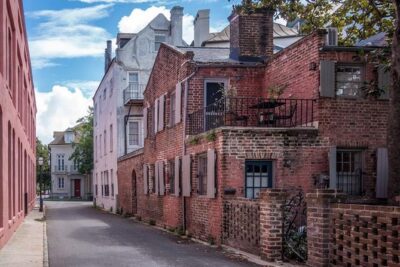
Hidden Alleyways and Historic Sites Small-Group Walking Tour
Read our review →
Charleston: Daytime or Sunset Historic Harbor Cruise
Read our review →
Charleston historical walking tour with a Professor of History at The Citadel
Read our review →
Charleston: Historical Downtown Tour by Horse-drawn Carriage
Read our review →
Undiscovered Charleston: Half Day Food, Wine & History Tour with Cooking Class
Read our review →Browse the lists this tour appears in