Review · FRANCE
Strasbourg: Private Walking Tour of the Historical Center
Strasbourg’s old center packs French and German culture into a very walkable two-hour route. You begin at Place du Quartier Blanc, then move through the Grand Island toward Notre-Dame Cathedral, the medieval churches, Place Broglie, and the famous covered bridges. The city’s bilingual character gives the walk more depth than a simple architecture tour.
I like the private format, since your guide can spend more time on the sights that matter to your group. I also like the route’s mix of major landmarks and smaller corners, including the 13th-century bridges and lesser-known spots that one guide used to good effect. The main drawback is time: two hours goes quickly, and the tour stays outside the cathedral, with no entrance ticket included.
Key points to know before booking
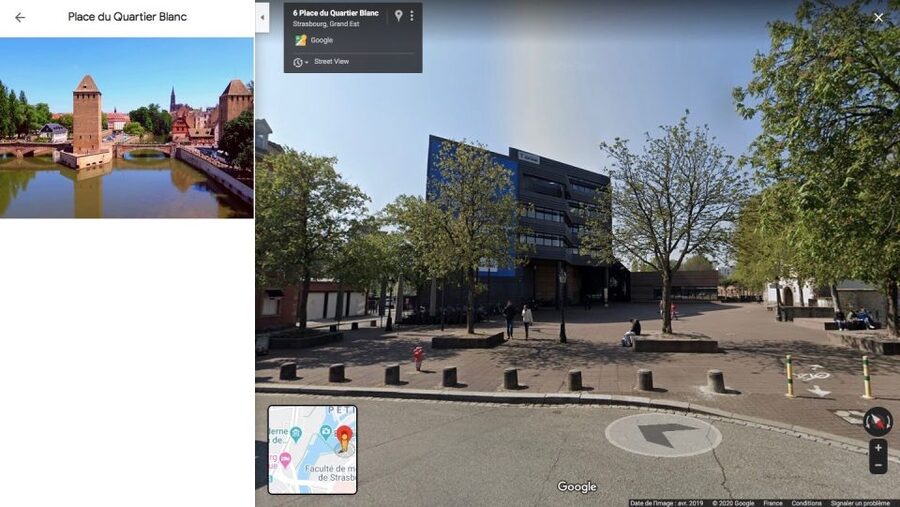
- Place du Quartier Blanc begins the walk: Meet your guide in front of the black building at 9 Place du Quartier Blanc.
- Notre-Dame is an exterior stop: Cathedral entry is not included, and talking inside the cathedral is prohibited.
- The covered bridges date from the 13th century: They offer one of the clearest links to Strasbourg’s medieval past.
- A private group means a more personal pace: The guide can adjust the walk, though the quality depends on how well the guide responds to your interests.
- Several languages are available: You can request English, French, German, Italian, Spanish, Portuguese, or Japanese.
- The tour has a 4.2 rating from 107 bookings: Praise centers on entertaining guides, useful information, and good German-language tours, while a few people wanted more detail or better attention to children.
Why Strasbourg’s Grand Island works so well on foot
Strasbourg is close to the German border, and that position shapes nearly everything you see and hear in the center. French and German influences meet in the streets, churches, public squares, and local language. You are not simply walking through an old French city. You are walking through a place that has long connected two national cultures.
The historic center sits on the Grand Island, a compact area surrounded by waterways. Its symbolic role matters: the island represents the meeting of France and Germany, and the city also serves as a European center with the European Parliament, Council of Europe, and European Ombudsman.
That makes a guided walk useful. You can see attractive buildings on your own, but a guide can explain why Strasbourg feels different from other French cities. You also avoid spending your short visit circling the same streets while trying to match names to landmarks.
The two-hour length is both a strength and a limit. It is short enough for a morning or afternoon plan, and it gives you a useful first look at the center without exhausting your feet. But you will not cover every church, museum, or interior. Think of it as an orientation walk with historical detail, not a full-day study of Strasbourg.
More History Walking Tours in France
- Paris: Dark History and Ghostly Guided Walking Tour
★ 4.7 · 1,000 reviews - Vieux Lyon Cultural & Historical Walking Guided Tour (English)
★ 5.0 · 942 reviews - Strasbourg: Guided Historical Neighborhoods Walking Tour
★ 4.9 · 275 reviews
Starting at Place du Quartier Blanc
The meeting point is 9 Place du Quartier Blanc. Your guide waits in front of the black building at Place du Quartier Blanc, 67000 Strasbourg. Take a moment to confirm the exact building before the start, since a private tour depends on finding the guide promptly.
The starting area is known in the tour description as the white district square. From here, your guide begins introducing Strasbourg and its central island. The opening is important because it gives you a framework for the rest of the walk: the border setting, the French and German identity, and the importance of the Grand Island.
You return to the same location after the two-hour tour. No transportation is included, which is not a serious issue for this route because the experience is built around walking through the center. Still, wear comfortable shoes and plan your day around being outdoors for the full two hours.
The private setup is especially helpful if your party has a clear interest, such as medieval architecture, the city’s bilingual identity, or religious buildings. You can ask questions as you go rather than waiting for a fixed group to move on.
Notre-Dame Cathedral, the city’s main visual marker
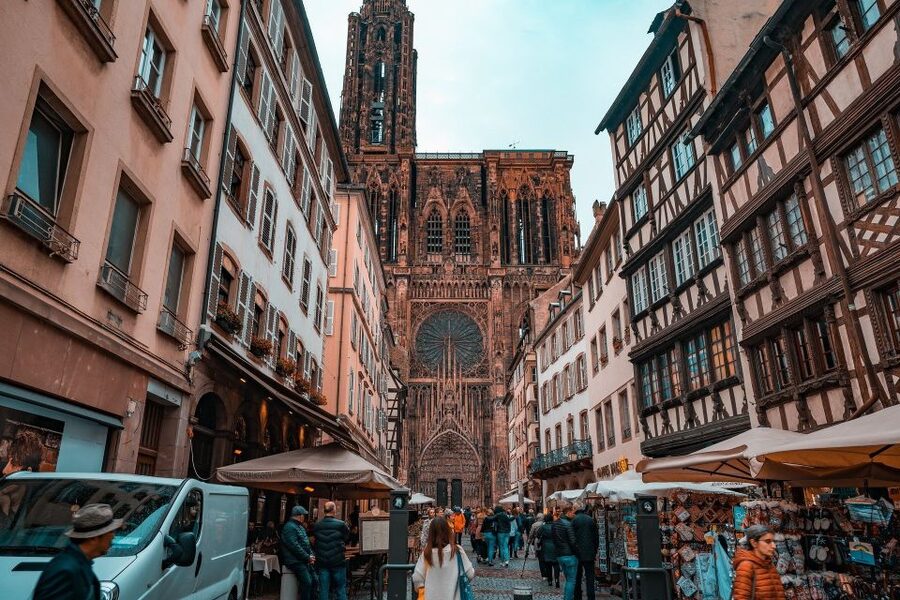
The Cathedral of Notre-Dame is one of the central stops. The tour focuses on the exterior, and entrance tickets are not included. That distinction matters if you were hoping for a long look inside or access to a particular interior feature.
The outside gives your guide plenty to discuss. You can admire the cathedral’s scale, stonework, and place in the city center while hearing about its role in Strasbourg’s identity. The stop also gives you time to orient yourself around the surrounding streets and squares.
There is one firm rule: talking inside the cathedral is prohibited. Since this walk does not include an interior visit, your guide’s commentary takes place outside. If you want to enter later on your own, treat that as a separate visit and check the cathedral’s current access rules.
I see the exterior-only plan as a practical choice for a two-hour tour. It keeps the route moving and avoids spending much of your limited time in one building. The tradeoff is clear: you get context and a good exterior view, but not a guided cathedral interior experience.
Medieval churches beyond the cathedral
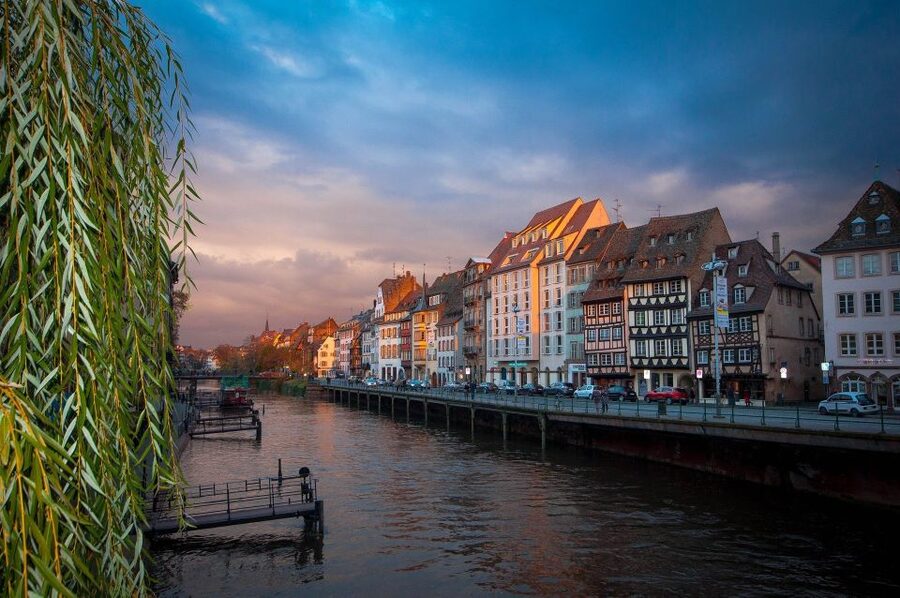
Strasbourg has several medieval churches, and the route includes examples such as Église Saint-Thomas and Église Saint-Guillaume. These stops help prevent the cathedral from becoming the only religious building you remember.
Saint-Thomas and Saint-Guillaume also give the guide a chance to show a wider side of the city’s past. A major cathedral tells you about civic ambition and public identity. Smaller or less famous churches can reveal how religious buildings fit into daily city life and neighborhood streets.
The exact amount of time spent at each church may depend on your guide and your group. Some guides give a lively account at several stops, while others may keep the explanations shorter. One German-language tour was praised as entertaining and informative, while another group felt it did not receive enough explanation overall.
That difference is worth keeping in mind when you book a private experience. A private guide is not automatically a long lecture. If you want more historical detail, say so early. If you are traveling with children, explain that too. One family found that the guide focused heavily on Alsatian culture and language and did not adapt enough to a 10-year-old.
More Old Town and Historic Centre Walks in France
- Bordeaux: Historic Center & Chartrons District Bike Tour
★ 4.8 · 709 reviews - Strasbourg on Foot: Historic Center and Petite France with a Local Guide
★ 4.7 · 223 reviews - Rouen: Guided Tour of the Historic Center
★ 4.8 · 145 reviews - Strasbourg: Historic Center Walking Tour
★ 4.7 · 88 reviews
The 13th-century covered bridges
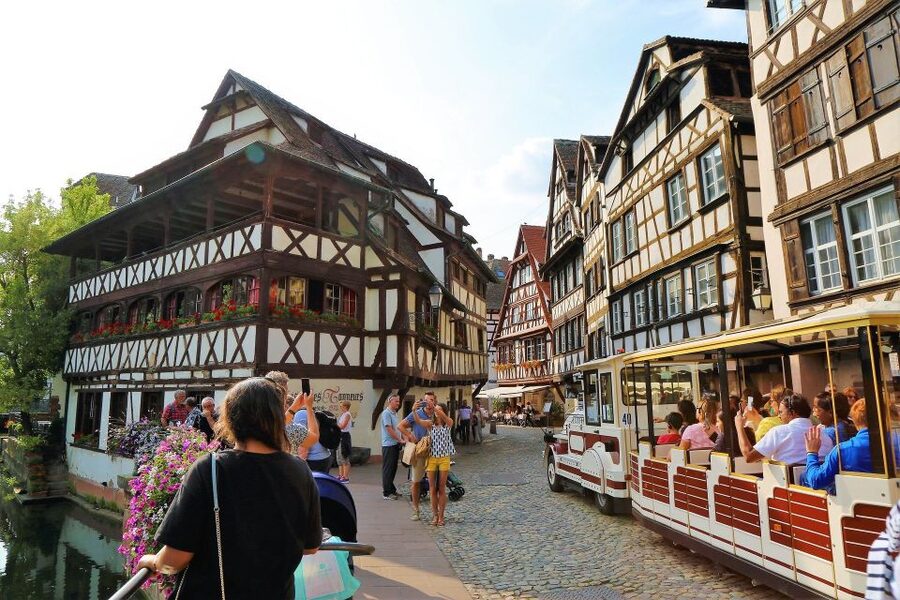
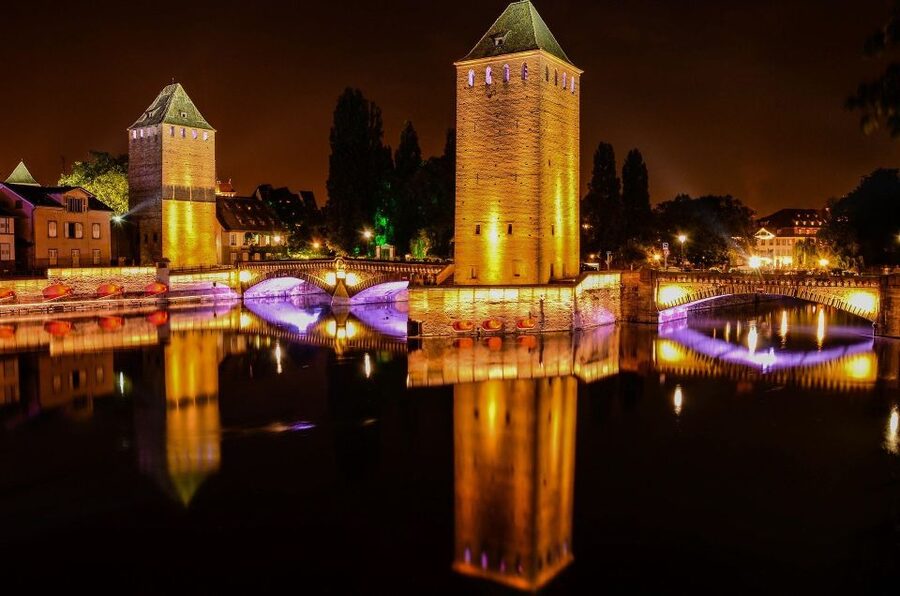
The covered bridges are among the strongest reasons to choose this walk. These well-preserved structures date from the 13th century and connect Strasbourg’s canals with its defensive past.
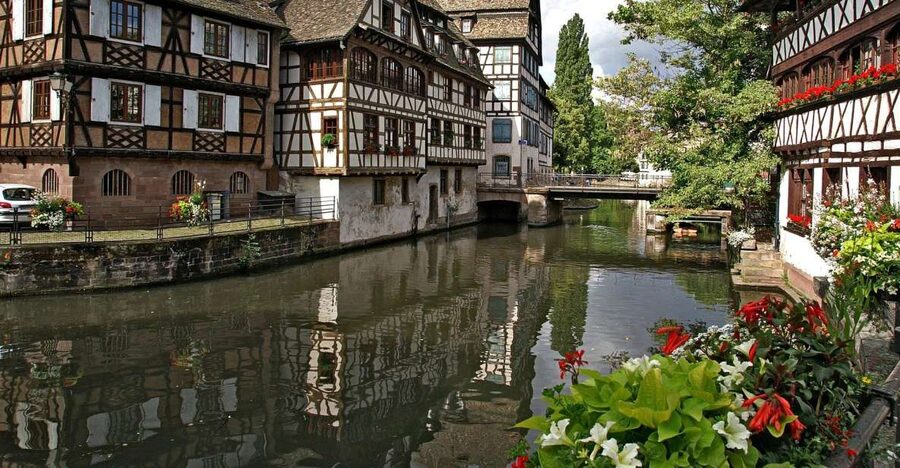
They are visually different from the cathedral and the formal squares. Here, water, stone, and old defensive structures shape the view. The bridges help you picture Strasbourg as a fortified medieval city rather than only a polished modern European center.
The word covered can create a false picture, since the structures have changed over time. Your guide can place them in their original setting and explain how they worked within the city’s defenses. That background turns a pleasant photo stop into a meaningful historical one.
I would pay close attention here. The bridges are easy to photograph, but the most useful part is understanding how the canals and fortifications fit together. You may also want to ask your guide how the structures changed over time, since the visual remains are more complex than a quick glance suggests.
Place Broglie and Strasbourg’s open civic spaces
Place Broglie adds a different mood to the route. After narrow medieval streets, churches, canals, and defensive bridges, this historic square gives you a broader public space to read the city’s later development.
Your guide has time to explain why the square matters and how it fits into Strasbourg’s urban story. The stop also offers a welcome change of pace. You are no longer looking only upward at church towers or across waterways. You are seeing how Strasbourg created a formal civic area within the historic center.
The square is also a good place to ask questions about the city’s French and German connections. Strasbourg’s identity is not confined to one building. It appears in the way major public spaces sit beside older medieval streets.
Because the tour is only two hours, the time at Place Broglie may be concise. If this square is a priority for you, mention it when you meet your guide. A private route gives you more room to signal what you want to understand, though the guide still has several major stops to cover.
What the private format really gives you
A private group is the main difference between this walk and a standard city tour. You do not have to follow the interests of a large crowd, and you can ask questions without holding up strangers.
That does not guarantee a perfect match. The quality depends on the guide’s preparation, storytelling, and ability to read your group. The available feedback shows both sides. Several people found their guide entertaining, funny, and informative. One person specifically praised Regine, and another guide was described as good at finding pleasant, less obvious corners of the old city.
At the same time, one group felt the guide spent too much time on Alsatian culture and language. Another enjoyed the hidden corners but wanted more explanation at the main sights. Those comments point to a useful booking tip: tell the guide what you want in the first few minutes.
You might say that you want:
- More detail about medieval architecture
- A focus on French and German history
- Stories that work for children
- Extra time at Place Broglie
- A faster route with more sights
- A slower walk with more questions
The tour offers guides in English, French, German, Italian, Spanish, Portuguese, and Japanese. German may be particularly useful for visitors who want to discuss Strasbourg’s border identity in a familiar language.
Price, timing, and overall value
At $235 per person, this is not a budget city walk. The value depends heavily on the size of your private group and how much you want personal attention.
For a couple or a small group, the cost buys a private guide, a fixed two-hour route, and the ability to ask questions freely. That can be worthwhile if Strasbourg is a key stop on your trip and you want a clear introduction without spending half a day in a larger group.
The price does not include entrance tickets or transportation. Since the tour is on foot and centers on the Grand Island, transportation is not a major omission. Cathedral entry is a separate matter. If you want to go inside, plan and pay for that independently.
The current score is 4.2 out of 5 from 107 bookings. That suggests a generally good experience with some unevenness in guide style. The strongest pattern is not lavish praise for every part of the route. It is appreciation for friendly, lively guides and the chance to see both major landmarks and less obvious corners.
The two-hour duration also affects the value. If you want an in-depth look at every church and a long cathedral visit, the tour will feel short. If you want a well-organized first walk, it is easier to justify the price.
Who should book this Strasbourg walk?
I would recommend it most to first-time visitors who want an introduction to Strasbourg’s old center without arranging the route themselves. It suits couples, families, and small private groups that value a flexible conversation over a fixed audio guide.
It is also a good match for anyone interested in the city’s French and German character. The route connects the Grand Island, medieval churches, cathedral, bridges, and civic square, so you get several pieces of Strasbourg in one outing.
Families should set expectations clearly. The private format can work well with children, but one family found that the guide did not involve its 10-year-old enough. Tell the operator about children and ask the guide to adjust the explanation style.
You may want a different plan if your main goal is cathedral interior access, museum time, or an extended history lecture. This is an exterior walking tour, not a cathedral admission package or a full-day cultural program.
Wheelchair users can be accommodated if you tell the operator in advance. That request should be made before the tour so the route can be prepared properly.
My booking advice
Book this tour if you want a private introduction to Strasbourg’s compact historic center, especially if you care about the city’s border identity, medieval churches, and canals. The covered bridges and cathedral exterior give the walk strong visual anchors, while Place Broglie adds a broader civic view.
Before the start, tell your guide what interests your group and how much detail you want. Ask for extra attention to children if needed, and remember that cathedral entry and tickets are not part of the price.
I would not choose it for a long interior visit or a very detailed architectural study. For a focused two-hour orientation with a private guide and several of Strasbourg’s defining sights, though, it offers a sensible first look at the city.
FAQ
Where does the Strasbourg walking tour begin?
The tour begins at 9 Place du Quartier Blanc. Your guide waits in front of the black building at Place du Quartier Blanc, 67000 Strasbourg, France.
How long does the walking tour last?
The tour lasts two hours and returns to the starting point at 9 Place du Quartier Blanc.
Is the tour private?
Yes. The experience is arranged for a private group rather than a shared public group.
Does the tour enter Strasbourg Cathedral?
No entrance ticket is included, and the tour highlights the cathedral exterior. Talking inside the cathedral is prohibited.
Which languages can the guide speak?
Guides are available in English, French, German, Italian, Spanish, Portuguese, and Japanese.
Is transportation included?
No. Transportation is not included, and the experience is designed as a walking tour of Strasbourg’s historic center.
Can wheelchair users join the tour?
Yes, wheelchair users can be accommodated if you inform the operator beforehand.
More Private History Tours in France
- Private D-Day Experience from Bayeux
★ 5.0 · 573 reviews - Private guided American D-Day Tour from Bayeux
★ 5.0 · 255 reviews - Normandy Battlefields D-Day Private Trip with VIP Services from Paris
★ 5.0 · 240 reviews - Paris City of Fashion History Private Guided Walking Tour
★ 5.0 · 221 reviews
Just added around France
- Medieval Carcassonne: Interactive Ghost Story & City Game★ 3.5 · 33 reviews
- Carcassonne During World War 2★ 5.0 · 127 reviews
- Carcassonne ‘s Medieval Walls: A Self-Guided Tour★ 4.5 · 43 reviews
- Small Group Guided D-Day Tour and Mémorial de Caen Museum★ 5.0 · 237 reviews
- Normandy: Private tour D-Day landing beaches American sector★ 5.0 · 62 reviews
- Mémorial de Caen Museum Admission and Guided Tour of D-Day Sites★ 4.5 · 275 reviews
- Private Day Tour including Normandy Landing Beaches & Battlefields from Caen★ 5.0 · 53 reviews
- Private Bordeaux History Tour with a glass of Bordeaux wine.★ 5.0 · 28 reviews
France History Tours, compared.

Normandy D-Day Sites & Cemetery Day Trip from Paris with Lunch
Read our review →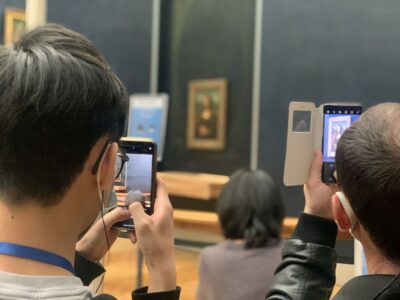
Paris: Louvre Museum Entry with History of Mona Lisa
Read our review →
Normandy D-Day Small-Group Day Trip with Omaha Beach, Cemetery & Cider Tasting
Read our review →
Normandy D-Day Beaches and American Cemetery Day Trip from Paris
Read our review →
Normandy American D-Day Beaches Full Day Tour from Bayeux
Read our review →
Normandy American D-Day Experience – Group tour from Bayeux
Read our review →
Normandy Beaches Half-Day Afternoon Trip from Bayeux (A2)
Read our review →