
Review · ITALY
Taormina: Guided Historic City Tour
Taormina’s Greek Theater gives this walk its big opening scene: ancient stone, the Ionian Sea, and Mount Etna lined up beyond the stage. I like that the tour then moves into the town itself, where Gothic palaces, a Roman monument, a Baroque church, and the cathedral appear along a compact historic route.
I also like the private group format, which lets you explore with your own party rather than joining a large crowd. The second advantage is the guide’s local focus. Guides named Giovanna and Tiziana have been praised for being friendly, professional, and clear in their explanations.
The main consideration is price. At $344.39 per group of up to 25, the tour can make good sense for a larger party, but it is a costly choice for one or two people. The Greek Theater ticket is also extra, and the two-hour schedule leaves little time for a slow visit.
Key points at a glance
- The Greek Theater opens the tour: See Taormina’s signature ancient site with views toward the Ionian Sea and Mount Etna.
- A private walk keeps the pace personal: Your group can explore with a licensed guide rather than joining a shared tour.
- The route mixes several eras: Roman, Gothic, and Baroque sights appear in one short city walk.
- The Naumachia is an unusual stop: This long red-brick monument is linked to the idea of a naval battle.
- The route ends at Taormina Cathedral: The walk carries you from the upper historic center toward the cathedral near the end of Corso Umberto.
- Plan for extra costs: Ancient Theater admission, food, hotel pickup, and drop-off are not included.
Why the Greek Theater is the right place to begin
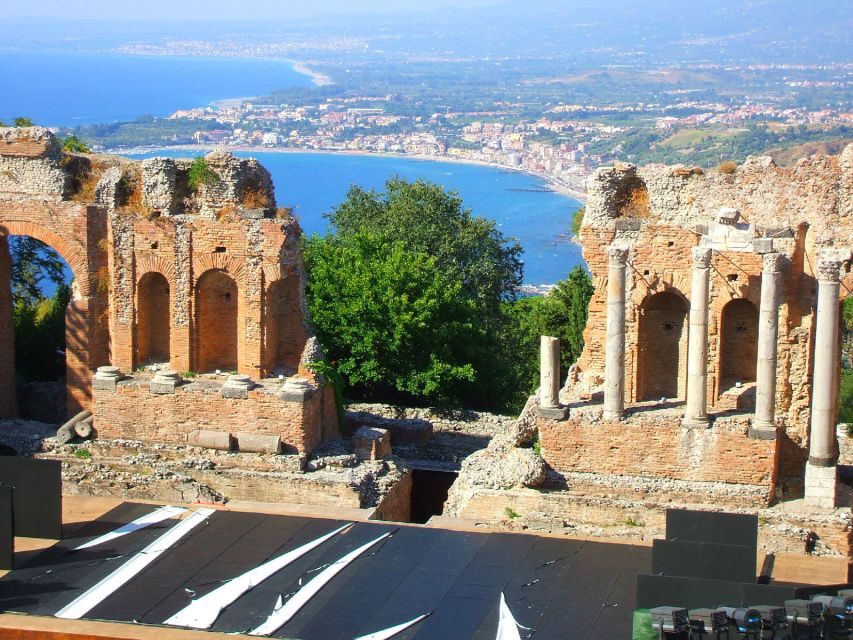
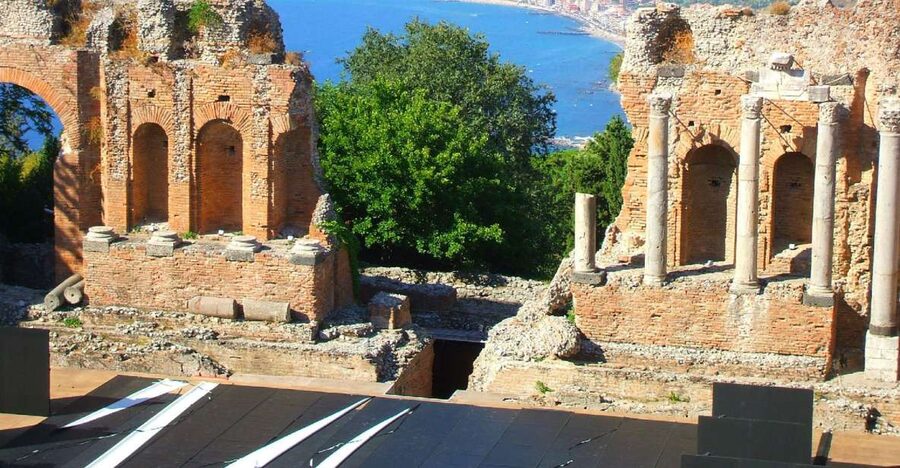
Taormina’s Ancient Theater, commonly called the Greek Theater, is the most dramatic stop on this walk. It was cut into the side of a mountain, so the setting does much of the talking before your guide adds the details.
Look beyond the stage and you get a wide view over the Ionian Sea, with Mount Etna in the background. That combination explains why the theater is one of Taormina’s best-known symbols. The site is not simply an old performance space. It is also a viewpoint that connects the town, the coast, and Sicily’s famous volcano in a single frame.
The theater was renovated during Roman times and could hold about 20,000 spectators. That number gives you a useful sense of its scale, even if the surviving structure does not present a complete ancient venue in the way a modern theater would.
The site is still used for concerts and cultural events. That continuing use helps you picture the place as more than a silent ruin. It remains a performance setting, though your visit is primarily a guided historic stop.
Your ticket is not included in the tour price. This matters because the theater is the first major attraction, not an optional side trip at the end. Check the total cost before booking, especially if you are comparing this walk with a tour that bundles admissions.
More Guided Tours in Italy:
- Pompeii: Entry Ticket and Guided Tour with an Archaeologist
★ 4.8 · 19,459 reviews - Rome: Colosseum with Arena, Roman Forum and Palatine Guided Tour
★ 4.0 · 5,598 reviews - Venice: St. Mark’s Basilica Guided Tour & VR History Intro
★ 3.9 · 4,880 reviews
From the Naumachia to Taormina’s Roman past
After the Greek Theater, the route continues to the Naumachia. The name is associated with a naval battle, but the feature you see is a long red-brick monumental structure. Its wall stretches for more than 100 meters and rises about five meters high.
This is a good example of why a guide adds value in Taormina. The object itself may not immediately explain its purpose or place in the town. A licensed guide can put the monument into context as you walk past it, rather than leaving you to guess from its shape.
The Naumachia also changes the rhythm of the tour. The Greek Theater is open, elevated, and scenic. This Roman monument is more urban and architectural. Together, they show two different ways to read Taormina: one through its views and performance spaces, the other through its surviving construction.
The tour is only two hours, so expect a guided look rather than a long examination of each site. If you enjoy stopping for photographs, listening to every explanation, or browsing nearby shops, you will need to manage your time carefully.
The Roman Odeon is smaller, but still worth your attention
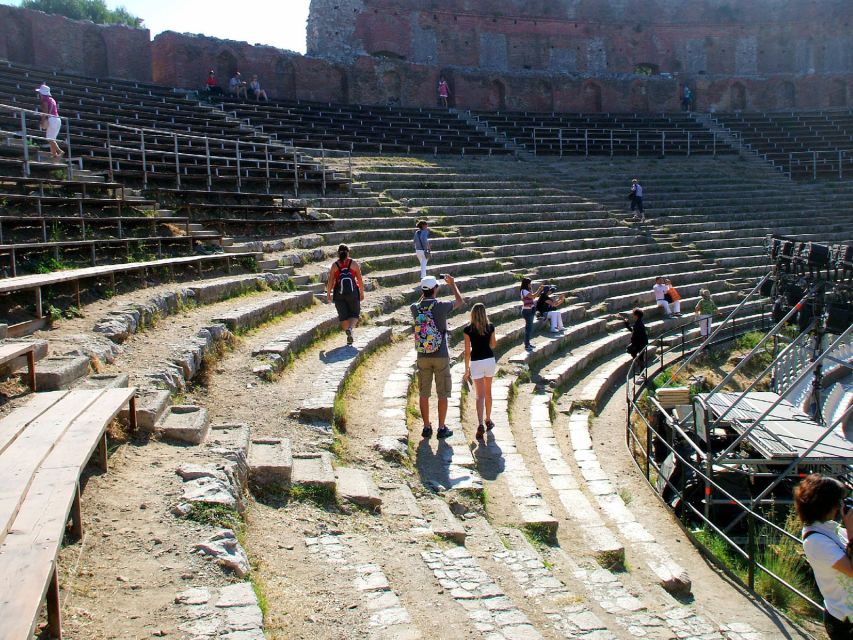
The next ancient stop is the Roman Odeon, a small theater. Compared with the Greek Theater, it is a more modest space, but that contrast is useful. You see that Taormina had more than one type of performance venue and that the Roman period left its own mark on the town.
The Odeon is also part of the walk’s broader appeal. This is not a single-monument tour with a few facts added around it. The route links ancient sites with medieval and later buildings, giving you a quick visual guide to Taormina’s changing architecture.
I would pay attention to the scale here. The Greek Theater was built for a huge audience, while the Odeon was smaller. That difference helps you understand that public entertainment in the ancient town could happen in more than one setting.
Because the group is private, you can ask your guide to clarify the points that interest you most. English, French, German, and Italian are available, so choose the language that lets you follow architectural and historical details without strain.
Palazzo Corvaia brings Gothic Taormina into view
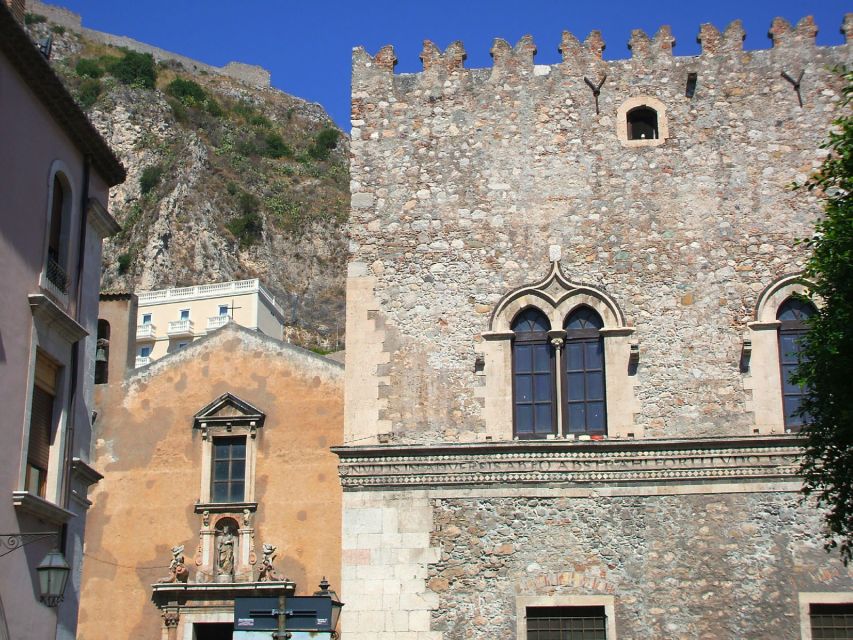
From the Roman sites, the tour moves toward Palazzo Corvaia. Built in a Gothic style, it is described as Taormina’s most famous palace. This is one of the walk’s strongest transitions, shifting you from ancient theaters to the city’s medieval architectural character.
The value here is visual variety. You are not spending two hours looking at ruins alone. The palace introduces a different period and a different kind of monument. Its design helps explain why Taormina feels layered rather than uniform.
A guide can point out the features that separate Gothic work from the Roman remains you have just seen. Even if you are not an architecture specialist, that side-by-side comparison makes the walk easier to follow. Instead of hearing a string of dates, you can watch the town change as you move along its streets.
The tour does not promise interior access to every building. The supplied details identify the palaces and churches on the route, but they do not say that all interiors are open. Think of this as a guided city walk with notable exterior and historic stops, not an all-access palace tour.
More History Tours in Italy:
- Colosseum: Underground and Ancient Rome Tour
★ 4.7 · 12,691 reviews - Pompeii: Small Group Tour with an Archaeologist
★ 4.8 · 12,264 reviews - Pompeii Small Group Tour with an Archaeologist
★ 5.0 · 6,593 reviews - Colosseum with Arena, Roman Forum and Palatine Hill Guided Tour
★ 4.5 · 3,526 reviews
Palazzo Duchi di Santo Stefano and the Catania Gate
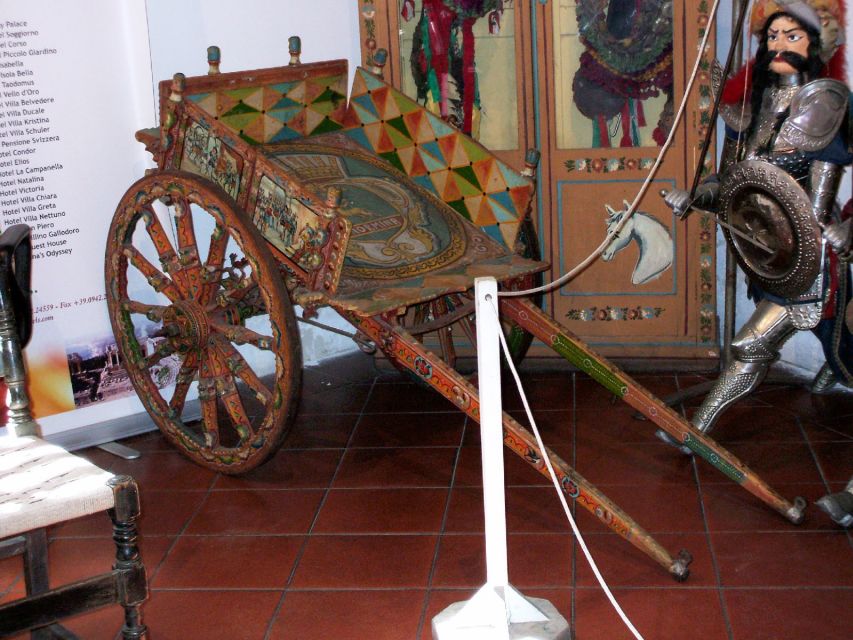
Near the Catania Gate, you reach Palazzo Duchi di Santo Stefano, another building in the Gothic style. Its position near the gate makes it part of the town’s movement between its central streets and its historic entrances.
This stop works well in the sequence because it gives you a second chance to compare Taormina’s Gothic architecture. One palace alone might seem like an isolated sight. Two Gothic buildings on the same route allow you to notice recurring forms and the way the buildings fit into the old center.
The Catania Gate also gives the walk a sense of direction. You are not simply circling attractions. You are moving through Taormina’s historic core toward the cathedral. That matters on a short tour, since the route itself helps you get your bearings.
Do not expect a separate transportation segment. Pickup and drop-off are not included, and the activity begins at a meeting point arranged after booking. You will need to reach that point yourself. The walk ends back at the meeting point, so plan your next activity from there rather than assuming the guide will take you to a hotel or station.
San Giuseppe shows Taormina’s Baroque side
The Church of San Giuseppe changes the architectural mood again. It is noted for its impressive Baroque style, which brings more decoration and theatrical design into the tour after the cleaner lines of the Gothic palaces.
This is one of the places where a guide’s explanation can make a quick stop more useful. On your own, you might register only that the church looks different from the buildings around it. With a guide, you can connect that difference to the Baroque period and see how the town’s religious architecture fits into the wider historic center.
The church also keeps the walk from becoming a procession of ancient monuments. Taormina’s appeal comes from how closely different periods sit beside one another. In a short distance, you move from a Greek theater to Roman remains, then to Gothic palaces and a Baroque church.
The tour description does not list admission arrangements for the church, so do not assume that every stop includes an interior visit. The confirmed inclusion is the licensed guide. The Greek Theater admission is specifically excluded, while the other stops are presented as part of the walking route.
Finishing at the cathedral
The final stop is Taormina Cathedral, built around 1400 on the ruins of a smaller medieval church dedicated to St. Nicholas of Bari. Ending here gives the walk a clear destination and brings the route into the religious and civic heart of the old town.
The cathedral is a useful final chapter because it carries the story beyond ancient Greece and Rome. You have already seen performance spaces and defensive or monumental structures. Here, the focus shifts to medieval worship and the later life of the town.
I like the way this ending makes the two-hour route feel complete. You begin with Taormina’s most famous ancient viewpoint and finish at a major medieval building. In between, the walk touches Roman, Gothic, and Baroque architecture.
The activity ends at the meeting point, though the information does not specify that the cathedral itself is the exact endpoint. Confirm the agreed meeting and return location when you book. That small detail is worth settling if you have a restaurant reservation, ferry connection, or another timed activity afterward.
What two hours really allows
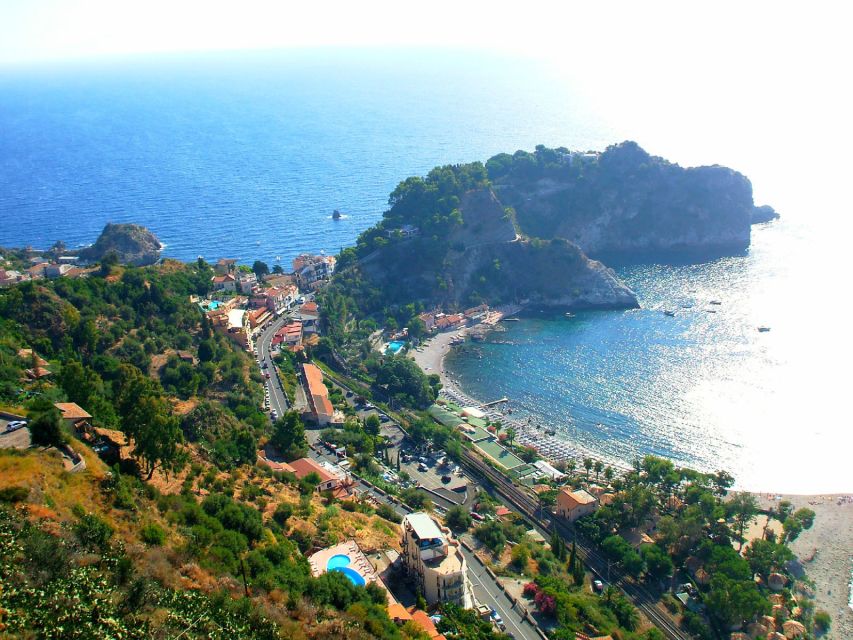
Two hours is enough for a well-organized introduction to Taormina’s historic center. It is not enough for a slow, deeply detailed examination of every monument, especially when the Greek Theater, Naumachia, Roman Odeon, two palaces, a church, and the cathedral all appear on the route.
You will get the most from this tour if your goal is orientation. A guide can show you the main sights, explain how the town’s architectural periods fit together, and leave you ready to explore on your own afterward.
The short duration also helps if Taormina is one stop in a busy Sicily itinerary. You can see the core sights without giving up an entire day. On the other hand, if you want long photo stops or extensive time inside the Ancient Theater, you may find the schedule tight.
Starting times vary, so check availability before you plan the rest of your day. The meeting point is agreed after booking, not listed as a fixed public location in the supplied details.
Is $344.39 good value for your group?
The listed price is $344.39 per group of up to 25 people. That pricing structure is the key to judging the tour.
For a large family group, wedding party, school group, or group of friends, the cost can be reasonable when divided among many people. You receive a private walk with a licensed guide, and the price does not rise with each person up to the stated limit.
For one or two people, the value is less convincing. You are paying a private-tour rate for two hours, and you still need to pay separately for the Greek Theater ticket. Meals, hotel pickup, and drop-off are also excluded.
The strongest reason to choose it is control. Your group gets its own guide, a choice of four languages, and a focused route through Taormina’s best-known historic areas. If a shared tour is cheaper and you do not care about group size, compare the total cost before committing.
A full refund is available if you cancel at least 24 hours in advance, and you can reserve now while paying later. Those policies make the booking less rigid, but they do not change the basic value calculation: this tour works best when several people share the group price.
Who will enjoy this Taormina walk?
I would recommend it to first-time visitors who want a clear introduction to the town without arranging several separate admissions and guides. It also suits families or friends who prefer a private experience and want to move at a group-specific pace.
The tour is a good fit if you care about architecture. You will see ancient theaters, a long Roman monument, Gothic palaces, a Baroque church, and a medieval cathedral in one route.
It also suits people who want a strong scenic start. The Greek Theater supplies the major view, with the Ionian Sea and Mount Etna behind it. If panoramic outlooks are high on your list, this opening stop earns its place.
I would think twice if your main goal is independent exploration, shopping, or a relaxed café walk. Two hours with a guide keeps the route focused. It may leave you wanting more time in the streets afterward, which is not a flaw, but it is something to plan for.
The guide quality matters here. Giovanna and Tiziana are names associated with especially warm, professional, and well-informed guiding on this experience. Guide assignment is not guaranteed, so book the language you need and confirm any special request after booking.
Should you book the guided Taormina city tour?
Book it if you are traveling with a group, want the main historic sights explained in one compact walk, and value a private guide. The mix of the Greek Theater, Roman Odeon, Naumachia, Gothic palaces, San Giuseppe, and the cathedral gives you a useful first look at Taormina.
Be more cautious if you are traveling alone or as a couple and are watching costs. Add the Ancient Theater ticket and your own transport, then decide if the private format still makes sense.
My practical advice is to treat this as an orientation tour, not a full-day archaeological visit. Let the guide explain the city’s main layers, enjoy the view from the Greek Theater, and keep time afterward to wander the historic center at your own speed.
FAQ
How long does the Taormina guided city tour last?
The tour lasts two hours. Starting times vary, so you need to check availability for the date you want.
Is the Ancient Theater ticket included?
No. Admission to the Ancient Theater, also called the Greek Theater, is not included in the tour price.
Is this a private tour?
Yes. It is offered as a private group experience for up to 25 people.
Which languages are available?
The live guide is available in English, French, German, and Italian.
Are pickup and drop-off included?
No. Hotel pickup and drop-off are not included. The meeting point is agreed upon after booking, and the activity ends back at that meeting point.
Can I cancel for a refund?
Yes. You can cancel up to 24 hours in advance for a full refund. You can also reserve now and pay later.
Just added around Italy
- Guided Cultural Tour of the Godfather Film in Messina★ 5.0 · 31 reviews
- Guided tour of the Riace Bronzes and the Archaeological Museum of Reggio Calabria★ 5.0 · 44 reviews
- SU NURAXI BARUMINI Unesco World Heritage Site★ 5.0 · 129 reviews
- Brescia the Unexpected: History, Local Stories & a drink★ 5.0 · 31 reviews
- Bolognese Cooking Class with Margherita in the Historic Center★ 5.0 · 26 reviews
- Tower and Power, Virtual tour in Medieval Bologna★ 4.5 · 54 reviews
- Bologna historical art walking tour with hidden gems and tastings★ 5.0 · 108 reviews
- Best of Bologna in one day : Food, architecture, art and history★ 5.0 · 27 reviews
Italy History Tours, compared.
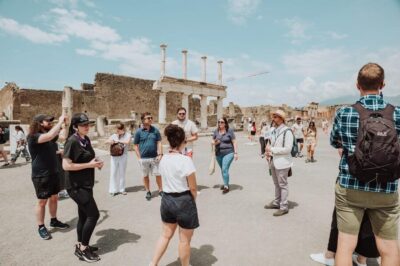
Pompeii: Entry Ticket and Guided Tour with an Archaeologist
Read our review →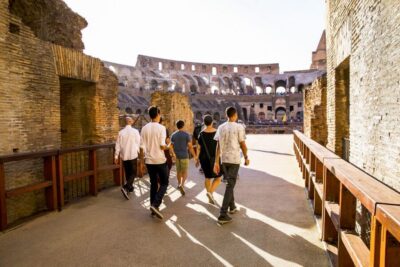
Colosseum: Underground and Ancient Rome Tour
Read our review →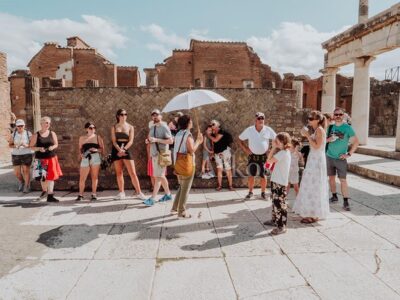
Pompeii: Small Group Tour with an Archaeologist
Read our review →Pompeii Small Group Tour with an Archaeologist
Read our review →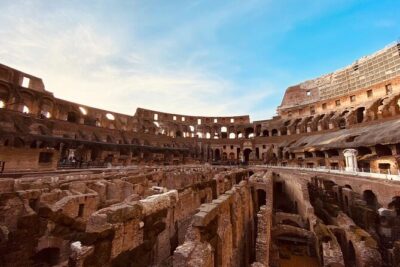
Rome: Colosseum with Arena, Roman Forum and Palatine Guided Tour
Read our review →
Venice: St. Mark’s Basilica Guided Tour & VR History Intro
Read our review →
Colosseum with Arena, Roman Forum and Palatine Hill Guided Tour
Read our review →
Herculaneum: Skip-the-Line Guided Tour with Archaeologist
Read our review →Browse the lists this tour appears in