
Review · FRANCE
2-Hour Walking Tour of the City’s Iconic Sights and History
Bordeaux’s grandest sights fit neatly into this two-hour city walk, beginning near the tourist office and moving through elegant squares, old streets, and the riverfront. You’ll see the Monument aux Girondins, Grand Théâtre, Place du Parlement, and Place de la Bourse without paying admission at each stop.
I like the low price, about $17.37 per person, and the way the route gives first-time visitors a useful map of central Bordeaux. I also like the guides who bring real personality to the walk, including Bruno, Christine, Hubert, and Jenny. The main thing to watch is the bilingual format: some guides give much more detail in French, leaving English speakers with a shorter explanation.
Key points to know before you book
- The route covers Bordeaux’s signature monuments: Expect the Monument aux Girondins, Allées de Tourny, Notre-Dame Church, Grand Théâtre, Place du Parlement, and Place de la Bourse.
- The tour is bilingual: Commentary is given in English and French, and the balance between the two languages can vary.
- The meeting point is inside the tourist office: Go to the Office de Tourisme et des Congrès de Bordeaux Métropole at 12 Cours du 30 Juillet for the 10:30 a.m. start.
- The final stop may change: Place de la Bourse is listed as the end point, but the guide, weather, and group size can alter the finish.
- You need to keep walking for two hours: There is no hotel pickup, food, or drink included.
- A minimum of five people is required: Groups can reach 25 people, so listening equipment may be used on larger departures.
A smart first look at Bordeaux for $17.37
At this price, the tour is best understood as an orientation walk rather than a full study of Bordeaux. You get a guided look at the central monuments, a basic timeline of the city, and practical suggestions for continuing on your own.
I would book it early in a Bordeaux visit, ideally on your first morning. After two hours, you should know where the Grand Théâtre, Place de la Bourse, Rue Sainte-Catherine, and Place des Quinconces sit in relation to one another. That makes the rest of your stay easier.
The tour lasts about two hours and starts at 10:30 a.m. The group limit is 25, which is small enough for a city walk but not necessarily intimate. Some departures use audio devices, especially when the group is large. Bring comfortable shoes, your own mask if required, and protection from rain or wind. Bordeaux weather can make an open-air tour feel very different from one day to the next.
The low price is a real strength. You are paying for a licensed local guide, not entrance tickets, transport, lunch, or a private experience. If you want to go inside the Grand Théâtre or visit other sights at length, you will need to arrange those separately.
More History Walking Tours in France
- Paris: Dark History and Ghostly Guided Walking Tour
★ 4.7 · 1,000 reviews - Vieux Lyon Cultural & Historical Walking Guided Tour (English)
★ 5.0 · 942 reviews - Strasbourg: Guided Historical Neighborhoods Walking Tour
★ 4.9 · 275 reviews
Finding the guide at the tourist office
The listed meeting point is the Office de Tourisme et des Congrès de Bordeaux Métropole at 12 Cours du 30 Juillet. The guide may meet you inside the office rather than directly on the pavement, so go in and confirm the tour before waiting outside.
This matters because the building can be busy, and the guide may call the group together rather than approach each person individually. Arrive a little early, look for the guide, and ask the tourist office staff if you are unsure. A name badge or clear company sign may not always be obvious.
The tour provider is OT Bordeaux. Confirmation arrives when you book, and the activity is available with a mobile ticket. Public transport is nearby, though you will spend the actual tour on foot.
The tour requires at least five people to operate and accepts up to 25. That range creates two different experiences. A small group can feel relaxed and allow more questions. A larger group may require headphones or audio equipment, and you may need to stay close to hear every explanation.
Monument aux Girondins and the political memory of Bordeaux
The first major stop is the Monument aux Girondins in Place des Quinconces. Give yourself a moment to take in its scale. A tall column rises above dramatic fountains and bronze figures, with a winged statue representing liberty at the top.
Your guide explains the Girondists, conservative deputies of the National Assembly who were executed in 1793 during the French Revolution for opposing the revolutionary government. That background gives the monument more weight than a quick photograph suggests.
The stop is listed for about five minutes. That is enough to understand the main story and admire the sculpture, but not enough for a long political discussion. If revolutionary history interests you, note the details and return later for a closer look.
Place des Quinconces also gives the group room to gather. It is a useful starting point for understanding Bordeaux’s grand scale, though the broad open space can feel exposed in bad weather.
Allées de Tourny and Bordeaux’s polished center
From the monument, the walk continues toward the Allées de Tourny. This broad promenade is lined with elegant 18th-century buildings, shops, and cafés. It shows the refined public face of Bordeaux, shaped by the city’s prosperous period and its grand urban planning.
You will spend only about five minutes here, so think of this as a moving introduction rather than a café break. The guide points out the architecture and explains how the city’s center was shaped. During seasonal events, including the Christmas market, the promenade can take on a different feel.
I like this part because it links the formal squares to everyday Bordeaux. The cafés and shops make the area feel lived in, while the carefully planned façades remind you that this was built to project wealth and order.
Same city, a different century:
- Normandy D-Day Sites & Cemetery Day Trip from Paris with Lunch
★ 5.0 · 6,877 reviews - Paris: Louvre Museum Entry with History of Mona Lisa
★ 3.9 · 2,823 reviews - Normandy D-Day Small-Group Day Trip with Omaha Beach, Cemetery & Cider Tasting
★ 5.0 · 2,786 reviews - Normandy D-Day Beaches and American Cemetery Day Trip from Paris
★ 4.5 · 2,673 reviews
Notre-Dame Church and the quieter Baroque detail
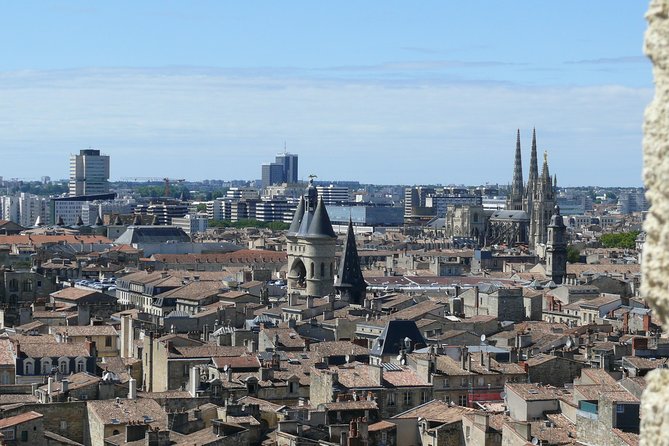
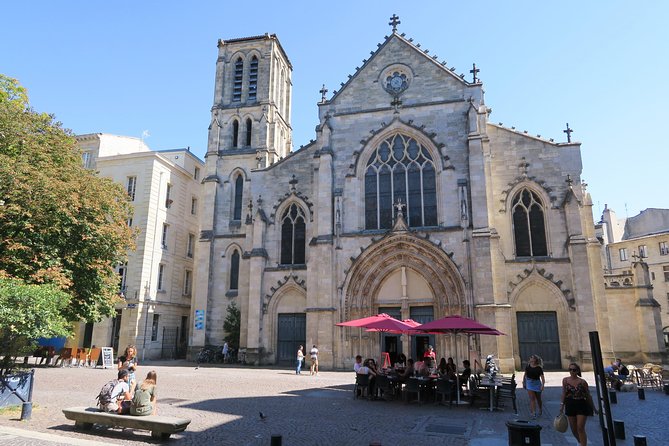
The Église Notre-Dame de Bordeaux is another brief stop. Its sculpted Baroque exterior and vaulted interior offer a change from the large civic monuments outside.
The schedule allows about five minutes, so do not expect an extended church visit or a detailed tour of the interior. The church is included as part of the city’s architectural story, not as a separate religious or art-history visit.
This is also where the limits of the route become clear. The walk aims to show a selection of central sights, not every major monument. Saint-André Cathedral, for example, is not listed as a regular stop. If that cathedral matters to you, plan time to see it independently.
Place de la Comédie and the Grand Théâtre
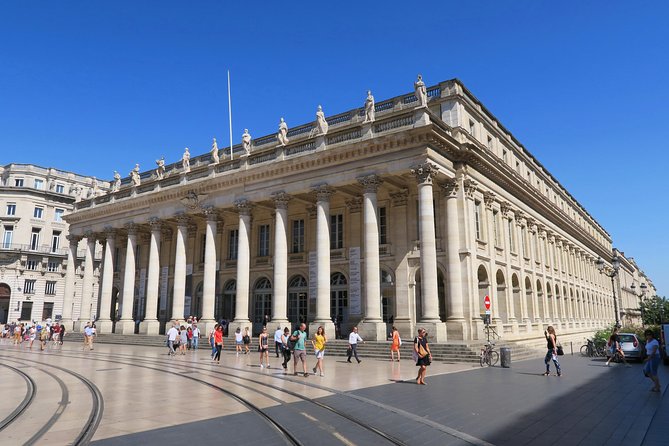
Place de la Comédie is one of the tour’s strongest moments. The square is framed by elegant buildings, shops, and cafés, with the Grand Théâtre providing the grand focal point.
The theater’s neoclassical façade is carefully proportioned, with a sweeping portico and a row of columns. Your guide explains that it was completed in 1780 and reflects the wealth of Bordeaux’s rising bourgeoisie. You also hear that the site once held a Roman temple, adding a much older layer beneath the polished 18th-century design.
The itinerary gives Place de la Comédie about ten minutes, followed by another five minutes focused on the Grand Théâtre. That is enough time for photographs and a useful explanation of the building’s place in Bordeaux life.
You should not expect an interior visit. The experience concentrates on the exterior and its historical setting. If you want to attend opera, ballet, or theater inside, that requires a separate ticket and schedule.
Several guides receive especially warm praise for this part of the walk and the city’s history overall. Bruno is described as funny and charismatic, while Christine is known for pointing out architectural details and moving smoothly between English and French. Names and guide assignments can change, so you cannot choose a particular guide when booking.
Place du Parlement and the feel of old Bordeaux
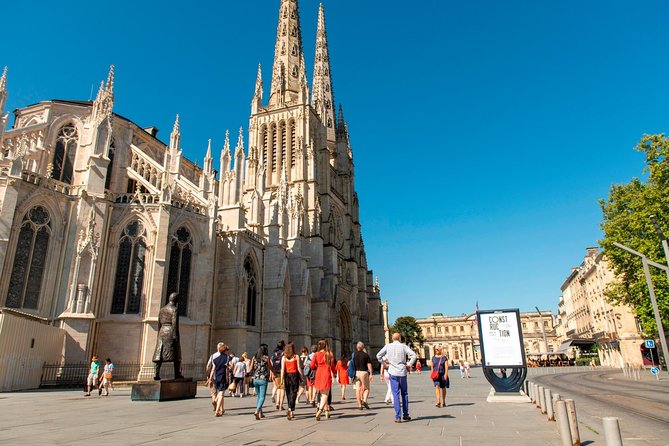
The route then reaches Place du Parlement, a smaller square surrounded by 18th-century buildings and cafés. Compared with the Grand Théâtre and Place des Quinconces, it feels more intimate and more connected to daily city life.
The stop lasts about five minutes. That gives you time to look at the façades, hear the square’s place in Bordeaux’s development, and perhaps note a café for later. The short visit also keeps the walk moving toward the river.
This section can be especially useful if you want to explore Bordeaux independently afterward. The central streets connect easily, and the square offers a natural pause between the theater district and the riverfront.
Place de la Bourse and the Garonne River
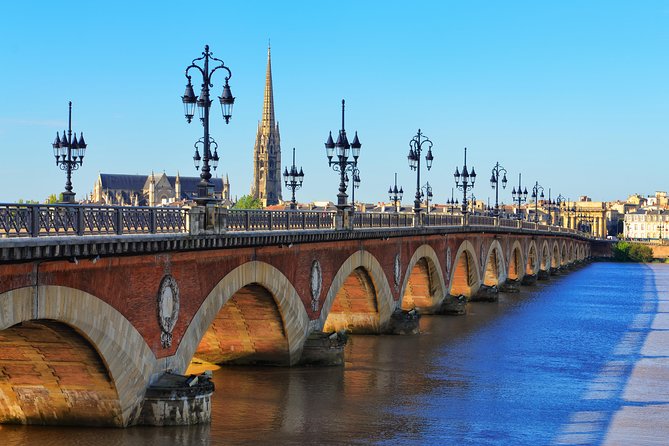
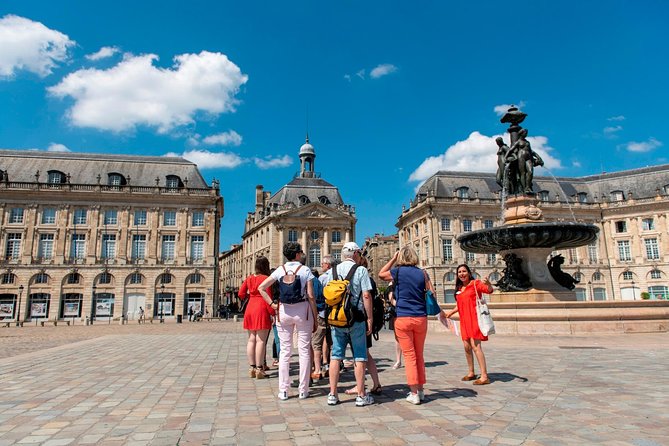
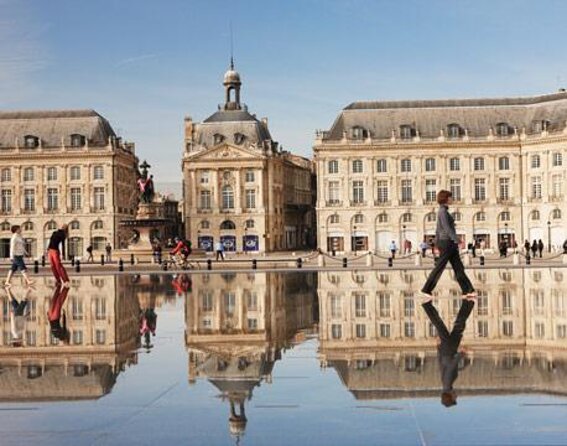
The final major sight is Place de la Bourse, one of Bordeaux’s defining views. The square was designed in the 18th century by Ange-Jacques Gabriel, chief architect to Louis XV. Its classical façades face the Garonne River, creating the grand open composition that appears in so many photographs of the city.
The nearby Miroir d’eau adds a modern touch. When operating, its shallow reflecting surface mirrors the buildings and gives the square a playful edge. The tour information names the fountain of the Three Graces as another detail to look for.
The riverfront is a good place for the guide to explain Bordeaux’s connection to trade, architecture, and public space. You get a broad view here rather than a museum-style lesson, but the setting helps the story make sense.
Place de la Bourse is listed as the end point. In practice, the finish can change with the weather, guide, and size of the group. Ask your guide how to return to the tourist office if you left bags, need public transport, or simply want to retrace your route.
The bilingual format is the main decision point
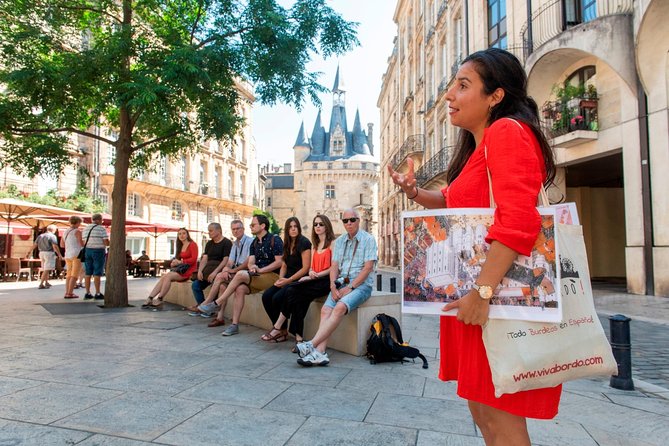
The tour is advertised in English but commentary is bilingual in English and French. This is not a small detail. On a good departure, the guide moves comfortably between both languages and keeps the information fairly balanced. Christine and some other guides are praised for translating regularly, while multilingual guides such as Jenny can make the experience easier to follow.
On weaker departures, the French explanation takes much longer and the English version becomes a short recap. Some English speakers found that they received less detail than the French-speaking part of the group. Others found the constant switching slow, especially when a guide had to explain every stop twice.
Large groups can make this more noticeable. Audio devices may be supplied, but equipment problems have caused delays on some departures. One group lost about 20 minutes while trying to get the system working. If you cannot hear the guide clearly, speak up early rather than waiting until the group has moved on.
I would book this tour if you are comfortable with some flexibility in the language balance. If you need a fully English, detailed lecture at every stop, confirm the arrangement before booking or choose a tour designed only for English speakers.
What the guides add to the walk
The best guides make the city easier to read. Bruno is often praised for humor and charm, Hubert for a well-paced two-hour introduction, and Christine for her architectural explanations. Jenny has also been praised for helping with a booking-date mistake and keeping the group together near public protests.
Those personal touches matter. A guide who answers questions, checks that people can hear, and offers tips for the rest of the day can make a simple walk much more useful.
The quality is not guaranteed to be identical on every departure. Last-minute guide substitutions have occurred, and a replacement may be less familiar with the route or less comfortable switching languages. You should judge the experience as a solid overview with variable delivery, not as a tightly scripted performance.
Walking pace, weather, and group comfort
You need to walk for the full two hours, with repeated stops to listen. Most people who can manage an ordinary city walk should be able to take part, but the route is not designed for someone looking for a seated sightseeing experience.
Rain and wind can affect your enjoyment. Much of the experience takes place in open squares and along the river, so bring suitable clothing. The tour does not include food or drinks, and there is no hotel pickup or drop-off.
The maximum group size is 25. That is manageable, but you may spend much of the time listening from the edge of the group rather than standing beside the guide. Arrive early, stay close, and ask for help if the sound system is not working.
Who should book this Bordeaux walking tour?
I would recommend it for a first visit, especially if you want a low-cost introduction before exploring alone. It suits anyone who enjoys architecture, public squares, revolutionary history, and a guide’s explanation of what you are seeing.
It is also useful if you have only a morning in Bordeaux. The route gathers several famous sights in one compact walk, so you do not have to work out the city center from a map.
I would be more cautious if you have already spent time in central Bordeaux or want to visit interiors. The stops are short, Saint-André Cathedral is not part of the listed route, and the guide may spend more time speaking French than you expect.
The free cancellation policy allows a full refund if you cancel at least 24 hours before the start time. Changes or cancellations inside that window are not accepted for a refund, so keep that deadline in mind when your plans are uncertain.
Should you book it?
Book this tour if you want an affordable first orientation, a look at Bordeaux’s most recognizable squares, and a local guide who can add context to the façades. At $17.37, the value is good if you use the walk as a starting point for your own exploring.
Think twice if you need a strictly English tour or detailed coverage of every major sight. The bilingual format, possible group size, changing route, and occasional audio problems can affect the experience.
My practical choice would be to book it for your first morning, arrive early inside the tourist office, stay near the guide, and ask about the English and French balance before the group leaves. If the language arrangement works for you, this is a useful and inexpensive way to get your bearings in Bordeaux.
FAQ
How long does the Bordeaux walking tour last?
The tour lasts approximately two hours.
What time does the tour begin?
The scheduled start time is 10:30 a.m.
Where does the tour meet?
It meets at the Office de Tourisme et des Congrès de Bordeaux Métropole, 12 Cours du 30 Juillet, 33000 Bordeaux.
Where does the tour finish?
Place de la Bourse is listed as the end point, but the finish can change with the guide, weather, and group size.
Is the tour offered in English?
Yes, but commentary is bilingual in English and French. The amount of detail in each language can vary by guide and group.
What sights are included?
The route includes the Monument aux Girondins, Allées de Tourny, Church of Notre-Dame de Bordeaux, Place de la Comédie, Grand Théâtre, Place du Parlement, and Place de la Bourse.
Are entrance tickets included?
No entrance tickets are needed for the listed stops, and the tour includes a local professional licensed guide. It does not include food, drinks, hotel pickup, or hotel drop-off.
How many people can join the tour?
The tour requires a minimum of five people and has a maximum of 25 participants.
Do I need to be able to walk for the full tour?
Yes. You must be able to walk for about two hours.
Can I cancel for a full refund?
Yes, if you cancel at least 24 hours before the experience start time. Cancellations or changes made less than 24 hours before the start time are not refunded.
More Two-Hour Tours in France
- Bayeux: 2-hour tour of the D-Day beaches, by vintage sidecar
★ 4.9 · 64 reviews - Normandy World War II Private 2 Hours Sidecar Tour Bayeux
★ 5.0 · 35 reviews - Paris Jewish History 2-Hour Private Guided Walking Tour
★ 4.6 · 32 reviews - Berlin’s Best: 2 Hour Walking Tour Third Reich and the Cold War
★ 5.0 · 5,486 reviews
Just added around France
- Medieval Carcassonne: Interactive Ghost Story & City Game★ 3.5 · 33 reviews
- Carcassonne During World War 2★ 5.0 · 127 reviews
- Carcassonne ‘s Medieval Walls: A Self-Guided Tour★ 4.5 · 43 reviews
- Small Group Guided D-Day Tour and Mémorial de Caen Museum★ 5.0 · 237 reviews
- Normandy: Private tour D-Day landing beaches American sector★ 5.0 · 62 reviews
- Mémorial de Caen Museum Admission and Guided Tour of D-Day Sites★ 4.5 · 275 reviews
- Private Day Tour including Normandy Landing Beaches & Battlefields from Caen★ 5.0 · 53 reviews
- Private Bordeaux History Tour with a glass of Bordeaux wine.★ 5.0 · 28 reviews
France History Tours, compared.

Normandy D-Day Sites & Cemetery Day Trip from Paris with Lunch
Read our review →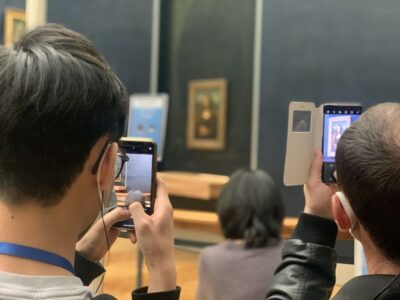
Paris: Louvre Museum Entry with History of Mona Lisa
Read our review →
Normandy D-Day Small-Group Day Trip with Omaha Beach, Cemetery & Cider Tasting
Read our review →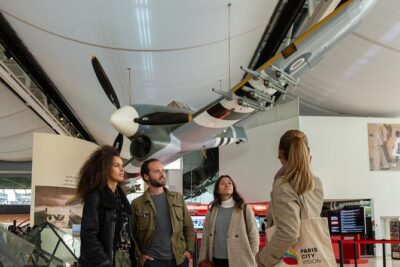
Normandy D-Day Beaches and American Cemetery Day Trip from Paris
Read our review →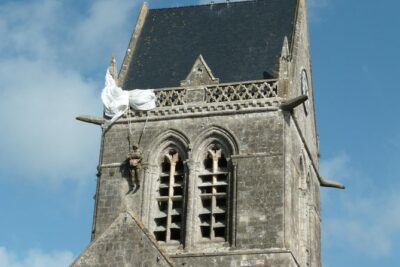
Normandy American D-Day Beaches Full Day Tour from Bayeux
Read our review →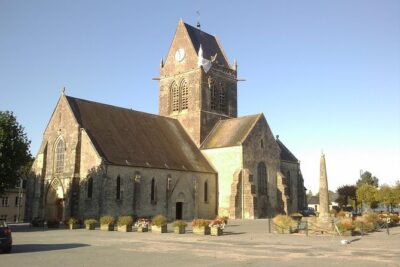
Normandy American D-Day Experience – Group tour from Bayeux
Read our review →
Normandy Beaches Half-Day Afternoon Trip from Bayeux (A2)
Read our review →
Omaha Beach D-Day Experience – Afternoon group tour from Bayeux
Read our review →Browse the lists this tour appears in