
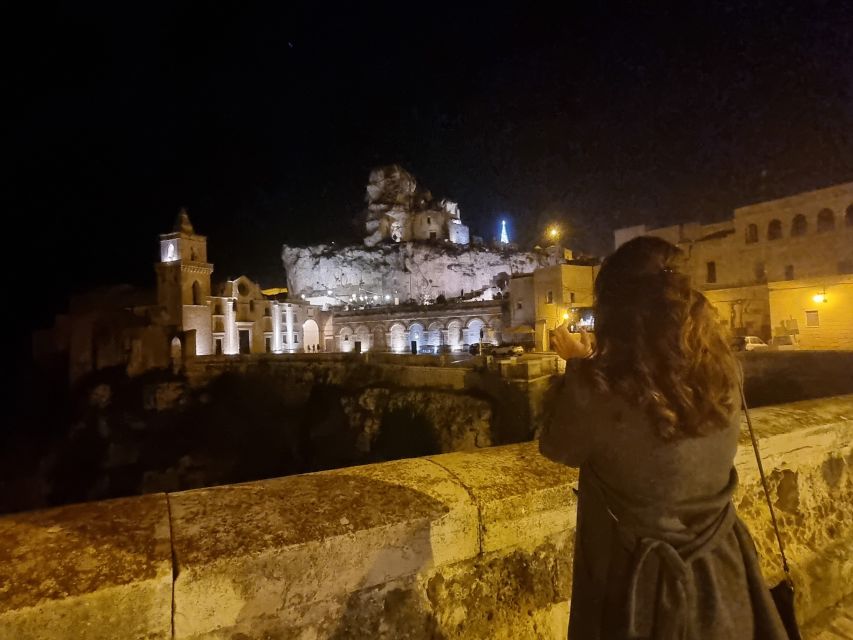
Review · ITALY
Matera: Sassi di Matera Historical Self-Guided Audio Tour
Matera’s Sassi are not just old houses cut into stone. They are entire neighborhoods carved through two valleys, with caves, stairways, churches, cisterns, and homes layered together over thousands of years. This self-guided audio tour gives you more than 30 geolocated points to help make sense of that remarkable setting.
I like the freedom to stop for photos, coffee, or a closer look without waiting for a group. I also like the very low price, about $4.70, and the choice of four languages. The main tradeoff is that the commentary is described as essential rather than deeply detailed, and entrance tickets to sites are not included.
Key points to know before you go
- More than 30 audio points: Follow a broad route through the Sassi using location-based commentary on your phone.
- A story shaped by caves: Learn how natural cavities served as homes, shelters, workshops, refuges, and places of worship from the Neolithic period onward.
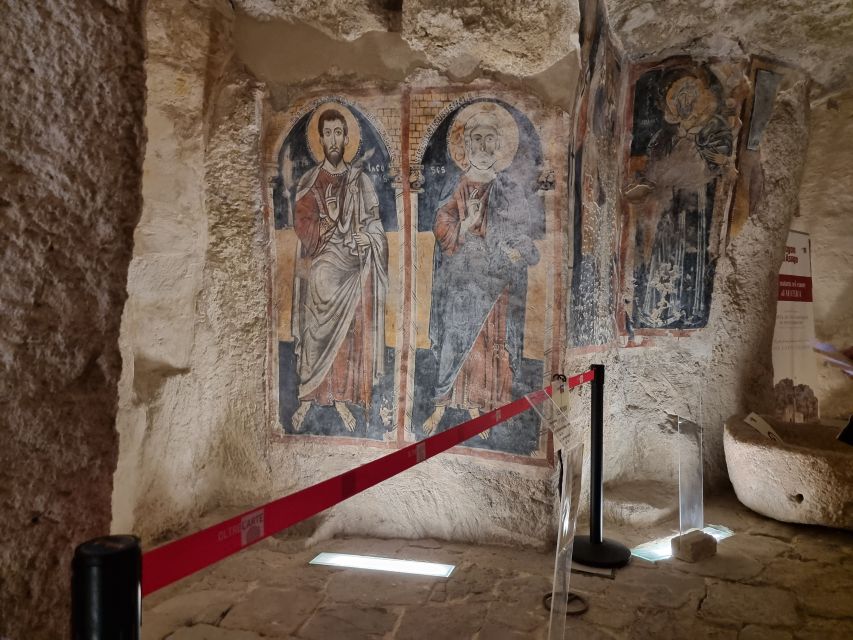
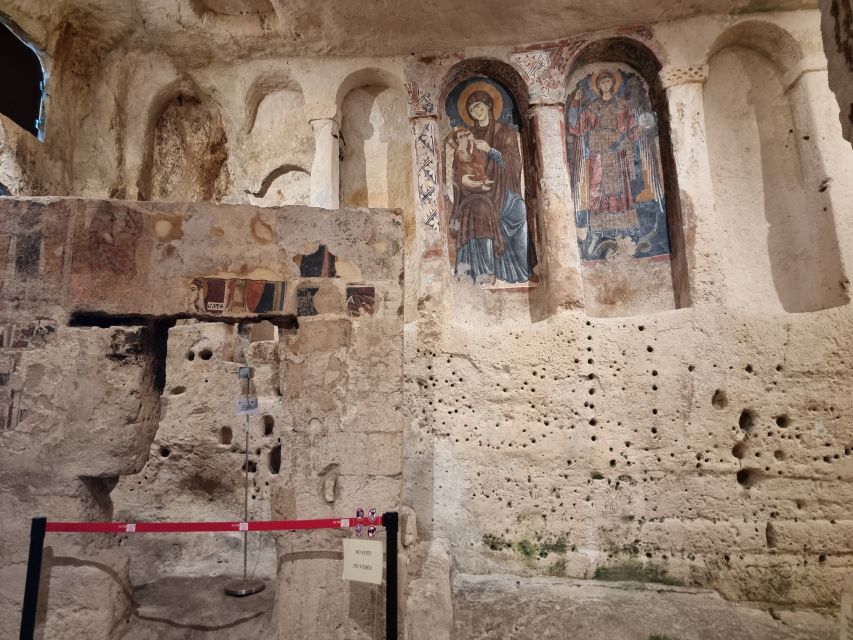
- Rock churches and frescoes: The wider Matera area contains 155 rock churches, many linked to Byzantine artistic traditions.
- Four language choices: Use the ITGUIDES app in English, French, German, or Italian.
- No meeting point: Start independently, but download the app and tour content before walking into the Sassi.
- Bring your own phone and earphones: An Android or Apple smartphone is required, and earphones are recommended but not mandatory.
Why Matera works especially well with audio
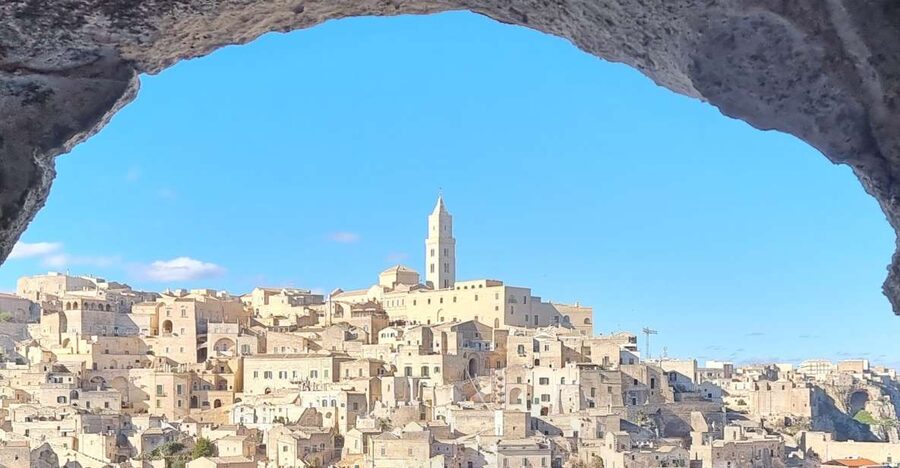
The Sassi can be confusing at first. A lane may look like a dead end, then turn into a stairway. A plain stone wall may conceal an old room, cistern, or chapel. Roofs often double as paths, and homes are stacked into the slopes rather than arranged in neat streets.
That is where audio helps. Instead of simply seeing a mass of weathered stone, you get explanations tied to particular places. The geolocation feature is intended for outdoor attractions, so the app can guide your attention as you move from one point to the next.
You should not expect a guide walking beside you or a fixed start time. This is a phone-based product, not a traditional group tour. That makes it useful for a flexible day in Matera, especially if you prefer to stop often or split the visit into shorter walks.
The content is available in English, French, German, and Italian. Select your language before setting out, then download the material with a good Wi-Fi or cellular connection. The free ITGUIDES app includes a demo, which is worth trying before you pay so you can see how the audio and map work on your device.
More Self-Guided Tours in Italy:
- Taormina: Ancient Theater Skip-the-Line Ticket & Audio Guide
★ 4.5 · 2,412 reviews - Naples: National Archaeological Museum Ticket & Audio App
★ 4.4 · 617 reviews - Naples: National Archaeological Museum audio guide
★ 4.0 · 155 reviews
Entering the Sassi’s two stone valleys
The Sassi extend across two valleys and form a striking urban area of caves, terraces, stone houses, ravines, and narrow routes. The app’s 30-plus points give you a framework for reading this unusual town rather than treating it as a collection of photogenic walls.
The most useful way to approach the tour is to let the location prompts introduce the area gradually. You may begin with an outdoor view, then move toward streets and structures where the descriptions explain how the stone was shaped and reused. Since the tour is self-guided, you can pause the audio whenever a view or building deserves more time.
The setting rewards patience. Matera’s appeal is not concentrated in one monument. Its character comes from the relationship between homes, caves, paths, churches, and the surrounding ravines. The audio points are valuable because they connect those pieces.
You should also plan for stairs, uneven surfaces, and changing gradients as you walk. The activity is listed as wheelchair accessible, but the information provided does not explain which specific routes or sites are step-free. If accessibility is important for your visit, check the exact path and individual entrances before booking.
Caves used from the Neolithic period to modern times
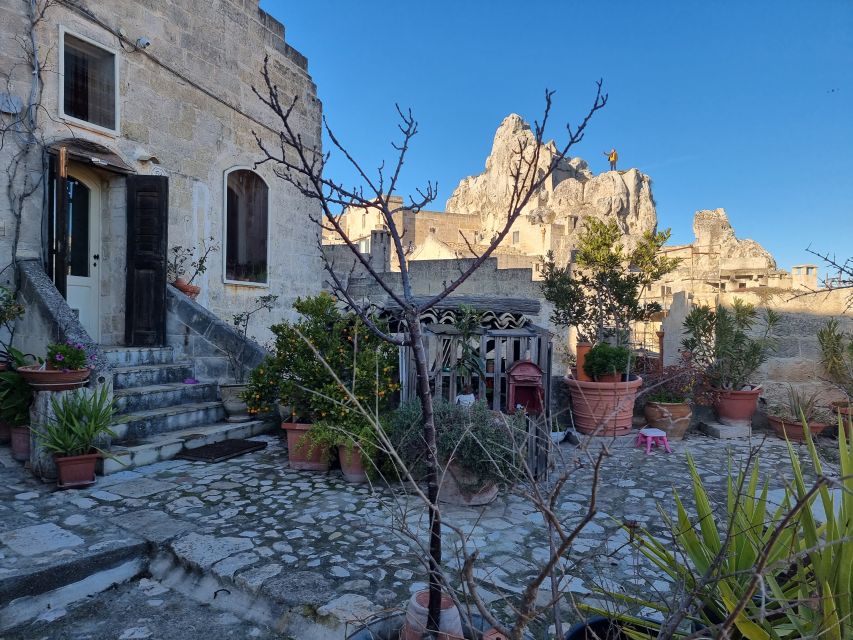
The oldest part of the story reaches back to the Neolithic period, when caves and ravines provided shelter and places for daily life. The same spaces continued to serve people through the Middle Ages and into modern times.
That long use is one of the most interesting features of the experience. These are not ruins abandoned after one short era. People repeatedly adapted the caves for homes, refuges, storage, worship, and other needs. You can listen to the explanation of a point, then look at the rock around you and notice how much of the town grew from natural cavities rather than from conventional construction.
The audio format is a good match for this subject because the details are easy to miss. A stone chamber may not announce what it once was. The app can provide the basic explanation while you examine entrances, openings, carved surfaces, and the way buildings fit into the slope.
Keep your expectations in check. The commentary may describe the exterior and, in some cases, the interior of a monument, but it is not designed as a full academic course. One useful improvement would be more broad historical context connecting Matera’s story to the wider history of southern Italy. If you want that level of detail, you may need a museum visit, a printed guide, or a separate live tour.
Rock churches and Byzantine frescoes
Matera’s rock churches are among the most important reasons to spend time in the Sassi. The area contains 155 rock churches, and many reflect the influence of communities from Armenia, Syria, Cappadocia, and Asia Minor.
During the Middle Ages, lay communities and monks who faced persecution in their homelands sought refuge in the caves. Some of these spaces became places of worship, decorated with Byzantine frescoes. The result is a blend of local stone architecture and eastern religious art.
The audio points can help you understand why a modest opening in the rock may matter. Look for the relationship between carved rooms, worship spaces, and the surrounding settlement. The churches were not isolated attractions placed in a modern town. They were part of daily life in the cave neighborhoods.
Do remember that entrance tickets are not included. The audio guide may explain an attraction from the outside, and some points may include information about interiors, but you should budget separately if you plan to enter paid sites. The product itself does not promise admission to every church or underground space.
That separation can be a benefit for careful planners. You pay a small amount for the orientation and choose which sites deserve extra admission fees. It also means you should not assume that buying the audio tour gives you access beyond public outdoor areas.
More Audio Tours in Italy:
- Rome: Ostia Antica Archaeological Park Ticket & Audio App
★ 4.6 · 146 reviews - Rome: Ancient Baths of Caracalla Ticket & Audio Guide
★ 4.2 · 99 reviews - Herculaneum Archaeological Park smart Audio Tour
★ 3.8 · 70 reviews - Athens: National Archaeological Museum Ticket & Audio Guide
★ 4.3 · 1,330 reviews
Underground architecture and cisterns
The Sassi are famous for what appears above ground, but the underground spaces are just as important. Caves, cisterns, and carved rooms show how residents adapted to limited resources and made practical use of the rock.
The audio tour highlights natural caves and underground architecture, helping you look beyond façades and viewpoints. A cistern is not merely an old hole in the ground. It points to the practical systems that allowed communities to live in a dry, stone-built setting.
The app cannot replace physically entering every underground attraction. Since entrance fees are excluded and the tour is geolocated for outdoor attractions, treat its descriptions as a guide to the setting rather than a guarantee of access inside each site.
This is also an area where slowing down pays off. You can stop the audio, inspect a carved opening, and return to the point later if your phone loses its location. You are not tied to a group schedule, so you can give the underground features the attention they deserve.
From crowded homes to the 1952 Sassi law
Matera’s modern story adds a difficult turn to the beauty of the old stone districts. After the Second World War, nearly 20,000 people still lived in the Sassi. The homes were often part of a dense, hard environment shaped by generations of cave living.
In 1952, the Sassi Law allocated funds for complete restoration. The work was difficult, and moving residents from the ravines where their families had lived for generations was emotionally and practically complicated.
This background matters because the Sassi are not simply a preserved medieval quarter. They are also a place shaped by poverty, public health concerns, forced relocation, restoration, and changing ideas about what a modern home should be.
The audio content gives you a useful starting point for thinking about that transition. Still, the available information suggests that the commentary focuses mainly on individual monuments and outdoor points, with less emphasis on placing Matera in the wider timeline of Italian history. If social history is your main interest, use this tour as an introduction and seek out additional context during your visit.
How the ITGUIDES app works in practice
You receive instructions for downloading and redeeming the audio guide in your voucher. The ITGUIDES app is free to download, and you can try its free demo before buying.
Do this preparation before you reach the Sassi:
- Install the app on an Android or Apple smartphone.
- Select your language: English, French, German, or Italian.
- Redeem the audio guide using the instructions in your voucher.
- Download all content over reliable Wi-Fi or strong cellular service.
- Bring earphones if you want to listen privately.
The audio is geolocated for outdoor attractions. That means the app is meant to connect commentary with your position, not simply provide a set of unrelated recordings. Still, phone location can be affected by narrow lanes, stone walls, and weak signal. Having the content downloaded is the sensible safeguard.
Earphones are recommended, but not required. If you listen aloud, remember that the Sassi can be quiet in places and crowded in others, so private listening is usually more comfortable.
There is no meeting point and no live guide. You can begin when convenient and return to the tour later. The product remains valid for 365 days, so you are not forced to use it on the day you buy it. That long validity is helpful if your plans change or if you want to use the guide during a later visit.
Is $4.70 good value?
At about $4.70 per person, this is one of the less expensive ways to add structure to a visit to Matera. You are paying for the audio content and app access, not transportation, a guide, or admission to monuments.
The value is strongest if you want a basic orientation and prefer to explore alone. A live guide would normally provide more back-and-forth conversation, richer historical context, and help interpreting details in real time. This app costs much less, but it also asks you to manage your own route and solve any technical problems yourself.
The 365-day validity adds flexibility. You can buy early, prepare the app, and use it when your schedule allows. Free cancellation up to 24 hours in advance and the option to reserve now and pay later make the purchase less risky, provided you follow the stated cancellation terms.
The modest rating of 3.6 out of 5 suggests the experience is useful but not perfect for everyone. The strongest qualities are its low price, clear route, and freedom to move at your own pace. The main limitation is depth. The descriptions may cover the essential facts about the exterior and, in some cases, the interior, but you should not expect every point to explain Matera’s full place in Italian history.
Who will get the most from this tour?
I would choose this audio guide if you want to keep your day independent, need one of the four available languages, or want simple explanations while walking through the Sassi. It is also a sensible add-on for repeat visitors who do not want to join another group.
It suits couples, solo visitors, and families who need the freedom to stop and restart. The low price makes it easy to combine with separately purchased entry tickets for selected churches or underground sites.
It is less suitable if you want a personal guide, detailed art history, or a carefully managed route with every admission arranged. It may also disappoint you if you expect the app to provide access to the interiors of the churches and caves. It does not include entrance tickets.
One practical tip: use the free demo before your visit and download everything in advance. That small step will make the experience much smoother.
Should you book the Matera audio tour?
Book it if you want an inexpensive introduction to the Sassi, enjoy exploring at your own speed, and are comfortable using your phone as a guide. The 30-plus points, four language choices, and long validity give you plenty of flexibility for a modest cost.
Skip it if you want a live expert, extensive historical analysis, or admission to Matera’s sites included in the price. For many people, the best plan is to use this as a walking companion, then spend extra on the rock churches, museums, or underground attractions that interest you most.
FAQ
Is this a guided group tour?
No. This is a self-guided audio tour delivered through the ITGUIDES app, with no meeting point and no live guide.
How many points of interest are included?
The tour includes more than 30 geolocated points of interest with audio descriptions.
Which languages are available?
You can use the audio guide in English, French, German, or Italian.
What does the tour explain?
It covers the Sassi’s caves, underground architecture, cisterns, churches, frescoes, and the area’s long history of human use.
Do I need a smartphone?
Yes. You need an Android or Apple smartphone to download and use the app.
Are earphones required?
No, earphones are not mandatory, but they are recommended for a more comfortable listening experience.
Do I need an internet connection during the tour?
You should download all the content with a good cellular signal or Wi-Fi before beginning. The instructions specifically recommend preparing the audio guide in advance.
Are entrance tickets included?
No. Entrance tickets are not included in the price of the audio guide.
Where does the tour begin?
There is no official meeting point. You start the self-guided activity independently.
How long is the audio guide valid?
The audio guide is valid for 365 days. Check availability for the starting times shown when booking.
Just added around Italy
- Guided Cultural Tour of the Godfather Film in Messina★ 5.0 · 31 reviews
- Guided tour of the Riace Bronzes and the Archaeological Museum of Reggio Calabria★ 5.0 · 44 reviews
- SU NURAXI BARUMINI Unesco World Heritage Site★ 5.0 · 129 reviews
- Brescia the Unexpected: History, Local Stories & a drink★ 5.0 · 31 reviews
- Bolognese Cooking Class with Margherita in the Historic Center★ 5.0 · 26 reviews
- Tower and Power, Virtual tour in Medieval Bologna★ 4.5 · 54 reviews
- Bologna historical art walking tour with hidden gems and tastings★ 5.0 · 108 reviews
- Best of Bologna in one day : Food, architecture, art and history★ 5.0 · 27 reviews
Italy History Tours, compared.
Pompeii: Entry Ticket and Guided Tour with an Archaeologist
Read our review →
Colosseum: Underground and Ancient Rome Tour
Read our review →
Pompeii: Small Group Tour with an Archaeologist
Read our review →Pompeii Small Group Tour with an Archaeologist
Read our review →
Rome: Colosseum with Arena, Roman Forum and Palatine Guided Tour
Read our review →
Venice: St. Mark’s Basilica Guided Tour & VR History Intro
Read our review →
Colosseum with Arena, Roman Forum and Palatine Hill Guided Tour
Read our review →
Herculaneum: Skip-the-Line Guided Tour with Archaeologist
Read our review →Browse the lists this tour appears in