
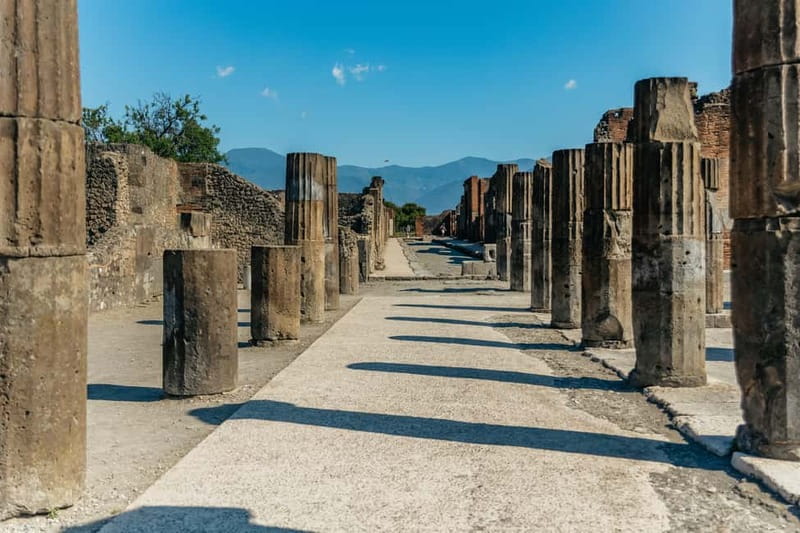
Review · ITALY
Pompeii: Archaeological Park Tour with Ticket on request
Pompeii makes the ancient Roman world feel startlingly close. On this two-hour archaeological tour, you walk streets, enter homes, and see everyday objects preserved by the eruption of Mount Vesuvius in 79 AD. It is less about admiring distant ruins and more about picturing meals, baths, theater trips, commerce, and family life in a real Roman town.
I like the way the archaeologist gives meaning to details you could easily miss, such as the design of public fountains and the purpose of household spaces. I also like the practical length: two hours gives you a clear introduction, then leaves time to explore more of the huge park on your own.
The main drawback is scope. Pompeii is vast, so this tour covers only a section, and a large group can make the meeting and first few minutes feel hectic. If you want to see every major house and street, you will need extra time after the guided walk.
Key points at a glance
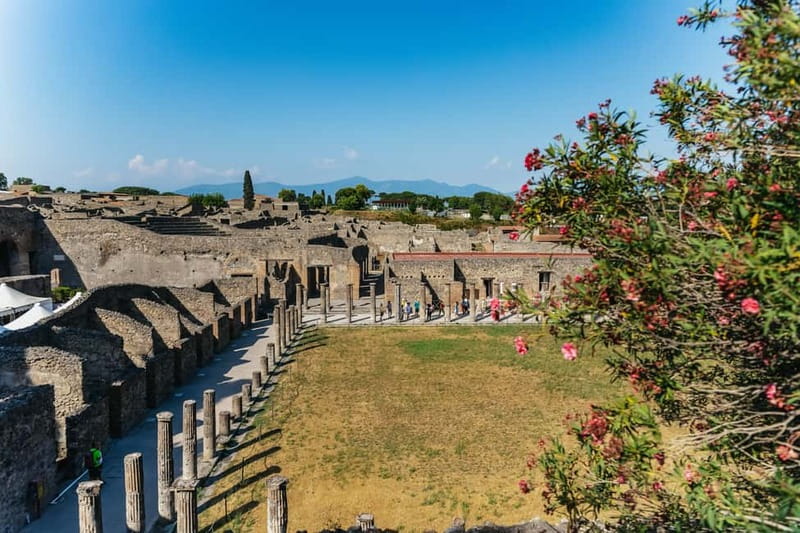
- Roman life, not just ruined walls: See homes, frescoes, public spaces, theaters, and everyday objects.
- A focused two-hour route: Learn the main story without spending an entire day in the heat.
- Skip-the-line access: Choose the option that includes the express Pompeii ticket.
- Archaeologist-led explanations: Guides such as Lara, Emiliana, Eraldo, and Maria bring context and humor to the ruins.
- Useful for a first visit: The guide points out details and areas you might miss while walking alone.
- Time to continue independently: The tour ends back at the meeting point, with the park’s other sections available for further exploration if you remain inside.
Why Pompeii is best seen with a guide
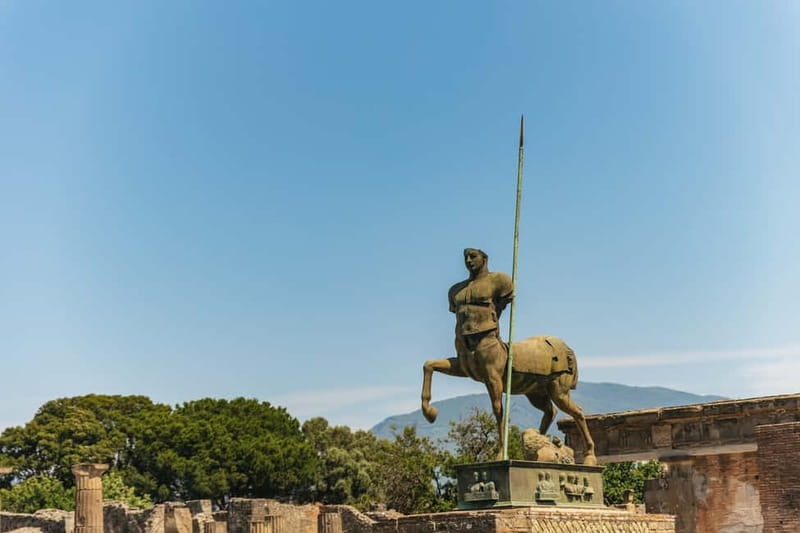
Pompeii is not a single monument. It is a full Roman town spread across a large archaeological park. Ancient roads lead past houses, shops, public buildings, theaters, and open spaces, but bare walls do not always explain how the place worked.
That is where the guide earns the fee. You might see a stone counter, a painted wall, or a line of stepping stones and simply move on. An archaeologist can explain how the feature fit into daily life. The tour makes the town easier to read, especially if this is your first visit.
The eruption in AD 79 is only part of the story. The real fascination is the ordinary life preserved beneath the ash. You see a town that was suddenly interrupted, with household decoration, public facilities, and human remains connecting the disaster to real people and animals.
The guides are presented in English or Italian. Several guides associated with this experience, including Lara, Emiliana, Eraldo, Maria, Frederica, Marco, and Laura, are known for clear explanations, a friendly manner, and a touch of humor. Your assigned guide will vary, but the format is consistent: follow the archaeologist through selected areas, listen to the explanation, and pause for photographs and questions.
More Ancient History Tours in Italy
- Pompeii: Entry Ticket and Guided Tour with an Archaeologist
★ 4.8 · 19,459 reviews - Colosseum: Underground and Ancient Rome Tour
★ 4.7 · 12,691 reviews - Pompeii: Small Group Tour with an Archaeologist
★ 4.8 · 12,264 reviews
Meeting at the Circumvesuviana station
The meeting point is on the first floor beside the entrance of the Tempio Travel Info Point in Pompeii’s Circumvesuviana Train Station. You exchange your voucher there for the entrance ticket or tour arrangements.
Allow extra time to find it. The station meeting area can be less obvious than an outdoor booth, and you may not immediately see a large sign with the tour company’s name. Look for the Tempio Travel Info Point and go upstairs rather than waiting outside the main entrance.
This location is practical if you arrive by train. It also puts you close to cafes and places to stop for water or lunch after the tour. One useful detail is that luggage storage has been available at the same meeting point for a fee of 6 euros, which can help if you are visiting between trains. That service is separate from the tour.
Drivers should check parking plans before setting out. Free parking may be available at Osteria Nonna Cherubina on Via Andolfi 46, but only if it is open and spaces are available. Access has been affected by construction at times, and the walk from there can take about 15 minutes. Paid parking closer to the archaeological site has been reported at around 3 euros per hour, but parking terms can change.
The first streets inside the archaeological park
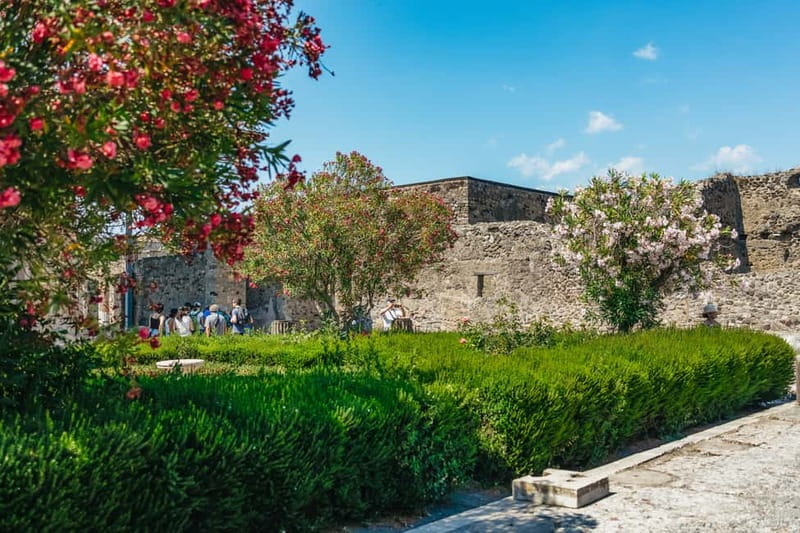
Once the ticket process is complete, the group enters the archaeological park and begins walking through Pompeii’s ancient streets. The first impression is scale. This is not a small ruin that you can understand in a quick circuit.
Your guide sets the scene before piling on details. You learn how the town functioned and how the eruption changed everything. The best explanations connect the stones under your feet to daily routines: where people gathered, how water was collected, how homes were arranged, and how public buildings shaped social life.
Expect uneven Roman paving, open ground, and exposure to the sun. Good walking shoes matter more than smart clothing here. Bring water, a hat, and protection from strong heat, especially in summer. One guide sensibly directed the group toward shaded areas during a very hot visit, but shade cannot be guaranteed throughout the route.
Headsets are supplied for groups of 16 or more. They are especially useful when the group spreads out around a building or when other groups are nearby. The park can be noisy, and without an audio system you may miss parts of the explanation.
Homes, frescoes, and the private side of Pompeii
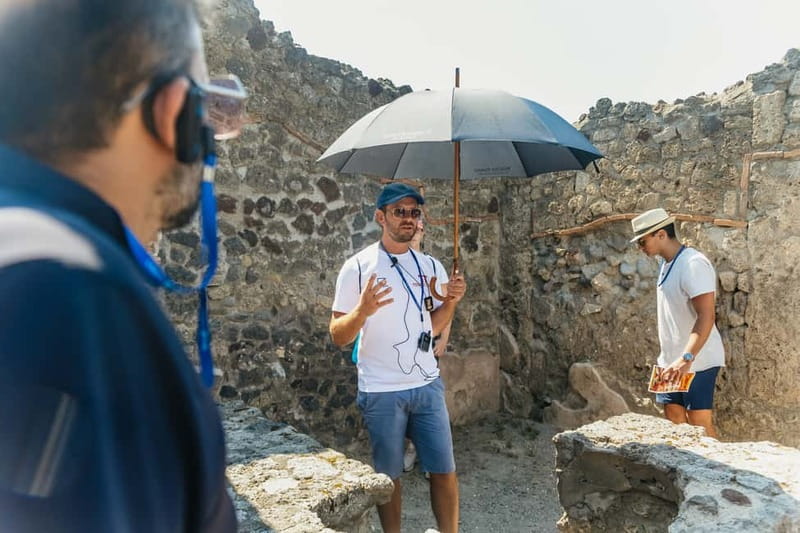
The houses are among the most revealing stops because they show Pompeii as a place where people lived, not simply a disaster site. Your guide takes you through selected chambers and explains what different rooms were used for and what activities took place there.
Painted frescoes are a major highlight. Some colors and details survived under volcanic ash, giving you a direct look at Roman decoration. The value of the explanation is not only in identifying a painting. You also learn how the artwork fitted into the house and what it tells you about taste, status, and social life.
Household items can be equally moving. A wall may seem plain until you understand how it formed part of a lived-in home. A fountain or water feature becomes more interesting when you learn about its design and use. These small details help you picture the town before the eruption rather than treating Pompeii as a collection of empty shells.
The casts of citizens and pets are the most emotional part of the visit. They make the eruption personal, but they can also be difficult to see. The guide provides historical context without turning the tragedy into a spectacle. If you prefer a lighter focus, the tour also includes theaters, public buildings, and daily routines.
More Archaeological Site Tours in Italy:
- Pompeii Small Group Tour with an Archaeologist
★ 5.0 · 6,593 reviews - Herculaneum: Skip-the-Line Guided Tour with Archaeologist
★ 4.8 · 3,439 reviews - Discover the Ancient Ruins of Pompeii: Day Trip from Rome
★ 3.5 · 2,247 reviews - Pompeii and Herculaneum Small Group Tour with an Archaeologist
★ 5.0 · 1,350 reviews
Amphitheater, theaters, and public life
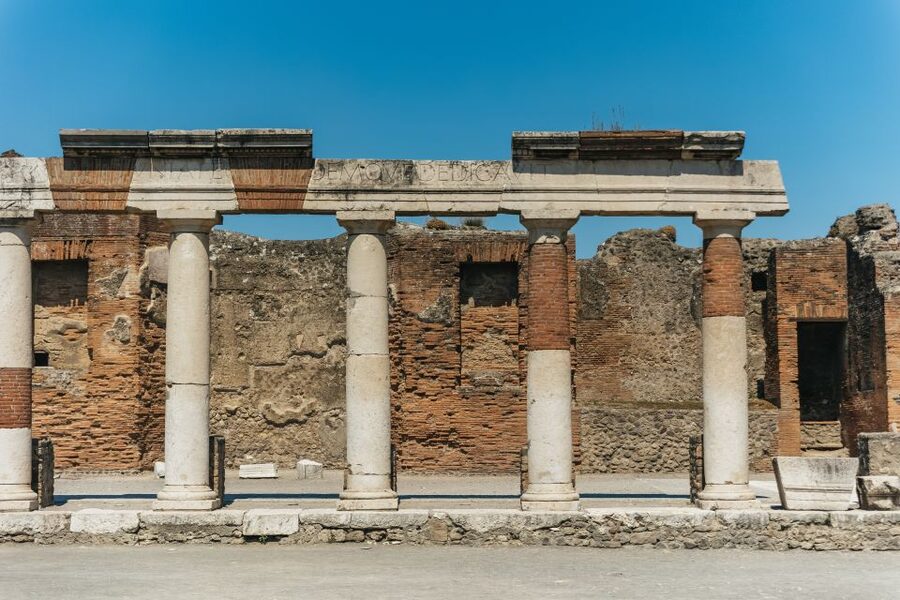
The route includes the Roman Amphitheater, a small theater, and the public gymnasium. These sites show how Pompeii’s residents spent time outside their homes.
The amphitheater is a reminder that public entertainment was central to Roman life. The small theater offers a different feel, with a more intimate setting for performances. The gymnasium helps explain the role of exercise and public space in the town.
Your guide also points out places linked to banquets and leisure. That balance matters. Pompeii is often reduced to its final hours, but this was a functioning community with entertainment, social habits, and places to meet.
The route cannot cover every major building in two hours. The guide chooses a practical selection, and you should expect a strong overview rather than a complete survey. If a particular house or building is high on your list, ask the guide where it is and save time afterward to find it.
What two hours really gives you

Two hours is a sensible length for many visitors. The walking is steady, the sun can be intense, and Pompeii demands concentration. A longer guided route might provide more information, but it could also leave you tired before you have had time to explore independently.
The tour moves at a pace that allows for explanations, photographs, and brief pauses. Some guides leave enough time for you to look around rather than speaking without a break. That makes the experience more relaxed, especially for families.
At the end, the guide can suggest other areas to see. You can then continue on your own if your ticket and park access allow it. This is an important part of the value. You get a clear route through the site, then the freedom to follow your own interests.
Keep opening hours and daylight in mind when choosing a start time. One late afternoon visit became difficult when darkness arrived around 5 p.m. in the shorter days of the year. Check the available start times carefully and avoid assuming that a late tour will leave plenty of time for independent wandering.
Group size, sound, and the overall pace
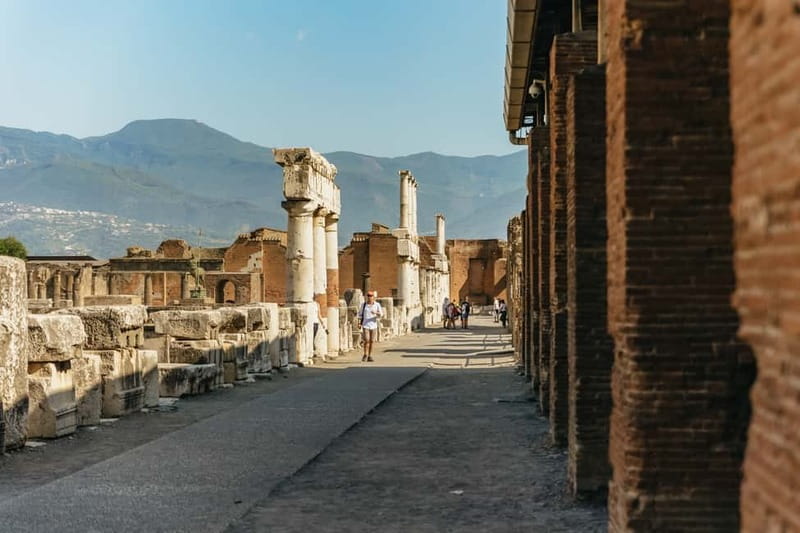
This is a group tour, not a private walk. Groups can number more than 20 people, and the beginning may feel disorganized while everyone gathers, exchanges vouchers, and enters together.
The headsets help once the tour starts. They let you hear the guide while standing farther back, which is useful around narrow streets and crowded buildings. The audio equipment has generally worked well, though you should still stay close enough to follow the group.
A large group also affects photographs and personal questions. You may need to wait your turn, and the guide cannot stop at every detail for long. On the other hand, the shared format keeps the price down and gives you a structured introduction without the cost of a private guide.
The guides are the strongest part of the experience. Lara has been praised for energy, detail, and humor. Emiliana combines explanations with time for photographs. Eraldo has been especially good at making the Roman way of life easy to picture, even for families with teenagers. Maria and other guides have also been noted for clear English and calm organization.
Is $31.89 good value?
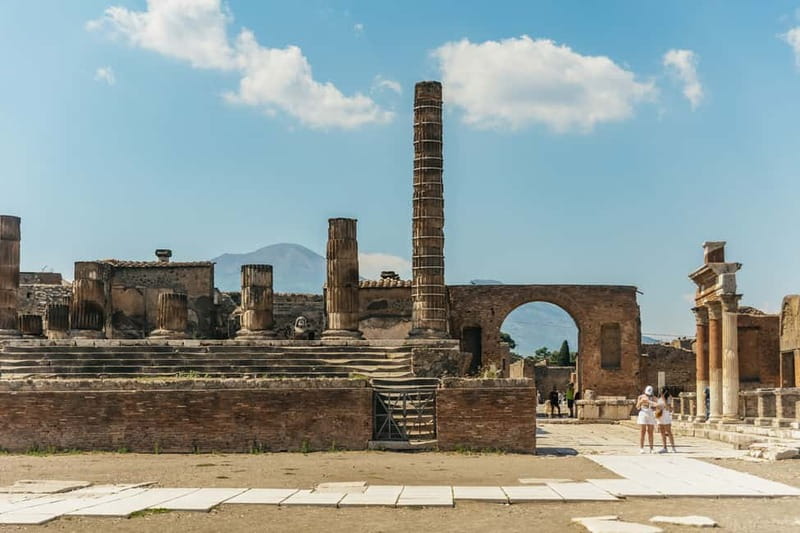
At $31.89 per person, the price is reasonable for an archaeologist-led introduction to a major site, especially if you value context and want to avoid spending your first hour figuring out where to go.
Pay close attention to the ticket choice during booking. The express Pompeii ticket is included only if you select the ticket option as an extra. You must choose between the option with tickets and the option without tickets. The headline price may not cover the entrance ticket if you choose the no-ticket version.
The value is strongest for a first visit, a short stop, or anyone arriving by train who wants a simple plan. You are paying for a guide, a structured route, and the chance to bypass the regular ticket line when the express ticket option is selected.
The value is weaker if you already know Pompeii well or want to move entirely at your own pace. You will still need extra time for parts of the park that are not on the guided route, and the group format limits how long you can linger at one house.
Free cancellation up to 24 hours before the start gives you some planning room, and the reserve-now, pay-later option helps if your schedule is still changing. The first Sunday of each month is different: entrance is free, but tickets cannot be reserved in advance and entry is not guaranteed.
Who should book this Pompeii tour?
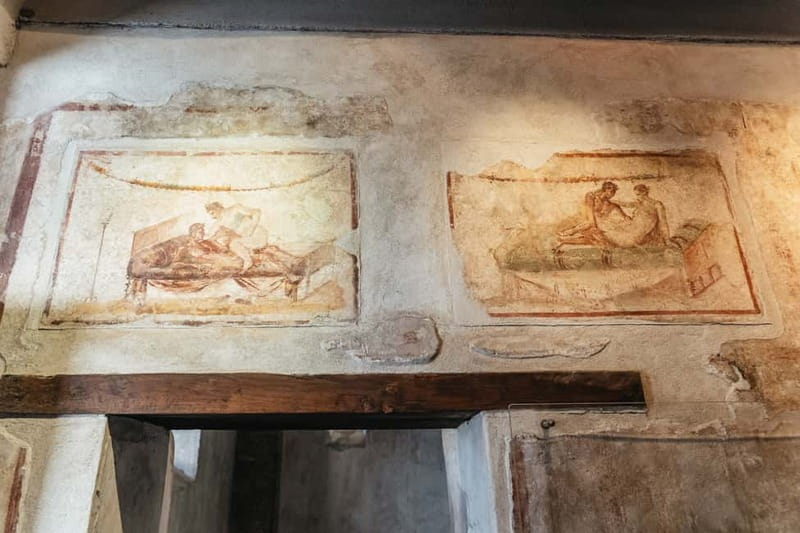
I would choose this tour for a first-time visitor who wants the main story without committing to a full-day guided program. It also suits families, since two hours is long enough to learn a lot but short enough to avoid exhausting younger members of the group.
It works well for anyone arriving by the Circumvesuviana train. The meeting point is close to the station, and the tour team has sometimes helped late arrivals join a later time slot, though you should not count on that. Rail delays can quickly create stress, so arrive early.
This is also a good match if you enjoy history but do not want to read every sign in the park. The guide explains how to interpret fountains, homes, theaters, and public spaces, giving you a useful framework for further exploration.
I would look elsewhere if you want a private guide, a specialist tour devoted to one house or theme, or a complete walk through every district. Pompeii is too large for that in two hours.
Final verdict
Book this tour if you want an efficient and informed first look at Pompeii. The archaeologist-led route, working headsets, practical two-hour length, and access to major highlights make it a solid choice for most short visits.
Choose the ticket option carefully, arrive early at the station meeting point, and plan for sun, uneven ground, and a large site. Leave extra time afterward for independent wandering. That combination gives you both the guide’s explanation and the freedom to discover Pompeii at your own pace.
FAQ
How long does the Pompeii tour last?
The guided walking tour lasts two hours. You may be able to continue exploring other parts of the archaeological park independently afterward.
Is the Pompeii entrance ticket included?
It depends on the option you choose. The express ticket is included only when you select the ticket option as an extra. You must choose between the ticket and no-ticket options.
Where is the meeting point?
Meet on the first floor beside the entrance of the Tempio Travel Info Point in the Circumvesuviana Train Station. You exchange your voucher there for the ticket.
Which languages are available?
The live guide is available in English or Italian.
Are audio headsets provided?
Headsets are available for groups of 16 or more. They help you hear the guide when the group spreads out.
What should I bring?
Bring your passport or identity card. Water, sun protection, and comfortable walking shoes are also sensible for the outdoor archaeological site.
Can I cancel the booking?
You can cancel up to 24 hours in advance for a full refund. A reserve-now, pay-later option is also available.
Just added around Italy
- Guided Cultural Tour of the Godfather Film in Messina★ 5.0 · 31 reviews
- Guided tour of the Riace Bronzes and the Archaeological Museum of Reggio Calabria★ 5.0 · 44 reviews
- SU NURAXI BARUMINI Unesco World Heritage Site★ 5.0 · 129 reviews
- Brescia the Unexpected: History, Local Stories & a drink★ 5.0 · 31 reviews
- Bolognese Cooking Class with Margherita in the Historic Center★ 5.0 · 26 reviews
- Tower and Power, Virtual tour in Medieval Bologna★ 4.5 · 54 reviews
- Bologna historical art walking tour with hidden gems and tastings★ 5.0 · 108 reviews
- Best of Bologna in one day : Food, architecture, art and history★ 5.0 · 27 reviews
Italy History Tours, compared.
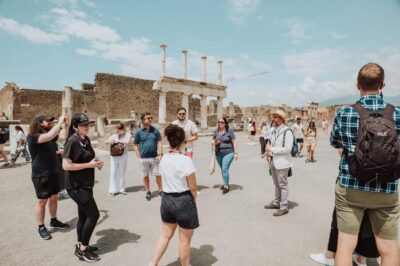
Pompeii: Entry Ticket and Guided Tour with an Archaeologist
Read our review →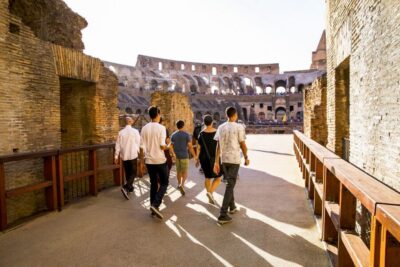
Colosseum: Underground and Ancient Rome Tour
Read our review →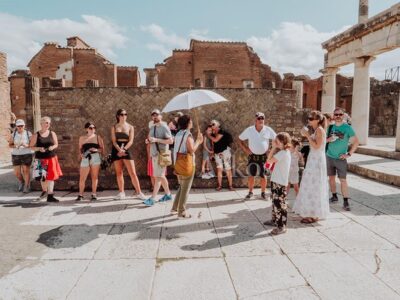
Pompeii: Small Group Tour with an Archaeologist
Read our review →Pompeii Small Group Tour with an Archaeologist
Read our review →
Rome: Colosseum with Arena, Roman Forum and Palatine Guided Tour
Read our review →
Venice: St. Mark’s Basilica Guided Tour & VR History Intro
Read our review →
Colosseum with Arena, Roman Forum and Palatine Hill Guided Tour
Read our review →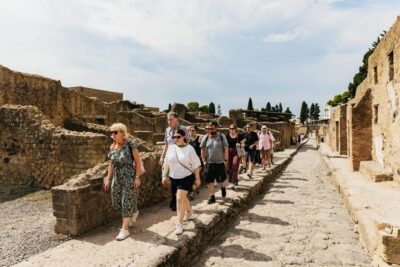
Herculaneum: Skip-the-Line Guided Tour with Archaeologist
Read our review →Browse the lists this tour appears in