Review · POMPEII
Pompeii and Herculaneum Small Group Tour with an Archaeologist
Pompeii and Herculaneum tell different stories of the same volcanic disaster. Pompeii gives you broad streets, theaters, baths, shops, and grand homes. Herculaneum feels smaller and more intimate, with vivid frescoes, carbonized wood, and remarkably preserved houses. Seeing both with an archaeologist gives the ruins a human scale that a map alone cannot provide.
I like the two-site format and the way admission tickets, transport, and headsets are bundled into the price. I also like the guides’ strong focus on daily Roman life. Guides such as Michele, Diego, Michael, Paulo, Antonio, and Alfredo have been praised for making architecture, engineering, cooking, housing, and social customs easier to understand.
The main drawback is time. Two hours at Pompeii is enough for the major sights, but Pompeii is enormous. You will see the highlights, not the whole city, and the pace can feel brisk. A lunch stop of roughly 50 minutes may also feel more practical than atmospheric, so consider bringing a snack or planning to eat quickly.
Key points to know before booking
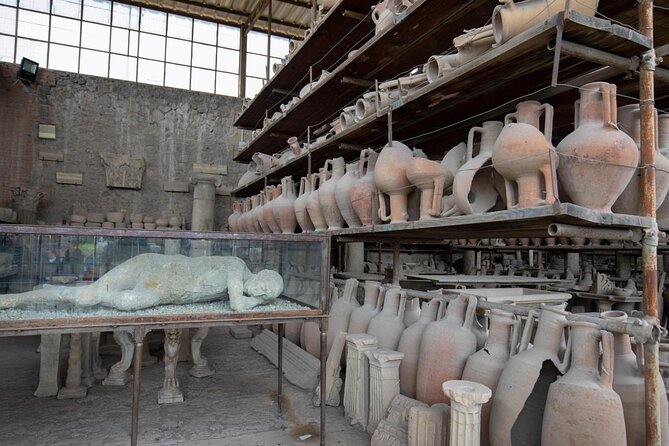
- Pompeii gets the larger share of attention: You visit the Forum, baths, theaters, villas, brothel, and plaster casts in about two hours.
- Herculaneum adds a different kind of preservation: Expect carbonized wood, detailed houses, marble decoration, and smaller streets that are easier to take in.
- Transport depends on your starting point: Naples, Sorrento, and Rome departures use a modern minibus, while Pompeii departures use the Circumvesuviana train to Herculaneum.
- The archaeological guide is the main value: Guides such as Michael, Michele, Diego, and Paulo have been praised for clear explanations and lively storytelling.
- The $77.09 price covers a lot: Both admission tickets, guiding, headsets, and selected transport are included, but lunch is not.
- Plan for a long walking day: The tour lasts about 6 to 11 hours, with no promise of leisurely free time inside either site.
Why seeing both ruins makes sense
If you have only seen photographs of Pompeii, Herculaneum is easy to overlook. That would be a mistake. The two sites were buried by the eruption of Mount Vesuvius in AD 79, but the results are not identical.
Pompeii spreads across a large urban area. Its streets, public buildings, theaters, baths, and private homes show how a Roman town worked as a whole. Herculaneum is smaller, but many buildings retain finer details. Wooden doors, beams, partitions, and furnishings survived because volcanic material sealed the town quickly.
I find the pairing useful because each site fills gaps in the other. Pompeii shows city life on a broad scale. Herculaneum gives you closer views of domestic interiors and building materials. After a morning of Pompeii’s long streets and major monuments, Herculaneum feels more concentrated.
The guide matters here. Without context, a painted wall can become just another painted wall. With a good explanation, you begin to notice room functions, household status, street planning, bathing habits, religious practice, and the engineering behind the buildings.
More Ancient History Tours in Italy
- Pompeii: Entry Ticket and Guided Tour with an Archaeologist
★ 4.8 · 19,459 reviews - Pompeii: Small Group Tour with an Archaeologist
★ 4.8 · 12,264 reviews - Pompeii Small Group Tour with an Archaeologist
★ 5.0 · 6,593 reviews
Meeting points and the day’s transport
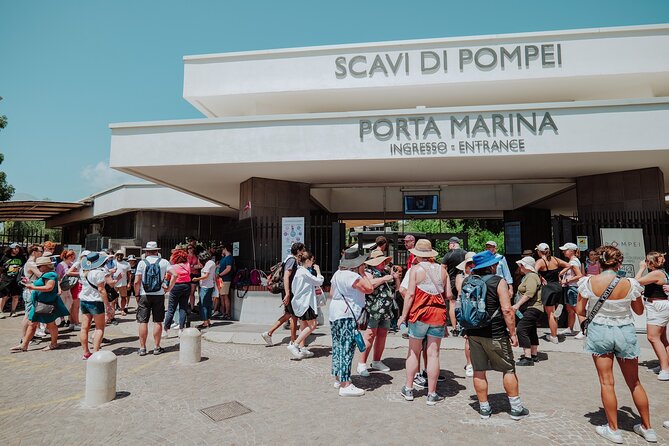
You choose a departure point when booking. The Pompeii meeting point is at Porta Marina Superiore. Naples departures meet outside Starhotels Terminus, Sorrento departures at Piazza Angelina Lauro, and Rome departures at Starhotels Terminus before traveling south.
From Naples, Sorrento, and Rome, the day uses a modern minibus. That removes much of the usual transport juggling between the two sites. From Pompeii, you receive a one-way Circumvesuviana train ticket to Herculaneum and walk about 10 minutes from Ercolano Scavi station to the entrance.
The Pompeii option deserves special attention. The tour ends at Herculaneum rather than returning you to Pompeii, and the return trip is not part of the experience. If you arrive by car or leave luggage near Pompeii, you need to arrange your own way back.
For Naples and Sorrento departures, round-trip transport is included. The Rome option includes train tickets to Naples and full-day transport service. The exact total duration varies from about 6 to 11 hours, so check the departure option carefully before you commit.
Pompeii begins with public life
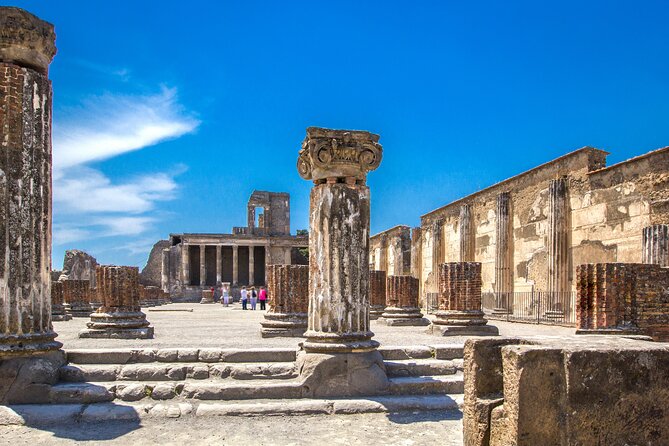
The guided walk starts with major civic and religious spaces. The Basilica was an open portico used for business and public activity. From there, the Forum gives you the clearest sense of Pompeii as a functioning town, not simply a collection of ruins.
The Forum was the city’s main square. It is broad, formal, and surrounded by public buildings. Your guide can help you read the space as a civic center, where commerce, politics, worship, and public ceremonies came together.
You then move along Pompeii’s main street. This is one of the most useful parts of the tour because the street itself reveals how the town worked. Look for the relationship between shops, homes, public buildings, and pedestrian routes. The walk also helps you understand why Pompeii requires stamina: even a focused route covers a lot of ground.
Villas, baths, and everyday life
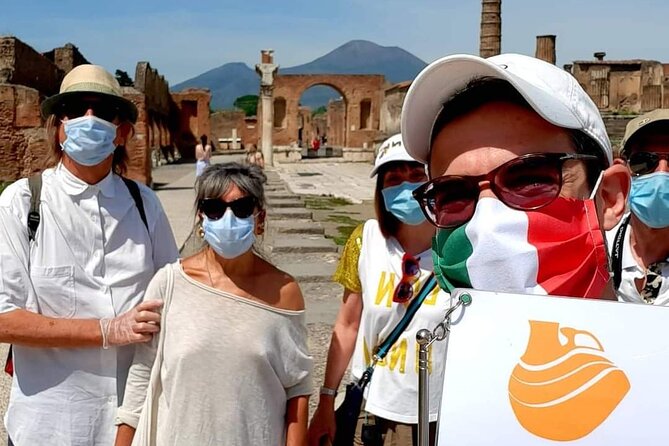
The House of Menander is one of Pompeii’s most impressive private residences. Its size, decoration, architecture, and contents point to the wealth and social position of its owners. It is a good place to see how a Roman home could function as both a private residence and a display of status.
At the Forum Granaries, you may see marble tables, fountain fittings, and plaster casts. These casts are among Pompeii’s most unsettling sights. They bring the eruption back to individual human beings and animals, including a dog. The sight is powerful, but it can also be difficult, especially for younger visitors.
The Stabian Baths are the oldest thermal complex in Pompeii. The tour uses them to explain Roman bathing culture and the organization of public facilities. You will not simply be looking at walls. You will be seeing one of the places where people met, washed, exercised, and spent part of their day.
The Lupanar, Pompeii’s famous brothel, is smaller and more direct. Its surviving layout and painted panels offer a glimpse into a less polished side of Roman urban life. It is a popular stop, so the narrow rooms can feel crowded when the site is busy.
More Ancient History Tours in Pompeii
- Discover the Ancient Ruins of Pompeii: Day Trip from Rome
★ 3.5 · 2,247 reviews - Skip the Line Guided Tour of Pompeii led by an Archaeologist
★ 5.0 · 703 reviews - Pompeii: Tour with Archaeologist Guide & Skip-the-Line Entry
★ 4.5 · 623 reviews - Pompeii Private Tour with an Archaeologist and Skip The Line – 3 hours
★ 5.0 · 564 reviews
The House of the Faun and Pompeii’s theaters
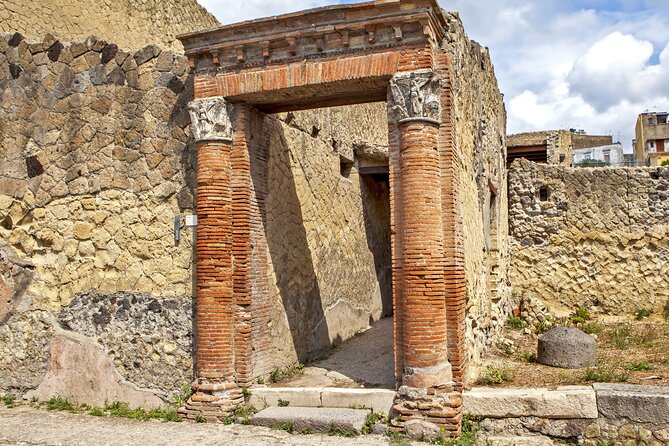
The House of the Faun was one of Pompeii’s largest private homes. Its name comes from a bronze statue of a dancing faun, and the house is known for its scale and decoration. The visit helps you compare elite domestic life with the public spaces seen earlier.
The Odeon, or Teatro Piccolo, was a smaller theater. Its design suited musical performances and more intimate events. The Teatro Grande was Pompeii’s principal theater, with a much bigger capacity and a more imposing setting.
These stops make the morning varied. You move from the Forum to residential streets, from bathing facilities to entertainment spaces. The tradeoff is that the schedule leaves little time for wandering. If you like to stop for long photo sessions or inspect every side room, two hours will not be enough.
The lunch break is useful, not especially scenic
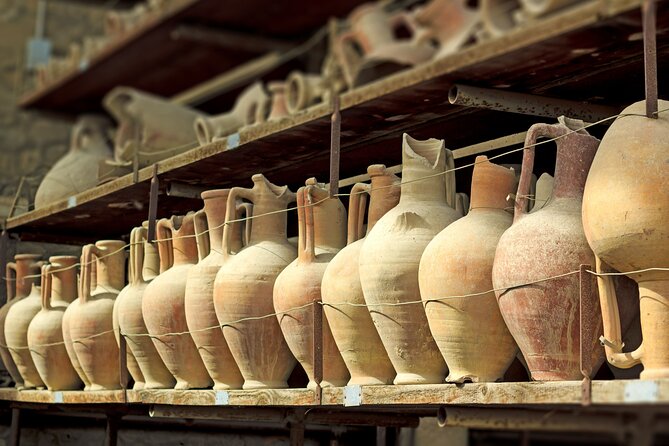
A short lunch stop comes before the transfer to Herculaneum. The break is generally around 50 minutes, and food is at your own expense.
The stop may be at a modern shopping center rather than in the archaeological area itself. That can feel out of tune with the ancient setting, especially if you hoped for a slow meal near Pompeii. The advantage is choice and convenience, with several food options in one place.
I would bring a snack in case you want to spend the break eating quickly and saving time for the ruins. Food and drinks are not included, and the schedule is too tight for an elaborate lunch.
Herculaneum offers finer detail
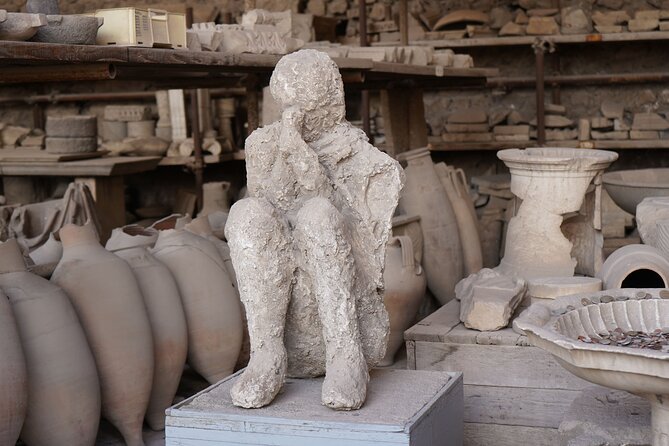
After lunch, you travel to Herculaneum by minibus or train, depending on your departure. The guide takes the group to the ticket office, and included admission lets you avoid buying separate entrance tickets on the day.
The House of the Deer is named for marble deer statues found in its peristyle. It is a strong example of the more decorative, residential character of Herculaneum. The terrace of Marcus Nonius Balbus adds public and political context. Balbus was a major benefactor who funded and restored public buildings, and his memorial honors show how civic generosity worked in the Roman world.
The College of the Augustales is connected with the cult of Emperor Augustus and may also have served as a local administrative center. It gives you a glimpse of religion, civic identity, and imperial loyalty at the town level.
Casa del Rilievo di Telefo is unusual because it had private access to the nearby Suburban Baths. That detail says a lot about comfort and status. It also shows why Herculaneum rewards close attention: small architectural links can reveal how wealthy residents used the town.
Wood, skeletons, and well-preserved houses
Casa del Tramezzo di Legno is named for its elegant wooden partition. Ancient wood is rare at archaeological sites, so this is one of Herculaneum’s most memorable details. The material makes the home feel less like a stone shell and more like an interrupted household.
The House of the Skeleton probably formed from three smaller buildings. Its name comes from human remains found in an upper room in the nineteenth century. Like the plaster casts at Pompeii, it adds a somber human dimension to the visit.
The Central Baths show the separation of men’s and women’s bathing areas, each with its own entrance. The House of the Black Salon is one of the town’s more luxurious mansions, with a monumental entrance and carbonized doorposts and lintel.
Casa Sannitica has a distinctive atrium surrounded by an Ionic-column gallery, along with frescoed rooms. Casa del Bel Cortile replaces the more usual atrium arrangement with a courtyard, stairway, and stone balcony. The House of the Grand Portal brings together columns, frescoes, and charred wooden remains.
This sequence is a major reason to add Herculaneum. Pompeii gives you scale and variety, while Herculaneum lets you stand close to the details of domestic life.
What the guide adds to the experience
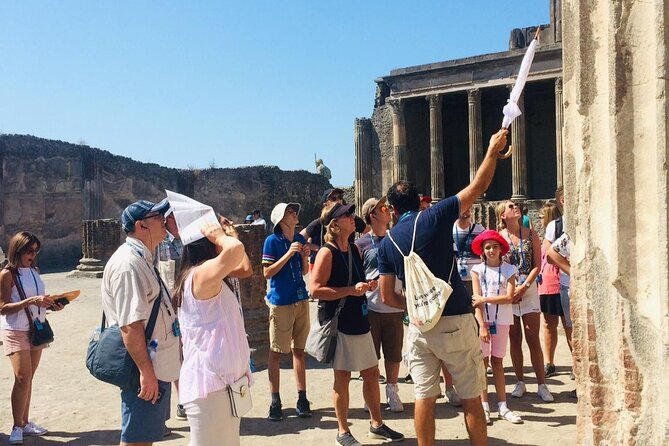
The guide is not simply there to point out buildings. The strongest guides connect what you see to how people lived. Michael has been praised for explaining minor details that are easy to miss. Diego is noted for making ancient daily life understandable. Michele, Paulo, Antonio, Alfredo, Amadeo, Tomas, Gianni, and Vince have also been praised for clear explanations, humor, patience, and enthusiasm.
Guides can vary, so I would not book on the promise of one specific person unless the operator confirms it. Still, the repeated strength of the archaeological guiding is important. You get a focused route and a chance to ask questions instead of trying to decode a large site map alone.
Headsets are supplied for all participants. That matters in noisy streets and open spaces, though one person had trouble staying connected when the guide moved too quickly. Stay close, especially at corners and during transfers.
The maximum group size is 20 people. That is small enough to hear most explanations, but it is not a private tour. If you want to set the pace yourself, a private guide or a self-guided visit would give you more freedom.
Is the $77.09 price good value?
At $77.09 per person, this is a strong package if you plan to see both sites in one day. Adult admission is listed at 20 euros for Pompeii and 16 euros for Herculaneum, before adding the guide, headsets, and transport.
The value is especially clear from Naples, Sorrento, or Rome, where minibus transport is included. You also avoid figuring out the best connection between the archaeological areas. From Pompeii, the train ticket is included, though you must arrange your return after the tour.
The price is less appealing if you prefer slow exploration. You are paying for efficiency and interpretation, not unlimited time. Pompeii alone can occupy most of a day, and this tour gives you only about two hours there.
Who should book this tour?
I would choose this tour if you are visiting the area for the first time, want to see both sites, and care about the archaeology behind the ruins. It suits couples, families with older children, and history-minded visitors who prefer a clear route to wandering without a plan.
It is also a good fit if you are based in Naples, Sorrento, or Rome and want transport handled for you. The day is long, but the minibus removes much of the stress.
I would hesitate if your priority is photography, quiet reflection, or detailed study of every building. Pompeii is too large for a full treatment in two hours. You may leave wanting to return, which is not a flaw, but it is worth knowing before you book.
The tour is not recommended for people with visual impairments unless they have a dedicated personal assistant. Most people can participate, but expect substantial walking on ancient streets and a full day of movement.
Free cancellation is available up to 24 hours before the start time. After that point, refunds are not provided, and changes are not accepted.
FAQ
How long does the tour last?
The experience lasts approximately 6 to 11 hours, depending on the departure option and transport arrangements.
Which sites are included?
The tour includes guided visits to both Pompeii and Herculaneum, with admission tickets for each site included.
How much time do I spend at Pompeii?
The guided visit to Pompeii lasts about two hours and covers major sights such as the Forum, Stabian Baths, House of Menander, Lupanar, House of the Faun, and the theaters.
How do I get from Pompeii to Herculaneum?
If you start in Pompeii, you travel with the guide by Circumvesuviana train. The journey takes about 30 minutes, followed by a walk of roughly 10 minutes to the ruins.
Is transport included from Naples, Sorrento, and Rome?
Yes. Naples and Sorrento options include round-trip minibus transport. The Rome option includes train tickets to Naples and full-day transport service.
Are food and drinks included?
No. Lunch and drinks are not included. A short lunch break takes place between the two archaeological sites, and you pay for your own food.
What happens after the Pompeii departure option?
The Pompeii departure option ends at the Herculaneum ruins. The return journey to Pompeii is not included, so you need to arrange your own way back.
Should you book it?
Book this tour if you want the efficient, guided version of Pompeii and Herculaneum. The combination of an archaeologist, included admissions, transport, and a small group makes the $77.09 cost sensible for a first visit.
Just set the right expectation. You will not see every corner of Pompeii, and the lunch stop is practical rather than memorable. You will see the major monuments, gain useful context, and discover why Herculaneum deserves equal billing. For most first-time visitors, that is a very good day’s work.
More Small-Group History Tours in Pompeii
- PompeiI Exclusive Tour with your Archaeologist in a Small Group
★ 4.5 · 363 reviews - Pompeii Small Group Tour – Tickets Included
★ 4.7 · 72 reviews - London Small Group Tour of Historical Pubs
★ 5.0 · 10,422 reviews - Boston: Freedom Trail History Small Group Walking Tour
★ 5.0 · 6,450 reviews
More Archaeological Site Tours in Pompeii
- Pompeii Skip-the-line Tour with Archaeologist Guide
★ 5.0 · 559 reviews - Explore Pompeii with an Archaeologist
★ 5.0 · 511 reviews - Pompeii 3hours Villa of Mysteries tour with an Archaeologist
★ 4.8 · 486 reviews - Pompeii Private Tour with an Archaeologist and Skip The Line
★ 5.0 · 391 reviews
Just added around Pompeii
- Pompeii and Herculaneum: Guided Tour with an Archaeologist★ 5.0 · 164 reviews
- Pompeii Guided Tour with Archaeologist★ 4.6 · 27 reviews
- Pompeii: Guided Tour with Archaeologist with max. 12 People★ 5.0 · 155 reviews
- Pompeii Small Group Tour – Tickets Included★ 4.7 · 72 reviews
- Pompeii: 2-Hour Guided Tour with an Archaeologist★ 4.9 · 151 reviews
- PompeiI Exclusive Tour with your Archaeologist in a Small Group★ 4.5 · 363 reviews
- Pompeii Private Tour with an Archaeologist Guide★ 5.0 · 184 reviews
- Pompeii Private Tour with an Archaeologist and Skip The Line★ 5.0 · 391 reviews
Pompeii History Tours, compared.
Pompeii: Entry Ticket and Guided Tour with an Archaeologist
Read our review →
Pompeii: Small Group Tour with an Archaeologist
Read our review →Pompeii Small Group Tour with an Archaeologist
Read our review →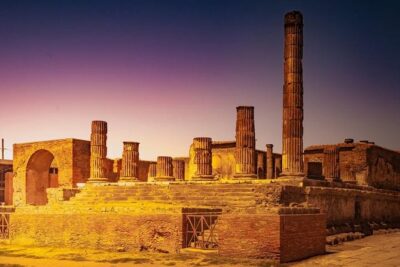
Discover the Ancient Ruins of Pompeii: Day Trip from Rome
Read our review →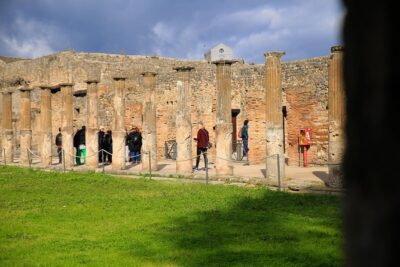
Skip the Line Guided Tour of Pompeii led by an Archaeologist
Read our review →
Pompeii: Tour with Archaeologist Guide & Skip-the-Line Entry
Read our review →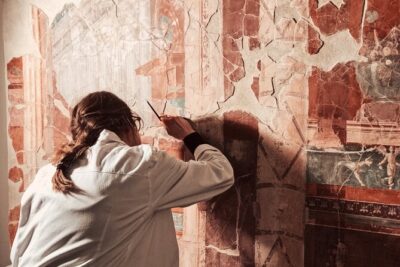
Pompeii Private Tour with an Archaeologist and Skip The Line – 3 hours
Read our review →