
Review · BUCHAREST
Bucharest: 3-Hour Dark History Tour with a Local
Bucharest’s darker stories are not tucked away in a museum. They sit beside busy streets, in old cemeteries, and around squares where people faced tanks, police, and gunfire. This tour links those places, from Bellu Cemetery to Revolution Square, with stories about royal Romania, interwar sex work, a 1970s serial killer, and Ceaușescu’s communist rule.
I like the Bellu Cemetery visit, where funerary sculpture, folklore, famous graves, and stray cemetery cats give the past a human scale. I also like the way the tour connects the 1989 Revolution with the less familiar student protests of the 1990s, rather than treating communism as a single chapter that ended overnight.
The main consideration is the amount of walking. You spend time outdoors, often standing while your guide talks, and the route can feel cold in winter. At $55 per person, the price is fair if you want a small-group, story-led tour with metro tickets and a local guide, but less appealing if you prefer grand buildings and a gentle sightseeing pace.
Key points to know before you book
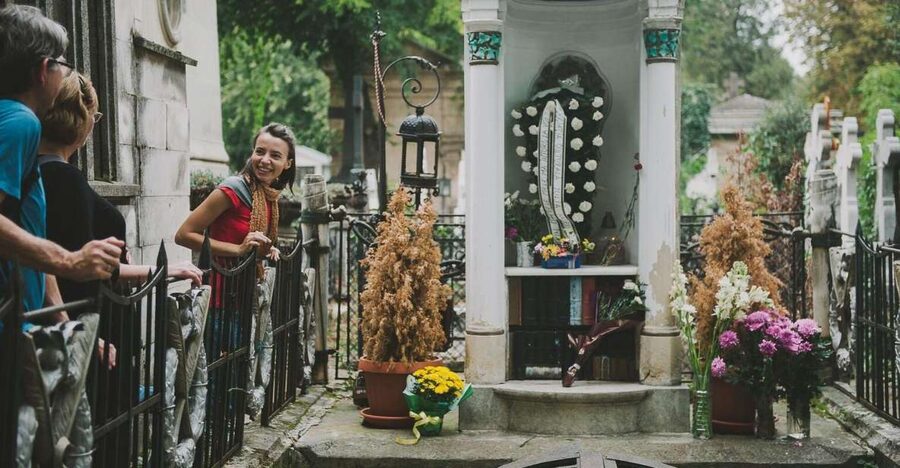
- Six cemeteries on one city street: Begin near a cluster that includes the Jewish Cemetery, the Cemetery of the Russian Soldiers, the Cemetery of the Victims of the 1989 Revolution, and Bellu Cemetery.
- Bellu is the emotional center: Expect ornate tombs, sad love stories, sinister mysteries, folklore, and time to look closely at funerary art.
- The past keeps changing shape: The route moves from royal and interwar Bucharest to communist prisons, labor camps, the Securitate, and the 1989 uprising.
- Not just a ghost walk: Stories about sex work, political violence, dictatorship, and survival give the tour a serious historical purpose.
- Guides bring different strengths: Alex is especially strong on architecture and history, Elena is warm and engaging, and Vlad is known for personal communist-era context and thoughtful detail.
- Plan for outdoor weather: Wear comfortable shoes and bring warm layers in colder months. Anyone under 16 cannot join.
Why Bucharest’s dark past works best on foot
The tour begins at the main entrance of the Ion Luca Caragiale National Theatre on Bulevardul Nicolae Bălcescu 2. This is a practical central meeting point, close to University Square and easy to identify.
From there, you move through Bucharest by foot and metro. The public transport matters because the route covers several parts of the city without wasting half the afternoon in traffic. Metro tickets are included, so you do not need to stop and buy them during the tour.
The group is limited to 12 people. That is small enough for questions and conversation, but it is not necessarily a private tour. Some dates may have only a few bookings, and several guides have tailored the route to the interests of the people in front of them. If you want to ask about architecture, folklore, communist life, or the Revolution, this is the sort of tour where questions can improve the experience.
The tone is serious, but it is not grim from start to finish. Guides such as Alex, Elena, Andra, Vlad, Irina, and Bogi use humor, personal stories, photographs, and small visual details to keep the history connected to the streets around you. You might hear about bullet holes, street art, local plants, architecture, food, or the lives of ordinary people alongside the larger political events.
That mix is important. A dark-history tour can become a string of shocking anecdotes. This one has more value when the guide explains why each place matters and how Bucharest changed over time.
More Dark History and Haunted Tours in Bucharest:
- Normandy D-Day Sites & Cemetery Day Trip from Paris with Lunch
★ 5.0 · 6,877 reviews - Prague: Ghosts, Legends, Medieval Underground & Dungeon Tour
★ 4.3 · 5,104 reviews - Savannah History and Haunts Candlelit Ghost Walking Tour
★ 5.0 · 3,235 reviews
Six cemeteries before Bellu Cemetery
The first section introduces a street with no fewer than six cemeteries. The exact atmosphere depends on the season, but the idea itself is striking: a major urban route is bordered by layers of memory that many people pass without noticing.
Among the cemeteries are the Cemetery of the Victims of the Revolution in 1989, the Jewish Cemetery, the Cemetery of the Russian Soldiers, and Bellu Cemetery. Each points to a different part of Bucharest’s past. The 1989 cemetery recalls the people killed during the overthrow of Nicolae Ceaușescu. The Jewish cemetery reflects a community and a chapter of Romanian history that deserves more attention. The Russian soldiers’ cemetery points to the conflicts and armies that shaped the region.
Your guide provides the links between these places. That is one of the strongest reasons to take the tour instead of simply walking past the gates on your own. A cemetery can look like a collection of names and stones until someone explains who is buried there, what the symbols mean, and what local beliefs say about death.
Expect to stop several times for stories. This is not a fast photo visit. You will be standing, listening, and looking carefully at details that are easy to miss from a moving vehicle.
Bellu Cemetery, Bucharest’s open-air gallery of the dead
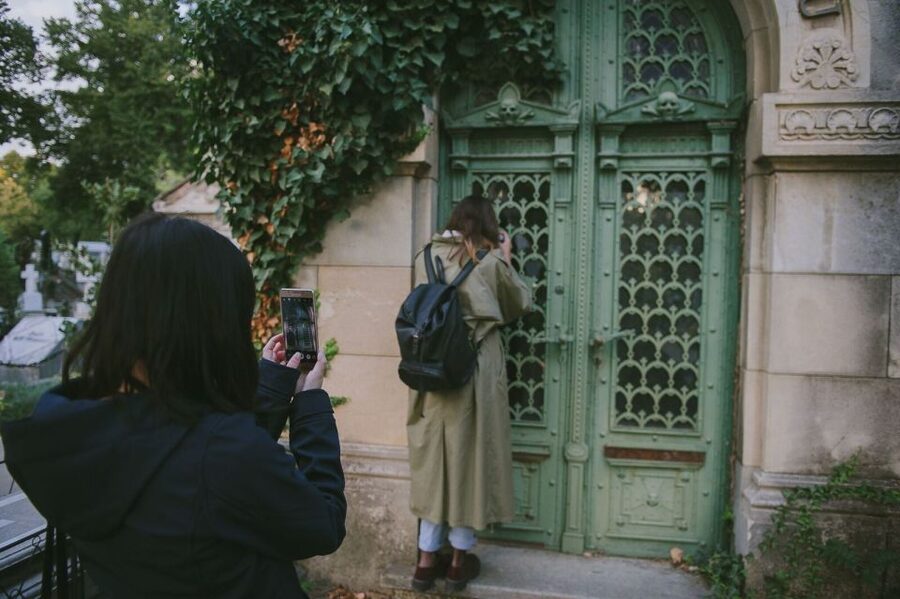
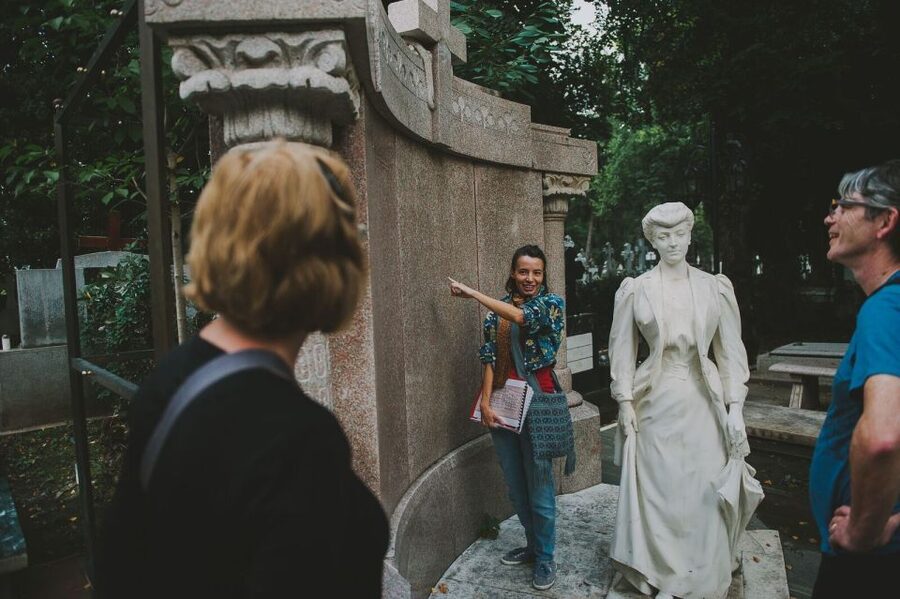
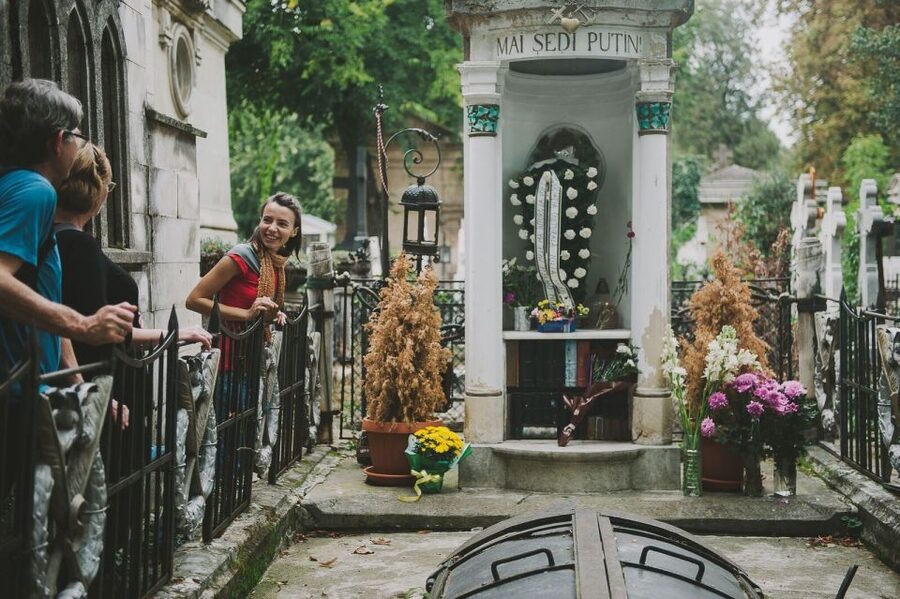
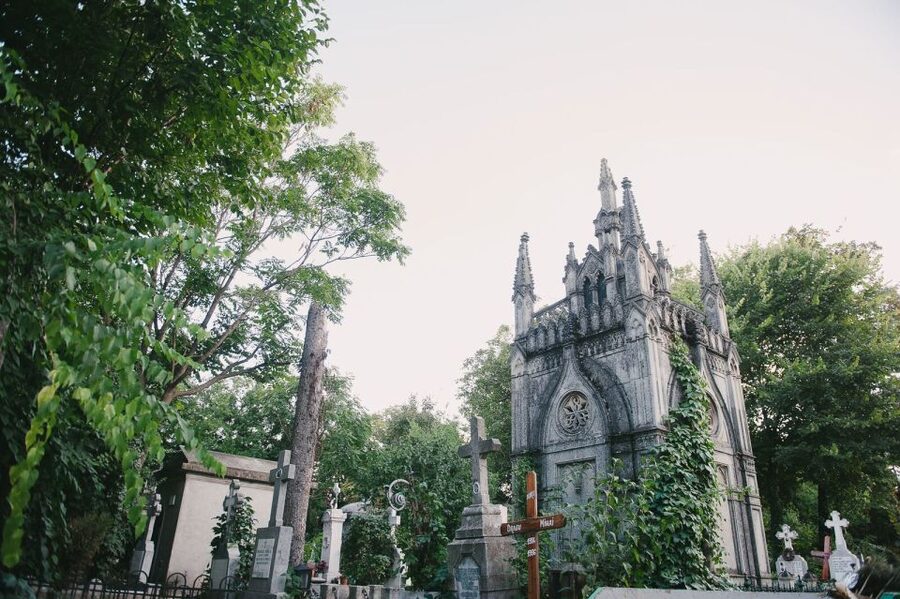
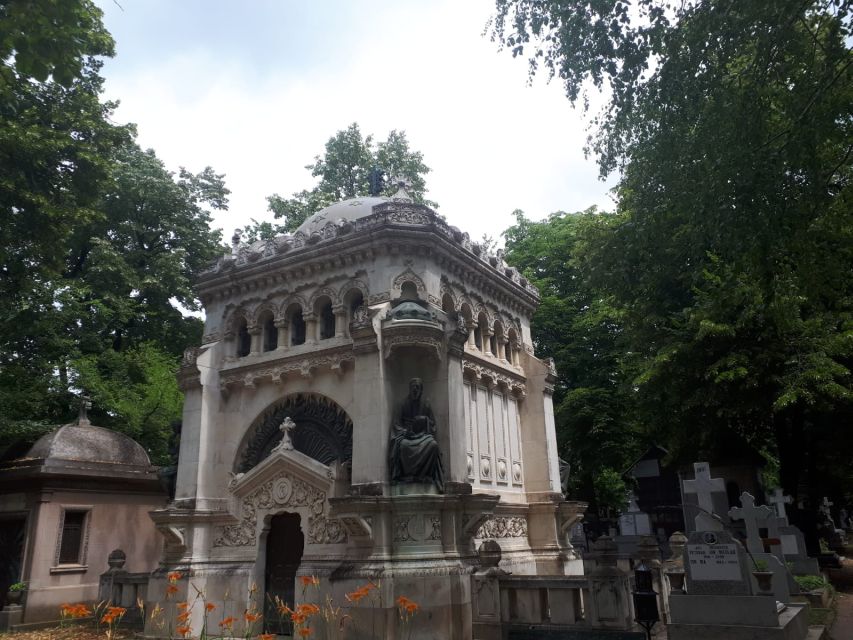
Bellu Cemetery is the main attraction for many people on the route. It is a national historical monument, and its tombs include elaborate funerary architecture rather than rows of identical markers.
The cemetery has the feel of an open-air gallery, but the stories give it more weight than a collection of beautiful stonework. You hear about tragic romances, family loss, local legends, and sinister mysteries. The guide helps you read the monuments as evidence of social status, artistic taste, grief, and changing ideas about death.
I would give this stop your full attention. The sculpture and crypts are visually strong, but the real pleasure is slowing down enough to notice the small details. One guide might focus on architecture, another on folklore, and another on the personalities connected with the graves. Alex, for example, is often praised for drawing attention to design and small clues, while Elena and Irina are known for telling the human stories in an engaging way.
The cemetery also has a less formal side. Stray cats and dogs live around some of the sites, and guides including Elena have shown genuine care for them, sometimes carrying food or treats. That is not the advertised centerpiece, but it can soften the mood after the darker stories. You may see cats being fed or cemetery dogs being petted, a reminder that the place is not simply a stage for spooky tales.
There is one practical drawback. Cemeteries are outdoor spaces, and you may spend a long time standing on uneven ground. Comfortable shoes are essential. In November, December, January, and February, warm clothing matters more than you might expect because listening quietly in one place can make you feel colder than walking.
University Square and the bloodied story of protest
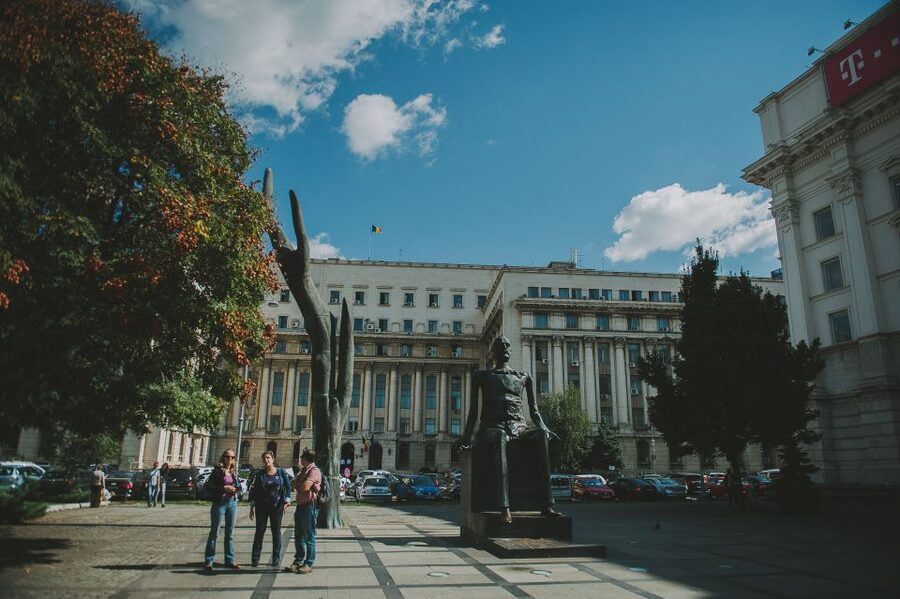
The tour then turns toward University Square, one of Bucharest’s most important public spaces. It played a major role in the 1989 Revolution and in the anti-communist student protests of the 1990s.
This stop helps you understand that the fall of communism was not a clean, simple ending. The Revolution began with public resistance, but the years that followed brought confusion, political struggle, and further violence. The square became a place where people demanded a different future, and where those demands met force.
A good guide makes the location easy to picture. You learn what happened in the square, how people gathered, and why this part of the city became so charged. Guides have also used personal memories and photographs to explain what daily life under communism felt like, rather than relying only on dates and official names.
This is one of the best parts of the tour for anyone who knows little about Romania after 1989. The discussion moves beyond Ceaușescu’s final days and shows that political change did not instantly produce comfort or agreement.
If you want a polished architectural tour, this section may feel less satisfying. The focus is on events, people, and power rather than decorative façades. If you care about how ordinary people experienced political change, it is much more rewarding.
More Three-Hour Tours in Bucharest:
- Berlin: 3-Hour World Heritage Cruise to Potsdam
★ 4.5 · 1,569 reviews - Edinburgh: 3-Hour Historical Walking Tour in Italian
★ 4.7 · 734 reviews - Pompeii Private Tour with an Archaeologist and Skip The Line – 3 hours
★ 5.0 · 564 reviews - 3-Hour Porto Jewish Heritage Walking Tour with Local Guide
★ 4.5 · 396 reviews
Little Paris, brothels, and the Vampire of Bucharest
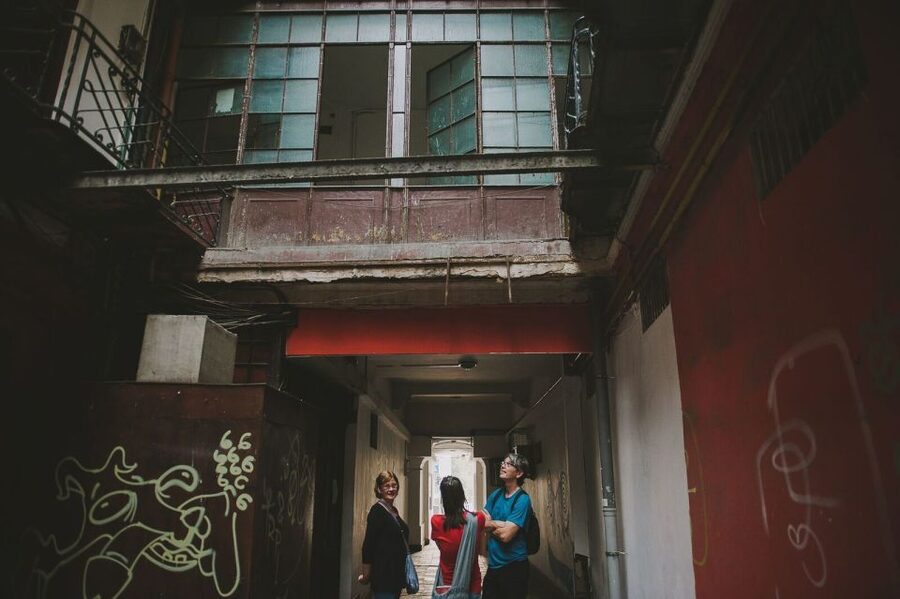
Bucharest was once called Little Paris because of its fashionable atmosphere, French influences, elegant streets, and social ambitions. The tour uses that period as a bridge into a less polished subject: the sex trade in interwar Bucharest.
You glimpse what remains of a former interwar brothel and hear how prostitution operated in the city. This is not treated as a cheap shock story. It helps show the gap between the sophisticated image of Little Paris and the working lives, exploitation, desire, and social rules that existed behind that image.
The route also introduces the serial killer nicknamed the Vampire of Bucharest, who terrorized the city in the early 1970s. This story gives the tour its clearest crime-history element, but it sits inside a wider account of Bucharest rather than taking over the whole afternoon.
If you expect a dedicated vampire tour, adjust your expectations. The experience is about Romanian history and city life, with criminal folklore as one strand. You will get more political history than supernatural theater.
This section can be especially useful if you have already seen Bucharest’s standard old-town sights. It points toward a city of hidden professions, social contradictions, and uncomfortable stories that do not fit neatly into a postcard.
Revolution Square and the machinery of communist fear
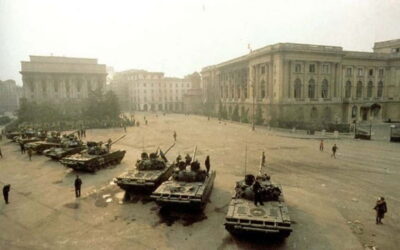
The final major stop is Revolution Square, where the 1989 Revolution began in Bucharest. Here the tour turns from individual crime and cemetery lore toward the state’s use of fear.
You learn about communist prisons, labor camps, torture methods, and the Securitate, Romania’s secret police. The discussion also covers Ceaușescu’s dictatorship and the daily hardships people faced while trying to survive under the regime.
This part gives the tour its greatest historical weight. The point is not simply that the communist government was harsh. You are shown how surveillance, imprisonment, shortages, forced labor, and punishment shaped ordinary decisions and private conversations.
Personal context can make a major difference here. Vlad has been praised for sharing his own understanding of life under Romanian communism, while other guides bring family memories, photographs, or stories passed down through the community. Ask questions if you want to understand how large political policies affected homes, work, food, travel, and trust between neighbors.
The tour does not present Romania as a country defined only by suffering. It also shows resistance, humor, survival, culture, and the ability to rebuild. That balance matters. Without it, a dark-history route can reduce a complicated country to dictators and graves.
What guides Alex, Elena, Andra, Vlad, and Irina add
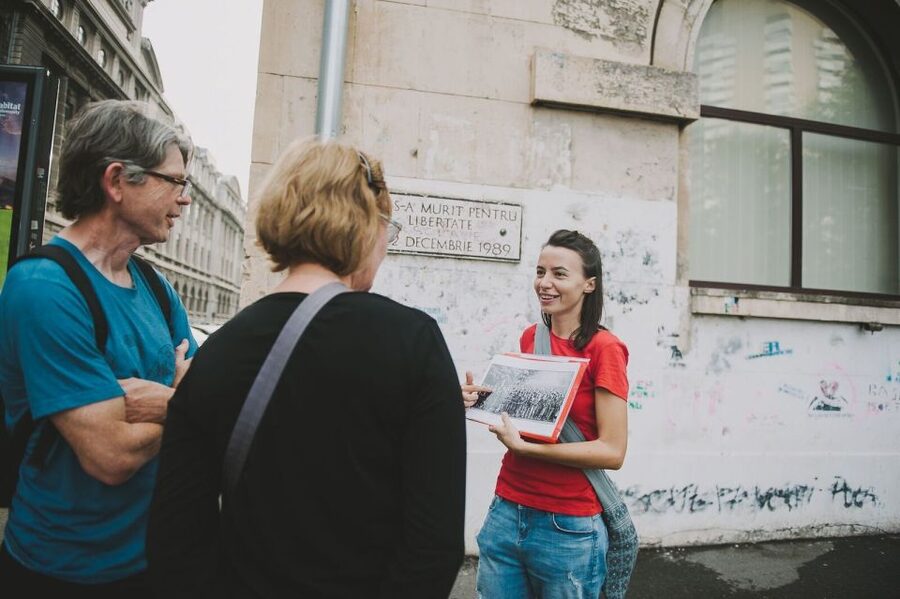
The experience is guide-led, so the person assigned to your group shapes the afternoon. The available guides have different personalities, but the strongest pattern is clear: they rely on explanation and storytelling rather than a memorized list of dates.
Alex is a strong choice for visitors interested in architecture, street details, and historical context. He has used photographs and pointed out things such as bullet holes, street art, and local plants, which can make the walk feel more observant and less like a lecture.
Elena has been especially warm and conversational. She asks questions, adapts to the group, and brings local food suggestions into the conversation. Her care for the cemetery cats and dogs adds a personal touch to the Bellu visit.
Andra is a good fit if you like clear explanations, humor, and social history. Irina is praised for her storytelling and strong grasp of Romanian history. Vlad tends to offer detailed historical commentary, personal communist-era context, and extra material after the tour.
You cannot choose the guide with certainty unless the booking system specifies one, so treat these names as examples of the guiding style available rather than a guarantee. The important point is that the quality of the experience depends less on a fixed script than on the guide’s ability to explain what you are seeing.
Is $55 a fair price for three hours?
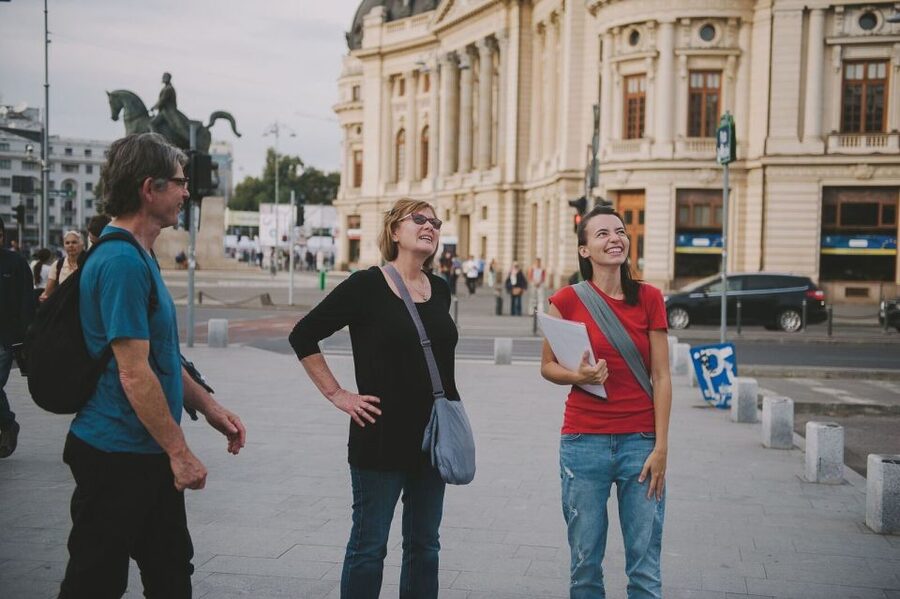
At $55 per person, this is not the cheapest way to walk around Bucharest. Still, the price includes an English-speaking local guide, metro tickets, and a traditional street snack. You are also paying for the connections between several sites, not just admission to one attraction.
The value is strongest if you want context. Bellu Cemetery is free to approach on your own, and you can visit public squares without a tour. What you cannot easily reproduce is the sequence of stories linking the cemeteries, Revolution Square, interwar Bucharest, the Securitate, and the city’s crime folklore.
A traditional Romanian chocolate bar or another street snack may be handed out during or at the end of the tour. Additional food, drinks, souvenirs, and shopping are not included.
For a group of up to 12, three hours is a useful length. It is long enough to cover serious material without taking the entire day, though the amount of walking can make it feel full. Some private or very small groups have received extra time, but you should not count on that.
Who should book this Bucharest dark history tour?
I recommend it if you enjoy cemeteries, political history, folklore, architecture, crime stories, or local social history. It is also a strong first tour in Bucharest if you want to understand the city before exploring more traditional sights.
You should be comfortable with mature subjects. The tour discusses murder, prostitution, executions, torture, political imprisonment, and people killed during the 1989 Revolution. The mood is often thoughtful and sometimes humorous, but it is not suitable for children under 16.
It is less suitable if you dislike walking, need indoor shelter, or want a relaxed overview of famous buildings. You will spend time outside and may stand while listening. In cold weather, wrap up warmly. In warm weather, carry water and wear shoes that can handle several hours on foot.
The small group size, metro rides, and local guide make the tour especially useful for solo visitors and couples who want conversation rather than a large bus group. It also suits repeat visitors who have already seen the Old Town and want a more unusual route.
You can cancel up to 24 hours before the start for a full refund, and reserve now while paying later, which helps if your Bucharest schedule is still changing.
Should you book it?
Book this tour if you want Bucharest explained through uncomfortable places and human stories. Bellu Cemetery alone is worth serious consideration, but the stronger experience comes from connecting its memorials with the 1989 Revolution, interwar sex work, the Vampire of Bucharest, and communist state terror.
Skip it if you want a short, easy city orientation or a tour focused on grand architecture. For everyone else, $55 buys three focused hours, local interpretation, metro transport, and a side of Bucharest that is difficult to find by simply wandering.
FAQ
Where does the tour meet?
The meeting point is at the main entrance of the Ion Luca Caragiale National Theatre, Bulevardul Nicolae Bălcescu 2, Bucharest.
How long does the tour last?
The tour lasts three hours.
What language is the tour in?
The live tour is conducted in English.
What is included in the price?
The price includes an English-speaking local guide, metro tickets, and a traditional street snack.
Is Bellu Cemetery included?
Yes. Bellu Cemetery is one of the main stops on the route.
Is the tour suitable for children?
No. People under 16 are not permitted to join.
How large is the group?
The maximum group size is 12 people.
What should I bring?
Bring comfortable shoes. Warm clothing is also a sensible choice in cold weather because much of the tour takes place outdoors.
Just added around Bucharest
- Private Tour: Transylvanian Castles and Brasov’s Medieval Old Town★ 5.0 · 42 reviews
- Visit Bulgaria – Veliko Tarnovo Medieval Fortress – Private tour from Bucharest★ 5.0 · 51 reviews
- Day Trip to Medieval Bulgaria- Small group tour★ 3.5 · 75 reviews
- Guided Walking Tour of Historical Bucharest★ 5.0 · 84 reviews
- Bucharest Jewish Heritage | Holocaust Memorial | Private Car Tour★ 5.0 · 38 reviews
- 2-Day Medieval Transylvania with Brasov,Sibiu and Sighisoara Tour from Bucharest★ 4.5 · 145 reviews
- Day trip to Dracula’s Castle, Peles Castle and Medieval Brasov★ 4.5 · 41 reviews
- 3-Day Medieval Transylvania Package Tour★ 4.7 · 31 reviews
Bucharest History Tours, compared.
Bucharest: Communism and History Guided City Walking Tour
Read our review →
From Bucharest: Small Group Day Trip to Medieval Bulgaria
Read our review →
Peles Castle, Dracula’s Castle and Medieval Town of Brasov in one day
Read our review →
Bucharest: Small Group History, Art & Secrets Tour
Read our review →
2-Day Medieval Transylvania with Brasov,Sibiu and Sighisoara Tour from Bucharest
Read our review →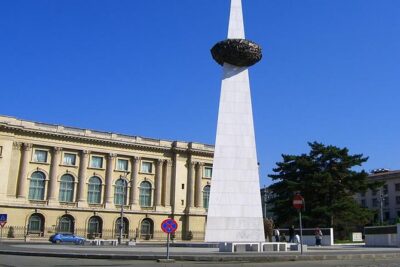
Roma Culture, Realities and Slavery History, Walking tour
Read our review →Browse the lists this tour appears in