

Review · PARIS
Small-Group Canadian Normandy D-Day Juno Beach from Paris
Juno Beach is not just a name on a map. You walk on the same sand where Canadian troops came ashore on June 6, 1944, then visit the Canadian Cemetery at Bény-sur-Mer and the Juno Beach Centre. I especially like the small group of no more than eight and the way guides such as Aaron, Julien, Enzo, and HP use maps, photographs, and personal stories to explain what happened.
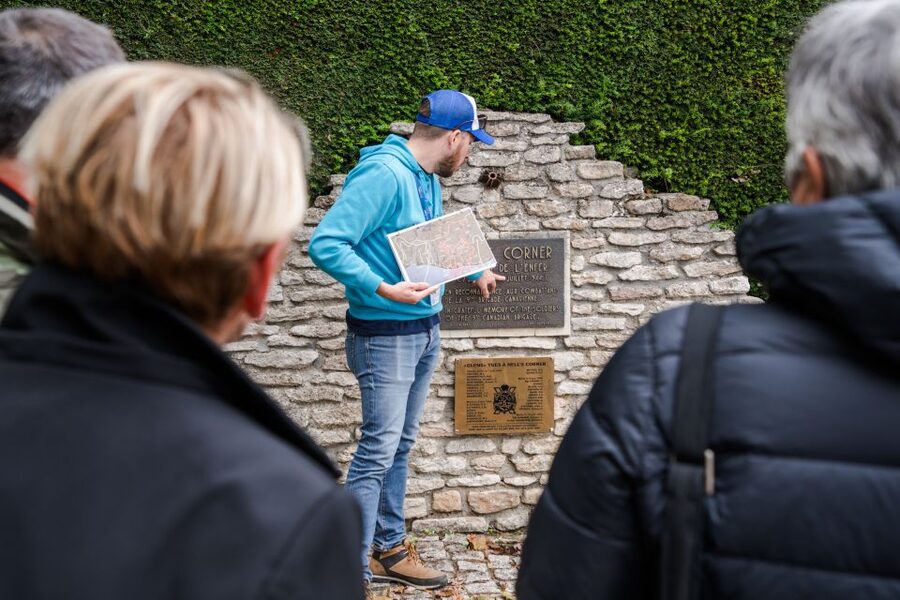
I also like the stop at Hell’s Corner, the furthest point reached inland by Canadian troops on D-Day, and the chance to see Abbey d’Ardenne, once used as a German headquarters. The drawback is the long day: roughly three hours each way from Paris, an early start, and a return around 8:00 PM, with traffic able to stretch the ride.
Key points to know before booking
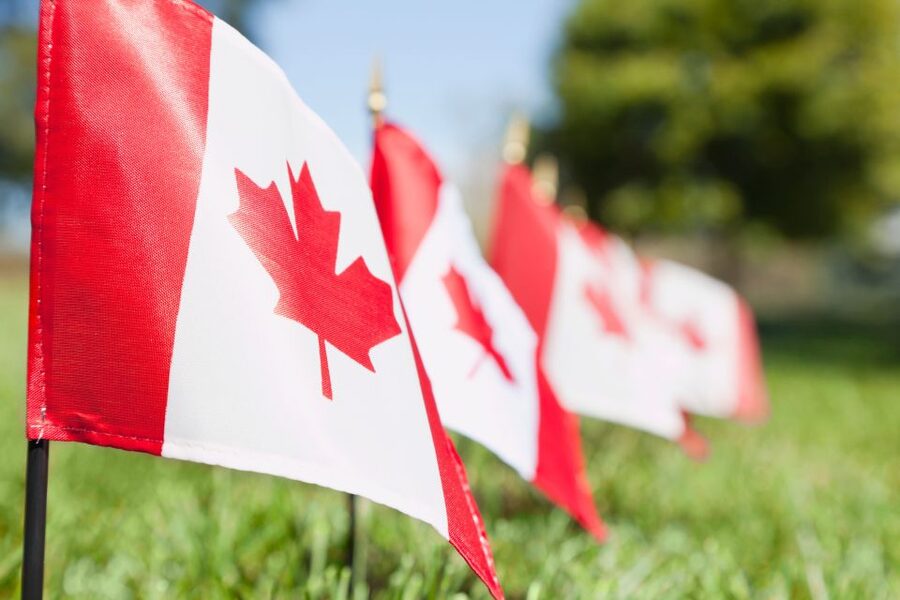
- Walk on Juno Beach: You have time to stand on the shore and consider the distance Canadian troops crossed under fire.
- Small group, maximum eight: The minibus setting makes it easier to ask questions and hear the guide than on a large coach.
- Canadian focus: The Canadian Cemetery, Juno Beach Centre, Hell’s Corner, and Abbey d’Ardenne keep the day centered on Canada’s role in Normandy.
- Guides shape the day: Guides including HP, Aaron, Julien, Enzo, Mathieu, Brun, and Clements have been praised for clear explanations, good pacing, and sensitivity.
- A full 13-hour commitment: Departure is at 7:00 AM, with an expected Paris return near 8:00 PM.
- Food is extra: Lunch is not included, so plan to buy food during the day or bring something along.
Why Juno Beach deserves a full day from Paris
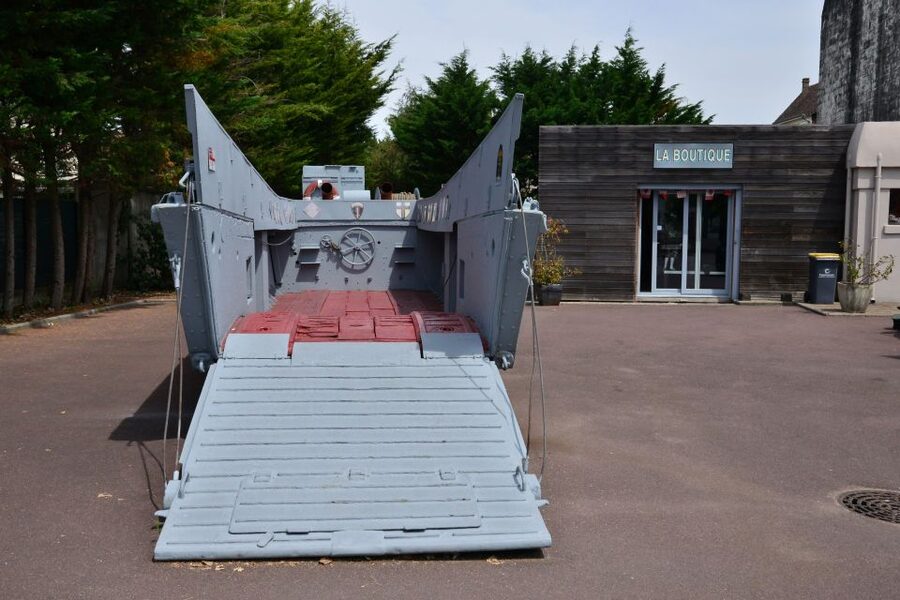
The Canadian landing at Juno was one part of the huge Allied assault on Normandy, but this tour keeps its attention on the Canadian troops who landed or parachuted into France. More than 14,000 Canadians took part on June 6, 1944. That number matters, but the places make the history easier to grasp.
At Juno Beach, the story shifts from military maps to physical ground. You can look across the shore, walk on the sand, and picture how exposed the landing area was. The beach is peaceful now, which can make the contrast with the events of 1944 especially powerful.
I would not choose this excursion simply because it is an easy way to check Normandy off your list. It is a long, serious day built around remembrance. You will spend plenty of time in a vehicle, but the reward is seeing several sites linked to Canada’s advance rather than visiting only one museum.
The mood can be emotional. Several parts of the visit are quiet and reflective, especially the cemetery and the beach. If you prefer a fast-moving sightseeing day with little military content, this is probably not the right outing.
More WWII and D-Day Tours in France
- Normandy D-Day Sites & Cemetery Day Trip from Paris with Lunch
★ 5.0 · 6,877 reviews - Normandy D-Day Small-Group Day Trip with Omaha Beach, Cemetery & Cider Tasting
★ 5.0 · 2,786 reviews - Normandy D-Day Beaches and American Cemetery Day Trip from Paris
★ 4.5 · 2,673 reviews
Leaving Paris at 7:00 AM in a group of eight
The meeting point is Café Dada Ternes. You need to arrive at least 15 minutes early, since the minibus leaves sharply and late arrivals cannot be accommodated. The driver-guide is expected to arrive in a gray minibus about 10 minutes before departure.
The maximum group size is eight. That is a major advantage on a day with so much explanation. You are not trying to hear a guide from the back of a full-size coach, and there is more room for questions and conversation. Guides such as Mathieu have also been praised for making the long drive pleasant, while HP has taken scenic roads instead of using only the fastest highway route.
The drive from Paris to Normandy takes about three hours each way, depending on traffic and the route used. That means you should think of this as a full excursion, not a quick side trip. Bring something to drink, dress for changing weather, and keep your expectations realistic about how much time is spent on the road.
The minibus has generally been described as comfortable, but conditions can vary. One complaint noted that the air conditioning did not work properly on a very hot 34-degree day. That is a useful reminder that a small vehicle can feel warm or crowded when weather turns extreme.
Juno Beach: where the history becomes physical
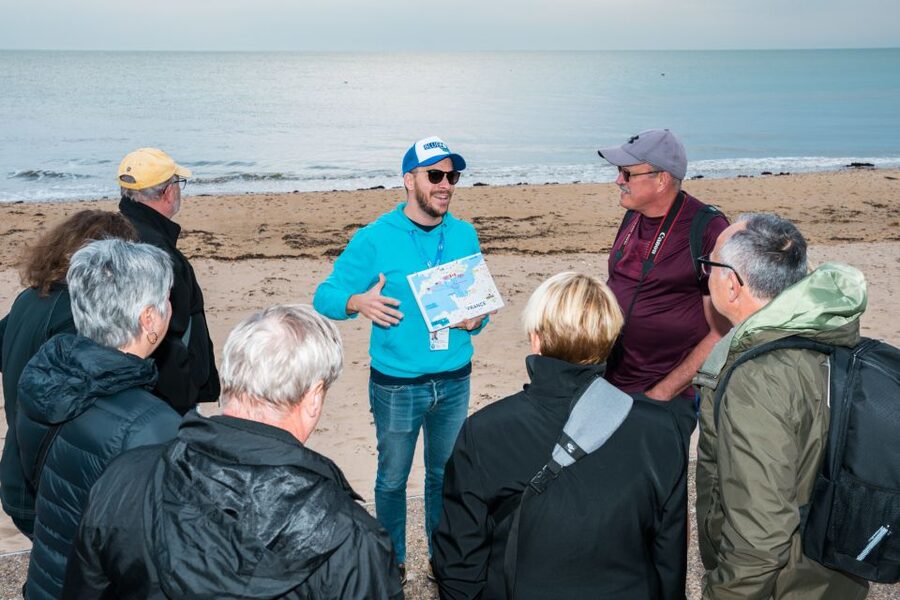
The beach is the emotional center of the day. You walk along the shore and see the same stretch of sand used by Canadian troops during the invasion. No exhibit can quite replace that moment of physical contact with the site.
Your guide should help you understand what you are seeing rather than leaving you with only a scenic walk. The strongest guide experiences have included maps, photographs, audio excerpts, and explanations of military movements. Clements, for example, has been praised for presenting the soldiers’ stories with both precision and feeling, while Brun has connected the military events with family stories from the Second World War.
Weather matters here. Normandy can be cold and windy even in late April, and the tour runs in rain or sunshine throughout the year. Bring a warm jacket and hat outside the summer months. Waterproof clothing is sensible, too, since there is no guarantee of dry weather on the shore.
The beach itself is not a long recreational stop. Its value comes from the setting and the story. You may find the visit more moving than visually dramatic, and that is the point. The quiet sand makes it easier to reflect on what the Canadian troops faced.
The Juno Beach Centre and the Canadian story
The Juno Beach Centre is described as the most extensive museum devoted to the Canadian landings in Normandy. Entrance is included, and the tour uses a separate entrance to help avoid the regular line.
You should allow time to look around rather than treating the museum as a quick indoor break. The exhibits give context to the landing, the Canadian military effort, and the events that followed. This is where the beach visit gains structure. Without the museum, it is easy to see the shore only as a peaceful stretch of coast. Inside, you can connect that place to planning, combat, sacrifice, and the wider campaign.
Pacing is important. Some people have found the museum time adequate, while another visitor wanted more time to browse and felt parts of the day moved too quickly. That tension is understandable. A 13-hour excursion has many stops, and traffic can take time away from the sites.
Your guide may adjust the schedule when needed. Nick and other guides have been praised for changing the plan in useful ways, but there is no promise that every group will receive the same amount of time at every stop. If the museum is your main interest, tell the guide early in the day.
More WWII and D-Day Tours in Paris
- Paris: Normandy D-Day Sites Guided Day Trip with Lunch
★ 4.7 · 1,082 reviews - From Paris: Normandy D-Day Landing Beaches Full-Day Tour
★ 4.8 · 698 reviews - Paris WW2 The German Occupation Small group or Private tour
★ 4.5 · 128 reviews - Normandy D-Day Private Tour with Omaha Beach from Paris
★ 5.0 · 87 reviews
Bény-sur-Mer Canadian Cemetery
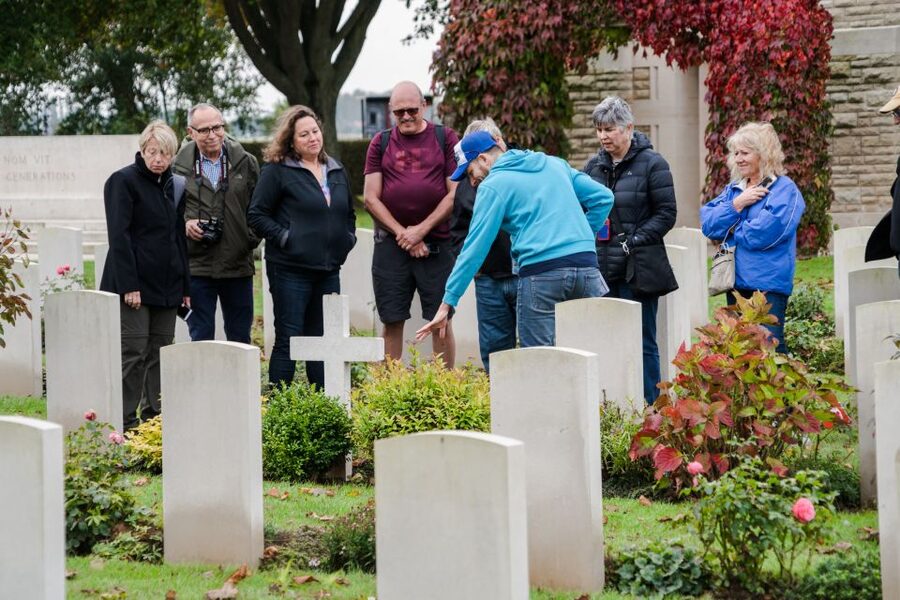
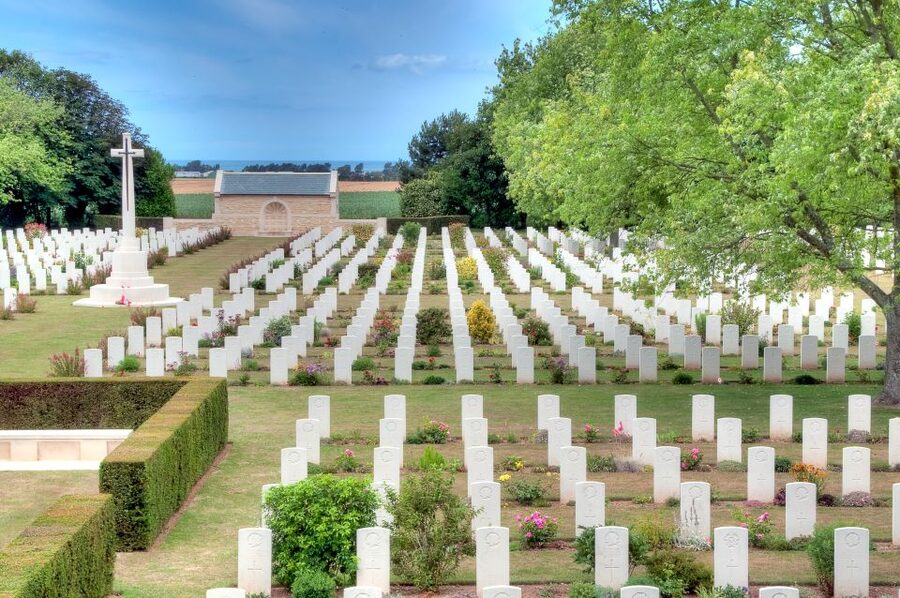
The Canadian Cemetery at Bény-sur-Mer is one of the day’s most solemn stops. You can walk through the grounds and pay respects to the Canadian soldiers buried there. The visit is not built around spectacle. Its power comes from the names, the orderly rows, and the reminder that the beach landing carried a terrible human cost.
Give yourself permission to slow down here. The guide can provide context, but this is also a place for quiet. Visitors with a family connection to the Canadian forces may find the stop especially personal. One person described standing on Juno Beach where a parent had stood 80 years earlier, then visiting the cemetery. You do not need a family link to feel the weight of the place, but such a connection can make the day deeply personal.
The cemetery is one reason I would not squeeze this outing between other major plans. You need mental space as well as physical time. Rushing from the graves to the next stop would miss part of what makes the visit worthwhile.
Hell’s Corner and the inland advance
The tour also visits Hell’s Corner, identified as the furthest inland advance reached by Canadian troops on D-Day, about five miles from Caen. This stop helps correct a common misunderstanding: the invasion was not only about reaching the beach. Troops had to move inland, hold ground, and face continuing danger.
The site gives the day a wider frame. After standing at the shoreline, you see how far the Canadian advance went. The distance may look modest on a modern map, but the guide’s account of the fighting helps explain why even a few miles represented a major achievement.
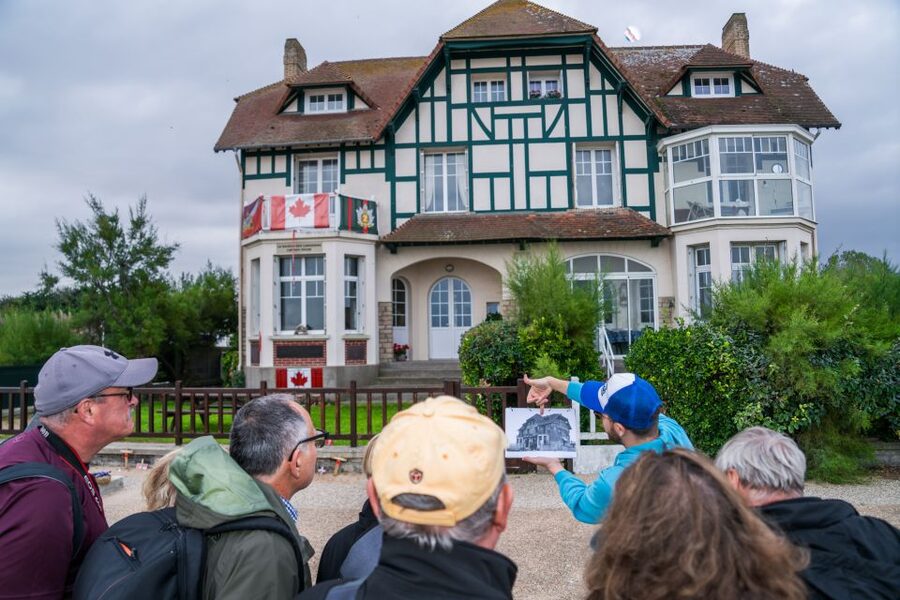
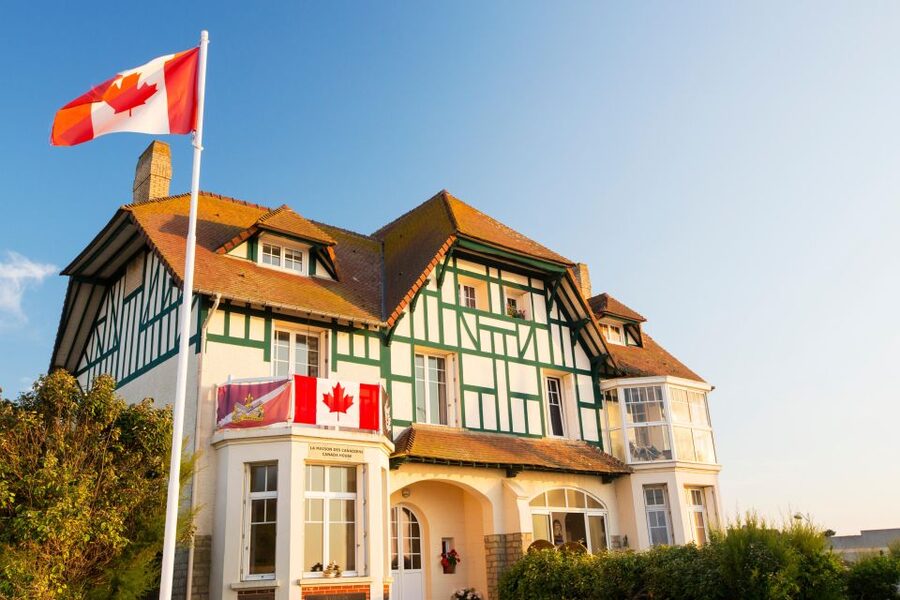
Some groups have also met people connected with a house in the Hell’s Corner area and seen a personal collection of German and Canadian ammunition. That kind of visit is not listed as a guaranteed part of every departure, so treat it as a possible bonus rather than a promised stop. The same applies to Canada House on Juno Beach, where some guides have arranged extra access with Madame Hoffer. It can add a personal local voice, but availability depends on the day.
Abbey d’Ardenne and the German position
Abbey d’Ardenne was used as a German headquarters, and seeing it adds an important opposing viewpoint to the Canadian story. The stop helps you understand that the Allied troops were not moving through an empty coast. German forces had prepared defensive positions, including bunkers, and the advance met organized resistance.
This part of the itinerary is useful for people who want more than a Canadian memorial visit. You see how the area functioned during the fighting and how the locations were tied to command and defense. It also gives your guide a chance to explain the battle beyond the first moments of the landing.
The tour can include bunkers and other military remains near the beach. The amount of time available may vary, and one person found the bunker discussion too general. If fortifications interest you most, ask focused questions. A good guide can often explain the details that matter to you, but a single day cannot cover every bunker, unit, and movement in depth.
Guides make or break a history tour
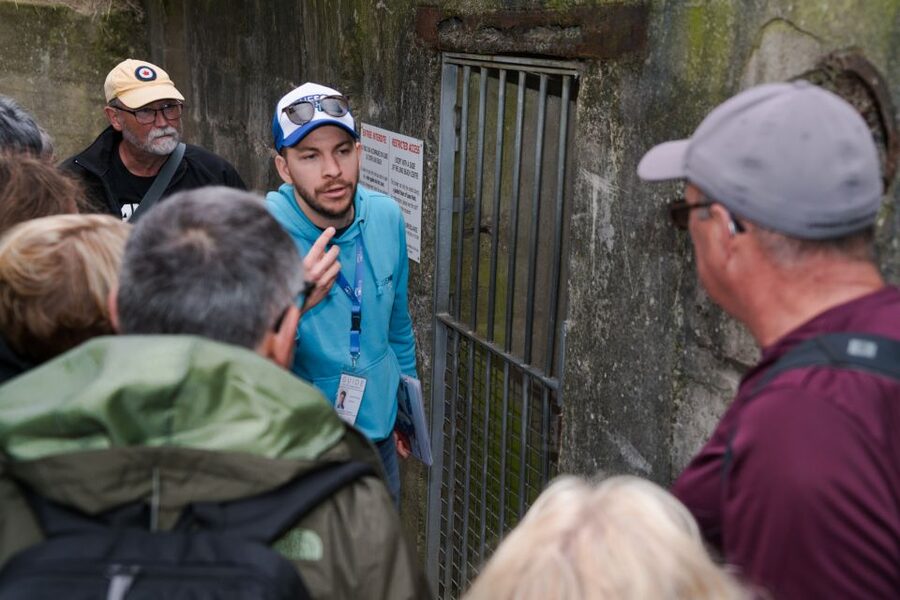
The strongest feature of this excursion is the guide. Names that have received especially warm praise include Aaron, HP, Julien, Enzo, Mathieu, Brun, Gabriel, Jonathan, Clements, Olivier, and Nick. Their styles differ, but the recurring strengths are clear: strong command of the subject, clear English, humor when appropriate, and respect for the seriousness of the sites.
Aaron has been praised for passion and clear explanations. HP has been singled out for humor, flexibility, careful driving, and sensitivity to Canadian visitors. Julien has used photos and audio excerpts to add detail, while Clements has made room for questions and quiet reflection. Mathieu has been noted for his pleasant manner and ability to explain the D-Day statistics and events clearly.
You cannot select the guide with certainty when booking, so do not treat any one person’s style as guaranteed. Still, the small group gives the guide room to respond to your interests. That is far better suited to this subject than a fixed script delivered to dozens of people.
English is the tour language. A small issue with the microphone and hearing the guide was reported on one hot day, so sit where you can hear clearly and speak up if you miss an explanation.
Lunch, weather, and what to bring
Food is not included in the price. Some guides have stopped at a bakery for lunch supplies, arranged a restaurant reservation, or provided time at a local restaurant, but the exact meal plan can change. Bring money for food and do not assume a restaurant stop is guaranteed.
I would pack:
- A warm layer and windproof jacket
- Comfortable shoes for walking on the beach and around the cemetery
- Water and a small snack
- Rain protection
- A phone charger
- Space for notes or photographs
The tour operates every day, all year, in rain or sunshine. Normandy weather can change quickly, and the open beach is more exposed than Paris. A hat is useful in cold weather, while a light layer helps on warmer days.
The day is not described as heavily strenuous, but you will be on your feet at several sites and walking on sand can be tiring. Anyone who needs a slower pace should tell the guide at the start.
Is $283 a fair price from Paris?
At $283 per person, this is not a cheap day trip. Yet the price includes transportation from central Paris, an English-speaking guide, entrance fees, and a group limited to eight people. You are also buying convenience: no train connections, no rental car, and no need to build a route between scattered Normandy sites.
The value is strongest if you want a Canadian-focused visit and have only one day available. Public transport would not give you the same easy connection between Juno Beach, Bény-sur-Mer, Hell’s Corner, and Abbey d’Ardenne. A rental car could offer more freedom, but you would need to research the sites, drive several hours, and provide your own historical background.
The value is weaker if you want a relaxed Normandy holiday with plenty of time at each museum. This is a packed day, and the drive eats up a large part of it. You are paying for access and guidance, not for a leisurely coastal afternoon.
Free cancellation up to 24 hours before departure and the option to reserve now and pay later make planning less risky. The practical issue is the fixed 7:00 AM start and strict departure policy. Put the meeting point into your Paris plans carefully.
Who should book this Juno Beach excursion?
I would choose this tour if you are Canadian, have a family connection to the Second World War, or want to understand Canada’s role in D-Day rather than seeing Normandy in a general way. It also suits anyone who values a guide who can explain maps, battlefield movement, and personal stories in English.
Families can find the subject meaningful, though younger children may struggle with the long drive and serious material. One family with children aged 12 and 14 considered the day a highlight, but your children’s interest in military history will matter.
I would hesitate if you dislike early starts, long road journeys, uncertain traffic, or emotionally heavy memorials. I would also avoid booking it on a day when you have an evening reservation in Paris that cannot be changed. The return is expected around 8:00 PM, but traffic can affect that timing.
Should you book it?
Book this excursion if your priority is a personal, Canadian-centered visit to Normandy with a small group and a guide who can put the sites in order. Walking Juno Beach, visiting the cemetery, and seeing the inland advance gives the day real meaning.
Skip it if you want a short outing or a broad tour of every major D-Day beach. This experience concentrates on Juno and the Canadian story. It asks for a long day, but for the right visitor, the time and cost are justified by the combination of transport, museum admission, battlefield stops, and thoughtful interpretation.
FAQ
How long is the tour?
The tour lasts about 13 hours. It departs Paris at 7:00 AM and usually returns around 8:00 PM, although traffic can affect the return time.
Where does the tour meet in Paris?
The meeting point is Café Dada Ternes. You should arrive at least 15 minutes before departure.
What vehicle is used?
Transportation is provided in a comfortable gray minibus. The group is limited to a maximum of eight participants.
Is the tour offered in English?
Yes. The tour has a live English-speaking guide.
What sites are included?
The day includes Juno Beach, the Juno Beach Centre, the Canadian Cemetery at Bény-sur-Mer, Hell’s Corner, and Abbey d’Ardenne. Bunkers and extra local visits may depend on the guide and the day.
Is food included?
No. Food is not included in the tour price. You should plan to buy lunch or bring food with you.
Does the tour run in bad weather?
Yes. Tours operate in rain or sunshine throughout the year.
What should I wear?
Bring comfortable walking shoes and clothing suited to changing weather. A warm jacket and hat are useful because Juno Beach can be cold and windy, even in spring.
Can I cancel the booking?
You can cancel up to 24 hours before departure for a full refund. The tour also allows you to reserve now and pay later.
More Small-Group History Tours in Paris
- Pompeii: Small Group Tour with an Archaeologist
★ 4.8 · 12,264 reviews - London Small Group Tour of Historical Pubs
★ 5.0 · 10,422 reviews - Pompeii Small Group Tour with an Archaeologist
★ 5.0 · 6,593 reviews - Boston: Freedom Trail History Small Group Walking Tour
★ 5.0 · 6,450 reviews
Just added around Paris
- The historic district of Montmartre★ 4.9 · 66 reviews
- Invalides Museum – WWI & WWII – Guided Tour up to 8 guests★ 5.0 · 32 reviews
- Paris: Khéops VR Experience – Explore Ancient Egypt★ 4.9 · 39 reviews
- Paris Jewish History 2-Hour Private Guided Walking Tour★ 4.6 · 32 reviews
- Paris: French Fashion History Walking Tour★ 4.9 · 37 reviews
- Paris: Le Marais & Montmartre Jewish History Walking Tour★ 4.8 · 170 reviews
- Historic Paris Walking Tour in English★ 4.9 · 78 reviews
- From Paris: Private Mont Saint-Michel & Normandy D-Day Tour★ 4.6 · 32 reviews
Paris History Tours, compared.

Normandy D-Day Sites & Cemetery Day Trip from Paris with Lunch
Read our review →
Normandy D-Day Small-Group Day Trip with Omaha Beach, Cemetery & Cider Tasting
Read our review →
Normandy D-Day Beaches and American Cemetery Day Trip from Paris
Read our review →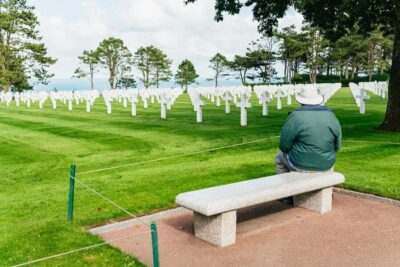
Paris: Normandy D-Day Sites Guided Day Trip with Lunch
Read our review →
Paris: Dark History and Ghostly Guided Walking Tour
Read our review →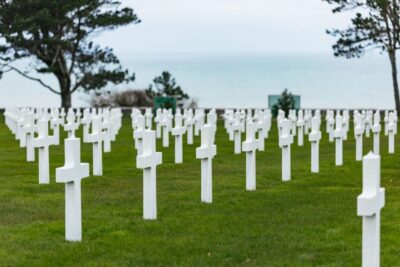
From Paris: Normandy D-Day Landing Beaches Full-Day Tour
Read our review →
Notre Dame Cathedral: Exterior Guided Tour & Unscheduled Access
Read our review →
Paris City of Fashion History Private Guided Walking Tour
Read our review →Browse the lists this tour appears in