
Review · FRANCE
Strasbourg on Foot: Historic Center and Petite France with a Local Guide
Strasbourg’s old center is compact, but its story is not. In two hours, this walk links the cathedral, grand palaces, medieval defenses, canals, and the half-timbered lanes of Petite France in a sensible route. I especially like the clear historical progression, from Place Kléber to the city’s medieval core, and the practical local advice on restaurants and things to do after the tour.
The price is $34, which is fair for a live two-hour introduction, a map, local recommendations, and a small Alsatian tasting. The main limitation is time: you’ll see the cathedral and Rohan Palace as guided stops, but this is not a full museum visit, and entry inside Notre Dame is not included as a guaranteed part of the tour.
Key points at a glance
- A logical old-town route: The walk connects Place Kléber, Notre Dame, Rohan Palace, Gutenberg Square, the Covered Bridges, and Petite France without wasting time.
- Strong guide-led storytelling: Guides including Leila, Stef, Stefania, Maya, and Javier are praised for warmth, humor, clear explanations, and useful restaurant advice.
- Cathedral details beyond the facade: You’ll hear about the 142-meter tower, stained glass, and astronomical clock, even though cathedral entry is not included.
- Petite France is the finale: The walk ends among canals, traditional houses, and the former Tanners’ Quarter, where the city’s old crafts shaped the neighborhood.
- A small taste of Alsace: The tour includes a typical sweet, with some outings also offering gingerbread or cheese tastings.
- Good first-day choice: The route gives you a working map of central Strasbourg so you can decide which sights deserve a longer visit.
Why this two-hour walk works well
I like this tour because it does not treat Strasbourg as just a pretty collection of canals. You move through the city in a way that explains how its religious center, political power, military defenses, trade, and crafts fit together.
The route also keeps changing character. Place Kléber feels open and modern by old-town standards. The cathedral area is grand and ceremonial. Near the Covered Bridges, the mood becomes defensive and medieval. In Petite France, narrow streets and canals take over. That variety helps the city feel like a real place rather than a string of postcard views.
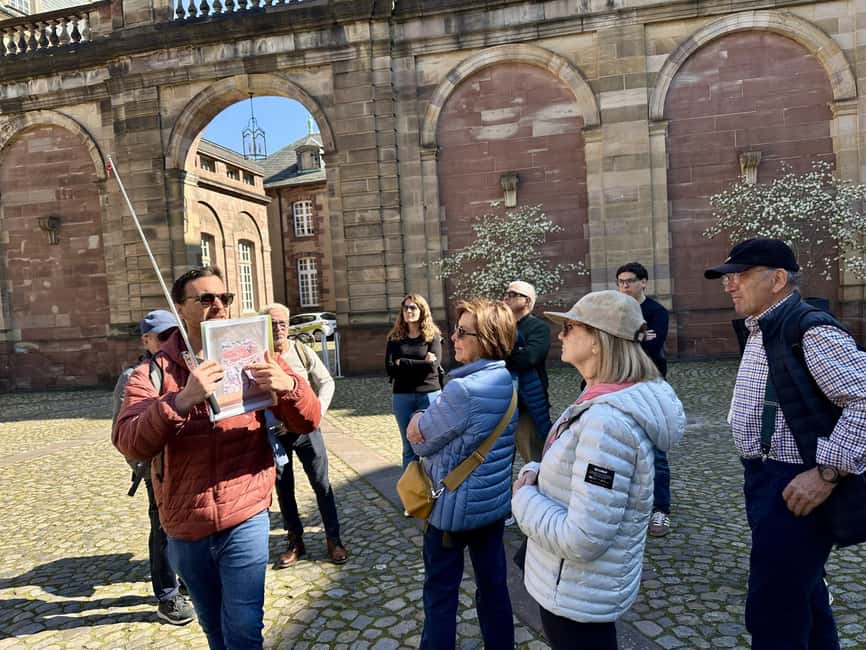
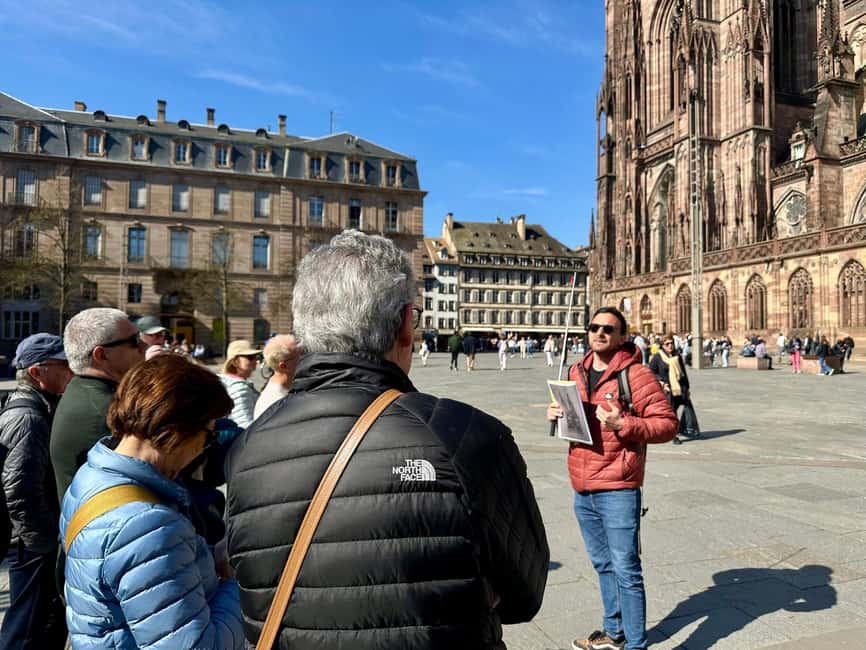
Guides use English or Spanish, and the strongest praise goes to guides such as Leila, Stef, Stefania, and Maya for making the walk personal and easy to follow. One useful detail is that some guides use headphones, which can make a real difference when the group pauses near busy public squares.
You should still think of this as an overview, not a specialist architecture tour. The advertised stop times are often about 10 or 15 minutes, so the guide has to keep moving. That is good for seeing a lot, but it leaves little time for long questions or museum interiors.
More History Walking Tours in France
- Paris: Dark History and Ghostly Guided Walking Tour
★ 4.7 · 1,000 reviews - Vieux Lyon Cultural & Historical Walking Guided Tour (English)
★ 5.0 · 942 reviews - Strasbourg: Guided Historical Neighborhoods Walking Tour
★ 4.9 · 275 reviews
Starting at Place Kléber and finding your bearings
The walk begins at Place Kléber, Strasbourg’s central public square. At Christmas, the square becomes especially dramatic, with a large decorated tree and seasonal lights. If you visit during the holiday market period, expect a more crowded setting and extra atmosphere.
This is a useful starting point because you are introduced to the city from its everyday center rather than dropped straight into a monument. Your guide can explain the basic layout before leading you toward the cathedral district.
The meeting point can vary with the option you book, and the listed starting location includes 14 Rue Mercière. Check the exact meeting instructions carefully. A city center meeting point is convenient, but the old streets can be confusing if you are rushing in from the train station or another neighborhood.
Notre Dame Cathedral and its 142-meter tower
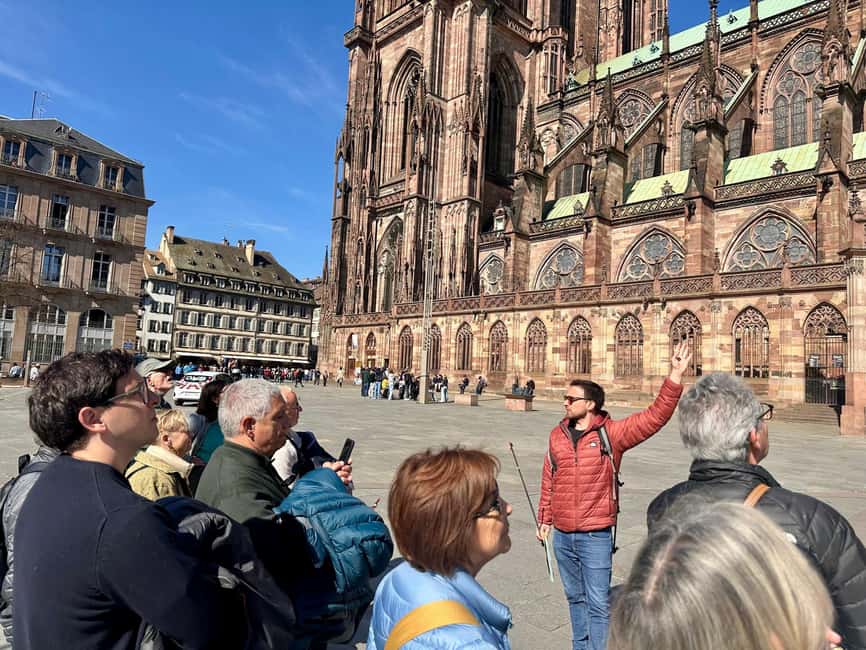
Strasbourg Cathedral is the visual anchor of the walk. Its single 142-meter tower rises above the old center, making it easy to use as a reference point later in your visit.
The guide’s discussion covers the building’s Gothic design, medieval stained glass, and famous astronomical clock. If the doors are open and conditions allow, you may get a look inside, but the included service specifically describes the cathedral stop as outside Notre Dame. Do not book this walk expecting guaranteed interior access or a full explanation of every chapel.
The astronomical clock is one of the key details to hear about. Its moving parts and timed display make it more than a decorative object. If you want to see its scheduled spectacle, you’ll need to check the cathedral’s own timing and admission arrangements separately.
I recommend treating this stop as your orientation to the cathedral. Use the guide to understand what you are looking at, then return later if you want a slower look at the stained glass, clock, or interior architecture. The tour gives you the context, while a separate visit gives you the time.
Rohan Palace and the city’s grand political side
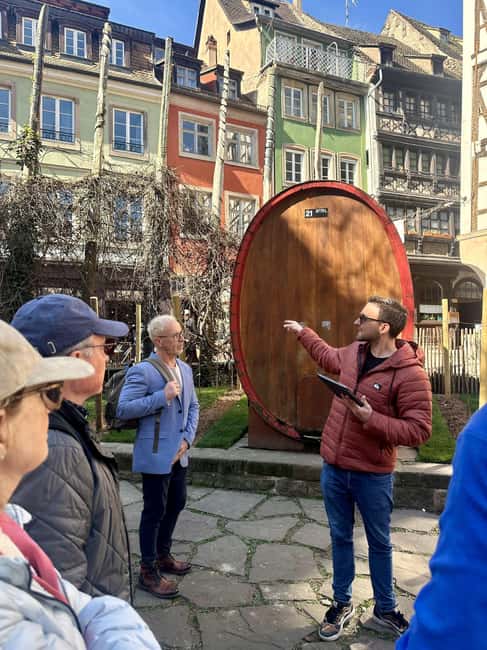
From the cathedral, the route continues to Rohan Palace, an 18th-century residence built for princes and cardinals. It offers a sharp contrast to the medieval lanes nearby. Here, the city’s story turns toward ceremony, rank, and political power.
The palace now houses museums including Fine Arts and Decorative Arts. The walking tour gives you an outside view and historical explanation rather than a dedicated museum visit. Your guide may connect the building with figures such as Marie Antoinette and Napoleon, both associated with Strasbourg’s wider political story.
This is a short stop, so I would not expect detailed treatment of the museum collections. Still, it earns its place because it shows how Strasbourg changed over time. The city was not only a medieval trading center. It also mattered to princes, church leaders, armies, and European rulers.
More Old Town and Historic Centre Walks in France
- Bordeaux: Historic Center & Chartrons District Bike Tour
★ 4.8 · 709 reviews - Rouen: Guided Tour of the Historic Center
★ 4.8 · 145 reviews - Strasbourg: Private Walking Tour of the Historical Center
★ 4.2 · 107 reviews - Strasbourg: Historic Center Walking Tour
★ 4.7 · 88 reviews
L’Ancienne Douane, Place des Tripiers, and everyday trade
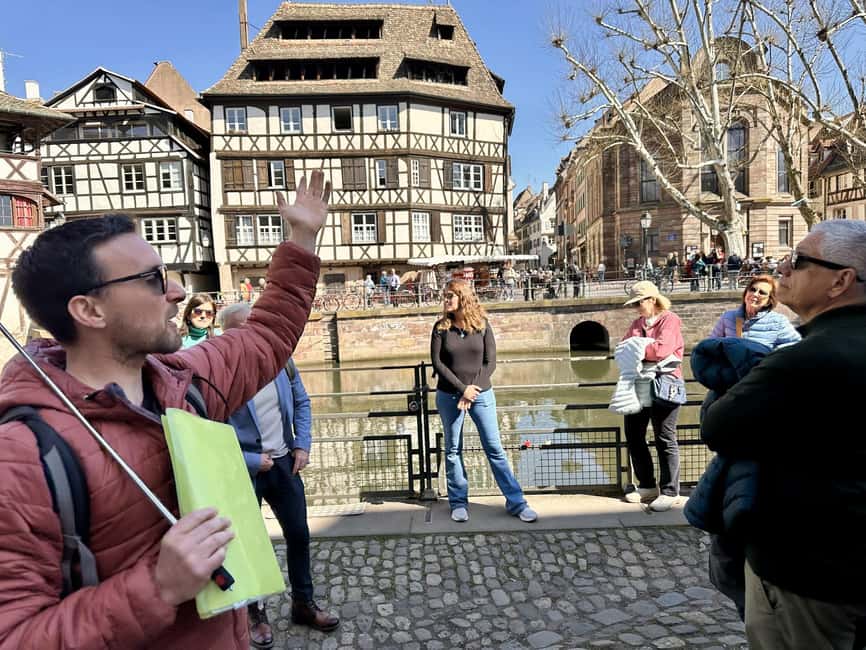
The next section moves away from monumental buildings and toward the working life of the old city. L’Ancienne Douane recalls Strasbourg’s role in trade and river commerce, while Place des Tripiers points toward the trades and food businesses that shaped daily life.
These stops are valuable because they help you read the old streets at ground level. Instead of seeing only attractive facades, you begin to notice why certain buildings sit beside canals, why bridges mattered, and how crafts were grouped in particular quarters.
The stop at Place des Tripiers is also a natural lead-in to the Tanners’ Quarter. Strasbourg’s old center was built by workers as much as by bishops and princes. That practical side of the city is one of the most appealing parts of the walk.
Gutenberg Square and Saint-Thomas Church
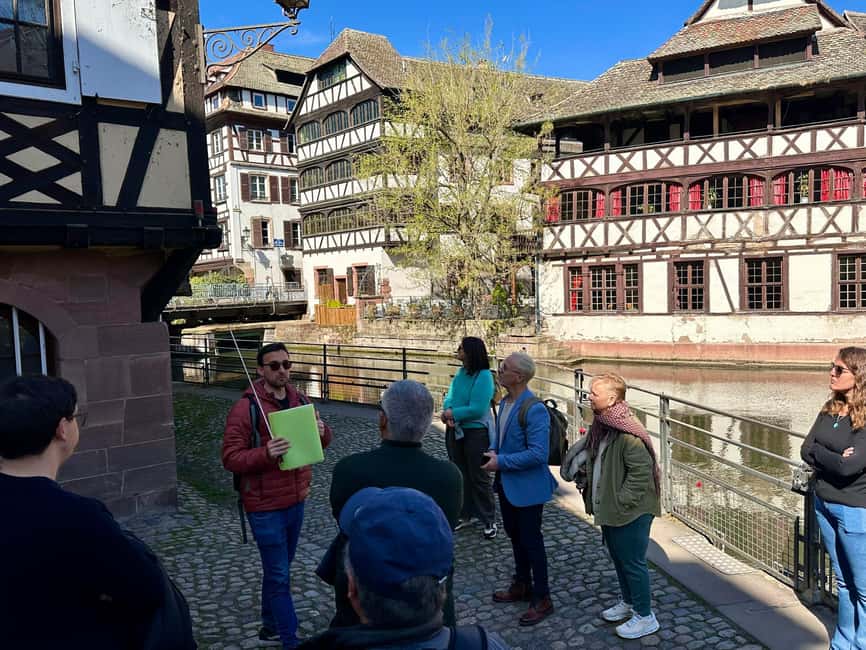
Place Gutenberg is described as a cultural and historical center of Strasbourg. It is named for Johannes Gutenberg, who lived in Strasbourg before developing the printing press in Mainz. The square gives the guide another chance to connect local history with wider European change.
The route then continues to Saint-Thomas Church. This stop adds another layer to the city’s religious story and gives you a different church setting after Notre Dame. Because each stop is brief, the guide will focus on the most useful points rather than offering a full church tour.
I like this middle section because it breaks up the major attractions. You get squares, churches, trade routes, and local neighborhoods in one continuous walk. It also gives you a chance to ask about places you may want to revisit later.
The Covered Bridges and Strasbourg’s defensive past
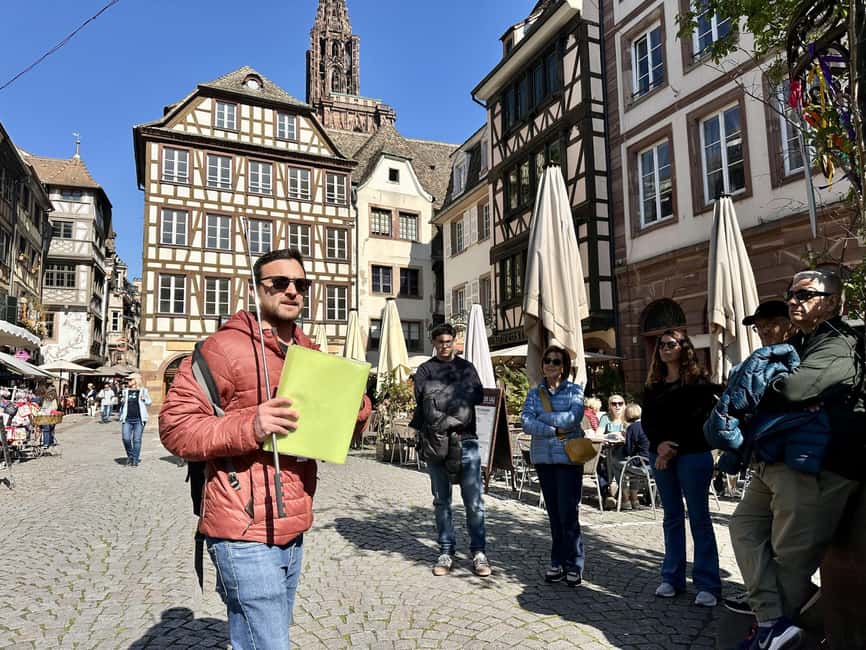
The Covered Bridges are among the most memorable stops. These medieval bridges once had wooden roofs and formed part of Strasbourg’s defensive system. Their towers, waterways, and crossing points show how the city protected itself while also managing movement through the old quarter.
The name can be slightly misleading today because the original wooden coverings are no longer the main feature. What remains is the powerful combination of stone structures, defensive towers, and canals.
This is a good place to listen closely to the explanation of urban growth. Strasbourg’s waterways were not placed there for scenic effect. They served transport, industry, defense, and drainage. The guide helps you see the canals as working infrastructure, not just a photo setting.
The area can be busy and the walking surface is old. Wear shoes with a firm sole, especially if you are visiting in wet weather. The tour keeps a steady pace, but guides are repeatedly praised for not rushing slower walkers.
Petite France and the Tanners’ Quarter
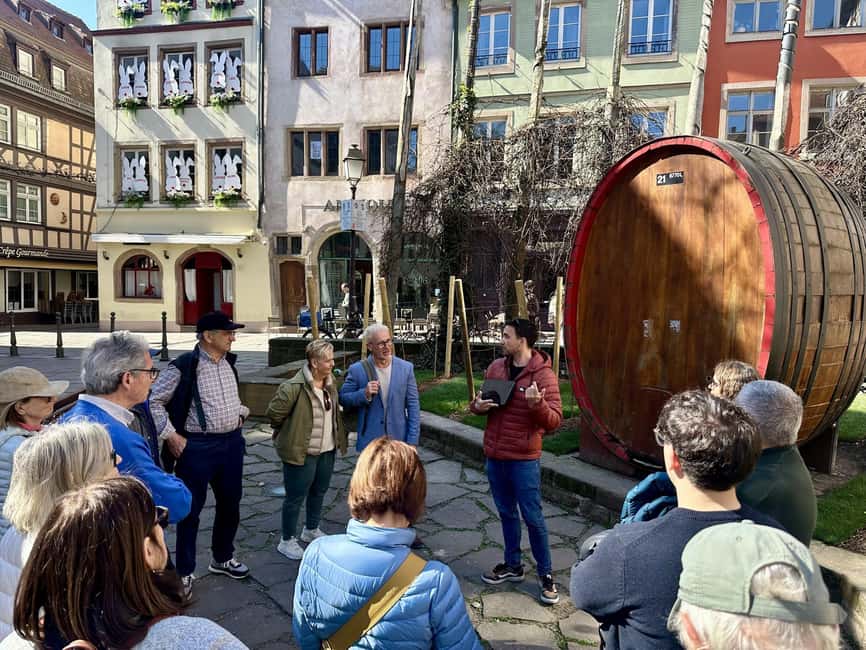
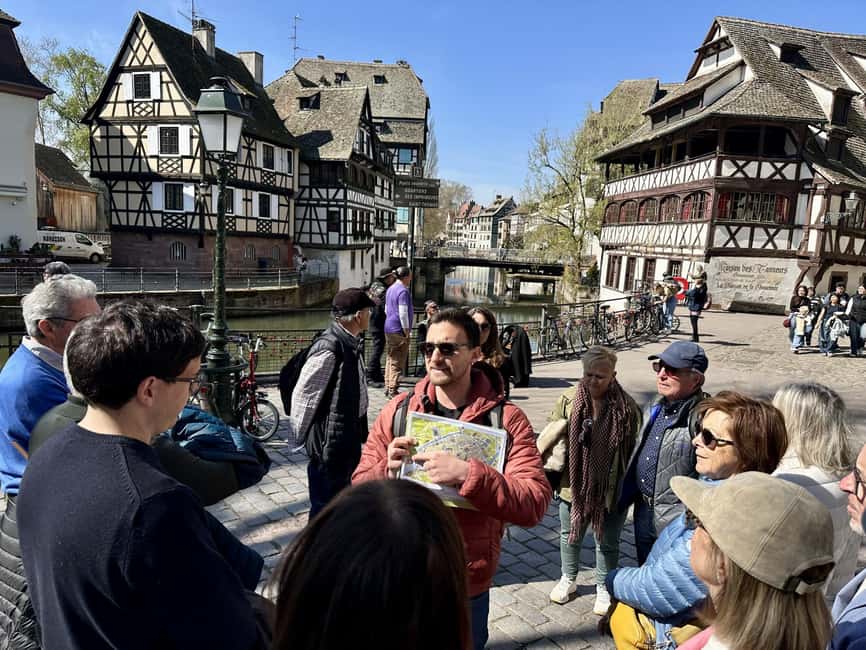
The tour finishes in Petite France, the most immediately charming part of the route. Here you find canals, cobbled streets, half-timbered houses, and buildings linked to fishermen, millers, and tanners.
The Tanners’ Quarter is especially important. Its traditional buildings are not simply decorative. Their form reflects the work once carried out here, including the need for water and space for craft production. You get a better feel for the old neighborhood when you connect the architecture with those trades.
Petite France is also where the tour’s pace may feel most relaxed. The guide brings the group through narrow lanes and toward waterside views, ending in the heart of the district. You can pause to take photographs and enjoy the reflections, but remember that the formal walk is still a guided group activity, not an open-ended stroll.
This final section is likely to be the visual highlight for most people. It is also the point where a good guide adds the most value. Without context, Petite France can look like a beautiful stage set. With context, you understand why the canals, mills, workshops, and houses developed together.
The guides and the human side of the tour
The strongest part of this experience is the guide’s personality. Stef is praised for an easy pace and enthusiasm. Leila is described as engaging, prepared, welcoming, and good at answering questions. Stefania is noted for remembering names and involving the group. Maya is valued for restaurant suggestions and practical advice, while Javier is praised for a friendly approach and strong command of the city’s story.
You should understand that guide quality can vary from one departure to another. The names listed above show the range of guides working on the tour, but you may not receive a particular person.
The common strengths are clear: good energy, accessible storytelling, and a willingness to help you plan the rest of your stay. One guide even prepared restaurant recommendations for the group. That kind of advice can be worth more than another rehearsed monument fact, especially if Strasbourg is your first stop in Alsace.
Some groups include people from several countries and age groups. That can make the walk feel social, though it also means the guide must balance different interests. If you want a private, highly specialized tour, this is not the right format.
What you get for $34
At $34 per person, the tour offers solid value if you want a quick introduction rather than a long visit to individual monuments. You pay for two hours with a live English or Spanish guide, a structured route through the historic center, a city map, local recommendations, and a typical Alsatian sweet.
The value comes from the connections between stops. You could walk to all these places alone, but you would spend time reading signs, checking directions, and trying to work out how the sites relate. The guide turns a set of landmarks into a usable story.
The price is less compelling if you already know Strasbourg well or plan to spend the entire day inside the cathedral and museums. Since the tour does not include dedicated admission to those interiors, you may still pay separately for the sights you want to explore in depth.
Free cancellation up to 24 hours before the start and reserve-now, pay-later booking make it easier to fit into a changing itinerary. Starting times depend on availability, so check the schedule before building your day around it.
Who should book this Strasbourg walk?
I would book this for a first visit, especially if you have only a day or two in Strasbourg. It gives you a strong sense of direction and helps you decide where to return for a longer look.
It also suits people who enjoy history in manageable pieces. You will not get a lecture, but you will hear enough about Gothic architecture, Renaissance engineering, trade, defense, religion, and local crafts to make the old center more readable.
Families and mixed-age groups should find the two-hour length manageable, though anyone uncomfortable on cobbles should plan footwear carefully. The route includes many outdoor stops, so weather can affect your enjoyment.
You may want another kind of tour if you need wheelchair-specific route information, a private guide, extensive museum access, or a long cathedral interior visit. Those details are not supplied for this experience, so ask before booking if they matter to you.
My verdict: a smart first walk in Strasbourg
Book this tour if you want a lively introduction to Strasbourg that balances major sights with the working neighborhoods behind them. The best reasons are the sensible route, the guide-led stories, the finish in Petite France, and the practical food and sightseeing tips.
Skip it if you prefer to explore alone and already have a detailed plan for the cathedral, palace museums, and old canals. For most first-time visitors, though, $34 is a reasonable price for getting oriented quickly and learning what deserves a second visit.
FAQ
How long does the Strasbourg walking tour last?
The guided tour lasts two hours.
What language is the tour offered in?
The tour is offered in English and Spanish. Some content may be presented in its original language.
Where does the tour begin?
The meeting point can vary depending on the option booked. One listed starting location is 14 Rue Mercière, so check your booking details carefully.
Where does the tour finish?
The tour finishes in Petite France.
Is entry inside Strasbourg Cathedral included?
The included information describes a guided stop outside Notre Dame Cathedral. The tour explains features such as the stained glass and astronomical clock, but guaranteed interior admission is not included.
What sights are covered on the route?
The route includes Place Kléber, Notre Dame Cathedral, Rohan Palace, L’Ancienne Douane, Place des Tripiers, Place Gutenberg, Saint-Thomas Church, the Covered Bridges, and Petite France.
Is a guide included?
Yes. The activity includes a live guide in English or Spanish.
Is food included?
A tasting of a typical Alsatian sweet is included. Some tour departures may also feature local specialties such as gingerbread or cheese.
Can I cancel the booking?
You can cancel up to 24 hours in advance for a full refund. The reserve-now, pay-later option allows you to hold a place without paying immediately.
Just added around France
- Medieval Carcassonne: Interactive Ghost Story & City Game★ 3.5 · 33 reviews
- Carcassonne During World War 2★ 5.0 · 127 reviews
- Carcassonne ‘s Medieval Walls: A Self-Guided Tour★ 4.5 · 43 reviews
- Small Group Guided D-Day Tour and Mémorial de Caen Museum★ 5.0 · 237 reviews
- Normandy: Private tour D-Day landing beaches American sector★ 5.0 · 62 reviews
- Mémorial de Caen Museum Admission and Guided Tour of D-Day Sites★ 4.5 · 275 reviews
- Private Day Tour including Normandy Landing Beaches & Battlefields from Caen★ 5.0 · 53 reviews
- Private Bordeaux History Tour with a glass of Bordeaux wine.★ 5.0 · 28 reviews
France History Tours, compared.

Normandy D-Day Sites & Cemetery Day Trip from Paris with Lunch
Read our review →
Paris: Louvre Museum Entry with History of Mona Lisa
Read our review →
Normandy D-Day Small-Group Day Trip with Omaha Beach, Cemetery & Cider Tasting
Read our review →
Normandy D-Day Beaches and American Cemetery Day Trip from Paris
Read our review →
Normandy American D-Day Beaches Full Day Tour from Bayeux
Read our review →
Normandy American D-Day Experience – Group tour from Bayeux
Read our review →
Normandy Beaches Half-Day Afternoon Trip from Bayeux (A2)
Read our review →
Omaha Beach D-Day Experience – Afternoon group tour from Bayeux
Read our review →Browse the lists this tour appears in