
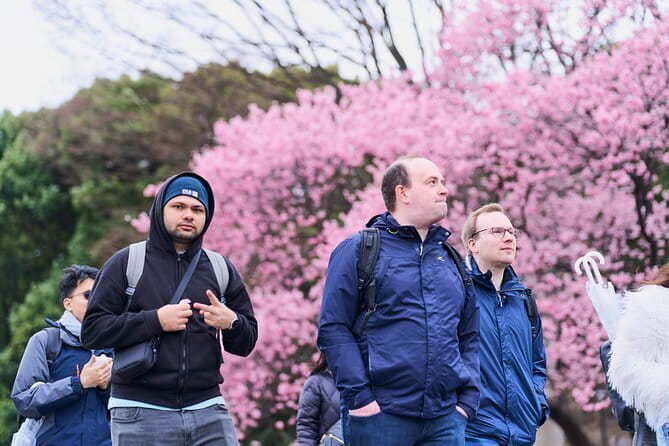
Review · TOKYO
Tokyo Castle & Imperial PalaceーShogun Walking Tour
Tokyo’s Imperial Palace grounds reveal their best stories at ground level: massive moats, stone walls, guarded gates, garden paths, and the remains of Edo Castle. I like the way this tour explains the castle as a working military system, not just a pretty park. I also like the small group limit of 10, which makes it easier to hear guides such as Anju, Fuma, Yuuka, or Tomo and ask questions.
The main consideration is that much of the two hours takes place outside, with slopes and walking on foot. The palace grounds themselves are open to the public, so you are paying mainly for interpretation, structure, and company rather than admission alone. At $23, that can be fair value if you want the site to make sense.
Key points at a glance
- Edo Castle was once a vast defensive complex: Moats, gates, towers, and stonework show how the shogun protected the political center of Japan.
- The route links samurai power with the modern Imperial Palace: You move from the Tokugawa era to the continuing imperial system.
- The East Gardens provide the quietest part of the walk: Look for seasonal plants, unusual trees, koi, and the remains of the former castle.
- Groups are limited to 10 people: That is useful for questions and for keeping a comfortable pace.
- The tour is English only: Japanese language support is not provided.
- The guide makes the difference: The strongest feedback centers on friendly storytelling, clear explanations, patient answers, and practical pacing.
Why Edo Castle matters in modern Tokyo
Tokyo can feel fiercely modern, but the Imperial Palace grounds preserve the footprint of an older capital. Edo Castle was once the largest castle in Japan. Its size is hard to grasp from a single wall or gate, so the guide’s job is to connect the surviving pieces and help you picture the larger fortress.
This is also a useful place to sort out the difference between the shogun and the emperor. The Tokugawa shoguns held political power during the long Edo period, while the emperor represented a much older imperial line. The tour uses the castle grounds to explain how those systems overlapped, changed, and eventually led to modern Tokyo.
I find that context more useful than a parade of dates. A stone wall can look like a stone wall until you learn what it protected, how a gate controlled movement, and why layered defenses made the castle so difficult to attack. The guide also connects the site to the 260 years of relative peace under the samurai government.
The experience then moves beyond the Edo period. The grounds now serve as part of the Imperial Palace, the residence of Japan’s emperor. That physical continuity gives the tour its central question: how did Japan’s imperial tradition survive for roughly 2,600 years while the country’s political systems changed around it?
More History Walking Tours in Japan
- Tokyo: Imperial Palace and Shogun Historical Walking Tour
★ 5.0 · 2,251 reviews - Tokyo: Imperial Palace Japanese History Walking Tour
★ 4.9 · 987 reviews - Tokyo Castle & Imperial PalaceーShogun Walking Tour
★ 5.0 · 724 reviews
Meeting at Wadakura Fountain Park
The meeting point is in front of Starbucks Coffee Kōkyo Gaien Wadakura Fountain Park Store, at 3-1 Kōkyo Gaien, Chiyoda City. Your guide holds a sign marked Local Guide Stars.
This is a sensible starting place because the walk begins near the palace grounds, but do not rely on recognizing the guide by face alone. Look for the sign, and allow enough time to find the store in the open park area. You return to the same place at the end, which makes the outing easy to pair with another central Tokyo activity.
The group can include up to 10 people. That is small enough for a guide to answer individual questions without turning the walk into a private tour. It also helps with the pace. Several guides, including Yuki and Fuma, have been praised for keeping the walk relaxed rather than rushing from stop to stop.
The tour lasts two hours. You should think of it as a walking history lesson with frequent stops, not a long museum visit. Wear shoes you can comfortably use on paths and slopes, and check the weather before leaving.
Sakurada Tatsumi Yagura and the first castle clues
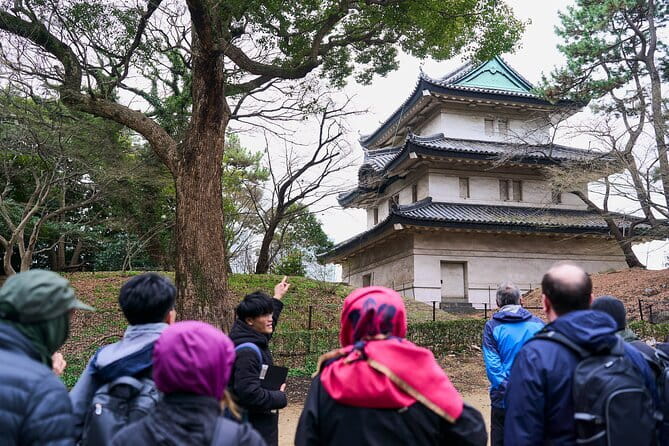
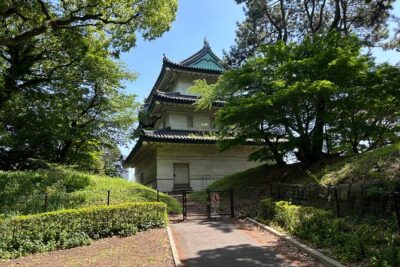
The first main stop is Sakurada Tatsumi Yagura, a surviving corner tower. You get a short five minute photo and orientation stop here.
The tower is a good opening clue to the old castle’s defensive design. From the outside, it may seem like a compact structure, but its position at a corner helped protect the walls and control the area around the moat. This is where a guide can make the difference between taking a quick photograph and understanding why the building was placed there.
Do not expect a fully restored castle interior. The appeal is in the remains, the layout, and the explanation of what once filled the surrounding area. If you want a polished building with rooms, displays, and long indoor visits, this tour will feel different. It is more about reading the site outdoors.
Ote-Mon Gate and the art of controlling movement
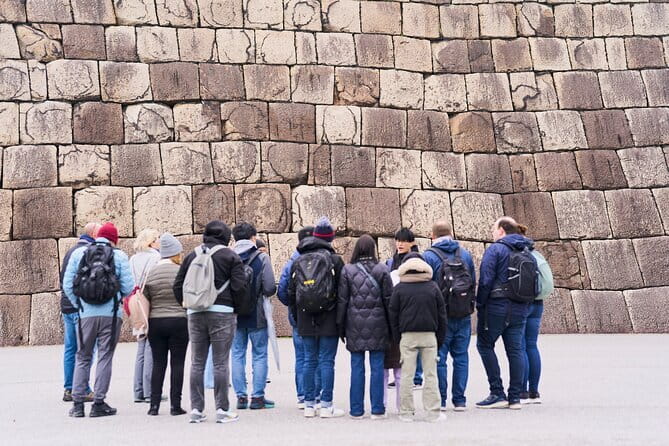
The route continues to Ote-Mon Gate, with about 15 minutes for photographs, sightseeing, and explanation. This is one of the more rewarding stops because gates were not simply entrances. They were carefully controlled points in a system built to slow, inspect, and confuse anyone who might threaten the castle.
The guide explains how the defenses were layered. That detail came through especially strongly in the way Xin Yan described the palace construction and defensive arrangement. Once you understand the purpose of bends, walls, moats, and guarded approaches, the route becomes easier to read.
This stop also helps you picture the castle as the center of political life. Retainers, officials, and visitors did not move through Edo Castle casually. Their access and route mattered. I like that the tour uses a physical feature you can see to explain social order as well as military planning.
You will have time for photographs, but keep your attention on the guide. The most useful information here is easy to miss if you treat the gate as a quick backdrop.
More History Walking Tours in Tokyo:
- Tokyo: Shinjuku Historical Walking Tour & Secret Backstreets
★ 5.0 · 530 reviews - Imperial Palace East Garden and Edo Castle Walking Tour in Tokyo
★ 5.0 · 510 reviews - Asakusa: A Big-picture History Walk to Know Japan
★ 4.6 · 77 reviews - Asakusa: 3.5-hour Big-picture History Walk
★ 4.7 · 39 reviews
Tokyo Imperial Palace and the continuing imperial system
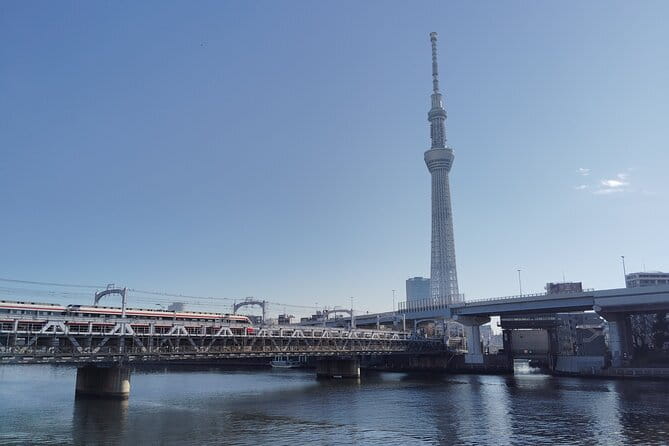
The Tokyo Imperial Palace stop lasts around 20 minutes. The palace is still an active imperial residence, so this is not a typical historic house visit with every room open for public inspection. The interest lies in the setting, the public views, and the explanation of how the modern institution fits into the older story.
The guide connects the present palace with the former Edo Castle and explains the development of Tokyo. This makes the stop especially helpful if you have heard about emperors and shoguns but are unsure how their roles differed.
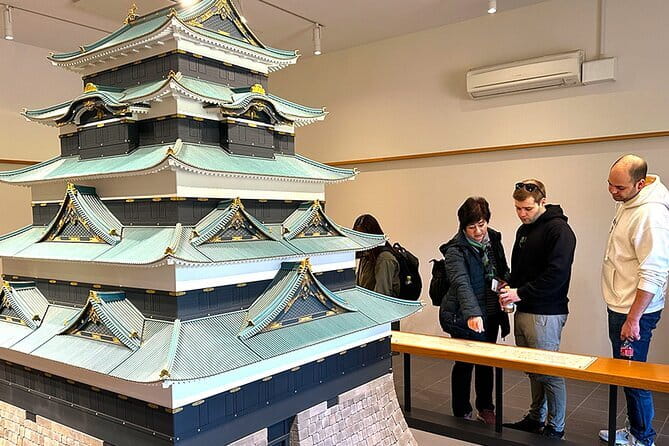
You also view a miniature structure showing what the former palace looked like. That model matters because much of the original complex no longer survives in its earlier form. A scale representation helps you imagine the buildings that once occupied the site.
Guides have also been praised for bringing the subject up to the present day, rather than stopping with samurai legends. Anju, for example, is noted for linking the Edo period with modern Japan. That broader timeline keeps the tour from becoming a costume drama about warriors.
Ninomaru Garden and the quieter side of the palace grounds
Ninomaru Garden receives about 15 minutes. Here the mood shifts from fortress planning to Japanese garden design.
You can expect carefully arranged plantings, seasonal color, old trees, and spaces intended for calm observation. The garden is not just a break between historical stops. It shows another side of the people who lived and worked around the castle, where formal power existed alongside artistic and natural settings.
The garden’s seasonal character means the exact appearance changes during the year. The supplied information does not promise a particular flower display on any given date, so it is best to enjoy the structure, trees, paths, and atmosphere rather than arrive with one fixed picture in mind.
This is also a good place to slow the pace. Pina described the experience as calm, with a comfortable amount of information and small quizzes. That sounds like the right approach here. You get facts, but the garden gives you room to look around instead of listening to a nonstop lecture.
Edo Castle ruins and imagining the vanished buildings

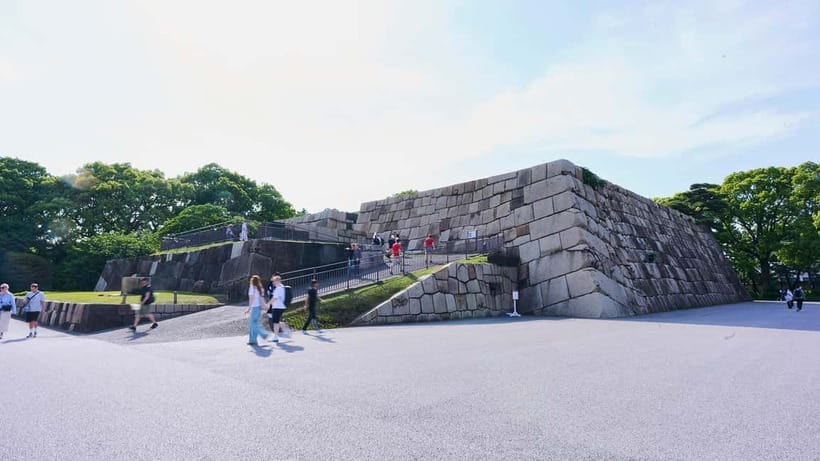
The Edo Castle ruins receive about 10 minutes, though the guide’s explanation may make this short stop feel more substantial. The remains are a reminder that the castle was once far larger than the pieces visible today.
This is where the tour’s central skill matters most: reconstruction through words. You see surviving stone foundations, walls, and open spaces, while the guide explains how the castle functioned and what its buildings meant.
I would not book this tour expecting a complete castle complex. You will not walk through a preserved shogun’s residence on this route. Instead, you use fragments to form a picture of a vanished center of power. That can be more thought-provoking, but it requires some imagination.
The stop works well for anyone interested in the Edo period, including people who became curious after watching historical dramas. The guide can separate screen drama from the broader political and social story without taking away the fun.
The East Gardens, koi, and trees from across Japan
The final major stop is the Imperial Palace East Gardens, with about 20 minutes for sightseeing and explanation. This is often the most restful part of the walk. You move among garden spaces, castle remains, and plant life after spending much of the tour thinking about walls and power.
You can look for special koi and a range of trees from different parts of Japan. The gardens also provide some of the best photo opportunities on the route. Bring a camera, but remember that the point of the stop is not only scenery. The guide explains what you are seeing and why the gardens matter.
This section gives the tour a good balance. The gates and moats show control and defense. The gardens show taste, leisure, and care. Together they create a fuller picture of palace life than either subject could provide alone.
The walk then returns to the Starbucks meeting point. Since the start and finish are the same, you do not need to arrange transport from a distant exit. Still, allow time for the complete route, particularly if you stop often for photographs.
How the guides shape the experience
The clearest strength of this tour is the guide. The names that appear repeatedly in the feedback include Anju, Fuma, Yuuka, Tomo, Keiko, Koyo, Ai, Kazuki, Kosei, Mai, Nana, and Xin Yan. You may not receive a specific guide, but the pattern is clear: the experience depends heavily on a warm, clear speaker who can turn site details into a story.
Anju is praised for patience, energy, and an ability to connect the Edo period with the imperial family today. Fuma is described as friendly and entertaining, with useful recommendations for the rest of a Tokyo visit. Yuuka is noted for clear explanations and taking photographs. Tomo is praised for a good pace and an interactive style.
Kosei’s background living abroad gave one group a helpful way to compare Japanese customs with other cultures. That kind of perspective can help you place an unfamiliar institution in a modern setting.
The guides also seem comfortable with different group needs. Some visitors wanted detailed history. Others valued a calm walk, simple explanations, or time for questions. The small group size helps the guide adjust.
The tour is conducted in English only. If you need Japanese language support, this is not the right option. If you can follow an English walking tour, the repeated praise for clear speech and patient answers makes it a strong choice.
Is $23 good value?
At $23 per person, the price is modest for a two hour guided walk in central Tokyo. Entry to the palace grounds is not the only measure of value here, because the main service is explanation. You are paying to understand what remains, how the defenses worked, and how the imperial and shogunal stories connect.
One fair criticism is that the gardens may not require an admission fee. If you only want a free stroll and photographs, you can visit without booking a guide. A person who enjoys researching signs and history independently may prefer that approach.
I would pay the $23 if you want the site to come alive quickly, especially on a first Tokyo visit. The small group, English guidance, and carefully ordered route reduce the chance that you will walk past a gate or wall without knowing why it matters.
Free cancellation up to 24 hours before the start also gives you some flexibility, and you can reserve now while paying later. Check the available starting times when booking because the exact schedule is not fixed in the supplied details.
Practical advice before you go
Most of the tour is outdoors. Bring suitable clothing for the day, since heat, rain, cold, or strong sun will affect your comfort. Photography is encouraged, so a camera or phone is worthwhile.
There is a security check when entering the Imperial Palace grounds. Do not bring knives or alcohol. Keep your belongings simple so the entry process stays easy.
The route includes slopes and sections where you need to walk or go down on foot. Wheelchairs are available and can be used within the grounds, but the route is not entirely flat. If mobility is a concern, ask the operator about the current route before booking.
A two hour walk can pass quickly when the guide is engaging, but you should still wear comfortable footwear. The route includes several stops, not just one short palace viewpoint, and the group walks between them.
Who should book this walk?
I would recommend it to anyone who wants a clear introduction to Edo Castle, samurai society, Tokyo’s development, and the imperial system. It works particularly well early in a Tokyo visit, when you want historical bearings before exploring other districts.
It also suits people who like gardens but want more than scenery. Ninomaru Garden and the East Gardens offer quiet beauty, while the guide supplies the political and cultural background.
Families and mixed-age groups may appreciate the short explanations, questions, quizzes, and manageable two hour length. History fans will find the moats, gates, and ruins more rewarding with the defensive details in place.
I would hesitate only if you dislike outdoor walking, need extensive indoor time, or want access to palace interiors. The grounds are the focus, and the route asks you to imagine much of the vanished castle.
Should you book the Tokyo Castle and Imperial Palace Shogun Walking Tour?
Book it if you want the Imperial Palace grounds to make sense, not merely look attractive. At $23, the value comes from the guide’s interpretation, the limited group size, and the connection between samurai rule, Edo Castle, modern Tokyo, and Japan’s imperial tradition.
Skip it if you prefer a self-guided garden walk or if outdoor walking is difficult for you. For most English-speaking visitors interested in Japanese history, this is a practical, reasonably priced way to turn palace walls, gates, ruins, koi, and gardens into a coherent story.
FAQ
How long is the Tokyo Castle and Imperial Palace Shogun Walking Tour?
The tour lasts two hours.
How much does the tour cost?
The listed price is $23 per person.
What language is the tour conducted in?
The tour is conducted in English only. Japanese language support is not available.
How many people can join the group?
The group is limited to 10 participants.
Where does the tour meet?
Meet in front of Starbucks Coffee Kōkyo Gaien Wadakura Fountain Park Store at 3-1 Kōkyo Gaien, Chiyoda City, Tokyo. The guide holds a Local Guide Stars sign.
What places are included on the walking route?
The route includes Sakurada Tatsumi Yagura, Ote-Mon Gate, Tokyo Imperial Palace, Ninomaru Garden, Edo Castle ruins, and the Imperial Palace East Gardens. It returns to the Starbucks meeting point.
Is there a security check?
Yes. There is a security check when entering the Imperial Palace grounds. Do not bring knives or alcohol.
Just added around Tokyo
- Tokyo: Edo Castle & East Garden of the Imperial Palace Tour★ 4.7 · 112 reviews
- Tokyo: Imperial Palace, the history of Japan (ENGLISH GUIDE)★ 5.0 · 77 reviews
- Tokyo: Customized Private Historical Guided Photoshoot Tour★ 5.0 · 25 reviews
- Kyoto: Nijo Castle World Heritage Guided Tour with Admission★ 4.9 · 37 reviews
- Historic Kanda Sake Tasting at Tokyo’s Oldest Shop (1596)★ 4.9 · 33 reviews
- From Tokyo: Private Nikko World Heritage Sights One Day Trip★ 4.7 · 52 reviews
- From Tokyo: Guided Day Trip to Nikko World Heritage Sites★ 4.8 · 51 reviews
- Asakusa: A Big-picture History Walk to Know Japan★ 4.6 · 77 reviews
Tokyo History Tours, compared.
Tokyo: Imperial Palace and Shogun Historical Walking Tour
Read our review →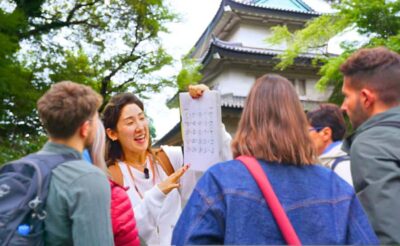
Tokyo: Imperial Palace Japanese History Walking Tour
Read our review →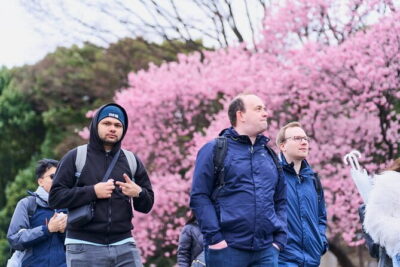
Tokyo Castle & Imperial PalaceーShogun Walking Tour
Read our review →
Tokyo: Shinjuku Historical Walking Tour & Secret Backstreets
Read our review →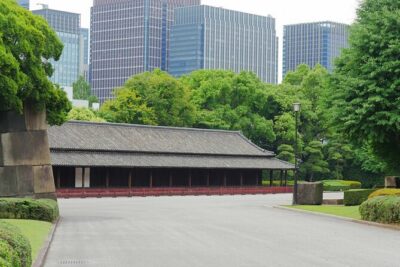
Imperial Palace East Garden and Edo Castle Walking Tour in Tokyo
Read our review →
From Tokyo: Nikko World Heritage Site Private Full-Day Trip
Read our review →
Tokyo: The Best of Izakaya in Shinjuku Food & Cultural Tour
Read our review →
Tokyo: Nikko World Heritage Private Day Trip Hotel Pick-up
Read our review →Browse the lists this tour appears in