
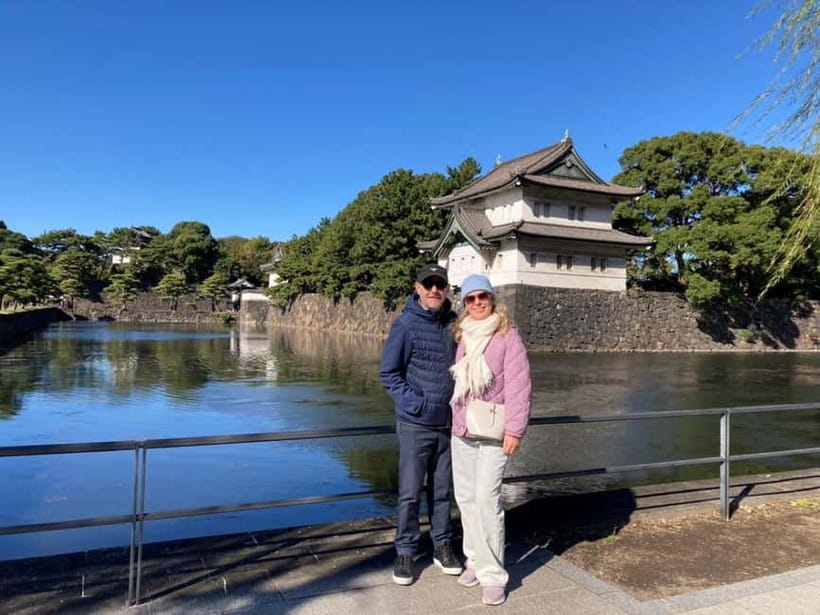
Review · TOKYO
Tokyo: Edo Castle & East Garden of the Imperial Palace Tour
The most interesting part of this tour is the way Edo Castle’s vanished world comes back through surviving walls, gates, gardens, and stories. You walk where shoguns once ruled Japan, then see how the site became part of the Imperial Palace grounds.
I like the calm pace and the guides’ use of pictures to explain buildings that no longer exist. I also like the small human touches, such as Hitoshi helping visitors reach the subway and Naoko adapting her tour for a group of older guests. The main drawback is simple: you do not enter the Imperial Palace itself, and the gardens close on Mondays and Fridays.
Key points to know before you book
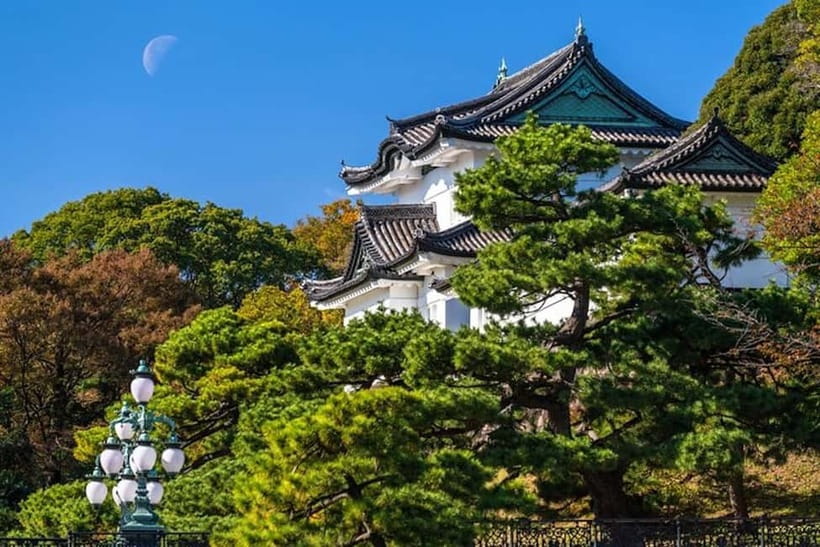
- Edo Castle remains: See old walls, former building sites, and other traces of the shogun’s seat of power.
- A two-hour walking tour: The route gives you a useful introduction without taking up a full day in Tokyo.
- English-speaking local guides: Guides such as Hitoshi, Naoko, Masahito, Shigeru, and Mikio are praised for clear explanations and patient pacing.
- The East Garden is free to enter: You are paying mainly for interpretation, context, and help noticing details you could easily miss.
- A memorable koi stop: The garden includes unusual koi that form part of the tour’s lighthearted appeal.
- Important restrictions: The East Garden is closed Mondays and Fridays, baggage checks are possible, and knives or similar items must be stored before arrival.
Why Edo Castle gives this walk its character
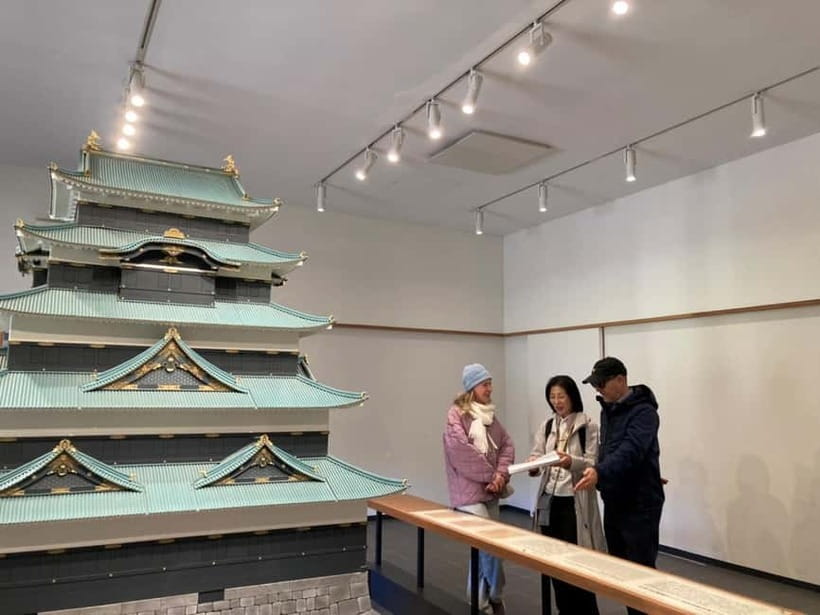
Tokyo can feel new at every turn, with towers, trains, neon, and crowds competing for your attention. The East Gardens offer a sharp change of pace. Beneath the clipped trees and open lawns lie the main grounds of Edo Castle, the seat of the shogun during the Edo period.
That setting gives the tour more weight than a standard park stroll. You are not simply looking at attractive trees and stonework. You are following the outline of a political center that shaped Japan for centuries.
The castle itself is no longer standing in full form, so the guide’s role matters. A good guide helps you picture the gates, towers, walls, and formal spaces that once filled the site. Several guides bring printed photographs or visual aids, which makes the missing buildings easier to understand.
The tour also connects the shogun’s government with the imperial family. That broader view is useful because many first-time visitors know one side of Japanese history but not how the two systems fit together. Guides explain the shift from shogun rule to the imperial era in a way that keeps the walk grounded in the places around you.
Other history tours people book around Tokyo:
- Tokyo: Imperial Palace and Shogun Historical Walking Tour
★ 5.0 · 2,251 reviews - Tokyo Castle & Imperial PalaceーShogun Walking Tour
★ 4.7 · 1,068 reviews - Tokyo: Imperial Palace Japanese History Walking Tour
★ 4.9 · 987 reviews
Meeting at Wadakura Fountain Park
The meeting point is in front of the fountain at Wadakura Fountain Park. Your guide holds a sign marked Gotcha, so look for the sign rather than relying only on a general view of the park.
This is a sensible starting point. The fountain park gives you an open place to find your guide before entering the palace grounds, and the transition from modern Tokyo to the formal garden begins almost at once.
Allow enough time to locate the fountain and settle in. The experience is a walking tour, not a bus excursion, and the group enters the garden together. If you arrive with purchases from Tsukiji, Asakusa, or another shopping stop, check them first if they include Japanese knives or other items that could be treated as weapons.
You should also expect a baggage inspection when entering the Imperial Palace grounds. That can slow the start slightly, but it is part of the site’s entry rules.
Walking through the East Gardens
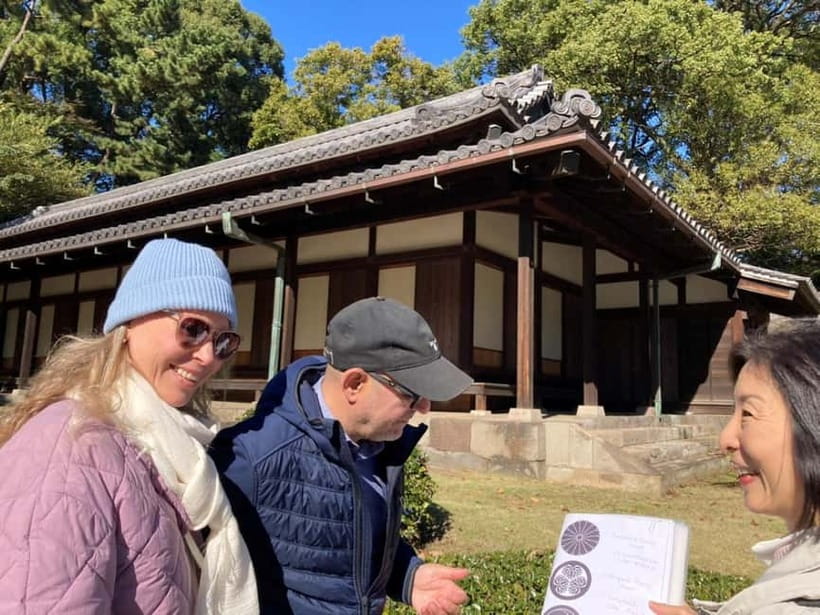
The East Gardens are the heart of the experience. Here you get a mixture of open green space, formal plantings, stone walls, former castle areas, and quiet corners that feel far removed from central Tokyo.
The tour moves at a leisurely pace. That matters because the value is in the explanation, not in covering a huge distance. You have time to pause, ask questions, take photographs, and look at the details without feeling pushed along.
Guides explain the purpose of the garden and the remains around it. You may see places where castle buildings once stood, old defensive walls, and entrances connected with the former castle complex. Since relatively little of the original castle remains, visual storytelling is especially helpful.
I would pay close attention when the guide explains how the site worked as a seat of government. The walls and gates were not just decorative. They reflected rank, security, and the carefully controlled movement of people around the shogun’s domain.
The gardens also provide a softer side of the story. Trees, ponds, paths, and seasonal plantings show how Japanese garden design can frame history without turning the site into a museum. Your guide may point out the meaning or importance of particular plants and explain how the garden’s appearance connects with Japanese culture.
The koi, gardens, and smaller details
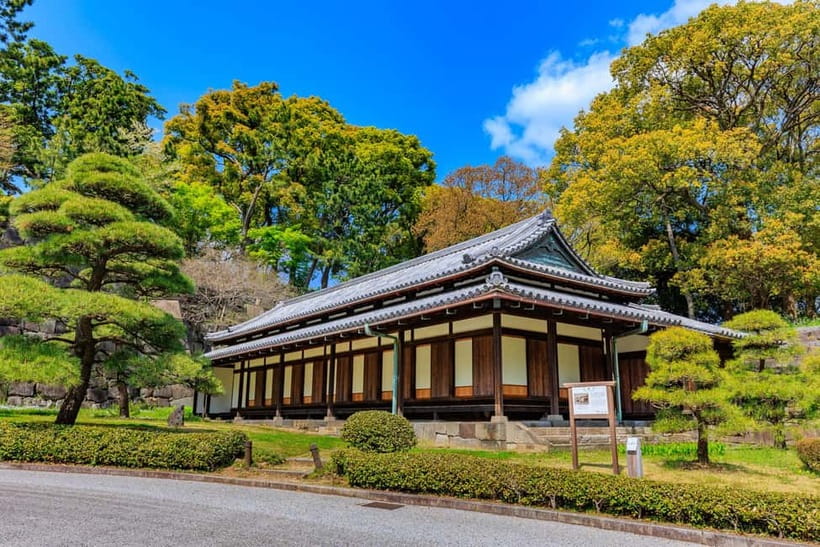
The tour description gives special attention to a one-of-a-kind or magical breed of koi. Treat this as a small highlight rather than the main reason to book, but it adds charm to a walk that could otherwise feel heavily focused on dates and political change.
The koi also give families and younger visitors something immediate to enjoy. One guide, Hitoshi, received praise for making the experience useful for a nine-year-old child, which suggests that the tour can work well for mixed-age groups when the guide keeps the explanations lively.
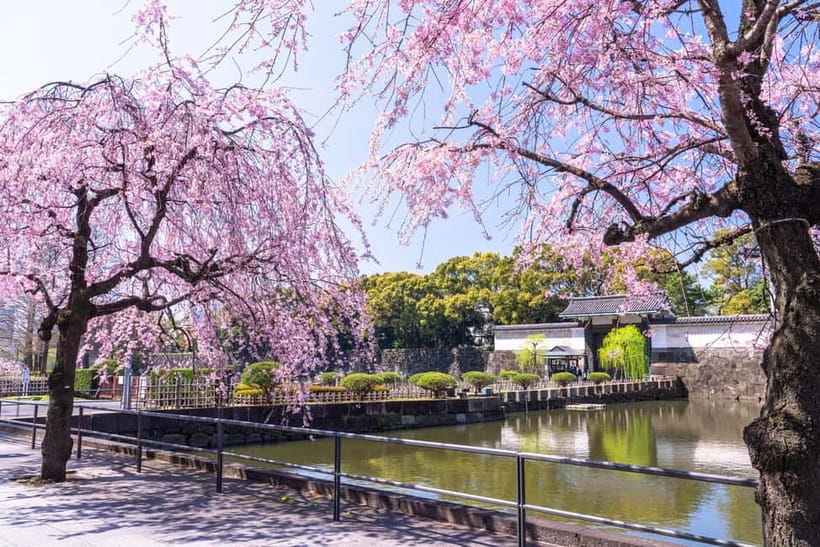
You may also get help with photographs. Guides including Hiroshi and Shigeru have been praised for taking pictures at good spots, while another guide showed an adjacent cherry blossom area during the visit. These extras depend on the guide and the day, so do not treat them as guaranteed parts of the route.
Still, they reflect the personal style of this experience. You are not simply handed a script and sent around the garden. The guide may adjust the pace, explain a point in another way, or help you continue to your next stop.
Same city, a different century:
- Tokyo Castle & Imperial PalaceーShogun Walking Tour
★ 5.0 · 724 reviews - Tokyo: Shinjuku Historical Walking Tour & Secret Backstreets
★ 5.0 · 530 reviews - Imperial Palace East Garden and Edo Castle Walking Tour in Tokyo
★ 5.0 · 510 reviews - From Tokyo: Nikko World Heritage Site Private Full-Day Trip
★ 4.9 · 243 reviews
What the guides add to a free garden
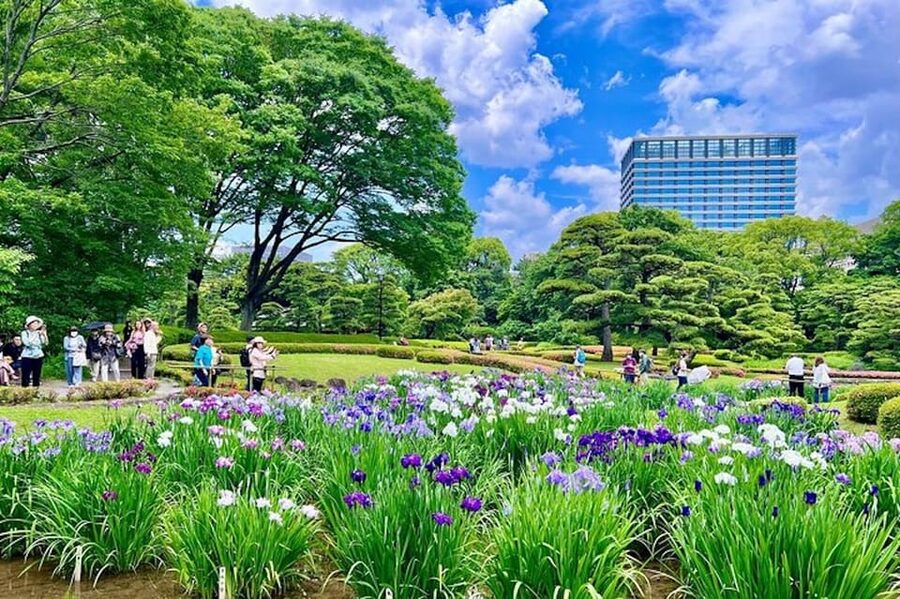
The East Gardens themselves are free to enter, which makes the $42 price a question of interpretation and convenience. If you only want to walk through attractive grounds, you can do that without paying for a tour.
The tour becomes more worthwhile if you want the site explained as you see it. Without a guide, castle foundations can look like stones, walls can look like walls, and a garden pond can remain just a pleasant pond. With the right explanation, those same features show how the castle worked and how Japanese power changed over time.
The strongest praise goes to the guides’ communication and patience. Hitoshi is repeatedly described as clear, friendly, and generous with his time. Masahito is praised for being prepared, good-humored, and willing to answer questions. Shigeru is noted for strong English and an ability to make the discussion engaging.
Mikio adjusted the pace for visitors who needed to walk slowly and take regular breaks. Another guide took special care of a visitor using a wheelchair. Those details matter if your group has different walking speeds or mobility needs, though you should still discuss your needs when booking rather than assume every route or condition will suit you.
Naoko’s tours are described as especially well organized, with pictures and visual explanations. She also handled a group of eight older visitors with patience. These examples suggest that the best experience comes from a guide who reads the group rather than rushing through a fixed speech.
What you will not see
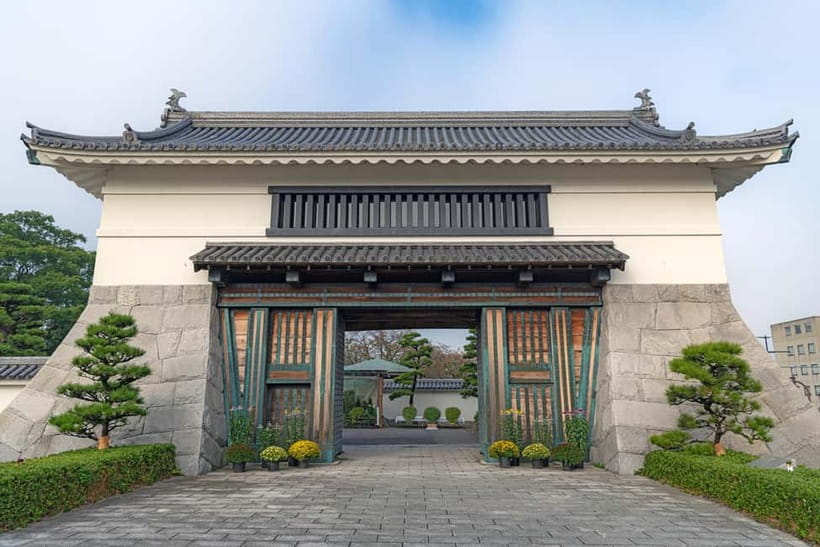
The biggest limitation is also the one most likely to cause confusion. This is not a tour inside the Inner Palace. The Imperial Palace is not open to the public through this activity, and the route remains in the East Gardens.
You may see palace-related entrances and learn about the wider complex, but do not book this expecting rooms, private interiors, or a close look at the imperial residence. The title can sound broader than the actual visit, so keep the distinction clear.
The garden also closes on Mondays and Fridays. Check the operating day before you book, especially if your Tokyo schedule is tight.
Weather is another practical factor. The tour runs outdoors, and rain can affect the comfort of the walk. One guide still kept a rainy-day visit enjoyable, but you will want suitable clothing and shoes. The pace is gentle, yet this remains a two-hour walk through open grounds.
Is $42 a fair price?
At $42 per person, this is not the cheapest way to see the East Gardens. Since entry to the garden is free, the admission itself does not account for the cost.
The price makes more sense if you value a live English-speaking guide, historical explanation, help with photos, and a clear two-hour route. You are buying the story of the place, not just access to it.
I would compare it with the rest of your Tokyo plans. If you enjoy exploring independently and are happy to read signs or use a guidebook, you may prefer to visit on your own. If you have limited time or want the site to make sense quickly, the tour can be good value.
One booking note is helpful: you can reserve and pay later, and cancellation is allowed up to 24 hours before the tour for a full refund. That gives you some flexibility when Tokyo weather or transport plans change.
Who will enjoy this tour most
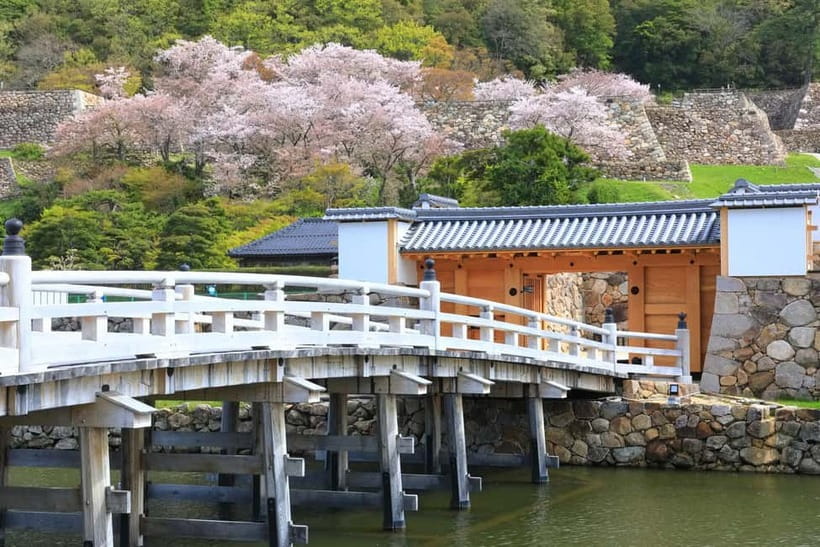
This experience suits you if you want Japanese history in a manageable dose. Two hours is long enough to cover the castle site and gardens, but short enough to fit before lunch, dinner, or another Tokyo activity.
It is especially useful for:
- First-time visitors who want a clear introduction to shoguns, emperors, and Edo Castle
- Families who benefit from stories, pictures, koi, and a relaxed route
- Older visitors who prefer regular pauses and a slower pace
- Visitors who want help taking photographs and finding the next subway connection
- Anyone who enjoys gardens but wants more context than a solo walk provides
It may not suit you if you want grand castle buildings still standing, access to the Inner Palace, or a full-day historical excursion. It also is not the right choice if Monday or Friday is your only available day.
Practical tips for a smoother visit
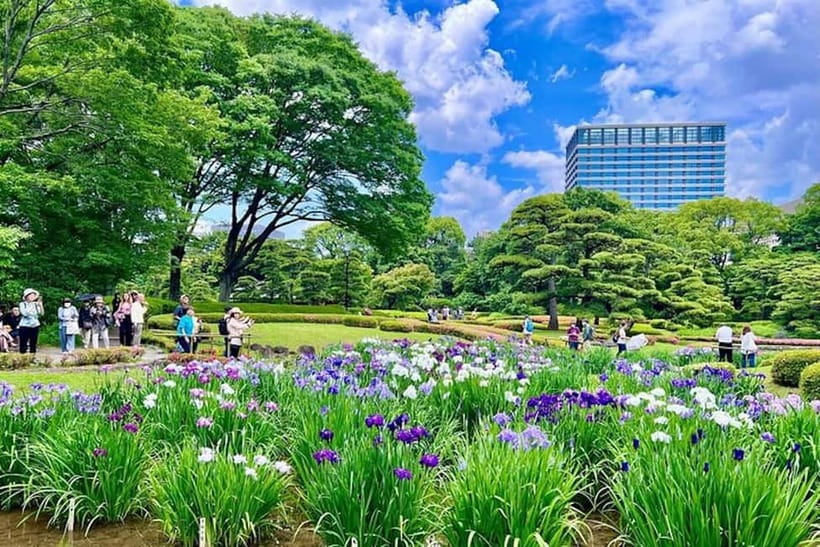
Wear comfortable shoes and plan for two hours outside. The pace is not described as strenuous, but the tour involves walking through the gardens and stopping at several sites.
Meet at the Wadakura Fountain Park fountain and look for the Gotcha sign. Keep your bags ready for inspection, and store knives or similar purchases before you arrive.
Use the guide’s knowledge actively. Ask about the shogun’s government, the castle layout, the imperial family, garden design, and the remains you are viewing. Guides such as Shigeru, Hitoshi, Naoko, Masahito, and Mikio have been praised for answering questions, so the experience should reward curiosity.
If you have mobility concerns, mention them in advance. The experience has been handled thoughtfully for slower walkers and at least one wheelchair user, but individual conditions can vary.
Should you book the East Garden tour?
Book it if you want the Imperial Palace East Gardens to make historical sense, not just look pretty. The garden is free, but the guide can turn old walls, empty foundations, plants, ponds, and castle traces into a clear picture of Edo-era power.
I would be more cautious if you expect to enter the Inner Palace or see a complete castle. You will not. At $42, the value rests almost entirely on the guide, and the repeated praise for Hitoshi, Naoko, Masahito, Shigeru, Mikio, and others suggests that the human side is the real strength.
For a short, calm introduction to Tokyo’s shogun and imperial past, this is a sensible choice. Pick a day other than Monday or Friday, leave weapon-like purchases in a locker, and arrive ready to walk slowly and listen.
FAQ
Where does the tour meet?
Meet in front of the fountain at Wadakura Fountain Park. The guide will hold a sign that says Gotcha.
How long does the tour last?
The guided walking tour lasts two hours.
What language is the tour conducted in?
The live tour guide speaks English.
Does the tour enter the Imperial Palace?
No. The tour visits the East Gardens and does not enter the Inner Palace.
What are the East Gardens built on?
The East Gardens were built on the main grounds of Edo Castle, where the shogun ruled Japan.
Which days are the gardens closed?
The East Gardens are closed on Mondays and Fridays.
Is there a baggage inspection?
Yes. Visitors may be subject to a baggage inspection when entering the Imperial Palace grounds.
Can I bring a Japanese knife purchased before the tour?
You should leave Japanese knives and other items that could be used as weapons in a coin locker or similar storage before the meeting.
Is the garden entrance included in the tour price?
The East Gardens are free to enter. The $42 price covers the guided walking experience rather than a separate garden admission ticket.
Can I cancel the booking for a refund?
Yes. You can cancel up to 24 hours in advance for a full refund. You can also reserve now and pay later.
Just added around Tokyo
- Tokyo: Imperial Palace, the history of Japan (ENGLISH GUIDE)★ 5.0 · 77 reviews
- Tokyo: Customized Private Historical Guided Photoshoot Tour★ 5.0 · 25 reviews
- Kyoto: Nijo Castle World Heritage Guided Tour with Admission★ 4.9 · 37 reviews
- Historic Kanda Sake Tasting at Tokyo’s Oldest Shop (1596)★ 4.9 · 33 reviews
- From Tokyo: Private Nikko World Heritage Sights One Day Trip★ 4.7 · 52 reviews
- From Tokyo: Guided Day Trip to Nikko World Heritage Sites★ 4.8 · 51 reviews
- Asakusa: A Big-picture History Walk to Know Japan★ 4.6 · 77 reviews
- Asakusa: 3.5-hour Big-picture History Walk★ 4.7 · 39 reviews
Tokyo History Tours, compared.
Tokyo: Imperial Palace and Shogun Historical Walking Tour
Read our review →
Tokyo Castle & Imperial PalaceーShogun Walking Tour
Read our review →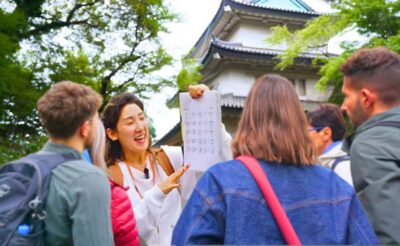
Tokyo: Imperial Palace Japanese History Walking Tour
Read our review →Tokyo Castle & Imperial PalaceーShogun Walking Tour
Read our review →
Tokyo: Shinjuku Historical Walking Tour & Secret Backstreets
Read our review →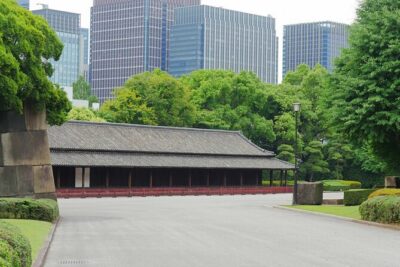
Imperial Palace East Garden and Edo Castle Walking Tour in Tokyo
Read our review →
From Tokyo: Nikko World Heritage Site Private Full-Day Trip
Read our review →
Tokyo: The Best of Izakaya in Shinjuku Food & Cultural Tour
Read our review →Browse the lists this tour appears in