
Review · ITALY
Bari Walk Through History
Bari reveals itself best on foot, one layer at a time. This three-hour walk moves from the old port and saint-filled churches to the narrow lanes of Bari Vecchia, then into the elegant Murat and Madonnella districts. The most memorable stop may be Arco Basso, where local women prepare fresh orecchiette by hand.
I like the small group limit of 10, which gives the guide room to answer questions and keep the walk conversational. I also like the mix of sights: free interior visits to two important churches, local stories in the old town, Liberty-era buildings, and broad seafront views.
The main consideration is the price, $107.84 per person. That is a serious fee for a walking tour, especially since admission is free at the listed stops. You are paying for local interpretation, the route, and the guide’s personal connection to Bari, not for expensive entry tickets.
Key points to know before you book
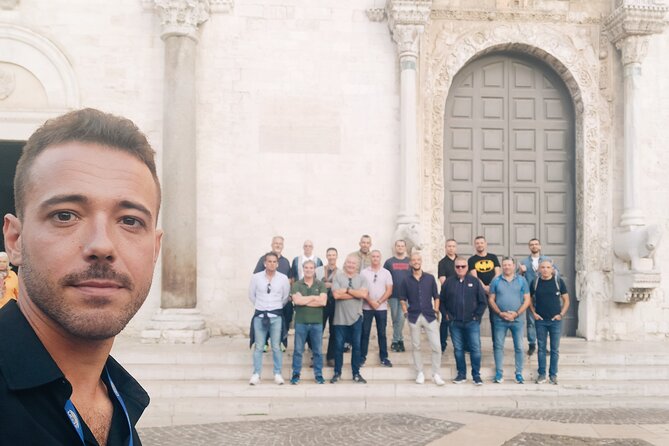
- Local guides make the difference: Francesco is praised for his warmth, stories, and love of Bari, while Adriano is also named as a kind and informative guide.
- Two churches include interior visits: See Basilica San Nicola and its Orthodox Crypt, followed by Cattedrale di San Sabino and its Crypt.
- Arco Basso adds real local life: Watch Bari women prepare the city’s famous fresh orecchiette.
- The route covers several sides of Bari: You walk through Bari Vecchia, Madonnella, Murat, the old port area, and the seafront.
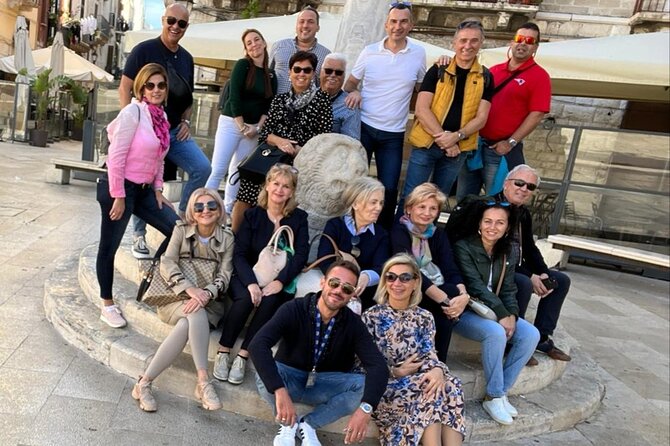
- The group stays small: A maximum of 10 people makes conversation easier than on a large city tour.
- Plan for weather and firm cancellation terms: Poor weather may bring a new date or refund, but ordinary cancellations are non-refundable.
Why this walk gives you a useful first look at Bari
Many city tours rush from one major monument to the next. This one is more useful because it shows how Bari changes as you walk. The route begins near Teatro Margherita, passes through the historic core, and ends near Castello Svevo. Along the way, you see religious Bari, working-class Bari, elegant modern Bari, and the city’s open waterfront.
That broad view matters if you are new to town. You get a sense of where the old center ends, where the Murat quarter begins, and how the seafront ties the city together. The guide also adds the human details that are hard to pick up from a map: legends, customs, amusing stories, and familiar connections with people in the old town.
Francesco is the guide most closely associated with this experience, and his local background is a major part of its appeal. He grew up in Bari and is described as someone who knows many people in the old city. That can turn a standard walk into more of a conversation with a local who knows why a street, building, or custom matters.
The tour is offered in English and takes about three hours. You should expect a steady city walk rather than a formal indoor museum visit. Most people can participate, and the meeting point is near public transportation, but the route through the old town includes narrow lanes and extended time on foot.
More History Walking Tours in Italy
- Venice: City Center Historical Guided Walking Tour
★ 4.2 · 1,873 reviews - Palermo: Street Food and History Walking Tour
★ 4.9 · 1,486 reviews - Verona: History and Hidden Gems Guided Walking Tour
★ 5.0 · 1,379 reviews
Basilica San Nicola and the Orthodox Crypt
The first major stop is Basilica San Nicola, one of Bari’s central landmarks. You go inside the Catholic Christian basilica and visit its Orthodox Crypt. The combination is especially worthwhile because it reflects Bari’s role as a meeting point between Western and Eastern Christian traditions.
The interior visit is listed as about 15 minutes, with no separate admission charge. That is enough time for the guide to explain the building and its importance without turning the morning into a long church lecture. The Orthodox Crypt gives the stop added interest, since you are not simply looking at another Romanesque church from the outside.
This is one place where a local guide adds real value. The stone walls and religious art can be appreciated on your own, but the meaning of the site is easier to grasp when someone explains its place in Bari’s civic and religious life.
Dress and behave respectfully, as you would in any active church. The itinerary provides a short visit, so do not expect an extended period for quiet contemplation or detailed independent viewing.
Cattedrale di San Sabino and its Crypt
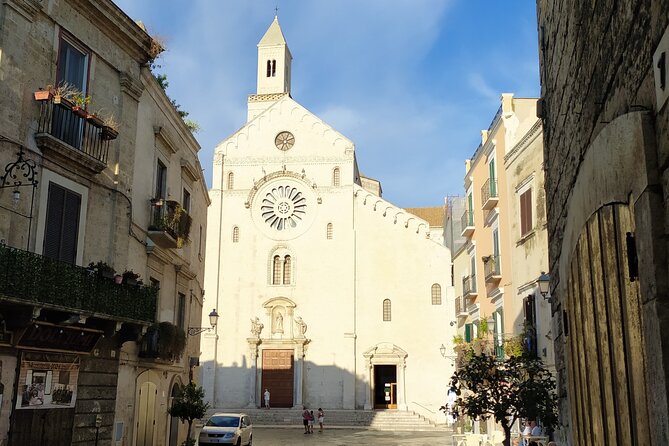
The walk continues to Cattedrale di San Sabino, with an interior visit to the cathedral and its crypt. The scheduled stop is about 10 minutes, again without an admission fee.
This is a compact stop, so the guide’s explanation is important. You will not have a great deal of time to study every architectural detail. Instead, the value comes from placing the cathedral within the old city and comparing it with Basilica San Nicola.
I like the way these two church visits work together. You see two major religious buildings early in the walk, then move out into streets where daily life takes over. That balance keeps the tour from becoming a procession of monuments.
If churches are your main reason for visiting Bari, you may want extra time afterward to return on your own. The tour gives you an introduction, not an exhaustive art and architecture study.
The theater, aqueduct palace, and a wider view of the city
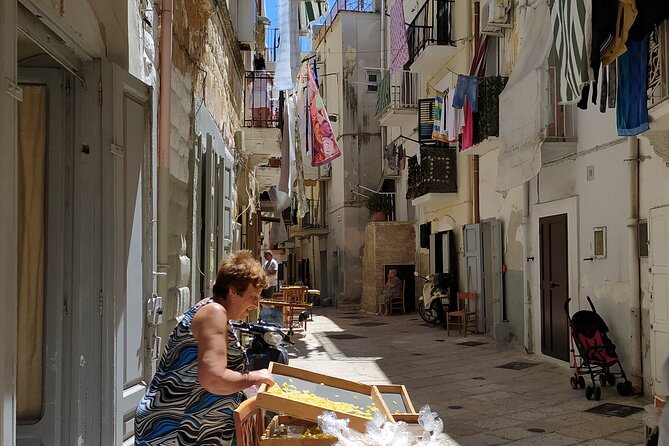
The route includes outside views of a theater and the Palazzo dell’Acquedotto, with information about visiting hours. These are brief exterior stops rather than full interior tours.
That distinction matters. You will hear what the buildings are and learn when visits may be possible, but the schedule does not include extended time inside them. This makes the walk more efficient while giving you a list of places to consider later.
The Palazzo dell’Acquedotto adds a different piece of Bari’s story from the churches. Its presence helps show how the city developed beyond the medieval core. The theater stop also gives you a chance to see how public culture fits into the city’s built environment.
You should treat these as orientation points, not the main focus of the experience. The strongest parts of the walk are the church interiors, old-town streets, and personal stories.
Same city, a different century:
- Pompeii: Entry Ticket and Guided Tour with an Archaeologist
★ 4.8 · 19,459 reviews - Colosseum: Underground and Ancient Rome Tour
★ 4.7 · 12,691 reviews - Pompeii: Small Group Tour with an Archaeologist
★ 4.8 · 12,264 reviews - Pompeii Small Group Tour with an Archaeologist
★ 5.0 · 6,593 reviews
Madonnella and the early 1900s Liberty buildings
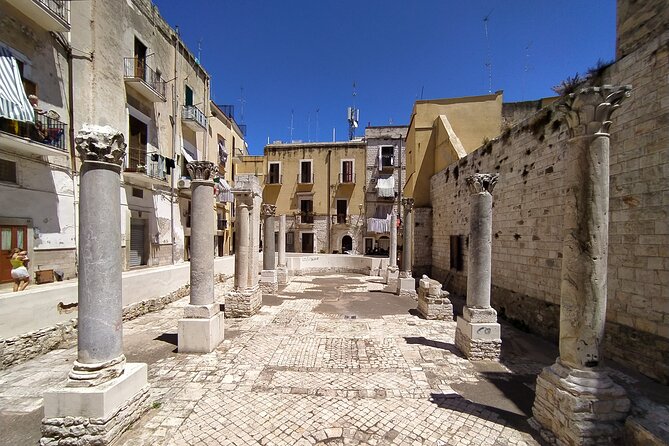
In the Quartiere Umbertino and Madonnella district, you spend about 20 minutes looking at elegant Liberty architecture from the early 1900s. This section gives your eyes a rest from the tight lanes of Bari Vecchia.
Liberty architecture is Italy’s version of Art Nouveau, with decorative lines and early modern design. The stop helps you see that Bari is not only a medieval city. Its character also comes from the period when it expanded into more orderly, formal neighborhoods.
This district is useful for understanding the city’s contrasts. The historic center has tight passages, old stone buildings, and small domestic details. Madonnella offers a more planned urban setting and a different style of beauty.
The time here is enough for an introduction and a few photographs. If architecture is your main interest, make mental notes of the buildings you want to revisit after the tour. The guide can point out what deserves a closer look, but the walk does not promise a detailed survey of every Liberty facade.
Bari Vecchia: alleys, legends, and everyday life
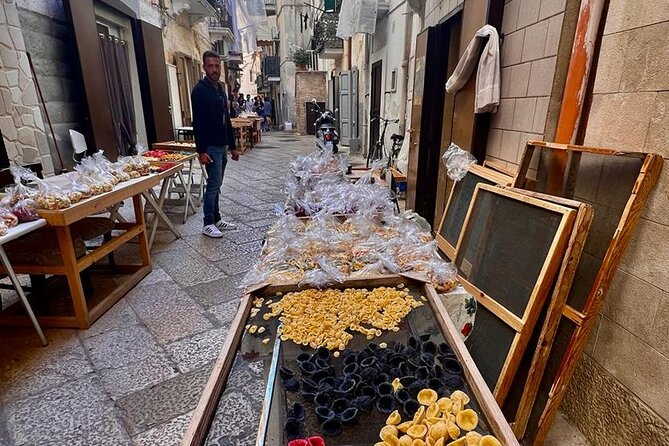
The longest stop is a one-hour walk through Citta Vecchia, Bari’s historic center. This is the heart of the experience. You move through narrow lanes, learn local legends and customs, and see how people live in the old city.
The practical strength of this section is its local focus. You are not only looking at old walls. You are hearing stories about the neighborhood and encountering the daily life of the people who still call it home. The guide’s local relationships are especially useful here, since they help the walk feel less like a monument checklist.
Francesco is praised for showing parts of Bari that are easy to miss and for explaining what you are looking at as you move through the streets. That is important in Bari Vecchia, where an ordinary doorway, alley, or worn facade may carry more meaning than its appearance suggests.
The lanes can be confusing if you explore alone. This guided hour gives you a clear introduction before you return on your own, perhaps with a better sense of where you are and what you are seeing. It also gives you context for the customs and food you may encounter elsewhere in the city.
The tour may include time for a food stop, depending on the guide and the day. Francesco has taken participants to a busy focacceria for panzerotto and focaccia Barese. Since this is not listed as a formal included tasting, do not book the tour expecting food to be part of the price. Still, it is a useful reminder to ask your guide where to eat after the walk.
Arco Basso and the women making orecchiette
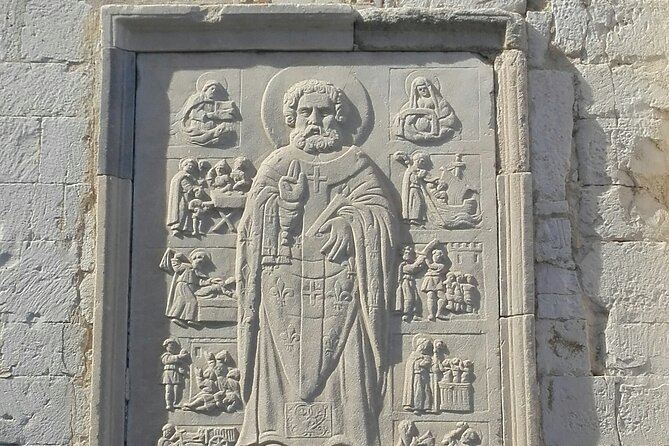
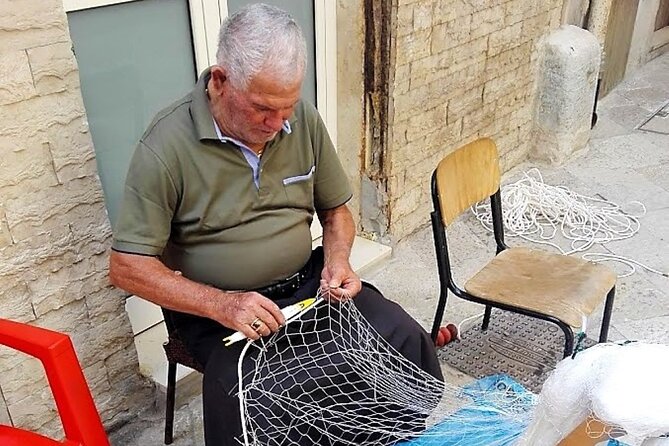
Strada delle Orecchiette, also known as the famous Arco Basso street, is one of the most distinctive stops. You spend about 10 minutes watching local women prepare fresh orecchiette, the ear-shaped pasta associated with Bari.
This is a small stop in time but a big one in character. It connects food with neighborhood life in a direct way. You are not seeing pasta in a shop window. You are watching a traditional skill practiced in the street.
Keep this visit respectful. You are observing people at work in their neighborhood, not entering a staged cooking show. The guide can explain the custom and help you understand why the street has become such a recognizable part of Bari.
Ten minutes is enough to see the activity and take in the setting, but not enough for a cooking lesson. If you want to eat orecchiette later, use the guide’s local suggestions rather than expecting a meal here.
Murat, the waterfront, and the walk toward Castello Svevo
The final 30-minute section moves through the French Murat quarter and the monumental area along the seafront. You see theaters, late 19th-century Art Nouveau buildings, and panoramic points suited to photographs.
This closing stretch changes the mood again. After the intimate lanes of Bari Vecchia, the waterfront gives you space and long views. The Murat quarter adds large-scale urban architecture, while the seafront lets you see Bari as a coastal city rather than only an old town.
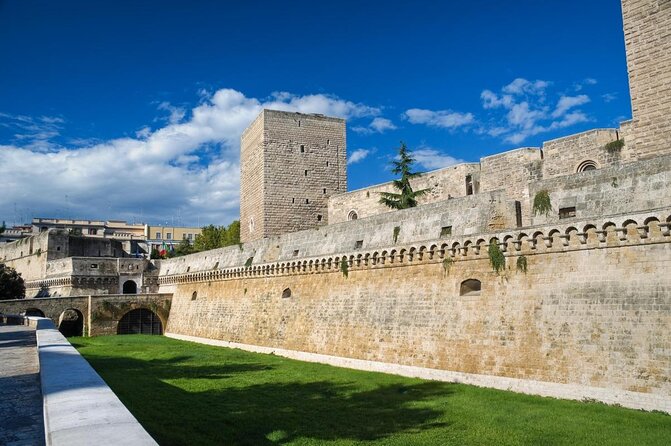
The route ends near Castello Svevo di Bari in Piazza Federico II di Svevia. You receive information about visiting hours, but the castle is viewed from outside during the tour. The ending is practical: you can finish with a clear landmark and decide if you want to visit the castle separately.
The final location also makes the tour useful for planning the rest of your day. You are not returned to the starting point, so remember that this is a one-way walk from Teatro Margherita to the castle. That is convenient if you want to continue exploring the old center, but less convenient if you have left belongings near the start.
Is $107.84 a fair price?
At $107.84 per person, this is not a budget walk. The churches and other listed sights do not add admission costs, so the price rests mainly on the guide’s time, route design, local access, and ability to explain Bari in English.
I would see the value in it if you are spending only a short time in Bari, arriving without much background, or hoping to understand the city beyond its postcard views. The tour covers several districts and gives you a strong starting map for later exploring.
I would hesitate if you prefer to wander alone, read at your own pace, or focus on entering museums and major monuments. The tour does not include a long castle visit, a full theater visit, or a meal. It is a guided orientation with local stories, not a package of paid attractions.
The small group limit helps justify the cost. A maximum of 10 people gives Francesco or Adriano more chance to answer questions and adjust the conversation. The strongest praise centers on the guides’ love of Bari, amusing anecdotes, and ability to make the walk feel personal rather than like a memorized speech.
Who should book this Bari walk?
I would recommend it to first-time visitors who want a clear introduction to Bari in one morning or afternoon. It is also a good fit if you enjoy architecture, church interiors, local food traditions, and stories about ordinary city life.
It suits couples and small groups especially well, and the private-feeling atmosphere may be possible when demand is low. One couple described having the guide to themselves, but you should not assume that will happen. The stated maximum is 10 people.
The walk is also useful for anyone arriving in Bari by cruise or using the city as a base in Puglia. You finish near Castello Svevo rather than returning to the theater, so plan your next stop from there.
Book with care if your schedule is uncertain. The experience is non-refundable and cannot be changed for any reason. If poor weather cancels the tour, you are offered another date or a full refund. The same applies if the minimum number is not reached. Service animals are allowed, and most people can participate.
Should you book Bari Walk Through History?
Book it if you want Bari explained by someone who feels personally tied to the city. Francesco receives the strongest praise, and Adriano is also named as a capable guide. The best parts are not costly admissions, but the human details: the old-town stories, local connections, the women shaping orecchiette, and the shift from medieval lanes to Liberty streets and the waterfront.
Skip it if $107.84 feels too high for a walking orientation or if you want extensive time inside each monument. For most first visits, though, this route gives you a smart three-hour introduction and enough local context to make the rest of your time in Bari more rewarding.
FAQ
How long does Bari Walk Through History last?
The experience lasts approximately three hours.
Where does the tour start?
The meeting point is Teatro Margherita at Piazza IV Novembre, 70122 Bari, Italy.
Where does the tour end?
The tour ends near Castello Svevo di Bari in Piazza Federico II di Svevia.
Is the tour offered in English?
Yes. The experience is offered in English.
What is the maximum group size?
The tour has a maximum of 10 people.
Does the tour include church entry?
Yes. The route includes internal visits to Basilica San Nicola and its Orthodox Crypt, plus Cattedrale di San Sabino and its Crypt. Admission is listed as free.
Does the tour include a visit inside Castello Svevo?
No. The castle is viewed from outside, and the guide provides information about internal visiting times.
What happens if bad weather cancels the tour?
You will be offered a different date or a full refund if the experience is canceled because of poor weather.
Just added around Italy
- Guided Cultural Tour of the Godfather Film in Messina★ 5.0 · 31 reviews
- Guided tour of the Riace Bronzes and the Archaeological Museum of Reggio Calabria★ 5.0 · 44 reviews
- SU NURAXI BARUMINI Unesco World Heritage Site★ 5.0 · 129 reviews
- Brescia the Unexpected: History, Local Stories & a drink★ 5.0 · 31 reviews
- Bolognese Cooking Class with Margherita in the Historic Center★ 5.0 · 26 reviews
- Tower and Power, Virtual tour in Medieval Bologna★ 4.5 · 54 reviews
- Bologna historical art walking tour with hidden gems and tastings★ 5.0 · 108 reviews
- Best of Bologna in one day : Food, architecture, art and history★ 5.0 · 27 reviews
Italy History Tours, compared.
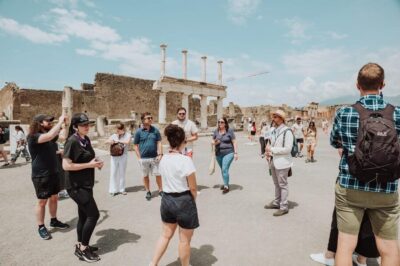
Pompeii: Entry Ticket and Guided Tour with an Archaeologist
Read our review →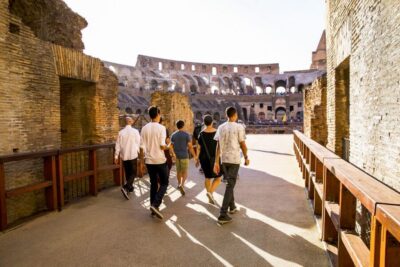
Colosseum: Underground and Ancient Rome Tour
Read our review →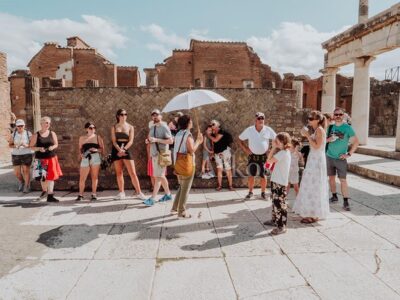
Pompeii: Small Group Tour with an Archaeologist
Read our review →Pompeii Small Group Tour with an Archaeologist
Read our review →
Rome: Colosseum with Arena, Roman Forum and Palatine Guided Tour
Read our review →
Venice: St. Mark’s Basilica Guided Tour & VR History Intro
Read our review →
Colosseum with Arena, Roman Forum and Palatine Hill Guided Tour
Read our review →
Herculaneum: Skip-the-Line Guided Tour with Archaeologist
Read our review →Browse the lists this tour appears in