
Review · BERLIN
The History of Berlin: WWII PRIVATE Walking Tour With Locals
Berlin’s past is not tucked away in one museum. It is written into streets, empty spaces, restored façades, border crossings, and monuments. This private four-hour walking tour connects those pieces, from the New Synagogue and Palace of Tears to the Holocaust Memorial, Hitler’s bunker site, Brandenburg Gate, and Museum Island.
I like the freedom to ask questions and change the pace. I also like the local guides, especially frequently praised names such as Sara, Seth, Boyd, Amelia, and Miha, who have tailored routes to personal interests. The main drawback is the amount of walking: one guest counted about 15,000 steps, and the exact sights can vary by guide and route.
Key points to know before booking
- A private route for your group: You do not join a large scheduled party, so the guide can adjust the focus and answer your questions.
- WWII and Cold War in one walk: The tour links Nazi-era sites with Berlin’s divided-city history.
- Important sights are mainly viewed from outside: Entrance tickets to museums and attractions are not included.
- A strong guide makes the difference: Sara, Seth, Boyd, Amelia, and Miha receive particularly warm praise for clear explanations and flexible pacing.
- Expect a serious walk: The advertised duration is about four hours, with enough distance that comfortable shoes matter.
- Good for repeat visitors and history-minded first-timers: The route can cover famous monuments while adding less obvious details about the city.
Why a private Berlin history walk can work so well
Berlin can feel confusing at first. Its key sites are spread across the old eastern and western sectors, and several important places look ordinary until someone explains what happened there. A private guide gives you a thread to follow.
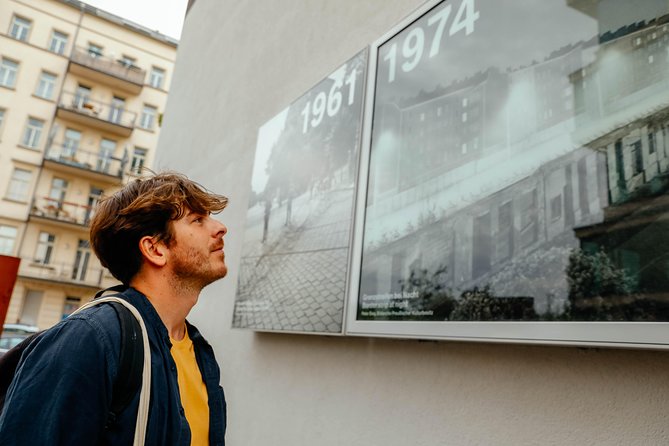
This is not a museum tour with a fixed display and a set lecture. You walk through the city, stopping where the past happened or where later memorials now mark it. The guide connects the Nazi rise to the destruction of the war, then links that period to the division of Berlin and the Cold War.
The private format matters most when you have a specific interest. You can ask about Nazi government, Jewish Berlin, wartime damage, the Berlin Wall, escape attempts, postwar reconstruction, or the city’s changing architecture. The route is described as customizable, although you should confirm your priorities with the guide at the start.
The current rating is 4.9 from 209 ratings, with 97 percent recommending the experience. That is a strong record, but a private tour depends heavily on the individual guide. Most feedback praises guides for their energy, clear storytelling, flexibility, and personal attention. One unhappy experience ended after only 15 minutes because of poor communication and unprofessional conduct. That is unusual in the available feedback, but it is a useful reminder to introduce yourself, explain what you want to see, and make sure the plan feels right before setting off.
More History Walking Tours in Berlin
- Berlin: Third Reich & Cold War Guided Walking Tour
★ 4.9 · 8,378 reviews - Berlin’s Best: 2 Hour Walking Tour Third Reich and the Cold War
★ 5.0 · 5,486 reviews - Third Reich Berlin: Hitler and WWII Walking Tour
★ 5.0 · 3,301 reviews
Starting at Oranienburger Strasse
The meeting point is Oranienburger Strasse 36, 10117 Berlin. The area is close to public transportation and begins the tour in a part of central Berlin with a strong connection to Jewish life, wartime destruction, and the city’s divided past.
The New Synagogue is an early visual highlight. Its Moorish-style architecture gives you plenty to look at before the guide adds the harder story of Berlin’s Jewish community and the damage inflicted during the Nazi period. The tour does not include an admission ticket, so expect to admire key buildings and sites from outside unless your guide and schedule arrange otherwise.
This first stop also helps set the tone. Berlin’s history is not presented as a neat sequence of dates. Architecture, politics, persecution, war, division, and restoration overlap. A good guide can explain those layers without turning the walk into a dry classroom lesson.
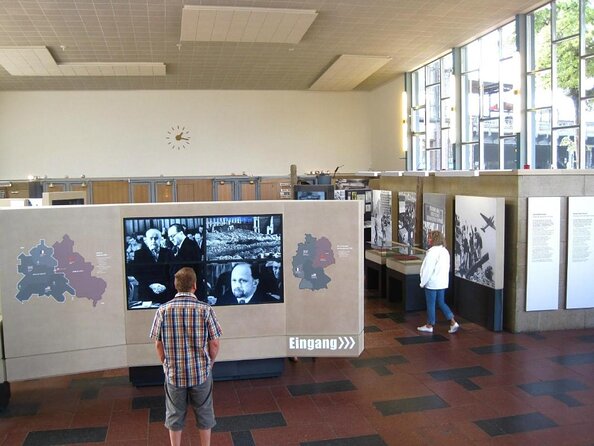
The route may then lead toward the Palace of Tears, the former border station where people crossed between East and West Berlin. Its name comes from the painful farewells that took place there. The exhibition explains how the crossing worked and how residents of Russian-occupied East Berlin tried to reach the Allied-controlled western sectors.
For many people, this is one of the most useful Cold War stops because it focuses on ordinary families. The story is not just about walls and governments. It is about who could visit, who had to leave, who could not return, and what a short goodbye at a railway station could mean.
Brandenburg Gate and the Holocaust Memorial
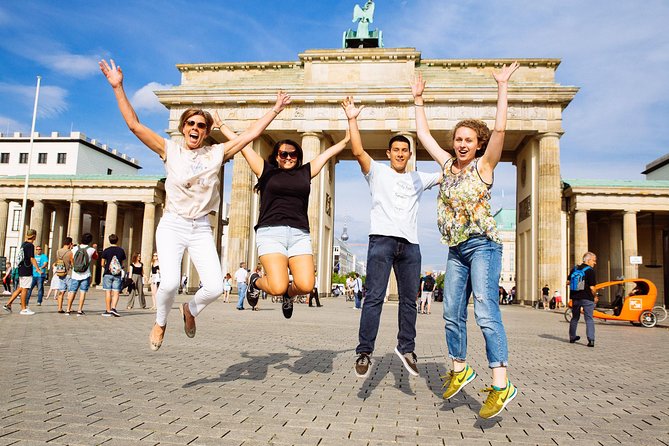
Brandenburg Gate is one of Berlin’s essential photo stops, but it deserves more than a quick picture. The monument has witnessed imperial rule, Nazi ceremony, wartime damage, postwar division, and reunification. Your guide can place it within the larger story rather than treating it as a decorative arch.
The stop is especially valuable if you are seeing Berlin for the first time. It gives you a fixed point for understanding the former border between east and west and the way Berlin’s symbolic center changed over time.
Nearby, the Holocaust Memorial offers a very different experience. Its field of concrete blocks is quiet, abstract, and intentionally open to interpretation. Walking among the blocks can feel unsettling as the ground shifts and the rows change around you.
The guide’s role here is important. The memorial does not provide a simple narrative on its surface, so context helps you understand why the site was built and how it relates to the persecution and murder of Europe’s Jews. Give yourself room to pause. This is not a stop to rush through for a photograph.
The tour focuses on the difficult parts of Berlin’s past without turning them into spectacle. That balance is one of its strengths. You are asked to think about what happened, where it happened, and how the city chooses to remember it.
Hitler’s bunker site and the Nazi story
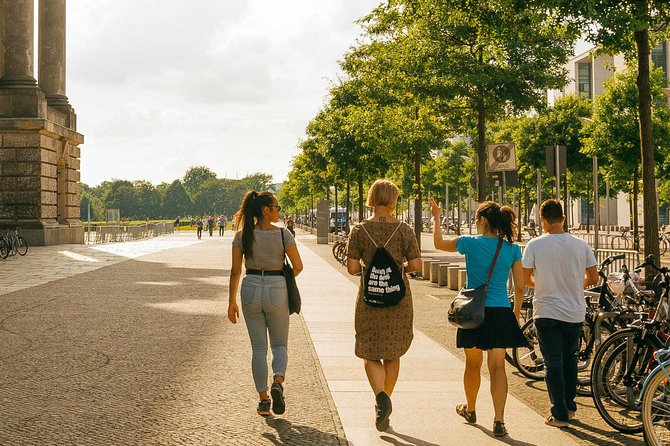
The former site of Hitler’s bunker is a particularly stark stop because there is little to see. The location is marked by modern surroundings rather than a grand museum entrance or preserved underground rooms. That absence can be more powerful than a reconstructed interior.
Your guide can explain the final days of the Nazi leadership, the destruction around the bunker, and why the site was not turned into a shrine. This is a place where historical explanation matters more than visual drama.
The tour also covers the rise of the Nazi Party and the connection between political power, propaganda, persecution, and war. A good explanation should make clear that the catastrophe did not appear overnight. It developed through choices, institutions, public participation, and the failure to stop escalating persecution.
Some guests praise guides such as Seth, Sara, Michele, and Boyd for making these subjects accessible and engaging without losing their seriousness. That ability matters. WWII history can become a string of dates, but the best parts of this walk show how decisions affected the people who lived in Berlin.
More History Walking Tours in Germany
- Berlin: Third Reich, Hitler, and WWII Walking Tour
★ 4.9 · 1,757 reviews - Berlin: History of the Third Reich Guided Walking Tour
★ 4.7 · 791 reviews - Berlin Historical Highlights Walking Tour
★ 4.9 · 657 reviews - Berlin Private Complete History All Day Walking Tour
★ 5.0 · 474 reviews
Bebelplatz and Berlin’s difficult memory
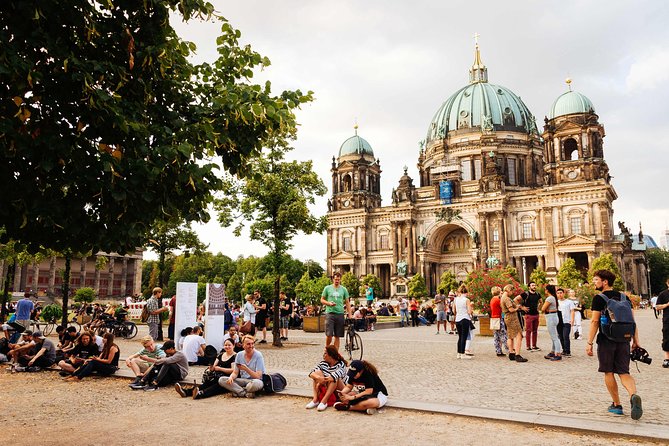
Bebelplatz brings you into one of Berlin’s most impressive architectural settings. The square is surrounded by major historic buildings, yet it is also tied to the Nazi book burning of 1933.
The memorial below the square is easy to miss if you do not know where to look. That is exactly why a local guide helps. A quick explanation turns an attractive urban space into a place where you can consider censorship, propaganda, and the early public signals of Nazi rule.
I like this contrast. Berlin often places a grand building beside a small, quiet reminder of a terrible event. You are constantly asked to look twice.
The walking route can also bring in nearby government buildings, memorials, and less obvious details. One guide took extra time to point out the former Gestapo camp area when the schedule allowed. Such additions depend on the guide and the route, so treat them as possible bonuses rather than guaranteed stops.
Reichstag, Checkpoint Charlie, and route changes
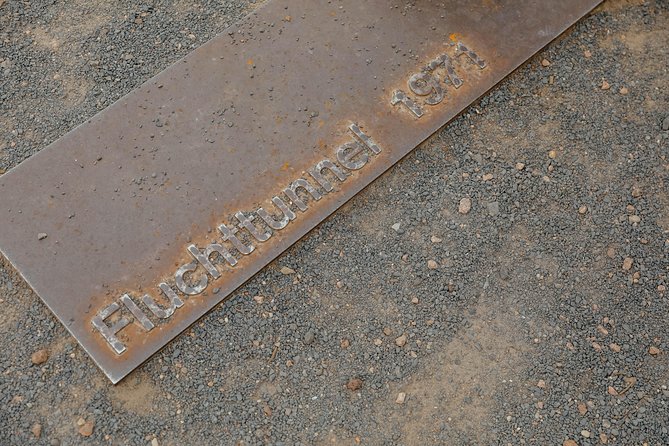
The itinerary may include the Reichstag Building, with about 30 minutes listed for the stop. The building opened in 1894 as the home of the German Empire’s parliament and was badly damaged by fire in 1933. Its history links imperial Germany, the Nazi seizure of power, wartime destruction, divided Berlin, and the later return of the federal government.
The building is usually approached from outside on this walking experience. Entrance is not included, and the tour does not promise a visit to the dome or interior. If seeing inside matters to you, ask the guide what is possible before booking separate admission.
Checkpoint Charlie may also be included, with roughly 30 minutes assigned in the suggested route. It was the best-known crossing point between East and West Berlin and became one of the most recognizable symbols of the Cold War.
The area today is busy with modern businesses and tourist displays. That can make it feel less authentic than other sections of the former border. Still, a guide can explain the checkpoint’s role, the escape attempts connected with the border, and the difference between the original crossing point and the commercial setting you see now.
The supplied route is not fully fixed. Museum Island, the Reichstag, Checkpoint Charlie, and the broader central Berlin sights are listed, while other stops depend on the guide’s chosen path. One person felt the tour focused too much on eastern architecture and government buildings and did not include several expected highlights. To avoid that mismatch, tell your guide at the beginning if Brandenburg Gate, the Holocaust Memorial, Checkpoint Charlie, or the Wall are essential for you.
Museum Island as the final chapter
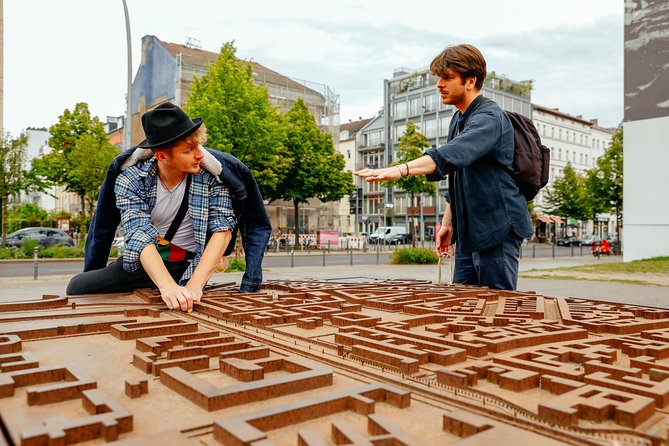
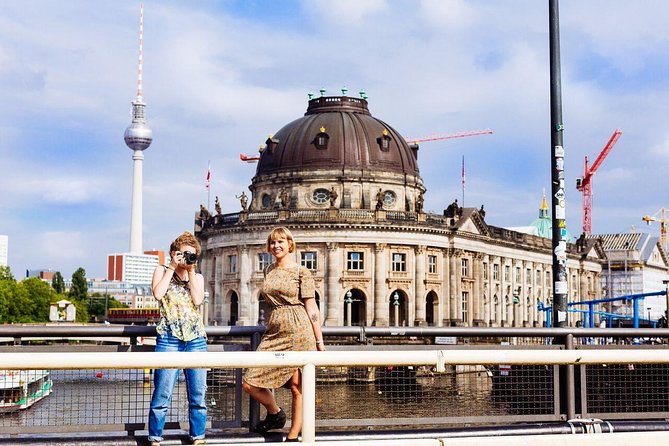
Museum Island is a fitting place to end because it brings together Berlin’s cultural institutions, royal past, wartime damage, and postwar rebuilding. The complex sits on the Spree Island in the historic center and is recognized by UNESCO.
The tour allows about an hour here, but museum admission is not included. You may see the buildings from outside and hear how they fit into Berlin’s story. If you want time inside the museums, plan a separate visit.
Museum Island also shows how much Berlin has rebuilt and restored. Several guides have pointed out the city’s effort to repair war-damaged buildings while adding modern work. That blend of old and new is one of the most interesting visual themes on the walk.
The tour returns to the original meeting point. Since the route covers a large section of central Berlin, you may finish with a much clearer sense of how the districts connect.
Walking distance, pace, and practical comfort
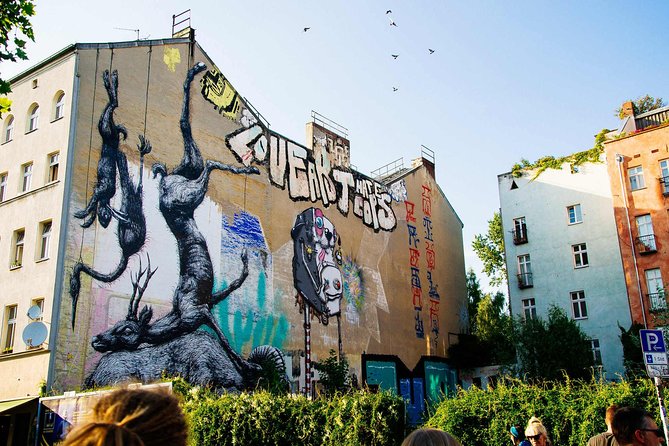
Four hours on foot is a serious outing. One account estimated 15,000 steps, though your total will depend on the route, stops, and pace. Wear comfortable shoes and bring water. There are opportunities to stop for refreshments, and guides have helped with coffee, bathroom breaks, and restaurant suggestions.
The tour requires a moderate level of physical fitness. It is not a strong choice if you want a short sightseeing loop with frequent transport. It may also be tiring for small children unless you discuss the family’s needs in advance.
There is no hotel pickup or drop-off. You meet at Oranienburger Strasse and finish there. The activity is offered in English, includes a mobile ticket, and is exclusively for your party.
The price is $143.97 per person. That is a lot for a four-hour walk, especially for one or two people. The value improves with a larger private group because group discounts may apply, and you are paying for one guide rather than separate seats on a large tour.
You are also paying for flexibility. A fixed group tour may cost less, but it cannot easily slow down for your questions or skip a stop that does not interest you. If you want a personal history lesson and can share the cost with family or friends, this price can make sense. If you mainly want photos of the major monuments, a cheaper public walking tour may suit you better.
All tour carbon emissions are offset. That does not change the route, but it is a useful part of the booking for people who want that consideration included.
The guides can shape the whole experience
The strongest praise is directed at the guides’ storytelling and personal attention. Seth is repeatedly described as clear, engaging, and able to connect WWII with the Cold War. Sara receives praise for energy, strong explanations, and building a route around personal requests.
Boyd is noted for bringing Berlin’s complicated past to life and adding places that are easy to miss. Amelia has adapted the walk to individual interests, while Miha has helped with questions, photo locations, and extra historical stops when time remained. Michele is praised for making a four-hour WWII walk feel varied rather than tiring.
These names are useful when you book, but a specific guide cannot be guaranteed by the information provided. If the booking system allows a request, asking for a particular guide may be worth trying. At the very least, explain your priorities clearly at the start.
Who should book this private walk?
I would choose this tour if you want Berlin’s major WWII and Cold War sites explained in one connected route. It is especially useful for first-time visitors who want context quickly, couples or families who prefer private time, and repeat visitors who want more than a standard monument checklist.
It also suits people who like to ask questions. You can stop over a detail, request more Jewish history, focus on the Wall, or spend more time on architecture and reconstruction.
I would hesitate if you dislike long walks, need guaranteed museum entry, or expect every advertised landmark on a fixed route. The tour is customizable, which is its strength, but it also means you must speak up about what matters most.
Free cancellation is available up to 24 hours before the start time. Cancellations or changes made later are not accepted for a refund.
Should you book it?
Book this experience if a local guide, a private pace, and serious historical context matter more to you than the lowest price. The best version of the tour links the New Synagogue, Palace of Tears, Brandenburg Gate, Holocaust Memorial, bunker site, Bebelplatz, Checkpoint Charlie, Reichstag, and Museum Island into one understandable story.
Before you begin, confirm your must-see sites and ask how much time will be spent walking versus stopping. With that small bit of planning, this can be a thoughtful and efficient introduction to Berlin’s darkest and most important chapters.
FAQ
Where does the tour start?
The tour starts at Oranienburger Strasse 36, 10117 Berlin, Germany.
Where does the tour end?
The activity ends back at the meeting point on Oranienburger Strasse.
How long does the tour last?
The tour lasts approximately four hours. Some experiences may run slightly longer depending on the route and discussion.
Is this a private tour?
Yes. Only your group participates, and the itinerary can be adjusted to suit your interests and preferences.
Is the tour offered in English?
Yes. The tour is offered in English.
Which sights may be included?
Possible sights include the New Synagogue, Palace of Tears, Brandenburg Gate, Holocaust Memorial, Hitler’s bunker site, Bebelplatz, Museum Island, the Reichstag Building, Checkpoint Charlie, and other historically relevant locations.
Are entrance tickets included?
No. Admission to attractions is not included. The main sites are visited from outside unless otherwise arranged.
Does the tour include hotel pickup?
No. Hotel pickup and drop-off are not included.
How physically demanding is the walk?
A moderate level of physical fitness is recommended. The walk can cover a substantial distance, with one account estimating about 15,000 steps.
Can I cancel for a full refund?
Yes, if you cancel at least 24 hours before the experience start time. Cancellations or changes made less than 24 hours before the start time are not accepted for a refund.
More Private History Tours in Germany
- Private Walking Tour: Berlin Wall, Cold War and Checkpoint Charlie
★ 5.0 · 37 reviews - PRIVATE BEHIND THE BERLIN WALL and COLD WAR BERLIN TOUR
★ 5.0 · 36 reviews - Private Tour: Jewish Heritage Walking Tour of Berlin
★ 5.0 · 29 reviews - Private Berlin WWII and Cold War History Tour with Local Expert Guide
★ 5.0 · 28 reviews
More Private History Tours in Berlin
- Private Walking Tour Berlin Third Reich Hitler and World War II
★ 5.0 · 360 reviews - Berlin Private Half-Day Walking Tour: Discover the German Capital’s History
★ 5.0 · 244 reviews - Private Walking Tour: World War 2 and Cold War Sites in Berlin
★ 5.0 · 230 reviews - Private Taxi Tour City East & West History and Architecture 3-4h
★ 5.0 · 42 reviews
Just added around Berlin
- Berlin Food & Cultural Tour: Must-Try German & Berliner Classics★ 5.0 · 51 reviews
- Berlin Half-Day World War II Walking Tour★ 4.5 · 48 reviews
- Small-Group Historical Bike Tour in Berlin★ 4.5 · 103 reviews
- Historic center of Berlin – Tour in Italian★ 5.0 · 143 reviews
- Berlin Cold War & World War II Third Reich Walking Tour★ 4.5 · 30 reviews
- Private Taxi Tour City East & West History and Architecture 3-4h★ 5.0 · 42 reviews
- Berlin Wall and Cold War Bike Tour in Small Groups★ 5.0 · 114 reviews
- Private Tour: Jewish Heritage Walking Tour of Berlin★ 5.0 · 29 reviews
Berlin History Tours, compared.

Berlin: Third Reich & Cold War Guided Walking Tour
Read our review →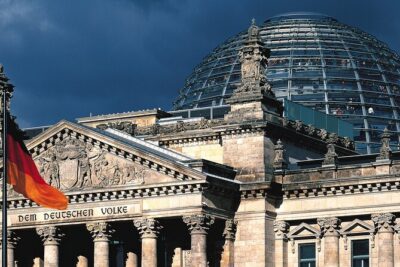
Berlin’s Best: 2 Hour Walking Tour Third Reich and the Cold War
Read our review →
Third Reich Berlin: Hitler and WWII Walking Tour
Read our review →
Berlin: Third Reich, Hitler, and WWII Walking Tour
Read our review →
Berlin: 3-Hour World Heritage Cruise to Potsdam
Read our review →
Cold War, Berlin Wall, Spies and the East Side Gallery
Read our review →
Berlin: History of the Third Reich Guided Walking Tour
Read our review →
Browse the lists this tour appears in