

Review · BERLIN
Private Taxi Tour City East & West History and Architecture 3-4h
Berlin makes more sense when you see its pieces together. This private taxi tour connects imperial boulevards, wartime scars, Cold War borders, modern government buildings, and lively old neighborhoods without asking you to cross the city by train every few minutes. Guide Gunter Bauer drives, explains, and adjusts the route to your interests.
I like the door-to-door pickup and the chance to cover both former East and West Berlin in one outing. I also like the small touches: Gunter can take photos during the tour, send them afterward, and help shape the commentary around architecture, World War II, the Wall, shopping, or everyday Berlin.
The main drawback is time. Three to four hours gives you a useful city overview, not a full visit to Berlin’s museums or memorials. You will spend much of the tour in the taxi, and a private vehicle can reach many places, but it cannot replace time on foot in neighborhoods such as Mitte or around the Brandenburg Gate.
Key points to know before booking
- Private taxi for your group: You do not share the vehicle with strangers, and the route can be adjusted to your interests.
- A strong Berlin overview: The tour links Ku’damm, the Reichstag, Unter den Linden, Alexanderplatz, Checkpoint Charlie, and major East Berlin sights.
- English-speaking guide Gunter Bauer: Expect historical explanation, personal stories, practical help, and a friendly driving style.
- Good in cold or wet weather: The heated, air-conditioned taxi lets you see a lot without spending the entire day outdoors.
- Pickup inside the S-Bahn ring: Hotel or apartment pickup is included within central Berlin. Airport and outer-city pickup costs extra.
- Built-in photo stops: You can stop at major sights, and Gunter has taken and sent photos to several groups after the tour.
Why a taxi is useful in a city split by history
Berlin is spread out. The old center sits east of the Brandenburg Gate, while the grand shopping streets and many Cold War landmarks lie west and south. A private taxi helps you connect these areas quickly.
That matters because Berlin’s story is not gathered in one compact old town. The Kaiser Wilhelm Memorial Church tells you about wartime destruction. The Brandenburg Gate recalls Prussian power, division, and reunification. Checkpoint Charlie brings the Cold War into focus. The Reichstag and government quarter show how the reunited country presents itself today.
You will not stop at every place for a long visit. Instead, the tour gives you a moving lesson in how the city changed. Gunter’s explanations add the links that a map alone cannot provide, such as why West Berlin’s Ku’damm developed so differently from Unter den Linden in the former East.
The vehicle is also useful for older visitors, families, and anyone dealing with poor weather. One family found the warm taxi especially helpful during a winter visit, with enough stops to get out and see important places up close. A bottle of water is a sensible addition, since the tour combines several hours of driving and talking.
More Private History Tours in Berlin
- Berlin Private Complete History All Day Walking Tour
★ 5.0 · 474 reviews - Private Walking Tour Berlin Third Reich Hitler and World War II
★ 5.0 · 360 reviews - Berlin Private Half-Day Walking Tour: Discover the German Capital’s History
★ 5.0 · 244 reviews
West Berlin: churches, shopping, theaters, and the old frontier
The western section begins around the Kaiser Wilhelm Memorial Church, one of Berlin’s most memorable reminders of World War II. The damaged tower and west portal were preserved after the war, while Egon Eiermann’s modern blue-glass church was built around them. Berliners gave the modern buildings the amusing nicknames lipstick and powder compact.
Inside the new church, blue glass blocks create a calm, dim light. The unusual double-wall design also reduces traffic noise from the busy square outside. This is a good example of what the tour does well: it explains not just what a building looks like, but why it looks that way.
Nearby, you pass Berlin Zoological Garden, one of Germany’s oldest zoos. Its gates and animal buildings reflect the city’s nineteenth-century interest in architecture from around the world. You will mainly see it from outside, including the elephant gate and the lion gate near Zoo station, but Gunter uses the stop to explain Berlin’s two-zoo arrangement, a result of the city’s division.
The Theater des Westens recalls the period when Berlin’s wealthy residents moved toward the greener western districts. Its ornate exterior can look overdone, almost like a pastry shop, but that was part of its appeal. The building still has an imperial box and now serves as a musical theater.
Ku’damm, KaDeWe, and Berlin’s polished western face
The taxi then turns toward Kurfürstendamm, usually shortened to Ku’damm. This broad boulevard was modeled partly on the Champs-Élysées and once offered villas, cafes, cinemas, and nightlife. Today it is mainly a shopping street, with luxury names farther west and large modern stores closer to the center.
You will also see Tauentzienstrasse and the Kaufhaus des Westens, better known as KaDeWe. The department store is famous for its luxury goods and especially its food floor, where you can find champagne, oysters, chocolates, bread, and cheese. The tour allows a short stop, but it is not a shopping excursion. If you want time to browse, return on your own.
One useful point here is historical geography. Ku’damm is often treated as the continuation of Tauentzienstrasse, but the two streets do not line up perfectly. Even the street numbers have a curious gap, a small detail that gives Gunter room to explain how Berlin’s roads and districts developed.
Around Nollendorfplatz and Urania, the tour moves through another layer of West Berlin. The former workers’ railway once disappeared underground near the wealthier villas of Charlottenburg. The wide green spaces nearby also reflect earlier plans for a car-focused city, including proposed elevated routes that thankfully never reshaped the center as heavily as they did in some other cities.
Tiergarten and the government quarter
Tiergarten began as a royal hunting ground. Frederick the Great opened it to the public, and Peter Joseph Lenné later reshaped it with paths, water, open views, and the Landwehr Canal. World War II left the park badly damaged, with trees cut down and food grown in the open spaces. Allied help supported its replanting.
The park contains several major stops. The House of World Cultures, once the Congress Hall, is known for its curved roof and Berlin nickname, Pregnant Oyster. The roof collapsed in 1980, but the building was rebuilt and now hosts non-European art and cultural events.
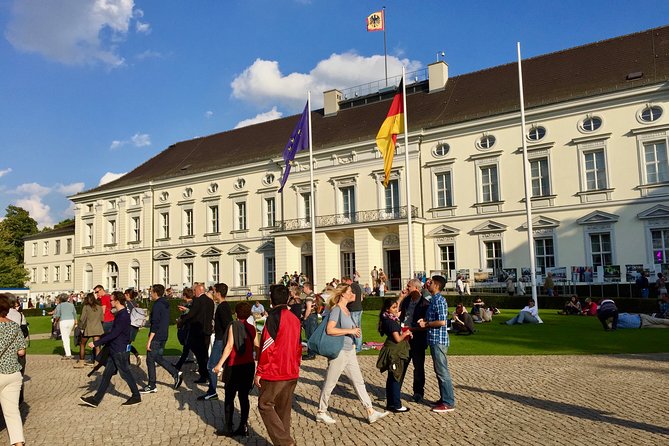
Bellevue Palace is another exterior stop. It is the official Berlin residence of the Federal President and was first built for August Ferdinand, the younger brother of Frederick the Great. The palace is smaller and less grand than its name may suggest, but its role gives you a useful look at the federal government’s split history between Bonn and Berlin.
The Victory Column is easy to recognize from its golden statue. It was originally placed in front of the Reichstag and later moved to its present location during the Nazi period. Its additional drum celebrated another military victory, but the later course of history made the monument far more complicated than its original message.
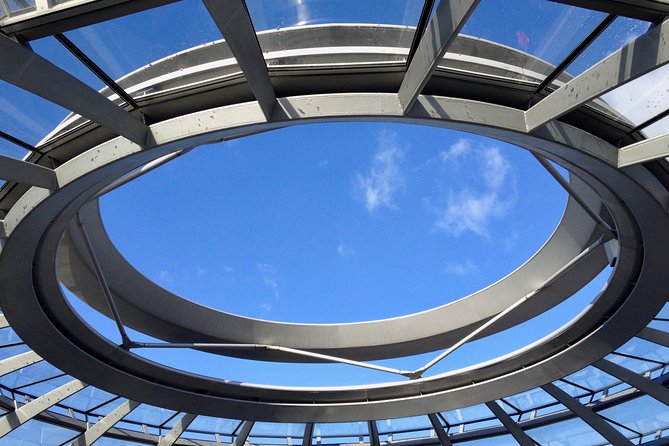
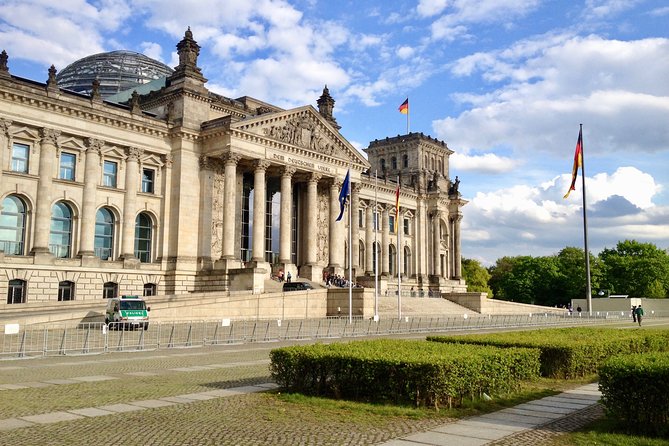
The Reichstag is one of the most important stops. Its nineteenth-century shell recalls the German Empire, while the restored interior and glass dome represent the reunited parliament. The tour explains the building’s long neglect during the division of Germany, its wartime symbolism, and the restoration that made it a central image of modern Berlin.
You will also see the Paul-Löbe-Haus and the Federal Chancellery. The Paul-Löbe-Haus contains committee rooms where much of parliamentary work happens. The Chancellery is an enormous building with hundreds of offices, including the Chancellor’s office and an unused official apartment. These buildings are not usually visited during this short tour, but seeing them from the taxi helps you understand how the new government district was planned along the Spree.
More Private History Tours in Germany
- Private Walking Tour: World War 2 and Cold War Sites in Berlin
★ 5.0 · 230 reviews - The History of Berlin: WWII PRIVATE Walking Tour With Locals
★ 5.0 · 209 reviews - Private Walking Tour: Berlin Wall, Cold War and Checkpoint Charlie
★ 5.0 · 37 reviews - PRIVATE BEHIND THE BERLIN WALL and COLD WAR BERLIN TOUR
★ 5.0 · 36 reviews
Mitte, Hackesche Höfe, and the traces of the Wall
Crossing back toward the former East, the route reaches Hackesche Höfe. This restored courtyard complex once mixed workshops, small factories, printing businesses, and apartments. During the GDR period, parts of it fell into poor condition and were used for storage. After reunification, it became one of the first major restoration projects in the area.
Today, the courtyards contain shops, crafts, porcelain, and Berlin souvenirs. You get a short look, not a long shopping break. If you like design, architecture, or small independent stores, make a note to return later on foot.
Berlin Hauptbahnhof provides a sharp contrast. Its glass-and-steel scale reflects the city’s modern transport network, with underground and elevated tracks spread across several levels. It replaced the old role of Bahnhof Zoo as the city’s main long-distance station, a decision that changed travel patterns across the former West.
Near Invalidenstrasse, the taxi crosses the old East-West border again. The story of Günter Litfin, one of the first people killed while trying to escape after the Wall was built, gives this stretch a human scale. The tour does not treat the Wall as only a political line. It points to the people who lived with it and tried to cross it.
The New Synagogue on Oranienburger Strasse is another important stop. Its Moorish-style facade and golden dome once marked a large Jewish community in Berlin. The main synagogue was destroyed during the war, but the front section and exhibition remain. Security is strict, similar to an airport, so expect a slower entrance if you decide to visit inside another day.
Unter den Linden, the Brandenburg Gate, and the old royal center
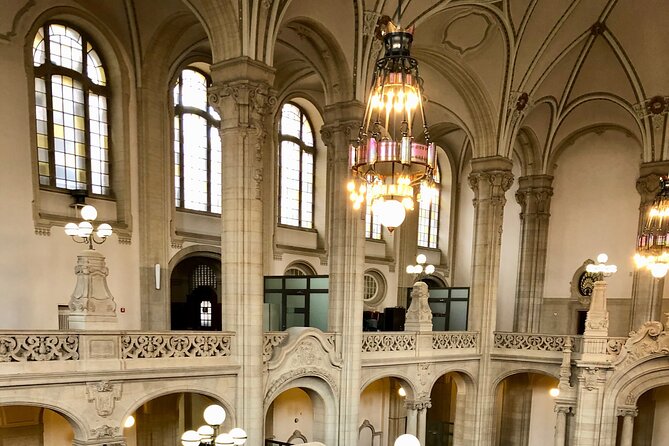
Unter den Linden runs through the historic heart of Berlin. What began as a royal riding path became a ceremonial boulevard lined with universities, opera buildings, libraries, museums, and former palaces.
At Bebelplatz, the former Opera Square, a glass panel in the pavement marks the underground room of empty bookshelves. It recalls the Nazi book burning of May 10, 1933. The square also brings together the State Opera, St. Hedwig Cathedral, Humboldt University, and the former Royal Library.
The Neue Wache is a quieter memorial along the boulevard. Once a guardhouse, it now honors victims of war and tyranny. Inside is Käthe Kollwitz’s Pietà, enlarged to represent grief on a national scale. This is one of the places where a short explanation helps, since the building can otherwise look like just another handsome neoclassical structure.
The Brandenburg Gate is the essential photo stop. Pariser Platz was once Berlin’s formal reception room, then became a deserted border zone during the Cold War. The gate survived while nearby buildings were destroyed or left empty. After reunification, the surrounding embassies and institutions were rebuilt in modern versions of their former shapes.
Gendarmenmarkt is another highlight. The German and French cathedrals frame the former theater, now a concert hall. Neither cathedral is actually a bishop’s seat. The French church recalls the Huguenot refugees welcomed by Prussia, while the German building now holds an exhibition on German parliamentary history.
The tour also passes the former Soviet embassy, a huge building meant to show Soviet power in central Berlin. These details help you read the city’s architecture as political language, not just decoration.
Alexanderplatz, Nikolaiviertel, and the old center
Alexanderplatz shows the former East Berlin at its boldest. The broad open space and tall television tower were designed to project socialist modernity, with room for public gatherings and grand civic displays. The square began much more modestly, outside the old city walls, and was once associated with cattle trading.
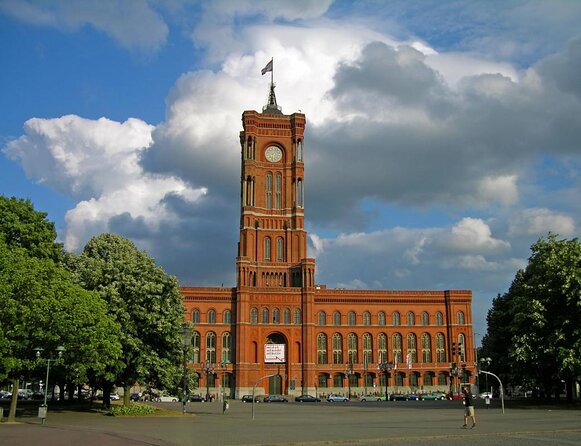
The Red City Hall gets its name from its red brick, not from the politics of the mayor. Built in the nineteenth century, it remains a symbol of Berlin’s civic government. Some interior rooms can be visited free of charge, though this taxi tour focuses mainly on the exterior.
Nikolaiviertel offers a different mood. It was reconstructed in the GDR period as an old Berlin quarter, though very little of the original district remained. The result is part historic evidence and part stage set, but it is still useful for seeing the kind of narrow streets, small restaurants, and older building forms that once shaped the city.
The Nikolaikirche is associated with Berlin’s earliest settlement. Nearby Knoblauchhaus preserves a Biedermeier interior and tells the story of a cloth-making family. You receive only a short stop here, so return independently if you want the museums and restaurants.
Potsdamer Platz, the Wall, and Checkpoint Charlie
The route then heads toward the broad redevelopment around Potsdamer Platz. Before World War II, this was one of Europe’s busiest intersections and a major entertainment district. War and the Wall emptied it. After reunification, modern towers, the Sony Center, hotels, offices, and shops attempted to bring city life back.
The area is impressive in size, but it can feel planned rather than organic. That is worth knowing before you expect an old Berlin neighborhood. The tour uses it to show how reunification produced a new city center almost from scratch.
At the Kulturforum, you see the western counterpart to Museum Island. The Philharmonie, New State Library, New National Gallery, picture gallery, and other museums were built to serve West Berlin while the eastern collections were inaccessible. The picture gallery contains major European old masters, including works by Titian, Caravaggio, and Rembrandt, but the museum itself requires a separate visit.
Topography of Terror offers one of the most serious stops. The open-air documentation center occupies the former area of the SS and Gestapo headquarters. It presents Nazi persecution beside surviving pieces of the Wall and buildings from the Prussian and Nazi periods. The stop is brief, with time for the outdoor section and facilities, but it gives you a strong reason to return for the full exhibition.
Checkpoint Charlie is mainly a photo stop. The guard booth and sign are replicas, not the original Cold War structures. Even so, the location matters because it was the scene of the 1961 tank confrontation between American and Soviet forces. Gunter’s explanation helps separate the genuine history from the modern tourist display.
How much value do you get for the price?
The listed price is $150.18 per person. The value depends heavily on group size. For one or two people, it is a premium way to see Berlin. For a family or small group, the private vehicle, pickup, parking, guide, and route flexibility make the cost easier to justify.
The price includes private transportation, Wi-Fi, an air-conditioned vehicle, parking fees, pickup within the S-Bahn ring, and both the taxi fare and city-tour service. Lunch is not included. Pickup from Berlin Brandenburg Airport or outside the S-Bahn ring costs extra under the local taxi tariff.
I would compare this price with the cost of several taxis, a private guide, and lost time on public transportation. If you already enjoy exploring by train and want long museum visits, spend the money elsewhere. If you have only one day, limited mobility, children, or bad weather, the taxi format earns its keep.
Gunter’s personal service is part of the value. He has adjusted timing after flight or travel delays, helped with train tickets, taken photos at the Brandenburg Gate and other stops, and sent images afterward. That level of attention is not guaranteed as a formal feature, but it is part of the experience described by the supplied information.
Who should book this Berlin taxi tour?
Book it if you want a fast, private introduction before exploring Berlin on foot. It works especially well for first-time visitors, older couples, families, and anyone who wants history explained in plain English while staying warm and comfortable.
It is also a good choice for visitors with a clear interest, such as World War II, the Berlin Wall, architecture, royal Berlin, or the former division between East and West. Tell Gunter what matters to you before the tour so he can focus the conversation.
Skip it if you want a slow walking tour, long museum visits, or a carefully timed interior itinerary. The tour covers a lot of ground, but many stops are viewed from outside or visited for only a few minutes.
Book at least a day ahead if your schedule is fixed, since the experience is often reserved weeks before the date. Free cancellation is available up to 24 hours before the start time. Pickup within the central S-Bahn ring is included, and child seats are available for toddlers and older children, with a baby seat available on request.
FAQ
How long does the private taxi tour last?
The tour lasts approximately 3 to 4 hours.
Is the tour private?
Yes. Only your group participates in the activity.
Is the tour offered in English?
Yes. The tour is offered in English, with Gunter Bauer as the named guide and driver.
Where can pickup take place?
Pickup is included from your desired hotel or apartment within the S-Bahn ring.
Does airport pickup cost extra?
Yes. Pickup from Berlin Brandenburg Airport costs extra under the Berlin taxi tariff.
Is pickup outside the S-Bahn ring included?
No. Pickup outside the S-Bahn ring costs extra. You can request details by email.
What is included in the price?
Private transportation, Wi-Fi, an air-conditioned vehicle, parking fees, central pickup, and both the taxi ride and city tour are included.
Is lunch included?
No. Lunch is not included.
Are child seats available?
Yes. A toddler seat is available for children from six months to three years, and a booster seat is available for older children. A baby seat can be brought on request.
Can I cancel for a full refund?
Yes. You can cancel up to 24 hours before the experience start time for a full refund. Changes or cancellations made less than 24 hours before the start time are not refunded.
Should you book it?
I would book this tour if your main goal is to understand Berlin quickly and comfortably. You will see far more of the city than on a short walking route, and Gunter Bauer adds the personal history, local detail, and practical help that make a private tour useful.
Just set your expectations correctly. This is a city overview with selected stops, not a full museum day. Use it to get your bearings, mark the places you want to revisit, and let Berlin’s complicated past begin to fit together.
Just added around Berlin
- Berlin Food & Cultural Tour: Must-Try German & Berliner Classics★ 5.0 · 51 reviews
- Berlin Half-Day World War II Walking Tour★ 4.5 · 48 reviews
- Historic center of Berlin – Tour in Italian★ 5.0 · 143 reviews
- Berlin Cold War & World War II Third Reich Walking Tour★ 4.5 · 30 reviews
- Small-Group Historical Bike Tour in Berlin★ 4.5 · 103 reviews
- Berlin Wall and Cold War Bike Tour in Small Groups★ 5.0 · 114 reviews
- Private Tour: Jewish Heritage Walking Tour of Berlin★ 5.0 · 29 reviews
- Private Walking Tour: Berlin Wall, Cold War and Checkpoint Charlie★ 5.0 · 37 reviews
Berlin History Tours, compared.

Berlin: Third Reich & Cold War Guided Walking Tour
Read our review →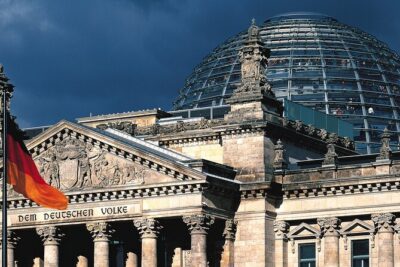
Berlin’s Best: 2 Hour Walking Tour Third Reich and the Cold War
Read our review →
Third Reich Berlin: Hitler and WWII Walking Tour
Read our review →
Berlin: Third Reich, Hitler, and WWII Walking Tour
Read our review →
Berlin: 3-Hour World Heritage Cruise to Potsdam
Read our review →
Cold War, Berlin Wall, Spies and the East Side Gallery
Read our review →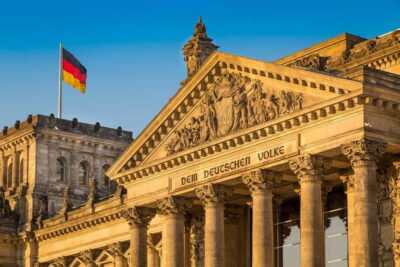
Berlin: History of the Third Reich Guided Walking Tour
Read our review →
Browse the lists this tour appears in