
Review · BERLIN
Berlin (E)Bike Tour Historical Highlights in Small groups
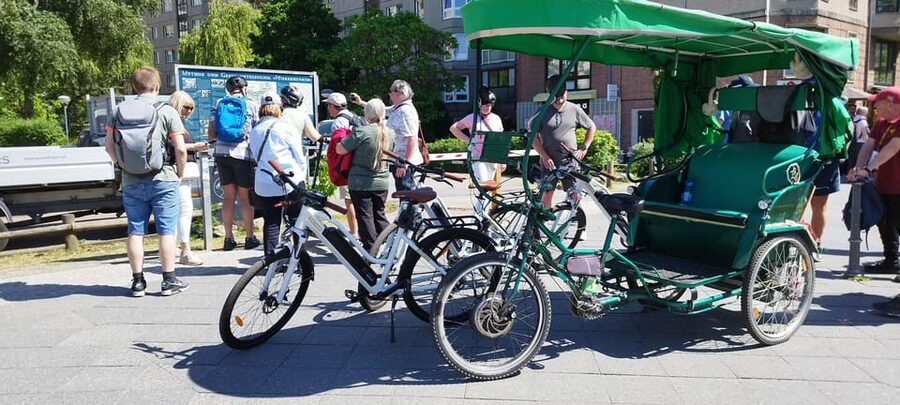
Berlin’s historic center is too spread out for a comfortable walking tour, yet many sights sit close enough together that a bus can feel slow and detached. This small-group e-bike and rickshaw tour solves that problem by linking Museum Island, Checkpoint Charlie, the Wall, the Holocaust Memorial, Brandenburg Gate, and the Reichstag in three and a half hours. I especially like the two-vehicle setup, which lets a non-cyclist stay with the group rather than sit out.
I also like the many photo stops and the guide’s stated photography help, plus the option to do the tour early in your stay so Berlin’s layout begins to make sense. The main caution is that the bike arrangements may need patience: one recent booking had an e-bike lose power, and the organizer’s handling of the complaint was poor. Ask how the bikes and rickshaw will be assigned before setting off.
Key points at a glance
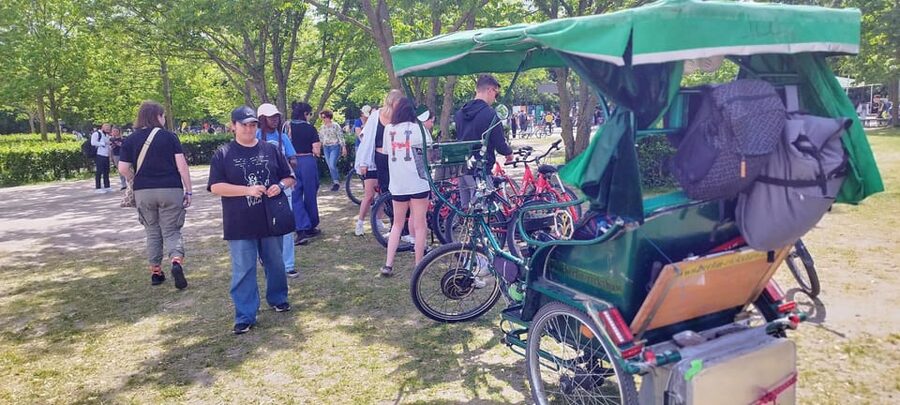
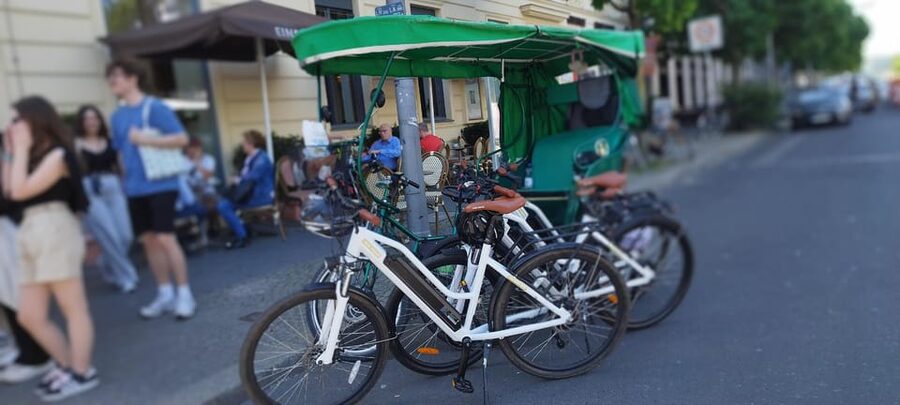
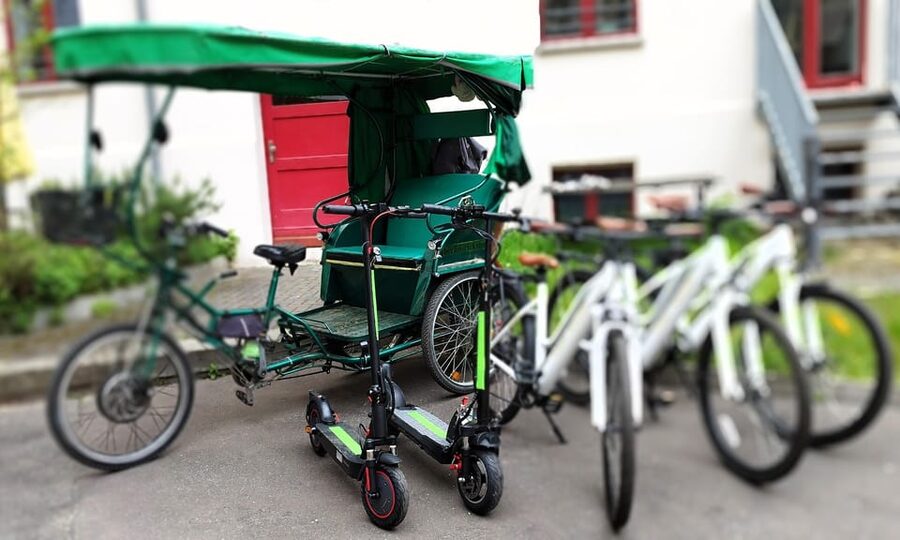
- One route, two ways to ride: E-bikes cover the route under your own power, while a traditional rickshaw carries up to two people.
- A tight six-person group: The small size should make questions and photo stops easier than on a large bus tour.
- Berlin’s hardest history in one sweep: The route links the Nazi book burning memorial, Hitler’s bunker site, the Holocaust Memorial, the Wall, and Checkpoint Charlie.
- Useful for mixed-age groups: Children under 14, grandparents, and people with limited mobility can ride in the rickshaw.
- Strong first-day orientation: The tour crosses a large part of Mitte and works well near the beginning of a Berlin visit.
- A few practical concerns: The tour is in English, comfortable shoes are recommended, and bike reliability deserves a quick check before departure.
Why three and a half hours works well in Berlin Mitte
The tour begins at Weinbergsweg 6, close to U-Bahn Rosenthaler Platz. That is a useful starting point, since Rosenthaler Platz sits in central Mitte with cafes, shops, bars, public transport, and Weinbergspark nearby. You can arrive early, find the meeting point, and have a little green space close by if the group is not ready to leave.
At $82 per person, this is not the cheapest way to see Berlin. The value comes from the ground covered and the small group, not from long interior visits. You are paying for a guide, an e-bike or rickshaw, water, route planning, and a camera-friendly introduction to the city.
The 210-minute schedule has a brisk rhythm. Most stops are for explanation, photographs, and an outside look rather than extended museum time. That matters because the route includes many major places, but it also means you should not expect to enter every building or spend an hour at any single memorial.
The group limit of six is a real advantage. Berlin’s central sights can feel crowded, and a small group gives you a better chance to hear the guide and ask about places you pass. It also makes the rickshaw arrangement more personal, especially for a family that needs one or two seats rather than a full vehicle.
More History Tours by Bike, Segway and Tuk-Tuk in Berlin:
- Berlin: Cold War & Berlin Wall History Guided Bike Tour
★ 4.8 · 422 reviews - Berlin: Guided Bike tour of the Berlin Wall and Third Reich
★ 5.0 · 160 reviews - Berlin Wall History Small Group Cycling Tour
★ 4.9 · 152 reviews
Starting at Weinbergsweg and the TV Tower
From Weinbergsweg, the route heads toward the TV Tower, one of the easiest landmarks to spot in Berlin. The tower helps you get your bearings: from here, the tour moves through the old center toward Museum Island and the grand boulevard of Unter den Linden.
This first section is useful because Berlin can seem scattered at ground level. The TV Tower, broad streets, historic buildings, and modern additions do not always form an obvious pattern to a first-time visitor. A guide can explain how the central districts fit together while you ride between stops.
The tower itself is a photo stop, not a scheduled visit to the viewing platform. If you want the panoramic view from inside, you would need a separate plan. Still, seeing it from street level gives the tour a clear visual marker at the start.
Museum Island and Unter den Linden
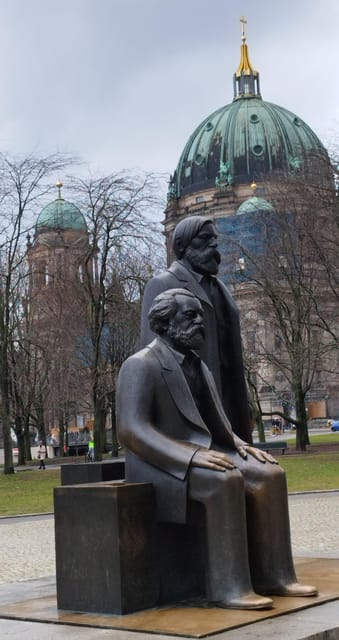
Museum Island brings the tour into one of Berlin’s most important cultural areas. The route allows time for photographs and a guided look, but it does not include museum admission or a museum visit. If you want to see the Pergamon Museum, Neues Museum, or another collection properly, save that for another block of time.
I like this arrangement for a first tour. You get a map in your head, see the relationship between the museums and the river, and can return later to the collection that interests you most. The bike or rickshaw also lets you see more of the surrounding streets than you would from a museum entrance alone.
Unter den Linden then carries you west through one of Berlin’s best-known avenues. This is a strong place for the guide to connect architecture, government, monuments, and daily city life. You can expect another photo stop and a moving explanation rather than a long pause.
The route is designed for comfort and ease, but Berlin’s central roads still require attention. Comfortable shoes remain a good idea, since you may step off for photographs and short explanations even though the vehicle does much of the work.
The book-burning memorial and the difficult Nazi sites
The Memorial to the Nazi Book Burning of May 10, 1933 gives the tour an early, quiet encounter with the Nazi period. It is easy to pass this place without noticing its meaning, so a guide adds real value here. The stop helps set up the later visits to Hitler’s bunker site, the Holocaust Memorial, and the Topography of Terror.
The bunker stop can surprise first-time visitors. There is no dramatic structure to enter or admire. The site is marked by its history and by what is absent, so the guide’s explanation matters more than the view. Expect a photo and a short account of the final days of Hitler’s regime, not an underground tour.
The Holocaust Memorial is another place where the outside experience is central. The field of concrete blocks invites a pause and personal reflection, but this is not a place to treat like a standard sightseeing backdrop. The guide can provide context, while you should allow yourself a little quiet time among the blocks.
A bike tour can make these difficult sites feel compressed because several are visited in one afternoon. That is the tradeoff. You gain a broad picture of Berlin’s twentieth-century history, but you may want to return on foot to one or two places for a slower visit.
More Cycling Trips in Berlin:
- Berlin Wall and Cold War Bike Tour in Small Groups
★ 5.0 · 114 reviews - Small-Group Historical Bike Tour in Berlin
★ 4.5 · 103 reviews - Historical Singapore Bike Tour on Full-Sized Bicycles
★ 5.0 · 1,421 reviews - Barcelona: 2.5-Hour Bike or E-Bike Historical Tour
★ 4.5 · 1,262 reviews
Checkpoint Charlie and the Berlin Wall
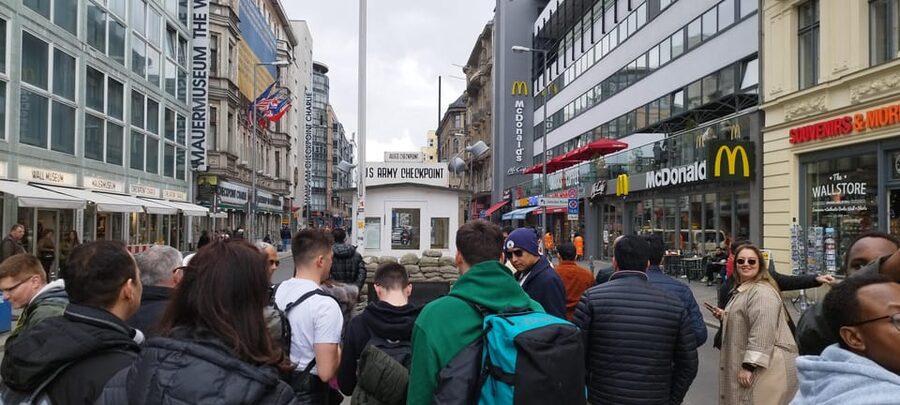
Checkpoint Charlie brings the story forward to the Cold War. The crossing point became one of the best-known symbols of divided Berlin, and the stop helps explain how the city once functioned as two separate political worlds.
The site today is busy with modern businesses and photo opportunities, so the historical setting is not perfectly preserved. That makes a guide especially useful. You need someone to distinguish the current streetscape from the border crossing that once controlled movement between East and West Berlin.
The Berlin Wall stop adds another layer. The route offers a guided look and sightseeing, but the exact section or display is not specified. You should expect historical explanation and a photo opportunity rather than a long visit to a particular gallery.
This part of the tour is one of the best reasons to use a bike. The Cold War sites are not all clustered around one small square, and riding between them lets you see how the former border cut through ordinary neighborhoods. The route gives you a citywide sense of division rather than only one famous checkpoint.
Topography of Terror and Potsdamer Platz connections
The Topography of Terror occupies the site of the former SS and Gestapo headquarters. It is one of Berlin’s most important Nazi-era documentation centers, although this tour lists a photo stop rather than an indoor exhibition visit.
That distinction is important. If the subject matters to you, plan a separate visit to the documentation center. The guided stop gives you orientation and historical context, while the interior displays require more time than this route allows.
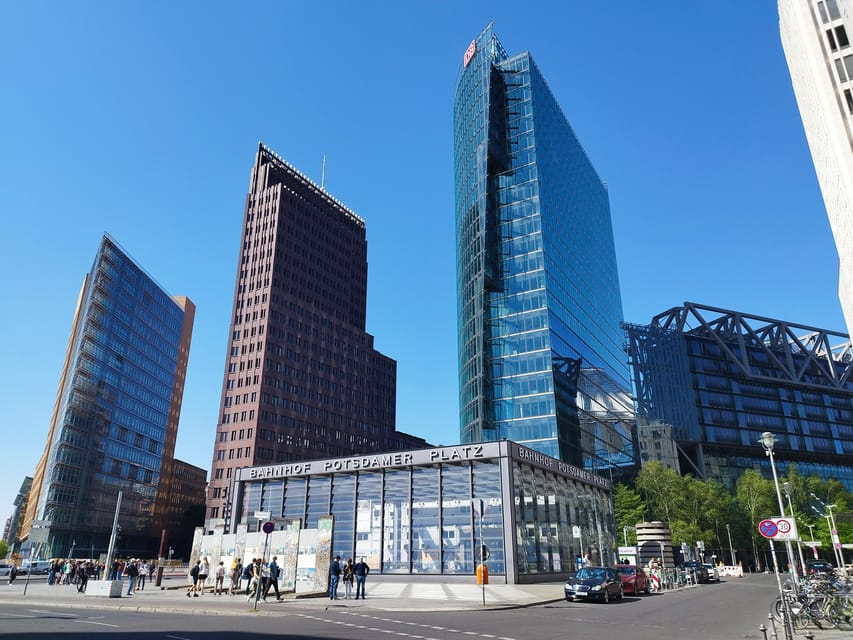
Potsdamer Platz is included among the main highlights, even though the detailed stop sequence does not list a separate stop there. You may see the modern square while moving through the central route or receive an explanation from the guide. Its glass towers and busy public spaces offer a sharp contrast with the nearby memorials and remnants of wartime Berlin.
That contrast is part of the appeal. In a short ride, you move from dictatorship and division to a rebuilt commercial center, then onward to the symbols of Germany’s present government. The tour is not only a checklist of monuments. It shows how quickly Berlin changes from one historical period to another.
Brandenburg Gate and the Reichstag
Brandenburg Gate is the route’s grand visual payoff. The gate has served as a royal entrance, a Cold War symbol, and a backdrop for modern German political life. Expect a guided photo stop, with enough time to take in the broad Pariser Platz area.
The gate can be crowded, so the small group helps. You will not have unlimited quiet here, but a guide can point out the meaning of the surrounding buildings and help you frame a photograph without losing the group.
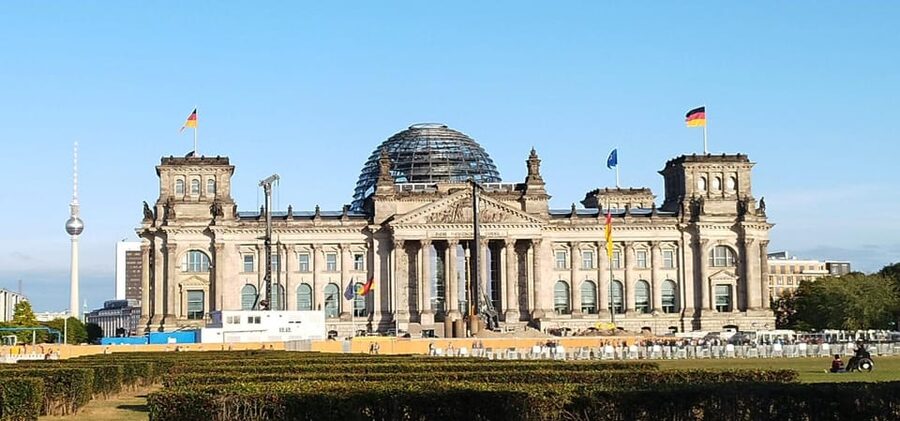
The Reichstag, home of the German parliament, follows naturally. The tour includes an outside look and explanation, not entry to the dome or parliamentary interior. If the dome is on your must-see list, book that separately and do not assume this tour provides access.
I like ending near the Reichstag because it gives the afternoon a clear finish. The route has moved from Nazi terror and Cold War division toward the current federal government. That does not erase the earlier history, but it gives the itinerary a useful final chapter.
E-bikes, rickshaws, and mixed-age groups
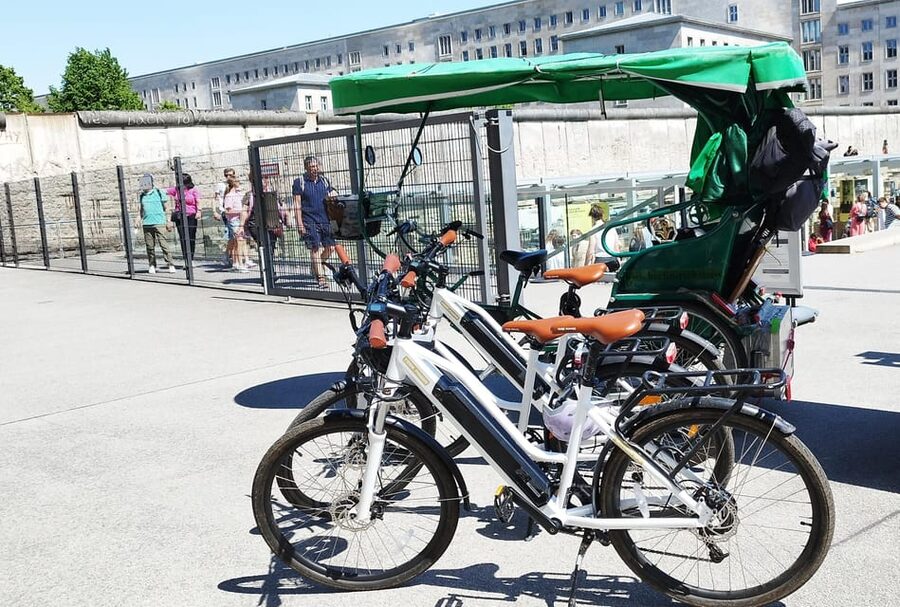
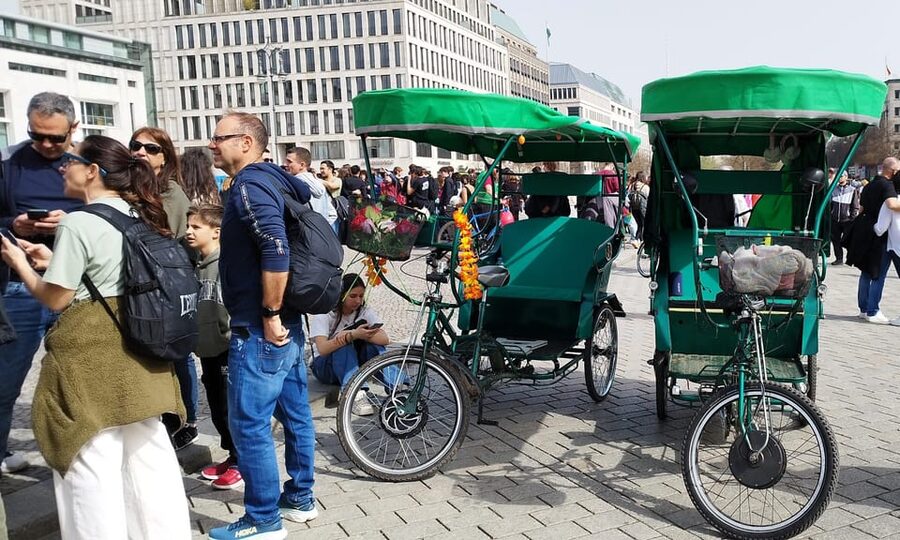
The e-bike option is aimed at people who want to cover a lot of ground without making the route a hard physical workout. You ride yourself, while the guide leads the group. The supplied information describes the vehicles as designed for comfort and the route as suited to easy sightseeing.
The rickshaw option is the tour’s most distinctive feature. A rickshaw can carry up to two people, making it practical for a grandparent, a young child, or a partner who does not cycle. The design allows boarding with only a few steps, which is helpful for many people with limited mobility, though the information does not promise access for every mobility condition.
Children under 14 and people who prefer not to bike can use the rickshaw. A mixed group can therefore stay together instead of splitting into cyclists and non-cyclists. That is a meaningful benefit for families.
There is one point to clarify before booking. One poor experience involved two riders whose e-bike power failed partway through the ride. The same account described the guide traveling in a rickshaw while the riders followed, which felt awkward to that participant. Since the tour may combine the two vehicle types, ask how the guide will lead the group and what happens if an e-bike develops a problem.
Guides, language, and the human side of the tour
The tour is conducted in English. One guide named Levent received particular praise for an enthusiastic presentation in Dutch on a booking where that language was available, but you should not assume Dutch service unless the operator confirms it for your date.
Another guide, Jakob, was praised for his work, while the bicycle organizer was described as disorganized. This suggests an important distinction: the guiding can be strong even when the equipment handoff is less polished. Give yourself a few minutes at the start to check the bike, ask questions, and make sure the route and seating plan are clear.
The guide also takes photographs during the many stops. That can be useful for families and couples who want pictures together, and it is a nice extra at a tour price that already includes bottled water. Still, photography is a bonus rather than a substitute for a private photo session.
The overall rating is 4.5 from 24 reviews, with repeated praise for the guide’s explanations and for the tour as an introduction to Berlin’s key areas. There is also one serious one-star account, so I would not ignore the equipment concern. A good guide can make a history tour memorable, but a weak bike or poor response to a mechanical problem can change the experience quickly.
Who should book it, and who should choose something slower?
I would choose this tour near the start of a Berlin stay. It gives you a working map of Mitte, shows which sites deserve a return visit, and helps you decide where to spend longer later. One person who took it midway through a visit felt the timing was less useful because several places were already familiar.
It suits:
- Families with children and grandparents
- Couples where one person does not bike
- People with limited mobility who can board a rickshaw with a few steps
- First-time visitors who want history and orientation in one outing
- Small groups that prefer a personal guide to a large bus
It is less suitable if you want long museum visits, extensive time inside memorials, or a slow photographic walk. It may also disappoint you if you expect every participant to ride an e-bike behind a cycling guide, since the rickshaw and bike arrangement can vary.
The tour includes free cancellation up to 24 hours before departure and allows you to reserve without paying immediately. Those policies reduce the risk of fitting it into a changing Berlin schedule, but the main booking decision remains the vehicle arrangement.
Should you book the Berlin e-bike and rickshaw tour?
Book it if you want to see a large part of Berlin Mitte in one afternoon, need a solution for mixed mobility, and value clear historical orientation over long interior visits. The small group, photo stops, English guide, and rickshaw option give the $82 price a reasonable case, especially for a family that would otherwise need separate plans.
Think twice if you are sensitive to equipment problems or want a polished, tightly managed cycling operation. Check the e-bike before departure, confirm who will ride in the rickshaw, and ask how the guide will lead a mixed group. With those points clear, this is a practical first look at Berlin’s hardest and most important sights.
FAQ
How long does the tour last?
The tour lasts 210 minutes, or three and a half hours.
Where does the tour begin and end?
It begins and ends at Weinbergsweg 6, near U-Bahn Rosenthaler Platz in Berlin.
Is the tour offered in English?
Yes. The listed live tour language is English.
How many people are in the group?
The group is limited to six participants.
Can someone who does not bike join the tour?
Yes. The rickshaw option is intended for non-bikers, people with limited mobility, grandparents, and young children. Each rickshaw accommodates up to two people.
Does the tour enter the museums, Reichstag, or other buildings?
The schedule lists guided sightseeing and photo stops. It does not include stated interior visits or admission to the museums, the Reichstag dome, the Topography of Terror exhibition, or other buildings.
Just added around Berlin
- Berlin Food & Cultural Tour: Must-Try German & Berliner Classics★ 5.0 · 51 reviews
- Berlin Half-Day World War II Walking Tour★ 4.5 · 48 reviews
- Small-Group Historical Bike Tour in Berlin★ 4.5 · 103 reviews
- Historic center of Berlin – Tour in Italian★ 5.0 · 143 reviews
- Berlin Cold War & World War II Third Reich Walking Tour★ 4.5 · 30 reviews
- Private Taxi Tour City East & West History and Architecture 3-4h★ 5.0 · 42 reviews
- Berlin Wall and Cold War Bike Tour in Small Groups★ 5.0 · 114 reviews
- Private Tour: Jewish Heritage Walking Tour of Berlin★ 5.0 · 29 reviews
Berlin History Tours, compared.

Berlin: Third Reich & Cold War Guided Walking Tour
Read our review →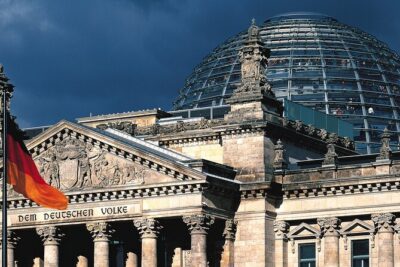
Berlin’s Best: 2 Hour Walking Tour Third Reich and the Cold War
Read our review →
Third Reich Berlin: Hitler and WWII Walking Tour
Read our review →
Berlin: Third Reich, Hitler, and WWII Walking Tour
Read our review →
Berlin: 3-Hour World Heritage Cruise to Potsdam
Read our review →
Cold War, Berlin Wall, Spies and the East Side Gallery
Read our review →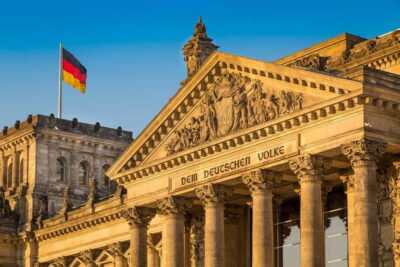
Berlin: History of the Third Reich Guided Walking Tour
Read our review →
Browse the lists this tour appears in