
Review · BERLIN
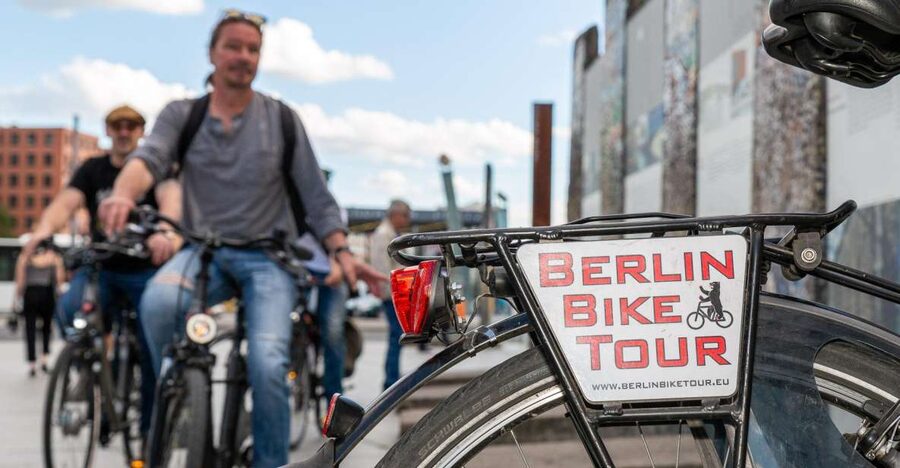
Berlin Wall History Small Group Cycling Tour
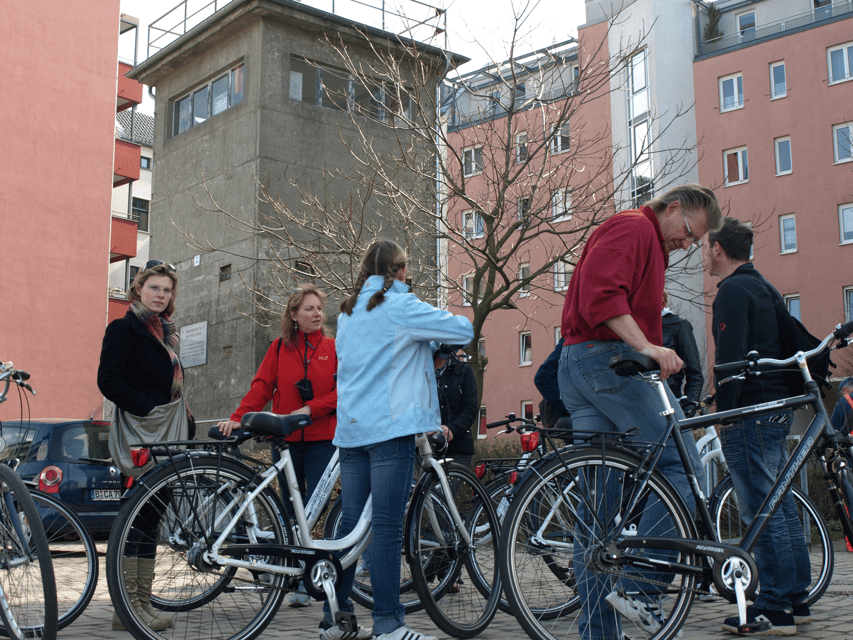
Berlin’s Wall is mostly gone, but its route still cuts through the city in surprising ways. This four-hour ride links the places where the border once divided families, stopped escape attempts, and finally opened on November 9, 1989. You start at Bornholmer Straße, where the first East German citizens crossed that night, then follow the old line toward Checkpoint Charlie.
I like the small group of no more than eight, which gives the guide room to explain difficult stories without turning the ride into a lecture for a crowd. I also like the route’s variety: watchtowers, former border crossings, a cemetery, government buildings, parks, and major sights all appear in one morning.
The main consideration is language. The live tour is conducted in German, so you will get the most from it if you understand German. The tour also runs in all weather, and large bags are not allowed, so dress for the forecast and travel light.
Key points to know before you book
- Begin where the Wall first opened: Bornholmer Straße is the most meaningful starting point, not just a convenient bike-shop address.
- See more than painted Wall fragments: The route includes a watchtower, Death Strip traces, memorials, border crossings, and escape locations.
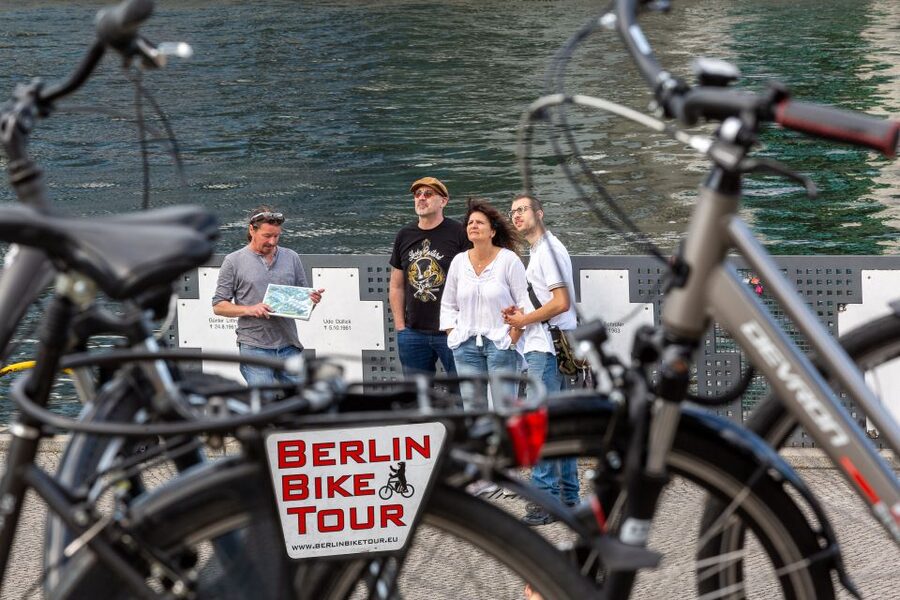
- Small groups make the history personal: With three to eight people, you can hear the guide clearly and ask questions.
- Ferenz may add firsthand perspective: His personal account of the period around German reunification made the tour especially memorable for some participants.
- The route covers major Berlin sights: Brandenburg Gate, Potsdamer Platz, Checkpoint Charlie, Museum Island, and the Tränenpalast appear along the way.
- Bring only what you need: Bikes, fees, the guide, and a rain poncho if needed are included, but food, drinks, luggage, and large bags are not.
Why Bornholmer Straße is the right place to start
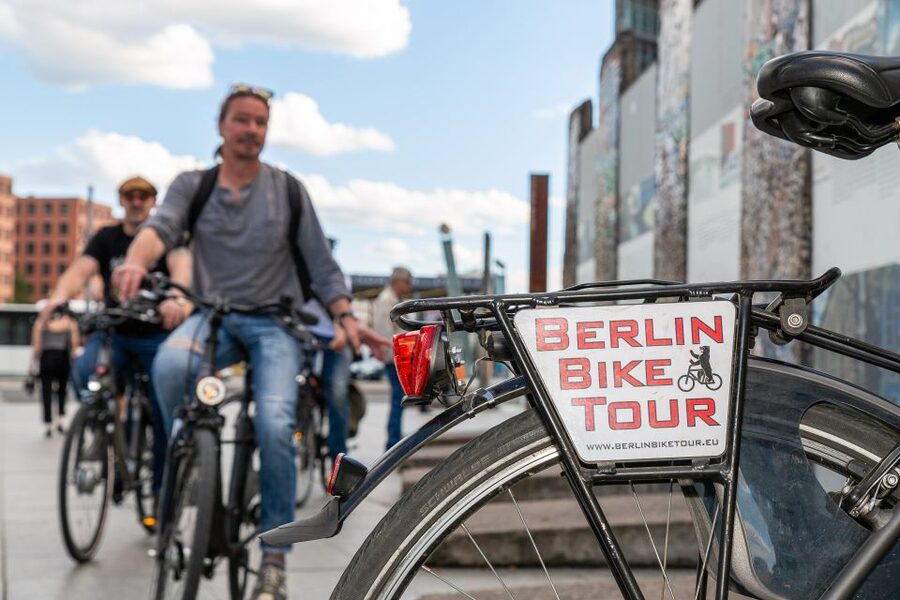
Your meeting point is at Berlin Bike Tour, 75 Bornholmer Straße. It is easy to reach, just a minute from the Björnsonstraße tram stop on lines M1, M13, and M50. The S-Bahn station Bornholmer Straße is about two minutes away, served by S1, S2, S8, S25, and S85.
The tour begins at the Square of November 9, 1989. This is where the first East German citizens crossed into West Berlin after a confused border announcement helped trigger the Wall’s opening. Starting here gives the entire ride a clear shape: you begin at the moment the division broke, then follow the border through the city to places that show how harsh that division had been.
You will also hear about the cherry trees planted along Bornholmer Straße. Their presence softens what was once a tense border zone, but the original watchtower and traces of the Death Strip keep the setting from becoming sentimental. This contrast is one of the strongest parts of the tour. Berlin has rebuilt and replanted much of this area, yet the old border is still readable if someone points out where to look.
The bikes are included, and the bicycles have been described as good and suitable for the route. You are not paying extra for a rental, then joining a separate history walk. The bike is the way you move between the sites, which lets you cover far more ground than a walking tour while keeping the pace tied to the old Wall route.
More Cold War and Communism Tours in Berlin:
- Berlin: Third Reich & Cold War Guided Walking Tour
★ 4.9 · 8,378 reviews - Berlin’s Best: 2 Hour Walking Tour Third Reich and the Cold War
★ 5.0 · 5,486 reviews - Cold War, Berlin Wall, Spies and the East Side Gallery
★ 5.0 · 1,024 reviews
Mauerpark and the first traces of division
From Bornholmer Straße, the ride continues through Mauerpark. Today, the name suggests open space and recreation, but the park occupies part of the former border strip. That change is worth noticing. The Wall did not run through a distant military zone. It cut across ordinary neighborhoods, gardens, streets, and places where Berliners now spend free time.
You will see how little physical Wall remains and how much of the story depends on markers, photographs, memorials, and the guide’s explanation. That makes a guided ride useful here. On your own, you could pedal past a strip of pavement or a sign without realizing its connection to the border system.
The ride then reaches the Chapel of Reconciliation at Bernauer Straße. This is one of the key memorial areas in Berlin because the former border ran directly through the street, separating buildings and residents. Bernauer Straße also preserves some of the clearest evidence of the Wall’s human cost, including escape attempts and the destruction of buildings that stood too close to the border.
Expect stops for explanation rather than a quick photo opportunity. The stories are serious, including tragic and fateful attempts to cross. The guide’s job here is not simply to recite dates. It is to connect the physical remains to the people who lived beside them.
Bernauer Straße and the Chapel of Reconciliation
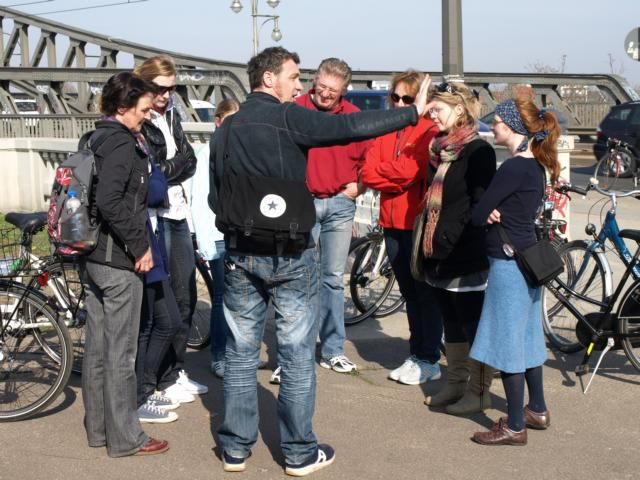
The Bernauer Straße section is likely to be one of the most informative parts of the ride. The memorial area helps you understand the border as a system, not just a concrete wall. Fences, patrol routes, watchtowers, open strips, and controlled crossings all worked together.
The Chapel of Reconciliation marks a former church site within the border zone. Its presence adds another layer to the stop. You are not only looking at military barriers. You are also seeing how the Wall reshaped religious buildings, homes, streets, and the daily routines of local people.
The small group matters most at stops like this. A group of eight can gather around the guide without the stop feeling like a formal tour assembly. If Ferenz is leading your ride, you may also hear a personal glimpse of life around the period of the Wall’s fall and reunification. That personal element is valuable because it links the broad political story to memory and lived experience.
Still, this is not a museum tour with a large indoor exhibition. Much of the evidence is outside, along the route. If you want a long visit to every memorial display or museum room, you would need to set aside additional time before or after the bike ride.
Chausseestraße, Invaliden Cemetery, and a former escape border
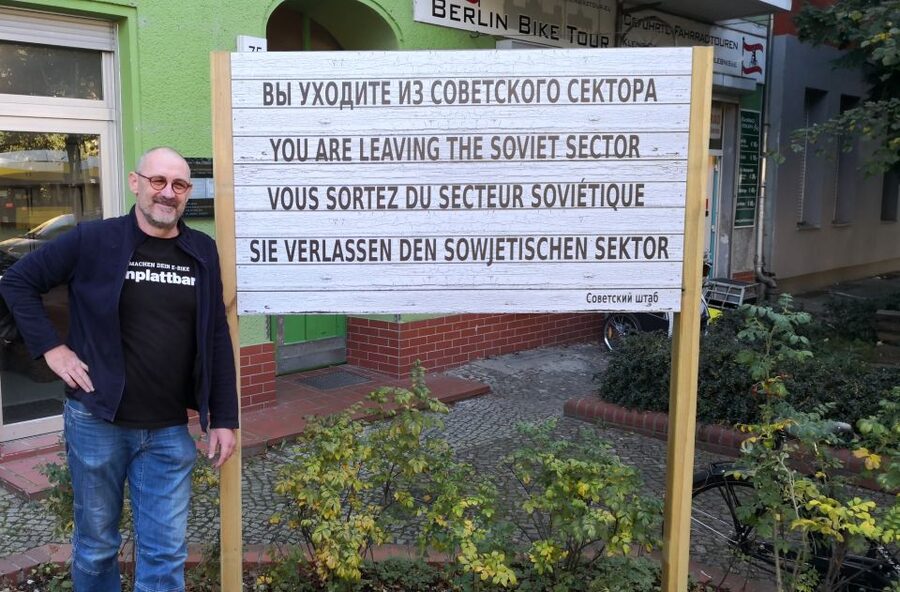
The route continues toward the former Chausseestraße crossing and then Invaliden Cemetery. These stops show how the border ran through central Berlin, where it can be easy to forget that a heavily guarded frontier once divided the city.
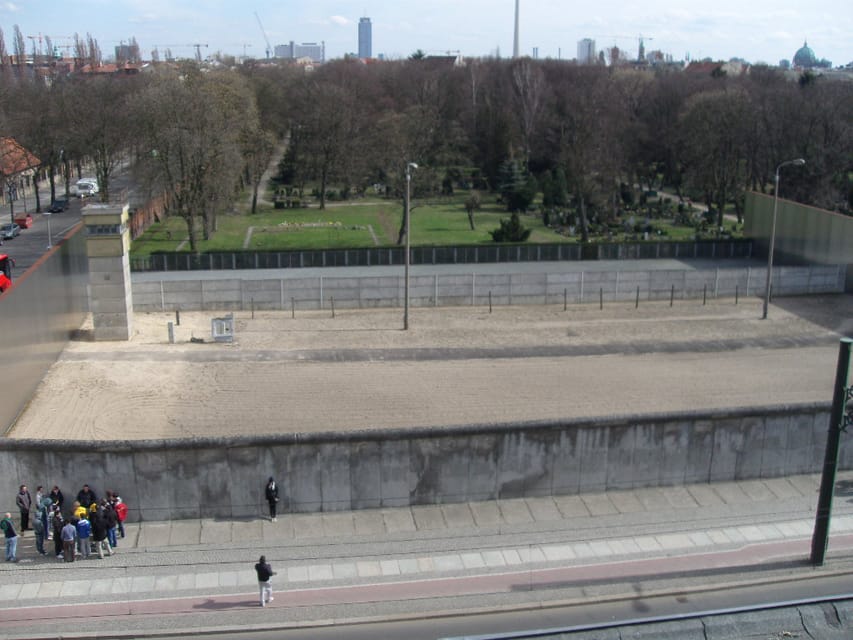
The cemetery is especially striking because it places the border beside a historic burial ground. A cemetery is already a place of memory, and here it also became part of the Wall’s physical setting. The stop at the former Invalidenstraße crossing adds another view of how people and vehicles moved, or failed to move, between East and West.
You will also visit the Memorial Günter Litfin. The memorial recalls Günter Litfin, one of the people killed while attempting to cross the border. Stops like this give the tour a human scale. Instead of treating the Wall as an abstract Cold War boundary, you are asked to remember individual lives and the risks people took to leave East Germany.
The subject matter is not light, and the ride does not pretend otherwise. Families with older children or teenagers may find the tour especially useful, provided they are ready for difficult stories. One family specifically found the experience suitable for young people, but the group setting and four-hour duration still make it better for children who can listen and cycle for several hours.
More History Tours by Bike, Segway and Tuk-Tuk in Berlin:
- Berlin: Cold War & Berlin Wall History Guided Bike Tour
★ 4.8 · 422 reviews - Berlin: Guided Bike tour of the Berlin Wall and Third Reich
★ 5.0 · 160 reviews - Berlin Wall and Cold War Bike Tour in Small Groups
★ 5.0 · 114 reviews - Small-Group Historical Bike Tour in Berlin
★ 4.5 · 103 reviews
The Parliament of the Trees and the Government Bank
As you ride along the Government Bank, you reach the Parliament of the Trees. This memorial uses a section of the former border area to remember people who died at the Wall. Its setting gives you another chance to see how Berlin has turned former border ground into a place for public memory.
The name is unusual, and the stop breaks up the sequence of checkpoints and concrete remains. It also makes a wider point: the Wall route is not one continuous preserved monument. It is a chain of surviving fragments, memorials, open spaces, and modern streets. You need the route and the explanations to connect them.
This part of the ride can also help you get your bearings in central Berlin. You are moving from the former northern border areas toward the major sights near the government district and Mitte. The bike saves time between stops, but the ride remains tied to history rather than functioning as a general city sightseeing circuit.
You may see rabbit images marked on the ground as the route continues toward Brandenburg Gate. These rabbit symbols are an unusual reminder of the empty border strip. They add a small visual detail to a route otherwise filled with heavy subjects.
Brandenburg Gate, Potsdamer Platz, and Checkpoint Charlie
At Brandenburg Gate, the tour reaches one of Berlin’s most familiar landmarks. The gate once sat in the restricted border area, inaccessible to ordinary East Berliners and difficult to approach from the West. Seeing it in the context of the Wall route changes how the monument feels. It is not just a grand photo stop. It represents a city divided around one of its central symbols.
The ride continues through Brandenburg Gate and on toward Potsdamer Platz. Before reunification, this area was marked by the border and by empty space. Today, it is one of the clearest examples of Berlin’s rebuilt center. The contrast is useful: you can see how quickly the modern city has covered the old division, and why the Wall’s surviving memorials matter.
Checkpoint Charlie comes later in the route. The crossing is famous, and it can feel more commercial and crowded than the quieter memorial sites. That is part of the value of visiting it by bike with a guide. You get the famous name, but you also place it within the wider network of crossings and border sites you have already seen.
Do not expect every stop to preserve large sections of the original Wall. The route’s strength is its connection between scattered traces. The guide fills in the gaps between what remains on the ground and what has disappeared.
Tränenpalast and the ride back to Bornholmer Straße
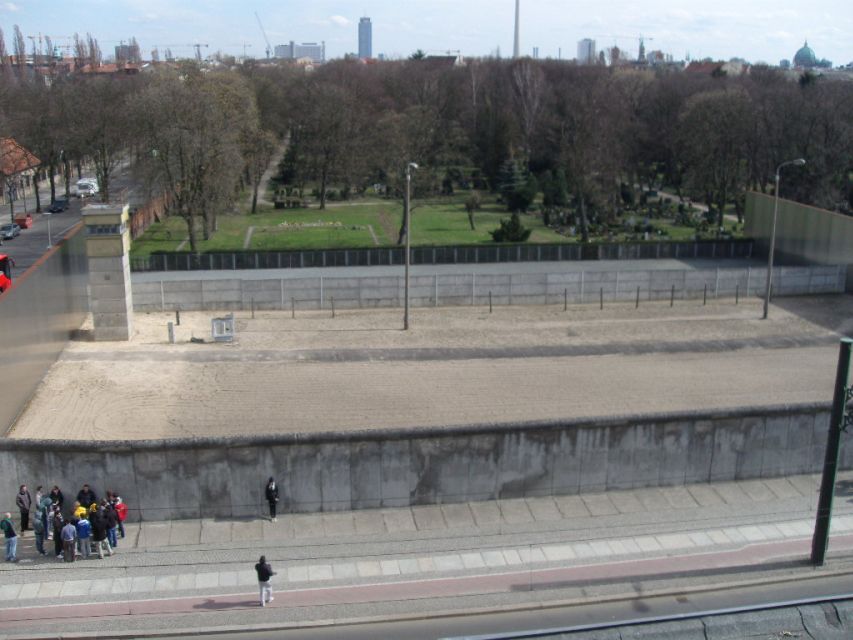
The final major stop is the Tränenpalast, or Palace of Tears, at Friedrichstraße. This former border crossing became known for tearful farewells because people leaving East Berlin often had to say goodbye to family and friends there. The building’s name captures the emotional side of the border in a few words.
The route also passes the Friedrichstadt Palace, Museum Island, the New Synagogue, and the Old Berlin Post Office. These sights broaden the ride beyond the Wall itself. You see how the former border moved through Berlin’s cultural and civic center, not just along a remote line.
After the Tränenpalast, you return to the starting point at Berlin Bike Tour. The four-hour duration is long enough to create a connected story but short enough to fit into a day of sightseeing. You should expect regular stops, cycling between them, and a steady stream of information rather than long visits inside museums.
A practical note: food and drinks are not included. Carrying a small water bottle may be sensible, but large bags and luggage are not allowed. Bring a passport or identity card, sunglasses, a sun hat, and a camera. The tour runs in all weather, and a rain poncho is supplied when needed.
What the $40 price buys you
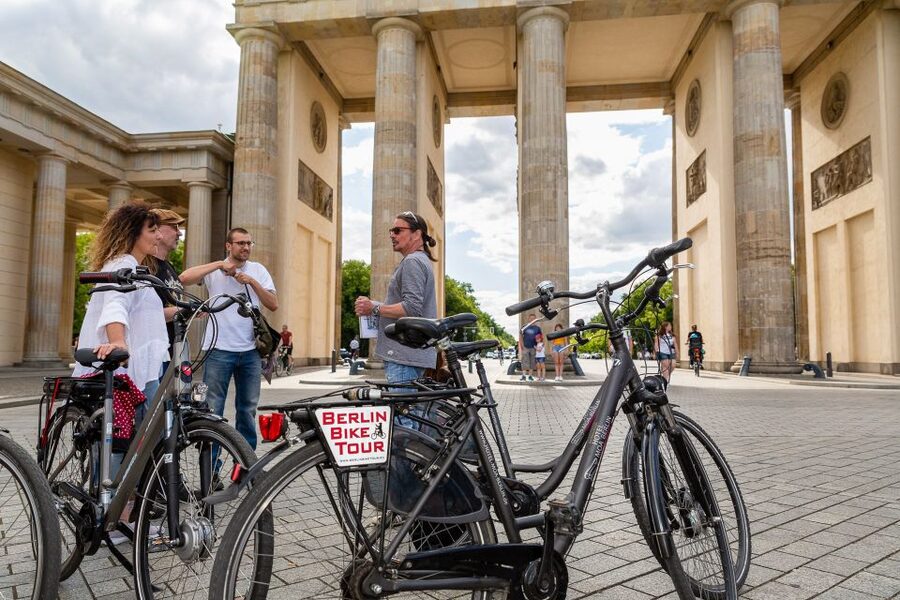
At $40 per person, the tour offers solid value if you want both transportation and interpretation. You receive a bicycle, guide, required fees, and a rain poncho when necessary. More important, you cover a broad stretch of Berlin in four hours without arranging a bike rental and building a route through scattered memorials yourself.
The value is strongest for first-time visitors who want the Wall story explained in place. You are not only paying to pedal past famous addresses. You are paying for the links between Bornholmer Straße, Bernauer Straße, Chausseestraße, Invaliden Cemetery, the Government Bank, Brandenburg Gate, Potsdamer Platz, Checkpoint Charlie, and the Tränenpalast.
The price is less compelling if you already know Berlin’s Wall route well or prefer to spend long periods at one memorial. This is a moving tour, not a detailed museum visit. You will see many places, but you will not have unlimited time at each one.
The booking terms are flexible: you can cancel up to 24 hours before departure for a full refund, and you can reserve now and pay later. Starting times vary, so check availability for the date you want.
Who should book this Berlin Wall bike tour?
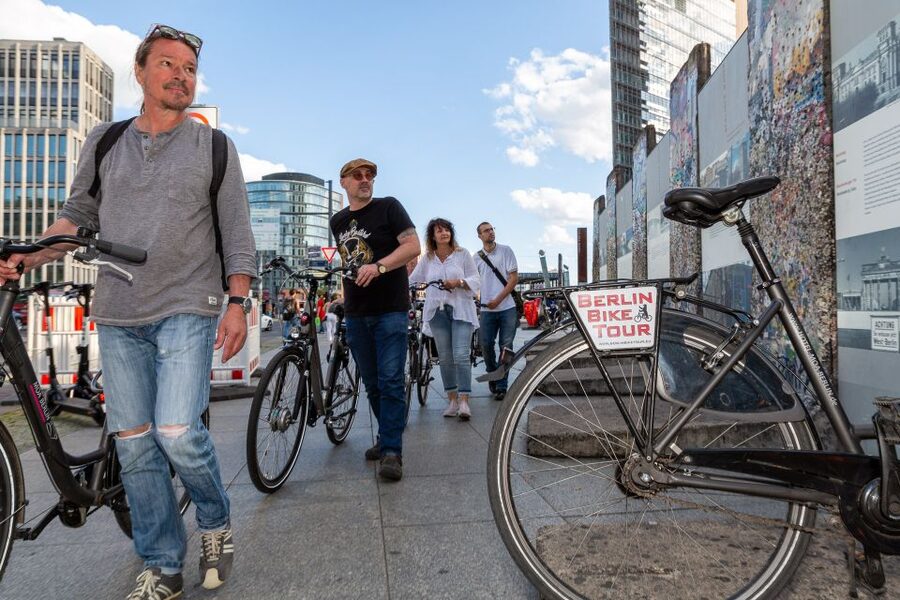
I would choose this tour if you want a serious introduction to the Wall, prefer a small group, and are comfortable listening in German. It suits adults, couples, families with older children, and anyone who wants to cover central Berlin by bicycle rather than by public transport.
It is also a good fit if you want to see places you might not find alone. The route includes the obvious names, such as Brandenburg Gate and Checkpoint Charlie, but its strongest sections are the less familiar stops: Bornholmer Straße, the Chapel of Reconciliation, the former crossings, Invaliden Cemetery, the Günter Litfin Memorial, and the Parliament of the Trees.
I would think twice if you need an English-speaking guide, dislike cycling in rain, or want a relaxed walking pace with long indoor visits. The tour is conducted in German, lasts four hours, and takes place in all weather.
Should you book it?
Book it if the Berlin Wall is a priority and you want a clear route through the city’s surviving traces. The small group, included bicycle, personal stories, and wide range of stops make the $40 fare a fair deal.
The best reason to choose it is the opening and closing shape of the ride. You begin where the border first gave way and finish at the Palace of Tears, passing memorials to both political change and personal loss along the route. Just bring weather-appropriate clothing, leave the large bag at your accommodation, and make sure German is comfortable for you.
FAQ
Where does the Berlin Wall cycling tour start?
The tour starts at Berlin Bike Tour, 75 Bornholmer Straße, Berlin 10439.
How long does the tour last?
The cycling tour lasts four hours.
How much does the tour cost?
The listed price is $40 per person.
How many people are in the group?
The group has a minimum of three participants and a maximum of eight.
What language is the tour conducted in?
The live guide conducts the tour in German.
Is a bicycle included?
Yes. A bicycle is included in the tour price.
Is a rain poncho provided?
Yes. A rain poncho is provided if necessary.
Does the tour run in bad weather?
Yes. The tour takes place in all weather.
What should I bring?
Bring a passport or identity card, sunglasses, a sun hat, and a camera.
Can I bring luggage or a large bag?
No. Luggage and large bags are not allowed.
Is food or drink included?
No. Food and drinks are not included.
Where can I meet the guide by public transport?
The meeting point is one minute from the Björnsonstraße tram stop, two minutes from Bornholmer Straße S-Bahn station, and about ten minutes from Schönhauser Allee S-Bahn and U-Bahn station.
Can I cancel the booking?
Yes. You can cancel up to 24 hours in advance for a full refund.
Can I reserve without paying immediately?
Yes. The reserve-now, pay-later option lets you book without paying at the time of reservation.
More Cycling Trips in Berlin
- Berlin (E)Bike Tour Historical Highlights in Small groups
★ 4.5 · 24 reviews - Historical Singapore Bike Tour on Full-Sized Bicycles
★ 5.0 · 1,421 reviews - Barcelona: 2.5-Hour Bike or E-Bike Historical Tour
★ 4.5 · 1,262 reviews - Asheville Historic Downtown Guided Electric Bike Tour with Scenic Views
★ 5.0 · 1,234 reviews
More Small-Group History Tours in Berlin
- Small group Potsdam: A Journey Through History and Palaces
★ 4.7 · 317 reviews - Small group Potsdam: A Journey Through History and Palaces
★ 4.5 · 151 reviews - Berlin Battlefield Tour – Operation Berlin 1945 (Small Group)
★ 5.0 · 23 reviews - Pompeii: Small Group Tour with an Archaeologist
★ 4.8 · 12,264 reviews
Just added around Berlin
- Berlin Food & Cultural Tour: Must-Try German & Berliner Classics★ 5.0 · 51 reviews
- Berlin Half-Day World War II Walking Tour★ 4.5 · 48 reviews
- Small-Group Historical Bike Tour in Berlin★ 4.5 · 103 reviews
- Historic center of Berlin – Tour in Italian★ 5.0 · 143 reviews
- Berlin Cold War & World War II Third Reich Walking Tour★ 4.5 · 30 reviews
- Private Taxi Tour City East & West History and Architecture 3-4h★ 5.0 · 42 reviews
- Berlin Wall and Cold War Bike Tour in Small Groups★ 5.0 · 114 reviews
- Private Tour: Jewish Heritage Walking Tour of Berlin★ 5.0 · 29 reviews
Berlin History Tours, compared.
Berlin: Third Reich & Cold War Guided Walking Tour
Read our review →
Berlin’s Best: 2 Hour Walking Tour Third Reich and the Cold War
Read our review →
Third Reich Berlin: Hitler and WWII Walking Tour
Read our review →
Berlin: Third Reich, Hitler, and WWII Walking Tour
Read our review →
Berlin: 3-Hour World Heritage Cruise to Potsdam
Read our review →
Cold War, Berlin Wall, Spies and the East Side Gallery
Read our review →
Berlin: History of the Third Reich Guided Walking Tour
Read our review →
Browse the lists this tour appears in