
Review · CHARLESTON
Hidden Alleyways and Historic Sites Small-Group Walking Tour
Charleston’s best stories often hide behind its grand facades. This two-hour walk leads you through narrow lanes, quiet passages, and residential corners that are easy to miss on your own, while also covering major sights such as Rainbow Row and the Old Exchange. I like the small group, capped at 13, and the way guides such as Dennis, Duggar, Evans, Al, and Mark bring their own Charleston connections to the walk.
I also like the easy pace and modest $34 price. You get a local guide, a useful introduction to the historic center, and several alleys you might otherwise walk past without noticing. The main drawback is that the tour stays outdoors, and its historical treatment may feel incomplete if you want fuller attention to Native peoples, slavery, and the city’s racial past.
Key points at a glance
- Four to six alleys: The exact lanes vary by guide, but the route includes lesser-known passages in South of Broad and the French Quarter.
- A 13-person maximum: The group size allows you to hear the guide and ask questions without the feel of a large procession.
- Rainbow Row and major landmarks: You get both quiet residential streets and Charleston’s familiar postcard sights.
- A two-hour introduction: The walk is long enough to give you historical context without taking over your day.
- Strong guide-to-guide character: Dennis, Duggar, Evans, Al, Mark Jones, Al Mixson, and Bruce are praised for storytelling, local insight, and personal attention.
- Outdoor-only sightseeing: You see the Old Exchange, Heyward-Washington House, and other buildings from the street. Admission is not included because the tour does not go inside.
Why Charleston’s alleys are worth your morning
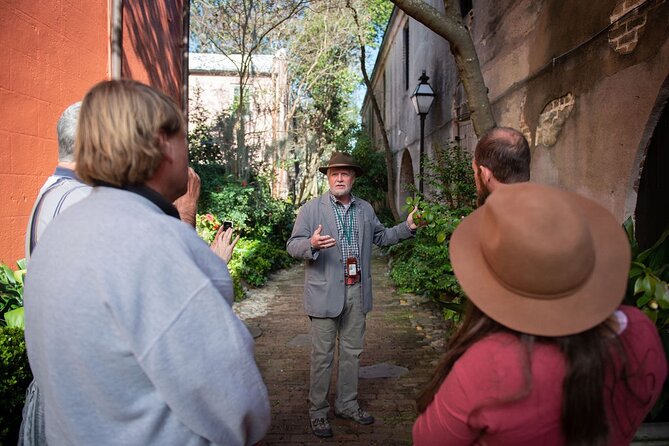
Charleston can seem easy to understand at first glance. Broad streets, pastel houses, church steeples, and waterfront landmarks give you plenty to photograph. But the city’s lanes tell a quieter story. Some barely look like streets at all, and several are tucked between better-known buildings in ways that make them easy to overlook.
That is the central idea of this tour. You are not simply moving from one famous address to another. You are learning how to notice the spaces between them. The guide points out narrow passages, old walls, private gardens, plantings, and architectural details while explaining the events that shaped Charleston.
I would take this walk early in a Charleston stay. It helps you get your bearings in the historic center, especially in the South of Broad and French Quarter areas. You can then return to the places that caught your eye, including Rainbow Row or one of the lanes you would have missed without the guide.
The tour is educational, but it is not built as a formal lecture. Guides add stories, local anecdotes, and personal observations. Evans Byrd, for example, is known for combining Charleston history with plant knowledge. Other guides bring their own family ties and local perspectives. That variation is part of the appeal, although it also means the tone and exact route depend on who leads your group.
More History Walking Tours in Charleston
- Historic Charleston Guided Sightseeing Walking Tour
★ 5.0 · 6,216 reviews - Charleston historical walking tour with a Professor of History at The Citadel
★ 5.0 · 1,284 reviews - Charleston: Old Walled City Historical Walking Tour
★ 4.7 · 705 reviews
Starting beside the Old Exchange
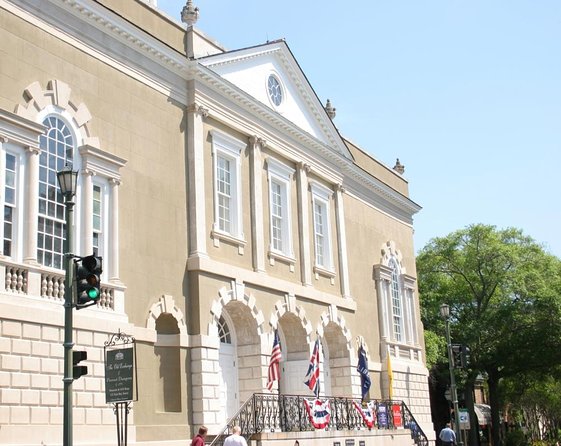
The meeting point is the north side of the Old Exchange and Provost Dungeon at 122 East Bay Street. This colonial building has more than 300 years of association with pirates, patriots, and presidents, making it a useful place to begin a walk through Charleston’s past.
You will view the building from outside. The tour does not include entry to the Old Exchange or the Provost Dungeon, and admission is not part of the $34 fee. That distinction matters if you are hoping to explore the interior. For that, you would need to make a separate visit.
As a starting point, the building gives the guide plenty to work with. The opening section sets up Charleston’s colonial era and connects the city to the Revolutionary period and later conflicts. You should expect narration and discussion rather than an indoor museum visit.
The meeting point is near public transportation, and the tour ends back where it begins. That makes it simple to fit into a day of sightseeing. You do not need to arrange a second pickup point or plan a return across town.
South of Broad, where the quiet lanes begin
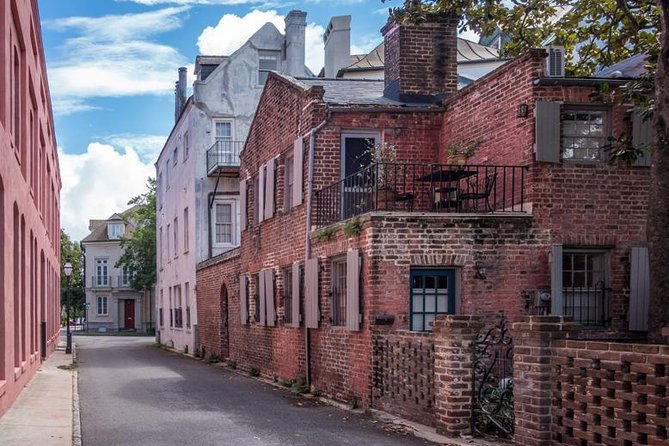
The South of Broad section is where the tour starts to feel different from a standard downtown stroll. This residential part of the historic district includes handsome homes, narrow lanes, and small passages that can be easy to miss from the main roads.
You will explore several alleyways, generally four to six across the full tour, though the exact stops vary by guide. Some lanes are located in this South of Broad area, and the guide uses them to explain how Charleston developed beyond its most photographed streets.
I like this part because it gives you a closer look at the city’s residential character. You are not only checking off landmarks. You are seeing how the old district works as a neighborhood, with private homes, gardens, church grounds, and lanes that have survived beside larger streets.
The guide may also point out trees and plants. That small detail adds variety to the walk, especially for anyone who enjoys gardens and old urban plantings. One guide, Evans Byrd, is praised for combining horticulture with local stories, while other guides focus more heavily on architecture, politics, or family history.
Keep in mind that these are active residential areas. The experience is about observing respectfully from public spaces, not entering private homes or gardens. The tour may offer views into some garden areas, but you should not expect access to private property.
Rainbow Row, Charleston’s famous postcard
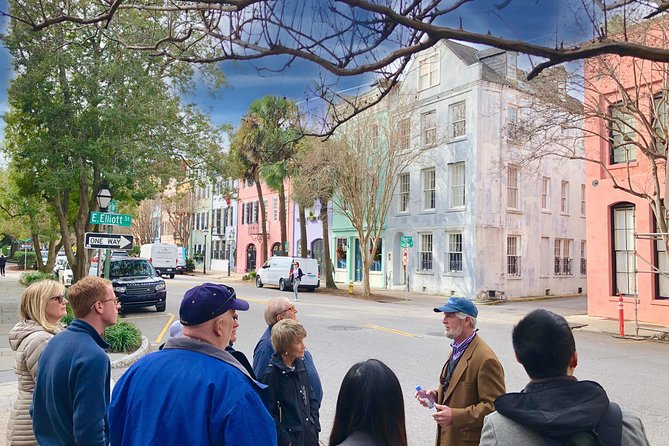
Rainbow Row is one of the clearest landmarks on the route. This line of Georgian row houses is widely recognized for its colorful facades and is described as the longest cluster of Georgian row houses in the United States.
The stop is brief, about 10 minutes. That is enough time for the guide to explain the buildings and give you a chance to look closely and take photographs, but it is not a full architectural study. You remain outside.
Rainbow Row is a good example of the tour’s balance. You get a major Charleston sight, but it is set within a wider walk that includes less obvious places. If you visited Rainbow Row alone, you would see the colors and facades. With a guide, you gain more context about where it fits into the historic center.
This is also a practical photo stop. The lane-based parts of the walk may be visually appealing but less predictable for pictures, depending on light and access. Rainbow Row gives you a well-known subject and a clear point of reference during the tour.
More History Walking Tours in the USA
- Historic Charleston Walking Tour: Rainbow Row, Churches, and More
★ 5.0 · 691 reviews - Charleston: History and Architecture Guided Walking Tour
★ 4.8 · 349 reviews - Charleston History and Hops Tour: Bar and History Walk
★ 5.0 · 316 reviews - Small-Group Tour: Charleston Old Walled City Historical Walking Tour
★ 4.5 · 283 reviews
The French Quarter and the city’s layered past
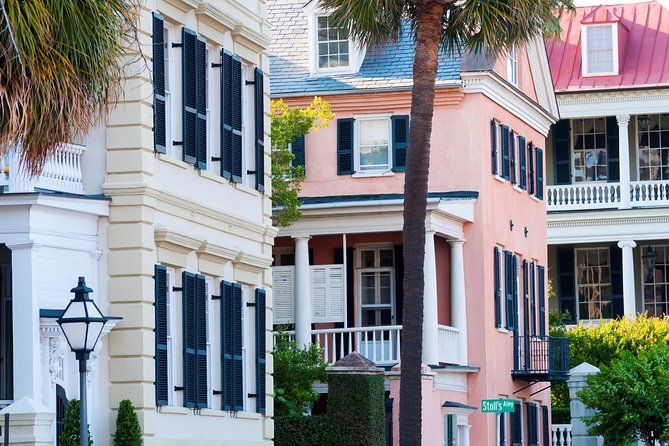
The route then moves through the French Quarter, another section of the historic district filled with notable buildings, churches, and narrow lanes. The guide covers several points of interest here and usually includes more alleyways or lanes.
St. Philip’s Episcopal Church is among the landmarks you may see. The Heyward-Washington House is another important point of interest along the broader route. You view these buildings from outside, so consider this tour an introduction rather than a substitute for Charleston’s house museums.
The narration covers Revolutionary and Civil War events, along with stories about the people and incidents connected to the city. Guides often add anecdotes that make the walk feel less like a list of dates. Duggar, Dennis, and Mark Jones are especially praised for making historical information lively and approachable. Al Mixson is noted for his interest in both architecture and the city itself.
There is an important limitation here. The historical emphasis can vary by guide, and the tour may give more attention to colonial, Revolutionary, and Confederate subjects than to Native peoples or slavery. If you want a fuller account of Charleston’s history, you should pair this walk with a museum or tour that directly addresses enslavement, the Gullah Geechee experience, Indigenous history, and the city’s racial divisions.
That is not a reason to dismiss the walk. It is a reason to know what it does best. This tour gives you a broad outdoor orientation and personal stories. It should not be your only source for understanding Charleston’s past.
Philadelphia Alley and the pleasure of finding what you would miss
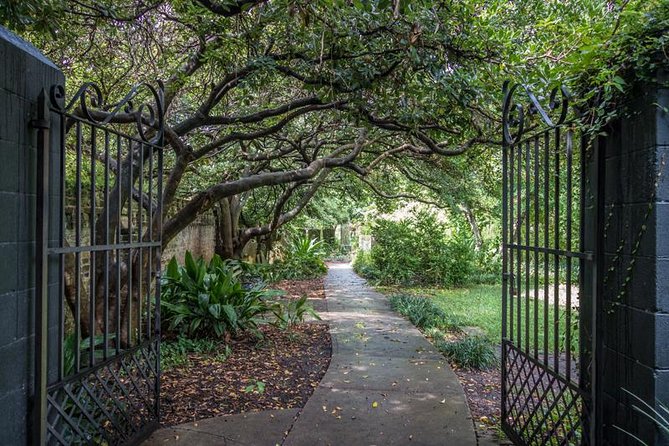
Philadelphia Alley is one of the named lanes associated with the tour, but it may not appear on every outing. The guide chooses from several possible alleyways, so the exact route changes.
That flexibility is useful. You are not locked into a rigid list of stops, and a local guide can adjust the walk based on the group and the conditions. The tradeoff is that you should not book expecting a guaranteed visit to every location named in the description.
Philadelphia Alley helps show why the tour’s theme works. A passage that looks too narrow or modest to matter can have a story tied to the city’s development. The pleasure comes partly from learning to look for these places yourself after the tour ends.
The walk finishes near the starting point, so you can continue exploring East Bay Street, the French Quarter, or nearby attractions without arranging transportation. Since the tour lasts about two hours, it fits well before lunch, after breakfast, or as a first activity on arrival day.
Guides make the biggest difference
The strongest part of this experience is the person leading it. The tour uses professional, licensed local guides, and the praise for specific individuals is unusually consistent.
Dennis is repeatedly described as personable, entertaining, and full of useful historical details. Duggar is praised for asking questions, making personal connections, and telling stories with warmth. Evans Byrd brings plant knowledge along with local history. Al Mixson focuses on architecture and the city’s character, while Mark Jones is described as passionate and well informed. Bruce brings a multigenerational Charleston connection.
You cannot assume you will receive a particular guide unless the booking system lets you choose one. That is worth checking if guide selection matters to you. The route and emphasis can shift from one person to another, which may be a plus for repeat visitors and a small uncertainty for first-time visitors with a fixed list of must-see points.
The small group helps. With no more than 13 people, you are more likely to hear the narration in a narrow lane, ask a question, or make a brief personal connection with the guide. The experience still depends on staying near the group and being able to walk for two hours, but it should not feel like a large crowd moving through the historic district.
What the $34 price really buys
At $34 per person, this is a reasonably priced way to add structure to your first look at Charleston. The fee covers the guided walk, a licensed local guide, and the small-group format. It does not include entry to buildings, food, transportation, or indoor museum visits.
The value comes from interpretation rather than admission tickets. You can walk through the historic district for free, but you may pass the alleys, churches, and row houses without knowing what makes them important. The guide turns a pleasant stroll into a more useful introduction.
I would call it good value for first-time visitors, couples, families with older children, and solo visitors who prefer some company while exploring. It is also useful for anyone interested in architecture, gardens, local stories, or urban history.
You may find it less satisfying if you want a museum-heavy experience, guaranteed indoor access, or a tightly fixed itinerary. People who have already spent several days studying Charleston may prefer a specialized tour focused on food, architecture, slavery, or the Civil War.
Walking comfort, weather, and timing
The walk is described as easy, but it still lasts about two hours on foot. Wear comfortable shoes and bring a water bottle. Charleston weather can be hot, damp, rainy, or chilly depending on the season, and the tour operates in all weather conditions unless poor weather forces cancellation.
Dress for the forecast rather than the photograph you have in mind. Shade and shelter will vary from one lane to another, and the activity takes place outside from start to finish.
Children must be accompanied by an adult. Most people can participate, and service animals are allowed. The tour is near public transportation, but no transportation is provided as part of the activity.
The published duration is about two hours, though a walk can run a little longer. Leave some room in your schedule rather than booking a timed attraction immediately afterward. The route returns to the meeting point, which makes planning easier.
Who should book this Charleston walk
I would choose this tour if you want a clear introduction to Charleston before exploring on your own. It gives you major sights, residential streets, and lesser-known lanes in one compact outing.
It suits you especially well if you:
- Want a small group rather than a large city tour
- Enjoy stories, architecture, gardens, and local anecdotes
- Prefer walking to riding between sights
- Are visiting Charleston for the first time
- Want to get your bearings early in your stay
- Like having a guide who can answer questions
I would think twice if you dislike outdoor walking, need guaranteed indoor stops, or want a fully inclusive history of the city’s Native, African American, and colonial past. In that case, pair this tour with a museum visit or choose a walk built around those subjects.
Should you book it?
Yes, if you want an affordable and personable first look at historic Charleston. The combination of four to six alleys, Rainbow Row, South of Broad, the French Quarter, and a small group gives you more texture than a simple landmark walk.
Book it early in your stay if possible, since the route helps you get oriented and identifies places worth revisiting. Bring water, wear sensible shoes, and remember that the buildings are viewed from outside.
The free-cancellation policy allows a full refund when you cancel at least 24 hours before the start time. Cancellations within 24 hours are not refunded, and poor weather or an insufficient number of bookings can lead to a rescheduled tour or full refund.
FAQ
Where does the tour begin?
It begins at the north side of the Old Exchange and Provost Dungeon, at 122 East Bay Street in Charleston.
Where does the tour end?
The walk ends back at the meeting point near the Old Exchange and Provost Dungeon.
Does the tour go inside the Old Exchange or other buildings?
No. The tour views the Old Exchange, Rainbow Row, Heyward-Washington House, churches, and other sites from outside. Building admission is not included.
How many alleyways will I visit?
You can generally expect to explore four to six alleyways or lanes. The exact stops vary by guide and route.
How large is the group?
The tour has a maximum of 13 participants.
What should I bring?
Wear comfortable shoes and bring a water bottle. Since the walk operates in all weather conditions, dress appropriately for the forecast.
Can I cancel for a refund?
Yes. You can receive a full refund if you cancel at least 24 hours before the local start time. Cancellations or changes made within 24 hours are not refunded.
More Small-Group History Tours in Charleston
- Small Group Ghost Tour Charleston: 60min of True Haunted History
★ 4.5 · 272 reviews - Semi-private SMALL group Historic Walking Tours w/certified guide
★ 5.0 · 224 reviews - Small Group Historic Charleston walking Tour
★ 5.0 · 62 reviews - Pompeii: Small Group Tour with an Archaeologist
★ 4.8 · 12,264 reviews
Just added around Charleston
- Charleston’s Historic Pubs, Taverns, and Taprooms Tour★ 4.5 · 33 reviews
- Small-Group Tour: Charleston Old Walled City Historical Walking Tour★ 4.5 · 283 reviews
- Charleston’s Strong Women of the South History Tour★ 4.5 · 27 reviews
- Private Sunset Sail BYOB Dolphin/History Tours on 43ft Mystique★ 5.0 · 42 reviews
- Sip History In a Secret Speakeasy Cocktail Class★ 5.0 · 40 reviews
- Sip History in The Sun Cabana Covered Cocktail Class★ 5.0 · 332 reviews
- Private Walking Tour of Historic Charleston★ 5.0 · 38 reviews
- Charleston History and Hops Tour: Bar and History Walk★ 5.0 · 316 reviews
Charleston History Tours, compared.
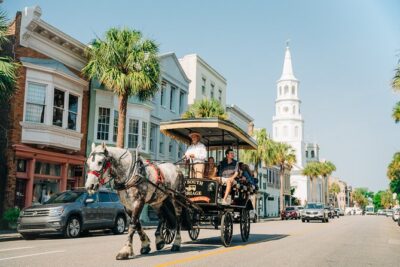
Charleston’s Old South Carriage Historic Horse & Carriage Tour
Read our review →
Historic Charleston Guided Sightseeing Walking Tour
Read our review →
Charleston Harbor History Day-Time or Sunset Boat Cruise
Read our review →
Charleston: Daytime or Sunset Historic Harbor Cruise
Read our review →
Charleston historical walking tour with a Professor of History at The Citadel
Read our review →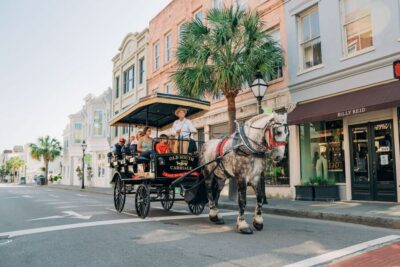
Charleston: Historical Downtown Tour by Horse-drawn Carriage
Read our review →
Undiscovered Charleston: Half Day Food, Wine & History Tour with Cooking Class
Read our review →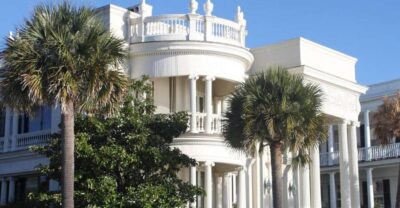
Charleston: Historic City Highlights Guided Bus Tour
Read our review →Browse the lists this tour appears in