
Review · MUNICH
Munich World War II Sites Including Dachau Concentration Camp
Dachau is the heart of this experience: a quiet, sobering memorial where photographs, documents, reconstructed barracks, and the crematorium help you understand what happened here. The day also connects that camp to Munich, where the Nazi movement gained power in plain sight. The link between place and politics makes this more useful than seeing either site alone.
I like the two-part format, with Dachau in one half of the day and a Munich walking tour in the other. I also like that public train and bus transport keeps the cost at $105.21 and gives you a practical look at how the site fits into the region. The tradeoff is clear: this is a long, demanding day with plenty of standing and walking, and some people may find the pace too quick for every museum panel.
Key points to know before booking
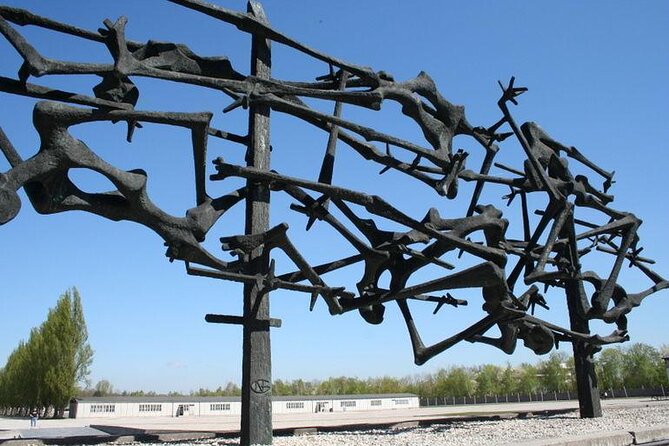
- Dachau comes first: Allow roughly three hours at the memorial, including the museum, grounds, reconstructed cell blocks, crematorium, and administrative area.
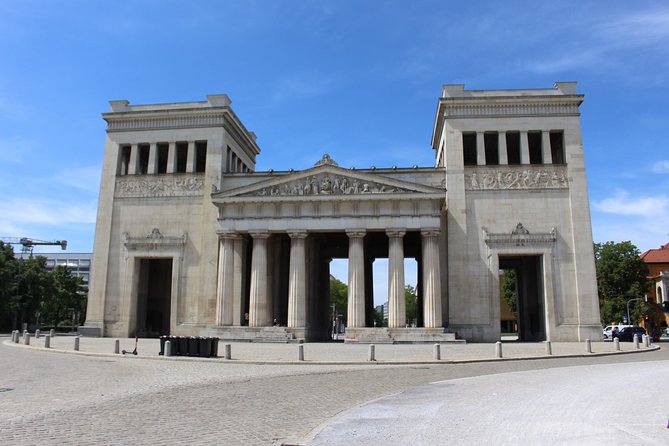
- Munich fills out the story: The city walk covers Königsplatz, Marienplatz, the former Gestapo headquarters, the site linked to the Beer Hall Putsch, and the building where Hitler joined the Nazi Party.
- Expect public transport: The group uses a train and bus to reach Dachau, with transport handled by the tour operator.
- This is a serious full-day outing: The tour runs about 8 hours and 30 minutes, beginning at 9:00 a.m. and generally finishing around 6:00 p.m.
- Guide quality matters: Past guides including Jake, Ian, Scott, Connie, Nick, Steve, and Josh have been praised for clear explanations and respectful handling of painful subjects.
- The audience is limited: Participants must be at least 13, and the group size is capped at 25.
Why combining Dachau with Munich makes sense
A visit to Dachau alone gives you a powerful look at the concentration camp system. A Munich city walk alone shows where the Nazi movement developed political support and public momentum. Put the two together, and you get a stronger sense of cause, place, and consequence.
That connection is the main reason I would consider this tour. In Munich, you are not just hearing about distant events. You are walking through streets and squares tied to the rise of the Third Reich, then visiting the first Nazi concentration camp in Germany. The setting changes, but the subject stays connected.
The city portion also deals with more than military events. It covers social issues, political pressure, people who helped build the regime, and the rise and fall of Adolf Hitler’s government. That wider frame is important. Dachau is not presented as an isolated horror, separate from everyday life in Munich.
The day is led in English, and the guides can vary. Names associated with particularly strong outings include Jake, Ian, Scott, Steve, Connie, Nick, Sam, Josh, and Achim. The exact guide is not guaranteed, but the strongest descriptions point to guides who combine factual detail with a respectful tone and room for questions.
More WWII and D-Day Tours in Germany
- Berlin: Third Reich & Cold War Guided Walking Tour
★ 4.9 · 8,378 reviews - Munich: Third Reich & WWII Walking Tour
★ 4.6 · 6,181 reviews - Berlin’s Best: 2 Hour Walking Tour Third Reich and the Cold War
★ 5.0 · 5,486 reviews
Starting at München Hauptbahnhof at 9:00 a.m.
You meet the guide at Radius Tours on Dachauer Strasse 4, close to Munich Central Station. That location is useful if you are staying in central Munich, and it makes the morning meeting fairly easy to reach by public transport.
After introductions, the group boards a train heading north toward Dachau. From there, a city bus takes you to the memorial site. The operator covers the public transport used during the tour, so you do not need to arrange those tickets yourself.
The public transport connection is one of the tour’s practical compromises. It is not a private coach ride, so you deal with regular train and bus conditions, including the possibility of a crowded bus. On the other hand, the route is less expensive than private transport, and the money saved helps keep the experience within reach for more people.
I would arrive early. With a maximum group of 25, the meeting is not enormous, but a railway station is still a busy place. You will want time to find the tour office, use the restroom, and settle in before the group leaves.
Dachau Memorial Site: three hours with a difficult subject
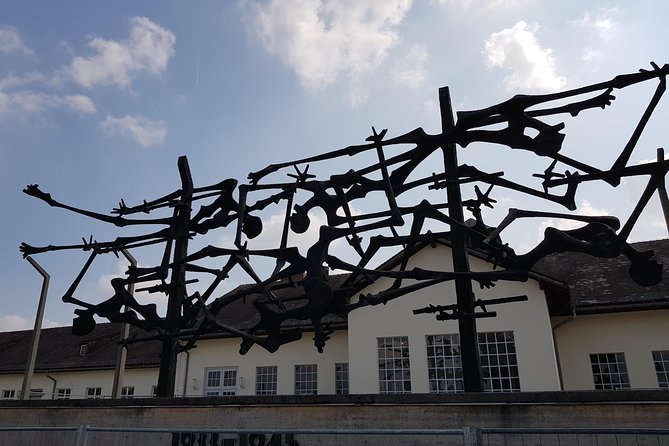
Dachau was the first Nazi concentration camp in Germany and later served as a model for other camps. That fact gives the site a particular importance, but the visit is not an abstract history lesson. You walk through a place where the system was organized, expanded, and used to imprison and persecute people.
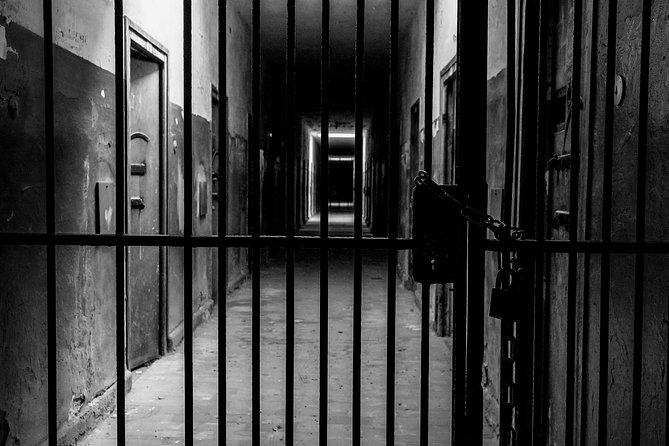
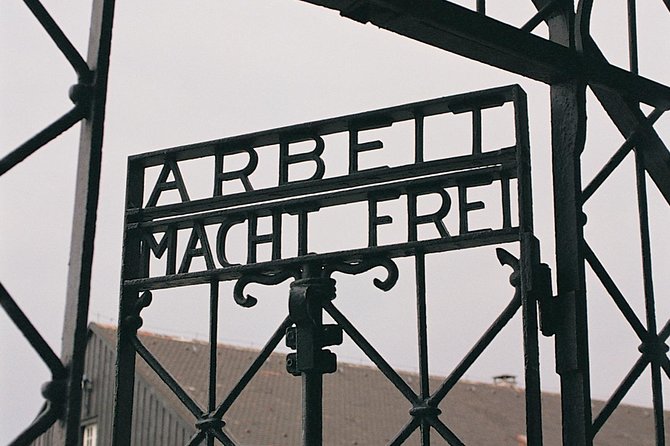
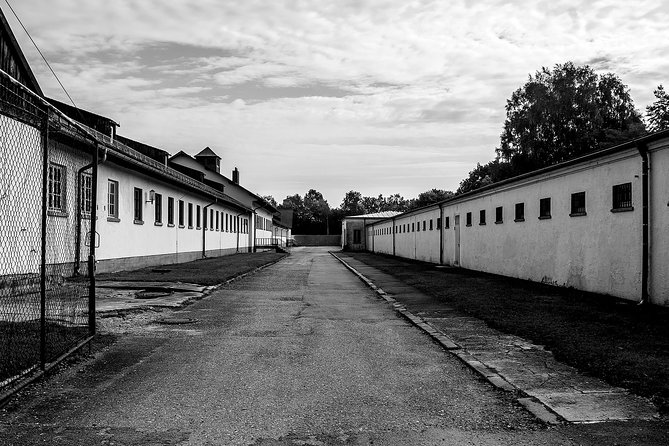
The tour includes the museum and camp grounds. You can expect to see photographs, documents, reconstructed cell blocks, the crematorium, and the administrative headquarters. The buildings and exhibits work together: documents explain the machinery of the camp, while the grounds make its scale and layout easier to grasp.
The guide’s role is especially valuable here. A strong guide can explain who was imprisoned, how the camp operated, and how the Nazi state connected paperwork, policing, punishment, and mass persecution. Guides such as Jake, Ian, Scott, and Connie have been praised for bringing in personal accounts and quotations from people who experienced imprisonment, while keeping the presentation respectful.
The subject is emotionally heavy, and the tour does not try to make it light. Some guides use a little appropriate humor during the less solemn parts of the day, but the memorial itself calls for quiet attention. You should be ready for a serious experience rather than a conventional sightseeing stop.
Three hours is a useful amount of time for an introduction, but it is not enough to read every panel at leisure. This is the central limitation of a guided visit. You receive structure, explanation, and context, but you may need to move on before exploring every document in detail.
If you already have extensive knowledge of Dachau or prefer a slow museum visit, an independent visit may suit you better. If you want help understanding the layout and the historical connections, the guide can make the site far easier to approach.
What the camp visit includes, and what it does not
The package includes a full tour of the Dachau memorial site and a local guide. It does not include food or drinks, so bring water and a snack. There is a break later in the day, but you should not treat the tour as a catered excursion.
Past descriptions also make clear that the memorial portion involves standing and walking outdoors. Weather matters. On a cold day, you will feel it. On a hot day, shade and water become important. One guide, Connie, was praised for finding shady places and sitting areas during a hot outing, but you should still prepare for conditions yourself.
Wear practical shoes and clothing suited to the forecast. The site is not a quick indoor museum stop. You move between buildings and open areas, then return to Munich for another substantial walk.
The memorial may also be difficult to hear in some places. Echoes, outdoor noise, and nearby visitors can make spoken explanations less clear. Stay close to the guide, especially when the group moves between sections. A headset system would make this easier, but no audio equipment is included in the information provided.
Same city, a different century:
- Leipzig: City History Canal Sightseeing Tour on a Motorboat
★ 4.7 · 7,671 reviews - Third Reich Berlin: Hitler and WWII Walking Tour
★ 5.0 · 3,301 reviews - Leipzig: 1.5-Hour Historical Walking Tour in German
★ 4.7 · 2,217 reviews - Nuremberg: Medieval Dungeons Guided Tour
★ 4.8 · 2,214 reviews
The break between Dachau and Munich
After returning to Munich by train, you have a short break before the city walking tour. The full schedule is often described as a morning Dachau visit followed by a late afternoon Munich tour, with about an hour for lunch or rest between them.
This pause is welcome. You can buy food nearby, use a restroom, and give your legs a rest before the second half. Since lunch is not included, plan to pay for it separately and avoid sitting down somewhere that takes too long. The walking tour still has a fixed meeting time.
The break also helps the day feel like two linked experiences rather than one endless lecture. That said, the overall outing remains long. If you are tired after Dachau, the Munich portion will require fresh attention and comfortable shoes.
Munich’s Third Reich sites, from Königsplatz to Marienplatz
The second half is a walking tour through central Munich, usually lasting about two and a half to three hours. It explores important places connected with the Nazi movement and the Third Reich.
Königsplatz is one of the key stops. The square served as a major marching ground for the Nazi Party, so the setting helps explain how public space was used for political theater and mass display. The stop is brief, around 20 minutes, but it gives the tour a strong visual starting point.
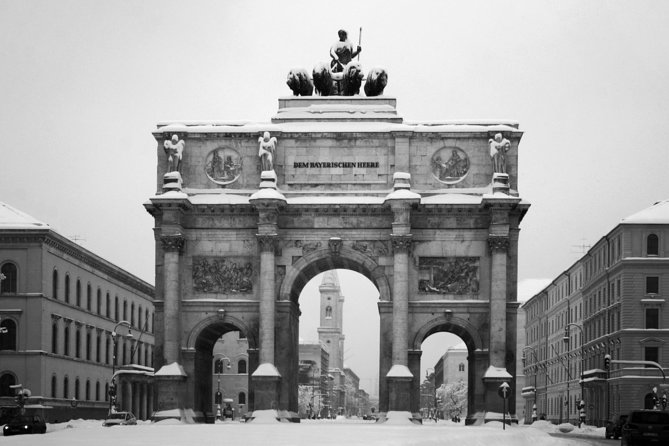
The walk continues through Munich Old Town and includes Marienplatz. You will visit the building where Hitler first joined the Nazi Party, the former Gestapo headquarters, and the location of the 1923 Beer Hall Putsch, also called the Munich Putsch.
Many sites no longer look exactly as they did during the Nazi period. Some buildings were damaged, altered, or reconstructed. That is where a guide’s photographs and explanations help. Jake, in particular, has been praised for using then-and-now images to show what has changed and what has disappeared.
You are also likely to hear how the Nazi movement developed before the Second World War, not simply what happened once the war began. This political background gives the walk a useful shape. You follow the story through streets and buildings rather than receiving disconnected facts.
The city tour is not only about famous names. It examines how institutions, public spaces, and ordinary urban routines became tied to the regime. That is one of its most worthwhile features, especially if you want to understand Munich’s role instead of treating the city as a neutral backdrop.
Guide style can shape the whole day
The strongest part of this tour is the human explanation. Guides such as Ian, Jake, Scott, Steve, Connie, and Nick have been praised for combining preparation, compassion, and a clear sense of the subject’s weight.
Jake is often singled out for answering questions, keeping the group engaged, and balancing serious material with a touch of humor when appropriate. Ian has been described as personable and easy to listen to. Scott has been praised for making difficult information educational and respectful. Connie’s attention to heat and rest areas is a reminder that good guiding includes looking after the group, not just reciting facts.
The experience can vary with the guide. Some guides are more animated and conversational. Others may present a large amount of information in a more direct style. A few people have found the city walk less engaging than the Dachau portion, or found it difficult to hear when the guide faced away from the group.
Stay near the front and speak up if you cannot hear. The group limit of 25 is reasonable, but it is still large enough for a quiet voice to disappear in a noisy street or echoing building.
Is the $105.21 price good value?
At $105.21 per person, the tour is not the cheapest way to visit Dachau and walk through Munich. You could arrange public transport and explore some locations independently. The question is what you want your money to buy.
Here, the price covers a local guide for both parts of the day, the Dachau memorial visit, the Munich Third Reich walk, and the train and bus transport used during the Dachau segment. You are paying for organization and interpretation as much as transportation.
I think the value is strongest for a first visit, a short stay in Munich, or anyone who wants the historical connections explained in one day. You can cover two major subjects without working out the route, transport, timing, or sequence yourself.
The value is weaker if you dislike group tours, want to read every exhibit at your own speed, or already know Munich’s Nazi-era history well. The fixed schedule means you trade independence for structure.
Because the day is nearly nine hours, the cost works best when you treat it as a full historical program rather than a quick excursion. You are getting two substantial guided experiences, not just a ride to a memorial.
Who should book this experience?
I would recommend it to adults and older teenagers with a serious interest in the Second World War, the Holocaust, and modern German history. The age limit is 13, and proof of age may be required. The subject matter is difficult, so younger children are not part of the intended audience.
It also suits you if you have only one or two days in Munich and want a clear introduction to both the city’s Nazi past and Dachau. The combined format saves planning time and gives the two places a useful connection.
You should think twice if you need a slow pace, have limited stamina for walking and standing, or dislike public transport. The full day can be physically demanding, and there are limited opportunities to sit. Bring water, dress for the weather, and plan to purchase your own lunch.
Free cancellation is available up to 24 hours before the start time. A minimum group size is required, and if the operator cancels for that reason, you are offered another date or experience, or a full refund.
Should you book the Munich and Dachau combination?
Book it if you want context as well as access. The Dachau Memorial Site is the emotional center, while Munich explains how the political movement took shape around real streets, buildings, and public squares.
Skip it if you want complete freedom at the memorial or a shorter outing. In that case, separate visits may let you spend more time with the exhibits and take more breaks.
For most first-time visitors who can handle a long day, the combination offers a strong use of time and money. Just arrive rested, expect serious material, stay close enough to hear the guide, and remember that the tour gives you a guided foundation rather than every possible detail.
FAQ
How long does the tour last?
The experience lasts approximately 8 hours and 30 minutes. It begins at 9:00 a.m. and generally occupies most of the day.
Where does the tour start?
It starts at Radius Tours, Dachauer Str. 4, 80335 Munich, near Munich Central Station.
Where does the tour end?
The Munich walking portion concludes around Königsplatz near Munich Central Station. The meeting information also lists the Radius Tours office as the activity’s end point.
Is the tour offered in English?
Yes. The tour is offered in English.
How do you reach Dachau?
The group travels by public train from Munich and then uses a city bus to reach the Dachau Concentration Camp Memorial Site. The tour operator handles the transport used during the outing.
How much time is spent at Dachau?
The Dachau portion lasts about three hours. It includes the museum, camp grounds, reconstructed cell blocks, crematorium, and administrative headquarters.
What Munich locations are included?
The walking tour includes Königsplatz, Marienplatz, the former Gestapo headquarters, the building where Hitler joined the Nazi Party, and the site of the 1923 Beer Hall Putsch.
Is food included?
No. Food and drinks are not included. You have a break between the two tour sections when you can buy lunch independently.
What is the minimum age?
Participants must be at least 13 years old. Proof of age is required.
How large is the group?
The group can include a maximum of 25 people. The local guide leads both the Dachau and Munich portions, although the guide may differ between the two sections.
Can I cancel for a refund?
Yes. You can cancel at least 24 hours before the experience starts for a full refund. Cancellations or changes made less than 24 hours in advance are not accepted for a refund.
Just added around Germany
- Berlin Food & Cultural Tour: Must-Try German & Berliner Classics★ 5.0 · 51 reviews
- Berlin Half-Day World War II Walking Tour★ 4.5 · 48 reviews
- Berlin Cold War & World War II Third Reich Walking Tour★ 4.5 · 30 reviews
- Small-Group Historical Bike Tour in Berlin★ 4.5 · 103 reviews
- Historic center of Berlin – Tour in Italian★ 5.0 · 143 reviews
- Private Taxi Tour City East & West History and Architecture 3-4h★ 5.0 · 42 reviews
- Berlin Wall and Cold War Bike Tour in Small Groups★ 5.0 · 114 reviews
- Private Tour: Jewish Heritage Walking Tour of Berlin★ 5.0 · 29 reviews
Munich History Tours, compared.
Munich: Guided Tour of the historic Town Hall on Marienplatz
Read our review →
Munich: Third Reich and World War II Segway Tour of the City
Read our review →
Munich and Nazi History Combination Day Tour Small Group
Read our review →
Munich: Nazi History 2-Hour Small Group Walking Tour
Read our review →Browse the lists this tour appears in