
Review · MUNICH
Third Reich & WWII Walking Tour
Munich’s Nazi past is not hidden behind a single museum door. It is spread across grand squares, beer halls, government buildings, and quiet corners where resistance took place. This 2-hour-45-minute walking tour connects those places and explains how Munich became the birthplace and political headquarters of the Nazi movement.
I like the route’s mix of major sites, from Hofbräuhaus and Feldherrnhalle to Königsplatz and the Hofgarten, and I like that it includes the White Rose resistance movement rather than focusing only on Hitler and the Nazi Party. Guides including Josh, Alex, Michael, Danielle, Bridget, Joel, and Ulrich have been praised for clear storytelling and sensitive handling of painful subjects.
The main drawback is physical, not historical. You will spend much of the tour walking or standing, with only a short chance to sit down. Bring water, perhaps a snack, and good shoes. Cold weather can make the experience tougher, and one guest found the guide difficult to hear without amplification.
Key points at a glance
- Follow Munich’s Nazi story on foot: Begin at Marienplatz and finish near Hitler’s former headquarters at Königsplatz.
- See the places where power was tested: The route covers Hofbräuhaus, Feldherrnhalle, Königsplatz, and the Hofgarten.
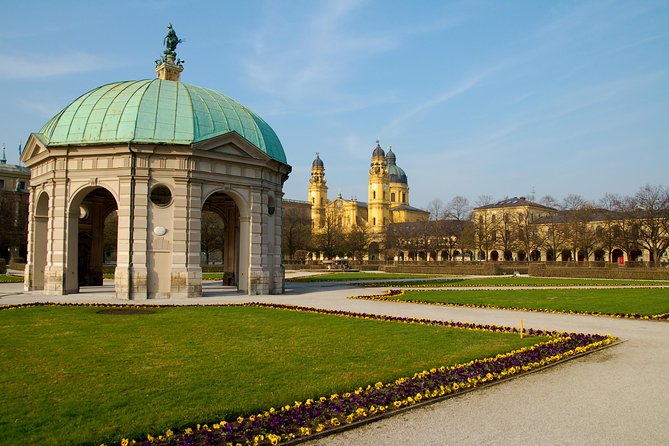
- Learn about resistance as well as dictatorship: The White Rose movement receives attention in the Hofgarten.
- Expect serious, careful teaching: Guides use facts, historic photographs, discussion, and quiet moments for reflection.
- Plan for nearly three hours outside: Walking and standing are a major part of the experience.
- Pay about $35.09: For a private museum guide or local historian, that is a reasonable price, especially if you value context over quick sightseeing.
Why Munich is the right place for this tour
Munich was not simply a backdrop to the Nazi era. It was a central setting in the movement’s rise, and the city’s streets help explain how political ideas moved from small meetings into public power.
The tour begins in a city center that looks, at first glance, like a pleasant place for shopping and sightseeing. That contrast is useful. You are not studying an isolated battlefield or a distant memorial. You are looking at ordinary urban spaces where political speeches, party gatherings, failed coups, government decisions, and acts of resistance took place.
I find this kind of walking tour valuable because location adds scale. A date in a book can feel remote. A guide standing in the same square can explain how a crowd gathered, how the authorities reacted, and why the site mattered. The buildings and streets do not tell the story by themselves, but they give the story a physical shape.
The subject is heavy, and it should be. The strongest guides, especially Josh and Alex, appear to balance facts with a calm, respectful delivery. They do not soften the crimes of the regime, but they also allow time for questions and reflection. That makes the tour useful for someone new to the subject as well as for someone who already knows the broad outline of World War II.
More History Walking Tours in Germany
- Berlin: Third Reich & Cold War Guided Walking Tour
★ 4.9 · 8,378 reviews - Munich: Third Reich & WWII Walking Tour
★ 4.6 · 6,181 reviews - Berlin’s Best: 2 Hour Walking Tour Third Reich and the Cold War
★ 5.0 · 5,486 reviews
Starting in Marienplatz: the city center meets political history
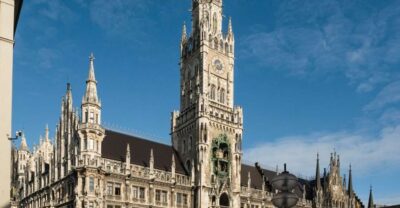
The meeting point is Marienplatz, Munich’s central square. This is a practical place to begin because it is easy to reach by public transport and familiar to almost anyone exploring the old town.
You should check the exact meeting instructions carefully before setting out. Detailed directions have caused confusion for some people, and the map pin has not always been reliable. Look for the information connected with the Munich tourist office rather than relying only on the first map marker you see.
Beginning at Marienplatz also gives the guide a chance to place the Nazi rise within the wider crisis that followed World War I. Germany was defeated and humiliated. Bavaria was caught in revolution and political violence, while hyperinflation damaged daily life and public confidence. That setting helps explain why extremist movements could gain an audience.
This context matters. The tour is not only a list of buildings connected with Hitler. It examines the conditions that allowed a radical political movement to attract followers and turn anger, fear, and nationalism into organized power.
Hofbräuhaus and the movement’s early public face
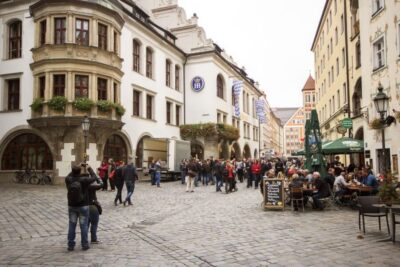
Hofbräuhaus is one of Munich’s most famous beer halls, and it is also connected with the early Nazi movement. The tour discusses the first mass meeting associated with the party there, showing how a beer hall could serve as a political stage.
That connection may surprise you if you know Hofbräuhaus mainly as a place for beer, food, music, and traditional Bavarian atmosphere. The point is not to treat the building as a shrine to its dark past. It is to understand how public venues helped political groups reach ordinary people.
At this stop, pay attention to the difference between a movement’s early message and its later actions. The guide explains how the Nazis presented themselves, how they built support, and how Munich became central to their identity. This is where a good guide’s storytelling matters most. The building is easy to see, but the political process needs explanation.
The visit is also a reminder that history often sits beside daily life. You may hear a discussion of mass politics while people nearby are carrying on with lunch or sightseeing. That contrast can feel uncomfortable, but it is part of the lesson.
Feldherrnhalle and the failed attempt to seize power
Feldherrnhalle is one of the most important stops because it connects the early Nazi movement with its failed attempt to seize power. The event was a turning point. The party did not take control of Germany through this action, but the aftermath helped Hitler gain publicity and political importance.
Here, the guide can explain how an unsuccessful coup became part of the movement’s later mythology. That distinction is worth hearing on site. Political groups often reshape defeat into a story of sacrifice, and the Nazis used memory and ceremony to strengthen loyalty.
This is also one of the places where Munich’s architectural grandeur can distract from the past. The square and nearby buildings are visually impressive. A guide helps you look past the postcard view and understand what happened there, why it mattered, and how the site was later used.
The stop involves standing in an open public area, so your comfort depends on the weather. On cold days, the pace and the guide’s ability to keep people engaged become especially important. Josh and other guides have received praise for keeping the group focused even in freezing conditions.
More WWII and D-Day Tours in Germany
- Third Reich Berlin: Hitler and WWII Walking Tour
★ 5.0 · 3,301 reviews - Berlin: Third Reich, Hitler, and WWII Walking Tour
★ 4.9 · 1,757 reviews - Nuremberg: Historischer Kunstbunker WWII Art Bunker Tour
★ 4.8 · 921 reviews - Berlin: History of the Third Reich Guided Walking Tour
★ 4.7 · 791 reviews
Königsplatz: mass rallies and the end of the route
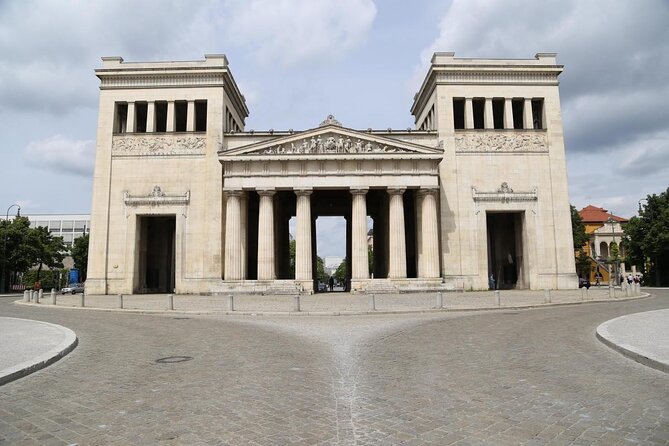
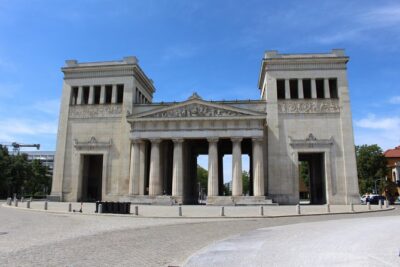
Königsplatz gives the tour its grandest setting. The square was used for mass party rallies and became closely linked with Nazi power in Munich. Its broad layout made it suitable for public ceremonies and large gatherings, which is exactly why the regime valued it.
The scale of Königsplatz helps you understand how architecture and public space can be used to project authority. A small meeting room creates one kind of political energy. A huge formal square creates another. Your guide explains how the setting supported spectacle and group identity.
The tour ends at Königsplatz, near Hitler’s former headquarters. That ending is practical and meaningful. You finish with the center of Nazi administration in Munich, rather than returning to the lighthearted atmosphere of the old town. It leaves you with a clear sense of how the movement developed from public meetings into organized rule.
The end point is also useful for planning the rest of your day. You are near the Documentation Center area, and Ulrich has recommended going inside to see its films, photographs, and artwork. Admission to the walking tour does not include an entry ticket, so treat that museum visit as a possible extra rather than part of the paid tour.
The Hofgarten and the White Rose resistance
A major strength of the route is its attention to the White Rose resistance movement. The discussion takes place in the Hofgarten, giving the tour a needed counterpoint to the story of Nazi expansion.
The White Rose group opposed the regime through leaflets and calls for resistance. Covering this part of Munich’s past shows that the city’s wartime story was not one of complete agreement or passive acceptance. It also introduces the moral choices faced by people living under dictatorship.
I especially value this stop because it prevents the tour from becoming a biography of Hitler alone. The history becomes broader and more human when you hear about people who challenged the regime, even at great personal risk.
The Hofgarten may also offer a quieter pause in the route. Still, do not expect a long seated break. The overall format remains an outdoor walking lesson, and you should be ready to listen while standing.
The guides make or break the experience
The guides are the tour’s most important feature. The route is fixed, but the quality of the explanation depends on who leads your group.
Josh is repeatedly praised for his passion, clear context, good pacing, and ability to handle difficult questions. Alex is noted for a personable style, historic visuals, and moments that allow the group to think quietly. Michael is described as easy to follow and able to answer questions in detail. Ulrich combines solid information with practical suggestions for the rest of your Munich visit.
Danielle, Bridget, and Joel have also been praised for bringing care and personality to a serious subject. Bridget has helped people with ideas for places to eat, relax, and visit afterward. That kind of local guidance is a useful bonus when you are still finding your way around Munich.
The best guides do more than recite dates. They explain cause and effect, ask for questions, and connect the sites to larger political and social changes. They also know when to stop talking. Quiet moments matter on a tour about mass murder, dictatorship, and resistance.
There is one practical issue: sound. The tour takes place in busy city streets and open squares, and one person found it hard to hear the guide. Stay close to the group, especially at crowded stops, and ask the guide to repeat a point if needed.
Pace, group size, and physical demands
The advertised format describes a small group limited to 10 people, which should allow more questions and easier conversation. The booking information also gives a maximum of 30 participants, so group size may vary. If you are expecting a very intimate walk, keep that distinction in mind.
The pace is generally described as steady rather than rushed. You move between several locations and spend time at each one. Guides have been praised for managing crowds, including the busy Christmas market season, without losing the thread of the story.
This is not a hop-on, hop-off experience. You need to walk well and stand for long periods. One account describes nearly three and a half hours of walking and standing, though the official duration is about 2 hours 45 minutes. The difference may reflect a slow-moving group, pauses, or rounding, but it is wise to plan for an active morning or afternoon.
There is little time for food or drink. Bring water and a small snack before you start. Wear shoes suited to city pavements, and dress for the forecast. A short indoor stop may occur, but you should not count on regular seating.
The tour is not recommended for children under 12. That seems sensible given the subject matter, length, and need for sustained attention.
Is $35.09 a fair price?
At about $35.09 per person, this tour sits in a reasonable range for a nearly three-hour guided walk. You are paying for a professional guide, not for food, drinks, hotel transport, or museum entry.
The value depends on what you want from Munich. If you only want quick photographs of famous squares, the price may feel high. If you want to understand why those places mattered, the cost is fair. A strong guide can connect events that would otherwise appear unrelated and point out details you might walk past.
The tour also saves you preparation time. You could read about the Nazi Party’s rise, the failed coup, the mass rallies, and the White Rose before visiting Munich. But the guide places those topics in order and ties them to real locations. That structure is the main product.
Because the tour lasts most of a morning or afternoon, you should also measure the price against your energy. If cold weather or long periods of standing will make you miserable, a museum-based option may suit you better. For most people who want a clear introduction to Munich’s role in the Third Reich, the fee is justified.
Who should book this Munich walking tour?
I would choose this tour if you want a focused introduction to Munich’s Nazi history and prefer places to lectures. It suits adults, older teenagers, and anyone willing to give serious attention to difficult material.
It is especially useful early in your stay. The guide can help you understand the city before you visit the Documentation Center or other museums. You may also receive useful ideas for the rest of your time in Munich, as several guides have offered directions and sightseeing suggestions after the walk.
You do not need prior study. The route covers a lot, but questions are welcomed, and the explanations are designed to give beginners a clear starting point. If you already know the subject well, you may still value the local setting and the focus on Munich rather than Germany in general.
I would hesitate if you need frequent seats, have difficulty walking across the city center, or want a light sightseeing experience. This is a serious tour about dictatorship, war, persecution, and resistance. It asks you to listen, think, and keep moving.
Should you book it?
Book this tour if you want to understand how Munich became central to the Nazi rise, not simply see famous buildings. The combination of Hofbräuhaus, Feldherrnhalle, Königsplatz, the Hofgarten, and the White Rose story gives the walk a strong balance of political power and moral resistance.
Choose a day when you can walk comfortably, bring water, and confirm the meeting point before leaving. If possible, plan extra time at the Documentation Center near the end point. The tour is not a complete study of World War II, but it is a thoughtful, well-priced way to connect Munich’s streets with one of the darkest chapters in modern European history.
FAQ
How long does the Third Reich and WWII Walking Tour last?
The tour lasts approximately 2 hours and 45 minutes.
Where does the tour start?
The tour starts at Marienplatz in Munich, Germany.
Where does the tour end?
The tour ends at Königsplatz 1, near Hitler’s former headquarters.
What places are included on the route?
The route includes Marienplatz, Hofbräuhaus, Feldherrnhalle, Königsplatz, and the Hofgarten. The tour also discusses the White Rose resistance movement.
Is museum admission included?
No. Admission tickets are not included. The tour ends near the Documentation Center, which can be visited separately.
How much does the tour cost?
The listed price is $35.09 per person.
Is the tour offered in English?
Yes. The tour is offered in English and includes a professional guide.
Is the tour suitable for children?
The tour is not recommended for children under 12 because of the serious subject matter.
Can I cancel for a full refund?
Yes, if you cancel at least 24 hours before the scheduled start time. Cancellations or changes made less than 24 hours in advance are not refunded.
Just added around Germany
- Berlin Food & Cultural Tour: Must-Try German & Berliner Classics★ 5.0 · 51 reviews
- Berlin Half-Day World War II Walking Tour★ 4.5 · 48 reviews
- Small-Group Historical Bike Tour in Berlin★ 4.5 · 103 reviews
- Historic center of Berlin – Tour in Italian★ 5.0 · 143 reviews
- Berlin Cold War & World War II Third Reich Walking Tour★ 4.5 · 30 reviews
- Private Taxi Tour City East & West History and Architecture 3-4h★ 5.0 · 42 reviews
- Berlin Wall and Cold War Bike Tour in Small Groups★ 5.0 · 114 reviews
- Private Tour: Jewish Heritage Walking Tour of Berlin★ 5.0 · 29 reviews
Munich History Tours, compared.
Munich World War II Sites Including Dachau Concentration Camp
Read our review →
Munich: Guided Tour of the historic Town Hall on Marienplatz
Read our review →
Munich: Third Reich and World War II Segway Tour of the City
Read our review →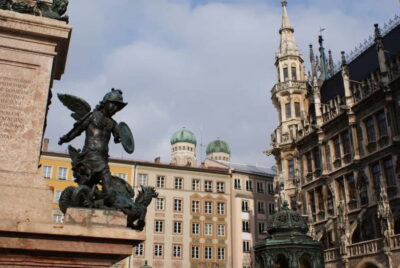
Munich and Nazi History Combination Day Tour Small Group
Read our review →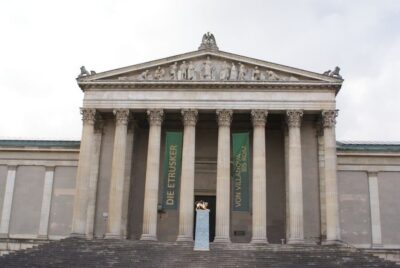
Munich: Nazi History 2-Hour Small Group Walking Tour
Read our review →Browse the lists this tour appears in