
Review · TOKYO
Imperial Palace East Garden and Edo Castle Walking Tour in Tokyo
Edo Castle is the real story here. The Imperial Palace buildings are closed to the public, but the former castle grounds reveal how Tokyo grew from a shogun’s stronghold into Japan’s modern capital. Your guide connects stone walls, gardens, ponds, and ruined foundations to samurai rule, the emperors, and daily life in the Edo period.
I like the small group of up to 12, which makes it easier to ask questions and hear the guide. I also like the price: at $25, you are paying mainly for useful context rather than an expensive admission ticket. Guides such as Kenta, Glenda, Kei, Sato, and Kaz are praised for clear explanations and lively stories.
The main drawback is simple: you do not enter the palace buildings, and the gardens may not match everyone’s idea of a grand royal sight. Some sections are mostly greenery and stonework, with few flowers in certain months. Plan on the full two and a half hours, too. This is not a quick one-hour stroll.
Key points to know before booking
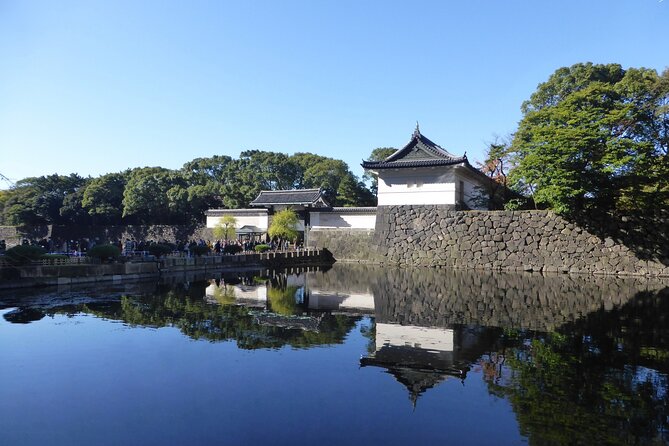
- Edo Castle is the focus: You explore the former castle grounds, ruins, walls, gardens, and historic sites rather than the palace interior.
- Wadakura Fountain Park starts the walk: This calm public park near the Imperial Palace is the meeting point and the first stop.
- Guides add the value: The gardens are free to enter, so the $25 fee pays for English explanations, historical detail, and help making sense of what you see.
- Expect hills and a steady walk: There are some slopes, though one report describes the route as having no stairs.
- Season affects the scenery: Cherry blossoms can appear in spring, while autumn may bring color, but October may also show mostly green plantings.
- The tour returns to the start: Meet at the Starbucks in Wadakura Fountain Park and finish back at the same meeting point.
What you are really seeing at the Imperial Palace
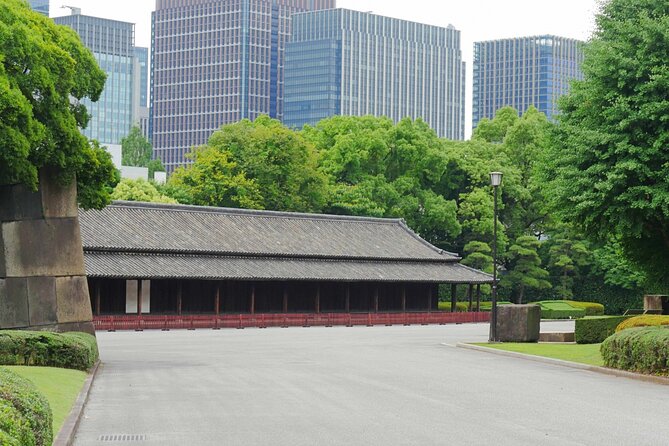
The Imperial Palace occupies the former site of Edo Castle, once the power center of the Tokugawa shoguns. That distinction matters. You are not touring a preserved European-style castle with furnished rooms and grand interiors. You are walking through an active historical site where much of the original structure disappeared, leaving foundations, gates, walls, gardens, and carefully marked ruins.
That can be rewarding if you enjoy reading a place through its remains. A guide points out what stood where and explains how the castle worked. Without that help, some stone platforms and open spaces may look like attractive but unexplained parts of a park.
The tour also gives you a useful introduction to Japan’s transition from samurai government to the modern imperial era. Guides explain the shoguns, samurai life, the Edo period, the emperor and the imperial family. This mix of political history and ordinary cultural detail gives the walk more purpose than a simple garden visit.
You should also set your expectations correctly. The East Gardens are not the private heart of the Imperial Palace, and you will not walk through imperial rooms. Entry to the palace buildings is not permitted to the public. The experience stays outdoors, among the East Gardens and surrounding grounds.
More History Walking Tours in Japan
- Tokyo: Imperial Palace and Shogun Historical Walking Tour
★ 5.0 · 2,251 reviews - Tokyo Castle & Imperial PalaceーShogun Walking Tour
★ 4.7 · 1,068 reviews - Tokyo: Imperial Palace Japanese History Walking Tour
★ 4.9 · 987 reviews
Starting at Wadakura Fountain Park
The meeting point is the Starbucks Coffee at Wadakura Fountain Park, 3-1 Kōkyogaien in Chiyoda City. This is a practical place to meet because it is near public transportation and the park is easy to recognize once you reach the Imperial Palace area.
The first stop lasts about 30 minutes. Wadakura Fountain Park is known for its fountains, open paths, and calm setting beside the palace grounds. It was first built in 1961 to mark the wedding of Emperor Akihito and Empress Michiko. The park was redesigned and reopened in 1995 for the wedding of Crown Prince Naruhito and Crown Princess Masako.
That detail gives the opening stop a modern royal connection. It also makes the park more than a convenient place to gather. You get an early look at how Japan’s imperial story continues into the present, before the walk turns toward Edo Castle and the shogun era.
Do not expect a long garden visit here. Thirty minutes is enough for orientation, photographs, and an explanation of the fountains and park’s role. The main historical content comes later in the East Gardens.
Two hours among castle ruins and gardens
Most of the tour takes place in the Imperial Palace East Gardens. Allow about two hours for this section. You will pass through manicured plantings, ponds, open lawns, slopes, and the remains of Edo Castle’s central areas.
The Honmaru area is one of the key places. It was connected to the castle’s main compound, and the remaining foundations help you picture the scale of the former stronghold. A guide can show you where important structures once stood and explain how the castle grounds were arranged.
The Ninomaru Garden offers a different mood. Instead of focusing only on military power, it presents traditional Japanese garden design, with neat plantings and water features. You may see koi in the ponds, and one particularly colorful account describes the carp glowing in the sunlight. That is the sort of small visual moment that can make the walk feel more personal.
The gardens are carefully maintained, but they are not always overflowing with flowers. In October, you might find plenty of green planting without strong autumn color. Spring can bring cherry blossoms, and autumn may offer foliage, but nature does not follow a tour schedule. If flowers are your main reason for booking, choose your timing carefully and keep expectations modest.
I find the contrast useful. The East Gardens are both a public park and a historic site. You get quiet paths and clipped plantings, but under them is the outline of a castle that once shaped the country. A strong guide keeps those two sides connected.
Why the guide matters more than the admission fee

The gardens themselves are free. That makes the $25 cost worth examining closely. You are not buying a costly entrance ticket. You are paying for an English-speaking local guide, a planned route, historical interpretation, and a small-group setting.
At its best, this is good value for a first visit to Tokyo. The palace grounds cover a large area, and the remains do not always explain themselves. Guides use photographs, visual pages, stories, and comparisons to show what the castle looked like and what each section was used for.
Kenta receives repeated praise for humor, clear communication, and well-prepared visual material. Glenda is described as especially clear in English and strong on the connections between emperors, shoguns, samurai, and the palace. Kei is praised for keeping the pace comfortable in rain and finding sheltered spots for explanations. Sato is noted for giving the right amount of detail and answering questions.
Other named guides include Loc, Miko, Miki, Kaz, Miyu, Satoko, and Midori. The guide assigned to your departure can vary, so you should not book on the assumption that one specific person will lead your group. Still, the range of positive comments suggests that the operator has several capable guides.
The best guides do more than recite dates. They explain what the walls, gardens, buildings, and ruins meant. They also make space for questions. That is especially helpful if you are new to Japanese history or want a clear introduction without taking a full museum course.
More History Walking Tours in Tokyo:
- Tokyo Castle & Imperial PalaceーShogun Walking Tour
★ 5.0 · 724 reviews - Tokyo: Shinjuku Historical Walking Tour & Secret Backstreets
★ 5.0 · 530 reviews - Asakusa: A Big-picture History Walk to Know Japan
★ 4.6 · 77 reviews - Asakusa: 3.5-hour Big-picture History Walk
★ 4.7 · 39 reviews
The walking conditions and pace
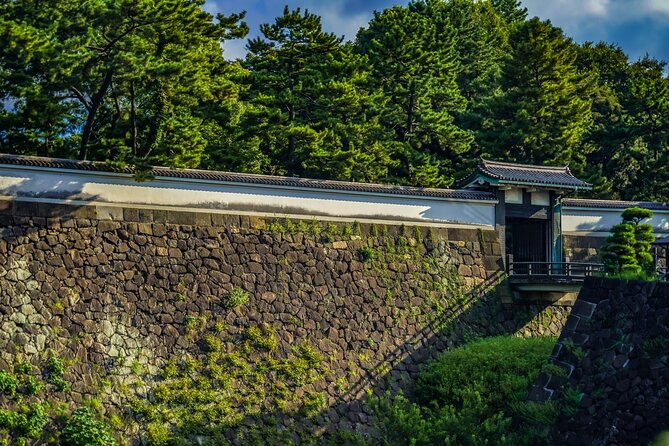
This is an outdoor walking tour lasting roughly two and a half hours. Wear comfortable shoes. Some paths are hilly, and one account specifically warns about steep sections. Another describes the route as having hills but no stairs, which suggests that the challenge is more about slopes and time on your feet than climbing steps.
The group size is capped at 12. That is small enough to stay together without the guide having to address a huge crowd. It also gives you a better chance of hearing explanations and asking about details that catch your eye.
Rain does not automatically ruin the experience. One guide kept a group moving at a good pace during wet weather and used sheltered places for some explanations. Even so, the activity requires good weather, and the operator may cancel if conditions are poor. You will be offered another date or a full refund in that case.
Bring water, since snacks are not included. The tour ends back at the starting point, which makes it easier to plan lunch or continue sightseeing from the Imperial Palace area. The exact two and a half hour timing matters if you have a tightly scheduled day. A past description caused confusion for someone expecting a much shorter walk, so treat the full duration as real.
What makes the history useful for a first visit
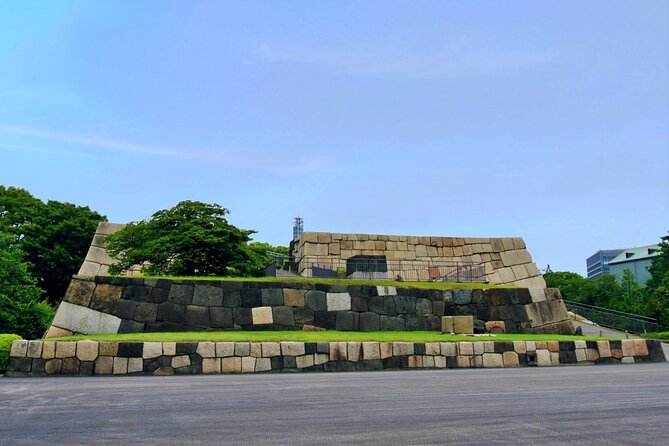
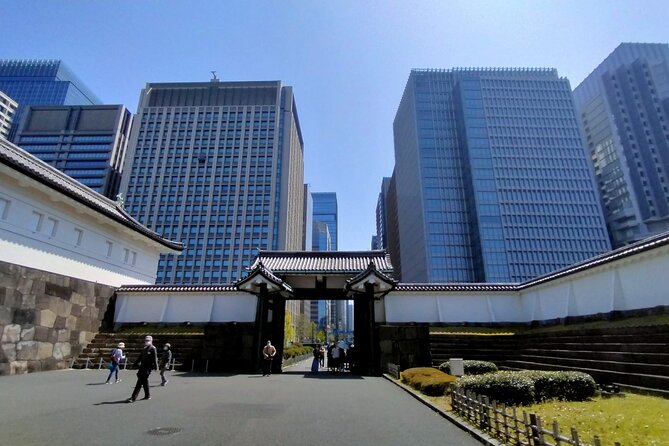
Tokyo can feel hard to read at first. Modern office buildings and traffic often cover the older story. The Imperial Palace grounds provide a clear place to begin because the site links several periods of Japanese history in one walk.
You start with a modern imperial park, then move into the former seat of shogun power. Along the way, the guide can explain the difference between the emperor’s role and the shogun’s authority, how samurai society worked, and how the palace grounds changed over time.
This is also a good choice if you want history explained in plain English. Several guides are praised for speaking clearly, slowing down when needed, and using humor to keep the group engaged. That matters outdoors, where it is easy for a long lecture to become tiring.
Families can fit into the experience, too. A guide was specifically praised for being patient with children. Most people can participate, though you should be comfortable walking for much of the morning or afternoon. Service animals are allowed, and one guide helped arrange a wheelchair when a member of a group became tired and dizzy.
The scenery: calm, neat, and sometimes understated
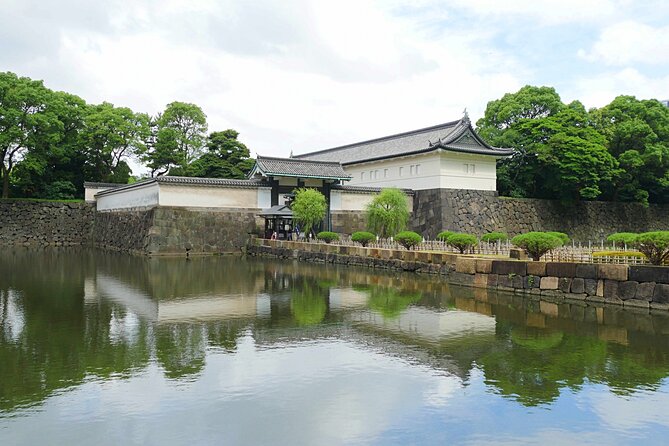
The East Gardens are attractive in a quiet, orderly way. Expect trimmed plantings, ponds, stone remains, and broad views across former castle grounds. The setting is more peaceful than dramatic.
If you want colorful flowerbeds at every turn, you may feel underwhelmed. The gardens can be mostly green, and seasonal color is not guaranteed. A report from October found neatly kept plantings but no flowers in bloom and little fall color.
If you like Japanese garden design, koi ponds, and historic stonework, the setting has more to offer. The Ninomaru Garden provides a traditional garden atmosphere, while the Honmaru area gives you the stronger castle connection. The changing views also create good photo opportunities, especially when the weather is bright.
The scenery works best when paired with the story. On its own, a stone foundation can be easy to pass. With an explanation of its former role, it becomes a clue to the castle that once occupied the site.
Is $25 a fair price?
For $25 per person, I consider this a reasonable purchase if you want interpretation. The entrance to the East Gardens is free, so someone who enjoys wandering alone and reading signs may prefer to visit independently.
The tour earns its fee through structure and explanation. You do not need to plan a route through the grounds, research Edo Castle before arriving, or guess which ruins matter. You get a guide, all fees and taxes included, and a chance to ask questions in a group limited to 12 people.
The value is strongest for a first-time Tokyo visit, a short stay, or anyone who wants a clear foundation in Japanese history. It is weaker for repeat visitors who already understand the site and mainly want quiet garden time. The two and a half hour commitment also has a cost if your schedule is packed.
Practical booking advice
The tour uses a mobile ticket, and confirmation is provided at booking. Meet at the Starbucks Coffee in Wadakura Fountain Park and return to that same meeting point at the end.
Give yourself enough time to reach the park. The meeting spot is near public transportation, but the Imperial Palace area is broad, and arriving early will make the start less stressful. Wear walking shoes and check the forecast before leaving.
Free cancellation is available if you cancel at least 24 hours before the local start time. Changes or cancellations inside that window are not refunded. If poor weather forces the operator to cancel, you can choose another date or receive a full refund.
Who should book this East Gardens walk?
Book it if you want the Imperial Palace grounds explained rather than simply photographed. It suits first-time visitors, history fans, families, and anyone who prefers a small group over a large city tour.
You should also book it if you want a gentle introduction to Edo Castle, samurai society, shogun rule, and the imperial family in one outing. Guides such as Kenta, Glenda, Kei, and Sato have received especially strong praise for clear storytelling, humor, patience, and useful visual aids.
Skip it if palace interiors are your main goal, since you will not enter them. You may also prefer an independent visit if you want to move quickly, avoid a fixed two and a half hour schedule, or see the gardens mainly for flowers. For most first-time visitors, though, the low price and strong guiding make this a sensible way to understand one of Tokyo’s most important historic sites.
FAQ
How long does the Imperial Palace East Garden and Edo Castle tour last?
The tour lasts approximately two hours and 30 minutes. About 30 minutes are spent at Wadakura Fountain Park, followed by about two hours in the East Gardens and former Edo Castle grounds.
Does the tour enter the Imperial Palace buildings?
No. The tour does not enter the Imperial Palace buildings because they are not open to the public. It covers the East Gardens and surrounding grounds.
Where does the tour begin?
The meeting point is Starbucks Coffee at Wadakura Fountain Park, 3-1 Kōkyogaien, Chiyoda City, Tokyo 100-0002, Japan.
Where does the tour end?
The activity ends back at the meeting point at Wadakura Fountain Park.
How many people can join the group?
The tour has a maximum of 12 participants.
Is the tour conducted in English?
Yes. An English-speaking local guide leads the experience.
Are the gardens and parks included in the price?
The tour includes all fees and taxes, and the itinerary lists free admission for Wadakura Fountain Park and the East Gardens. The $25 price mainly covers the guided experience.
Should I wear special clothing or shoes?
You should wear comfortable walking shoes. The route includes walking through the gardens and may include some hills or steep paths.
Can I cancel the booking for a full refund?
Yes, if you cancel at least 24 hours before the experience starts. Cancellations or changes made less than 24 hours before the start time are not refunded. If bad weather causes the operator to cancel, you can receive a full refund or choose another date.
Just added around Tokyo
- Tokyo: Edo Castle & East Garden of the Imperial Palace Tour★ 4.7 · 112 reviews
- Tokyo: Imperial Palace, the history of Japan (ENGLISH GUIDE)★ 5.0 · 77 reviews
- Tokyo: Customized Private Historical Guided Photoshoot Tour★ 5.0 · 25 reviews
- Kyoto: Nijo Castle World Heritage Guided Tour with Admission★ 4.9 · 37 reviews
- Historic Kanda Sake Tasting at Tokyo’s Oldest Shop (1596)★ 4.9 · 33 reviews
- From Tokyo: Private Nikko World Heritage Sights One Day Trip★ 4.7 · 52 reviews
- From Tokyo: Guided Day Trip to Nikko World Heritage Sites★ 4.8 · 51 reviews
- Asakusa: A Big-picture History Walk to Know Japan★ 4.6 · 77 reviews
Tokyo History Tours, compared.
Tokyo: Imperial Palace and Shogun Historical Walking Tour
Read our review →
Tokyo Castle & Imperial PalaceーShogun Walking Tour
Read our review →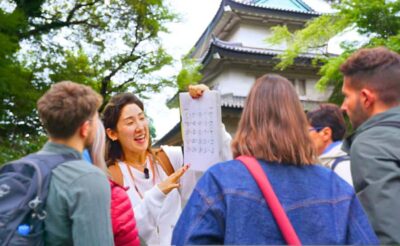
Tokyo: Imperial Palace Japanese History Walking Tour
Read our review →Tokyo Castle & Imperial PalaceーShogun Walking Tour
Read our review →
Tokyo: Shinjuku Historical Walking Tour & Secret Backstreets
Read our review →
From Tokyo: Nikko World Heritage Site Private Full-Day Trip
Read our review →
Tokyo: The Best of Izakaya in Shinjuku Food & Cultural Tour
Read our review →
Tokyo: Nikko World Heritage Private Day Trip Hotel Pick-up
Read our review →Browse the lists this tour appears in