
Review · ITALY
Asti Historic Town Walking Tour
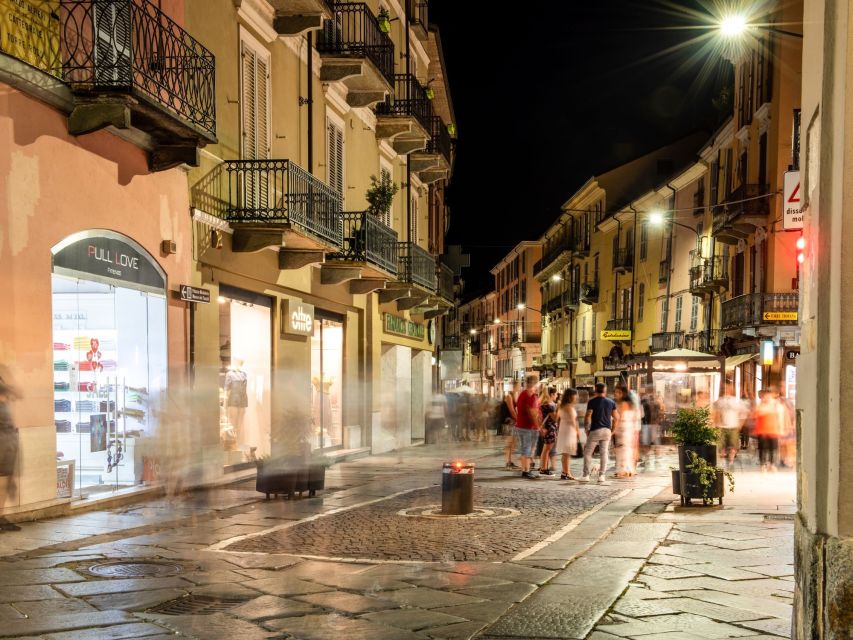
Asti’s appeal is easy to miss if you simply pass through Piedmont by car. This two-hour walk brings you into the old center, where aristocratic Baroque palaces, church facades, porticos, and elegant 19th-century squares fit together in a surprisingly tidy whole.
I like the low $11 price, which makes a guided introduction to Asti an easy add-on to a Piedmont trip. I also like the focus on the town as it is today, with shops, markets, local products, and the annual Palio tied to its older story. The main consideration is pace: there is a lot to cover, and one participant found the actual walk closer to an hour and a half than two hours.
Key points at a glance
- Piazza Vittorio Alfieri meeting point: The tour begins and ends at the same central address, making it simple to fit into a day in Asti.
- Baroque and Liberty architecture: You will see aristocratic palaces alongside 19th-century squares and elegant Liberty-style shopfronts.
- Asti beyond its monuments: The walk connects churches and historic buildings with markets, boutiques, cultural events, and local food traditions.
- English or Italian guide: A live local guide leads the tour in either language.
- Good value at $11: The price is modest for a two-hour introduction, especially if you are new to Asti.
- Comfortable shoes matter: This is a walking tour through the historic center, not a coach sightseeing trip.
Why Asti deserves two hours on foot
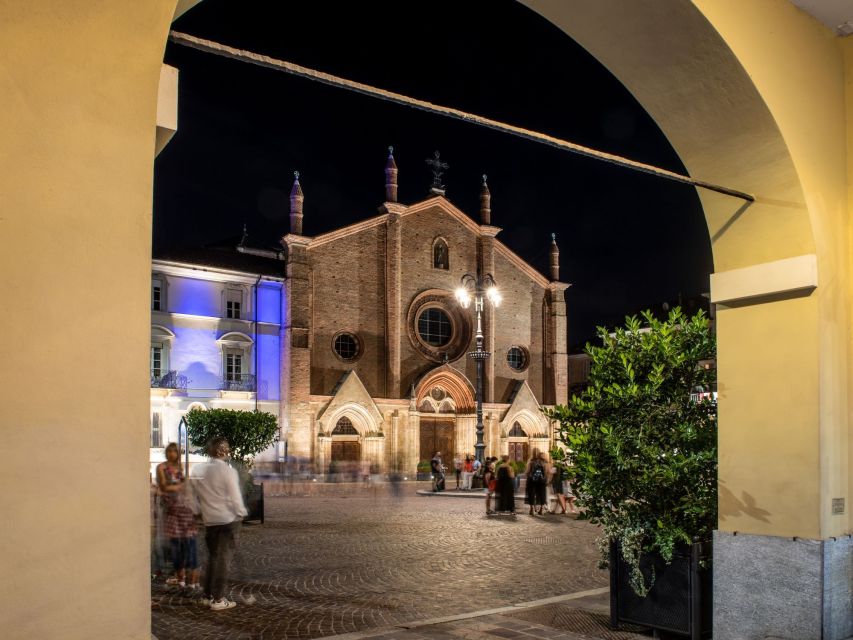
Asti is known as the capital of the Monferrato hills, but this tour keeps its attention on the historic town itself. That is a smart choice for a short visit. You do not spend your time waiting for transport or moving between far-flung sights. Instead, you walk from one urban detail to the next.
The town’s character comes from different periods living side by side. Baroque aristocratic palaces recall the wealth and status of Asti’s leading families. Later, 19th-century squares and Liberty-style storefronts add a lighter, more decorative touch. Churches, covered walkways, commercial streets, and public spaces complete the picture.
I like this mix because it gives you more than a parade of isolated monuments. You get a sense of how Asti functions as a town. Its past is still visible, but it is not sealed behind museum doors. Markets, boutiques, cultural events, and food shops remain part of the daily scene.
A guide is useful here because the details can be easy to overlook. A palace may look like a handsome old building until someone explains its place in Asti’s social story. A graceful storefront may seem merely decorative until you recognize it as part of the city’s Liberty-era style.
More History Walking Tours in Italy
- Venice: City Center Historical Guided Walking Tour
★ 4.2 · 1,873 reviews - Palermo: Street Food and History Walking Tour
★ 4.9 · 1,486 reviews - Verona: History and Hidden Gems Guided Walking Tour
★ 5.0 · 1,379 reviews
Starting in Piazza Vittorio Alfieri
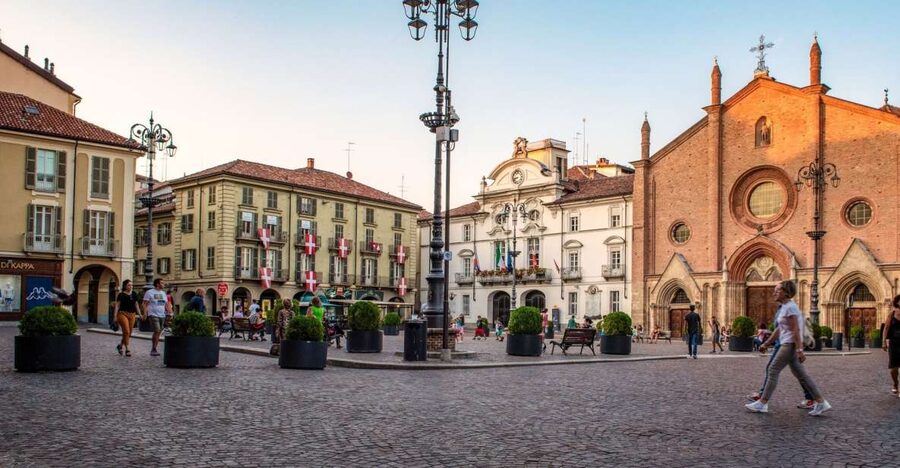
The meeting point is Piazza Vittorio Alfieri, 34, where the walk also finishes. That makes the logistics pleasantly simple. You do not need to arrange transportation to a second part of town, and you can return to the same place after the tour.
Because the walk starts and ends at one address, you can use it as a practical introduction to Asti. Afterward, you will have a better sense of where you are and which streets or shops deserve a closer look. The supplied details do not specify the exact sequence of buildings visited, so you should think of the route as a guided overview rather than a fixed checklist of named monuments.
The square is also a useful place to plan the rest of your day. Asti is tied to weekly markets, local products, cultural events, and its Palio. The walk gives you context for those parts of town, even though the tour itself is focused on the historic center.
Arrive ready to walk. Comfortable shoes are specifically recommended, and that is sensible advice for any tour through an old Italian town. Transportation is not included because none is needed during the experience.
Baroque palaces and the old aristocratic city
The strongest architectural theme is Asti’s Baroque inheritance. The town’s aristocratic palaces are among the main reasons to take the tour with a guide rather than wander without context.
Baroque architecture is often about movement, decoration, and visual drama. In Asti, it is presented as part of a larger urban setting rather than as a single grand stop. You may find that the pleasure comes from comparing one facade with another, noticing how doorways, windows, proportions, and ornament shape the street.
The tour description does not name individual palaces or promise interior access. That matters. You should expect to appreciate the exterior architecture and hear about the city’s past, not assume that you will enter every building.
This is also where the tour’s short length creates a trade-off. Asti has many things to see, and two hours is enough for an introduction but not for a slow architectural study. One piece of direct feedback described the guide as engaging and the subject matter as interesting, but felt that the number of sights led to a fairly surface-level visit. If you want detailed attention to each palace, a longer or more specialized tour may suit you better.
Churches, porticos, and the rhythm of the town
Churches and porticos add variety to the walk. They break up the palaces and squares, giving you different types of architecture and different ways to read the city.
The porticos are especially useful as part of the town’s visual rhythm. They connect buildings and streets while creating sheltered passages. The tour information does not provide a named list of churches or explain which interiors are included, so keep your expectations focused on guided sightseeing rather than guaranteed admission inside religious buildings.
A good walking guide can help you notice how these spaces relate to one another. A church may anchor a square. A portico may lead your eye toward a palace or a shopfront. A group of buildings may reveal how old and newer parts of Asti were joined without an awkward break.
That sense of harmony is one of the experience’s most appealing ideas. The Baroque palaces, 19th-century squares, and Liberty stores are from different periods, but they are presented as parts of one town rather than competing attractions.
Same city, a different century:
- Pompeii: Entry Ticket and Guided Tour with an Archaeologist
★ 4.8 · 19,459 reviews - Colosseum: Underground and Ancient Rome Tour
★ 4.7 · 12,691 reviews - Pompeii: Small Group Tour with an Archaeologist
★ 4.8 · 12,264 reviews - Pompeii Small Group Tour with an Archaeologist
★ 5.0 · 6,593 reviews
Liberty houses and elegant shopfronts

The Liberty style, known in many places as Art Nouveau, gives Asti a different look from its Baroque buildings. Here, the focus is on 19th-century elegance, decorative details, and the polished appearance of shop windows.
This part of the tour should appeal to you if you enjoy urban design as much as formal monuments. You do not need to be an architecture specialist. Look for the way decorative elements appear on houses and commercial buildings, and notice how the storefronts help make the historic center feel lived in.
The tour also connects these shopfronts with Asti’s typical products. The description refers to the scents of refined local products boutiques, which suggests that food and shopping are part of the experience’s atmosphere. It does not promise a tasting, so do not book expecting a formal food sample. Instead, consider this a chance to learn what kinds of local products to look for after the walk.
That distinction is useful. The tour can point you toward the town’s food culture without replacing a dedicated tasting experience. If you are planning lunch or shopping afterward, the introduction may help you make better choices.
Asti’s Palio, markets, and local life
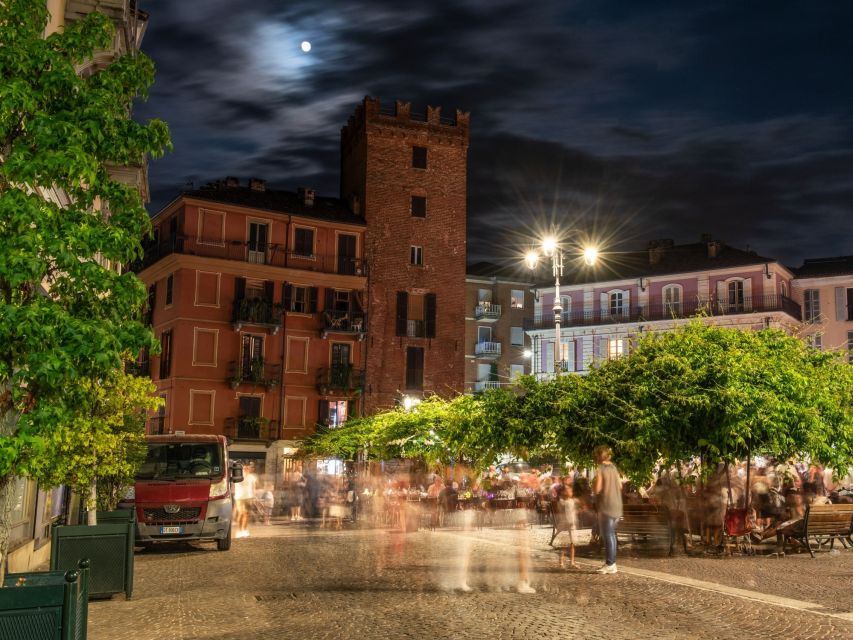
Asti’s identity is not limited to old stone and decorated facades. The town’s Palio brings its past back into public life each year, while weekly markets give it a practical, commercial energy. Cultural and food events add another layer.
The guide is expected to explain how these traditions fit into Asti’s story. That makes the walk more useful than a simple architecture circuit. You get a look at the city as a place where historic pride, shopping, food, and public events still meet.
The word Palio refers to a traditional competition associated with Italian towns, often involving neighborhood or district pride. The supplied information does not provide dates or event details, so you will need to check separately if your visit is timed to coincide with Asti’s Palio or another festival.
The same applies to markets. The tour presents them as part of Asti’s character, but it does not guarantee that a market will be operating during your walk. If market shopping is a main goal, check the local schedule before booking.
What the guide adds to the experience
The tour includes a live local guide in Italian or English. That language choice is important because the value of this experience rests largely on explanation. Asti’s buildings may be attractive on their own, but the guide connects them to the city’s development, architecture, commerce, and traditions.
The strongest praise is directed at the guide’s manner. The guide is described as engaging, well-informed, and highly recommended. That is exactly what you want on a short city walk. A lively explanation helps keep a quick route from feeling like a list of dates and building names.
At the same time, the guide has a demanding job. There are many sights in a compact area, and the two-hour limit encourages a broad overview. You may hear plenty of information while getting only a short look at some places.
I would treat this as a first orientation to Asti. If you already know the city well, or if you want close study of architecture, you may find the pace too brisk. If you are arriving for the first time, the range of subjects is a strength because it helps you decide what to revisit on your own.
Is $11 a fair price?
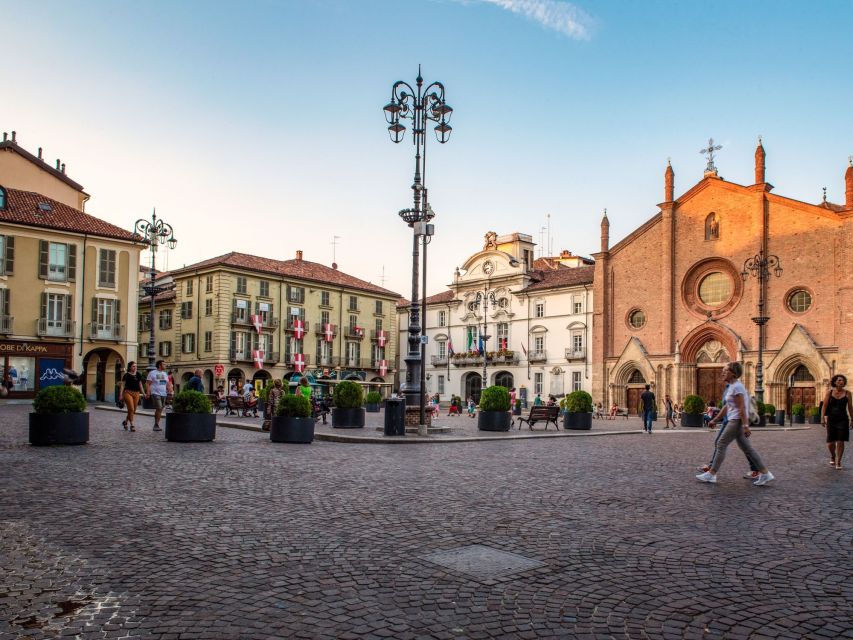
At $11 per person, the tour is priced as an affordable introduction rather than a major half-day activity. The fee includes the English or Italian-speaking local guide, while transportation is not included. Since the route begins and ends at the same central address, the lack of transport should not be a problem.
The value is strongest if you are already planning to spend time in Asti. For a small sum, you get a structured introduction to the historic center and a chance to understand what you are seeing. It is also a sensible option if you have only a short window before lunch, a train, or another Piedmont activity.
The price does not guarantee a tasting, museum admission, private guiding, or a detailed visit inside each building. Those expectations would change the value calculation. Think of the tour as a low-cost walking orientation with local interpretation.
A rating of 4.5 from 82 ratings suggests that the experience has been received well overall. The two available comments point in different directions: one praises the guide but wishes the tour were longer, while another gives high marks for the guide’s knowledge and engaging style. Taken together, the message is clear: the guide is a major strength, while the amount covered in two hours can feel ambitious.
Who will get the most from this walk?
I would recommend the tour to you if you want a quick introduction to Asti’s architecture and local character without spending much. It suits first-time visitors, independent explorers who like a little structure, and anyone interested in the link between historic buildings and present-day shops and markets.
It is also a good fit for people who enjoy walking through towns rather than checking off a short list of famous attractions. The tour’s appeal comes from the way churches, palaces, squares, porticos, Liberty buildings, and food boutiques are considered together.
You may want something else if you require a slow, highly detailed architectural tour. The route covers a lot, and one direct comment raised concern that the actual duration was shorter than advertised. If every stop matters to you, ask about the pace at the start and make sure your expectations match a broad city overview.
The tour is wheelchair accessible, which makes it an option for many visitors who need an accessible experience. Still, the information provided does not describe the exact street surfaces or any access details for individual buildings, so you may want to confirm those points before booking if they are important for your plans.
Practical tips for making the walk work
Wear comfortable shoes. That is the one item specifically requested, and it is the right choice for a two-hour walk through the historic center.
Choose your language carefully when booking. The guide can lead the tour in Italian or English, so select the option that will let you follow architectural and historical explanations with ease.
Keep your schedule flexible after the tour. Since the route may cover many subjects quickly, you may want time afterward to return to a palace, browse a shop, visit a church, or explore a market at your own pace.
Do not count on transportation or a formal tasting. Both are outside the stated inclusions. The experience is about walking, looking, and listening, with local products presented as part of Asti’s atmosphere rather than as a guaranteed sampling session.
Cancellation is flexible: you can cancel up to 24 hours in advance for a full refund. You can also reserve now and pay later, which helps if your Piedmont plans are still shifting.
Should you book the Asti Historic Town Walking Tour?
Book it if you want an inexpensive, guide-led introduction to Asti’s Baroque palaces, Liberty architecture, churches, squares, and local food culture. The $11 price is easy to justify, and the guide’s engaging style appears to be the experience’s strongest feature.
Skip it if you want a slow, specialist tour with extensive interior visits or a guaranteed tasting. The route covers a lot in two hours, and you should be prepared for a broad look rather than a detailed examination of every sight.
For most first-time visitors, I would book it early in your stay. Use the walk to get your bearings, then decide which parts of Asti deserve more of your own time.
FAQ
Where does the Asti Historic Town Walking Tour start?
The tour starts at Piazza Vittorio Alfieri, 34, in Asti.
Where does the tour finish?
The walk returns to Piazza Vittorio Alfieri, 34.
How long does the tour last?
The stated duration is two hours. One direct comment reported an actual duration of about one and a half hours, so the pace and exact timing may vary.
What languages are available?
The live guide can lead the tour in Italian or English.
Is transportation included?
No. Transportation is not included, but the walking route starts and ends at the same address.
Is the tour wheelchair accessible?
Yes, the activity is listed as wheelchair accessible.
What should I bring?
Bring comfortable shoes for the guided walk.
Does the tour include food tastings?
A formal tasting is not listed as an inclusion. The tour introduces Asti’s typical products and food boutiques as part of the town experience.
Can I cancel for a full refund?
Yes. You can cancel up to 24 hours in advance for a full refund. You can also reserve now and pay later.
Just added around Italy
- Guided Cultural Tour of the Godfather Film in Messina★ 5.0 · 31 reviews
- Guided tour of the Riace Bronzes and the Archaeological Museum of Reggio Calabria★ 5.0 · 44 reviews
- SU NURAXI BARUMINI Unesco World Heritage Site★ 5.0 · 129 reviews
- Brescia the Unexpected: History, Local Stories & a drink★ 5.0 · 31 reviews
- Bolognese Cooking Class with Margherita in the Historic Center★ 5.0 · 26 reviews
- Tower and Power, Virtual tour in Medieval Bologna★ 4.5 · 54 reviews
- Bologna historical art walking tour with hidden gems and tastings★ 5.0 · 108 reviews
- Best of Bologna in one day : Food, architecture, art and history★ 5.0 · 27 reviews
Italy History Tours, compared.
Pompeii: Entry Ticket and Guided Tour with an Archaeologist
Read our review →
Colosseum: Underground and Ancient Rome Tour
Read our review →
Pompeii: Small Group Tour with an Archaeologist
Read our review →Pompeii Small Group Tour with an Archaeologist
Read our review →
Rome: Colosseum with Arena, Roman Forum and Palatine Guided Tour
Read our review →
Venice: St. Mark’s Basilica Guided Tour & VR History Intro
Read our review →
Colosseum with Arena, Roman Forum and Palatine Hill Guided Tour
Read our review →
Herculaneum: Skip-the-Line Guided Tour with Archaeologist
Read our review →Browse the lists this tour appears in