
Review · GERMANY
Bamberg: Immersive Medieval Tour
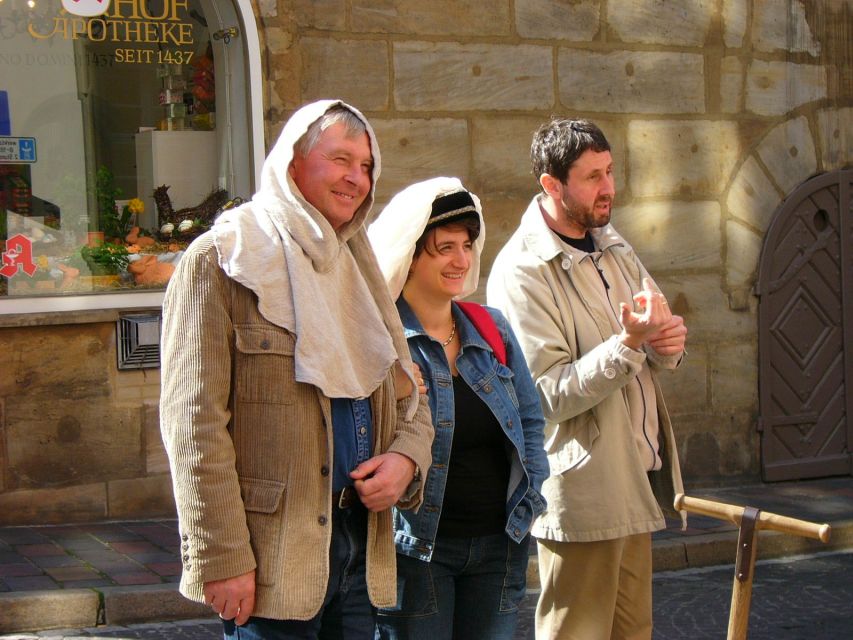
Bamberg’s medieval past feels closest when you are not just looking at a church or town hall, but handling the tools that once kept a household running. This 75-minute walking tour opens with a small glass of mead, then turns the city into a stage for wells, fire, witches, demons, and daily life.
I like the hands-on role-play, which asks you to become a noble lady or simple craftsman rather than listen to a distant history lecture. I also like the route through quieter side streets, a useful touch during busy Advent market weekends. The main drawback is clear: the tour is conducted in German, so non-German speakers may miss much of the storytelling.
Key points to know before booking
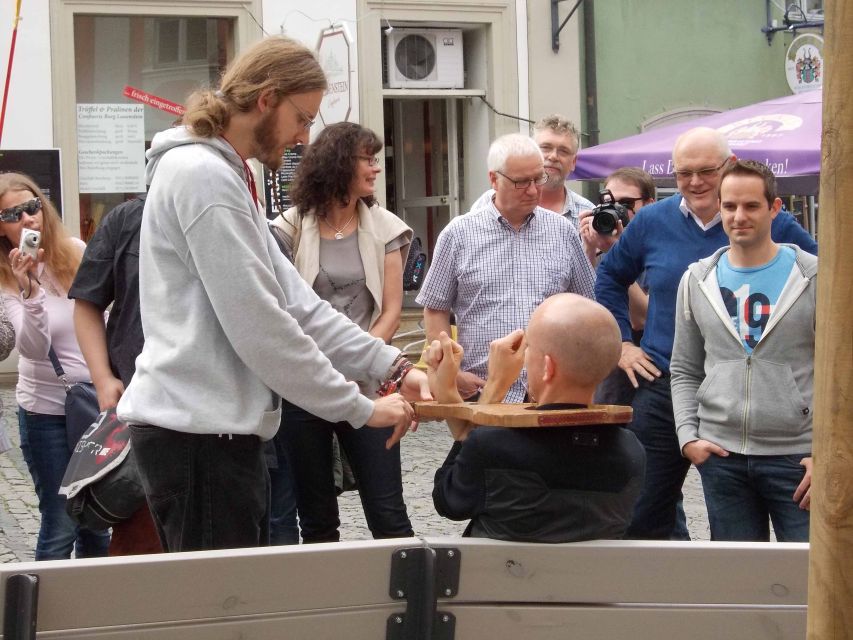
- Mead starts the experience: You receive a glass of medieval-style mead as you meet your guide.
- You take on a role: Choose, in effect, between the world of a noble lady and that of an ordinary craftsman.
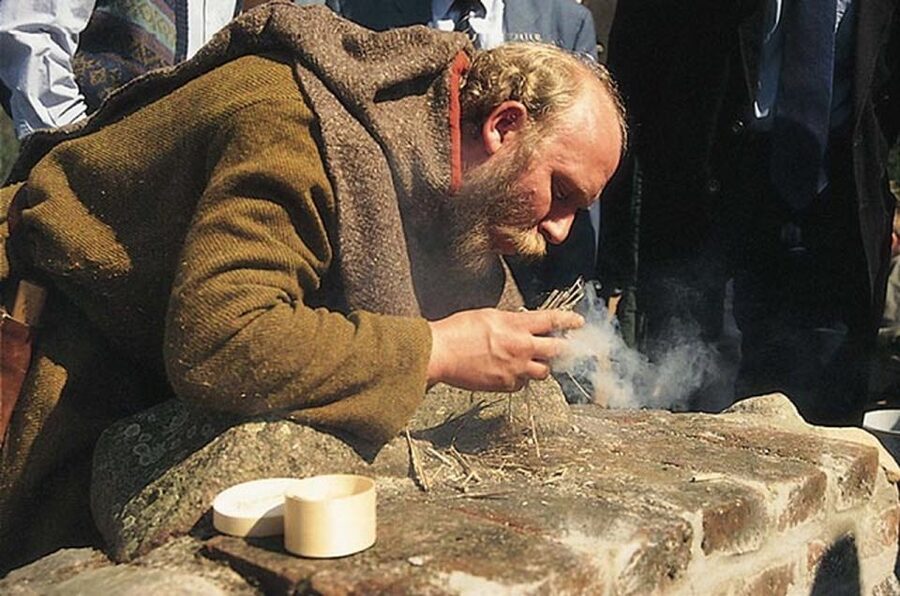
- Real actions replace passive sightseeing: You may draw water from a well and strike a fire starter to wake the embers.
- Bamberg supplies the setting: The route connects old lanes and surviving structures with the city’s long development.
- The tour is short and focused: At 75 minutes, it fits neatly into a day of sightseeing.
- German is the only listed tour language: This matters more here than on a simple photo walk because the stories carry the experience.
A small glass of mead sets the medieval tone
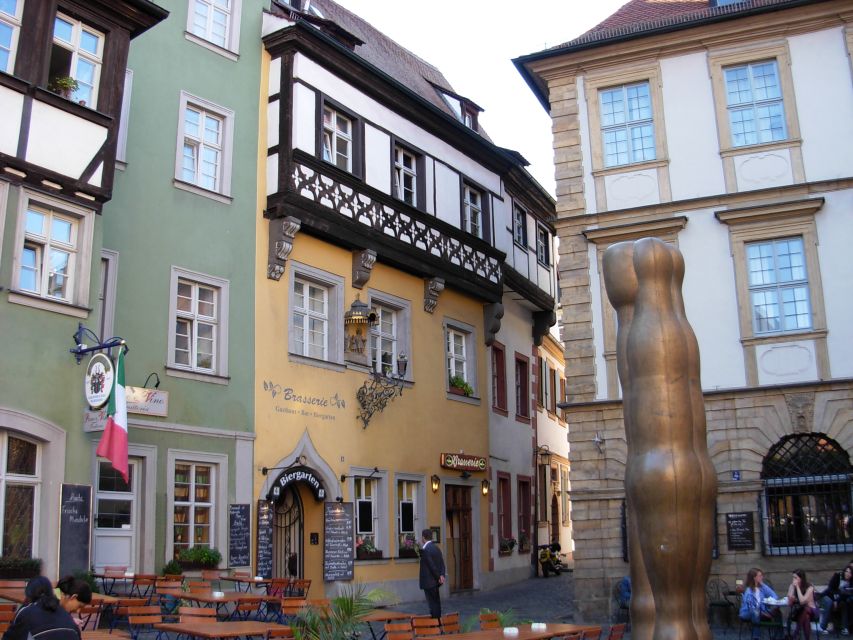
The tour begins at Tourismus- und Kongressservice Bamberg on Geyerswörthstraße 5. That central meeting point is easy to use as an anchor for your Bamberg sightseeing, and the opening drink gives the group an immediate sense that this will not be a standard city walk.
Mead, made from honey, is a fitting first taste of the Middle Ages. It is also a modest serving, not a drinking event. Alcohol and drugs are not allowed during the activity, so treat the mead as a historical welcome rather than the main attraction.
Your guide leads in German and uses a theatrical approach. The point is not to dress up for a photo and then return to a normal sightseeing script. You are invited to think like someone who lived in a world where work, religion, illness, superstition, and household survival were tightly linked.
That approach gives the first few minutes a clear purpose. Instead of beginning with a list of dates, the guide can place you in the social world behind the stone buildings. A noblewoman and a craftsman would have seen the same town in very different ways, and the role-play helps bring out that difference.
More Medieval History Tours in Germany:
- Nuremberg: Medieval Dungeons Guided Tour
★ 4.8 · 2,214 reviews - Medieval Tour in Nuremberg in Spanish
★ 5.0 · 1,374 reviews - Nuremberg: 1.5-Hour Medieval Tour
★ 4.6 · 33 reviews
Bamberg as a planned second Rome
The larger story begins with Henry II, the German emperor who chose Bamberg in the 11th century as a place to develop into a second Rome. That ambition explains why the city carries more historical weight than its compact size might suggest.
You will hear how Bamberg developed over the centuries and how its architecture helped shape urban form in central Europe. This is useful context for the rest of your visit. The city is not simply a collection of pretty old facades. Its streets, religious buildings, civic structures, and working quarters reflect changing ideas about power, faith, trade, and daily life.
The tour uses the modern UNESCO World Heritage Site as its setting, but it does not stay at the level of official history. You get the broad city story, then move closer to the people who lived within it.
That balance is one of the tour’s better qualities. You can look at Bamberg’s grand buildings on your own, but it takes a guide to connect them with the people who carried water, cooked food, made goods, raised children, and faced disease without modern medicine.
Old lanes, colorful civic buildings, and the Romanesque cathedral

The route includes well-preserved structures dating as far back as the 11th century. The colorful town hall offers one kind of historical lesson. It points to civic identity, public authority, and the way Bamberg presented itself as a city.
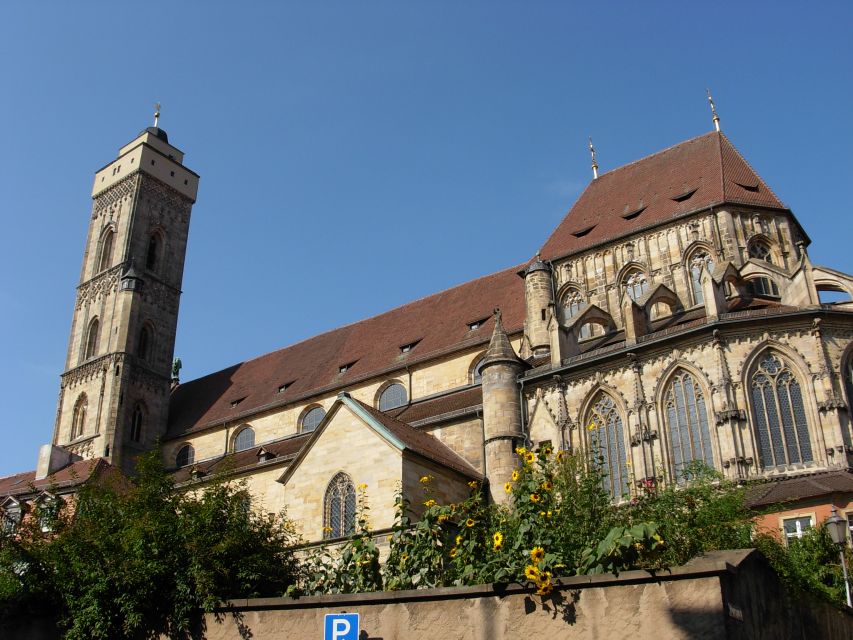
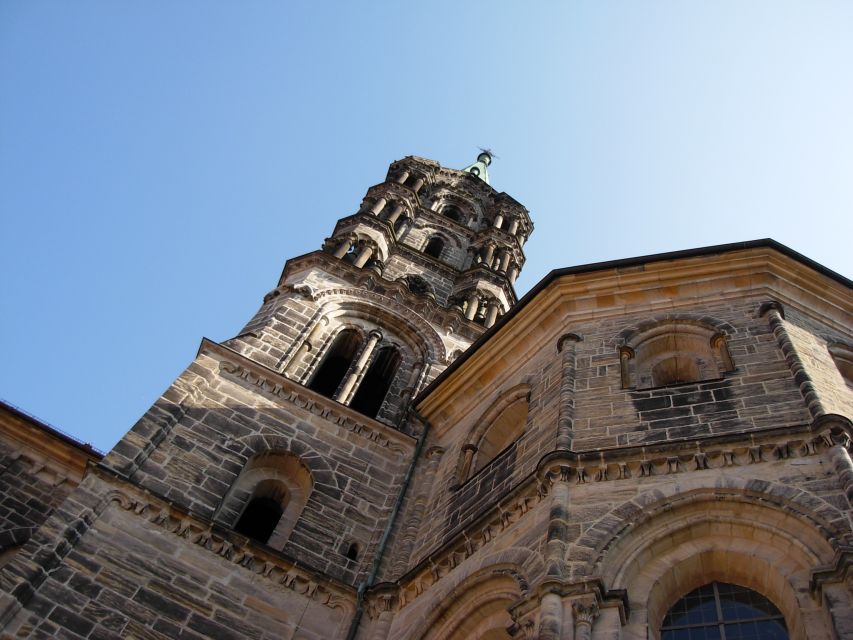
The ancient Romanesque cathedral offers another. Its scale and age remind you that medieval Bamberg was shaped by religious power as much as by ordinary work. The cathedral is not merely a backdrop for the tour. It helps show how the city’s leaders imagined their place in Europe and how architecture could express that ambition.
You should not expect a long interior visit or a full architectural survey based on the stated format. The tour is 75 minutes, and its attention is split between buildings, streets, stories, and practical demonstrations. If you want a detailed art-history discussion of the cathedral, you may need a separate visit.
What you do get is a useful connection between the monumental and the ordinary. The great stone buildings make more sense when you also consider the people who supplied them, lived around them, and understood them through medieval religious beliefs.
A particularly practical feature is the use of smaller side streets. This keeps the route closer to everyday Bamberg and can make the experience easier during crowded periods. In late November and December, when the Advent market brings extra people into town, quieter lanes offer welcome breathing room.
Drawing water and waking a medieval fire
The most unusual part of the tour is its physical approach. You may collect water from a well and use a fire striker to ignite embers in a stove. These are small acts, but they change how you think about the past.
A well is easy to overlook when you are moving from one grand building to another. Once you are asked to draw water, it becomes part of the city’s basic infrastructure. Water is no longer an abstract necessity. It becomes weight, effort, time, and routine.
The fire striker offers the same lesson. Modern heating and cooking hide the work needed to produce a flame. Striking embers by hand shows why fire was precious and why a household’s stove mattered so much. It also gives younger participants a concrete task, although the tour’s materials do not state a minimum age or a family-specific program.
These activities are not meant to recreate every part of medieval life. They are short demonstrations within a city walk. Their value is that they give you a physical reference point for the stories. You hear about household life, then handle something connected to it.
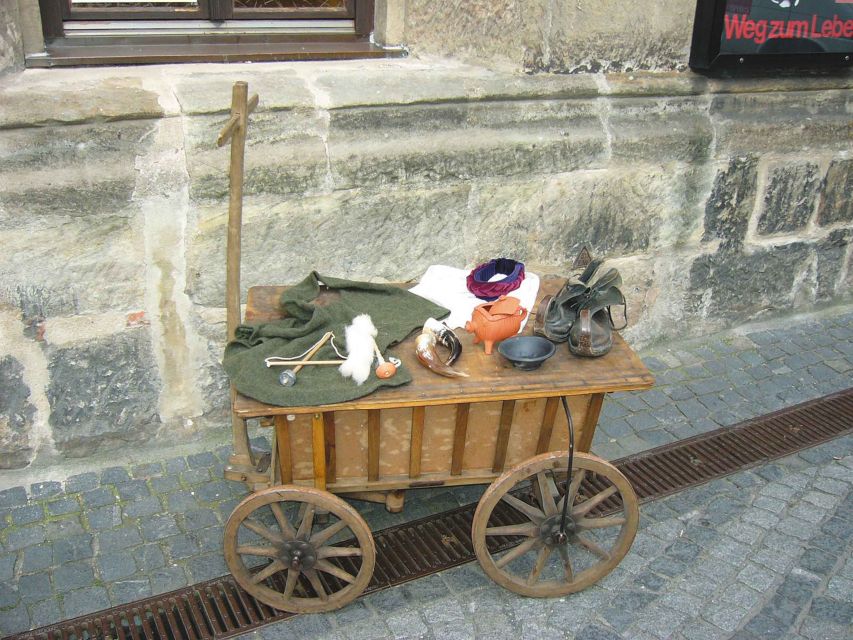
The guide’s use of props adds to this effect. One especially committed guide described in the feedback carried a basket throughout the tour, even in freezing weather and without gloves. That detail suggests a guide who treats the character and the objects as part of the whole performance, rather than leaving the props behind after the introduction.
More History Tours in Germany:
- Berlin: Third Reich & Cold War Guided Walking Tour
★ 4.9 · 8,378 reviews - Leipzig: City History Canal Sightseeing Tour on a Motorboat
★ 4.7 · 7,671 reviews - Munich: Third Reich & WWII Walking Tour
★ 4.6 · 6,181 reviews - Berlin’s Best: 2 Hour Walking Tour Third Reich and the Cold War
★ 5.0 · 5,486 reviews
Witches, demons, love, work, and death
Medieval Bamberg also comes with darker material. The tour explores how ordinary people lived, loved, and died at a time when demons and witches were accepted parts of the mental world.
That subject needs the right expectations. This is not presented as a modern ghost hunt based on the available description. It is a look at how medieval people understood danger and misfortune. Illness, accidents, failed crops, conflict, and death did not always have explanations that make sense to us today, so supernatural beliefs filled part of that gap.
The witches’ ointment theme adds drama, but the larger value is social history. You get a glimpse of how belief shaped behavior and how fear could influence a community. That is more useful than simply hearing a spooky tale with no context.
The role-play helps here. A noble lady might have access to different protections and resources than a craftsman, while both would face the uncertainties of the period. The tour lets you consider those differences without turning the entire experience into a lecture.
Some visitors will enjoy this theatrical side more than others. If you prefer dates, architectural terms, and a quiet academic tone, the lively presentation may feel too playful. If you like stories with a physical setting and a little atmosphere, it should make the old streets easier to remember.
Why the role-play works better than a standard city walk
A normal walking tour often gives you facts while you stand in front of buildings. This experience asks you to act, touch, and imagine. That does not make every detail more accurate, but it can make the setting more memorable.
The role is also flexible enough to connect with different interests. You can focus on status and ceremony as a noble lady, or on work and household survival as a craftsman. The description does not promise costumes or a fully scripted character for every participant, so do not book it expecting a large theatrical production.
Instead, expect guided participation. The mead, basket, props, well, and fire striker create a few clear moments around which the history can gather. The guide carries the story, and your actions give it texture.
I especially like that this method avoids making Bamberg’s past seem polished and distant. Medieval life involved labor, fear, social divisions, and limited control over basic needs. The tour’s best moments connect the handsome old city with those less comfortable truths.
A 75-minute format that fits a full day
Seventy-five minutes is long enough to establish a theme but short enough to combine with other plans. You can place it early in your Bamberg visit to get a sense of the city’s older layers, or schedule it after seeing the main sights to give those buildings more human context.
The short duration also limits fatigue. You are not committing half a day to a staged program, and the route should leave you time for the cathedral, museums, food, and independent wandering. At the same time, the compact schedule means the guide cannot cover every century, building, and social group in detail.
That tradeoff is important. Think of this as a focused experience about medieval life within Bamberg, not a complete city orientation. You will learn about the city across the centuries, but the strongest emphasis is on the medieval period and on the people beneath the official story.
Check the available start times when booking, since the activity does not list a single fixed departure time. Meet at the specified tourism office rather than going directly to a landmark on the route.
Is $23 a fair price?
At $23 per person, the tour asks for more than a basic stroll but includes a live guide, the role-play format, hands-on props, and mead. I consider that reasonable if you want an activity built around participation rather than just commentary.
The value comes from the structure. You are paying for a prepared presentation with a clear theme, not simply for directions between Bamberg’s old buildings. The physical demonstrations give the guide tools to explain daily life in a way a free walk may not.
Still, the price will feel less worthwhile if you do not understand German. The listed language is German, and much of the value rests in the guide’s explanations, timing, and storytelling. A non-German speaker may appreciate the streets, objects, and actions, but will lose the central layer of the experience.
The same is true if you want a full architectural tour. You will see important buildings, but the focus is broader and more theatrical. For a short introduction to medieval customs and Bamberg’s setting, the price is fair. For detailed cathedral art or a long city survey, spend your money elsewhere or add another tour.
Free cancellation up to 24 hours before the activity and the option to reserve now and pay later reduce the risk if your schedule is still shifting. Those policies are useful, but they do not change the key booking question: can you follow a German-speaking historical performance?
Who will enjoy this Bamberg experience most?
I would choose this tour for visitors who like history with a physical element. It suits you if you enjoy trying a simple old craft, handling props, and hearing how ordinary people understood their world.
It also works well for anyone who has already seen Bamberg’s major buildings and wants a different angle. The town hall and cathedral can look familiar after a day of sightseeing. The stories of wells, fire, work, belief, and social rank give you new things to notice.
Families may find the demonstrations more engaging than a standard lecture, although no age recommendation is provided. Children should be comfortable with a guide-led activity in German, and adults should not expect a separate children’s program.
German speakers will get the full benefit. If you speak only English, ask before booking if any language support is available, since the listed tour language is German only. The activity data does not promise translation, printed material, or a bilingual guide.
You should also be comfortable with the medieval subject matter. Witches, demons, and death are part of the theme. The presentation may be playful, but it is not simply a light sightseeing walk.
Practical details that matter on the day
Meet at Tourismus- und Kongressservice Bamberg, Geyerswörthstraße 5, 96047 Bamberg. The experience includes the guide, the themed tour, and mead, so you do not need to arrange those separately.
The tour lasts 75 minutes. Starting times vary, so check availability for the date you want. Since the route uses city streets and side lanes, wear shoes suitable for walking and dress for the season, though the provided information does not give a specific accessibility statement.
The tour is conducted in German. Alcohol and drugs are not allowed, despite the included mead. That rule makes sense because the drink is part of the guided program, not an invitation to continue drinking during the walk.
I would arrive with enough time to find the tourism office and settle in. The experience starts with the greeting and drink, so arriving late could mean missing the opening that sets up the rest of the role-play.
Should you book it?
Book this Bamberg medieval tour if you want storytelling tied to real actions. Drawing water, striking a fire starter, carrying props, and taking on a social role give the old town a human scale that a standard photo stop cannot provide.
Skip it if you need an English-language tour, a quiet academic lecture, or a detailed examination of cathedral art. The 75-minute format is focused, the presentation is theatrical, and German is essential.
For German-speaking visitors, $23 is a sensible price for a compact, well-themed activity that adds texture to Bamberg’s UNESCO-listed streets. Schedule it when you want to move beyond grand buildings and think about the people who hauled water, tended fires, feared witches, and built their lives around this medieval city.
FAQ
Where does the Bamberg medieval tour meet?
Meet at Tourismus- und Kongressservice Bamberg, Geyerswörthstraße 5, 96047 Bamberg.
How long does the tour last?
The tour lasts 75 minutes.
What language is the tour conducted in?
The live tour guide conducts the experience in German. German is the only listed language.
Is mead included?
Yes. The experience includes a glass of medieval mead at the start, along with the guide and themed tour.
What will I do during the tour?
You take on the role of a noble lady or simple craftsman and may collect water from a well and use a fire striker to ignite embers in a stove. The tour also covers Bamberg’s medieval life, beliefs, buildings, and development over the centuries.
How much does the tour cost?
The listed price is $23 per person.
Can I cancel the booking?
Yes. You can cancel up to 24 hours in advance for a full refund. You can also reserve now and pay later.
Just added around Germany
- Berlin Food & Cultural Tour: Must-Try German & Berliner Classics★ 5.0 · 51 reviews
- Berlin Half-Day World War II Walking Tour★ 4.5 · 48 reviews
- Small-Group Historical Bike Tour in Berlin★ 4.5 · 103 reviews
- Historic center of Berlin – Tour in Italian★ 5.0 · 143 reviews
- Berlin Cold War & World War II Third Reich Walking Tour★ 4.5 · 30 reviews
- Private Taxi Tour City East & West History and Architecture 3-4h★ 5.0 · 42 reviews
- Berlin Wall and Cold War Bike Tour in Small Groups★ 5.0 · 114 reviews
- Private Tour: Jewish Heritage Walking Tour of Berlin★ 5.0 · 29 reviews
Germany History Tours, compared.

Berlin: Third Reich & Cold War Guided Walking Tour
Read our review →
Leipzig: City History Canal Sightseeing Tour on a Motorboat
Read our review →
Berlin’s Best: 2 Hour Walking Tour Third Reich and the Cold War
Read our review →
Third Reich Berlin: Hitler and WWII Walking Tour
Read our review →
Leipzig: 1.5-Hour Historical Walking Tour in German
Read our review →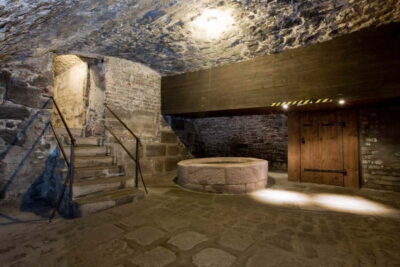
Berlin: Third Reich, Hitler, and WWII Walking Tour
Read our review →Browse the lists this tour appears in