
Review · NUREMBERG
Medieval Tour in Nuremberg in Spanish
Nuremberg’s best stories are not all found in the famous castle or Christmas market. This Spanish walking tour looks at the city’s darker and stranger past: witch trials, executions, medieval trades, fountains, and old legends. It finishes at Kaiserburg, giving you a useful historical walk with a clear beginning and end.
I like the route for two reasons. First, it connects ordinary streets and buildings to memorable characters, from Till Eulenspiegel to Kaspar Hauser. Second, the guide keeps the focus on stories rather than a dry list of dates. Guides such as Fede explain the city with humor and can help if you have trouble finding the meeting point.
The main consideration is the pace. The tour lasts about two and a half hours and stays outdoors, with ten stops spread through the old town. Rain or tired feet may matter, and the tour is conducted in Spanish, so it is best for you if you can follow spoken Spanish with ease.
Key points to know before booking
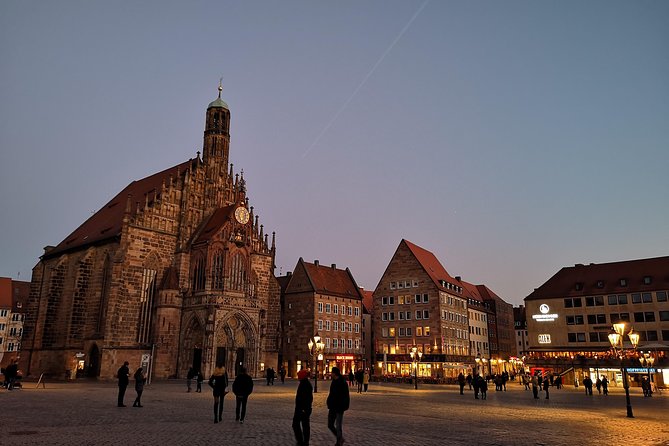
- A different side of Nuremberg: The route moves beyond Albrecht Dürer, Christkindlesmarkt, and the main castle sights to explore medieval customs and darker tales.
- Ten central stops: You visit Hauptmarkt, St. Lorenz, the Heilig-Geist-Spital, city towers, fountains, bridges, Weißgerbergasse, the old walls, and Kaiserburg.
- Spanish-speaking guidance: The experience is led in Spanish, with guides such as Fede bringing together facts, jokes, legends, and practical help.
- Good value for a walking tour: At $19.60 per person, the price covers about 150 minutes of guided sightseeing without extra admission charges.
- A useful finish at Kaiserburg: Ending at the Imperial Castle leaves you near one of Nuremberg’s major sights for further exploring.
- A moderate group size: The tour can include up to 30 people, large enough for social energy but small enough to remain a walking tour.
Why this walk reveals Nuremberg’s less polished past
Nuremberg is often presented through its grand imperial castle, handsome churches, famous market, and connection with Albrecht Dürer. Those sights matter, but they can make the city seem tidier and more straightforward than it really was.
This route adds the awkward, curious, and sometimes grim parts of medieval life. You hear about witchcraft as a feared occupation, the executioner as a necessary but shunned worker, and fountains that represent love, foolishness, and death. You also hear how Nuremberg turned invention and craftsmanship into a city brand.
That approach suits me because it gives you something to remember at each corner. A church becomes more than a church. A bridge becomes tied to the man who worked as the city executioner. A narrow street becomes a clue to the trades that once shaped daily life.
The route also gives you a sense of how stories travel through a city. Some are based on documented people and places. Others belong to local legend. A good guide helps you enjoy both without pretending that every tale has the same historical weight.
More Medieval History Tours in Germany:
- Nuremberg: Medieval Dungeons Guided Tour
★ 4.8 · 2,214 reviews - Bamberg: Immersive Medieval Tour
★ 4.7 · 232 reviews - Nuremberg: 1.5-Hour Medieval Tour
★ 4.6 · 33 reviews
Hauptmarkt begins the story at 3:30 pm
The tour starts at Hauptmarkt 14 at 3:30 pm. This is a practical meeting point in central Nuremberg, near major sights and public transportation. Arrive with enough time to locate the guide, especially if you are unfamiliar with the square or need to use your phone to find the exact place.
The opening ten minutes cover Nuremberg’s basic story. That may sound like the least unusual part of the route, but it gives you a map in your head before the stranger tales begin. You learn how the city’s key areas fit together and why its central position helped it grow in importance.
Because the tour begins in a busy public square, look for the guide rather than expecting a private indoor meeting room. A mobile ticket is provided, and confirmation arrives when you book. Guides such as Fede may contact you to help with the meeting point, which is useful if you are running into confusion before the start.
St. Lorenz connects faith with local stories
The ten-minute stop at St. Lorenz introduces the construction of the church and its particular stories. The building gives the route a chance to show how religion shaped public life, money, work, and local identity in medieval Nuremberg.
You should not expect a long interior visit or a formal church tour. The value here is the explanation around the church and the details that connect it to the city’s wider past. The stop is short, so you can keep your attention on the guide without feeling that you are being asked to study every architectural feature.
If church interiors are a priority for you, this stop may feel brief. If you want a walking route that uses landmarks as story settings, it fits well.
Heilig-Geist-Spital brings in Till Eulenspiegel
At the Heilig-Geist-Spital, the guide tells the story of Till Eulenspiegel. This character is linked with medieval humor and trickery, giving the walk a lighter change of tone after the opening history and church stop.
The ten-minute visit shows how legends can reveal the habits and values of an era. A comic figure who cheats, fools, or exposes people is not just entertainment. Such stories often point to suspicion of authority, pride, greed, or social rules.
This is one reason I would choose the tour over a simple monument walk. You are not only told what a building is. You are given a character and a plot to help you remember where you are.
More History Tours in Germany:
- Berlin: Third Reich & Cold War Guided Walking Tour
★ 4.9 · 8,378 reviews - Leipzig: City History Canal Sightseeing Tour on a Motorboat
★ 4.7 · 7,671 reviews - Munich: Third Reich & WWII Walking Tour
★ 4.6 · 6,181 reviews - Berlin’s Best: 2 Hour Walking Tour Third Reich and the Cold War
★ 5.0 · 5,486 reviews
Weisser Turm marks the first city wall
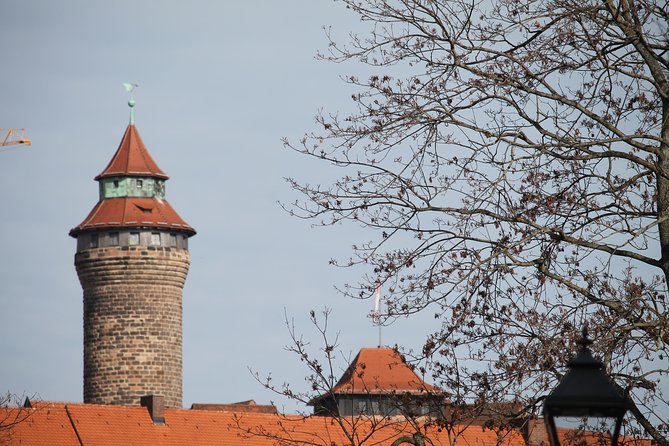
The Weisser Turm stop lasts about five minutes and focuses on the tower of the first city wall. It is short, but it helps explain Nuremberg as a protected medieval town rather than a collection of isolated landmarks.
The city wall appears again later near Beim Tiergärtnertor, so you get two chances to understand its role. The earlier stop provides the basic orientation. The later stop adds more of the wall’s hidden history.
A five-minute stop means the guide will likely keep moving rather than pause for a detailed architectural study. I see that as a benefit if you want a lively route, though less so if you prefer long periods for photographs.
Ehekarussell turns marriage into a fountain
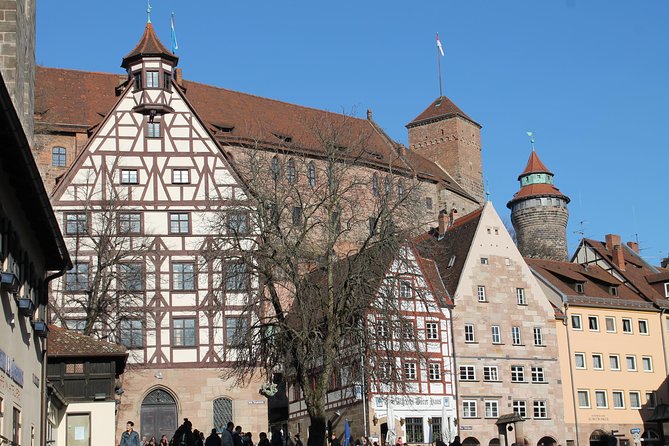
The Ehekarussell, or marriage carousel, is one of the route’s most unusual visual stops. The tour presents it as the fountain of the delights of married life, along with the broader theme of fountains connected with madness, love, and death.
The idea works because the fountain gives the guide something concrete to interpret. Instead of hearing an abstract lecture about relationships or morality, you stand before a public work that turns married life into a series of scenes.
Allow about ten minutes here. It is a good place to listen closely and examine the fountain while the guide explains its meaning. I would not treat this as a quick photo stop. Its value lies in the explanation, especially if you enjoy stories that mix humor with a slightly sharp view of human behavior.
Unschlitthaus introduces Kaspar Hauser
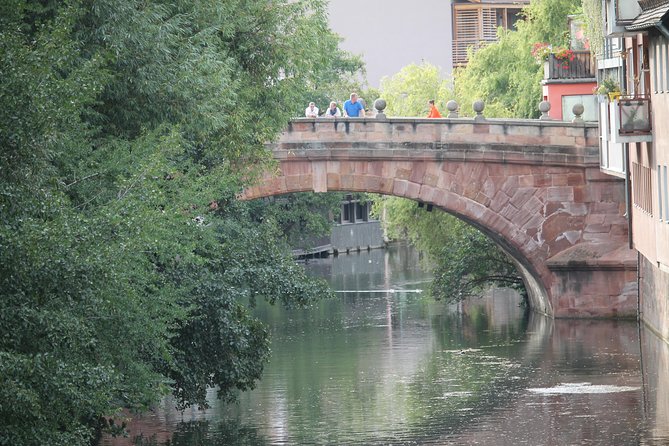
At Unschlitthaus, the tour takes up the story of Kaspar Hauser, described as one of Europe’s most mysterious figures. The focus is on the orphan of Europe and the palace intrigues that came to light around him.
This stop adds a later layer to a mostly medieval route. Kaspar Hauser’s story shows that Nuremberg’s mysteries did not end when the Middle Ages did. It also creates a change of pace, moving from legendary characters and old trades to a real figure surrounded by unanswered questions and political suspicion.
The stop lasts about ten minutes. You will get the story in the setting of Nuremberg’s old town rather than in a museum with objects and documents. That is useful for a city walk, but you should know that the experience depends on the guide’s storytelling. If you want a detailed academic study of Kaspar Hauser, this short stop will not replace a book or specialist visit.
Hangman’s Bridge explains a feared profession
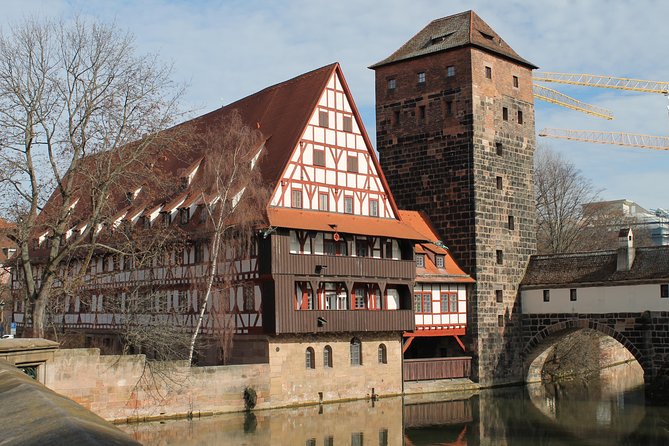
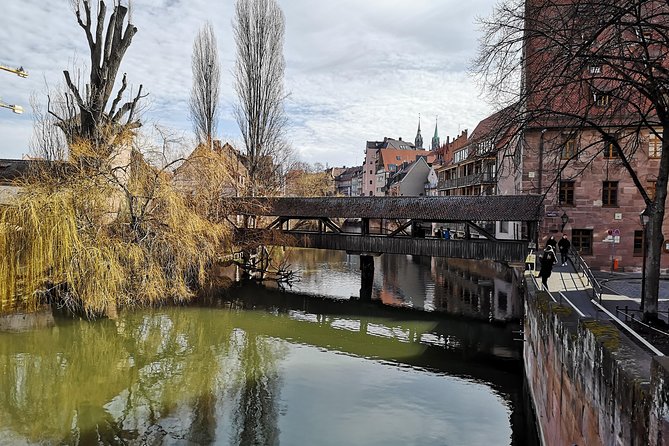
At Hangman’s Bridge, the guide examines the executioner of Nuremberg, including his trade and achievements. This is one of the strongest concepts in the tour because it deals with a job the city needed but many people feared and rejected.
Medieval towns depended on strict systems of law and punishment. The executioner carried out public duties, yet the profession could place him outside normal social life. That tension makes the bridge a useful setting for talking about status, stigma, and the practical workings of justice.
The tour also includes other trades in medieval life, including the idea of Mendel’s book. The broader point is that a city’s past is not only made by rulers and artists. It is also made by craftspeople, workers, officials, and people with jobs that few of us would want.
This ten-minute stop may appeal to you if you prefer social history to grand political stories. It also shows the tour’s darker edge without making the entire experience grim.
Weißgerbergasse preserves the old-town feel
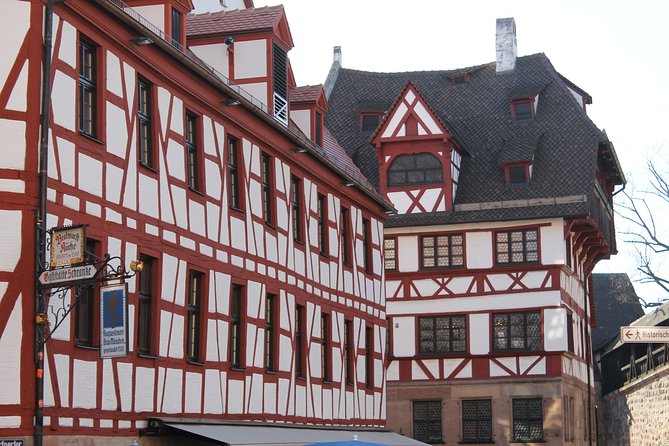
Weißgerbergasse is presented as the most medieval street in Nuremberg. The ten-minute stop focuses on the street itself and the trades that once took place there.
The name points to the leather trade, and the street helps you picture a working town rather than a stage set built only for visitors. Narrow lanes, older façades, and the memory of craft work make this one of the route’s most visual sections.
This is a good place to slow down and look around. The guide’s explanation gives the street context, but you also have the chance to notice its shape and buildings. Since the tour is still moving toward the castle, you should take photos as you go rather than assume there will be a long free period later.
Beim Tiergärtnertor reveals the city wall’s hidden side
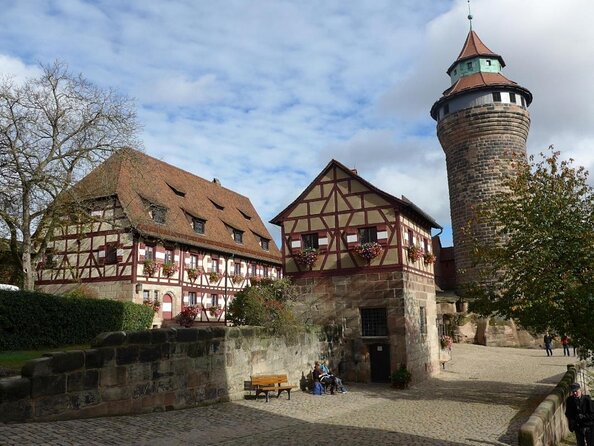
Near Beim Tiergärtnertor, the guide returns to Nuremberg’s walls and their hidden history. The stop lasts about five minutes, so think of it as a concise explanation of how the fortifications shaped movement, defense, and the city’s boundaries.
This location also helps connect the old streets to Kaiserburg. The wall was not merely a defensive line. It helped define where the city began and ended, how people entered it, and how the castle related to the town below.
The route’s two wall stops are brief, but together they create a useful thread. You first meet the early tower, then see how the larger defensive system fits into the old town. That is more helpful than hearing about the walls only once at the castle.
Kaiserburg ends the walk with darker legends
The final stop is Kaiserburg Nurnberg, the Imperial Castle, at Burg 17. The tour ends here after about fifteen minutes focused on the castle and its darker stories, including flying horses and women of bad life.
The castle is one of Nuremberg’s most important sights, so ending here is practical. You can continue exploring the area after the guide finishes, or use the location to orient yourself for the rest of your visit.
The castle section is not a full admission tour. The provided experience includes a guided explanation outside the need for a separate paid attraction ticket, and no entrance charge is listed for any stop. If you want to see castle interiors or museum displays, you should plan that separately.
I like this ending because the route builds toward a major landmark without spending the entire afternoon inside it. The castle receives its share of stories, but the city streets remain the main subject.
What $19.60 gets you
At $19.60 per person, the tour offers about two hours and thirty minutes of guided walking in central Nuremberg. That works out to a modest cost for a Spanish-language introduction that links ten locations instead of leaving you to connect them alone.
No admission fees are listed for the stops, and the guide in Spanish is included. You should budget for your own drinks, since soda or pop is not included, though that is a small point on a walking route.
The value is strongest if you want context. You can walk past the same fountains, bridges, towers, and streets without knowing why they matter. The guide turns them into a connected story. If you already know Nuremberg well or prefer to explore at your own pace, the price may feel less useful.
The group can include up to 30 people. That is not a private tour, and you should expect a shared walking experience. At the same time, the maximum is limited enough to keep the format more focused than a very large city tour.
Timing, comfort, and who should book
The 3:30 pm start makes this easy to fit around a morning museum visit or a midday meal. The route ends at Kaiserburg around two and a half hours later, so keep enough energy for a sustained walk and wear comfortable shoes.
The tour is outdoors and continues in changing weather. One review describes a rainy afternoon that remained enjoyable because the guide, Fede, used humor and kept the information flowing. That does not remove the need for a rain jacket, but it suggests that the atmosphere depends partly on the guide’s ability to keep the group engaged.
Most people can participate, and service animals are allowed. The route is near public transportation. No detailed information is provided about step-free access, seating, or the exact walking distance, so contact the provider if you have mobility concerns.
I would choose this tour if you:
- Want a Spanish-language introduction to Nuremberg
- Enjoy legends, mystery, and unusual local details
- Prefer a walking route over a formal museum talk
- Are visiting the city for the first time
- Want to understand the old town before exploring Kaiserburg on your own
I would look elsewhere if you need a private experience, want extensive time inside each attraction, or prefer a tour focused mainly on art, architecture, or the twentieth century.
A practical booking choice for Spanish-speaking visitors
The experience has a five-star rating based on 1,374 reviews, with 100 percent recommending it. The strongest praise centers on the guides’ ability to make a rainy afternoon pleasant, explain a large amount of history, and add jokes without losing the thread of the story. Fede is specifically praised for reaching out to help with the meeting point and for combining preparation with an easy manner.
That matters because this is a story-led tour. The buildings provide the setting, but the guide provides the connection between witchcraft, fountains, workers, legends, city walls, and the castle. A strong guide can make the route feel like one long tale. A weaker presentation would leave you with several disconnected stops.
Free cancellation is available if you cancel at least 24 hours before the start time. Changes or cancellations made inside that window are not accepted for a refund, and the experience requires a minimum number of participants. If the minimum is not met, you are offered another date or experience, or a full refund.
Should you book this Nuremberg medieval tour?
Book it if you want Nuremberg explained through people, legends, and unsettling details, not just famous monuments. The route is especially useful early in your visit because it gives meaning to streets and landmarks you can revisit later.
At $19.60, it is a fair buy for a 2.5-hour Spanish walking tour with ten central stops and a finish at Kaiserburg. Just plan for outdoor walking, a group of up to 30, and a guide-led experience rather than extended visits inside attractions.
If Fede is leading your date, expect a guide who may help with the meeting point and keep the mood light. Regardless of the guide, the tour is best for you if you like history with a human face, a few strange turns, and enough practical orientation to make Nuremberg easier to explore on your own.
FAQ
What language is the tour conducted in?
The tour is conducted in Spanish, and a Spanish-speaking guide is included.
How long does the Nuremberg medieval tour last?
The tour lasts approximately two hours and thirty minutes.
Where does the tour begin?
The meeting point is Hauptmarkt 14, 90403 Nürnberg, Germany.
Where does the tour finish?
The tour ends at the Imperial Castle of Nuremberg, at Burg 17, 90403 Nürnberg, Germany.
What time does the tour start?
The scheduled start time is 3:30 pm.
Are entrance tickets included?
The tour includes the Spanish-speaking guide, and no admission ticket is listed for the stops. Separate castle admission is not included as part of this walking experience.
Just added around Germany
- Berlin Food & Cultural Tour: Must-Try German & Berliner Classics★ 5.0 · 51 reviews
- Berlin Half-Day World War II Walking Tour★ 4.5 · 48 reviews
- Small-Group Historical Bike Tour in Berlin★ 4.5 · 103 reviews
- Historic center of Berlin – Tour in Italian★ 5.0 · 143 reviews
- Berlin Cold War & World War II Third Reich Walking Tour★ 4.5 · 30 reviews
- Private Taxi Tour City East & West History and Architecture 3-4h★ 5.0 · 42 reviews
- Berlin Wall and Cold War Bike Tour in Small Groups★ 5.0 · 114 reviews
- Private Tour: Jewish Heritage Walking Tour of Berlin★ 5.0 · 29 reviews
Nuremberg History Tours, compared.
Nuremberg: Historischer Kunstbunker WWII Art Bunker Tour
Read our review →
Nuremberg: 1.5-Hour Private Tour through Historical Old Town
Read our review →
“Rotes Bier” and “Blaue Zipfel”. A historical-culinary walk
Read our review →
Nuremberg: WWII Tour, Courtroom 600 and 3rd Reich Sites
Read our review →
Browse the lists this tour appears in