
Review · BERLIN
Berlin Battlefield Tour – Operation Berlin 1945 (Small Group)
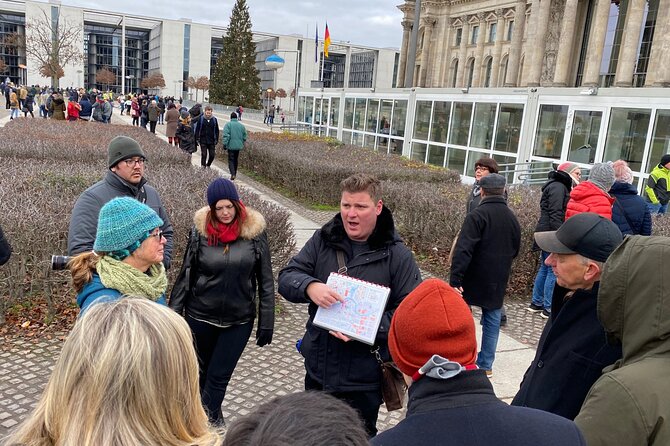
Berlin’s final battle becomes easier to grasp when you walk the actual route of the fighting. This 2.5-hour tour follows the Soviet advance from Berlin Central Station to the Reichstag and Weidendammer Bridge, linking broad political events to bridges, ministries, streets, and ruined ground.
I like the small maximum of 15 people, which gives you a fair chance to hear the guide and ask questions. I also like the clear route, ending near Friedrichstrasse station, plus bottled water and rain ponchos when needed. The drawback is that this is an outdoor walking tour, and bad weather or a missed minimum group size can lead to a change or cancellation.
Key points at a glance
- Walk the Soviet route: Start at Berlin Hauptbahnhof and follow the advance toward the Reichstag.
- See six significant sites: The route includes Moltke Bridge, the former Himmler House, Platz der Republik, the Reichstag, and Weidendammer Bridge.
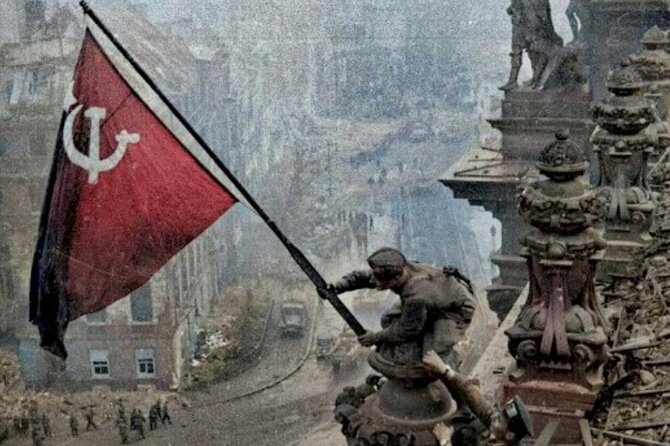
- Hear the final battle in place: The guide explains room-to-room fighting, artillery, the Reichstag flag, and the failed breakout from the Führerbunker.
- Keep the group personal: A maximum of 15 people makes questions and conversation easier.
- Pay for focused history: At $54.01 per person, the tour offers a compact way to understand Berlin’s closing days in 1945.
- Finish by public transport: The tour ends about 50 meters from S+U Friedrichstrasse station.
Following the final Soviet advance through Berlin
This is not a general Berlin sightseeing walk with a few wartime facts added. It focuses tightly on Operation Berlin, the Soviet assault that brought the European war to its final violent stage in the city.
The route begins on the southern side of modern Berlin Central Station. The station itself is a useful starting point because you can arrive easily by public transport, then shift from present-day Berlin to the events of April and May 1945.
The guide spends about ten minutes setting the scene before the walking begins. That opening matters. Without some orientation, the battle can feel like a pile of dates, army names, and dramatic anecdotes. The introduction gives you a basic framework for understanding the Soviet advance, the German defense, and the importance of the government quarter.
I would book this tour if you want military history explained through physical space. You are not simply shown a building and told its name. You are asked to picture firing positions, artillery ranges, bridges, open ground, and the narrow routes through which soldiers moved.
More Battlefield and Military History Tours in Berlin:
- Berlin Battlefield Tour – Operation Berlin 1945
★ 4.7 · 32 reviews - Berlin Beers & Battlefields Tour: War History and German Beer
★ 5.0 · 29 reviews - Berlin Beers & Battlefields Tour: War History & German Beer
★ 4.9 · 29 reviews
Moltke Bridge and the Soviet axis of advance
The first major stop is Moltke Bridge, about ten minutes from the starting point. This ornate red sandstone bridge became a hard-fought crossing during the battle.
Here, the guide explains the direction of advance used by the Soviet 3rd Shock Army. You begin to see why a bridge could matter so much. It was not just a crossing over the Spree. It was a route into the government quarter, and control of it helped shape the next stage of the attack.
This stop is especially useful for people who know the broad outline of the Battle of Berlin but struggle to picture it on a map. Standing at the bridge gives the discussion a fixed point. The guide can explain the problems faced by the Soviet troops and the German defenders without relying only on abstract military terms.
The stop lasts about ten minutes, so expect a concentrated explanation rather than a long pause. You will want comfortable shoes, since this is one of several outdoor stops and the tour keeps moving.
Himmler House and close-range fighting
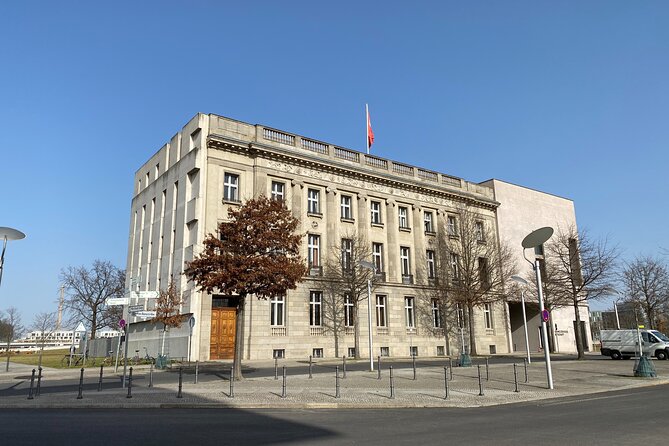
After crossing Moltke Bridge, you reach the former Interior Ministry, known during the Nazi period as the Himmler House. It stood in the old diplomatic quarter and became a place of intense fighting.
The key subject here is the Soviet artillery barrage fired at close range, followed by brutal room-to-room combat. This helps explain the difference between a map showing a short distance and the reality of taking a fortified urban building.
I find this part of the route valuable because it moves the story away from famous names and final photographs. The Battle of Berlin was also fought in stairwells, offices, corridors, and rooms. A building associated with the Nazi government becomes a way to understand how slow and dangerous the final advance could be.
The visit at the site takes about ten minutes. The former building is not presented as a preserved battlefield attraction, so the guide’s explanation is essential. You are using the location as evidence, then supplying the missing wartime context through the story.
Crossing the open ground at Platz der Republik
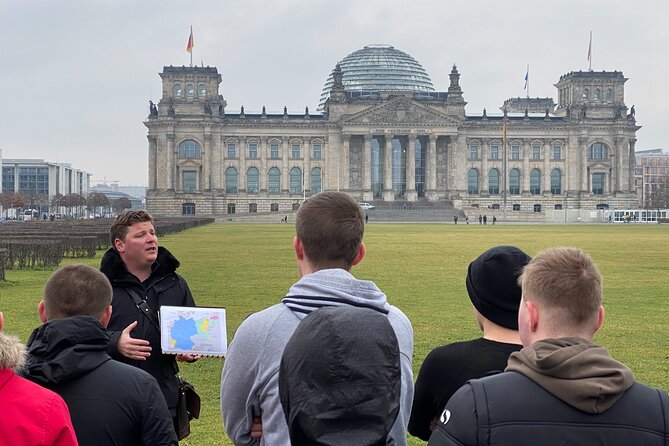
The next stop is Platz der Republik, the former Königsplatz. The tour describes this area as the no man’s land between the advancing Soviet units and the Reichstag.
From here, the guide helps you picture the roughly 300 meters of exposed ground that the 207th and 150th Rifle Divisions had to cross. Today, the setting is part of central Berlin. In April 1945, the same stretch represented a dangerous final approach under fire.
This is one of the strongest teaching points on the walk. A distance of 300 meters sounds modest until you imagine crossing it while facing defenders and artillery. The guide uses the open space to explain why reaching the Reichstag required more than symbolic courage. It required troops to move through a heavily contested zone.
The stop lasts around ten minutes. It is also one of the places where weather can affect your comfort, since the tour has no indoor shelter built into the route. The provider supplies rain ponchos if needed, but dress for an outdoor walk rather than a museum visit.
More Small-Group History Tours in Berlin:
- Small group Potsdam: A Journey Through History and Palaces
★ 4.7 · 317 reviews - Berlin Wall History Small Group Cycling Tour
★ 4.9 · 152 reviews - Small group Potsdam: A Journey Through History and Palaces
★ 4.5 · 151 reviews - Small-Group Historical Bike Tour in Berlin
★ 4.5 · 103 reviews
The Reichstag, the bunker, and the final flag
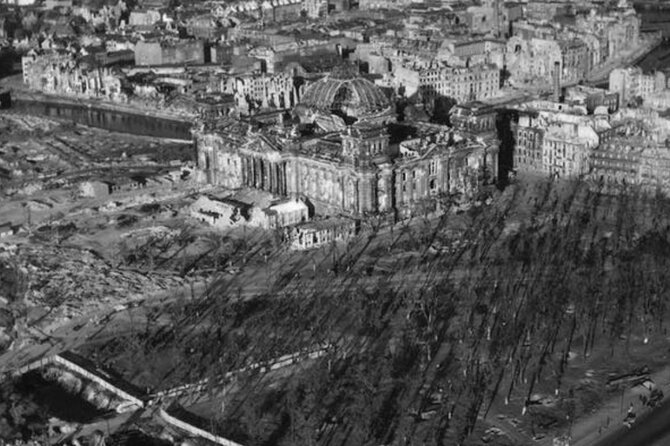
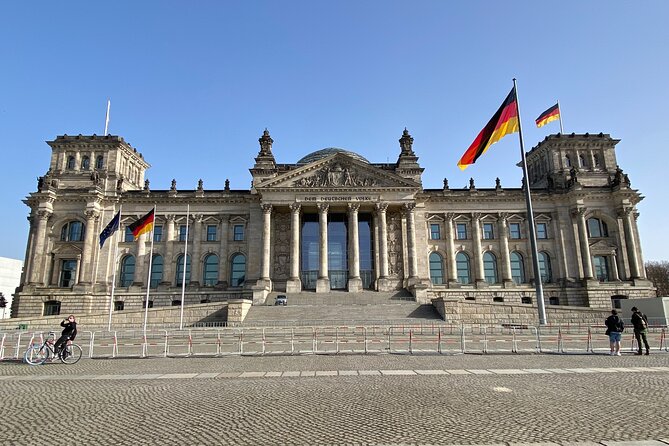
The Reichstag is the emotional center of the tour. As you approach the building, the guide connects the fighting here with Hitler’s last hours in the Führerbunker, only a few hundred meters away.
The tour then turns to Sergeants Yegorov and Kantariya and the raising of special banner number five on the roof. That act became one of the defining images of the battle and a symbol of the end of Nazi rule in Berlin.
The stop lasts about 20 minutes, making it the longest pause on the route. That gives the guide room to explain both the military action and the later meaning attached to the photograph and the flag.
You should keep the focus of the tour in mind here. This is not a visit inside the Reichstag building, and no admission ticket is included because the stops are viewed from public areas. The value lies in understanding the building as a wartime objective and in hearing how the final assault unfolded around it.
The Reichstag stop also links the personal and political sides of the story. Hitler’s final moments in the bunker, the Soviet push through the government quarter, and the raising of the flag all happened within a very small part of Berlin. Walking between these points makes the scale of the final days easier to understand.
Weidendammer Bridge and the failed breakout
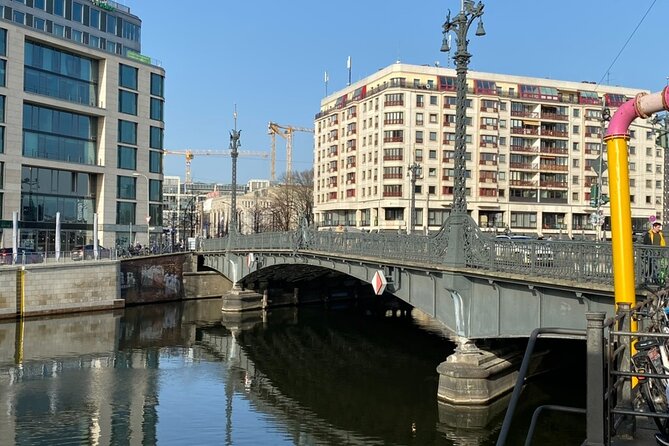
The final stop is Weidendammer Bridge, spelled Wiedendammer in some tour information. During the last days of the battle, it was one of the few bridges still intact across the Spree.
The guide explains the fighting on the night of May 1, 1945, when German forces attempted to break out from the area around the Führerbunker. The effort ended in terrible bloodshed.
This is a fitting final stop because it takes the story beyond the Reichstag’s famous image. The battle did not end neatly when the flag was raised. Soldiers were still trying to escape, regroup, or survive in the closing hours.
The tour ends at the bridge, about 50 meters from S+U Friedrichstrasse station. That makes the finish practical. You can continue to another part of central Berlin without arranging a taxi or retracing the route.
Ask the guide for help reaching your next destination. The area has strong public transport links, so the ending works well if you plan to continue sightseeing, return to your hotel, or connect with another activity.
What the $54.01 price gives you
At $54.01 per person, this is not the cheapest way to take a walk through central Berlin. You are paying for a focused subject, a guide-led route, and the chance to ask questions in a small group.
The value is strongest if you want more than a quick introduction to World War II in Berlin. The tour covers six locations in about two and a half hours, including the Soviet advance, the fight for government buildings, the Reichstag assault, and the failed breakout.
A larger general city tour might mention the Reichstag and the war, but it would not normally spend time on the Moltke Bridge crossing, the former Himmler House, or the 300 meters of open ground at Platz der Republik. That specific focus is what justifies the price for a history-minded visitor.
The small group also matters. With no more than 15 people, you are less likely to lose the guide’s voice or feel unable to ask a question. One review specifically praised the chance for detailed conversation, including a long exchange with a son who had a strong interest in history. That suggests the tour can handle questions beyond a basic script, particularly when the guide is Jochen.
Still, the price may not suit you if you want a broad overview of Berlin, access inside historic buildings, or a relaxed sightseeing walk with many photo stops. This is a concentrated battlefield tour, and the subject includes difficult combat and mass death.
The guide and the small-group format
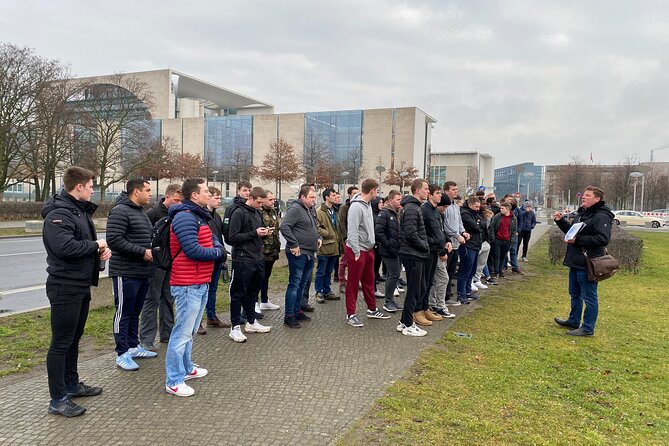
The guide makes a major difference on a tour like this. The supplied experience information names Jochen as one guide, and the comments about his ability to handle in-depth discussion are useful if you want more than surface facts.
The format is designed for conversation. A group capped at 15 people gives you a better chance to stand close enough to hear, ask about a confusing point, or connect one stop with another. The experience is offered in English.
Do not expect a private tour. Fifteen people is still a group, and the walking pace or question time may not suit everyone. But it is small enough to feel more personal than a large coach excursion or a crowded public walk.
The tour has a 4.8 rating from 23 reviews, with 96 percent recommending it. Those figures suggest strong satisfaction, but the sample is not large. I would treat them as a useful signal, not a guarantee that every guide or departure will feel identical.
Timing, weather, and practical comfort
The advertised duration is approximately two hours and 30 minutes. The listed stop times add up to about 75 minutes, with the remaining time used for walking, orientation, and moving between sites.
The start is at Ella-Trebe-Straße 9, 10557 Berlin, on the southern side of Berlin Central Station. Check the exact meeting instructions before setting out, since a major station can have several exits and approaches.
The route ends at Weidendammer Bridge, 10117 Berlin, close to Friedrichstrasse station. Because the tour starts and ends at different points, you should not plan to leave a bag at the starting point unless you have confirmed a separate arrangement.
Wear shoes suitable for city walking. The experience requires good weather, and rain ponchos are provided if needed, but a poncho will not make cold or wet conditions pleasant for everyone. If the provider cancels because of poor weather or because the minimum number of participants is not met, you can choose another date or receive a full refund.
You can cancel for a full refund up to 24 hours before the start time. Changes or cancellations within 24 hours are not accepted for a refund, so leave some flexibility in your Berlin schedule.
Service animals are allowed, and the tour is near public transportation. Most people can take part, though you should consider your own comfort with a 2.5-hour outdoor walk.
Who will get the most from this walk
I would recommend this tour to you if you enjoy military history, modern European history, or guided walks that explain why a place matters. It is also a good choice for parents traveling with an older child who already has an interest in the Second World War. The small format allows questions that might not fit into a standard sightseeing tour.
It suits repeat visitors to Berlin particularly well. If you have already seen the Brandenburg Gate and Reichstag as major attractions, this walk gives those familiar areas a different purpose.
The tour may be less suitable for very young children, people who prefer indoor museums, or anyone wanting an unhurried architectural walk. The subject is serious, the schedule is focused, and much of the meaning comes from listening carefully to the guide.
Should you book Operation Berlin 1945?
Book it if you want a compact, place-based account of Berlin’s final battle and you value a guide who can answer detailed questions. The route is logical, the end point is convenient, and the 15-person limit gives the experience a personal feel.
Skip it if you want to go inside the Reichstag, avoid outdoor walking, or prefer a general introduction to Berlin. At $54.01, the tour earns its price through focus rather than through included admissions or elaborate extras.
For a history-minded visitor, this is a strong use of a morning or afternoon. You leave with a clearer sense of how the Soviet advance moved through central Berlin, why the bridges and open ground mattered, and how violent the city’s final hours remained after the famous flag was raised.
FAQ
Where does the Berlin Battlefield Tour begin?
It begins at Ella-Trebe-Straße 9, 10557 Berlin, on the southern side of Berlin Central Station.
Where does the tour end?
It ends at Weidendammer Bridge in central Berlin. The bridge is about 50 meters from S+U Friedrichstrasse station.
How long does the tour last?
The tour lasts approximately two hours and 30 minutes.
What language is the tour offered in?
The tour is offered in English.
How many people can join the tour?
The maximum group size is 15 people.
What sites are included?
The route includes Berlin Central Station, Moltke Bridge, the former Interior Ministry known as Himmler House, Platz der Republik, the Reichstag, and Weidendammer Bridge.
Is bottled water provided?
Yes. Bottled water is provided.
Are rain ponchos available?
Yes. Rain ponchos are provided if needed.
Are service animals allowed?
Yes. Service animals are allowed.
What happens if the tour is canceled because of weather?
You will be offered a different date or a full refund if poor weather causes the cancellation.
Can I cancel for a full refund?
Yes. You can cancel at least 24 hours before the start time for a full refund. Cancellations or changes made less than 24 hours before the start time are not accepted for a refund.
Just added around Berlin
- Berlin Food & Cultural Tour: Must-Try German & Berliner Classics★ 5.0 · 51 reviews
- Berlin Half-Day World War II Walking Tour★ 4.5 · 48 reviews
- Small-Group Historical Bike Tour in Berlin★ 4.5 · 103 reviews
- Historic center of Berlin – Tour in Italian★ 5.0 · 143 reviews
- Berlin Cold War & World War II Third Reich Walking Tour★ 4.5 · 30 reviews
- Private Taxi Tour City East & West History and Architecture 3-4h★ 5.0 · 42 reviews
- Berlin Wall and Cold War Bike Tour in Small Groups★ 5.0 · 114 reviews
- Private Tour: Jewish Heritage Walking Tour of Berlin★ 5.0 · 29 reviews
Berlin History Tours, compared.

Berlin: Third Reich & Cold War Guided Walking Tour
Read our review →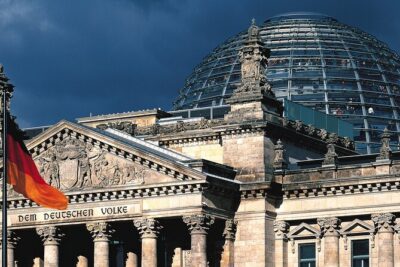
Berlin’s Best: 2 Hour Walking Tour Third Reich and the Cold War
Read our review →
Third Reich Berlin: Hitler and WWII Walking Tour
Read our review →
Berlin: Third Reich, Hitler, and WWII Walking Tour
Read our review →
Berlin: 3-Hour World Heritage Cruise to Potsdam
Read our review →
Cold War, Berlin Wall, Spies and the East Side Gallery
Read our review →
Berlin: History of the Third Reich Guided Walking Tour
Read our review →
Browse the lists this tour appears in