
Review · BERLIN
Path of Resistance: Berlin’s Hidden Holocaust Stories
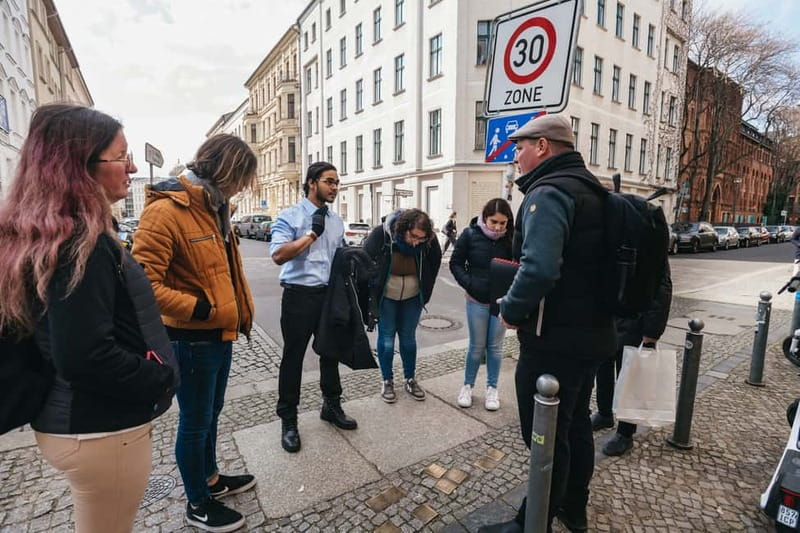
Berlin’s streets hold more than memorials to Nazi crimes. They also preserve stories of people who resisted, protected Jewish neighbors, protested deportations, or helped children escape. This 150-minute walking tour brings those quieter acts of courage into focus, from Otto Weidt’s workshop to the women’s protest on Rosenstraße.
I like the small-group format, limited to 10 participants, because the subject calls for room to ask questions and pause. I also like the way the route connects major sites, such as Bebelplatz, with less familiar memorials and personal stories. A guide named Johan is specifically praised for combining the history of German and Jewish life in Berlin with clear historical analysis.
The subject matter is heavy, and the tour moves at a steady pace through streets, courtyards, and cobbled areas. You should wear good shoes, prepare for rain or sun, and allow yourself some quiet time afterward. The $57 price is fair if you want expert interpretation and included entries, but it is more than a basic city walk.
Key points at a glance
- Otto Weidt’s workshop: See the modest workplace where Otto Weidt helped protect blind and deaf Jewish workers.
- Rosenstraße protest: Hear how German women publicly demanded the release of their Jewish husbands.
- Bebelplatz book burning site: Stand where the Nazi attack on books and free thought began in public view.
- Personal stories over broad slogans: The tour explains resistance through individual choices, risks, and consequences.
- Small English-speaking group: The group is limited to 10 people, with time for discussion and questions.
- Historic route through central Berlin: The walk links the Jewish quarter, Museum Island, Neue Wache, and Friedrichstraße.
Why this Berlin walk feels different
Many Berlin history tours focus on the Nazi state, its leaders, and its grand buildings. This one gives more attention to ordinary people. That choice matters because resistance was rarely simple or safe. Some people acted openly. Others hid workers, forged papers, offered shelter, or made one brave decision at a time.
You will also hear about people who did not resist, and about the conditions that allowed antisemitism to become state policy. The tour explains Nazi ideas of Aryan superiority and the classification of people into supposed sub-races. That context helps you understand how prejudice was turned into laws, deportation, and genocide.
I appreciate this balance. The route does not present courage as an easy moral choice. It shows that helping someone could cost a job, freedom, or life. At the same time, the stories offer a measure of hope without softening the crimes.
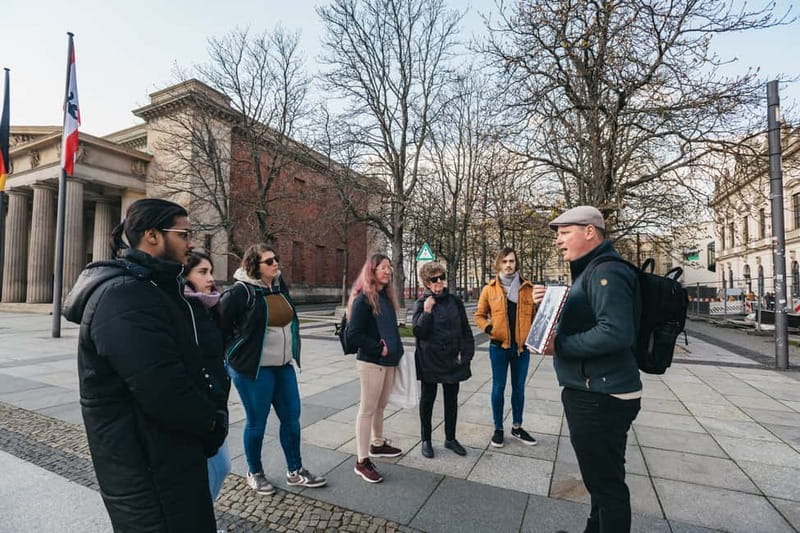
The tour is led in English by a local historian, with historical maps and Then & Now photographs used to connect the present streets with their wartime appearance. The format is part walking tour, part guided discussion. That makes it a good fit if you want interpretation rather than a quick list of dates.
More WWII and D-Day Tours in Berlin
- Berlin: Third Reich & Cold War Guided Walking Tour
★ 4.9 · 8,378 reviews - Berlin’s Best: 2 Hour Walking Tour Third Reich and the Cold War
★ 5.0 · 5,486 reviews - Third Reich Berlin: Hitler and WWII Walking Tour
★ 5.0 · 3,301 reviews
Starting at the former Imperial Post Office
Arrive 10 minutes early at the former Imperial Post Office. The guide waits at the main entrance with a blue umbrella, a useful detail in a busy central area.
The route begins near Berlin’s old Jewish quarter and stays largely in the center. No public transport ticket is needed. You should still wear comfortable shoes because the walk includes several stops and historic streets, with little opportunity to sit for long periods.
The overall group limit is listed as 10 people. That is smaller than many city walks and should make it easier to hear the guide, study photographs, and ask about family stories or places that interest you.
The New Synagogue and Moses Mendelssohn School
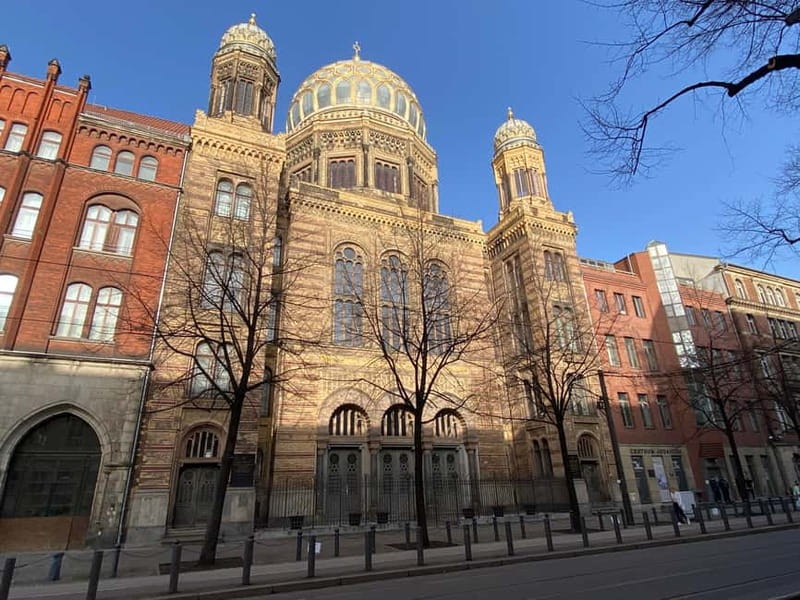
The New Synagogue Berlin, also known as the Jewish Centre, introduces the Jewish presence in Berlin before and during the Nazi period. You will receive a guided look at the site and its place in the city’s Jewish life.
The next stop is the Jüdisches Gymnasium Moses Mendelssohn. Its inclusion helps move the story beyond persecution alone. Jewish Berlin was not only a community targeted by the state. It was also a place of schools, families, work, worship, and civic life.
These early stops are valuable because they give the tour a human starting point. You begin with the people and institutions that existed before the Nazi assault, rather than meeting Jewish history only through memorials to loss.
Grosse Hamburger Strasse Cemetery and the cost of deportation
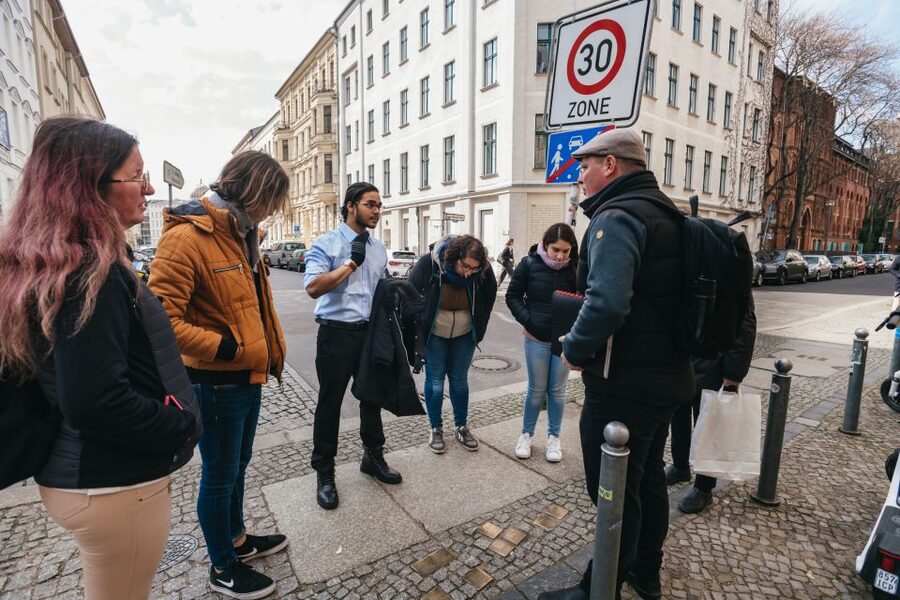
At Grosse Hamburger Strasse Cemetery, the guide turns toward the destruction of Jewish life in Berlin. This area connects to the forced removal of families from their homes and the deportation system that followed.
The route asks you to picture what it meant for people to disappear from familiar streets. Later memorials can sometimes feel abstract. Here, the setting helps make the process more concrete: homes, schools, workshops, and neighbors were all caught up in the machinery of persecution.
The tour also introduces the difference between quiet help and organized public action. Some forms of resistance were private and hard to record. Others became visible enough to challenge the authorities directly.
More WWII and D-Day Tours in Germany
- Berlin: Third Reich, Hitler, and WWII Walking Tour
★ 4.9 · 1,757 reviews - Berlin: History of the Third Reich Guided Walking Tour
★ 4.7 · 791 reviews - Hitler’s Germany: Berlin During the Third Reich & WWII
★ 4.8 · 476 reviews - Private Walking Tour Berlin Third Reich Hitler and World War II
★ 5.0 · 360 reviews
Otto Weidt’s workshop for blind and deaf workers
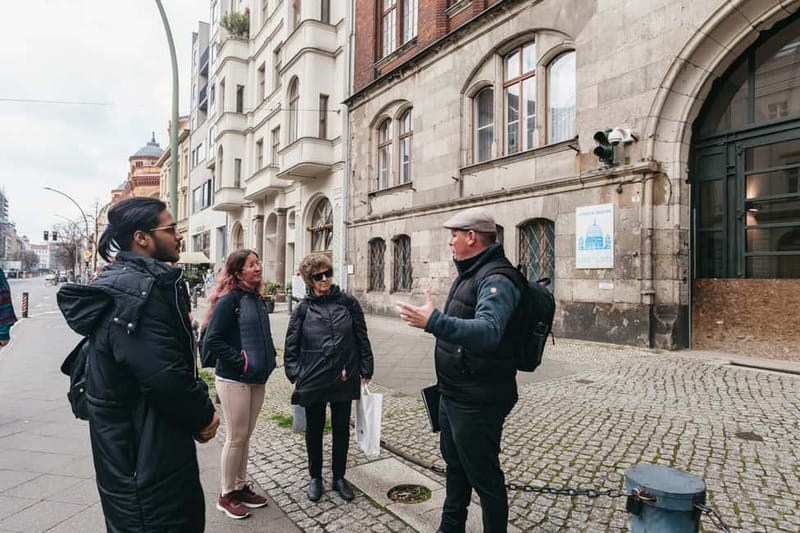
Otto Weidt’s workshop is one of the most affecting stops. Weidt ran a brush workshop and worked to shield blind and deaf Jewish employees from persecution. The location is modest, which is part of its force. You are not looking at a grand headquarters or a military command post. You are seeing an ordinary workplace linked to extraordinary risks.
The story shows how protection could take practical forms. A person might try to keep workers employed, conceal them, or use personal influence to delay their arrest. The tour places Weidt’s actions within the broader system of Nazi persecution, so you can see both his courage and the danger surrounding it.
This stop may appeal most to anyone who prefers personal history to military chronology. You are not simply told that resistance existed. You are shown how one workplace became a place where people tried to keep each other alive.
Rosenstraße and the Block of Women
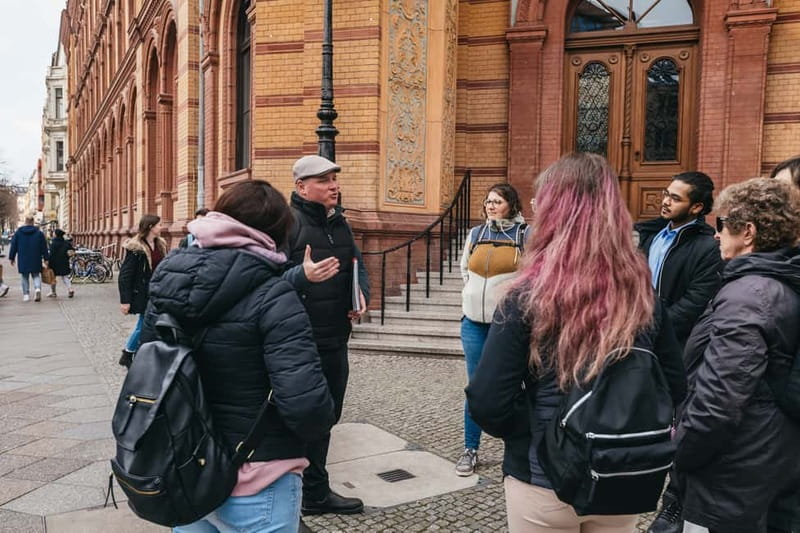
The Rosenstraße protest is the tour’s clearest example of public resistance by ordinary Germans. German women gathered to demand the release of their Jewish husbands. Their protest challenged the authorities at a time when public opposition could bring serious consequences.
The site is often called the Block of Women. The story is especially important because it complicates the idea that all resistance came from organized political groups or famous figures. Here, family members used collective pressure to demand action.
The guide explains the protest as part of the larger history of mixed Jewish and non-Jewish families under Nazi rule. You will consider why some people resisted, why others stayed silent, and how the state responded when its policies met public opposition.
This is likely to be one of the most memorable sections of the walk. It connects private grief with public action, and it gives the word resistance a more human scale.
Museum Island and Neue Wache
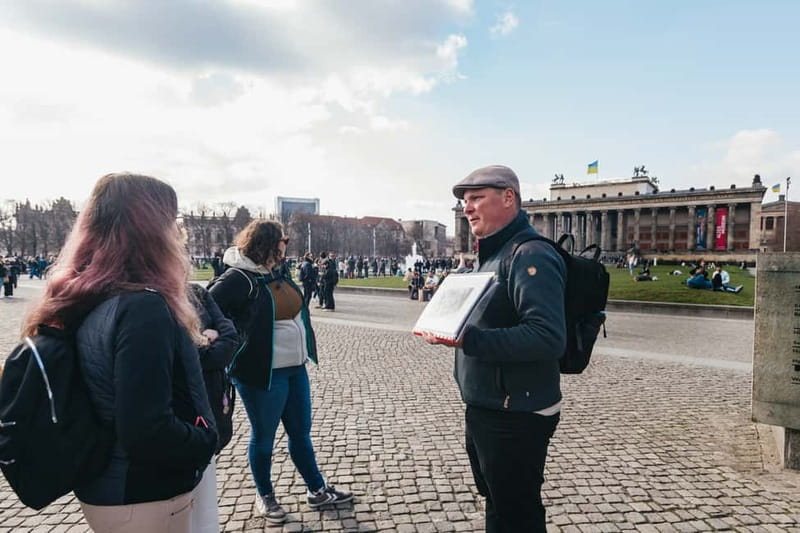
The route continues through Museum Island, where the surrounding city provides a wider setting for the discussion. The stop is not only about one building or one memorial. It helps connect Berlin’s cultural center with the political history unfolding around it.
At Neue Wache, you pause at one of Berlin’s best-known memorial spaces. The guide uses the site to discuss remembrance, mourning, and the way Germany has chosen to mark war and political violence.
These stops give you a change of pace after the more intimate stories in the Jewish quarter. They also show how public memory is shaped by architecture. A memorial can honor victims, guide reflection, or raise questions about whose suffering is being remembered and how.
Bebelplatz and the May 10, 1933 book burning
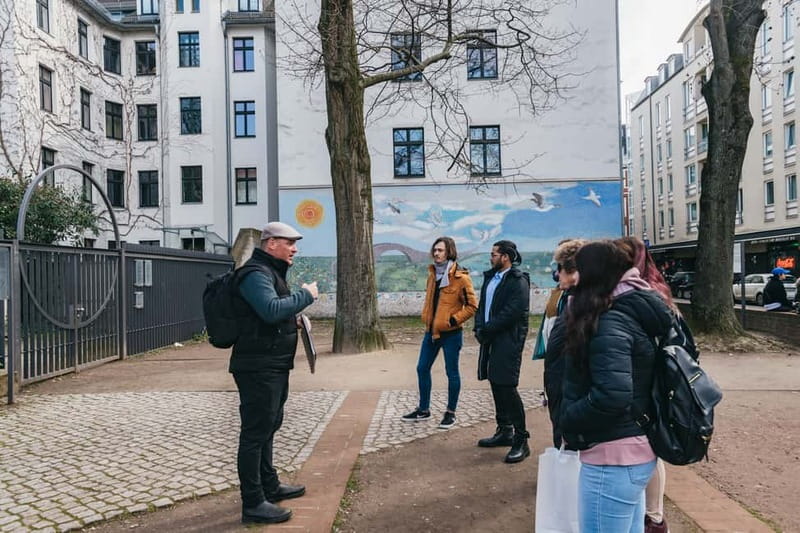
Bebelplatz is the site of the infamous Nazi book burning on May 10, 1933. The event signaled the regime’s attack on free thought, intellectual freedom, and writers whose ideas did not fit Nazi ideology.
The memorial here is easy to miss if you do not know where to look. That makes a guide particularly useful. You will learn how the square was used to stage a public rejection of books and ideas, and how cultural persecution formed part of the wider Nazi program.
The location also broadens the tour beyond Jewish persecution, while keeping the central theme of state control and resistance. Burning books was not separate from later violence. It helped create a public climate in which certain people, ideas, and identities could be excluded and destroyed.
For me, this stop is most useful when paired with the earlier stories. Otto Weidt and the Rosenstraße women show individuals resisting direct persecution. Bebelplatz shows the public attack on the freedom to think, write, and disagree.
Trains to Life, Trains to Death
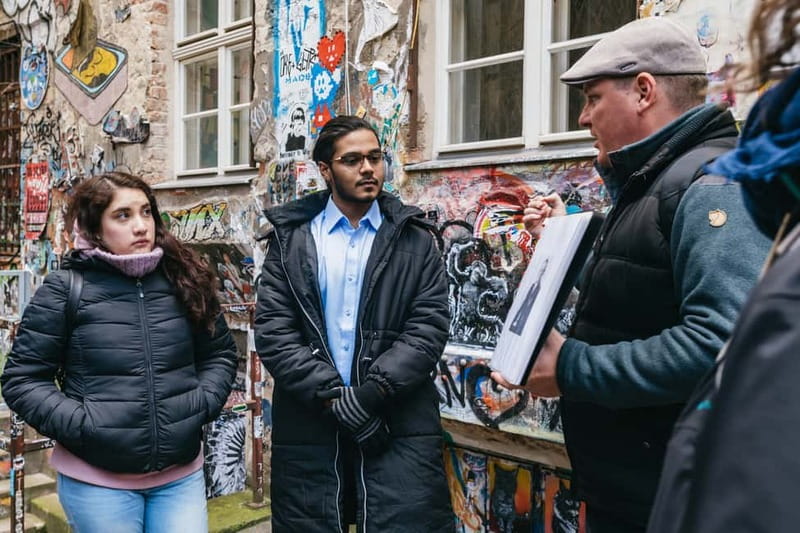
The memorial titled Trains to Life, Trains to Death brings the discussion to children who escaped and those who did not. The tour includes the story of Nicholas Winton, known as the British Schindler, who helped hundreds of Jewish children leave danger.
This section offers an important contrast. Some children found a route to safety. Many others were trapped by borders, government policy, and the growing reach of Nazi persecution. The memorial encourages you to think about rescue not as an abstract success story, but as a race against time with many children left behind.
The story of Winton also expands the tour beyond Berlin without taking you away from its main theme. Resistance was not limited to street protests or secret work inside Germany. It could involve paperwork, travel arrangements, contacts, and the determination to keep helping when the odds were poor.
Finishing at Berlin Friedrichstraße station
The tour ends at Berlin Friedrichstraße station. This is a practical finish for continuing your day in central Berlin, and it gives the route a natural link to the city’s transport history.
By this point, you will have covered Jewish community life, deportation, workplace protection, public protest, intellectual repression, rescue, and remembrance. The route is not a general overview of every Nazi site in Berlin. It has a specific purpose: to show how resistance appeared in many forms.
That focus is a strength, but it also sets expectations. If you want Hitler’s bunker, the major Nazi government buildings, or a broad military history of World War II, this is not the right walk. If you want the human stories behind persecution and defiance, it is a better match.
What the $57 price includes
At $57 per person, this tour costs more than a simple orientation walk. The value comes from the historian-led interpretation, the small group, included entry to museums and memorials, historical maps, and Then & Now photographs.
You are paying for connections between places that you could visit on your own but might not understand fully. A plaque can tell you what happened at a site. A specialist guide can explain why the event mattered, how it fitted into Nazi policy, and what choices people faced.
The strongest value is likely for first-time visitors who want a serious introduction to Berlin’s Jewish and resistance history. It also suits repeat visitors who have already seen the city’s major memorials and want a more focused route.
The price may feel high if you prefer to move independently, read at your own pace, or spend a long time inside each museum. The walking tour has a set rhythm, and each stop receives a limited amount of time.
Practical details for a respectful visit
The tour runs in all weather, so bring water, rain protection, and sun coverage. Comfortable shoes matter more than stylish ones here. The route lasts 150 minutes, and the subject requires concentration as well as walking.
The activity is listed as wheelchair accessible. If you use a wheelchair, it is sensible to confirm the exact route and access arrangements before booking, especially because the tour passes historic streets and several different sites.
English is the tour language. The guide uses live explanation, discussion, and questions rather than relying only on displays. Some of the material is emotionally difficult, so this is not a light sightseeing stop to fit between shopping and lunch.
The booking terms are flexible: you can cancel up to 24 hours before the start for a full refund, and the reserve now, pay later option lets you hold a place without paying immediately. These policies are useful if your Berlin schedule is still changing.
Who should book this walk?
I would choose this tour if you want to understand the people behind Berlin’s Holocaust memorials. It is particularly suitable for history-focused visitors, families with older teenagers, teachers, students, and anyone who values expert explanation over a checklist of famous sights.
You should also book it if you want stories of German resistance that go beyond well-known military plots. Otto Weidt, the Rosenstraße women, and the people connected with Jewish schools and workplaces show how courage could appear in daily life.
I would choose another activity if you have limited mobility and do not want a steady outdoor walk, or if you are looking for a broad survey of all World War II sites. The emotional weight is considerable, too. Plan a quiet break afterward rather than scheduling a crowded attraction immediately after the tour.
Should you book Path of Resistance?
Book it if you want a focused, serious walk through central Berlin that explains both Nazi persecution and the people who opposed it. The strongest reasons are the small group, specialist historical approach, personal stories, and stops that many general city walks skip.
At $57, it is best viewed as a guided history experience rather than basic sightseeing. You will get the most from it if you arrive ready to listen, ask questions, and give the subject the attention it deserves. For an accessible introduction to Berlin’s Jewish quarter and overlooked acts of resistance, this is a thoughtful choice.
FAQ
How long is the Path of Resistance tour?
The tour lasts 150 minutes.
What language is the tour conducted in?
The live tour guide speaks English.
Where does the tour meet?
It meets at the former Imperial Post Office. Arrive 10 minutes early, and look for the guide at the main entrance holding a blue umbrella.
Where does the tour finish?
The walk finishes at Berlin Friedrichstraße station.
Is public transport needed?
No public transport ticket is required for this walking tour.
What should I bring?
Bring comfortable shoes, water, and an umbrella or other weather protection. The tour operates in all weather conditions.
Just added around Berlin
- Berlin Food & Cultural Tour: Must-Try German & Berliner Classics★ 5.0 · 51 reviews
- Berlin Half-Day World War II Walking Tour★ 4.5 · 48 reviews
- Small-Group Historical Bike Tour in Berlin★ 4.5 · 103 reviews
- Historic center of Berlin – Tour in Italian★ 5.0 · 143 reviews
- Berlin Cold War & World War II Third Reich Walking Tour★ 4.5 · 30 reviews
- Private Taxi Tour City East & West History and Architecture 3-4h★ 5.0 · 42 reviews
- Berlin Wall and Cold War Bike Tour in Small Groups★ 5.0 · 114 reviews
- Private Tour: Jewish Heritage Walking Tour of Berlin★ 5.0 · 29 reviews
Berlin History Tours, compared.

Berlin: Third Reich & Cold War Guided Walking Tour
Read our review →
Berlin’s Best: 2 Hour Walking Tour Third Reich and the Cold War
Read our review →
Third Reich Berlin: Hitler and WWII Walking Tour
Read our review →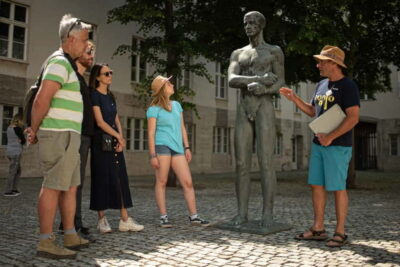
Berlin: Third Reich, Hitler, and WWII Walking Tour
Read our review →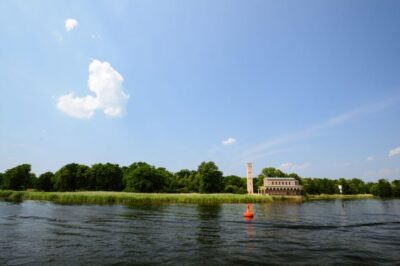
Berlin: 3-Hour World Heritage Cruise to Potsdam
Read our review →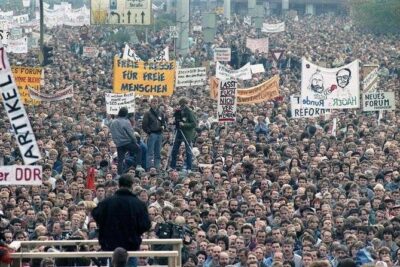
Cold War, Berlin Wall, Spies and the East Side Gallery
Read our review →
Berlin: History of the Third Reich Guided Walking Tour
Read our review →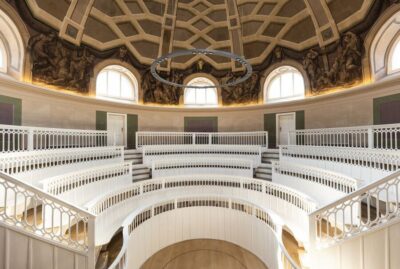
Browse the lists this tour appears in