
Review · ITALY
Guided Tour, Historic Center Sassi Rock Churches and Cave House
Matera’s Sassi are easy to admire and surprisingly easy to misunderstand. This walking tour helps you read the city properly, from the layered cave dwellings of Sasso Barisano to the rock church of Santa Maria de Idris and a furnished cave home that shows how families lived until the 1950s. Guides such as Patrizia, Lorenza, and Anna Maria have earned especially warm praise for clear explanations and patience.
I like the way the tour combines big views with real interiors. The Barisano viewpoint gives you the overall picture, while the church and cave house show what life looked like at close range. I also like the practical value: for $26.60, you get about two hours with an English-speaking guide and admission to both main interiors.
The main drawback is the walking. Steps, uneven cobbles, and heat are part of the Sassi, and this is not a good choice if you have limited mobility. Drivers should also plan carefully, since parking near the meeting point can be difficult and the meeting instructions may need close attention.
Key points at a glance
- Santa Maria de Idris included: Enter one of Matera’s best-known rock churches, with about 20 minutes set aside for the visit.
- A real cave home: The Casa Grotta contains traditional furnishings and tools, showing domestic life in the Sassi until the 1950s.
- Two sides of old Matera: The route covers the historic center, Sasso Barisano, and Sasso Caveoso.
- Strong local guiding: Patrizia, Lorenza, Anna Maria, and other guides have been praised for clear English, local knowledge, and patience.
- Small enough to manage: The maximum group size is 20, though some departures have been much smaller.
- Allow for rugged walking: Wear shoes with good grip and expect stairs, slopes, and rough ground.
Why a guide helps in Matera’s Sassi
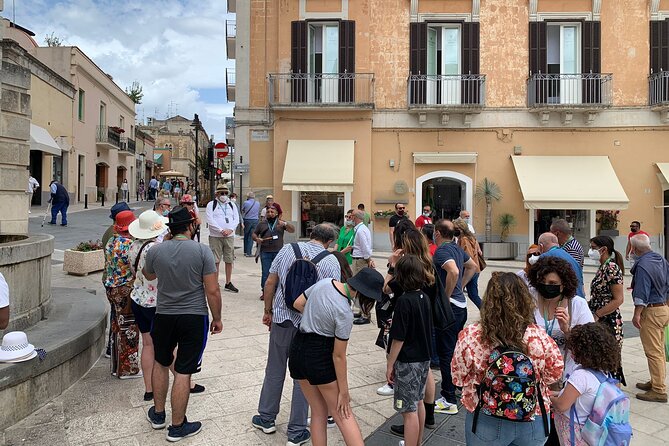
At first glance, Matera can look like a maze of stone lanes, stairways, balconies, and cave openings. You can certainly walk through it alone, but it is hard to understand what you are seeing without some explanation. A dark opening may once have been a home, a stable, a workshop, an oil mill, or a place of worship.
This tour gives you the basic story as you move. The guide points out buildings, courtyards, churches, and views that are easy to pass without noticing. You also hear about ordinary routines, shared spaces, work, devotion, and the way families adapted to homes carved directly into the rock.
That context is the real reason to book. The tour is not just a walk to photo stops. It helps you connect the shape of the Sassi with the people who lived there. I especially value that the route includes both broad viewpoints and enclosed spaces. The first shows the scale of the districts. The second makes the past feel more concrete.
The guides are a major part of the experience. Patrizia has been praised for clear English, a calm pace, and taking care of the group in hot weather. Lorenza has received similar praise for explaining Matera’s culture and past. Anna Maria, who was born in Matera and lived there most of her life, has also led the walk. The exact guide depends on the departure, but the strongest pattern is clear: a good local guide adds a lot here.
More Old Town and Historic Centre Walks in Italy
- Rome in a Day Tour with Vatican, Colosseum and Historic Center
★ 4.5 · 1,042 reviews - Rome Food Tour in the Historic Centre with 8+ Food Tastings
★ 5.0 · 1,000 reviews - Genoa: 2-Hour Guided Walking Tour of the Historical Center
★ 4.2 · 605 reviews
Starting in Piazza Vittorio Veneto and the old center
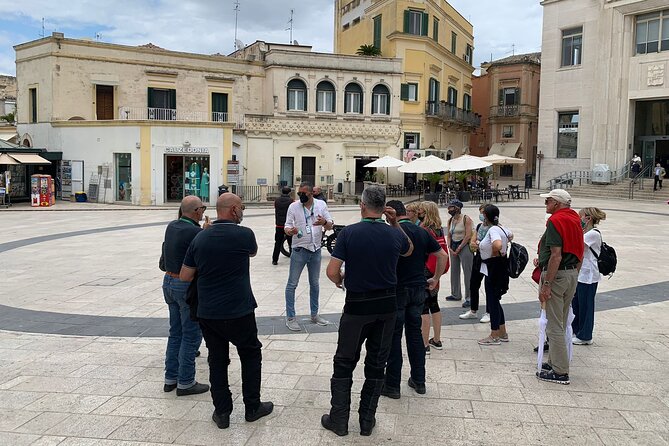
The route begins from the central office at Via Don Giovanni Minzoni 13, then moves into the heart of Matera around Piazza Vittorio Veneto. This square is one of the city’s main meeting places, so it gives you a useful starting point before the route turns toward the older districts.
The opening section focuses on the historic center. You pass through alleys, small squares, portals, historic facades, and monuments while the guide explains how Matera changed over time. The city is not only a collection of ancient cave dwellings. It also has later buildings and daily life, and the opening walk helps you see how those parts fit together.
I like this gradual start. You are not dropped straight into a pile of caves with no frame of reference. Instead, you move from the public center into the Sassi, watching the architecture change as the route continues.
The guide also helps with orientation. Google Maps can be confusing around the old lanes and stairs, so having someone lead the way means you can look around instead of staring at your phone. That is especially useful if you have only a short stay in Matera and want an efficient first look at the old city.
Seeing Sasso Barisano from above
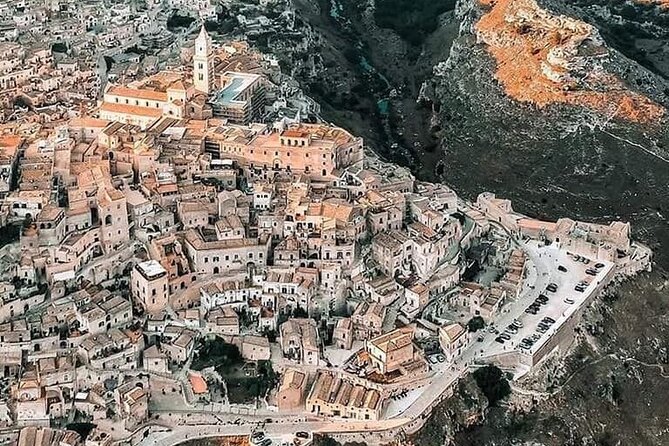
One of the early highlights is the viewpoint over Sasso Barisano. From above, you can see the district as a dense network of cave homes, rock churches, lanes, and terraces. This is the moment when the Sassi start to make visual sense.
The guide explains how the neighborhood was arranged and how people lived within it. You get a better idea of the relationship between homes, shared spaces, and religious buildings. The viewpoint also gives you time for photographs before the route moves toward the more detailed visits.
There is a practical benefit here. You see the structure of Sasso Barisano without immediately walking every narrow lane. That saves energy and gives you a map in your head. Later, when you enter the Sassi more closely, you already understand the larger pattern.
Do not expect a long stop. The listed timing is about 10 minutes, so treat it as a focused orientation point rather than a full sightseeing session. Still, it is an important part of the route because the Sassi are easier to understand from above before you enter their folds.
Entering Santa Maria de Idris
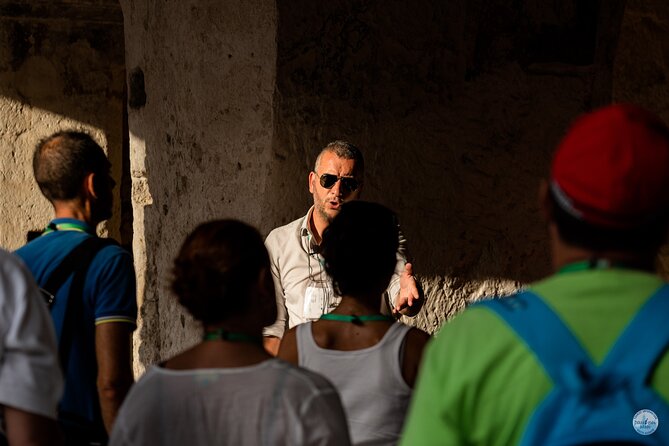
The tour includes admission to the Church of Santa Maria de Idris, located in the San Giovanni in Monterrone complex. This is one of Matera’s rock churches, cut into the stone rather than built as a conventional freestanding church.
The visit lasts about 20 minutes. Inside, the guide explains the church and its place in Matera’s religious and artistic story. The stone setting gives the visit a very different feel from the open streets. You move from bright views and broad lanes into a compact interior shaped by the rock itself.
This stop matters because it shows that the caves were not only homes. The Sassi also held places of worship, work areas, and shared spaces. Without entering a rock church, you might understand Matera mainly as a striking residential district. The interior visit fills in an important part of the picture.
The church is also one of the tour’s clearest value points. Admission is included, and a guided visit can help you notice details you might otherwise pass over. The entrance may be particularly useful at busy times, when an organized group can move through more easily than someone trying to work out the process alone.
Same city, a different century:
- Pompeii: Entry Ticket and Guided Tour with an Archaeologist
★ 4.8 · 19,459 reviews - Colosseum: Underground and Ancient Rome Tour
★ 4.7 · 12,691 reviews - Pompeii: Small Group Tour with an Archaeologist
★ 4.8 · 12,264 reviews - Pompeii Small Group Tour with an Archaeologist
★ 5.0 · 6,593 reviews
Walking through Sasso Caveoso
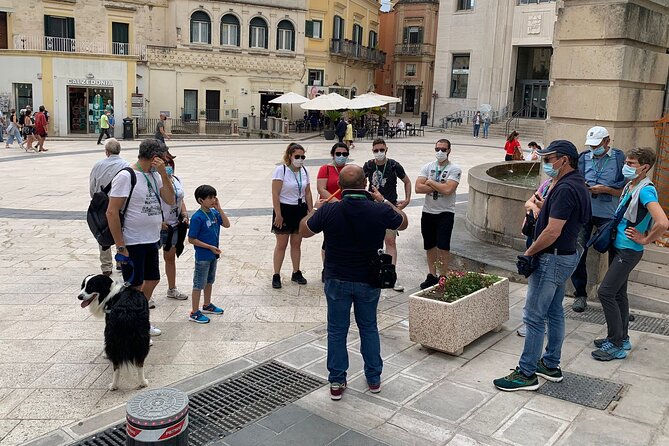
The route then turns to Sasso Caveoso, often regarded as the most recognizable part of the Sassi. Here the walk becomes more about streets, courtyards, homes, and the way the neighborhood worked as a community.
You pass through old residential areas where families shared courtyards and common spaces. The guide explains how people used these settings and how daily life was organized. This is where the tour moves beyond the postcard view. You start to see the Sassi as a place shaped by chores, family life, work, and limited space.
The route also includes underground oil mills. These are reminders of local ingenuity and agricultural work, showing how food production fitted into the rock-built environment. The guide’s explanations help you understand why these spaces mattered rather than treating them as just another unusual room.
Another stop is the so-called barbarian cemetery, an archaeological site connected with older burial practices. The details here add another layer to Matera’s long human story. It is not simply a neighborhood from one period. The streets and caves carry traces of different uses and eras.
This section can be physically demanding. You should expect stairs and uneven surfaces, and the pace may vary with weather and the group. Several guides have been praised for slowing down in strong heat, offering breaks, and making room for questions. That makes the walk more comfortable, but it does not remove the need for sensible footwear and water.
Inside a traditional Casa Grotta
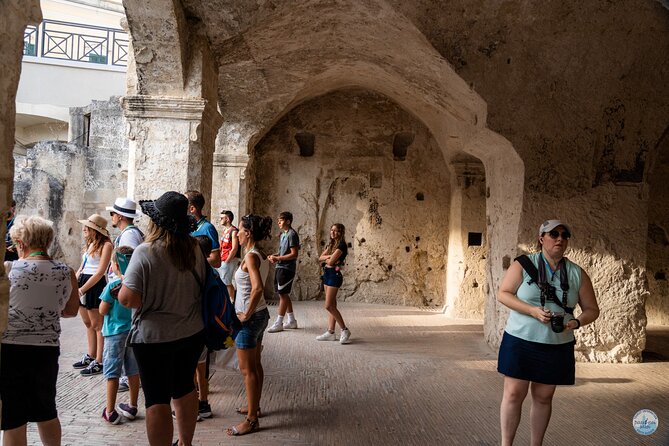
The Casa Grotta is the tour’s most direct look at domestic life. This cave home is furnished with traditional objects and tools, allowing you to see how several functions could fit into a tight rock-cut space.
You move through areas used for living, cooking, and household work. The point is not luxury. It is adaptation. Families made use of the available rock, arranged their belongings carefully, and shared limited space. The guide explains the habits and survival methods that shaped life in these homes until the 1950s.
I find this stop especially useful for families and anyone who wants more than an architectural overview. A view of the Sassi can be dramatic, but an interior with beds, tools, and household objects gives you a better sense of scale. You can picture how different everyday life was when the cave was a working home rather than a sightseeing stop.
The visit lasts about 15 minutes. That is enough for a clear introduction, though it is not a long museum visit. If you want an extended study of individual objects, you may find the time brief. For most people, the short stop works well within a two-hour walking tour.
How much walking should you expect?
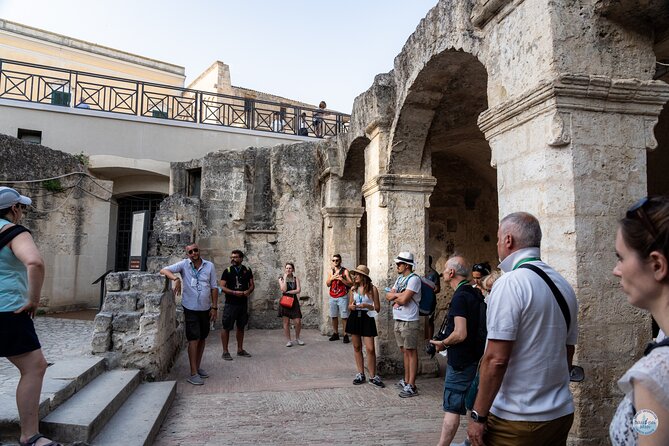
The advertised duration is about two hours, but several departures have lasted closer to two and a half hours. The difference may depend on questions, pace, heat, and the size of the group. You should plan for at least two hours without scheduling another activity too tightly afterward.
The Sassi involve steps up and down, sloping streets, cobbles, and rugged ground. One guide may keep an easy pace with frequent pauses, while another group may move more briskly. The tour is suitable for most people, but it is not designed for someone who cannot manage uneven walking.
Wear shoes with non-slip soles. Bring water, since bottled water is not included, and consider the weather before booking. The experience requires good weather, and hot afternoons can make the stone streets tiring. A later departure may be more pleasant in warm conditions, if that option is available.
Service animals are allowed, and the tour operates near public transportation. The route begins at Via Don Minzoni 13 and finishes at Piazzetta Pascoli, so you do not return to the starting point. That ending point is useful for continuing around the old city, but remember that you will need to arrange your next move from there.
Group size, language, and meeting details
The maximum group size is 20 people, though some groups have been as small as eight or twelve. A smaller group makes it easier to hear the guide, ask questions, and keep a comfortable pace. Even with a full group, the route is manageable if everyone stays together.
The tour is offered in English and uses a mobile ticket. Confirmation is provided at booking. I would still arrive early, because the meeting point is an address rather than a famous monument, and the old center can be confusing. One departure involved a late arrival and trouble finding the office, although the provider’s staff helped locate the group.
If you are driving, do not assume you can pull up and park beside the meeting point. Matera is busy and parking is limited. It is wiser to allow extra time for parking and walking to Via Don Giovanni Minzoni 13.
Is $26.60 good value?
At $26.60 per person, the price is reasonable for an English-speaking walking tour that includes two paid entrances. You are paying for a local guide, route planning, historical context, Santa Maria de Idris, and the Casa Grotta, not just for a stroll through public streets.
The value is strongest if this is your first time in Matera. You get an efficient overview of the historic center and both Sassi districts, then enter places that would be less meaningful without explanation. The tour also saves you from spending time lost among the lanes.
The price is less attractive if you prefer exploring alone or already know Matera well. The route is focused on orientation and interpretation rather than long, leisurely time at every stop. Snacks and bottled water are not included, so carry what you need.
The experience is commonly booked around 16 days ahead. That suggests you should reserve before your visit if your dates are fixed, especially if you want a small group or a particular time of day.
Who should book this Matera walking tour?
I would choose this tour for a first visit, a short stay, or anyone who wants the Sassi explained by a local English-speaking guide. It works well for couples, families with older children, and active adults who can handle stairs and uneven streets.
It is also a good first activity in Matera because it gives you a map of the city. Afterward, you can return to the lanes and viewpoints that interested you most, now with a better sense of what you are seeing.
I would think twice if you have limited mobility, dislike group walks, or want a slow photographic outing with long pauses. The route covers a lot in about two hours, and the Sassi are physically demanding in hot weather.
Free cancellation is available up to 24 hours before the start time. Changes or cancellations inside that window are not accepted for a refund. If bad weather or the minimum group size cancels the tour, you are offered another date or experience, or a full refund.
Should you book it?
Book this tour if you want the Sassi to make sense, not just look beautiful. The included rock church and cave house give the walk substance, while the viewpoints and old lanes show Matera at its most striking.
The strongest reason to go is the guiding. Patrizia, Lorenza, Anna Maria, and the other local guides are praised for clear English, patience, and an ability to explain both major events and small details. Just arrive early, wear grippy shoes, carry water, and be ready for stairs.
If you can manage the walking, this is a well-priced and efficient introduction to Matera’s old center, Sasso Barisano, and Sasso Caveoso.
FAQ
Where does the tour begin?
The tour begins at the Central Office at Via Don Giovanni Minzoni 13, 75100 Matera, Italy.
Where does the tour end?
The tour ends at Piazzetta Pascoli in Matera.
How long does the tour last?
The advertised duration is about two hours. Some departures have lasted around two and a half hours.
What language is the tour offered in?
The tour is offered in English.
Is admission to Santa Maria de Idris included?
Yes. Admission to the Church of Santa Maria de Idris in San Giovanni in Monterrone is included.
Is the cave house visit included?
Yes. Entry to the traditional Casa Grotta is included.
Is bottled water included?
No. Bottled water and snacks are not included.
How many people can join the tour?
The maximum group size is 20 people. Some departures may be smaller.
Is the tour suitable for people with limited mobility?
The tour requires walking on steps, cobbles, and rugged ground, so it is not suitable for people with limited mobility.
Can I cancel for a full refund?
Yes, if you cancel at least 24 hours before the experience starts. Cancellations or changes made less than 24 hours before the start time are not refunded.
Just added around Italy
- Guided Cultural Tour of the Godfather Film in Messina★ 5.0 · 31 reviews
- Guided tour of the Riace Bronzes and the Archaeological Museum of Reggio Calabria★ 5.0 · 44 reviews
- SU NURAXI BARUMINI Unesco World Heritage Site★ 5.0 · 129 reviews
- Brescia the Unexpected: History, Local Stories & a drink★ 5.0 · 31 reviews
- Bolognese Cooking Class with Margherita in the Historic Center★ 5.0 · 26 reviews
- Tower and Power, Virtual tour in Medieval Bologna★ 4.5 · 54 reviews
- Bologna historical art walking tour with hidden gems and tastings★ 5.0 · 108 reviews
- Best of Bologna in one day : Food, architecture, art and history★ 5.0 · 27 reviews
Italy History Tours, compared.
Pompeii: Entry Ticket and Guided Tour with an Archaeologist
Read our review →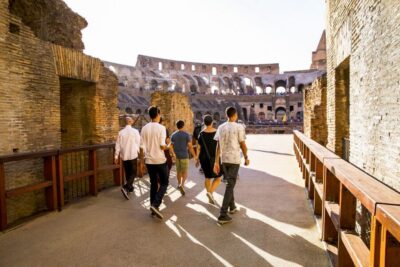
Colosseum: Underground and Ancient Rome Tour
Read our review →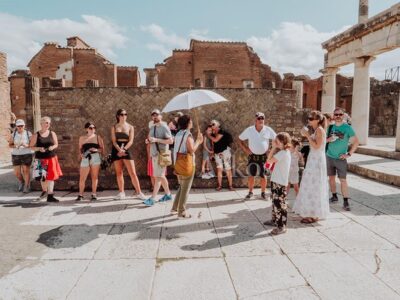
Pompeii: Small Group Tour with an Archaeologist
Read our review →Pompeii Small Group Tour with an Archaeologist
Read our review →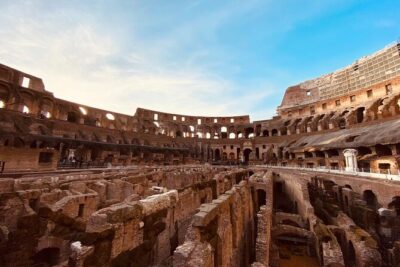
Rome: Colosseum with Arena, Roman Forum and Palatine Guided Tour
Read our review →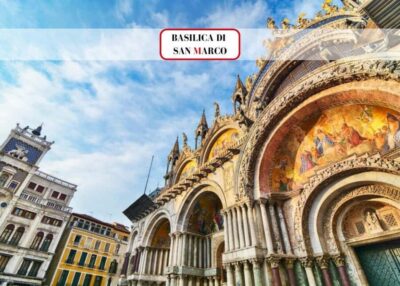
Venice: St. Mark’s Basilica Guided Tour & VR History Intro
Read our review →
Colosseum with Arena, Roman Forum and Palatine Hill Guided Tour
Read our review →
Herculaneum: Skip-the-Line Guided Tour with Archaeologist
Read our review →Browse the lists this tour appears in