
Review · ITALY
Homemade Pasta in a Peaceful Medieval Village
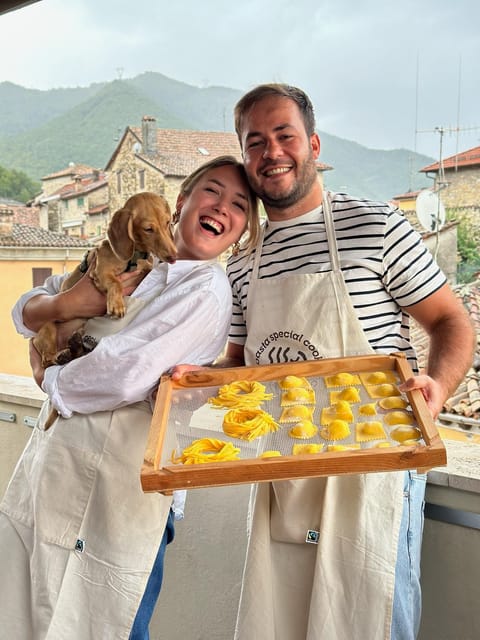
The best part of this experience is that the cooking happens in a real family home in Calestano, a medieval village about 40 minutes from Parma. Virginia and her mother, Mamma Nadia, teach you to make tagliatelle and stuffed ravioli by hand, then serve the meal on their terrace above the Parma hills.
I like the small class size and the chance to learn practical techniques you can repeat at home. I also like the easy Parma transfer option, especially since reaching a hill village without a car can be awkward. The main consideration is the climb to the apartment, with one visitor counting 54 steps to the third floor, so ask about access if stairs are difficult.
What makes this pasta class special
- A real family kitchen: Virginia and Mamma Nadia teach traditional methods in their home rather than in a formal cooking school.
- Two fresh pasta styles: You make both silky tagliatelle and stuffed ravioli from scratch.
- A terrace meal with a view: Antipasti, wine, pasta, tiramisu, and coffee follow the hands-on lesson.
- A peaceful village setting: Calestano gives you a taste of rural Parma away from the city crowds.
- Small-group attention: The class is described as intimate, with a maximum of eight people and a general limit of ten.
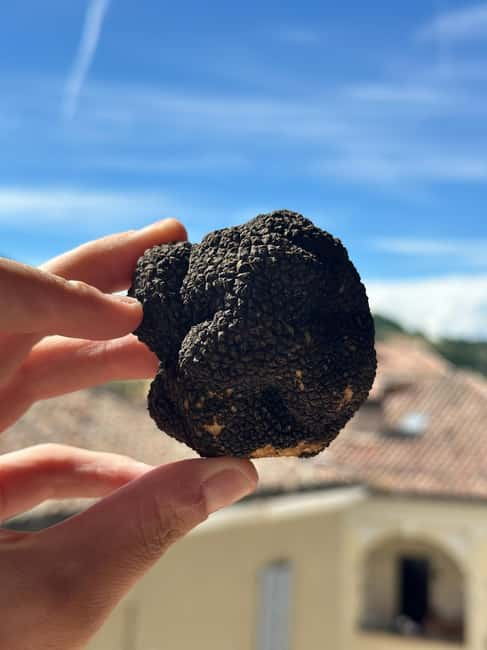
- Optional black truffle: You can add freshly foraged truffle from the surrounding woods for an extra charge.
From Parma to Calestano in 40 minutes
This is not a quick pasta demonstration tucked into a city restaurant. You leave Parma and head into the province, where Calestano offers a slower setting and a stronger sense of place. The village is medieval, quiet, and surrounded by the rolling hills associated with the Parma countryside.
If you do not have a car, transportation can be arranged from Hotel Maria Luigia in Parma. You need to request this service when booking. Hotel pickup and drop-off are not included as a standard part of the experience, so confirm the transfer details rather than assuming that any Parma hotel is covered.
That transfer matters. The class takes place around 40 minutes from central Parma, and public transport may not be convenient for a short afternoon activity. With the arranged ride, you can focus on the food and scenery instead of trying to piece together a route into the hills.
If you drive, you receive the exact address in Calestano. Keep in mind that this is a home-based experience, not a large venue with a prominent sign and reception desk. Save the address and allow enough time for the journey.
More Medieval History Tours in Italy
- Private Tour of the Medieval Village of Ostuni by Tuk Tuk
★ 4.5 · 278 reviews - Discover the Medieval Charm of Siena on a Private Walking Tour
★ 5.0 · 247 reviews - Roman countryside Food & Wine Tasting in a medieval winery
★ 4.5 · 220 reviews
Virginia and Mamma Nadia welcome you home
Virginia leads the class in Italian and English, with Mamma Nadia adding the family touch and her own kitchen knowledge. The format is personal. You are not simply watching a chef prepare pasta while standing behind a counter. You work with the dough, ask questions, and get corrections as you go.
That hands-on guidance is especially useful for first-time pasta makers. Virginia explains and demonstrates the process, then helps you adjust your technique. Several details matter here: how the dough feels, how thin to roll it, how to shape the pasta, and how to avoid ending up with ravioli that open in the pot.
The small group helps. The published information gives a maximum of eight people for the intimate class, while the general group limit is ten. Either way, this is a much more personal setup than a large workshop. If you attend alone, the format also gives you an easy way to meet other people around a shared table.
Two friendly cats, Cesare and Cindy, may inspect the activity from nearby. They are part of the home atmosphere, not a scheduled attraction, but their presence adds to the feeling that you have been welcomed into family life rather than brought into a polished tourist set.
Making tagliatelle and stuffed ravioli
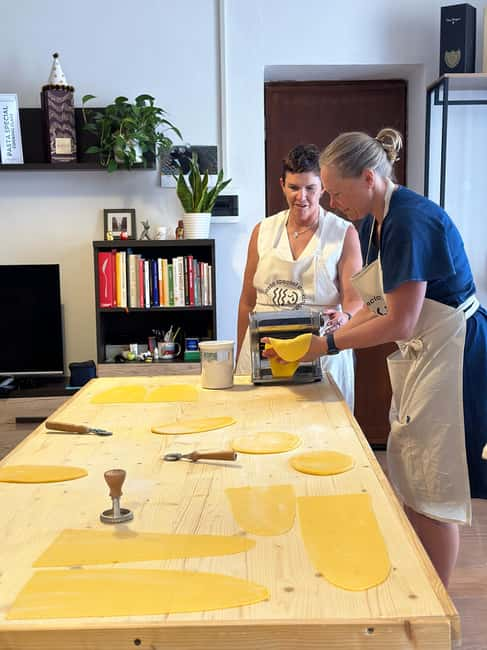
The central lesson covers two pasta classics. First comes the basic dough, made by hand with organic, seasonal ingredients. Some ingredients may come from the family garden, which gives the cooking a direct connection to the surrounding area.
Tagliatelle teaches you the value of even rolling and careful cutting. The pasta should be thin enough to cook lightly but sturdy enough to hold its shape. It is a simple dish, yet small changes in thickness can affect the final texture. This is the sort of skill that stays useful after your holiday.
Ravioli adds another layer. You learn to work with filling, portioning, folding, and sealing. The goal is not only to make attractive parcels, but to keep them closed while they cook. Virginia’s corrections are part of the value, since a written recipe cannot easily tell you when dough is too dry or when a seal needs more pressure.
You make the pasta yourself, but do not expect to prepare every part of the meal. The host family handles some elements, including the sauces and much of the surrounding meal. One participant especially wished they had been involved in making the sauce, so this class is best understood as a pasta workshop followed by a family meal, not a full lesson in every course.
That division is sensible for a three-hour experience. You get enough time to learn the main pasta techniques without turning lunch into an all-day production.
A terrace lunch with local wine and tiramisu
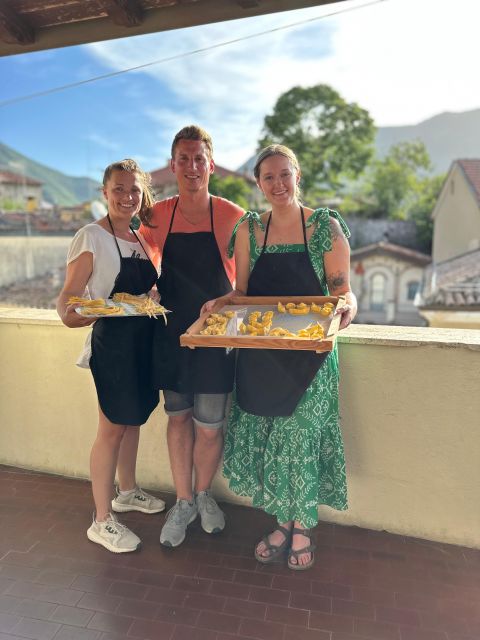
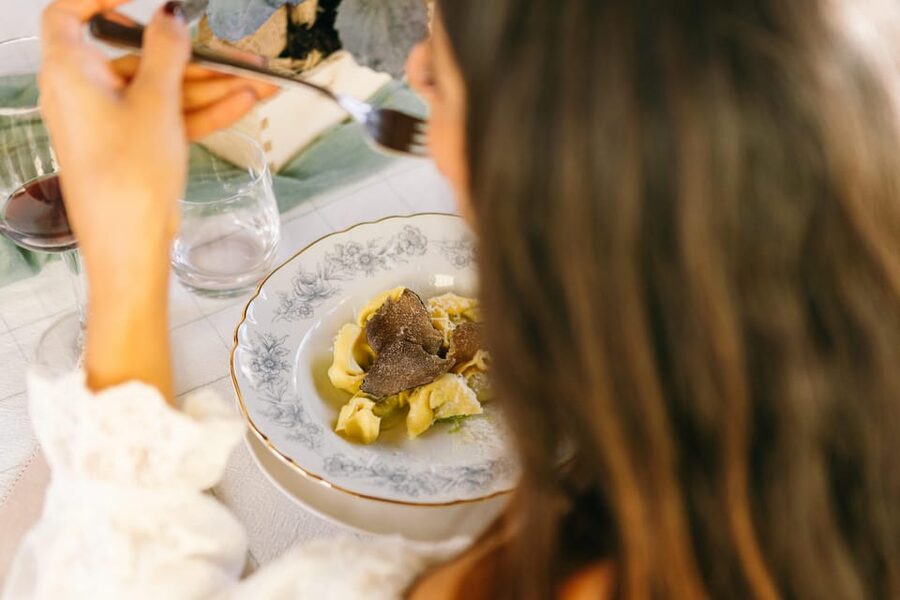
After the work comes the reward: a generous meal on the panoramic terrace. The setting is a major part of the experience. You sit above the village and look across the Parma hills while eating pasta made only a short time earlier.
The meal begins with antipasti and local wine. Then come the tagliatelle and ravioli you prepared. The menu also includes bottled water, alcoholic beverages, coffee or tea, and a homemade tiramisu to finish.
This is not a tasting menu built around tiny portions. The wording and food descriptions point to a long, relaxed meal, with conversation and time to enjoy the view. If you want to understand the Italian habit of treating food as a social occasion, this part may matter as much as the pasta lesson.
Mamma Nadia’s tomato sauce receives particular praise for its flavor. It is a useful reminder that simple Italian food depends on good ingredients and careful balance, not a long list of additions. The local wine also forms an important part of the meal, though the specific producer and style are not provided.
The terrace setting is beautiful, but you should keep expectations practical. Weather can affect how much time you spend outside, and the experience is held at a private home rather than a restaurant with multiple indoor dining areas. The setting is part of the appeal, but it also means the format is informal and home-based.
Same city, a different century:
- Pompeii: Entry Ticket and Guided Tour with an Archaeologist
★ 4.8 · 19,459 reviews - Colosseum: Underground and Ancient Rome Tour
★ 4.7 · 12,691 reviews - Pompeii: Small Group Tour with an Archaeologist
★ 4.8 · 12,264 reviews - Pompeii Small Group Tour with an Archaeologist
★ 5.0 · 6,593 reviews
The black truffle option
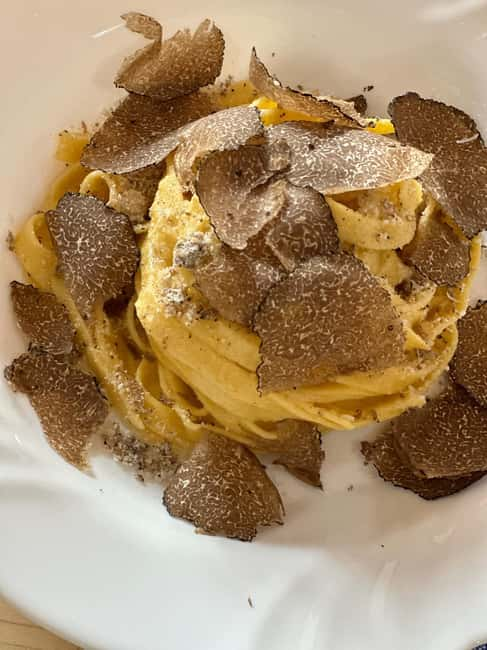
Calestano is surrounded by woods where black truffles can be found. You can request a truffle addition for an extra cost, making the meal more closely tied to the local food culture.
The truffle option is not included in the $105 base price, so ask about the current supplement before booking. It is best suited to serious food lovers who want to add a local specialty and do not mind paying more for it.
You should also see it as an optional enhancement, not a reason to book the class by itself. The standard experience already includes two pasta dishes, antipasti, wine, dessert, and the family setting. If you are watching your budget, the regular menu offers plenty.
Is $105 good value?
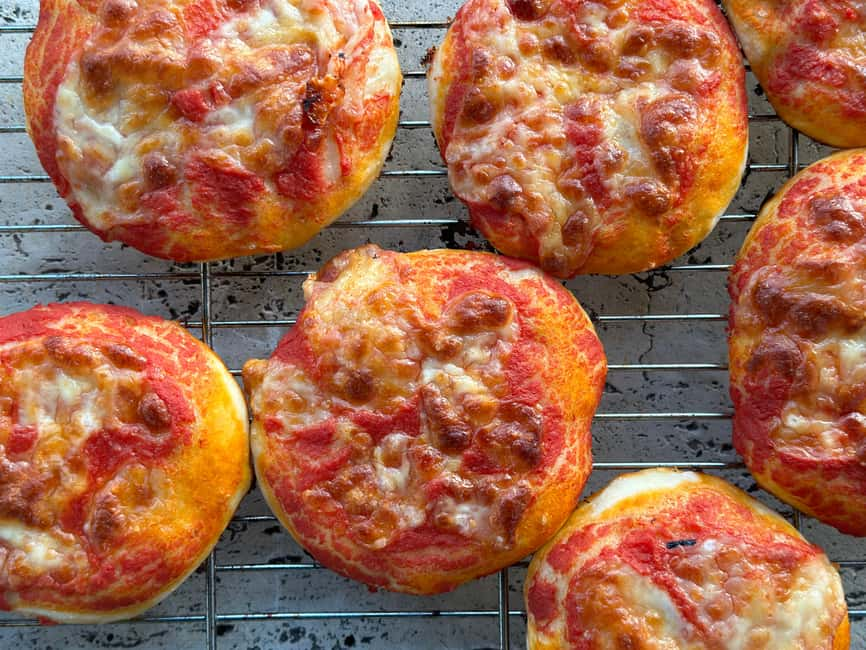
At $105 per person, this is not the cheapest pasta lesson you will find in Italy. The price makes more sense when you count the full package: a three-hour class, two pasta preparations, a meal, wine, dessert, coffee or tea, and the rural setting outside Parma.
Transportation is a separate issue. The transfer from Parma can be arranged, but hotel pickup and drop-off are not included in the listed price. If you need the ride, ask exactly what it costs and where you meet. Even with an added transfer charge, the convenience may be worthwhile because the class is outside the city.
The value is strongest if you want a personal experience rather than a basic cooking tutorial. You are paying for instruction from Virginia and her mother, the chance to cook in a family home, and a meal with views. If your only goal is to learn a quick pasta recipe, a city class may cost less and take less time.
I would also compare this with the cost of a good meal in Parma. Here, part of your meal is made by you, but you also receive instruction and a setting that a normal restaurant cannot provide.
Who will enjoy this experience most?
This class suits couples, solo visitors, food-focused travelers, and anyone who likes meeting local people through cooking. It also works well for someone who wants a quieter half-day away from Parma.
You do not need to be an experienced cook. The teaching is designed around demonstration, practice, and correction. You leave with techniques that can help you make pasta at home, not just a pleasant memory of watching somebody else cook.
Solo visitors should consider it. The class creates an easy social setting, and the small group encourages conversation. One person attended alone and shared the activity with other international participants, turning the meal into a cultural exchange as well as a cooking lesson.
Families need to check the age rule. Children under seven are not accepted, while an eight-year-old has enjoyed the class in the past. The formal restriction still matters, so do not assume that every young child can join.
The experience is not suitable for anyone with gluten intolerance. It is also not suitable for people over 95 according to the stated restrictions.
Practical points before you book
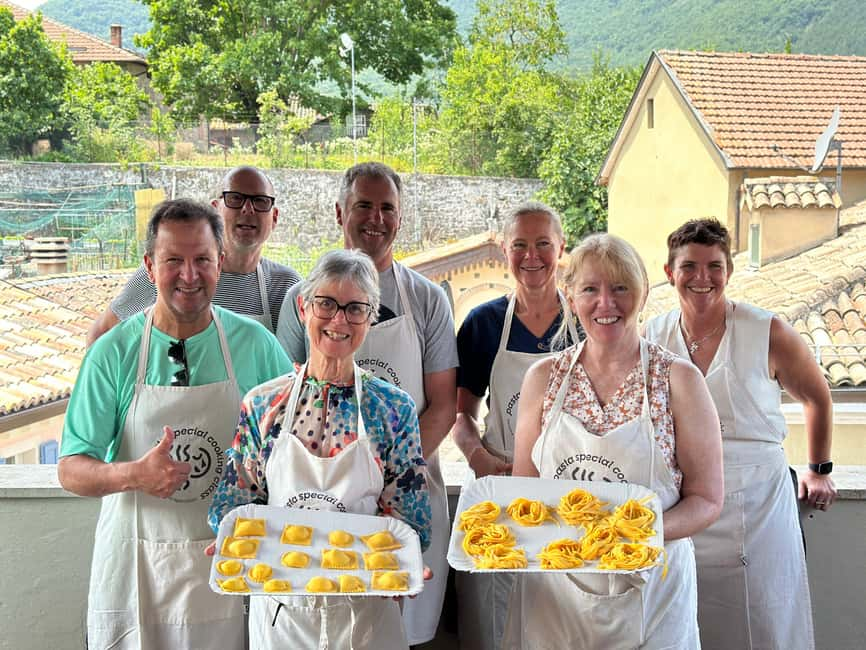
The apartment is reached by stairs. One detailed account counted 54 steps to the third floor, and the climb was considered worthwhile, but this is still an important point for anyone with limited mobility.
Wear clothes you can work in. Pasta making involves flour, dough, and hands-on shaping, so this is not the place for clothing that must stay spotless. The experience includes wine, but it is wise to tell the host about any food concerns when you book.
The host speaks Italian and English. Ask in advance if you want transportation from Parma or if you are considering the black truffle option. Also remember that the exact Calestano address is provided to people driving themselves, while Hotel Maria Luigia is the meeting point for those using arranged transportation.
The experience lasts three hours, but the transfer adds time to your day. Plan it as a half-day outing rather than trying to squeeze it between two tightly scheduled Parma visits.
Cancellation is flexible: you can cancel up to 24 hours ahead for a full refund. You can also reserve and pay later, which helps if your Italian plans are still changing.
My verdict: book it for the setting and the meal
I would recommend this pasta class if you want more than a standard cooking lesson. The strongest reasons to book are the warm family setting, Virginia’s patient instruction, Mamma Nadia’s cooking, and the terrace meal overlooking the Parma hills.
It is especially good for people who value local contact and a slower pace. The ride to Calestano, the stair climb, and the separate transportation cost are the tradeoffs. The class also will not show you how to prepare every part of the meal, since the family handles some sauces and courses.
Book it if you like making food with your hands and sitting down afterward for a generous meal with wine and conversation. Skip it if you need step-free access, cannot eat gluten, or want a fast city-center activity. For everyone else, this offers a memorable way to connect Parma’s food culture with a real village home.
FAQ
Where does the pasta class take place?
The experience takes place in Calestano, a medieval village in the province of Parma, about 40 minutes from Parma city center. People driving receive the exact address after booking.
Where do I meet if I need transportation from Parma?
Hotel Maria Luigia is the meeting point for arranged transportation. You must request the transportation service when booking.
Is transportation included in the price?
Hotel pickup and drop-off are not included as standard. A private transfer from Parma can be arranged, so ask about the service and cost when booking.
What pasta will I learn to make?
You will learn to make fresh tagliatelle and stuffed ravioli by hand, starting with the dough and using traditional techniques.
Who teaches the class?
Virginia leads the class with her mother, Nadia, also known as Mamma Nadia. The experience is offered in Italian and English.
What food and drinks are included?
The experience includes the pasta workshop, antipasti, your freshly made pasta, lunch, dinner, bottled water, alcoholic beverages, coffee or tea, and tiramisu.
Can I add black truffle?
Yes. A black truffle option is available for an extra cost. The truffle is freshly foraged from the woods around the area.
Is the class suitable for children?
Children under seven are not accepted. The stated information also says the experience is not suitable for people over 95 years old.
Can someone with gluten intolerance join?
No. The experience is not suitable for people with gluten intolerance because the main activity involves making and eating fresh pasta.
More Pasta in Italy
- Milan: Fresh Pasta and Tiramisù Class in A Historical Home
★ 4.9 · 195 reviews - Rome: Five Shapes of Pasta Cooking Class in Ancient Tavern
★ 5.0 · 102 reviews
Just added around Italy
- Guided Cultural Tour of the Godfather Film in Messina★ 5.0 · 31 reviews
- Guided tour of the Riace Bronzes and the Archaeological Museum of Reggio Calabria★ 5.0 · 44 reviews
- SU NURAXI BARUMINI Unesco World Heritage Site★ 5.0 · 129 reviews
- Brescia the Unexpected: History, Local Stories & a drink★ 5.0 · 31 reviews
- Bolognese Cooking Class with Margherita in the Historic Center★ 5.0 · 26 reviews
- Tower and Power, Virtual tour in Medieval Bologna★ 4.5 · 54 reviews
- Bologna historical art walking tour with hidden gems and tastings★ 5.0 · 108 reviews
- Best of Bologna in one day : Food, architecture, art and history★ 5.0 · 27 reviews
Italy History Tours, compared.
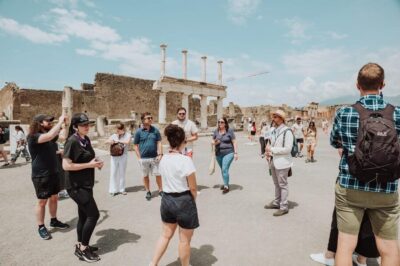
Pompeii: Entry Ticket and Guided Tour with an Archaeologist
Read our review →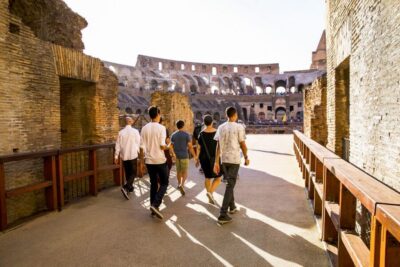
Colosseum: Underground and Ancient Rome Tour
Read our review →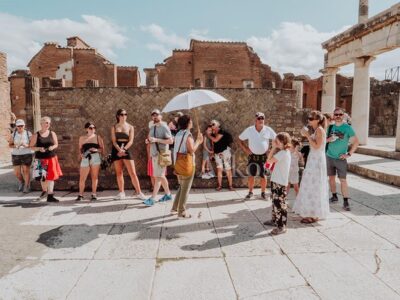
Pompeii: Small Group Tour with an Archaeologist
Read our review →Pompeii Small Group Tour with an Archaeologist
Read our review →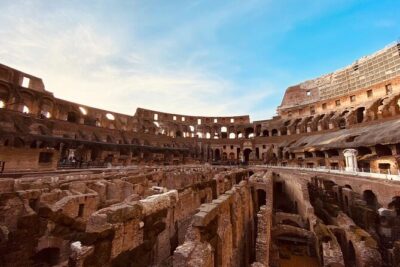
Rome: Colosseum with Arena, Roman Forum and Palatine Guided Tour
Read our review →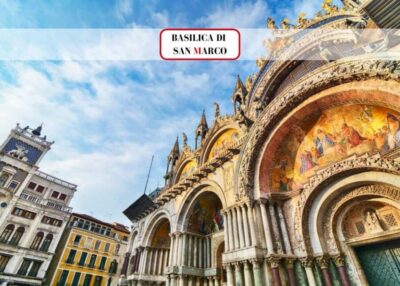
Venice: St. Mark’s Basilica Guided Tour & VR History Intro
Read our review →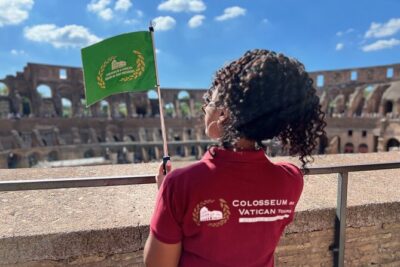
Colosseum with Arena, Roman Forum and Palatine Hill Guided Tour
Read our review →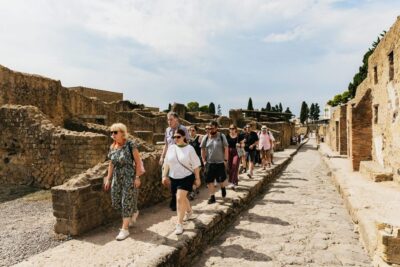
Herculaneum: Skip-the-Line Guided Tour with Archaeologist
Read our review →Browse the lists this tour appears in