
Review · ITALY
MANTOVAGANDO: Exploring Mantua’s Historic Center
Mantua’s old center is compact, handsome, and full of places that make more sense with a guide beside you. This one-hour walk links Piazza Sordello, Broletto Square, Piazza delle Erbe, and the grand Basilica of Sant’Andrea, with a final look at the city’s special views and its curious connection to three lakes.
I like the slow pace and the way the walk stays in the center instead of rushing from one distant sight to another. I also like that the route includes Sant’Andrea, Mantua’s major church, rather than treating the town as a string of pretty squares. Guide Eleonora Scacchetti has earned repeated praise for being prepared, courteous, and willing to answer questions.
The main thing to consider is the short one-hour format. It gives you a useful introduction, but the stops move along quickly, and the Bibiena Scientific Theater can only be visited if it is not being used for a concert or conference. The tour is in Italian, so you should be comfortable following a live explanation in that language.
Key points at a glance
- Piazza Sordello starting point: Meet in front of the Palazzo Ducale ticket office, which is only the meeting place and is not involved in the walk.
- Four central landmarks: The route covers Broletto Square, Piazza delle Erbe, Sant’Andrea Basilica, and a final sightseeing stop.
- Sant’Andrea gets the most time: Allow roughly 30 minutes for the church, the longest stop on the walk.
- Bibiena Theater is conditional: A visit may be included if the theater is free from concerts and conferences.
- A useful first look at Mantua: The compact route works well early in your stay, before exploring larger Gonzaga sites in detail.
- Italian-language guiding: The walk is wheelchair accessible, and comfortable shoes are still a sensible choice.
Starting beneath Mantua’s Gonzaga past
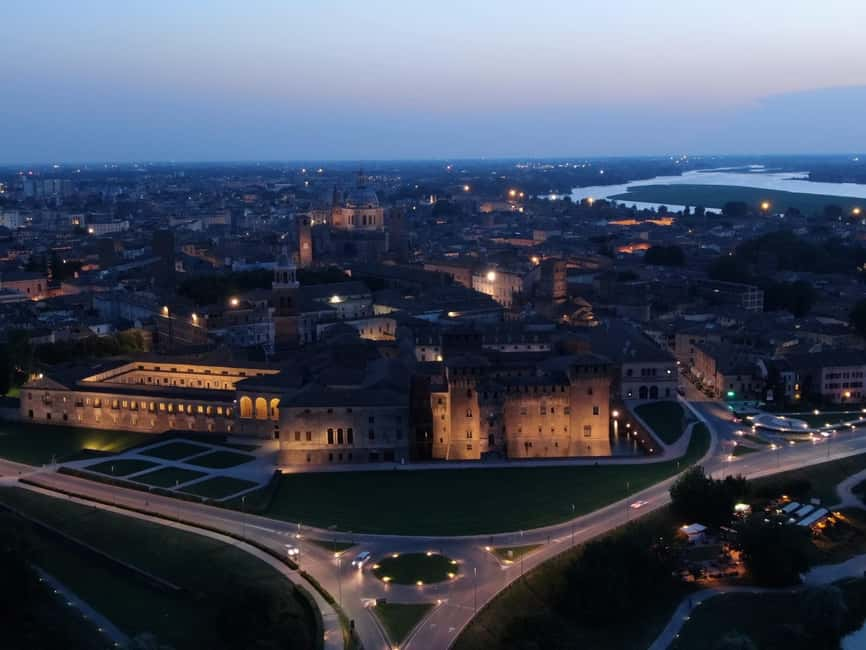
The meeting point is in Piazza Sordello, in front of the ticket office for the Palazzo Ducale, also called the Doge’s Palace. This square is a fitting place to begin. You are surrounded by the old seat of Mantua’s ruling Gonzaga family, yet the tour does not take you through the full palace complex.
That distinction matters. The ticket office is simply an easy landmark for meeting your guide. It has nothing to do with the walking tour, so you should not expect palace admission or a detailed visit to the Ducal Palace as part of this experience.
From here, the route turns into the historic center. I like this arrangement because you begin in one of Mantua’s grandest public spaces, then move into the smaller squares and streets where the city feels more local and lived-in. The walk is not built around a single blockbuster sight. Instead, it shows you how the center fits together.
With only one hour, the guide needs to keep the group moving. That is useful if you have limited time, but it also means this is an orientation walk rather than a long historical lecture at every stop. If you want to study the Ducal Palace, the Camera Picta, or other Gonzaga rooms, plan a separate visit.
More Old Town and Historic Centre Walks in Italy
- Rome in a Day Tour with Vatican, Colosseum and Historic Center
★ 4.5 · 1,042 reviews - Rome Food Tour in the Historic Centre with 8+ Food Tastings
★ 5.0 · 1,000 reviews - Genoa: 2-Hour Guided Walking Tour of the Historical Center
★ 4.2 · 605 reviews
Broletto Square and the shape of the old town
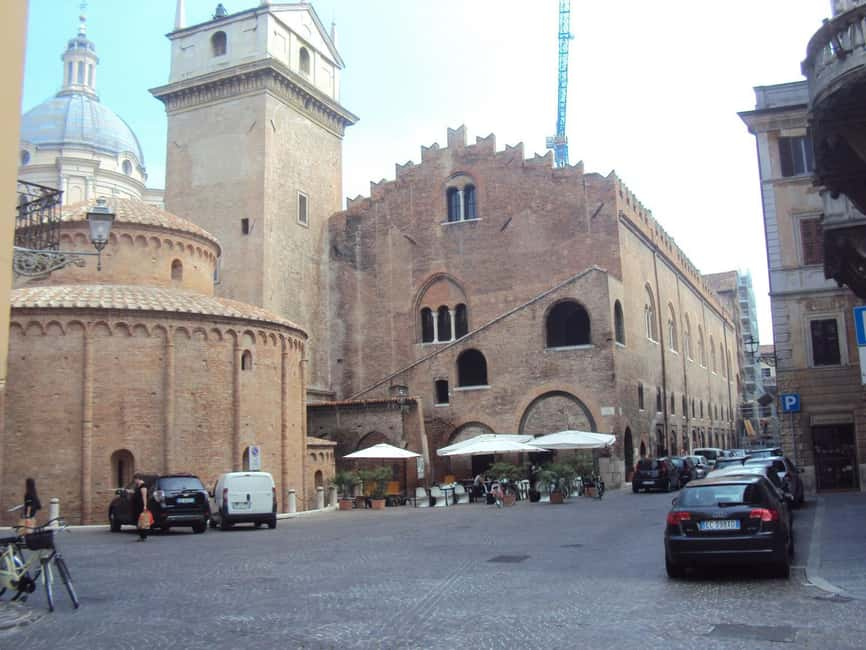
The first listed stop is Broletto Square, with about 10 minutes set aside for a guided visit. This is a short stop, but it helps you read Mantua’s urban form. The walk takes you from the broad ceremonial setting of Piazza Sordello into a more enclosed public space, where the city’s medieval and civic character comes forward.
Ten minutes is enough to hear the key points and take a few photographs. It is not enough for a detailed architectural study, so use this part of the tour to get your bearings. Pay attention to how the buildings frame the square and how close together the main historic areas are.
I find short stops like this most useful when the guide connects them to the next place. Mantua can look like a series of attractive streets if you explore it without context. A local guide can help turn those separate views into a clear route through the center.
The tour is also described as a search for hidden treasures. That phrase should be taken in the practical sense: look for small details along the way, not just the largest façades. The information provided does not promise a particular secret room or concealed monument, so you should expect the pleasure of noticing less obvious details rather than a special access visit.
Piazza delle Erbe, Mantua’s everyday historic stage
Next comes Piazza delle Erbe, again with around 10 minutes of guided attention. The square gives the walk a different mood from Piazza Sordello. Here, the focus is less on a single palace and more on the way Mantua’s public life has gathered around central streets and open spaces.
A short explanation can add real value here. You will already see the architecture, but a guide can point out what belongs to the civic center, what reflects religious life, and how the square connects with the rest of the old town. The stop also gives you another chance to pause, look up, and take photographs without losing the route.
Do not expect a long break for shopping or food. The walk is tightly timed, and the purpose is sightseeing. If you want to return to Piazza delle Erbe for a slower look, this tour helps you decide where to spend that extra time later.
The center of Mantua rewards unhurried walking. That is one of the best features of this experience. Even though the full tour lasts only an hour, it follows a gentle street-level rhythm rather than turning into a bus ride or a checklist of far-apart monuments.
Thirty minutes inside Sant’Andrea Basilica
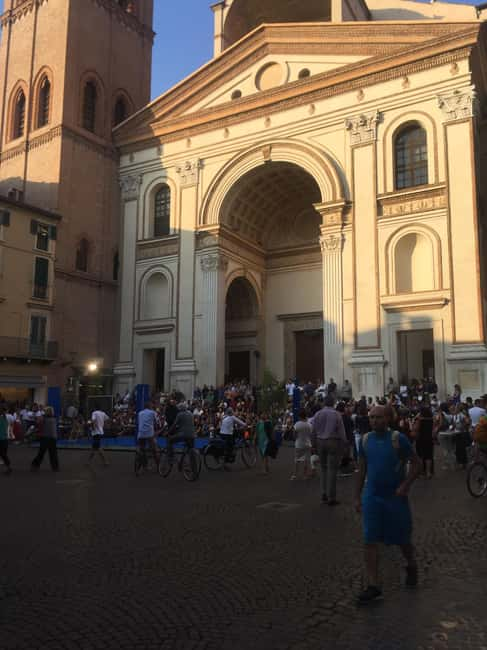
The longest part of the walk is the Basilica of Sant’Andrea, with approximately 30 minutes devoted to the visit. That makes the church the central sight of the tour, not a quick exterior photo stop.
Sant’Andrea is important enough to deserve this extra time. The basilica gives you a chance to move from Mantua’s streets and squares into a major religious interior, where scale and design change the feel of the visit. The provided route does not specify every interior feature that will be explained, so the exact emphasis may depend on the guide and the conditions inside.
Still, the time allocation tells you what to expect. You will have room to look around, listen, and ask questions rather than simply walk in and out. If you enjoy churches, architecture, or the way religious buildings shape an old city, this is likely to be the most rewarding stop.
Keep your camera ready, but remember that a church visit calls for a respectful pace. Comfortable shoes are listed as essential, and they make sense here and throughout the walk. Even a compact historic center can feel tiring if you spend the whole hour standing on hard streets.
One practical point is worth noting: the tour is wheelchair accessible. That is useful for anyone who needs step-free access, though the route still takes place in a historic center, and conditions can vary from one street or square to another. If you have specific mobility needs, it is sensible to confirm the details before booking.
Same city, a different century:
- Pompeii: Entry Ticket and Guided Tour with an Archaeologist
★ 4.8 · 19,459 reviews - Colosseum: Underground and Ancient Rome Tour
★ 4.7 · 12,691 reviews - Pompeii: Small Group Tour with an Archaeologist
★ 4.8 · 12,264 reviews - Pompeii Small Group Tour with an Archaeologist
★ 5.0 · 6,593 reviews
A possible look at Bibiena Scientific Theater
The tour description includes the Bibiena Scientific Theater when it is not occupied by a concert or conference. This is an appealing extra, but it is not guaranteed.
That condition is important. You should book this walk for its confirmed route through Mantua’s historic center and Sant’Andrea Basilica, not solely for the theater. If the building is available, it adds another layer to the city’s cultural life. If it is in use, the tour continues without that visit.
The same practical rule applies to any timed sightseeing walk: stay flexible. The guide may need to adjust the order or explain a place from outside when an interior is occupied. The information provided does not state that another attraction replaces the theater, so do not count on a substitute visit.
This is also where the one-hour length becomes most noticeable. There is not much spare time for delays. The advantage is that you get a focused introduction. The tradeoff is that a change in access can have a larger effect on the schedule than it would on a half-day tour.
The Three Lakes clue and Mantua’s special views
One of the experience’s more unusual themes is the prisoner of the three lakes. The supplied details do not explain the phrase in full, so I would treat it as a local clue to watch for during the walk rather than promise a specific story or stop that is not clearly named.
Mantua is closely associated with water, and the tour’s highlights also call out special views. On the final sightseeing section, look for the relationship between the old center and the surrounding setting. The route itself remains in the historic center, but the guide may help you understand why the city’s position matters.
This part is listed as about 15 minutes after the basilica. It sounds like a chance to pause and take in the city rather than enter another major monument. Bring a camera, as requested, but give yourself time to listen too. A good view is more useful when you know what you are looking at.
The exact viewpoint is not named, so I would not plan around one particular panorama. Instead, think of this as a closing look at Mantua from the street, after the guide has introduced its main squares and church.
What guide Eleonora adds to the walk
The experience is led by Eleonora Scacchetti, a tourist guide with Guidamica Mantova. The available feedback gives you a clear sense of what to expect from her guiding style: careful preparation, courtesy, and patience with questions are the qualities most often praised.
That matters on a short tour. An hour leaves little room for a guide who wanders off topic or gives vague directions. Eleonora’s strong points, as reflected in the feedback, suggest a walk that stays focused while still allowing questions.
There was one practical sound issue on a particular visit. The guide arrived without earpieces, and a microphone made crackling noise before it was switched off. That did not prevent the walk from being described as interesting, but it is a useful reminder that audio equipment can affect a group tour, especially in a square or busy street.
Because the language is Italian, you should also think about how comfortably you follow spoken Italian outdoors. Some content is shown in its original language. If you understand Italian well, the live explanations should feel natural. If you do not, you may miss much of the historical detail even if you can still enjoy the sights.
One hour, and what that means for value
The tour lasts one hour, with the listed time divided between Broletto Square, Piazza delle Erbe, Sant’Andrea Basilica, and the final sightseeing section. That makes the experience easy to fit into a busy day.
No price is provided in the information available here, so I cannot judge the exact cost. The value depends on what you want. If you are looking for a concise introduction with a live local guide, one hour can be a sensible use of your time. You see several important places without committing half a day.
If you want in-depth palace history, a long church lecture, or time inside every major monument, this will feel brief. Mantua offers separate visits focused on the Ducal Palace, the Camera Picta, Palazzo Te, the Basilica dome, boat views, and themed history walks. Those experiences suit a deeper visit, while this one works as a central overview.
I would especially consider it if you have just arrived in Mantua. The route can help you understand where the main squares and church are located, then you can return later to the places that caught your eye. The one-hour length also leaves room for lunch, a museum visit, or a separate palace tour.
Who should book this Mantua walk
I would recommend this experience to you if you want:
- A short introduction to Mantua’s central monuments
- A walking route rather than transport between sights
- A visit to Sant’Andrea Basilica with a guide
- Context for Piazza Sordello, Broletto Square, and Piazza delle Erbe
- A tour in Italian led by a local guide
- A wheelchair-accessible experience
- A flexible booking with cancellation up to 24 hours before the start
It is also a good fit if you prefer slow tourism. The route is not a race through the whole city. It stays within the historic center and gives the church the largest block of time.
I would hesitate if you need English guiding, since the stated language is Italian. I would also look elsewhere if the main goal is the Ducal Palace interior, the Camera Picta, Palazzo Te, or a longer visit above Sant’Andrea. Those require separate experiences.
Wear comfortable shoes and bring a camera. The route involves walking through streets and squares, and the most useful preparation is simple: arrive at the Palazzo Ducale ticket office in Piazza Sordello, ready to begin on foot.
Should you book MANTOVAGANDO?
Book it if you want a focused, one-hour introduction to central Mantua, especially with Sant’Andrea Basilica as the main attraction. Eleonora Scacchetti’s reputation for clear, courteous guiding strengthens the appeal, and the route gives you several useful reference points for exploring on your own afterward.
Do not book it expecting a full tour of the Ducal Palace or a guaranteed visit to Bibiena Scientific Theater. The theater depends on whether it is free, and the Italian-only format may not suit every visitor.
For an Italian-speaking visitor, a first-time visitor to Mantua, or anyone with a tight schedule, this is a practical choice. For a detailed architectural or Gonzaga-focused day, use it only as a starting point and add a longer specialist visit.
FAQ
Where does the MANTOVAGANDO tour begin?
It begins in Piazza Sordello, in front of the ticket office for Palazzo Ducale, also known as the Doge’s Palace.
Is the Palazzo Ducale ticket office part of the tour?
No. The ticket office is only the meeting point and is not involved in the visit.
How long does the experience last?
The walking tour lasts one hour.
What language is the tour in?
The live tour guide speaks Italian. Some content is shown in its original language.
Which places are included?
The route includes Piazza Sordello, Broletto Square, Piazza delle Erbe, the Basilica of Sant’Andrea, and a final sightseeing section.
Is Sant’Andrea Basilica visited inside?
Yes. The itinerary allows about 30 minutes for a visit to the Basilica of Sant’Andrea.
Is Bibiena Scientific Theater guaranteed?
No. It can be visited if it is not being used for concerts or conferences.
Is the tour wheelchair accessible?
Yes, the activity is listed as wheelchair accessible.
What should I bring?
Bring comfortable shoes and a camera.
Can I cancel for a full refund?
Yes. You can cancel up to 24 hours in advance for a full refund.
Just added around Italy
- Guided Cultural Tour of the Godfather Film in Messina★ 5.0 · 31 reviews
- Guided tour of the Riace Bronzes and the Archaeological Museum of Reggio Calabria★ 5.0 · 44 reviews
- SU NURAXI BARUMINI Unesco World Heritage Site★ 5.0 · 129 reviews
- Brescia the Unexpected: History, Local Stories & a drink★ 5.0 · 31 reviews
- Bolognese Cooking Class with Margherita in the Historic Center★ 5.0 · 26 reviews
- Tower and Power, Virtual tour in Medieval Bologna★ 4.5 · 54 reviews
- Bologna historical art walking tour with hidden gems and tastings★ 5.0 · 108 reviews
- Best of Bologna in one day : Food, architecture, art and history★ 5.0 · 27 reviews
Italy History Tours, compared.
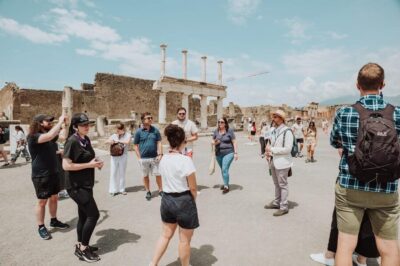
Pompeii: Entry Ticket and Guided Tour with an Archaeologist
Read our review →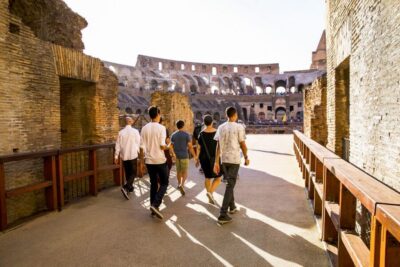
Colosseum: Underground and Ancient Rome Tour
Read our review →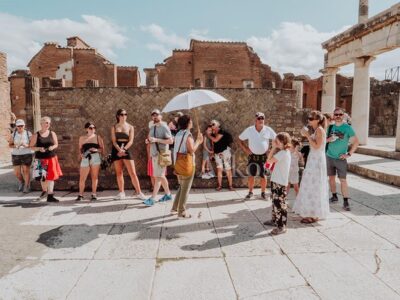
Pompeii: Small Group Tour with an Archaeologist
Read our review →Pompeii Small Group Tour with an Archaeologist
Read our review →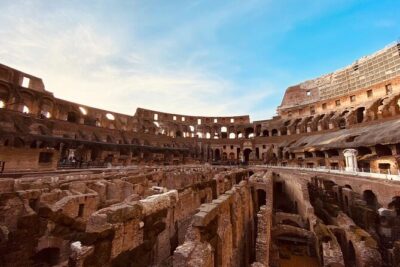
Rome: Colosseum with Arena, Roman Forum and Palatine Guided Tour
Read our review →
Venice: St. Mark’s Basilica Guided Tour & VR History Intro
Read our review →
Colosseum with Arena, Roman Forum and Palatine Hill Guided Tour
Read our review →
Herculaneum: Skip-the-Line Guided Tour with Archaeologist
Read our review →Browse the lists this tour appears in