
Review · ITALY
Paestum: Small-Group Tour with an Archaeologist and Tickets
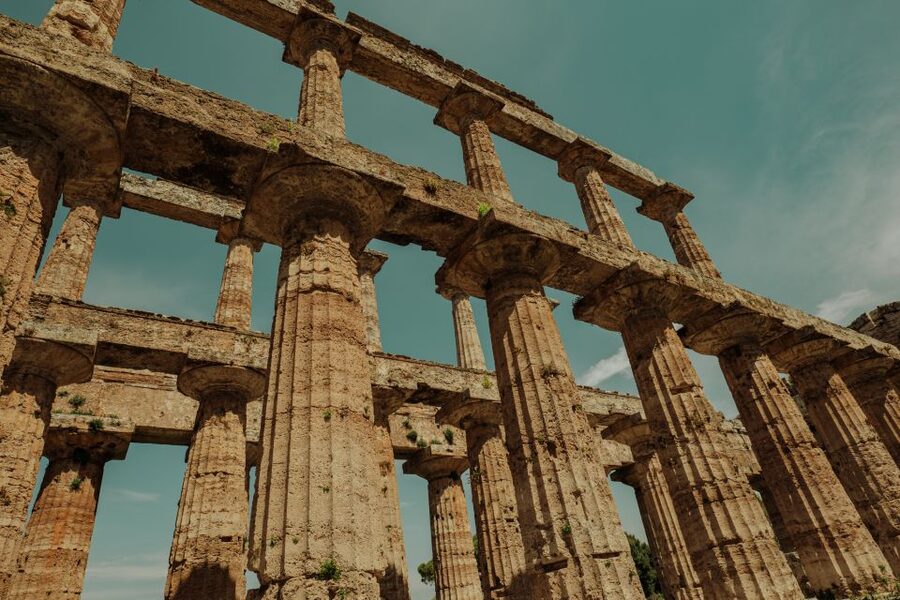
Paestum gives you something rare in Italy: three huge Greek temples still standing in open country, with Roman streets, an amphitheater, city walls, and a museum nearby. The temples are older than most famous Roman sights, and their columns are unusually complete. A guide who understands archaeology helps you see far more than the stones alone.
I like the way this tour pairs the outdoor ruins with the National Archaeological Museum, especially the Tomb of the Diver. I also like the small-group format, which makes it easier to hear the guide and ask questions. The main drawback is the pace: two hours covers the major sights, but it leaves little time to rest, linger, or explore the museum on your own.
Key points at a glance
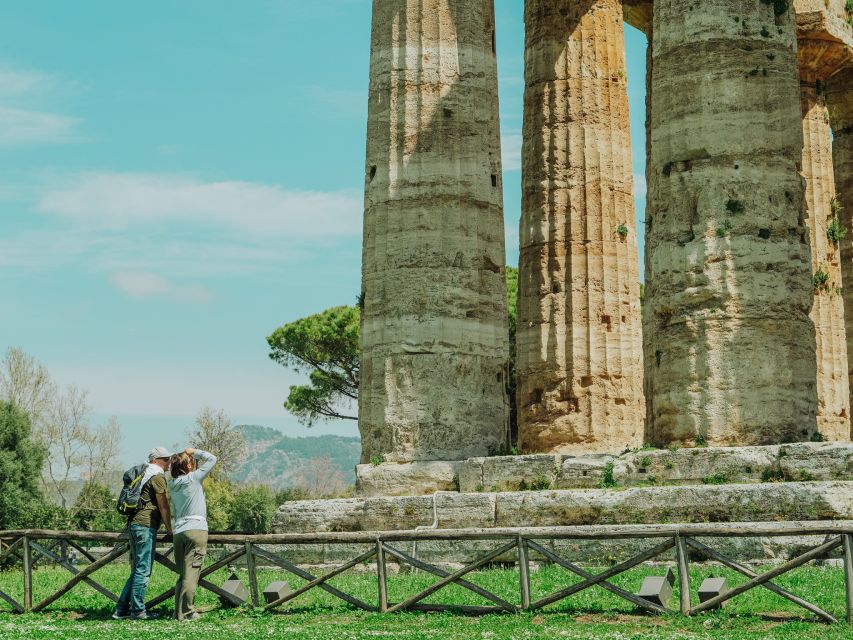
- Three remarkably preserved Greek temples: See the Temple of Neptune, Temple of Ceres, and the Basilica, all dating to the 6th century B.C.
- Archaeologist-led explanations: Guides such as Mario, Maria, Ivan, Francesca, and Angelo bring in details about Greek, Lucanian, and Roman building traditions.
- Ruins plus museum: The tour connects the temples and Roman city to local artworks in the National Archaeological Museum.
- The Tomb of the Diver: This painted Greek tomb is the museum’s most famous object and gives the ancient site a human story.
- Small groups help: A group of six, noted on one tour, was easy to hear and comfortable for questions.
- Good value at $47: Entry and guiding are included, but transport, drinks, and extra personal exploring are not.
Why Paestum feels different from Pompeii
Paestum is often overlooked by people heading toward Pompeii, but it offers a different kind of ancient experience. Pompeii gives you houses, shops, wall paintings, and streets frozen by disaster. Paestum gives you an unusually clear look at a Greek-founded city later shaped by Lucanian and Roman rule.
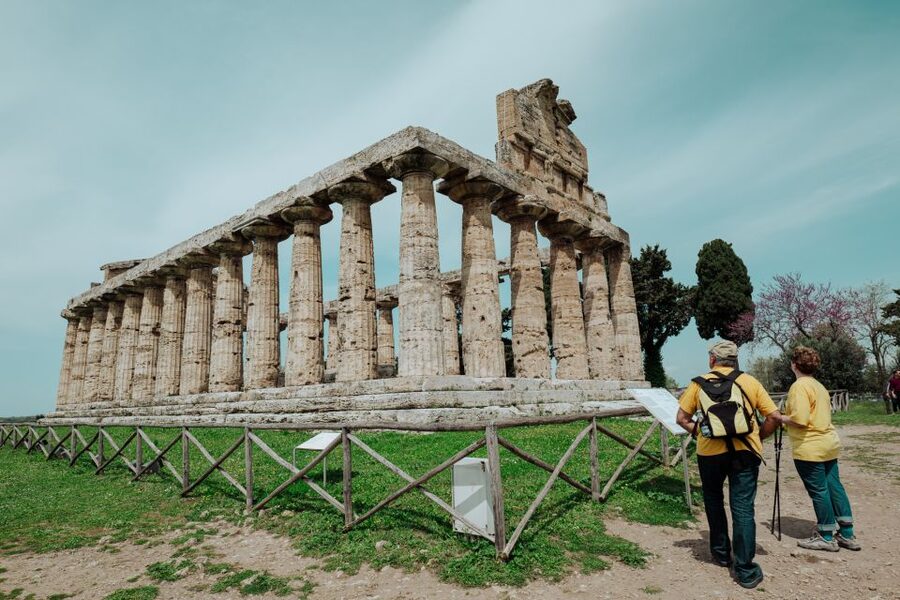
The first thing you notice is the scale of the temples. Their pale stone columns are tall, broad, and close enough to inspect from several angles. You are not looking at a few broken blocks or a reconstructed outline. You are seeing major Greek sanctuaries that have survived with an impressive amount of their original form.
I find the setting useful for understanding ancient architecture. The temples are not boxed into a museum or crowded between modern buildings. You can look from the columns toward the city walls, then across the remains of the Roman settlement. That physical relationship helps you picture Paestum as a living city rather than a set of isolated monuments.
A guide adds the missing pieces. Without help, you can identify columns and walls, but the comitium, forum, markets, amphitheater, and changing layers of Greek, Lucanian, and Roman use are harder to read. The best guides on this tour explain those changes in plain language and point out features that are easy to walk past.
More Archaeological Site Tours in Italy:
- Pompeii: Entry Ticket and Guided Tour with an Archaeologist
★ 4.8 · 19,459 reviews - Pompeii: Small Group Tour with an Archaeologist
★ 4.8 · 12,264 reviews - Pompeii Small Group Tour with an Archaeologist
★ 5.0 · 6,593 reviews
The 90-minute walk through the archaeological park
The outdoor portion lasts about 90 minutes, so wear shoes you can walk in comfortably. The route takes you through the major areas of the archaeological park, with time to look at the temples and Roman remains while your guide explains what you are seeing.
The Temple of Neptune is the major architectural prize. It dates to the 6th century B.C. and is often compared with the Parthenon in Athens. The comparison is not just a sales pitch. Its tall columns and strong proportions make it one of the most striking Greek temples you can see outside Greece.
You also visit the Temple of Ceres and the building commonly called the Basilica. These structures differ in design and period, and a good guide explains why they should not all be viewed as identical versions of the same building. The tour helps you notice column styles, proportions, construction methods, and the way later cultures used the site.
One especially useful part of the walk is the explanation of Paestum’s multiple eras. The city began as a Greek settlement, later became associated with the Lucanians, and then was incorporated into the Roman world. Guides including Mario and Angelo have been praised for explaining these layers without turning the walk into a lecture packed with technical terms.
You will also see the Roman forum and comitium, the political assembly hall. The amphitheater and markets add a social dimension, showing that Paestum was not only a place of worship. City walls and roads help define the city’s size and organization.
I like this balance. The temples draw you in, but the Roman remains keep the visit from becoming a single-photo stop. The guide can show you how political, commercial, religious, and public spaces fitted together.
The drawback is that the site is not a short indoor museum visit. You are on your feet for much of the experience, and summer heat can make the two-hour schedule feel longer. One visitor described spending more than two hours standing in temperatures above 30°C, so bring water, wear light comfortable clothing, and consider an early or cooler start if the available time suits you.
What an archaeologist guide adds
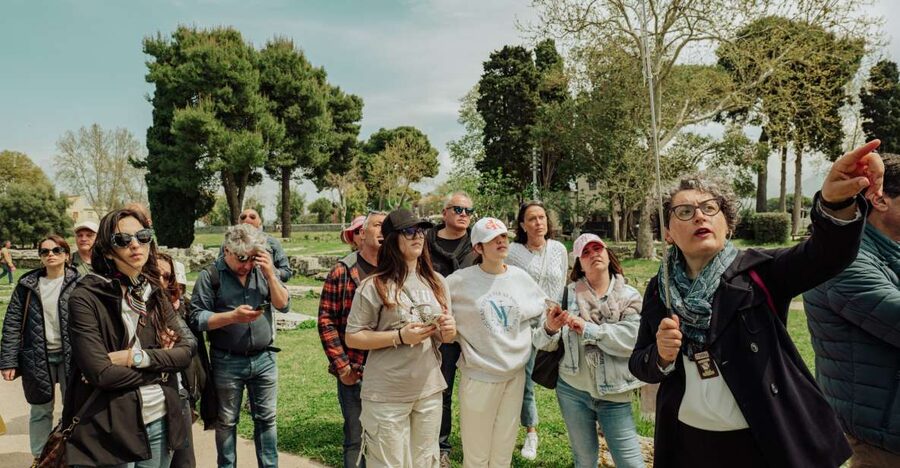
The strongest reason to book this tour is the guide. Paestum rewards context, and the guides here are not simply pointing out famous buildings and reciting dates.
Ivan is an archaeologist who has worked on excavations at the site. That gives his explanations a practical edge. He can discuss the work of uncovering buildings and artifacts, and one particularly memorable detail from his tours is the connection between excavation work and a roof displayed in the museum.
Mario is another frequently requested name, praised for clear English, humor, and enthusiasm. His explanations cover the temples, marketplace, prison, forum, roads, and other buildings, while also bringing in Greek, Lucanian, and Roman construction methods. He has also been described as patient with questions and able to adjust the level of detail to the group.
Maria, Francesca, Angelo, Silvia, Nan, and other guides are also part of the guide team. The specific person you receive depends on the date and booking, so you should not reserve on the assumption that one named guide is guaranteed. Still, the repeated strength of the experience is the archaeological background and the ability to explain the site to people who do not already know ancient Greek architecture.
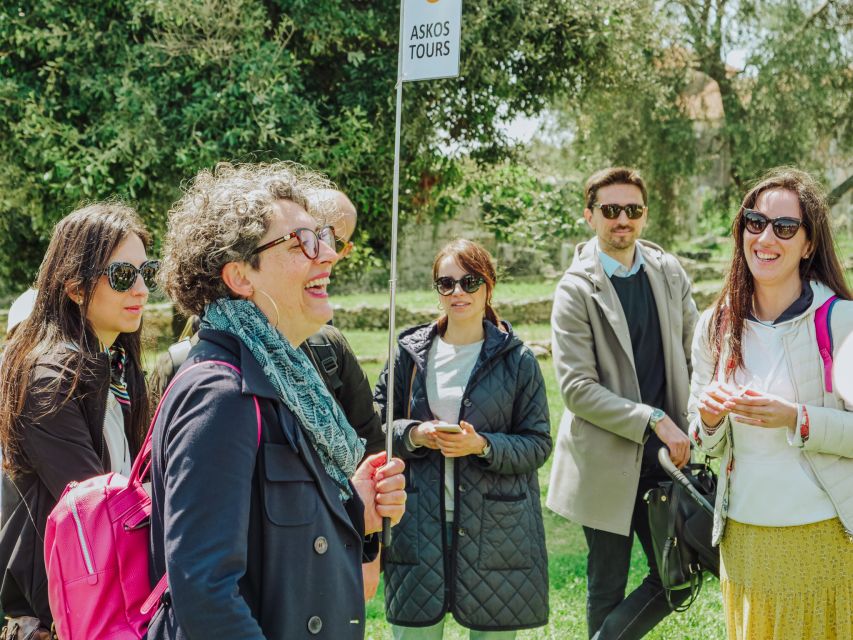
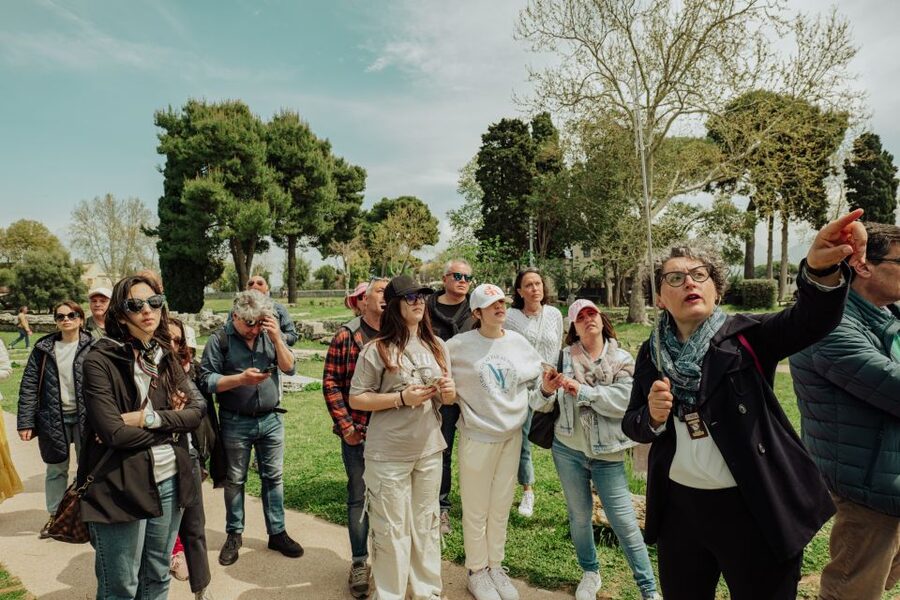
A small group matters here. With six people, you can usually hear the guide without standing shoulder to shoulder, and you have a better chance of asking about a column, wall, or building that catches your eye. Larger groups receive disposable earphones so the guide can be heard more clearly.
A private group is also available. That makes sense if you are traveling with family or friends and want a more flexible pace, though the supplied price of $47 is for the listed activity and may not represent the private option.
The National Archaeological Museum and Tomb of the Diver
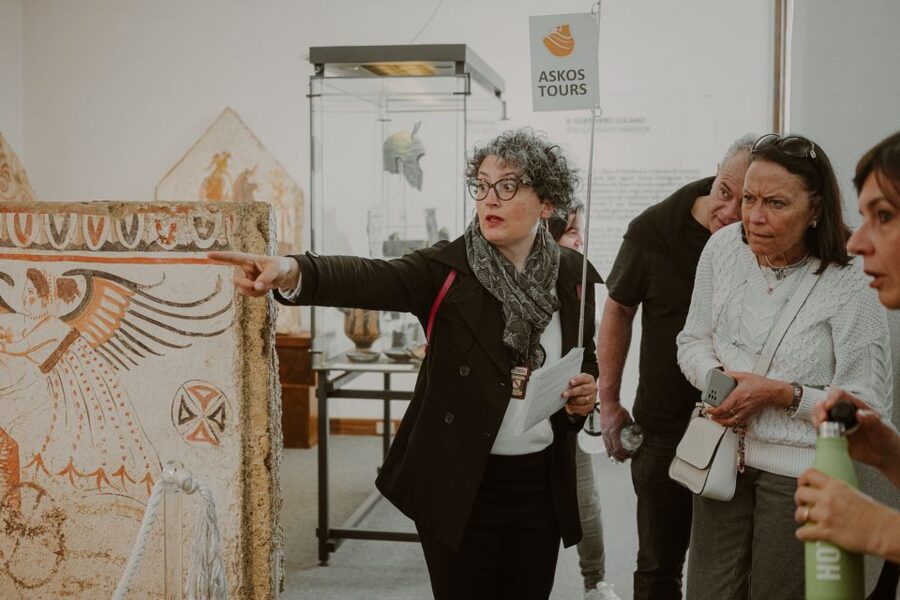
The final 30 minutes take place in the National Archaeological Museum of Paestum. This is not a bonus room to rush through after the temples. It supplies the objects and images that make the outdoor ruins easier to understand.
The museum holds local Greek works dating as far back as the 7th century B.C. You can see artifacts connected with the ancient city and get a better sense of the artistic traditions behind the buildings and burial customs.
The museum’s headline object is the Tomb of the Diver. This painted tomb is famous for its image of a figure diving into water, and it is one of the most unusual pieces connected with the ancient Greek world in Italy. It gives the visit a more personal note after the scale and formality of the temples.
I recommend paying close attention to how your guide links the museum displays to the park. Several guides are praised for treating the museum as a continuation of the outdoor visit rather than a separate attraction. When you have just seen the walls, temples, roads, and civic buildings, the artifacts can answer questions that stonework alone cannot.
There is one practical point to clarify before you book. The guided museum visit is scheduled as part of the two-hour tour, but one account noted that reentry after the tour was not possible. If you want a long, quiet museum visit, ask about the current entry arrangement before committing. The included museum explanation is valuable, but the schedule is designed for highlights, not a full afternoon of independent study.
More Small-Group History Tours in Italy:
- Pompeii and Herculaneum Small Group Tour with an Archaeologist
★ 5.0 · 1,350 reviews - Herculaneum Small Group Tour and Ticket With an Archaeologist
★ 5.0 · 994 reviews - PompeiI Exclusive Tour with your Archaeologist in a Small Group
★ 4.5 · 363 reviews - Syracuse: Neapolis Archaeological Park Small Group Tour
★ 4.7 · 350 reviews
Is $47 a fair price?
At $47 per person, the tour offers solid value if you want the site explained properly. The fee includes the archaeologist guide and skip-the-line entry to Paestum. You are paying for interpretation as much as admission, and that matters at a place where many remains are not immediately obvious.
On your own, you can admire the temples, but the comitium, amphitheater, markets, forum, city walls, and different cultural phases are harder to place. The museum is also easier to appreciate when someone explains how it relates to the ruins.
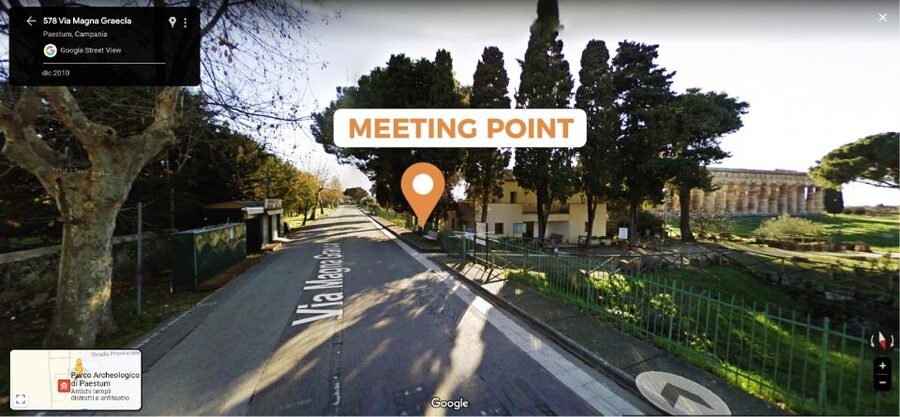
The price does not include transportation, food, or drinks. You need to make your own way to the meeting point, which may vary by booking. The named meeting location is near the Basilica Paleocristiana dell’Annunziata on Via Magna Graecia, 919, but check your confirmation carefully because the starting point depends on the option selected.
There are two drop-off location options connected with the same area. Do not expect hotel pickup or a transfer from Naples, the Amalfi Coast, or elsewhere in Campania. This is a guided visit once you reach Paestum, not a full-day transport package.
The booking terms add useful flexibility. You can cancel up to 24 hours before the activity for a full refund, and the reserve-now, pay-later option lets you hold a place without paying immediately. Starting times vary, so check availability for your date.
Who will enjoy this Paestum tour most?
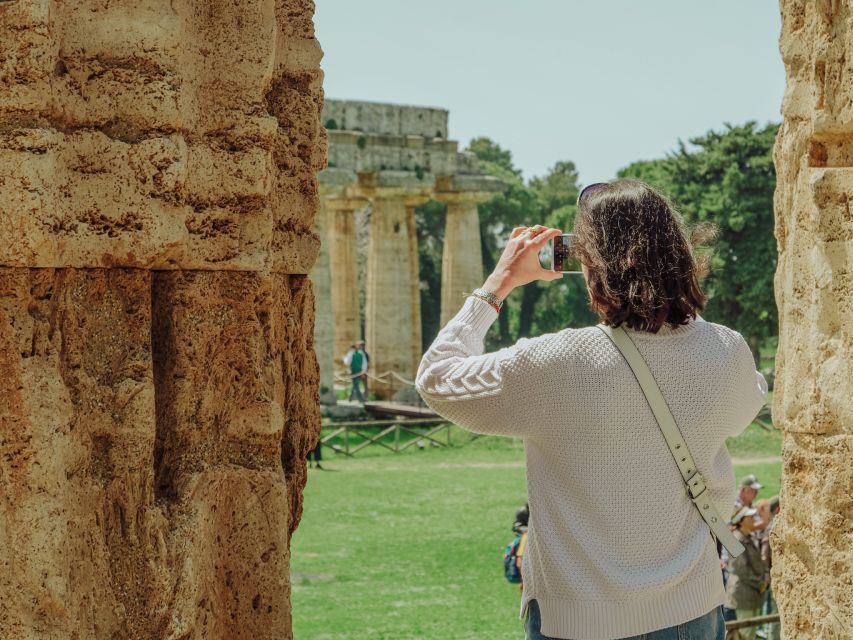
This tour suits anyone who wants ancient sites explained rather than simply photographed. It is especially useful for first-time visitors to Paestum, families who want help keeping children interested, and people who enjoy architecture, archaeology, and ancient Greek history.
The guides can adjust their language to the audience. One guide was praised for making the subject work for children, while other tours focused on architectural design, mythology, excavation work, or the transition from Greek to Roman control. That range makes the experience flexible for mixed-age groups.
It is also a good choice for visitors with limited time. In two hours, you see the central temples, major Roman remains, and museum highlights. If your schedule allows only a short stop in Paestum, this format makes sure you do not miss the principal sights.
I would be more cautious if you have mobility limitations. The activity is not suitable for wheelchair users or people with mobility impairments, and the tour involves walking and standing outdoors. Comfortable shoes, water, and comfortable clothes are specifically recommended.
You should also think about your preferred pace. If you like to stop for long periods, sketch details, read every label, or sit in the shade between monuments, two hours may feel tight. If you prefer a clear route with the main points selected for you, the schedule works well.
Small group, languages, and practical details
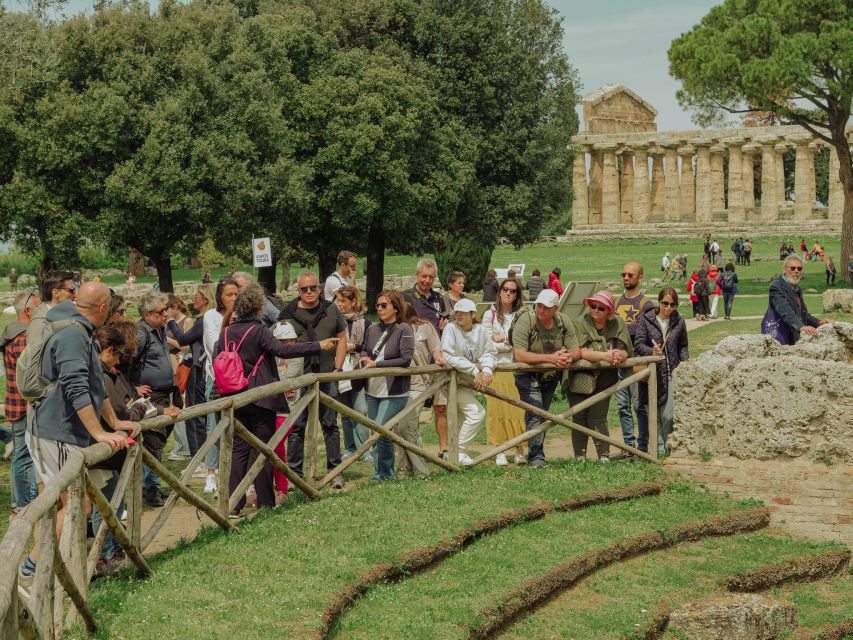
The tour is offered in English, Italian, French, Spanish, and German. The exact guide language depends on the option you book, so confirm that your preferred language is selected.
Small groups are the norm, and private groups can be arranged. The size makes a real difference at Paestum because the guide often points out details across a broad area. You will have a better chance of seeing exactly what is being discussed and asking a follow-up question.
Bring water even if the weather looks mild. The park has exposed walking areas, and the experience can feel tiring in strong summer heat. Comfortable shoes are more important than stylish ones here. You will get more from the temples if your attention is not fixed on sore feet.
The tour does not include food or drinks. Plan those separately, especially if you are visiting in the morning or during hot weather. Since transportation is also excluded, allow enough time to reach the meeting point before the scheduled start.
My recommendation: book it if you want the site to make sense
I would book this tour for a first visit to Paestum. The temples alone are worth the trip, but the guide gives you the structure needed to understand the city’s Greek, Lucanian, and Roman layers. The museum and Tomb of the Diver also make the $47 price easier to justify.
Book it with realistic expectations. This is a focused two-hour introduction, not a leisurely full-day archaeological study. You will walk, stand, and move at a steady pace, and you may want extra time for the museum or a rest afterward.
If you can handle the walking and want a clear, informed visit, this is a strong choice. If you need wheelchair access, dislike guided schedules, or want to explore every display at length, visit independently or arrange a slower private option instead.
FAQ
How long does the Paestum tour last?
The tour lasts two hours. About 90 minutes are spent in the Archaeological Park of Paestum, followed by about 30 minutes in the National Archaeological Museum.
What does the $47 price include?
The price includes the guided tour with an archaeologist and a skip-the-line entry ticket to Paestum.
Is transportation included?
No. Transportation to and from Paestum is not included.
Is food or drink included?
No. You need to arrange your own food and drinks.
Which languages are available?
The tour is offered in English, Italian, French, Spanish, and German.
Can I book a private group?
Yes. A private group option is available.
What are the main sights covered?
The tour covers the three Greek temples, city walls, Roman ruins, the comitium, amphitheater, markets, forum, and the National Archaeological Museum.
What is the Tomb of the Diver?
The Tomb of the Diver is the best-known display in the National Archaeological Museum of Paestum. It is a painted Greek tomb featuring a diver.
Is the tour suitable for wheelchair users?
No. The activity is not suitable for wheelchair users or people with mobility impairments.
What should I bring?
Bring comfortable shoes, water, and comfortable clothing. Disposable earphones are provided for larger groups so you can hear the guide more easily.
Just added around Italy
- Guided Cultural Tour of the Godfather Film in Messina★ 5.0 · 31 reviews
- Guided tour of the Riace Bronzes and the Archaeological Museum of Reggio Calabria★ 5.0 · 44 reviews
- SU NURAXI BARUMINI Unesco World Heritage Site★ 5.0 · 129 reviews
- Brescia the Unexpected: History, Local Stories & a drink★ 5.0 · 31 reviews
- Bolognese Cooking Class with Margherita in the Historic Center★ 5.0 · 26 reviews
- Tower and Power, Virtual tour in Medieval Bologna★ 4.5 · 54 reviews
- Bologna historical art walking tour with hidden gems and tastings★ 5.0 · 108 reviews
- Best of Bologna in one day : Food, architecture, art and history★ 5.0 · 27 reviews
Italy History Tours, compared.
Pompeii: Entry Ticket and Guided Tour with an Archaeologist
Read our review →
Colosseum: Underground and Ancient Rome Tour
Read our review →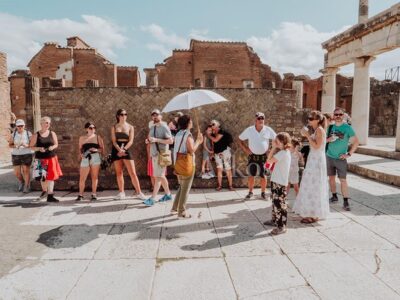
Pompeii: Small Group Tour with an Archaeologist
Read our review →Pompeii Small Group Tour with an Archaeologist
Read our review →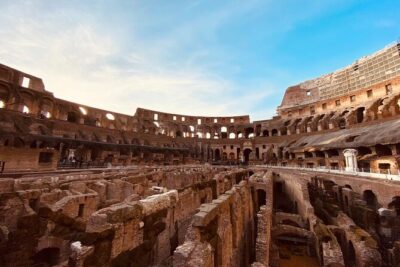
Rome: Colosseum with Arena, Roman Forum and Palatine Guided Tour
Read our review →
Venice: St. Mark’s Basilica Guided Tour & VR History Intro
Read our review →
Colosseum with Arena, Roman Forum and Palatine Hill Guided Tour
Read our review →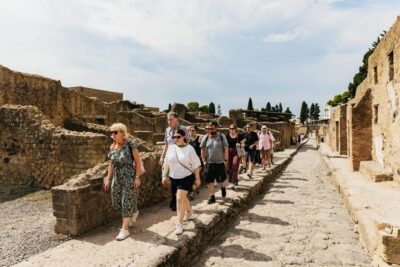
Herculaneum: Skip-the-Line Guided Tour with Archaeologist
Read our review →Browse the lists this tour appears in