
Review · ITALY
Pompeii: Skip-the-Line Guided Tour with Expert Archaeologist
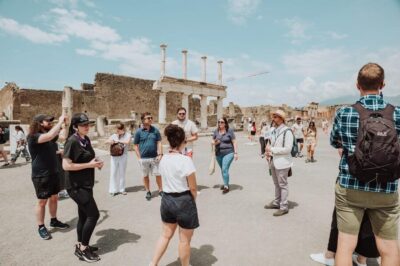
Pompeii makes far more sense when someone can explain what you are seeing. An archaeologist guide turns a maze of broken walls into a Roman city with bakeries, baths, temples, homes, shops, and streets still marked by everyday life. You may also see newly opened excavation areas, since this is an active archaeological site rather than a finished museum.
I like the small-group format, which makes it easier to hear through the headset and ask questions. I also like the three-hour Complete Pompeii option, which gives you time to move beyond the famous Forum and see more ordinary corners of the city. The main drawback is the heat: Pompeii is vast, dusty, and short on shade, so this can be a tiring walk even when the storytelling is excellent.
Key points to know before you book

- A real archaeological perspective: Guides such as Ilaria, Anna, Brunella, Enzo, and Paulo explain both the buildings and the evidence behind them.
- Two routes are available: The Pompeii Express option lasts about two hours, while the Complete Pompeii visit runs about three hours.
- The Forum is only the beginning: You may see temples, bakeries, baths, shops, villas, a cemetery, city walls, and plaster casts.
- Ongoing excavation matters: Your route can change as new areas open and preservation work continues.
- Heat is a serious factor: Bring water, sunscreen, a hat, and sturdy closed-toe shoes.
- The meeting point needs care: Meet 15 minutes early at the park entrance on Via Villa dei Misteri, across from the Hortus Pompei restaurant, where the guide holds a green Walks sign.
Why Pompeii is better with an archaeologist

Pompeii is easy to underestimate. From the entrance, it can look like a field of walls and paving stones, with no clear sense of where to begin. The site is enormous, and a solo visit can leave you walking past important details without knowing what they mean.
A trained guide gives you a useful order. You see how public buildings fit beside private homes, how shops opened onto the streets, and how Roman engineering supported daily life. A doorway, oven, drain, painted wall, or raised sidewalk becomes evidence rather than decoration.
The strongest part of this experience is the explanation of ordinary life. You are not limited to grand monuments. You can stand in an old bakery, look at the remains of shops, enter public baths, and consider how residents moved through the city before the eruption of Mount Vesuvius in 79 AD.
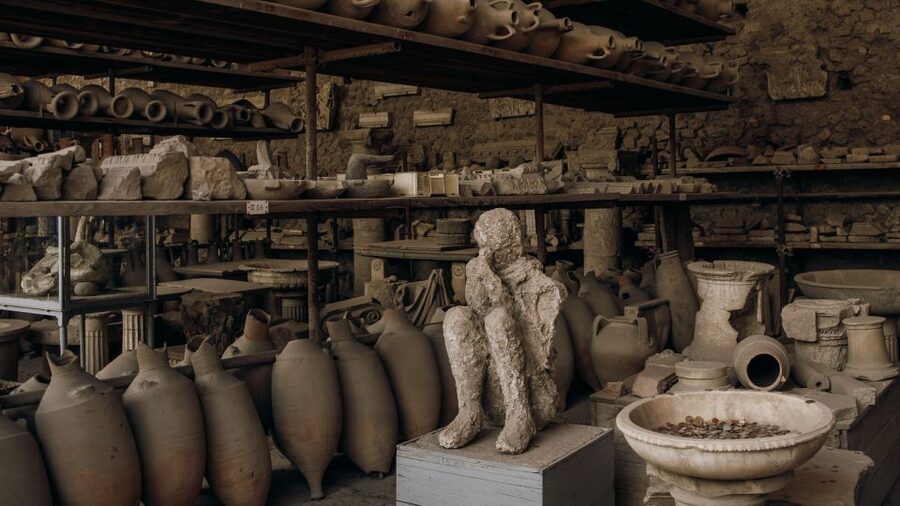
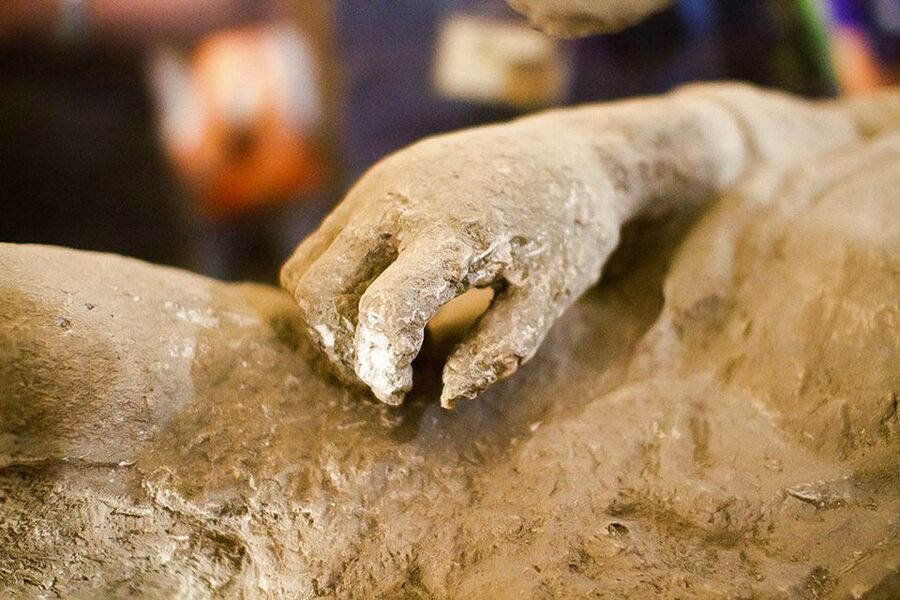
Guides also add context to the disaster. The plaster casts are emotional, but a good archaeologist helps you look at them with care instead of treating them as sensational objects. You learn what the casts reveal about the final moments of people caught in the eruption and how archaeologists preserve this evidence.
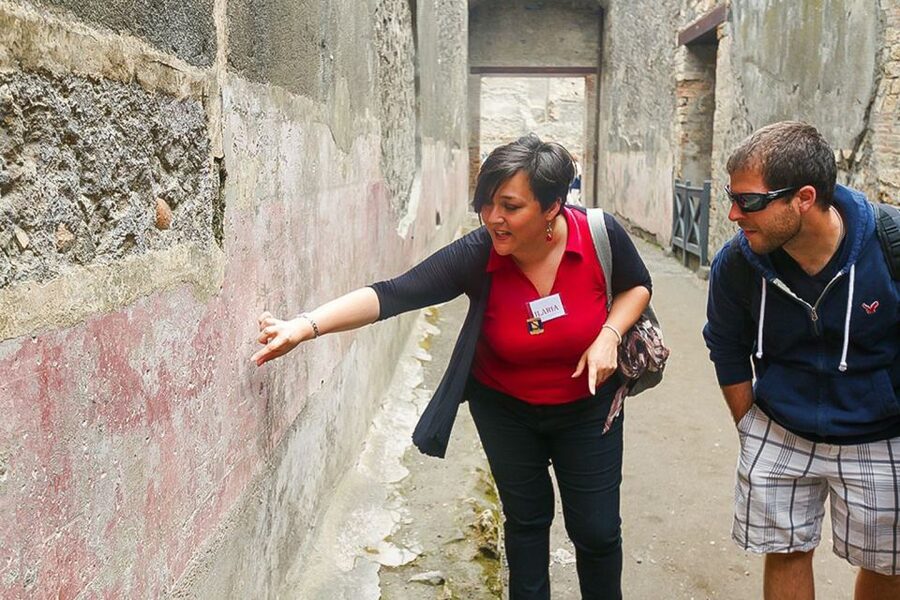
The guides are praised for making difficult material easy to follow. Ilaria is noted for bringing the ruins to life with stories, while Anna is especially clear and engaging in English. Enzo uses stories to explain the site, and Brunella has been appreciated for taking time with questions rather than rushing from one stop to the next. That mix of scholarship and plain speaking is exactly what Pompeii needs.
More Ancient History Tours in Italy
- Pompeii: Entry Ticket and Guided Tour with an Archaeologist
★ 4.8 · 19,459 reviews - Colosseum: Underground and Ancient Rome Tour
★ 4.7 · 12,691 reviews - Pompeii: Small Group Tour with an Archaeologist
★ 4.8 · 12,264 reviews
Starting at the Villa dei Misteri entrance
The tour begins at Via Villa dei Misteri, 1, at the entrance gate for Pompeii Archaeological Park. You should arrive 15 minutes before the start time. Look for the green Walks sign across from the Hortus Pompei restaurant.
This meeting point is worth taking seriously. One minor weakness in the arrangements is that the initial guide identification and the end point can feel less obvious than they should. Confirm the entrance location before you leave your hotel, and do not rely only on a map pin. The clearest plan is simple: arrive early, look across from the restaurant, and find the guide with the green sign.
Pre-reserved entry tickets let you bypass the regular ticket line. That saves useful time, especially when the park is busy. It does not make the site small or effortless, though. Once inside, you still have a large archaeological area to cross on foot.
Headsets are supplied when needed. This is a practical benefit, not a minor extra. Pompeii can be noisy, and a guide who can speak while you walk means you do not have to crowd around one person to hear every explanation.
Walking the Roman streets
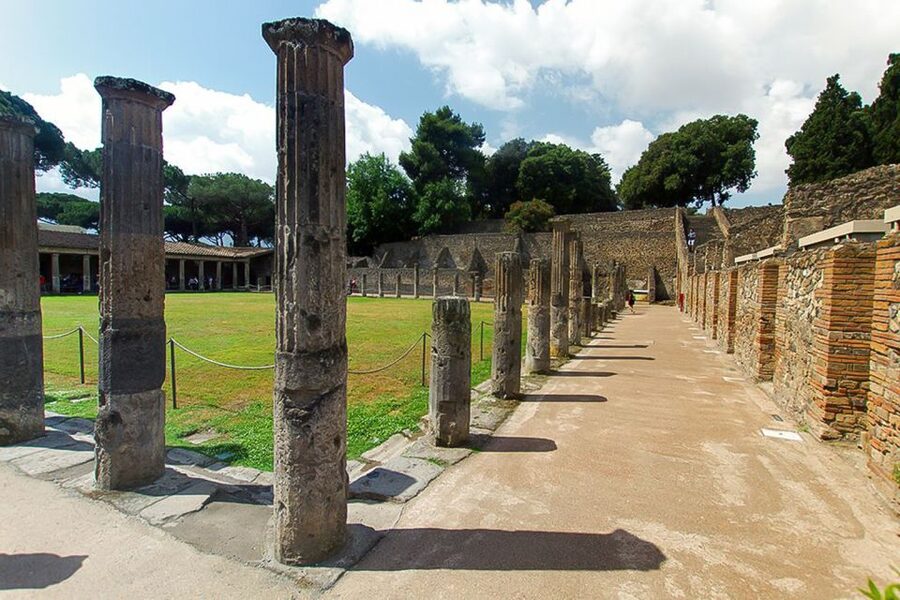
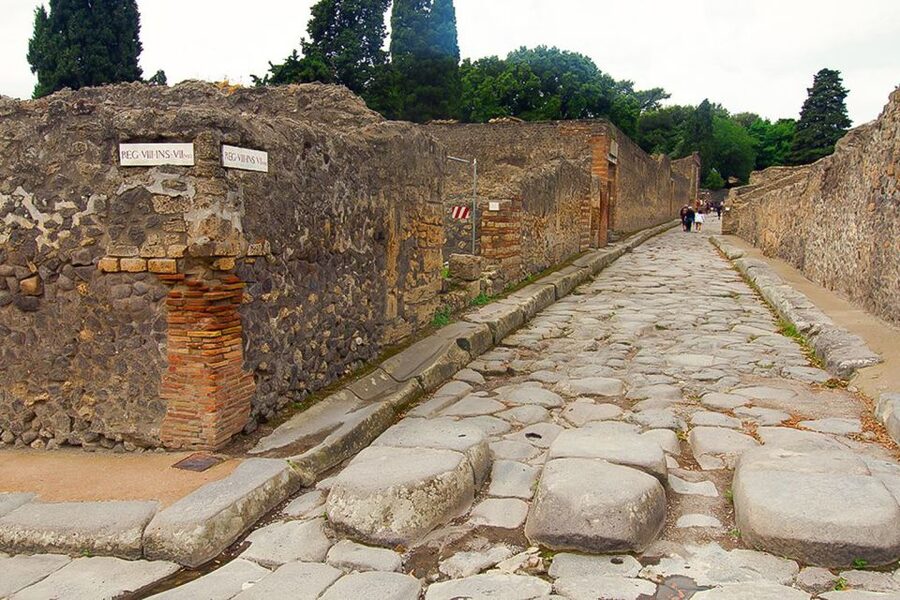
The streets are one of the most revealing parts of Pompeii. You walk over ancient paving and see the remains of buildings that once served very different purposes. The guide helps you read the city plan and points out how homes, shops, temples, baths, and public spaces worked together.
I like this part because it moves Pompeii away from the idea of a frozen disaster scene. Before the eruption, this was a functioning city. People bought food, visited public baths, worked in shops, worshipped at temples, and gathered in public spaces.
The route may include an ancient bakery, where the ovens and food-related remains offer a close look at Roman food production. You may also see what is described as an ancient supermarket, a useful reminder that shopping in Pompeii was part of the daily rhythm rather than a side note.
The streets can be uneven, and you should expect a steady walking pace. Comfortable shoes are essential. High heels are not allowed, and closed-toe shoes are a sensible choice because the ground is rough in places.
The Forum, Temple of Apollo, and public life
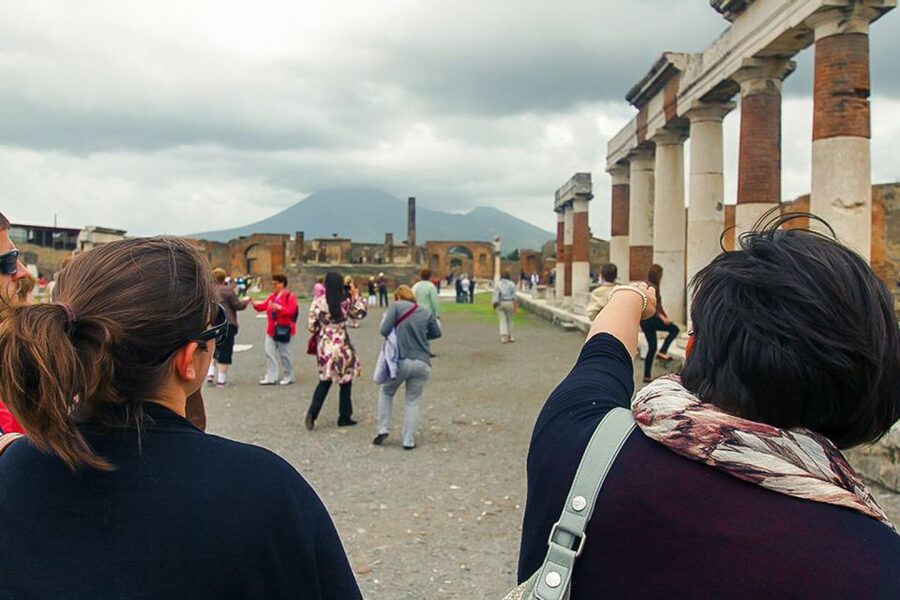
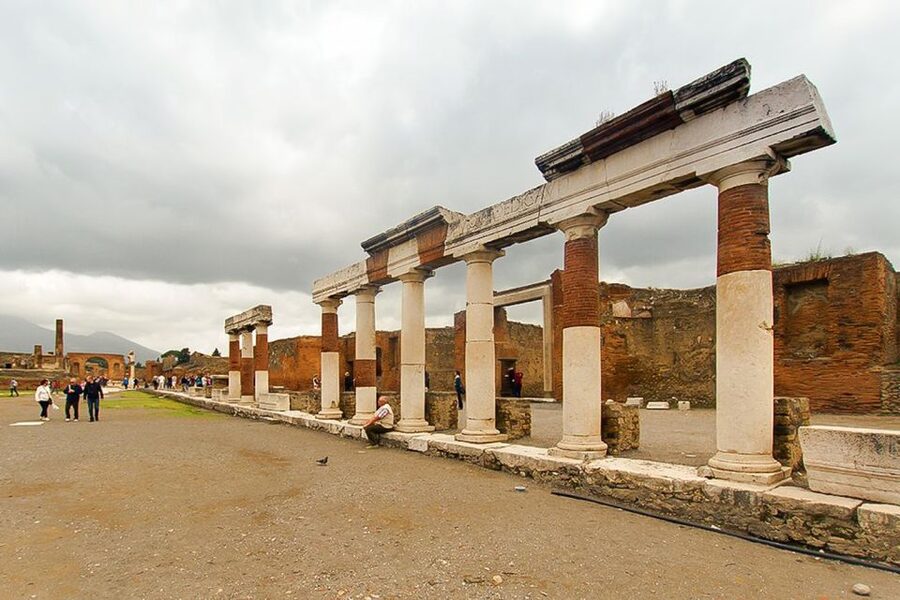
The Roman Forum provides the major civic setting for the visit. Here, your guide can explain how the city organized public and religious life. The nearby Temple of Apollo adds another layer, showing that Pompeii was not simply a collection of houses but a community shaped by public ritual and shared institutions.
The value of seeing these places with an archaeologist is the connection between remains and function. Without help, columns and foundations can blur together. With an explanation, you begin to understand which spaces served civic, religious, commercial, or domestic purposes.
The Forum is part of the shorter Express route, so you can still see the city’s central landmarks if you choose the two-hour option. The three-hour visit gives you more room for side streets and less famous buildings, which is the better choice if Pompeii is a major reason for your visit.
A three-hour route still cannot reveal every corner. Pompeii is so large that you could return several times and find new streets, homes, and details. The Complete option is best understood as a fuller introduction, not a visit to every uncovered building.
More Archaeological Site Tours in Italy:
- Pompeii Small Group Tour with an Archaeologist
★ 5.0 · 6,593 reviews - Herculaneum: Skip-the-Line Guided Tour with Archaeologist
★ 4.8 · 3,439 reviews - Pompeii: Archaeological Park Tour with Ticket on request
★ 4.5 · 2,283 reviews - Discover the Ancient Ruins of Pompeii: Day Trip from Rome
★ 3.5 · 2,247 reviews
Baths, villas, shops, and private homes
The public baths show how much social life took place outside the home. Your guide can help you understand the layout and explain what these spaces meant to residents. They also offer a useful contrast with the private villas, where decoration, room arrangement, and household space tell a different story.
Shops open toward the streets, making the city feel surprisingly familiar. You can imagine commerce taking place at the same thresholds where people once bought goods and services. Even when only fragments remain, the street-facing design helps you see how work and home life overlapped.
Private houses are especially rewarding when the guide points out details you might otherwise miss. A wall fragment or room plan may reveal status, habits, or the way a household used its space. The point is not simply to admire ruins. It is to understand how people lived inside them.
The route can include an old cemetery and the city walls. From the walls, you may get panoramic views toward Naples. This gives the visit a welcome change of pace after long stretches among stone streets and low buildings.
An old brothel may also be included when appropriate for the group. The guide handles that choice according to the people on the tour, so families should understand that the stop is not guaranteed. For adults, it offers another look at the less polished side of Roman urban life.
The plaster casts and Pompeii’s human story
The plaster casts are among the most powerful sights in the park. They preserve the forms of people caught by the eruption, making the disaster feel personal in a way that walls and columns cannot.
This is also the point where a sensitive guide matters most. The visit is not just about shock. Archaeological explanation can show what the casts are, how they were made, and why they help researchers understand the eruption and its victims.
Some children find this stop difficult, while others respond strongly to the human story. Parents should use their judgment. The tour can work well for families when the guide, such as Sonya or Ilaria, keeps the history clear and answers questions in a calm, age-appropriate way.
The guides are also good at mixing serious subjects with humor and stories. That balance keeps three hours from becoming a long lecture. Children may not remember every date, but they are more likely to remember how a bakery worked, why a street was raised, or what a Roman shop looked like.
A living archaeological site, not a finished attraction
One of the most useful ideas on this tour is that Pompeii is still being excavated. About one-third of the city remains uncovered, and preservation work continues. New discoveries can affect which areas are open and how the route is arranged.
That gives the tour a welcome sense of movement. You are not seeing a site whose story ended when it opened to the public. You are seeing a place where archaeologists are still testing ideas, protecting fragile remains, and adding to what is known about the city.
The itinerary may change when a new excavation area opens. In practical terms, that means you should enjoy the fact that the tour is not entirely fixed. It also means you should not expect every visit to show exactly the same rooms or streets.
A guide who works with archaeological material can explain why some areas are closed, why preservation takes time, and why exposing a building is only the first step. That context makes the work behind Pompeii visible.
Choosing between two and three hours
The Pompeii Express option lasts about two hours and focuses on the park’s main sights, including the Forum, temples, and shops. It suits you if Pompeii is one stop in a packed day, or if you want a clear introduction without committing to a longer walk.
The Complete Pompeii option takes about three hours and reaches farther into the site. It is the better value if you have come from Naples or are making Pompeii a central part of your day. You see more types of buildings and have more chances to understand ordinary life beyond the headline monuments.
The extra hour matters because Pompeii is physically large. It is not merely extra lecture time. It gives the group more space to walk through additional streets, pause at less famous structures, and ask questions.
The tradeoff is stamina. Several hours in full sun can wear you down, even when the tour is engaging. Start early if possible, bring plenty of water, and use a hat or UV umbrella. Shade is limited, and food and drink facilities inside the park are not plentiful. One refreshment point can have long queues, so do not count on a quick stop during the walk.
Price, group size, and overall value
At $70 per person, this is not the cheapest way to enter Pompeii. You are paying for a pre-reserved ticket, an official guide, archaeological training, headsets when required, and a route designed to give the ruins meaning.
I consider that fair value if you want to understand the site rather than simply pass through it. Pompeii is too large for a casual wander to guarantee a satisfying visit. A guide can save you from spending hours on streets without knowing which buildings matter or how they connect.
The small-group setup improves the value further. You can hear the explanation, ask questions, and keep moving without the confusion of a very large crowd. Private and small-group formats are available, so check the option you select when booking.
The price is harder to justify if you want to spend the entire day at your own pace or have already studied Pompeii in depth. In that case, you may prefer a shorter guided introduction followed by independent time. The tour ends back at the entrance, so you can continue exploring on your own if your schedule and energy allow.
Who should book this Pompeii tour
I would choose this experience for a first visit, especially if you are coming from Naples and have only one chance to see Pompeii. It is also a strong choice for families, provided everyone can walk at a moderate pace and handle the heat.
History fans will appreciate the archaeological focus. You are not getting only a broad overview of Roman life. You are also hearing about excavation, preservation, recent discoveries, and the evidence found in the buildings.
The tour is less suitable for anyone with mobility limits, wheelchair users, or families using strollers. The park requires substantial walking over uneven ground, and strollers are not allowed. Anyone who struggles to walk at a moderate pace should plan a different way to visit.
Bring a passport or ID card, including one for children, since full participant names must match the identification provided at booking. Cancellation is free up to 24 hours before the start, and you can reserve now and pay later, which helps if your Naples plans are still shifting.
Should you book it?
Book this tour if you want Pompeii explained by someone who studies the site and if the extra cost of a guide fits your budget. The strongest reasons are the small group, clear headsets, pre-reserved entry, and the chance to see more than the Forum and a few famous houses.
Choose the three-hour Complete option if Pompeii is a main event. Choose Express if you need a focused introduction and want to conserve time and energy.
I would skip it only if you strongly prefer independent exploration, already know the site well, or cannot manage a long walk in heat and uneven conditions. For most first-time visitors, the guide is what turns Pompeii from an impressive ruin into a city you can actually understand.
FAQ
How long does the Pompeii guided tour last?
You can choose a Pompeii Express visit lasting about two hours or a Complete Pompeii option lasting about three hours.
What does the tour include?
The experience includes pre-reserved skip-the-line Pompeii tickets, an official Pompeii tour guide, and headsets when needed.
Where does the tour meet?
Meet at the entrance gate for Pompeii Archaeological Park on Via Villa dei Misteri, 1, across from the Hortus Pompei restaurant. The guide holds a green Walks sign.
How early should I arrive?
Arrive 15 minutes before the scheduled start time.
Is the tour conducted in English?
Yes. The live tour guide language is English.
What sights can I see?
Depending on the route and current site access, you may see the Forum, Temple of Apollo, public baths, villas, shops, a bakery, an ancient market area, a cemetery, plaster casts, city walls, and excavation areas.
Is hotel pickup included?
No. Hotel pickup and drop-off are not included.
Is the tour suitable for wheelchair users or people with mobility impairments?
No. The tour is not suitable for wheelchair users or people with mobility impairments. It involves walking at a moderate pace, and strollers are not allowed.
What should I bring?
Bring comfortable shoes, a passport or ID card, and identification for children. Water, sunscreen, and sun protection are also sensible for the exposed site.
More Skip-the-Line Tickets in Italy
- Taormina: Ancient Theater Skip-the-Line Ticket & Audio Guide
★ 4.5 · 2,412 reviews - Historic Milan Tour with Skip-the-Line Last Supper Ticket
★ 4.5 · 1,976 reviews - Skip the Line Guided Tour of Pompeii led by an Archaeologist
★ 5.0 · 703 reviews - Pompeii: Tour with Archaeologist Guide & Skip-the-Line Entry
★ 4.5 · 623 reviews
Just added around Italy
- Guided Cultural Tour of the Godfather Film in Messina★ 5.0 · 31 reviews
- Guided tour of the Riace Bronzes and the Archaeological Museum of Reggio Calabria★ 5.0 · 44 reviews
- SU NURAXI BARUMINI Unesco World Heritage Site★ 5.0 · 129 reviews
- Brescia the Unexpected: History, Local Stories & a drink★ 5.0 · 31 reviews
- Bolognese Cooking Class with Margherita in the Historic Center★ 5.0 · 26 reviews
- Tower and Power, Virtual tour in Medieval Bologna★ 4.5 · 54 reviews
- Bologna historical art walking tour with hidden gems and tastings★ 5.0 · 108 reviews
- Best of Bologna in one day : Food, architecture, art and history★ 5.0 · 27 reviews
Italy History Tours, compared.
Pompeii: Entry Ticket and Guided Tour with an Archaeologist
Read our review →
Colosseum: Underground and Ancient Rome Tour
Read our review →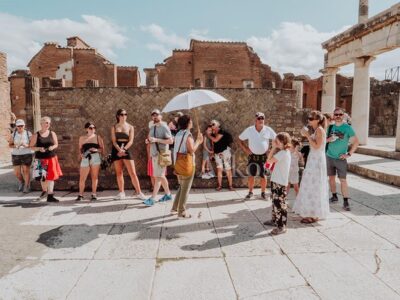
Pompeii: Small Group Tour with an Archaeologist
Read our review →Pompeii Small Group Tour with an Archaeologist
Read our review →
Rome: Colosseum with Arena, Roman Forum and Palatine Guided Tour
Read our review →
Venice: St. Mark’s Basilica Guided Tour & VR History Intro
Read our review →
Colosseum with Arena, Roman Forum and Palatine Hill Guided Tour
Read our review →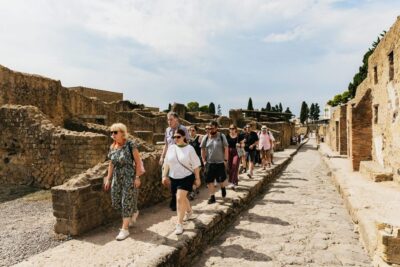
Herculaneum: Skip-the-Line Guided Tour with Archaeologist
Read our review →Browse the lists this tour appears in