Review · POMPEII
Pompeii: Tour with Archaeologist Guide & Skip-the-Line Entry
Pompeii is easiest to understand when someone explains what you are looking at. This two-hour walk takes you from the city gate through theaters, homes, shops, baths, the Lupanare, and the forum, turning broken walls into a picture of daily Roman life before Vesuvius buried the city in 79 AD.
I like the archaeologist-led storytelling, and I like the skip-the-line entry, especially when the ticket area is crowded. The route also gives you a useful first look at Pompeii before you continue alone.
The main caution is time. Two hours is enough for a strong introduction, but not enough for all of Pompeii. One booking ended after about 90 minutes, and some important areas, including the baths and brothel, were not reached. Plan to stay longer if you can.
Key points at a glance
- Porta Marina sets the scene: Begin at one of Pompeii’s main entrances before walking into the ancient city.
- The route covers everyday life: See a theater, private house, food shop, baths, brothel, forum, and basilica.
- Guide quality makes the difference: Guides such as Paolo, Lilian, Teresa, Angelo, Mario, and Anna have been praised for clear explanations and humor.
- Audio equipment helps in crowds: Groups larger than eight receive radio guides, while smaller language groups may use an audio guide with an Italian-speaking guide.
- The $32 price is sensible: You get the Pompeii Express ticket and a two-hour guided visit, then can explore more independently.
- Allow extra time afterward: Pompeii is much larger than this route, and the guide can point you toward areas worth seeing next.
Why Pompeii works better with a guide
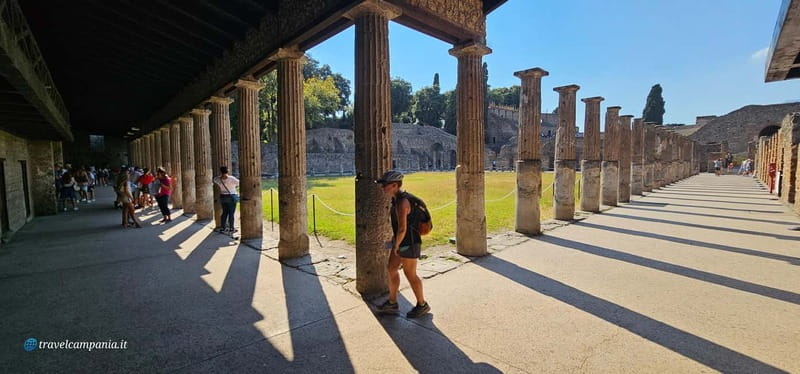
Pompeii can look confusing at first. You walk past walls, paving stones, columns, and roofless rooms, but the purpose of each space is not always obvious. A guide gives those remains a human scale.
You learn to read the city as a place where people lived, worked, worshipped, ate, relaxed, and conducted business. A raised curb becomes part of the road system. A small counter becomes a place where hot food was served. A doorway, painted wall, or worn stone can reveal how the city worked.
That context is the main reason I would choose this tour over entering alone. The guides do not simply recite dates. They explain customs, crafts, building design, and everyday routines. Several guides, including Paolo, Teresa, Lilian, and Mario, are praised for mixing facts with humor, which helps a two-hour history lesson feel like a walk through a real town.
The archaeologist title is also useful here. Pompeii is not just a famous disaster site. It was a living city long before the eruption, with roots reaching back to the seventh century BC. The tour helps you focus on that longer story instead of seeing only ash, plaster casts, and destruction.
More Ancient History Tours in Italy
- Pompeii: Entry Ticket and Guided Tour with an Archaeologist
★ 4.8 · 19,459 reviews - Pompeii: Small Group Tour with an Archaeologist
★ 4.8 · 12,264 reviews - Pompeii Small Group Tour with an Archaeologist
★ 5.0 · 6,593 reviews
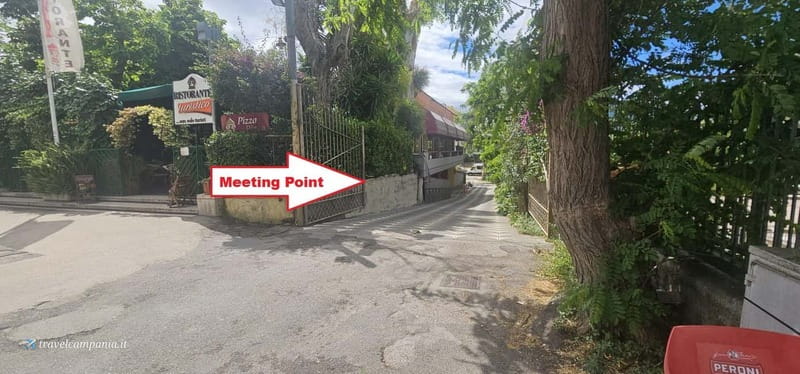
Starting at the Guide Pompei meeting point
The meeting arrangement deserves attention. The starting location is listed as Guide Pompei, with the welcome box serving as the meeting point. Outside Pompeii’s entrance, the surrounding area can be busy and confusing, so give yourself extra time to find the desk and identify the correct staff member.
The meeting point has generally been described as easy to reach, but one person found the check-in area difficult to locate. That is a small issue with a simple fix: arrive early, keep your booking details handy, and ask specifically for the welcome box if you are unsure.
Do not arrive late. The tickets are group tickets, and once the guide has left, you may not be allowed to join or recover the ticket cost. This is especially important if you are coming from Naples or Rome by train. Train delays have caused problems, although the local team has sometimes helped move people to a later tour or arrange general entry.
You must provide the first and last names and dates of birth for everyone in your party. Bring a passport or identity card. A copy is accepted, including for children.
Entering through Porta Marina
Once the group is assembled, the guide leads you toward Porta Marina. This first stop takes about 10 minutes and provides a useful introduction to the city’s layout.
The skip-the-line benefit matters most here. Pompeii is a major sight, and waiting at the ticket office can eat into the day before you have even reached the ruins. Priority access does not make the site quiet, but it gets you moving faster.
At the gate, listen for the broad outline of Pompeii’s story. The settlement was founded in the seventh century BC and developed over many centuries before the eruption of Vesuvius in AD 79. That long timeline matters. You are not entering a city built all at once, but a place shaped by changing rulers, building styles, and local customs.
The guide also helps you get your bearings. Pompeii is extensive, and the entrance is only the beginning. A map is useful, and you may receive one as part of the visit.
Teatro Piccolo and the city’s public life
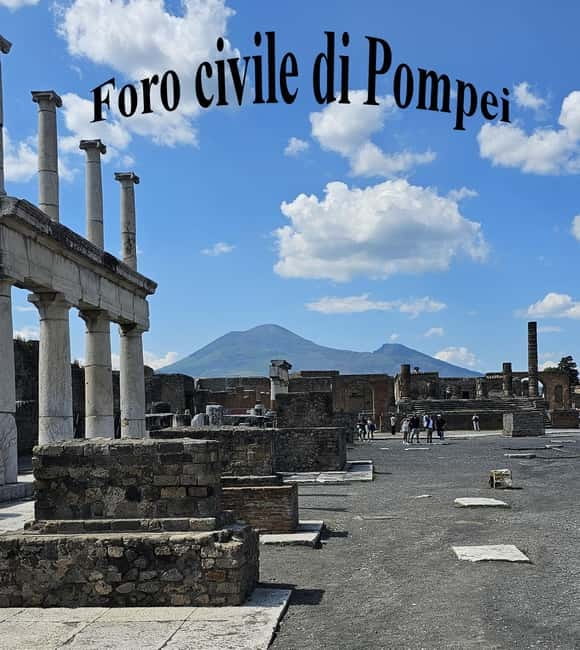
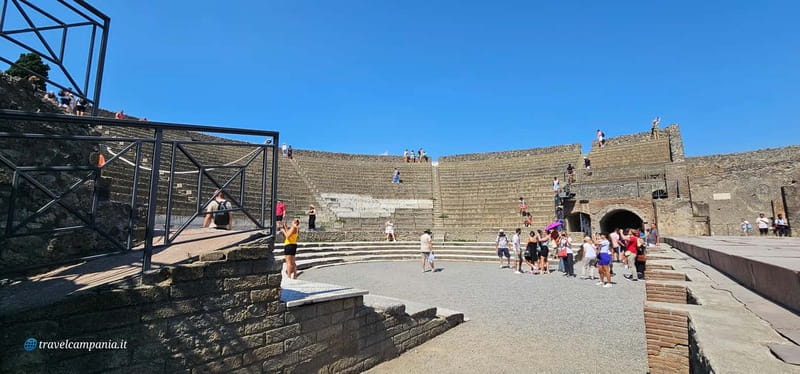
The Teatro Piccolo, or small theater, gets about 10 minutes. This is one of the tour’s public spaces, a helpful counterpoint to the homes and shops later on.
The stop shows that Pompeii was not simply a collection of private houses. Theater, entertainment, and shared public life were part of the city’s rhythm. A guide can explain the design and use of the theater, giving you a better sense of how crowds moved through the city.
Ten minutes is enough for an explanation and a look around, but not enough for a detailed architectural study. If theaters are a major interest, note the location and return after the guided portion.
More Ancient History Tours in Pompeii
- Discover the Ancient Ruins of Pompeii: Day Trip from Rome
★ 3.5 · 2,247 reviews - Pompeii and Herculaneum Small Group Tour with an Archaeologist
★ 5.0 · 1,350 reviews - Skip the Line Guided Tour of Pompeii led by an Archaeologist
★ 5.0 · 703 reviews - Pompeii Private Tour with an Archaeologist and Skip The Line – 3 hours
★ 5.0 · 564 reviews
Casa degli Amanti and domestic Pompeii

The visit to Casa degli Amanti lasts about 15 minutes. A private house is one of the best places to understand the difference between Pompeii as a ruin and Pompeii as a home.
Look beyond the walls. The arrangement of rooms, decorative details, and traces of household activity help show how people lived. The guide’s job here is to connect the physical remains with daily routines rather than leave you staring at disconnected fragments.
This is where an expert explanation earns its keep. You may notice a doorway or painted surface, but the guide can point out why it matters and how it fits into Roman domestic life. The stop is not long, so expect an overview rather than a room-by-room examination.
The Thermopolium and food on the street
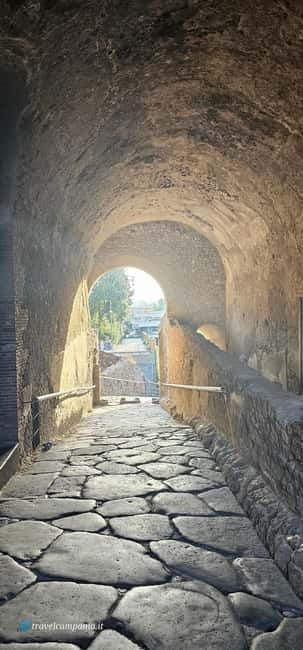
The Thermopolium receives about 15 minutes. This ancient food shop is one of the most memorable stops because it brings Pompeii down to an ordinary level.
Instead of thinking only about emperors, temples, and grand public buildings, you see where people could buy prepared food. The counter, layout, and surviving details make the space easy to picture as a working business.
This stop also shows why Pompeii is so valuable. The city preserves small clues about regular life, not just monumental architecture. A guide can explain the design and how the shop may have functioned, helping you understand the difference between a home, a commercial space, and a public building.
After this section, the schedule allows about five minutes of guided touring and free time. It is a short pause, but useful if you need to take photos, catch up with the group, or look again at a detail.
Terme Stabiane and Roman bathing
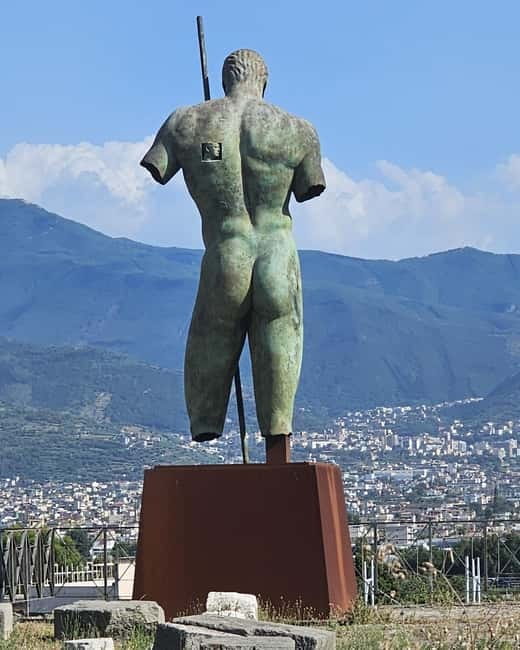
The Terme Stabiane, or Stabian Baths, receives around 15 minutes. Roman baths were not simply places to wash. They were social spaces, and their design reveals how public amenities were organized.
This stop is important, but it is also one of the places where the short format can feel restrictive. The site contains far more than can be explained in a few minutes. One person on a tour did not reach the baths at all, so the exact route can vary with crowds, access, and the guide’s timing.
If the baths are high on your list, tell the guide early and confirm whether they are included in that day’s route. Do not assume every stop will receive the full advertised time. Pompeii’s pathways, temporary closures, and crowd levels can affect the order.
The Lupanare and Pompeii’s frank side
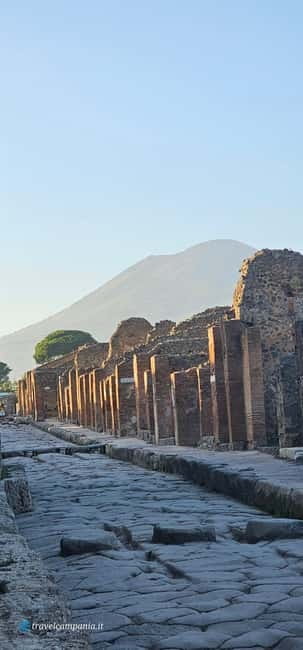
The Lupanare gets the longest single stop, about 20 minutes. This building is commonly identified as a brothel, and it offers a direct look at a less polished side of Roman urban life.
The guide can explain the small rooms, artwork, and layout without turning the visit into a cheap joke. The value is in seeing how commercial sex fit into the city’s wider social and economic world.
The Lupanare is popular, so it can become crowded. This is where radio equipment helps. You can stand slightly away from the guide and still follow the explanation instead of pressing into a tight group.
Not every group reaches this building. One person specifically found that the brothel and baths were missed, despite being listed among the expected highlights. If this stop matters to you, treat the route as a guided overview rather than a guaranteed checklist.
The Civil Forum and the center of Pompeii

The Foro Civile di Pompei, or Civil Forum, receives about 15 minutes of explanation, followed by about 10 minutes of free time. This is the tour’s largest civic space and one of the best places to connect the different parts of Pompeii.
The forum was the city’s public center, so it helps explain how politics, religion, trade, and civic business came together. After seeing homes, shops, baths, and theaters, you can now place them within the larger structure of the city.
The free time is welcome. Use it to look across the forum, take photographs, or ask a quick follow-up question. The group may be moving on, so this is not a chance for a long independent exploration, but it gives you a moment to absorb the scale of the site.
Guides have also been praised for avoiding the worst crowds when possible. That skill matters at the forum and at the Lupanare, where other groups may gather at the same time.
The basilica and what happens after the tour
The basilica is listed as a self-guided stop rather than a full guided segment. In a Roman city, a basilica was a major public building used for civic and legal activity, so it is a fitting final point for the organized route.
At this stage, the guide may suggest what to see next. Take notes. Pompeii is too large to finish in two hours, and the guided route is best treated as an orientation.
Some people stay another couple of hours. You could easily spend a full day if you want to examine the houses, theaters, forum, public buildings, artifacts, and plaster casts at a slower pace. The short tour gives you a framework, then you can choose what deserves more of your attention.
One practical tip is to ask about free lockers at the gates if you are carrying a backpack. Water fountains are also available around the site, though they may not be clearly marked. Bags are not allowed in the tour area, so plan around the site’s storage rules rather than arriving with a large daypack.
Guide style, audio support, and group comfort
The guide is the heart of this experience. Names associated with especially strong tours include Paolo, Lilian, Teresa, Angelo, Mario, Anna, and Imme. Individual personalities vary, but the best guides keep the pace moving, explain details clearly, and make room for questions without letting one long discussion consume the whole visit.
Radio equipment is provided when the group passes eight participants. In smaller groups of up to four people in the same language, the experience may use an audio guide with an Italian-speaking guide. That arrangement is worth understanding before you book if you need full live commentary in your chosen language.
The audio system has generally worked well, especially in crowded areas. One person found the earpiece too loud, so adjust the volume if possible. Another advantage is that the guide can lead you through busy streets while you continue listening.
The tour is offered in English, Italian, French, Spanish, and German. It is not designed for wheelchair users or people with mobility impairments. The ancient streets are uneven, and the pace involves standing and walking for two hours. It is also not suitable for people over 95 according to the activity restrictions.
Is $32 good value for Pompeii?
At $32 per person, the package includes the Pompeii Express entrance ticket and an authorized archaeology guide. That is a fair price if you want a clear introduction and do not want to spend your first hour figuring out the site alone.
The value comes less from the ticket itself and more from the explanations. Pompeii’s admission gives you access to a vast archaeological area, but it does not automatically tell you what a room was for, how a shop operated, or why a road was designed in a certain way.
I would not book this expecting a complete Pompeii visit. You are paying for two hours of focused interpretation and priority entry. Add independent time afterward if you want to see more.
Free cancellation up to 24 hours before the start and reserve-now, pay-later terms make the booking less rigid. Still, the late-arrival rule is strict, so flexible payment does not mean flexible departure timing.
Who should book this Pompeii tour?
I would choose this tour if you are visiting Pompeii for the first time, want the main ideas explained, or have only part of a day available. It is also a good fit for families, since a lively guide can make the ruins easier for children to follow.
It suits you especially well if names, dates, and broken walls do not mean much without a story. The guides explain the city’s design, food, entertainment, work, and home life in a way that gives the remains purpose.
You may prefer independent entry if you want to linger in one house, move slowly for photography, or build your own route. You should also think twice if you have limited mobility or cannot comfortably walk on uneven surfaces.
Should you book it?
Yes, if you want a strong first look at Pompeii for $32 and can spare extra time afterward. The guide, skip-the-line entry, radio equipment, and broad range of stops make the visit far more useful than wandering without context.
Book it with realistic expectations. The route can be affected by crowds, and two hours may not cover every headline site. Arrive early at the welcome box, bring the required identification, avoid large bags, and tell the guide which stops matter most to you.
For most first-time visitors, this is a practical way to begin. The guided walk gives you the story. Your extra time gives you Pompeii itself.
FAQ
How long does the Pompeii guided tour last?
The guided visit lasts approximately two hours. The route also includes short periods of free time and a self-guided visit at the basilica.
What is included in the price?
The $32 price includes a Pompeii Express entrance ticket and an authorized guide who specializes in archaeology.
Which languages are available?
Tours are offered in English, Italian, French, Spanish, and German. If a language group has no more than four participants, the tour may use an audio guide with an Italian-speaking guide.
Do I need identification?
Yes. Bring a passport or identity card for each participant, including children. A copy of a passport or identity card is accepted.
What happens if I arrive late?
If the group has already left, you may not be allowed to join. Because the tickets are group tickets, the tickets may also be lost.
Are audio devices provided?
A radio guide is included when the group exceeds eight participants. Smaller groups may use an audio guide arrangement, depending on the language and group size.
Is the tour suitable for wheelchair users?
No. The activity is not suitable for wheelchair users or people with mobility impairments. It is also not suitable for people over 95.
More Skip-the-Line Tickets in Pompeii
- Herculaneum: Skip-the-Line Guided Tour with Archaeologist
★ 4.8 · 3,439 reviews - Taormina: Ancient Theater Skip-the-Line Ticket & Audio Guide
★ 4.5 · 2,412 reviews - Historic Milan Tour with Skip-the-Line Last Supper Ticket
★ 4.5 · 1,976 reviews - Córdoba: Skip-the-Line Great Mosque-Cathedral History Tour
★ 4.7 · 1,690 reviews
More Archaeological Site Tours in Pompeii
- Pompeii Skip-the-line Tour with Archaeologist Guide
★ 5.0 · 559 reviews - Explore Pompeii with an Archaeologist
★ 5.0 · 511 reviews - Pompeii 3hours Villa of Mysteries tour with an Archaeologist
★ 4.8 · 486 reviews - Pompeii Private Tour with an Archaeologist and Skip The Line
★ 5.0 · 391 reviews
Just added around Pompeii
- Pompeii and Herculaneum: Guided Tour with an Archaeologist★ 5.0 · 164 reviews
- Pompeii Guided Tour with Archaeologist★ 4.6 · 27 reviews
- Pompeii: Guided Tour with Archaeologist with max. 12 People★ 5.0 · 155 reviews
- Pompeii Small Group Tour – Tickets Included★ 4.7 · 72 reviews
- Pompeii: 2-Hour Guided Tour with an Archaeologist★ 4.9 · 151 reviews
- PompeiI Exclusive Tour with your Archaeologist in a Small Group★ 4.5 · 363 reviews
- Pompeii Private Tour with an Archaeologist Guide★ 5.0 · 184 reviews
- Pompeii Private Tour with an Archaeologist and Skip The Line★ 5.0 · 391 reviews
Pompeii History Tours, compared.
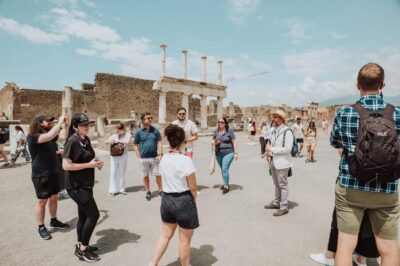
Pompeii: Entry Ticket and Guided Tour with an Archaeologist
Read our review →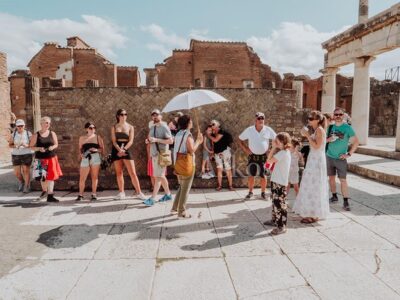
Pompeii: Small Group Tour with an Archaeologist
Read our review →Pompeii Small Group Tour with an Archaeologist
Read our review →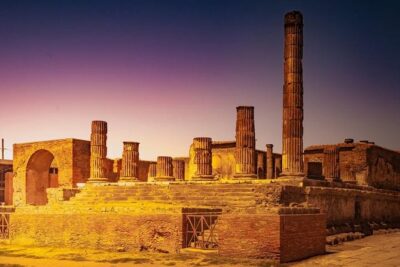
Discover the Ancient Ruins of Pompeii: Day Trip from Rome
Read our review →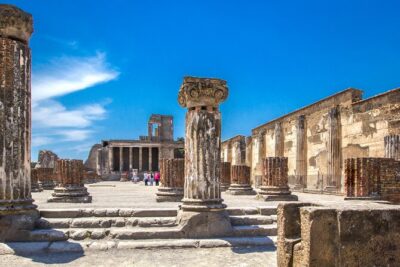
Pompeii and Herculaneum Small Group Tour with an Archaeologist
Read our review →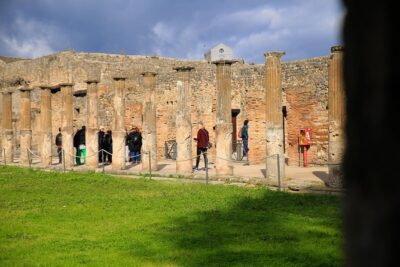
Skip the Line Guided Tour of Pompeii led by an Archaeologist
Read our review →
Pompeii Private Tour with an Archaeologist and Skip The Line – 3 hours
Read our review →