
Review · ITALY
Pompeii: Skip-the-Line Tickets and Tour with Archaeologist
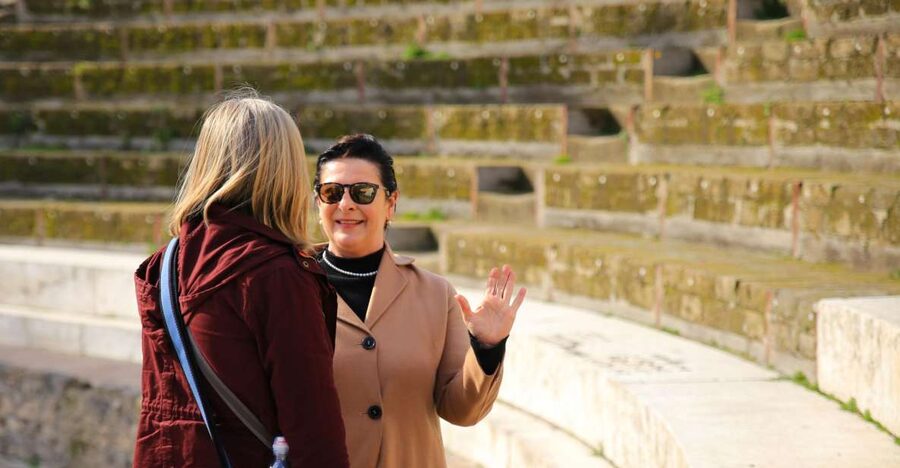
Pompeii is easiest to understand when someone helps you read what you are seeing. On this small-group archaeological tour, you walk original volcanic-stone streets while your guide explains the homes, bakeries, baths, gymnasium, and Forum that once made up a working Roman city.
I like the skip-the-line entry, which matters on hot or crowded days, and I like the way guides such as Lello, Italo, Leonardo, and Raffaele turn broken walls into scenes of daily life. The main drawback is time: two hours gives you a strong introduction, but Pompeii is so large that you will want to stay longer afterward.
Key points to know before booking
- Meet near Porta Marina Inferiore: Find your guide at the entrance of Coffee Shop Vittoria, close to the archaeological site.
- Follow an archaeologist: Expect context about Roman homes, food, politics, technology, and death, not just a list of dates.
- See the essential Pompeii sights: The route includes streets, villas, bathhouses, bakeries, the market area, and the Forum.
- Plan to explore afterward: The guided portion covers only part of Pompeii, so keep extra time if you want to see more.
- Wear practical clothing: Bring comfortable shoes, a sun hat, and sunscreen. Leave luggage, large bags, strollers, and umbrellas behind.
- Good for families: Guides use humor, questions, stories, and visual details to keep children and adults involved.
Why Pompeii works better with an archaeologist
Pompeii can look like a sprawling field of old stone if you walk in without a plan. You may see a doorway, a faded wall painting, or a line of stepping stones, but miss the clue that explains how the city worked.
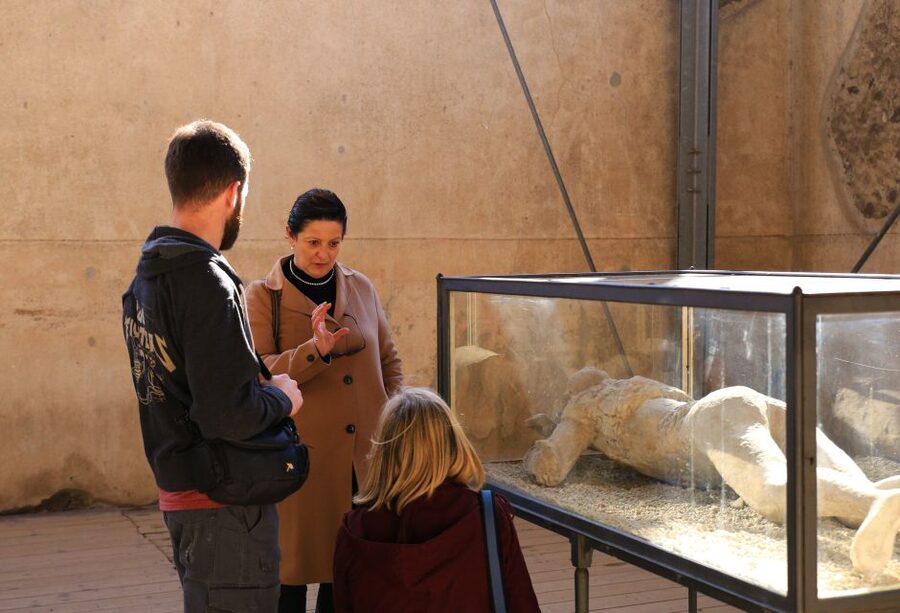
A trained guide gives those remains a purpose. The stone pavement becomes a busy street. A bakery becomes evidence of how food was prepared and sold. A dining room suggests how a wealthy household entertained. The Forum becomes more than an open square because you can picture people gathering there for business, politics, religion, and public life.
That is the real value of this tour. You are not simply being led from one famous ruin to another. You are being taught how to interpret the site.
The guides also bring different personalities to the walk. Lello is often described as energetic, funny, and especially good with children. Italo is praised for explaining more than surface facts, helping people understand how to read Pompeii on their own afterward. Raffaele and Leonardo are also noted for their strong archaeological background and lively delivery.
The exact guide is not guaranteed, so book this for the structure and expertise of the tour rather than for one particular person. Still, the repeated pattern is clear: the guides use humor and stories, while keeping the historical material tied to the physical remains around you.
More Ancient History Tours in Italy
- Pompeii: Entry Ticket and Guided Tour with an Archaeologist
★ 4.8 · 19,459 reviews - Colosseum: Underground and Ancient Rome Tour
★ 4.7 · 12,691 reviews - Pompeii: Small Group Tour with an Archaeologist
★ 4.8 · 12,264 reviews
Meeting at Coffee Shop Vittoria
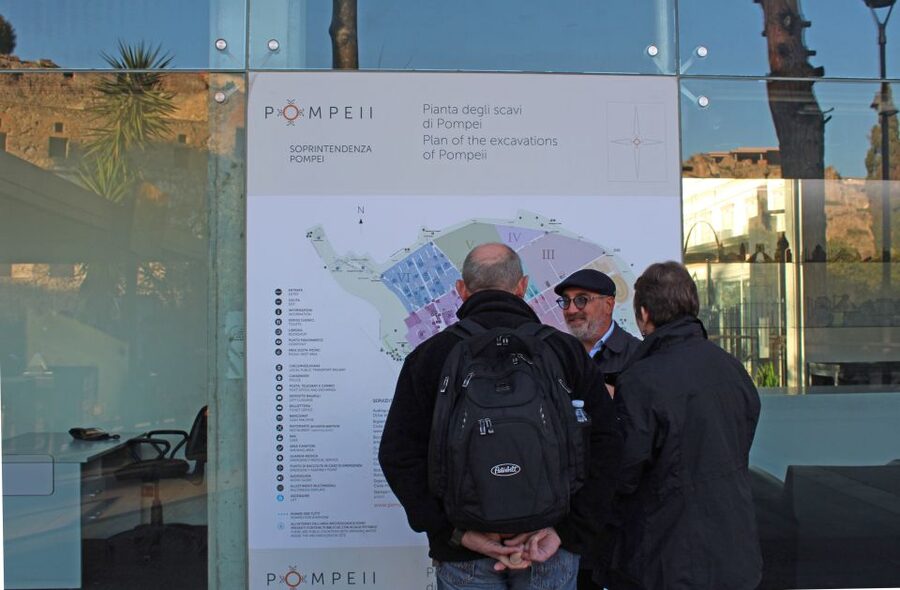
The meeting point is the entrance of Coffee Shop Vittoria, close to the Porta Marina Inferiore entrance to Pompeii. This is useful because you do not need to search for a guide inside the enormous site. Meet first, join the group, and then head toward the archaeological entrance together.
Give yourself enough time to locate the café and the correct gate. Pompeii has more than one access point, and arriving at the wrong entrance can create needless stress. Your booking requires the full names of all participants as they appear on identification documents, so enter those details carefully.
The tour is in English. Admission tickets and a professional guide are included, but hotel pickup, hotel drop-off, lunch, and drinks are not. You handle your own transport to Pompeii and your own food and water.
The separate entrance is a practical advantage. Pompeii can draw long lines, especially during busy periods, and standing outside in strong sun is a poor use of your limited sightseeing time. Skip-the-line access does not make the site quiet, but it gets you moving sooner.
Walking Pompeii’s original streets
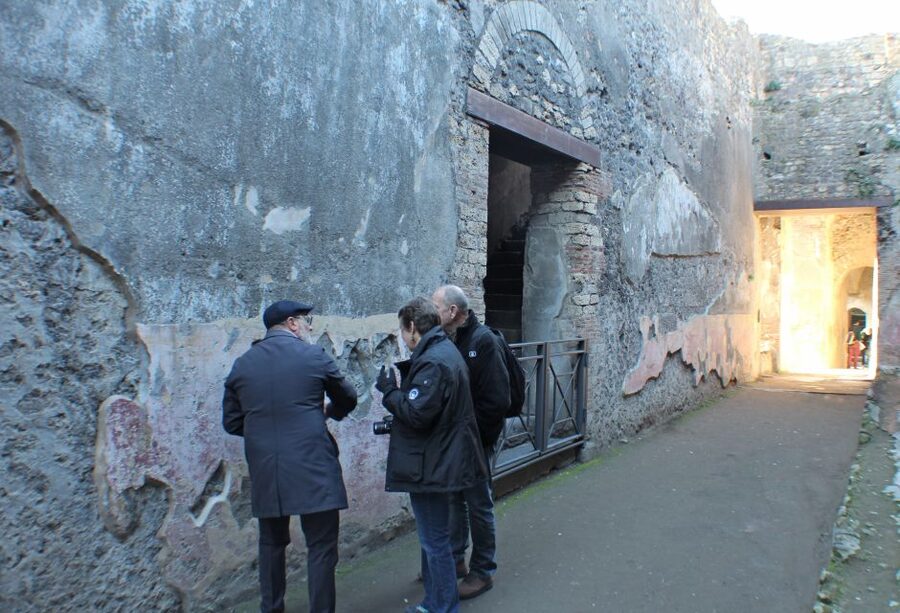
Once inside, the physical scale begins to sink in. You walk along original volcanic-stone pavement, passing streets that once served homes, shops, public buildings, and meeting places.
This is where good guiding makes a real difference. The city is not arranged like a modern museum, with every object labeled beside a neat display. The remains are spread over a large area, and the meaning of each space depends on its position and design.
Your guide introduces the daily routine of Roman citizens. You hear how people used public buildings, prepared food, gathered in shared spaces, and arranged their homes. The stories focus on ordinary life as well as grand public monuments, which gives Pompeii a human scale.
Look down as you walk. The original pavement is uneven, and the route involves plenty of walking. Comfortable shoes are essential. A sun hat and sunscreen are also sensible because the site offers exposed stretches and the tour takes place outdoors.
This is not the place for a rolling suitcase, large bag, stroller, or umbrella. Those items are not allowed, so pack lightly before you arrive.
Villas, dining rooms, and Roman home life
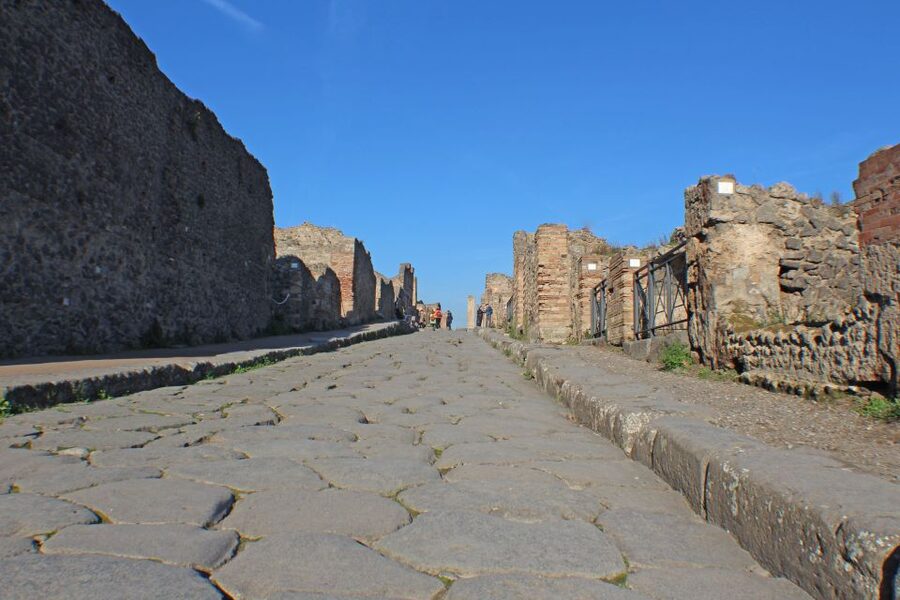
Pompeii’s houses help explain the gap between public and private life in the Roman world. A guide can show you how architecture, decoration, and room arrangement reflected status and household habits.
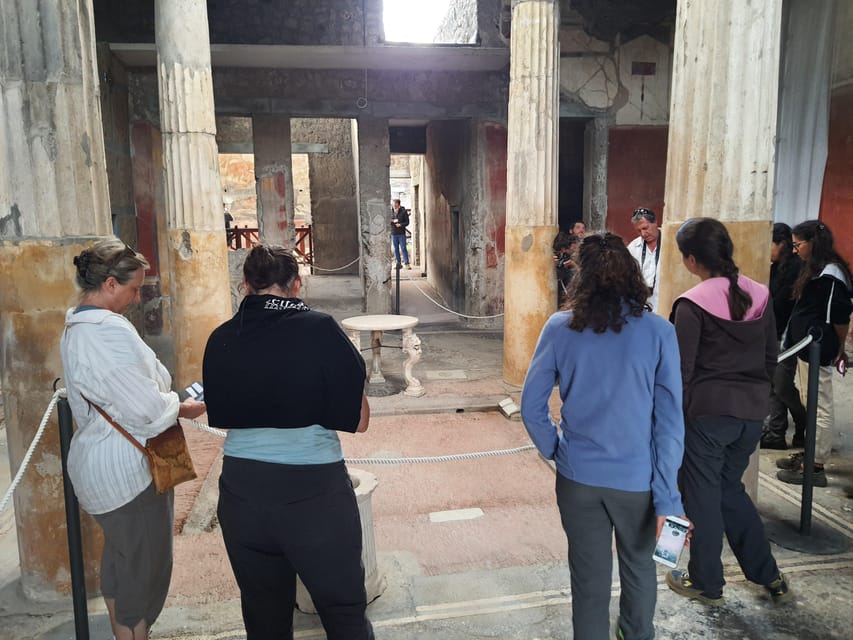
The tour description uses the image of women reclining on a marble dining couch while enjoying a feast. That detail helps you picture the triclinium, the Roman dining room, as a social space rather than an empty chamber. Food, conversation, display, and rank all mattered around the meal.
You may also hear about wall decoration, courtyards, household work, and the way different rooms served different purposes. The point is not simply to admire a preserved wall. It is to understand how people moved through their homes and how the home represented the family.
Some of the most useful explanations concern details you could easily walk past. A guide points out how the remains reveal habits, technology, and social rules. You leave with a better sense of what to notice when you continue through Pompeii independently.
More Archaeological Site Tours in Italy:
- Pompeii Small Group Tour with an Archaeologist
★ 5.0 · 6,593 reviews - Herculaneum: Skip-the-Line Guided Tour with Archaeologist
★ 4.8 · 3,439 reviews - Pompeii: Archaeological Park Tour with Ticket on request
★ 4.5 · 2,283 reviews - Discover the Ancient Ruins of Pompeii: Day Trip from Rome
★ 3.5 · 2,247 reviews
Bakeries, markets, and the ordinary city
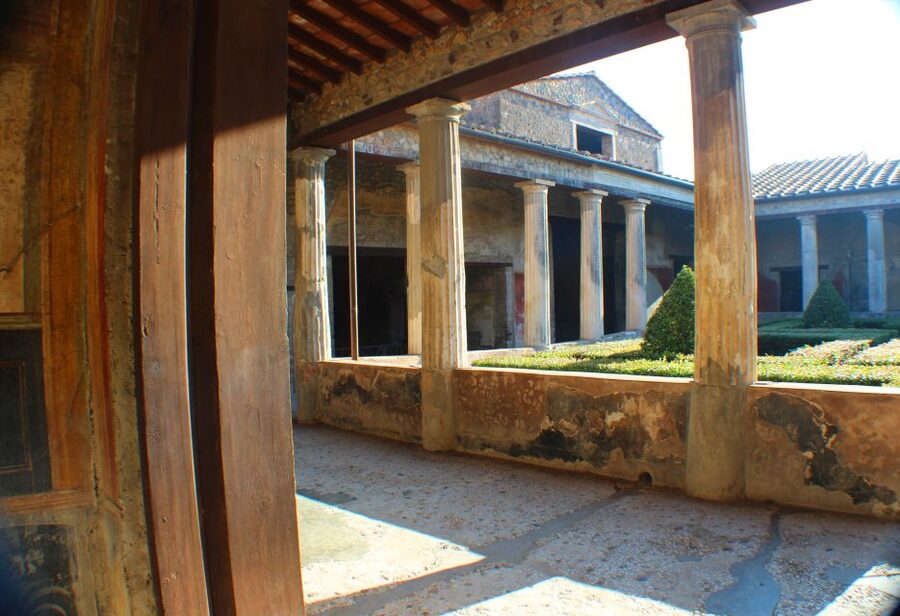
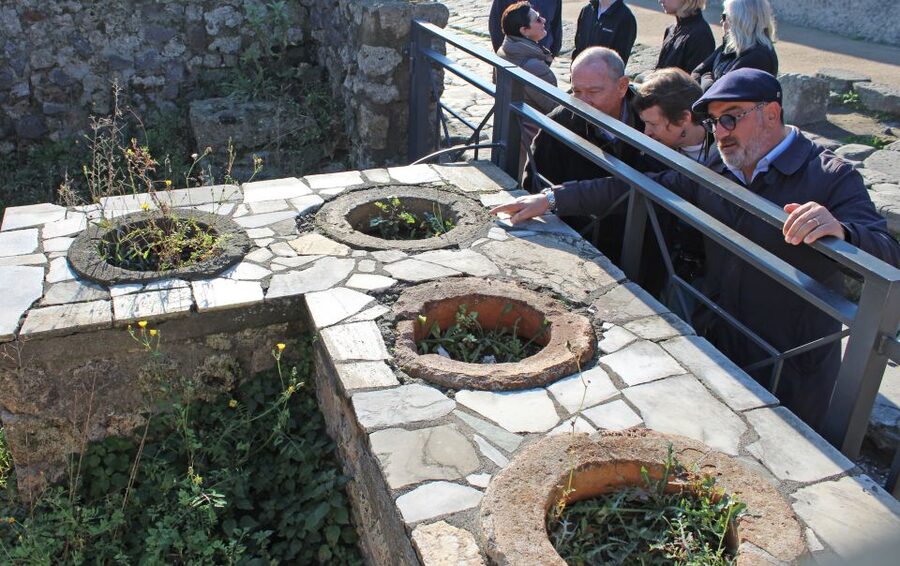
The bakery area is one of the most memorable stops because it connects the ruins to a familiar part of life: making and selling food. You can imagine bread being prepared in ovens and distributed to people living nearby.
That kind of detail keeps the tour grounded. Pompeii was not only a place of temples and wealthy villas. It was a working city with tradespeople, shoppers, cooks, politicians, athletes, and families.
The market area offers another useful shift in perspective. Instead of seeing a set of columns and fragments, you hear about people buying goods, meeting one another, and handling the practical business of city life.
I especially value this focus on the ordinary. Grand monuments are easy to admire, but bakeries, shops, roads, and dining rooms show how the city functioned. They also make the site more accessible for children, who may connect faster with food, homes, and daily routines than with a long sequence of rulers and dates.
The Forum and the public face of Pompeii
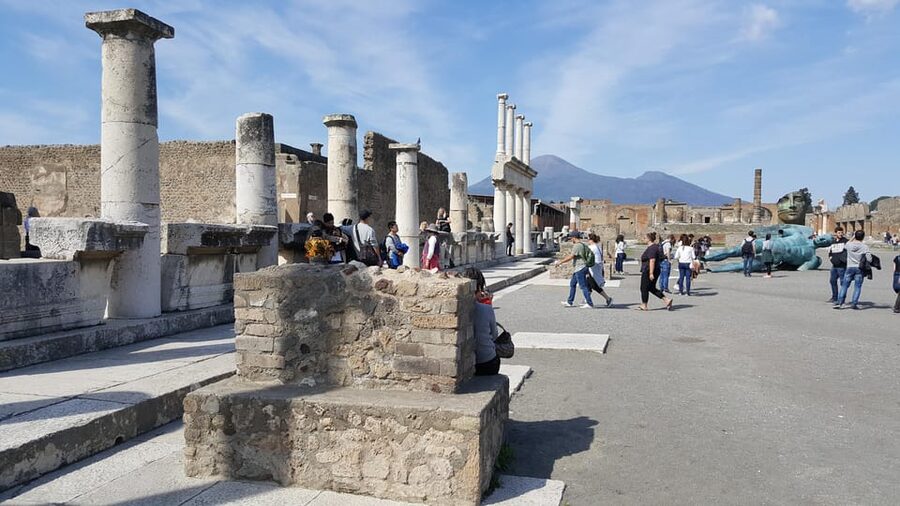
The Forum was the city’s major public gathering area, and it gives the tour a chance to explain politics and civic life. This is where people met, watched public activity, and gathered around politicians.
Your guide places the Forum within the larger Greek-Roman city, explaining how public space shaped the habits of the people who lived here. The value is in the setting: you can stand in the same broad area where public life once unfolded, then connect that space to the homes and streets visited earlier.
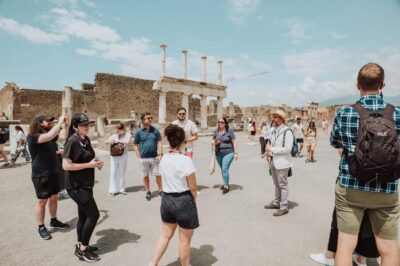
The Forum can be busy, and crowds may make it harder to hear. Some guides use headsets, which allows you to keep moving without standing shoulder to shoulder around the guide. Group size can vary, but several people describe groups of roughly 15 or fewer, with some departures becoming almost private when demand is low.
Do not expect to see every important building in Pompeii during the guided walk. The site is huge, and a two-hour tour has to make choices. The guide aims to cover key areas and give you a framework for the rest.
A lively lesson, not a dry lecture
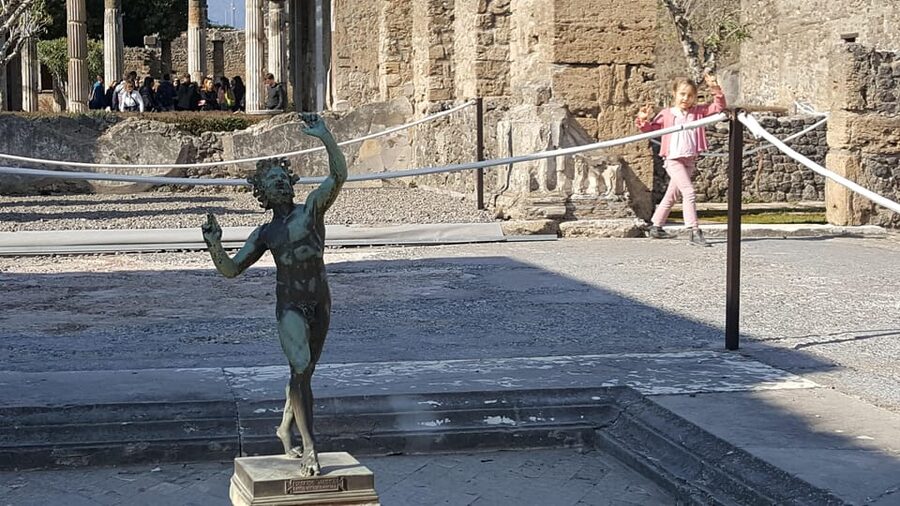
The strongest part of this experience is the delivery. Guides use humor, questions, anecdotes, and vivid scenes to hold your attention. That matters at Pompeii, where heat, uneven paving, crowds, and the sheer number of ruins can wear you down.
Lello is repeatedly praised for involving the whole group, including children and older family members. Italo is described as giving people enough background to continue exploring alone with a better eye. Other guides, including Anna, Maria, Nello, Rosanna, and Raffaele, are also singled out for warmth, enthusiasm, or clear explanations.
Those details point to a useful distinction. You are not paying only for access to Pompeii. You are paying for a person who can decide what matters, explain why it matters, and keep the pace moving.
A good guide also knows when to pause. The tour allows time for questions and photographs, though the exact pace depends on the group, the guide, and crowd levels. If you want a slow photographic study of every room, this may feel brisk. If you want a clear introduction that avoids wandering, the pace should suit you.
What the two-hour schedule really gives you
The advertised duration is two hours. Some past departures lasted about two and a half hours, but you should plan around the stated two-hour schedule and treat any extra time as a bonus.
In two hours, you can expect a guided look at a selected portion of Pompeii rather than a complete visit. You will get an explanation of Roman daily life, see several major types of buildings, and learn how the city’s streets and public areas fit together.
Many people choose to stay inside after the guided portion. This is a smart plan if your schedule allows it. Your guide can suggest additional areas to visit, and the introduction gives you enough orientation to explore without feeling completely lost.
I would allow at least a little extra time after the tour for your own wandering. Pompeii is too large to absorb in one quick circuit, and the guided route will necessarily leave sections unseen.
If you have only one short window in Pompeii, the tour gives you a focused visit. If you have most of a day, it works better as the first part of your visit, followed by independent exploration.
Is $105 a fair price?
At $105 per person, this is not a budget entry ticket. You are paying for admission, skip-the-line access, and a live English-speaking archaeologist in a small group.
The price makes the most sense if you value your time or feel unsure how to approach a vast archaeological site. Without guidance, you may spend hours walking between ruins without understanding their use. A good guide can also help you avoid getting stuck in the busiest areas and can point out details that are easy to miss.
The value is stronger for first-time visitors, families, and anyone with a serious interest in Roman life. It is also useful for people who have visited Pompeii before but want a more meaningful reading of the site. One repeat visitor found the guided experience much more rewarding than walking alone because the archaeological explanation added focus.
The price may feel high if you already have strong knowledge of Pompeii, want a quiet self-guided visit, or plan to spend an entire day with a guidebook. In that case, you may prefer admission alone and more freedom to set your own pace.
For most first-time visitors, I consider the cost defensible because Pompeii rewards interpretation. The ticket gets you through the gate, but the guide helps turn the remains into a city.
Practical advice for families and older visitors
This tour suits families well because the guides use stories and humor instead of relying only on formal lectures. Children ages 11, 14, and 16 are specifically reported as staying engaged, which suggests the format works for school-age children and teenagers who may lose interest on a long ruins walk.
Still, Pompeii is physically demanding in simple ways. The pavement is old and uneven, the site is broad, and much of the walking is outside. Wear supportive shoes and bring water, even though drinks are not included.
A sun hat and sunscreen are wise in warm weather. In rain, conditions can be less comfortable, so bring only what the site permits and check the rules before arriving. Umbrellas are not allowed, and baby strollers are not allowed.
Headsets may be provided on some departures. They are helpful because you can hear the guide without crowding around one person, but you should still stay close enough to follow the group.
Cancellation and booking details
You can cancel up to 24 hours before the activity for a full refund. The reserve-now-and-pay-later option lets you hold a place without paying at the time of booking, which is useful when your Campania plans are still shifting.
The activity is offered in English, and starting times vary. Check availability for the date you want. Enter every participant’s name exactly as shown on the required identification documents, including the full names of children.
Since hotel pickup and drop-off are not included, arrange your own way to Pompeii and allow time to reach Coffee Shop Vittoria near Porta Marina Inferiore.
Who should book this Pompeii tour?
Book it if you want a clear, human explanation of Pompeii instead of a self-guided walk through a very large site. It is especially useful for first visits, families, history fans, and anyone who wants to understand Roman homes and daily habits, not just photograph famous ruins.
It is also a good choice if lines are likely to be long or you have limited time. The combination of separate entry and a focused route helps you spend more of your visit inside the ruins.
Skip it if you strongly prefer complete independence, need a very slow pace, or plan to see Pompeii over several days with your own research. The two-hour route covers only part of the city, and $105 is a considerable premium over admission alone.
For most people, I would book it and reserve extra time afterward. The guide gives you the tools to make sense of Pompeii, then you can continue at your own pace.
FAQ
How long does the Pompeii tour last?
The listed duration is two hours. Some past departures lasted about two and a half hours, but you should plan for the stated two-hour schedule.
Where do I meet the guide?
Meet at the entrance of Coffee Shop Vittoria, close to Pompeii’s Porta Marina Inferiore entrance.
Is the tour conducted in English?
Yes. The activity includes a live English-speaking guide.
Are Pompeii entrance tickets included?
Yes. Admission tickets to the archaeological site and a professional guide are included.
Does the tour include hotel pickup and drop-off?
No. You must arrange your own transportation to and from Pompeii.
What should I bring?
Bring comfortable shoes, a sun hat, and sunscreen. Children need a passport or identification card.
Can I bring a stroller, luggage, or umbrella?
No. Baby strollers, luggage or large bags, and umbrellas are not allowed.
More Skip-the-Line Tickets in Italy
- Taormina: Ancient Theater Skip-the-Line Ticket & Audio Guide
★ 4.5 · 2,412 reviews - Historic Milan Tour with Skip-the-Line Last Supper Ticket
★ 4.5 · 1,976 reviews - Skip the Line Guided Tour of Pompeii led by an Archaeologist
★ 5.0 · 703 reviews - Pompeii: Tour with Archaeologist Guide & Skip-the-Line Entry
★ 4.5 · 623 reviews
Just added around Italy
- Guided Cultural Tour of the Godfather Film in Messina★ 5.0 · 31 reviews
- Guided tour of the Riace Bronzes and the Archaeological Museum of Reggio Calabria★ 5.0 · 44 reviews
- SU NURAXI BARUMINI Unesco World Heritage Site★ 5.0 · 129 reviews
- Brescia the Unexpected: History, Local Stories & a drink★ 5.0 · 31 reviews
- Bolognese Cooking Class with Margherita in the Historic Center★ 5.0 · 26 reviews
- Tower and Power, Virtual tour in Medieval Bologna★ 4.5 · 54 reviews
- Bologna historical art walking tour with hidden gems and tastings★ 5.0 · 108 reviews
- Best of Bologna in one day : Food, architecture, art and history★ 5.0 · 27 reviews
Italy History Tours, compared.
Pompeii: Entry Ticket and Guided Tour with an Archaeologist
Read our review →
Colosseum: Underground and Ancient Rome Tour
Read our review →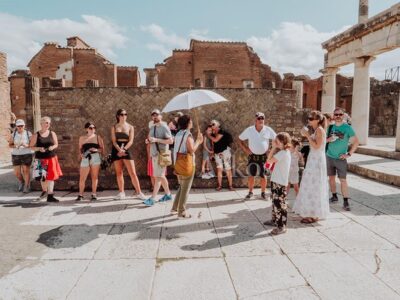
Pompeii: Small Group Tour with an Archaeologist
Read our review →Pompeii Small Group Tour with an Archaeologist
Read our review →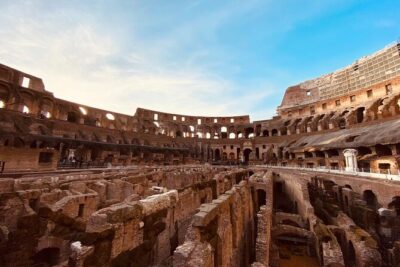
Rome: Colosseum with Arena, Roman Forum and Palatine Guided Tour
Read our review →
Venice: St. Mark’s Basilica Guided Tour & VR History Intro
Read our review →
Colosseum with Arena, Roman Forum and Palatine Hill Guided Tour
Read our review →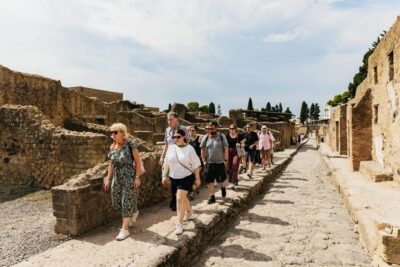
Herculaneum: Skip-the-Line Guided Tour with Archaeologist
Read our review →Browse the lists this tour appears in