
Review · ITALY
Pompeii: The Ultimate Skip-the-Line Archaeological Adventure
Pompeii is most powerful when the ruins connect to ordinary life, and this tour gets you from the Forum to food counters, private villas, theaters, and the plaster casts of Vesuvius’ victims in two focused hours. I like the archaeologist guide and the single-language format, which keep the explanations clear. The tradeoff is pace: two hours covers the essentials, but some explanations may feel brisk.
I also like the priority entry and the useful route through Pompeii’s best-known sights. At $39, including admission and the guide, it is a fair deal if you want structure and context. If you hope to explore every corner or study the frescoes at length, you will need extra time after the tour.
Key points at a glance
- The route links daily life with grand monuments, moving from the Forum and theaters to thermopolia, villas, and the Lupanare.
- An English or Spanish archaeologist leads the visit, with tours kept monolingual rather than mixing languages.
- Priority entry saves time, though everyone still passes through a required security check.
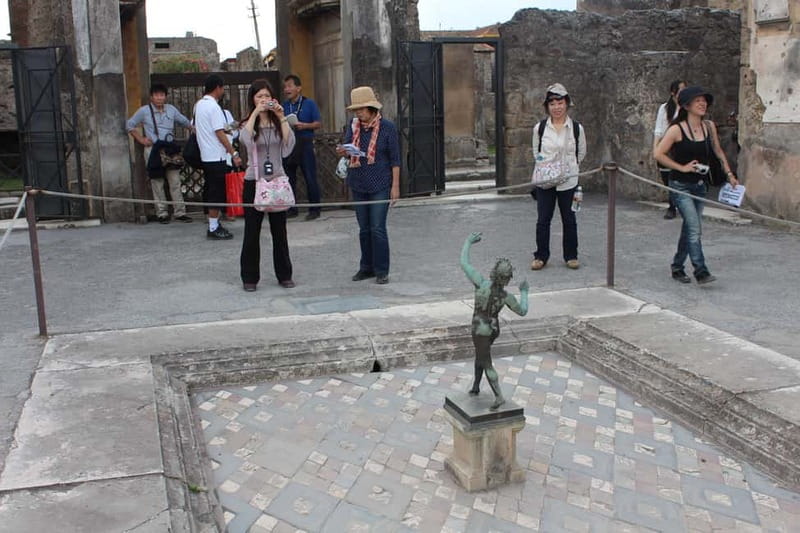
- The House of the Vettii offers a close look at elite Roman life, while the Thermopolium of Vetutius Placidus shows how food was sold.
- The plaster casts at the Garden of the Fugitives add emotional weight to the archaeological remains.
- Two hours is efficient but limited, so good shoes, sun protection, and realistic expectations matter.
Why Pompeii works best with a guide
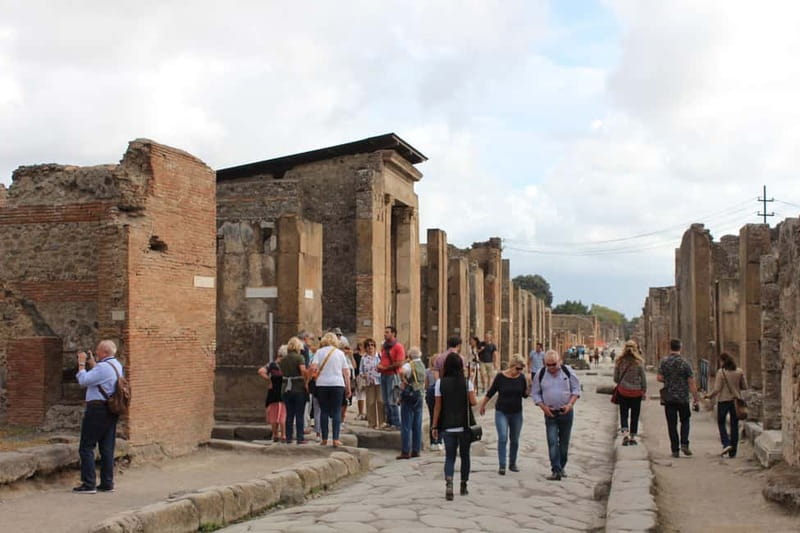
Pompeii is huge, and its streets can look like a maze of stone walls if you do not know what you are seeing. A guide gives each stop a purpose. A counter becomes an ancient food shop, a decorated room becomes a sign of wealth, and a row of worn streets begins to show how people moved through the city.
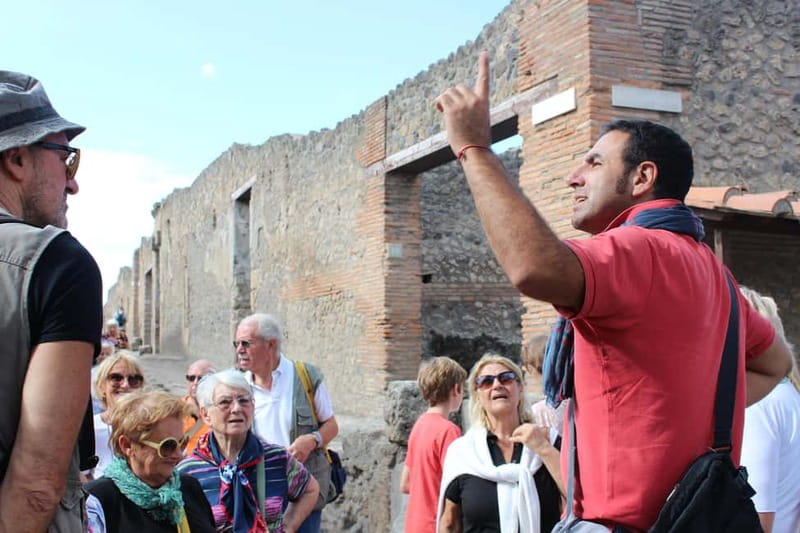
This tour is led by a professional archaeologist in English or Spanish. That matters at Pompeii because the site rewards explanation. You can look at a fresco on your own, but a guide can point out how the room was used, what the decoration suggested about the owner, and how private homes differed from public buildings.
The monolingual setup is useful. You will not spend half the tour waiting for the same point to be repeated in another language. The guide can keep one rhythm and answer questions within that language. Earphones are provided for groups of up to five people, helping you hear the commentary while walking through open streets.
The strongest feedback about this experience points to clear explanations, an enjoyable pace, good organization, and guides who add practical suggestions for seeing more of Pompeii after the formal tour. One Spanish-speaking guide was also praised for telling the story clearly and recommending monuments to visit independently.
There is a fair warning here. One account found the guide friendly and helpful but felt the tour moved too quickly and offered less detail than expected. That is possible on any two-hour Pompeii route. You get a well-chosen introduction, not a full archaeological study.
More Ancient History Tours in Italy
- Pompeii: Entry Ticket and Guided Tour with an Archaeologist
★ 4.8 · 19,459 reviews - Colosseum: Underground and Ancient Rome Tour
★ 4.7 · 12,691 reviews - Pompeii: Small Group Tour with an Archaeologist
★ 4.8 · 12,264 reviews
Meeting at Piazza Esedra
Your starting point is Piazza Esedra, at the Towns of Italy-Vox Kiosk next to Coffeeshop Vittoria. This is not a place to arrive at the last second. You should be there at least 15 minutes before departure because latecomers cannot join and do not receive a refund.
That strict rule is easy to understand at a major archaeological park. The guide has a fixed entry time, and the group cannot hold up the route for people still finding the meeting point. Bring your passport or ID card, since identification is required.
The advertised skip-the-line access means you use an express security entrance rather than waiting in the standard ticket queue. It does not mean instant entry. The security check is compulsory and can still cause delays, so keep your schedule sensible if you have a train or another booking afterward.
The first steps inside Pompeii
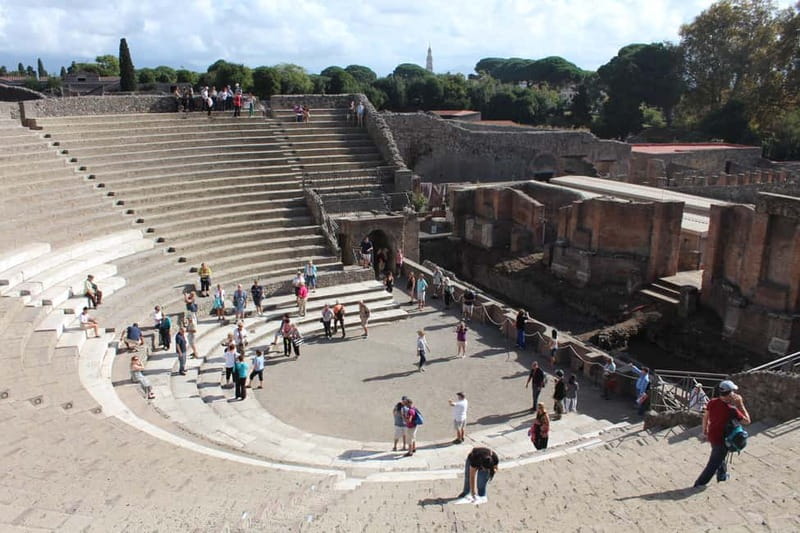
The two-hour visit begins with a broad look at Pompeii’s urban remains. You will walk through streets shaped by Roman planning, passing walls, doorways, public buildings, and views across the archaeological park.
The key benefit at this stage is orientation. Instead of wandering from ruin to ruin, you get a sense of how the city worked as a place where people lived, shopped, worshipped, watched performances, and met in public spaces.
The route includes the Grand Theater, one of the site’s major public buildings. Its size helps explain the role of entertainment in Roman society. A theater is also a welcome change from rows of residential walls, giving you a clearer feeling for public life and civic pride.
You should expect walking on uneven ancient paving. The route is not suited to people with mobility impairments, wheelchair users, serious back problems, or heart problems. Even if you are generally fit, wear sturdy walking shoes rather than flip-flops.
Garden of the Fugitives and the human cost
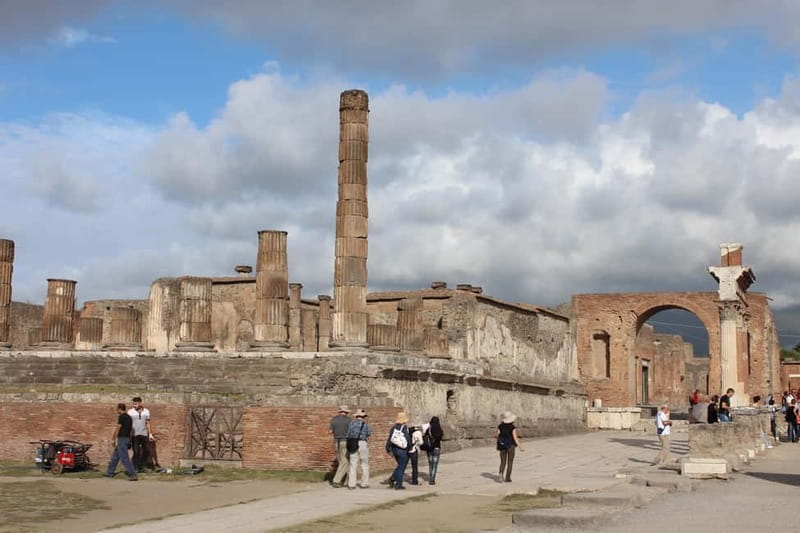
The Garden of the Fugitives is scheduled as a short stop of about five minutes. The name refers to plaster casts of people caught by the eruption of Mount Vesuvius.
This is one of Pompeii’s most affecting places. The casts are not simply another archaeological object. They make the disaster personal, showing the shape and posture of people who had little chance to escape the ash and volcanic material.
The short stop gives you time to look and listen, but not necessarily to linger. If this is the part of Pompeii you most want to study, plan to return after the tour if site access and opening conditions allow. The guide can provide the setting and meaning, while independent time lets you absorb it quietly.
This stop also changes the tone of the visit. Pompeii can seem like an open-air museum of buildings, but the Garden of the Fugitives reminds you that this was a real city interrupted by catastrophe.
More Archaeological Site Tours in Italy:
- Pompeii Small Group Tour with an Archaeologist
★ 5.0 · 6,593 reviews - Herculaneum: Skip-the-Line Guided Tour with Archaeologist
★ 4.8 · 3,439 reviews - Pompeii: Archaeological Park Tour with Ticket on request
★ 4.5 · 2,283 reviews - Discover the Ancient Ruins of Pompeii: Day Trip from Rome
★ 3.5 · 2,247 reviews
Forum Baths and the center of public life
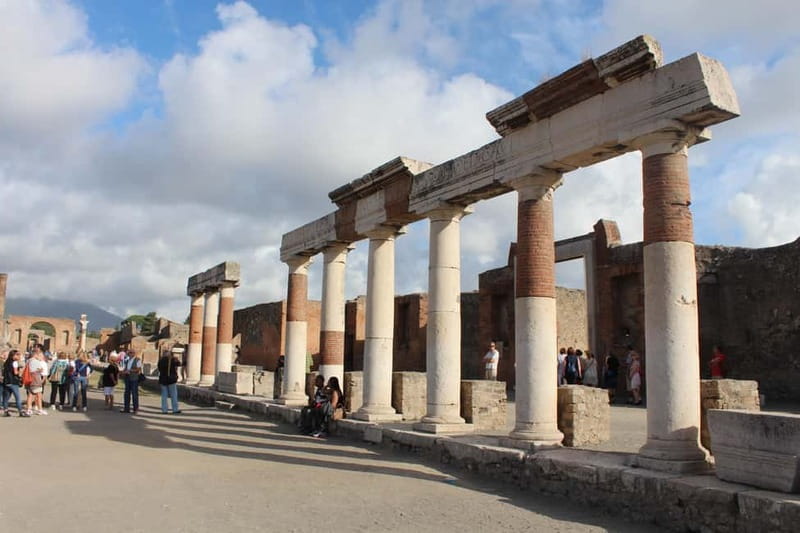
The Forum Baths are another brief photo and explanation stop. Roman baths were not only places to wash. They were social spaces, and their construction shows the importance Romans placed on public comfort and routine.
The Forum nearby served as the civic heart of Pompeii. It was a place for business, politics, religion, and public gathering. Your guide can help separate the different functions of the surrounding buildings, which otherwise may appear as a series of columns and broken walls.
I find this pairing useful because the baths and Forum show two sides of Roman life. One is practical and social, the other is formal and civic. Together they give you more than a list of ruins.
The five-minute timing is enough for an introduction, especially with a guide who keeps the story moving. It is not enough for careful photography from every angle or detailed architectural study. Again, this is a highlights tour.
The Amphitheater and Pompeii’s public spectacle
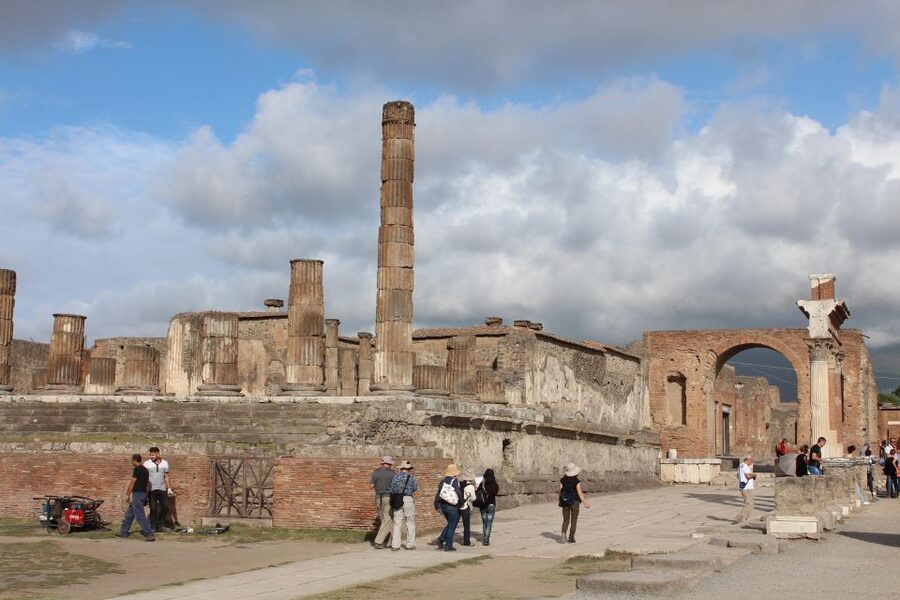
The Amphitheater of Pompeii receives another short stop. Its scale shows how large public events could be, and it gives you a sense of the crowds Pompeii’s residents gathered to watch entertainment.
The amphitheater is especially useful for understanding that Pompeii was not a quiet village buried by chance. It was an active Roman city with public buildings designed for large audiences.
Expect a photo stop and guided explanation rather than an extended visit inside every section. The route favors variety, taking you from public life to homes and shops instead of spending the full two hours on one monument.
The Lupanare and Pompeii’s frank side
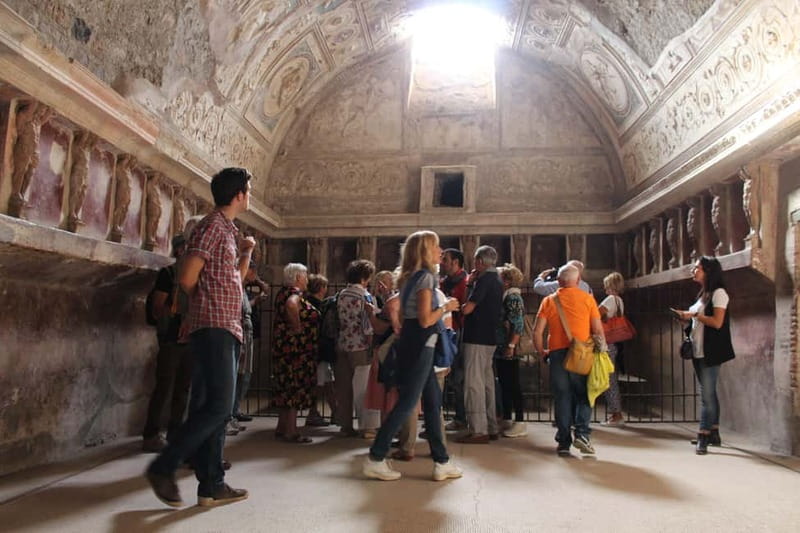
The Lupanare, commonly understood as a brothel, is among Pompeii’s most talked-about stops. Its small rooms and surviving imagery offer a blunt look at a part of Roman urban life that polite public monuments often leave out.
The site also includes Pompeii’s erotic art collection as part of the broader experience. This material may not suit every family or every visitor, so keep that in mind before booking. It is presented as archaeology and social history, not as a separate entertainment stop.
The planned 10-minute visit gives the guide time to explain the space and its role. Crowds can make small rooms feel tight, and the area may be more difficult to view at a leisurely pace than an open street or Forum.
The House of the Vettii and the world of wealthy owners
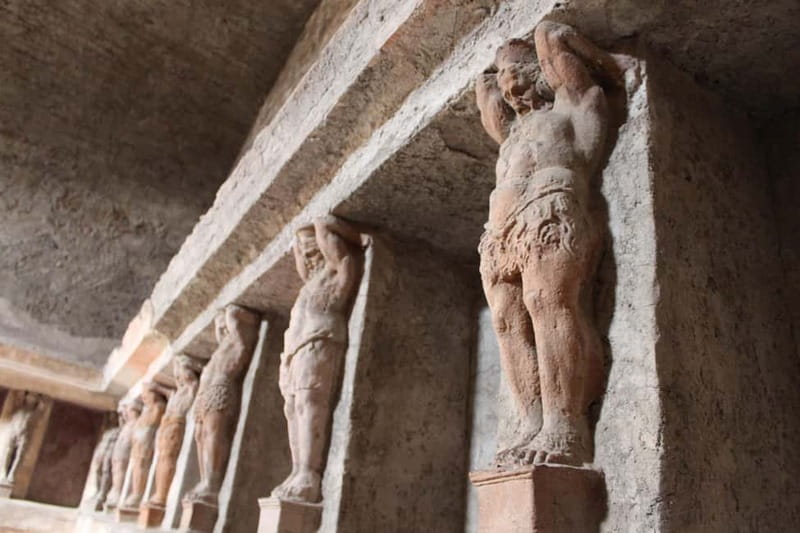
The House of the Vettii is one of the tour’s most rewarding residential stops. It shows how the wealthy used architecture, decoration, and display to shape the impression of their homes.
Here, you can expect attention to rooms, wall decoration, and the gap between the owners’ private lives and the public image they wanted to project. The surviving frescoes are a reminder that Roman houses were not plain stone shells. Color and decoration played a large part in showing status.
This is where an archaeologist’s guidance has real value. Without context, you may notice attractive paintings but miss how the rooms fit together or what they say about Roman domestic life. The 10-minute timing is enough to make the house meaningful, but not enough to inspect every detail.
If elite residences interest you most, this is a reason to leave time for further independent exploration. The tour provides a strong introduction to lavish Pompeian homes, while a longer visit lets you compare them with humbler buildings.
Vetutius Placidus and the ancient food counter
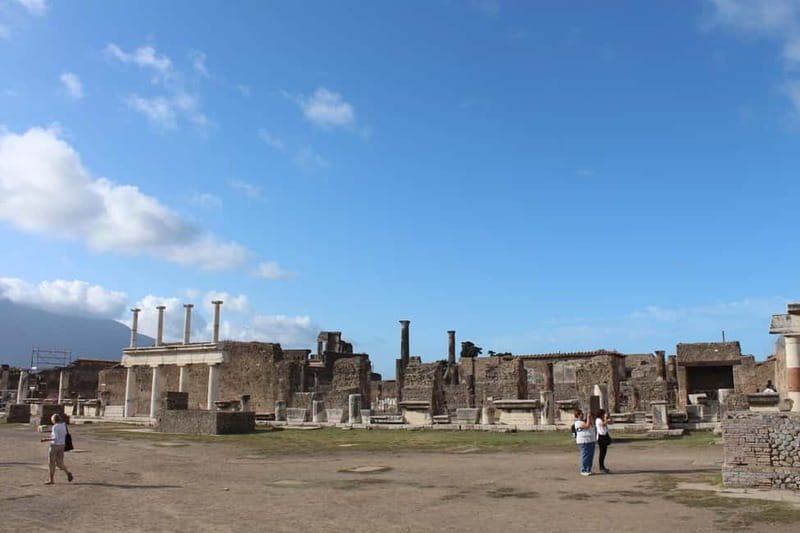
The House of Vetutius Placidus and its Thermopolium bring you back to everyday commerce. A thermopolium was a place where prepared food and drink could be sold, making it one of the clearest stops for imagining daily errands.
The counters are especially easy to understand. You can see how a commercial space differed from a private dining room, and how food service fit into the rhythm of city life. This stop helps balance the grander monuments and wealthy homes.
I like this part of the route because it makes Pompeii feel practical rather than purely ceremonial. You are not only looking at villas and public buildings. You are seeing where people bought food, passed through shops, and handled the ordinary needs of the day.
The 10-minute stop should give the guide room to explain the shop and its setting. As with the other enclosed spaces, you may want to move carefully and stay close enough to hear the commentary.
What the two-hour format gives you
Two hours is a sensible length for a first look at Pompeii, especially if you are visiting from Naples or another town in Campania and want to fit the archaeological park into a busy day.
The route has a good rhythm. You see public monuments, emotionally serious remains, private homes, commercial spaces, and Pompeii’s more unusual art. That range is the tour’s main strength.
The limit is depth. Pompeii contains far more than this route can cover, and some stops receive only five or 10 minutes. One particularly honest assessment found the information useful but too brief, with the guide appearing eager to finish. Other accounts praised the pace and clarity, so your experience may depend partly on the day’s crowd levels and the guide assigned.
I would treat this as a structured introduction. It helps you understand what you are seeing and points you toward places worth revisiting. It is not designed for someone who wants to spend 20 minutes examining each fresco.
Price, group setup, and what you receive
At $39 per person, the price includes the Pompeii entrance ticket, an archaeologist guide, and skip-the-line access through express security. Transfers are not included, so you must reach Piazza Esedra on your own.
For a major site with a confusing layout, that is a reasonable price. You are paying not just for admission but for a clear route and professional interpretation. The value is strongest if you have only a few hours or do not want to spend part of your visit figuring out where to go.
The value is weaker if you already know Pompeii well, speak comfortably about Roman archaeology, or plan to spend most of the day exploring independently. In that case, the fixed route and short stops may feel restrictive.
The single-language format is a genuine plus for many people. English and Spanish tours are offered separately, so you can follow one continuous explanation. The earphones for groups of up to five people should also help with hearing the guide in open areas.
Practical details before you book
Wear good walking shoes. Pompeii’s ancient streets are uneven, and the tour involves steady walking. A hat and sunscreen are sensible because much of the route is outdoors with limited shade.
The park requires suitable clothing. Shirtless entry and disrespectful clothing are not allowed. Large bags and backpacks are restricted, with a maximum size of 30 by 30 by 15 centimeters, and oversized items must be left in the cloakroom.
Pets are not allowed. Professional optical and audio equipment, unauthorized transport such as bicycles and scooters, and drones are also prohibited.
The tour is not suitable for wheelchair users or people with mobility, back, or heart problems. If you need a slower pace or accessible facilities, this is not the right choice.
You can cancel up to 24 hours in advance for a full refund, and the reserve-now, pay-later option keeps your payment flexible. Those policies help if your Campania plans are still changing, but they do not soften the late-arrival rule.
Should you book it?
Book this tour if you want a well-organized first visit, a professional archaeologist, priority entry, and a compact route through Pompeii’s major themes. It is especially useful if you are coming from Naples, have only part of a day, or prefer clear explanation over wandering alone.
Think twice if you want a slow archaeological study. The two-hour schedule covers a lot, but it cannot give every villa, fresco, and public building the attention it deserves.
For most first-time visitors, I consider $39 fair value. Arrive early, bring identification, wear proper shoes, and treat the tour as your foundation. If the House of the Vettii, plaster casts, or ancient shops capture your interest, use the remaining time to explore further on your own.
FAQ
How long does the Pompeii tour last?
The guided experience lasts two hours.
Where does the tour meet?
Meet at the Towns of Italy-Vox Kiosk in Piazza Esedra, next to Coffeeshop Vittoria, in Pompeii.
How early should I arrive?
Arrive at least 15 minutes before the scheduled start. Latecomers cannot join the tour, and no refund is provided.
Which languages are available?
The tour is available in English or Spanish. Tours are monolingual, so only one language is used during each visit.
Does the ticket include Pompeii admission?
Yes. The Pompeii ruin ticket and skip-the-line access through an express security check are included.
Do I need to bring identification?
Yes. You must bring a passport or valid ID card.
What should I wear and bring?
Wear good walking shoes, and bring a hat and sunscreen. Clothing must meet Pompeii Archaeological Park requirements, and bags must not exceed 30 by 30 by 15 centimeters.
More Skip-the-Line Tickets in Italy
- Taormina: Ancient Theater Skip-the-Line Ticket & Audio Guide
★ 4.5 · 2,412 reviews - Historic Milan Tour with Skip-the-Line Last Supper Ticket
★ 4.5 · 1,976 reviews - Skip the Line Guided Tour of Pompeii led by an Archaeologist
★ 5.0 · 703 reviews - Pompeii: Tour with Archaeologist Guide & Skip-the-Line Entry
★ 4.5 · 623 reviews
Just added around Italy
- Guided Cultural Tour of the Godfather Film in Messina★ 5.0 · 31 reviews
- Guided tour of the Riace Bronzes and the Archaeological Museum of Reggio Calabria★ 5.0 · 44 reviews
- SU NURAXI BARUMINI Unesco World Heritage Site★ 5.0 · 129 reviews
- Brescia the Unexpected: History, Local Stories & a drink★ 5.0 · 31 reviews
- Bolognese Cooking Class with Margherita in the Historic Center★ 5.0 · 26 reviews
- Tower and Power, Virtual tour in Medieval Bologna★ 4.5 · 54 reviews
- Bologna historical art walking tour with hidden gems and tastings★ 5.0 · 108 reviews
- Private or semi-private tour of the historic center of Bologna★ 5.0 · 34 reviews
Italy History Tours, compared.
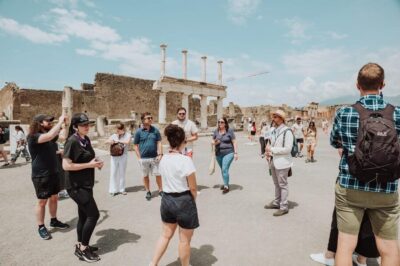
Pompeii: Entry Ticket and Guided Tour with an Archaeologist
Read our review →
Colosseum: Underground and Ancient Rome Tour
Read our review →
Pompeii: Small Group Tour with an Archaeologist
Read our review →Pompeii Small Group Tour with an Archaeologist
Read our review →
Rome: Colosseum with Arena, Roman Forum and Palatine Guided Tour
Read our review →
Venice: St. Mark’s Basilica Guided Tour & VR History Intro
Read our review →
Colosseum with Arena, Roman Forum and Palatine Hill Guided Tour
Read our review →
Herculaneum: Skip-the-Line Guided Tour with Archaeologist
Read our review →Browse the lists this tour appears in