
Review · ITALY
Rimini: Guided Walking Tour of the Historic City Center
Rimini’s old town is far more than a beach resort. In 90 minutes, this Italian-language walking tour links Roman bridges, medieval defenses, Renaissance buildings, and the film world of Federico Fellini. The route gives you a useful first look at a city many seaside visitors miss.
I like the clear sweep through Rimini’s long past, from the Arch of Augustus to the Fellini murals in San Giuliano. I also like the low $15 price, which makes this an easy way to get oriented before exploring on your own. The main caution is that the tour is delivered in Italian, and the pace may not suit anyone who walks slowly.
- Roman Rimini in one compact walk: See the Arch of Augustus, Surgeon’s Domus, and five-arch Ponte di Tiberio.
- A walk through several eras: Medieval Galliana Gate and Renaissance Malatesta monuments follow the Roman stops.
- Fellini connections: Visit Cinema Fulgor and finish among murals honoring the director and his wife.
- A useful first-day tour: The 1.5-hour route helps you recognize the city center before a longer independent visit.
- Strong guide reports: Francesca is praised for clear organization, engaging storytelling, and well-timed humor.
- One practical warning: The tour is in Italian, takes place in all weather, and requires comfortable walking shoes.
Why Rimini’s old town deserves your time
Rimini is easy to misread. Its broad reputation rests on beaches, nightlife, and summer hotels, but the historic center reaches much further back. Roman roads, medieval walls, Renaissance churches, theaters, and Fellini landmarks all sit within a fairly compact area.
I see this tour as a useful introduction rather than a complete study of Rimini. You will not have time to linger at every monument or explore each interior at length. Instead, a guide gives you the basic sequence of the city, points out the important buildings, and helps you decide where to return later.
That approach works well if you have just arrived. It also suits a short stay, since 90 minutes gives you context without taking half a day from the rest of your plans. At $15 per person, the cost is modest for a live guide and a focused route through the center.
The tour has an average rating of 4.6 from 56 bookings, with especially warm feedback about the guides’ preparation and manner. Francesca is singled out for being organized, engaging, and lightly humorous. That is useful to know because the person leading the walk will shape the experience more than the monuments themselves.
Starting at the Arch of Augustus
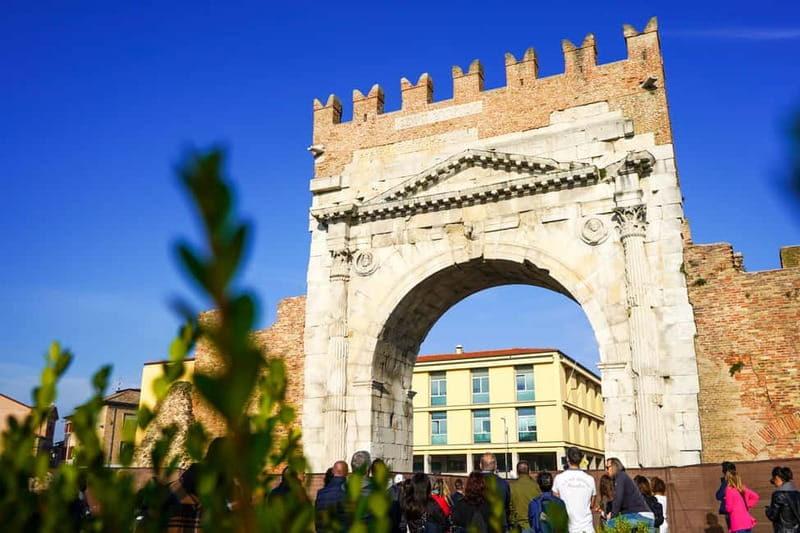
Meet inside the tourist office at Corso d’Augusto 152. The walk begins with the Arch of Augustus, one of Rimini’s clearest reminders that this was an important Roman settlement long before it became a resort town.
The arch marks the main entrance to the old center. It gives the route a strong opening because you can immediately see how Rimini’s modern streets connect with its ancient past. Your guide will explain the city’s origins before leading you farther into the historic core.
I like this kind of beginning. You are not simply shown a handsome stone gateway and sent onward. The arch provides a reference point for understanding the rest of the walk. As you pass from one period to another, you can keep returning to the idea of Rimini as a city built over many centuries.
The first stop is also a reminder to keep your expectations sensible. This is an outdoor walking tour, not a guided interior visit to every site. You should expect explanations from the street and public spaces, with the route moving at a steady pace.
More History Walking Tours in Italy
- Venice: City Center Historical Guided Walking Tour
★ 4.2 · 1,873 reviews - Palermo: Street Food and History Walking Tour
★ 4.9 · 1,486 reviews - Verona: History and Hidden Gems Guided Walking Tour
★ 5.0 · 1,379 reviews
Ancient engineering at the Surgeon’s Domus and Tiberius Bridge
The route continues past the Surgeon’s Domus, an important archaeological complex. Even from a short visit, this stop adds depth to the Roman portion of the tour. It helps show that Roman Rimini was more than a road junction and a grand entrance.
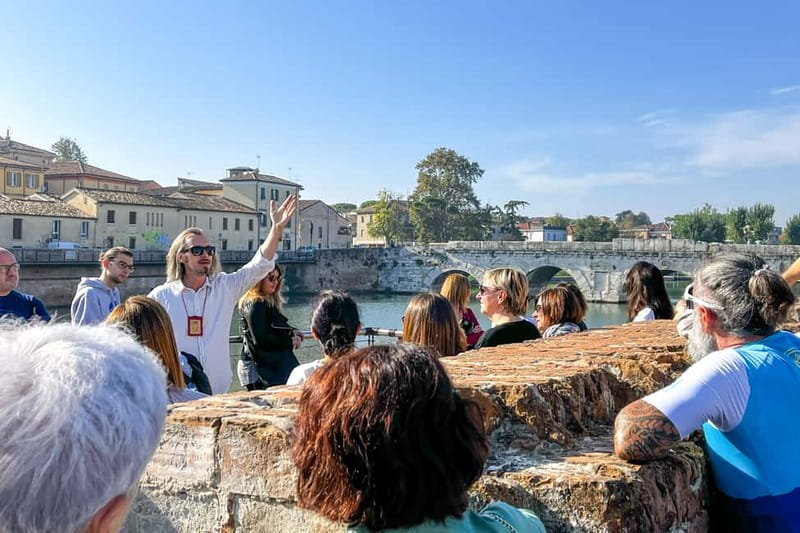
Next comes the Ponte di Tiberio, or Tiberius Bridge. Its five stone arches cross the waterway and show the scale of Roman construction in the city. The bridge is one of the tour’s most memorable outdoor sights because its purpose remains easy to understand: it carried people across the river and connected Rimini with the roads beyond.
I find this section valuable for another reason. Roman remains can sometimes feel scattered when you see them one at a time. Linking the arch, the archaeological complex, and the bridge on foot gives you a better sense of how the old city functioned.
You will want comfortable shoes here and throughout the route. The tour lasts only 1.5 hours, but it is still a continuous city walk. The activity information says to bring suitable footwear, and that is practical advice rather than a formality.
The Galliana Gate and Rimini’s medieval edge
From the bridge, the walk heads toward the Galliana Gate. This medieval gateway connected the city with the port area and once formed part of Rimini’s defensive wall.
The gate changes the tone of the route. At the Roman stops, the emphasis is on roads, bridges, and engineering. Here, the focus shifts to protection, movement through controlled entrances, and the changing shape of the medieval city.
I like that the tour does not treat Rimini as a collection of unrelated sights. The route shows how the city’s needs changed. Roman builders created major connections; later residents defended the city and managed access to the port. You can follow those changes simply by walking from one structure to the next.
The exact order of sights may change, so do not worry if your guide takes the group through the city in a slightly different sequence. The core stops are the same, but weather, local conditions, or the guide’s judgment may affect the order.
Renaissance Rimini at the Malatesta Temple and Castel Sismondo
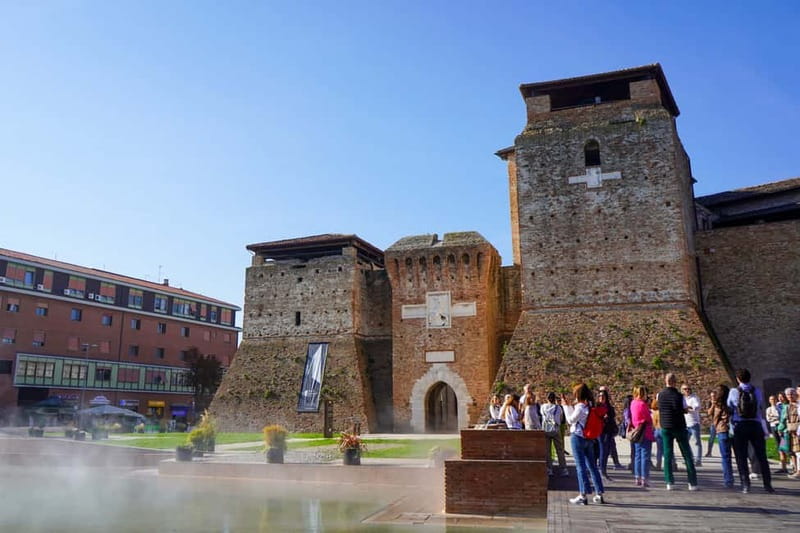
The Malatestiano Temple and Castel Sismondo bring you into Rimini’s Renaissance period. They are among the tour’s most important architectural stops and show how the city’s ruling Malatesta family shaped its public image.
The Malatesta Temple is a church with a strong connection to Renaissance design. Castel Sismondo offers a different expression of power, with the fortified character of a castle rather than the religious focus of a temple. Seeing both helps you compare two sides of the same period.
Your guide’s role matters here. The buildings may be impressive at first glance, but the story behind them makes the stop easier to remember. A well-organized guide can explain why these monuments matter without turning the walk into a long academic lecture.
Feedback about Francesca points to precisely that strength. She is described as prepared, clear, and engaging, with humor used at the right moments. That combination is especially helpful during an overview tour, where you are receiving many names, dates, and architectural details in a short time.
You should not book this walk expecting extended time inside each monument. The route is designed to connect major sights from outside and explain their place in the city. If one building catches your attention, mark it for a later independent visit.
Same city, a different century:
- Pompeii: Entry Ticket and Guided Tour with an Archaeologist
★ 4.8 · 19,459 reviews - Colosseum: Underground and Ancient Rome Tour
★ 4.7 · 12,691 reviews - Pompeii: Small Group Tour with an Archaeologist
★ 4.8 · 12,264 reviews - Pompeii Small Group Tour with an Archaeologist
★ 5.0 · 6,593 reviews
Piazza Cavour, Teatro Galli, and Cinema Fulgor
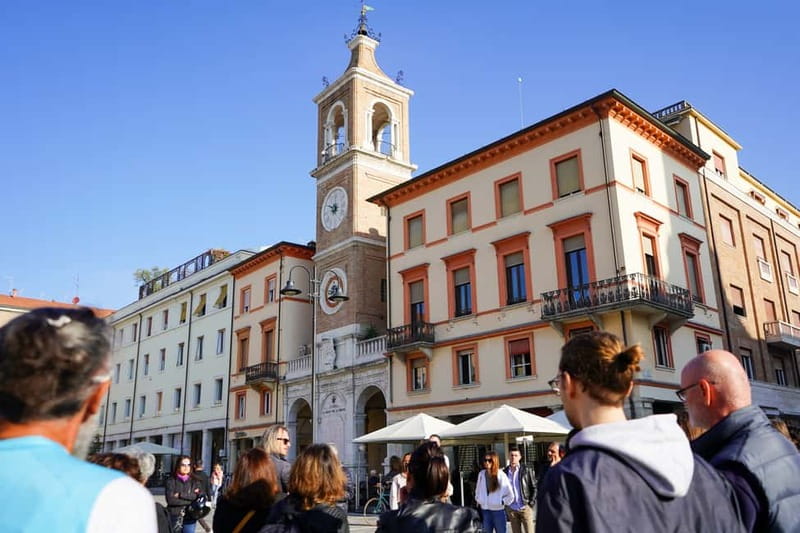
Piazza Cavour was once the heart of Rimini. The square remains an important gathering point on the route, and it brings together several cultural and civic landmarks.
Here you will see the renovated Teatro Amintore Galli. The theater adds a performing arts angle to the tour and shows that Rimini’s center is not only about ancient ruins and churches. The square also provides a natural pause in the sequence of architectural styles.
Cinema Fulgor gives the tour its clearest connection to Federico Fellini. The ornate Art Nouveau movie theater is dedicated to the director, who was born in Rimini. Even if you are not a serious film fan, this stop helps explain why Fellini appears so often in the city’s public identity.
I particularly like this change of subject. Without it, the route could become a rapid march through Roman and Renaissance monuments. Fellini brings the city into the modern age and shows how a local figure can shape the way a place presents itself.
The theater and cinema are also good reminders that Rimini’s center is a living part of town, not simply an outdoor museum. You are moving through public squares and streets that connect old buildings with present-day city life.
San Giuliano’s Fellini murals
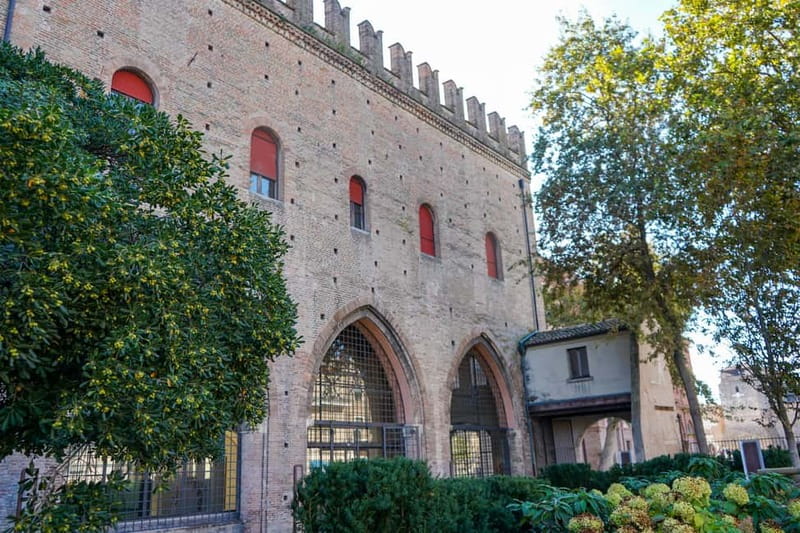
The tour ends with a walk through San Giuliano, where colorful murals depict scenes from Fellini’s films along with portraits of the director and his wife.
This is a fitting final stop because it changes the experience from formal monuments to neighborhood art. The murals offer a more personal view of Rimini’s connection with Fellini. Instead of seeing only a theater named for him, you see his work interpreted across the walls of a district.
I would save a little energy for this last stretch. It is easy to focus only on the famous Roman and Renaissance sights, but the murals may be the part you remember most clearly afterward. They give the walk a relaxed, visual ending.
The route’s title emphasizes the historic city center, but the finish in San Giuliano broadens the picture. You leave with more than a list of old buildings. You have also seen how Rimini celebrates a modern cultural figure through public art.
What the $15 price really gets you
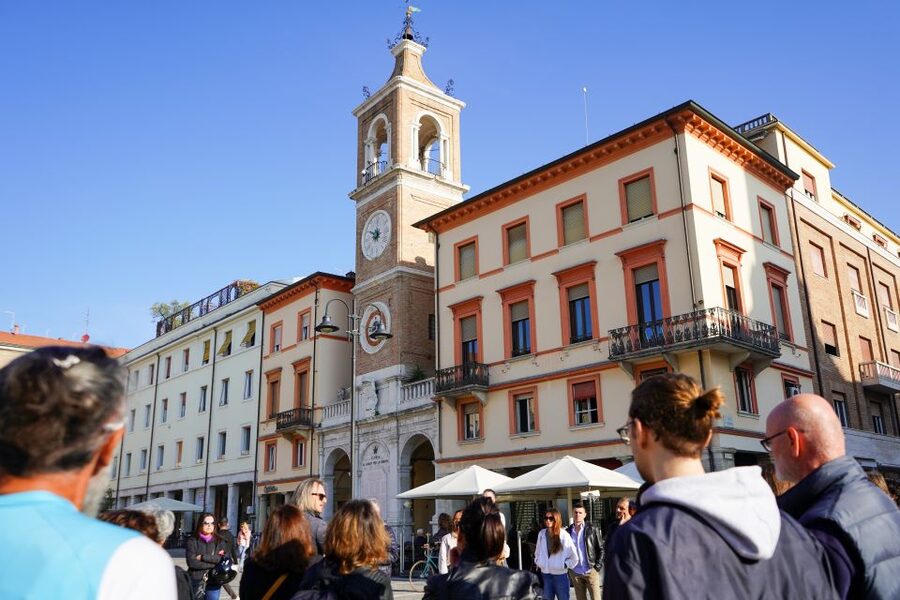
At $15, this is a good-value orientation walk if you want a live explanation of Rimini’s main sights. The price includes the walking tour and guide, but not food, drinks, or hotel pickup and drop-off.
The value is strongest for first-time visitors. You get a prepared route, a local-language guide, and a sensible chain of landmarks without needing to research the city before arrival. The cost is also low enough that you can treat the tour as a scouting visit and return later to the sights that interest you most.
The value is weaker if you already know Rimini well or want long visits inside individual monuments. The 90-minute limit means the guide must keep moving. This is a best of the center walk, not a deep examination of one church, castle, or archaeological site.
The activity allows free cancellation up to 24 hours before the start and offers reserve-now, pay-later booking. Those options are useful if your Italian plans are still shifting, though you should still check the available start times before committing.
Language, walking pace, and accessibility
The live guide language is Italian. If you understand Italian comfortably, you can expect the most complete version of the commentary. If you do not, check the language details carefully before booking, since no other guide language is listed.
The tour is described as wheelchair accessible, but it is also marked as not suitable for people with mobility impairments. Those details do not sit neatly together, so I would confirm the exact route and walking conditions with the provider before reserving if accessibility is important to you.
The walk takes place rain or shine. Bring comfortable shoes and dress for the forecast, since the experience is outdoors and the itinerary may include narrow streets, public squares, and extended periods on foot.
Children under five are not suited to this activity. For older children, the Roman bridge, castle, and Fellini murals may provide more variety than a standard church-focused tour, but the guide’s Italian commentary and steady pace remain important factors.
Who should book this Rimini walk?
I would recommend it to a first-time visitor who wants a quick orientation and enjoys moving between different periods of a city’s past. It is also a sensible choice for anyone staying near the coast who wants to see Rimini beyond the beach without spending a full day away.
Film fans will appreciate the Cinema Fulgor and San Giuliano murals. Architecture lovers will get a compact sequence of Roman, medieval, and Renaissance sights. Budget-conscious visitors get a live guide for less than the price of many longer paid attractions.
I would hesitate if you need English commentary, cannot walk at a steady pace, or want extensive time inside each monument. The tour’s strength is its compact route and broad coverage, not slow, detailed inspection.
Should you book the Rimini historic center tour?
Book this tour if you want a short, inexpensive introduction to Rimini’s old center and can follow an Italian-language walk. The combination of Roman landmarks, Malatesta architecture, Piazza Cavour, Cinema Fulgor, and Fellini murals gives you a surprisingly broad picture in 90 minutes.
Skip it if you already have a strong plan for Rimini or need a tour with a slower pace and more interior visits. For most first-time visitors, though, $15 is a fair price for getting your bearings and learning which parts of the city deserve a second look.
FAQ
Where does the Rimini walking tour meet?
You meet the guide inside the tourist office at Corso d’Augusto 152.
How long does the tour last?
The walking tour lasts 1.5 hours.
What language is the tour conducted in?
The live tour guide speaks Italian.
What sights are included?
The route includes the Arch of Augustus, Surgeon’s Domus, Ponte di Tiberio, Galliana Gate, Malatesta Temple, Castel Sismondo, Piazza Cavour, Teatro Amintore Galli, Cinema Fulgor, and the Fellini murals in San Giuliano.
Is hotel pickup included?
No. Hotel pickup and drop-off are not included.
Is food included?
No. Food and drinks are not included in the tour price.
What should I bring?
Bring comfortable shoes. The tour takes place outdoors and runs in rain or shine.
Can I cancel the booking?
You can cancel up to 24 hours in advance for a full refund. You can also reserve now and pay later.
Just added around Italy
- Guided Cultural Tour of the Godfather Film in Messina★ 5.0 · 31 reviews
- Guided tour of the Riace Bronzes and the Archaeological Museum of Reggio Calabria★ 5.0 · 44 reviews
- SU NURAXI BARUMINI Unesco World Heritage Site★ 5.0 · 129 reviews
- Brescia the Unexpected: History, Local Stories & a drink★ 5.0 · 31 reviews
- Bolognese Cooking Class with Margherita in the Historic Center★ 5.0 · 26 reviews
- Tower and Power, Virtual tour in Medieval Bologna★ 4.5 · 54 reviews
- Bologna historical art walking tour with hidden gems and tastings★ 5.0 · 108 reviews
- Best of Bologna in one day : Food, architecture, art and history★ 5.0 · 27 reviews
Italy History Tours, compared.
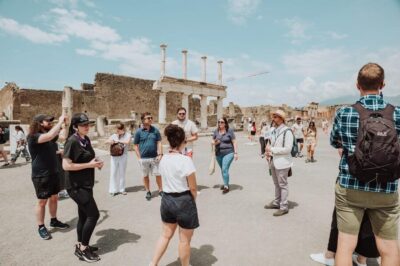
Pompeii: Entry Ticket and Guided Tour with an Archaeologist
Read our review →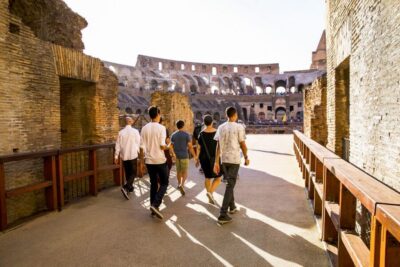
Colosseum: Underground and Ancient Rome Tour
Read our review →
Pompeii: Small Group Tour with an Archaeologist
Read our review →Pompeii Small Group Tour with an Archaeologist
Read our review →
Rome: Colosseum with Arena, Roman Forum and Palatine Guided Tour
Read our review →
Venice: St. Mark’s Basilica Guided Tour & VR History Intro
Read our review →
Colosseum with Arena, Roman Forum and Palatine Hill Guided Tour
Read our review →
Herculaneum: Skip-the-Line Guided Tour with Archaeologist
Read our review →Browse the lists this tour appears in