
Review · ITALY
Sicilian cooking class in the historic baglio Florio Adamo
At the former Florio factory, cooking feels tied to the place. Under the old porch, you work with farm produce and recipes passed from mother to grandmother, making caponata, hand-rolled pasta and ricotta cassatelle rather than simply watching a chef. Liliana and Vito guide the session, and the class ends with your own meal and Adamo wine.
I like the 19th-century kitchen and old winemaking setting, which give this class far more character than a modern restaurant classroom. I also like the hands-on pace: you make at least two appetizers, pasta, sauce and dessert, with no cooking machines to hide the work.
The main consideration is transport. Pickup may be arranged by car if you contact the provider, but car rides are not part of the advertised price. The estate is also still being renovated, so expect a working historic farm and winery rather than a polished showpiece.
Key points at a glance
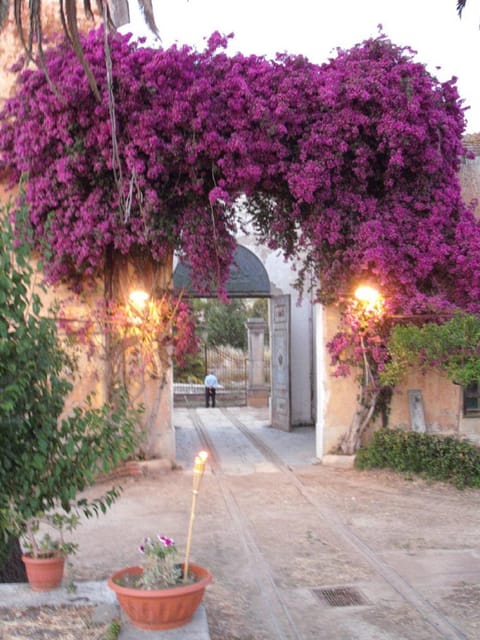
- Former Florio factory: Cook beneath an old porch in a family property connected with Sicilian wine and farming.
- Handmade Perciasacchi pasta: Use an ancient wheat flour produced by the company, then prepare a sauce such as almond pesto.
- A full Sicilian menu: Make at least two appetizers, fresh pasta, tomato bruschetta and a traditional ricotta dessert.
- Liliana and Vito as hosts: Liliana welcomes you and explains the property, while Vito often leads the practical cooking.
- Food, wine and leftovers: Sit down to eat what you prepare, taste white and red wines, and take the cooked food with you.
- Small-group feel: The available feedback points to a personal class rather than a large, formal demonstration.
Arriving at the old Florio factory
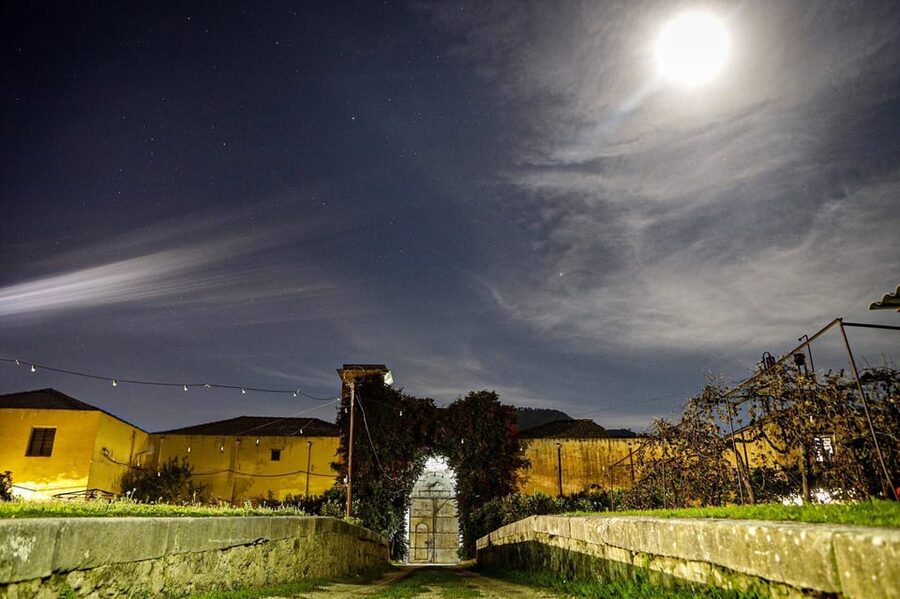
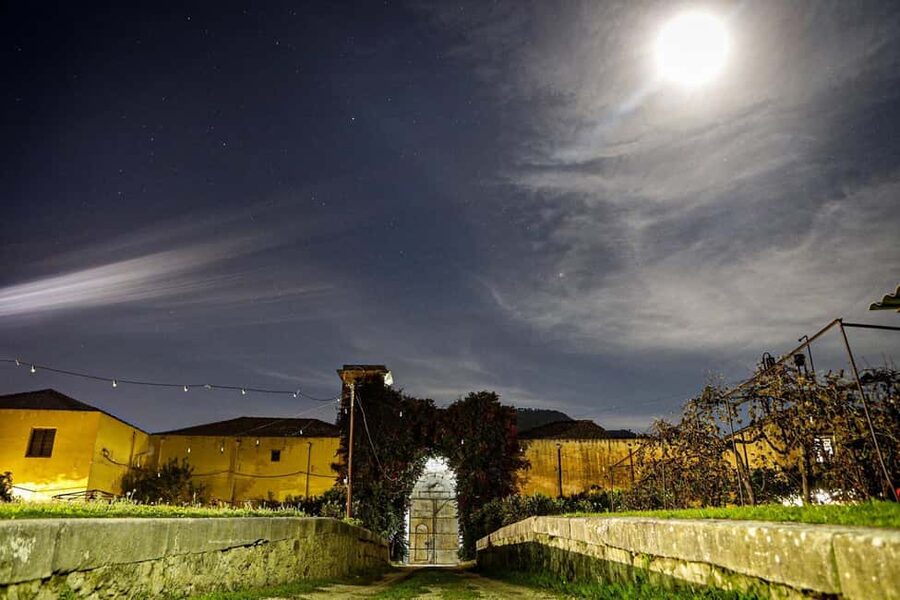
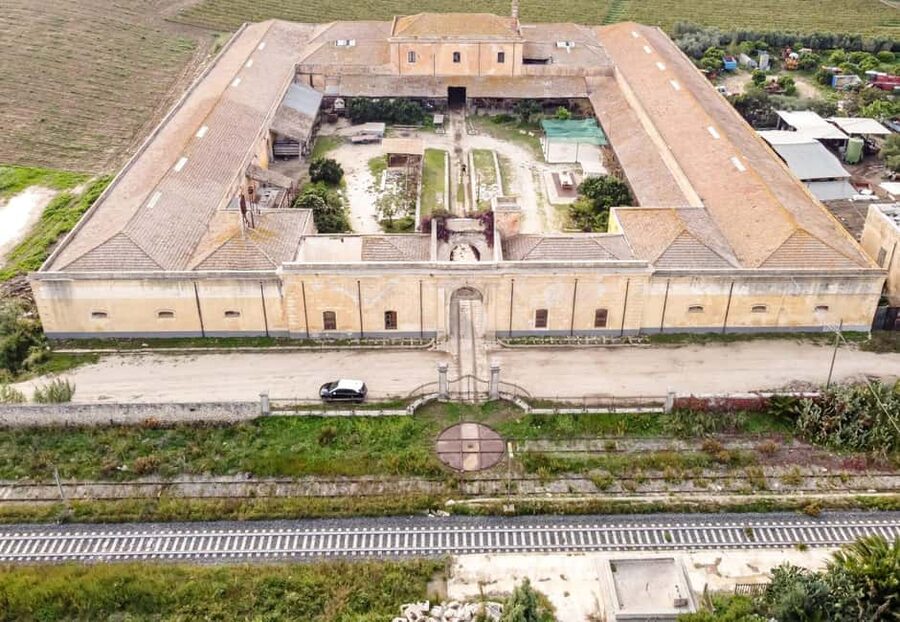
This experience begins with a sense of place. The former Florio factory is not just a venue selected for its kitchen. It is part of the story of an Italian family business, with old winemaking equipment and a broad historic structure that recalls the working countryside of western Sicily.
Liliana welcomes you and introduces the baglio, a traditional Sicilian farm complex. You may see equipment from the property’s winemaking past before settling into the cooking area. Some parts of the estate remain under renovation, but that is part of the setting. You are not walking into a newly built culinary studio designed to look old. You are using a real family property that still carries signs of work, age and change.
The kitchen has been described as a spacious 19th-century room, while other sessions have used an outdoor cooking area beneath the porch. The exact setup can vary, but the appeal is the same: the class takes place within the old estate rather than in a city-center restaurant.
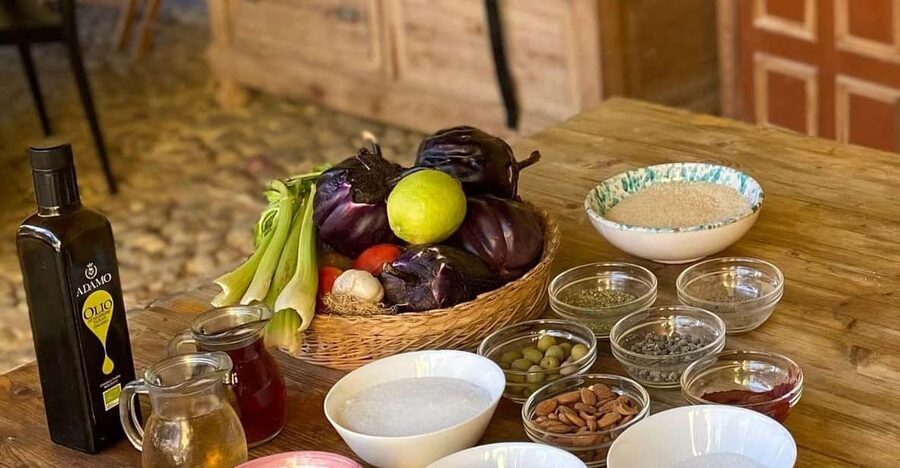
That matters because the class connects food with its source. The vegetables, herbs, flour, wine and olive oil are not presented as isolated products. They belong to the farm and winery around you. Mint and basil from the garden become part of the meal, and the raw materials are seasonal and produced by the company when possible.
More Cooking Classes in Italy:
- Rome: Five Shapes of Pasta Cooking Class in Ancient Tavern
★ 5.0 · 102 reviews - Syracuse: Traditional Cooking Class & Ancient Market Visit
★ 4.9 · 72 reviews - Cooking Class in a Historic Home in the Heart of Brindisi
★ 4.7 · 28 reviews
The first Sicilian dishes: caponata, arancine and bruschetta
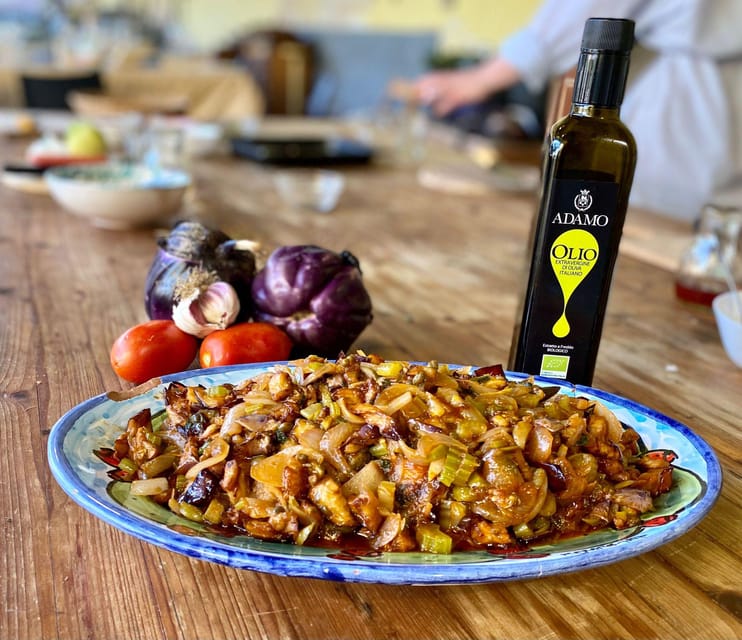
The cooking usually begins with appetizers. You learn at least two, with eggplant caponata and arancine among the central possibilities. Depending on the day, the selection may include other local preparations as well.
Caponata is an especially good dish for a class because it teaches the balance that makes Sicilian cooking so distinctive. Eggplant, vegetables and seasoning must work together without one flavor taking over. It is also practical food: caponata can be served as a starter, side dish or light meal, and it often tastes even better after the flavors have had time to settle.
If arancine are included, you get a different lesson in texture and shaping. These rice-based specialties require more than tossing ingredients into a pan. You form, fill and prepare them for frying, learning the sort of careful handwork that machines cannot replace.
Bruschetta keeps the opening courses simple. Fresh tomatoes meet basil or mint, good olive oil and toasted bread. That simplicity is useful. With only a few ingredients, you can see why fresh produce and proper seasoning matter so much in Sicilian food.
One session included a memorable fried apple in the appetizer course. It is not guaranteed as part of every class, but it shows the kitchen’s willingness to add small, personal touches to familiar recipes.
Making pasta with Perciasacchi flour
The pasta course is one of the most distinctive parts of the experience. You use Perciasacchi flour, made from an ancient wheat produced by the company, and prepare the dough by hand.
There are no machines doing the kneading or shaping for you. That can make the process slower and less uniform, but it also gives you a better feel for the food. You notice the dough’s texture, learn how much pressure to use and see how a basic mixture becomes something ready for the pot.
The pasta may be shaped as busiate, a spiral form associated with western Sicily. The hand-shaped strands hold onto sauce well, making them a fine partner for almond pesto. You should expect guidance rather than a lecture. Liliana or Vito can show you the technique, then let you work through it yourself.
The almond pesto is another strong regional touch. Almonds bring body and a gentle sweetness, while the sauce gives the pasta a clear Sicilian identity. You are not just learning a generic pasta dish that could come from any part of Italy.
I would pay attention during this stage if you want recipes you can repeat at home. The ingredients are straightforward, but the useful lessons are in the texture of the dough, the shape of the pasta and the balance of the sauce.
Dessert with fresh ricotta
The dessert course is fresh ricotta cassatelle, a Sicilian pastry filled with ricotta. These are prepared as part of the class, not simply placed on the table at the end.
For many people, this is the most fiddly section of the meal. You need to handle the pastry, add the filling and prepare the pieces for cooking without losing the shape. It is a pleasant change from the savory work, and it shows how ricotta appears across Sicilian cooking, from simple fillings to elaborate sweets.
The dessert also rounds out the menu well. You move from vegetables and rice to pasta, then finish with a sweet made from a local staple. The result feels like a small family meal rather than a single recipe lesson.
Because the food is made by hand, the finished dishes may not look identical. That is not a problem here. The point is to learn the method, share the work and sit down to something you helped prepare.
More Workshops and Classes in Italy:
- Milan: Fresh Pasta and Tiramisù Class in A Historical Home
★ 4.9 · 195 reviews - Rome: Ancient Mosaic Making Workshop
★ 5.0 · 29 reviews - Bolognese Cooking Class with Margherita in the Historic Center
★ 5.0 · 26 reviews - Dubai Evening Heritage Safari by Vintage G Class Al Marmoom Oasis
★ 5.0 · 1,500 reviews
Sitting down with Adamo wine
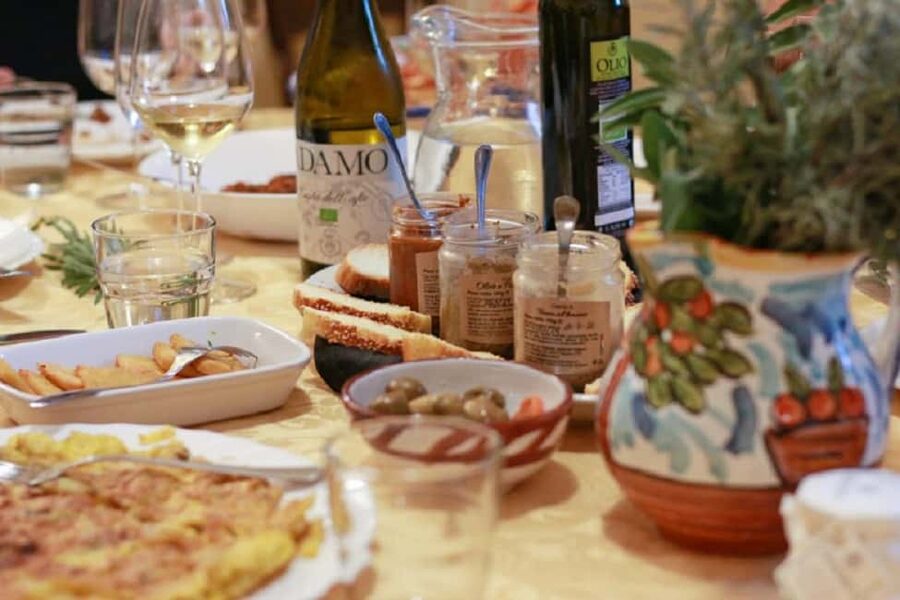
After the cooking, you eat at the estate. This is not a quick tasting between activities. The meal includes the dishes you have prepared, along with the chance to sample the company’s white and red wines. Rosé has also been served during past sessions.
The wine is part of the value of the visit because you are at a family winery, not simply bringing an unrelated bottle into a cooking school. You can compare how the wines work with different foods and browse among possible pairings as you eat.
The atmosphere is informal. Traditional Italian music may be played, and the meal takes place in the same old-world setting where you cooked. The food arrives steaming, and you have time to talk with the hosts and the other people in the class.
Do not expect a formal wine course with technical tasting notes. The emphasis is on enjoying the meal, learning about the winery and understanding how Sicilian food and wine fit together. If you like a relaxed table more than a structured lecture, this format should suit you.
A useful bonus is that you can take the food you prepared with you at the end. Several dishes are made in generous portions, so you may have enough for another meal. That adds practical value to a class already priced at $94 per person.
What the $94 price gets you
At $94, this is not the cheapest way to eat in Sicily. A restaurant meal will cost less, and a short demonstration class may also have a lower price. The comparison changes when you count what is included here.
You receive 3.5 hours at a historic family property, instruction from Liliana or Vito, hands-on preparation of several courses, fresh farm ingredients, dessert, wine and the meal you make. You also get an introduction to the baglio and its winemaking background.
The class covers more ground than a single recipe workshop. You may prepare two appetizers, pasta and sauce, bruschetta and dessert. For someone who wants to bring Sicilian cooking skills home, that spread makes the price easier to justify.
The strongest value comes from the setting and the personal attention. You are not paying only for ingredients. You are paying for access to a working family place, for time with the hosts and for a meal built from traditional recipes.
The price does not include car rides. If you need pickup, contact the provider before booking. Pickup can be arranged from your location or a nearby reference point, but the transport arrangement may be separate from the class price.
How the guides shape the experience
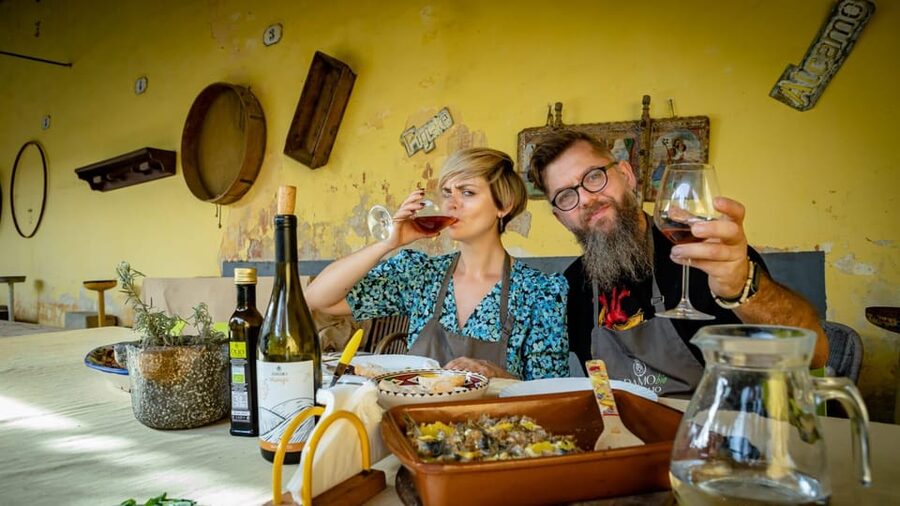
Liliana is the welcoming presence and can show you around the old factory and baglio. She has also led the cooking class herself, explaining Sicilian methods and the family traditions behind the recipes.
Vito often handles the practical cooking instruction. He has been praised for taking his time, explaining each course and keeping the mood friendly. After one class, he also showed the vineyard and explained more about the property.
The experience can therefore feel slightly different depending on who leads your session. That is worth understanding before you book. You are dealing with a family-run operation, not a large school with a fixed team and identical scripts.
I see that as a strength for most people. The hosts can adjust the pace, answer questions and share personal details about the winery. The tradeoff is that the class may feel less standardized than a professional culinary academy.
The language offered is English. The warm, informal approach should help you follow the work, but ask questions as you go if a shaping technique or recipe step is not clear.
Timing, transport and accessibility
The class lasts 3.5 hours, with start times depending on availability. Allow enough space around it for the meal and any delay connected with pickup. This is not a quick activity to squeeze between two tightly scheduled sights.
Pickup is available in some form, but it is not automatically included as part of the car service. Contact Adamo Bio with your location or a clear reference point if you need a ride. The provider says car travel can be arranged separately.
The activity is wheelchair accessible. Since the estate includes historic spaces and areas under renovation, it is sensible to confirm the exact meeting point and route when arranging transport. The available information supports accessibility, but it does not describe every surface or facility on site.
You can cancel up to 24 hours before the activity for a full refund, and a reserve-now, pay-later option is available. Those policies help if your western Sicily plans are still shifting.
Who will enjoy this class most
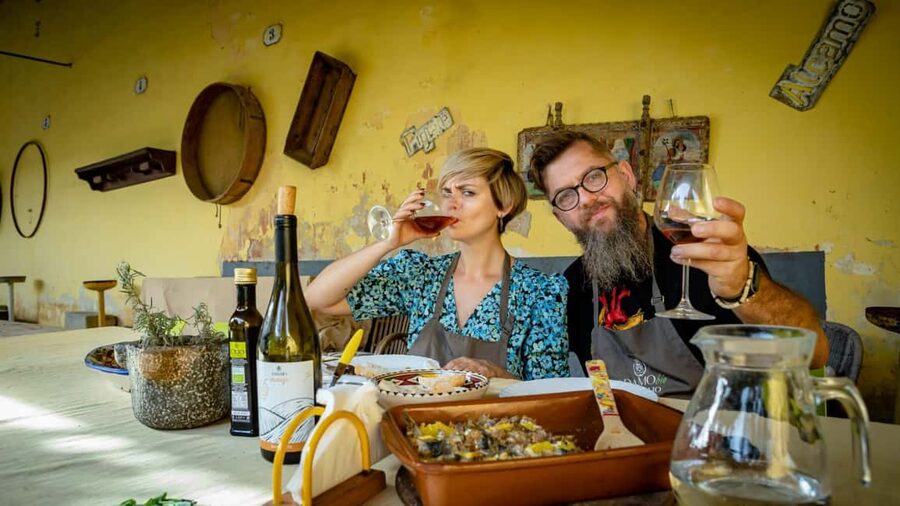
I would choose this class if you want food tied to a family property and local production. It suits people who prefer rolling dough, shaping food and chopping ingredients over watching a chef perform from a distance.
It is also a good fit for couples, families and small groups who want an unhurried shared meal. The class has a personal feel, and the setting gives you more to talk about than a standard kitchen classroom.
Wine lovers will appreciate the connection between the food and the Adamo winery. The inclusion of white, red and possibly rosé makes the meal more complete, even if the focus remains cooking rather than formal tasting.
This may not be the right choice if you want a sleek modern venue, a strict professional curriculum or a short activity with no transport planning. The old estate is still being worked on, and the charm comes partly from its unfinished, lived-in character.
Should you book the Florio factory cooking class?
Book it if you want to make a broad Sicilian meal by hand, eat it in a former winery and spend time with a family that connects its food to its own farm and traditions. The caponata, Perciasacchi pasta with almond pesto and ricotta cassatelle give you a useful set of dishes to remember and repeat.
The best reasons to go are the historic kitchen, the personal instruction from Liliana and Vito, the farm ingredients and the generous meal with wine. Plan the transport carefully, and accept that the estate is an old property under renovation rather than a finished luxury venue.
At $94, I consider it good value for a 3.5-hour experience with several courses, wine, a tour of the property and food to take home. If those details match your idea of a worthwhile day in Sicily, this is an easy class to add to a western Sicily itinerary.
FAQ
How long does the Sicilian cooking class last?
The activity lasts 3.5 hours. Starting times depend on availability.
How much does the cooking class cost?
The listed price is $94 per person.
Where does the cooking class take place?
It takes place at the former Florio factory in the historic baglio of Adamo Bio, in Sicily.
Who leads the cooking class?
Liliana welcomes you and may lead the class. Vito also teaches the practical cooking session and explains the food and winery.
What food will I prepare?
You will prepare at least two appetizers, which may include eggplant caponata or arancine. The class also includes fresh pasta made with Perciasacchi flour, a sauce such as almond pesto, tomato bruschetta and a Sicilian dessert such as ricotta cassatelle.
Are wine and the meal included?
Yes. You sit down to eat the dishes prepared during the class, with Adamo white and red wines. Rosé has also been served during some sessions.
Can I take the food home?
Yes. At the end of the lesson, you can take with you what you prepared together.
Is transportation included?
Car rides are not included in the price. If you need transportation, contact the provider, since a separate pickup arrangement may be possible from your location or a reference point.
Is the activity wheelchair accessible and offered in English?
Yes. The activity is wheelchair accessible, and the live tour guide language is English.
Just added around Italy
- Guided Cultural Tour of the Godfather Film in Messina★ 5.0 · 31 reviews
- Guided tour of the Riace Bronzes and the Archaeological Museum of Reggio Calabria★ 5.0 · 44 reviews
- SU NURAXI BARUMINI Unesco World Heritage Site★ 5.0 · 129 reviews
- Brescia the Unexpected: History, Local Stories & a drink★ 5.0 · 31 reviews
- Bolognese Cooking Class with Margherita in the Historic Center★ 5.0 · 26 reviews
- Tower and Power, Virtual tour in Medieval Bologna★ 4.5 · 54 reviews
- Bologna historical art walking tour with hidden gems and tastings★ 5.0 · 108 reviews
- Best of Bologna in one day : Food, architecture, art and history★ 5.0 · 27 reviews
Italy History Tours, compared.
Pompeii: Entry Ticket and Guided Tour with an Archaeologist
Read our review →
Colosseum: Underground and Ancient Rome Tour
Read our review →
Pompeii: Small Group Tour with an Archaeologist
Read our review →Pompeii Small Group Tour with an Archaeologist
Read our review →
Rome: Colosseum with Arena, Roman Forum and Palatine Guided Tour
Read our review →
Venice: St. Mark’s Basilica Guided Tour & VR History Intro
Read our review →
Colosseum with Arena, Roman Forum and Palatine Hill Guided Tour
Read our review →
Herculaneum: Skip-the-Line Guided Tour with Archaeologist
Read our review →Browse the lists this tour appears in