
Review · ITALY
Lecce: Jewish History Walking Tour
Lecce’s gold-colored Baroque churches get most of the attention, but this short tour reveals an older, quieter story: a Jewish community that lived, worked, worshipped, and eventually disappeared from the city. You’ll walk medieval lanes, see the site of a former synagogue, and finish underground among the remains of that building. The mikveh and mezuzah give the history a physical presence that a church-by-church stroll cannot.
I like two things here. First, the route connects street names with real events, including Via della Sinagoga and Via Abramo Balmes, rather than treating Jewish history as a museum-only subject. Second, the museum also explains Salento’s role in welcoming Jewish displaced persons after World War II. The drawback is the tight one-hour format: it gives you a clear introduction, but not enough time for a long discussion of every period or piece of evidence.
Key points to know before you book
- An underground museum sits on the remains of Lecce’s synagogue, with a mikveh and mezuzah among its most meaningful features.
- The walking route uses actual Jewish street locations, including Via della Sinagoga, Vico della Saponea, and Via Abramo Balmes.
- The story reaches beyond medieval Lecce, covering the forced departure of Jews around the 1500s and the postwar experience of Jewish refugees in Salento.
- English and Italian guides lead the tour, with guides including Diletta, Chiara, Elena, Sarah, and Francesco named in guest feedback.
- The tour costs $29 per person and lasts one hour, making it a useful add-on rather than a full-day history program.
- The activity is wheelchair accessible and runs rain or shine, with the meeting point inside the Jewish Museum.
Why this small corner of Lecce matters
Lecce is famous for its 17th-century Baroque style, but that is only one chapter in the city’s story. Messapians, Greeks, Byzantines, Normans, French Angevins, and Spanish Aragonese all shaped the city before and during the period most sightseers associate with it.
The Jewish community belongs to that longer story. This tour helps you picture Lecce before the streets became dominated by the churches and palaces that define modern sightseeing here. Jewish life was part of the city’s medieval society, even though much of its physical presence later vanished or was covered by newer buildings.
That absence is part of the point. You are not walking into a preserved Jewish quarter with a complete row of houses and synagogues. Instead, you follow clues: a street name, an old alley, a name attached to a public way, and archaeological remains below the present city.
I find that approach useful because it prevents the past from feeling too tidy. The tour is about recovering a community from limited evidence and explaining why it disappeared. It also shows that Jewish history in Lecce is not only a story of loss. The account of Jewish refugees welcomed in Salento after World War II adds a later chapter shaped by local help and human resilience.
More History Walking Tours in Italy
- Venice: City Center Historical Guided Walking Tour
★ 4.2 · 1,873 reviews - Palermo: Street Food and History Walking Tour
★ 4.9 · 1,486 reviews - Verona: History and Hidden Gems Guided Walking Tour
★ 5.0 · 1,379 reviews
Starting inside the Jewish Museum
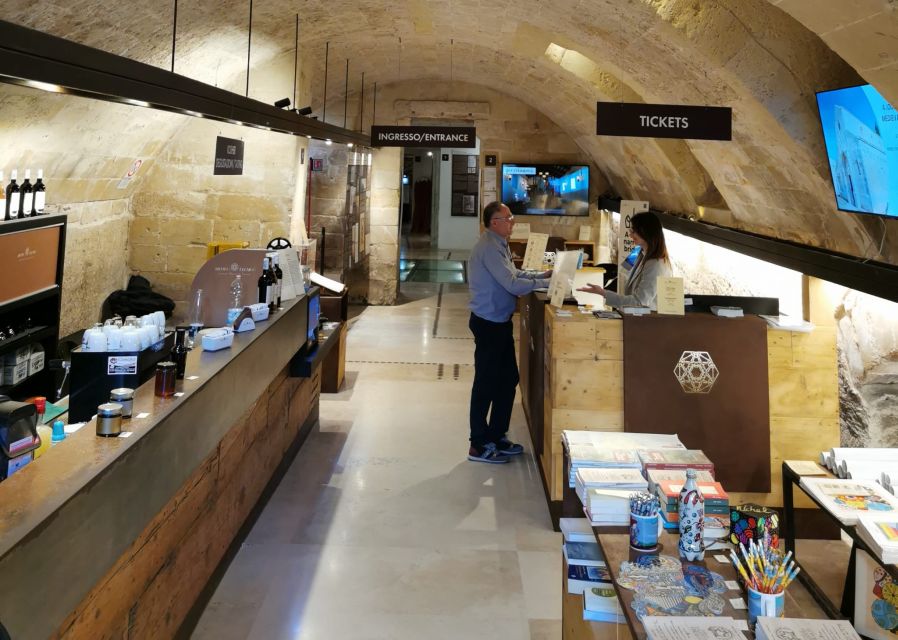
The practical starting point is Infotab, inside the Jewish Museum of Lecce. One useful detail is easy to miss: you should look for the meeting point inside the museum rather than waiting somewhere outside on the street.
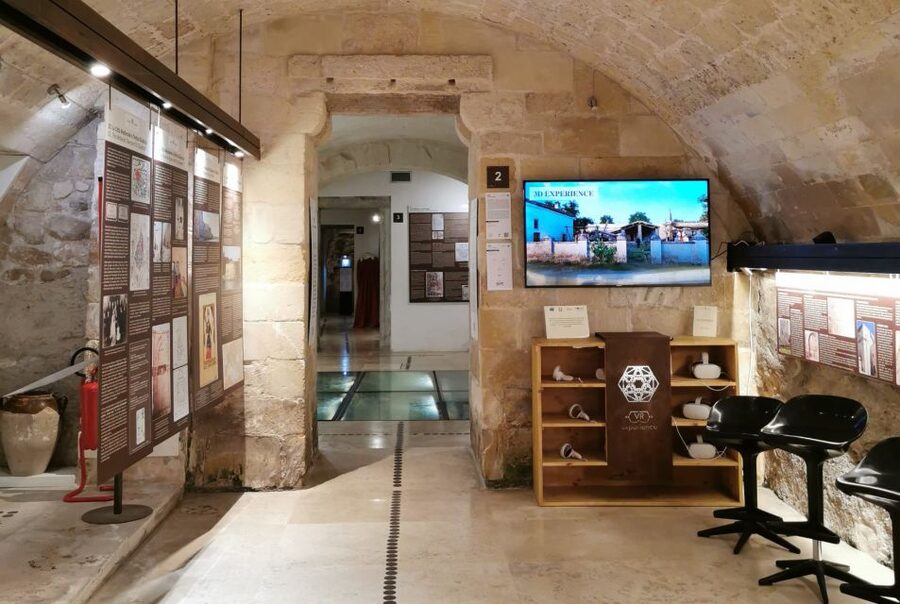
The visit begins with a guided look at the museum, followed by the walk through the old city. The museum portion lasts about 25 minutes. That is enough time to establish the key dates and themes before you head outdoors, though anyone wanting a long scholarly discussion will find the schedule brisk.
The museum uses videos and English translations to present the material. The presentation has been described as polished and professional, with enough detail to explain the distinctive place Jewish people held in Puglian society for centuries. You may also encounter the moving story of three women born in Lecce after World War II who later returned from Israel. It connects the local past to living personal memory.
This opening section matters because the street walk would otherwise be easy to misunderstand. Without some background, Via della Sinagoga is just another attractive lane in old Lecce. With the museum introduction, it becomes evidence of a community whose buildings and institutions were largely erased.
Walking Via della Sinagoga and the medieval lanes
After the museum, the guide takes you through streets and alleys associated with medieval Lecce. The pace is a walk, not a strenuous hike, and the route lasts roughly 35 minutes. You are not simply moving between major monuments. The guide uses the city itself as the exhibit.
Via della Sinagoga is the key early stop. The street follows the old route that once led to one of the most important synagogues in southern Italy. The synagogue no longer functions as a place of worship, but the street preserves a link to where Jewish life once had a visible place in the city.
That is one of the tour’s strongest features. You get a sense of how history can survive in a name even when the building has gone. The guide explains what is known about the synagogue and places it within the wider story of Lecce’s Jewish community.
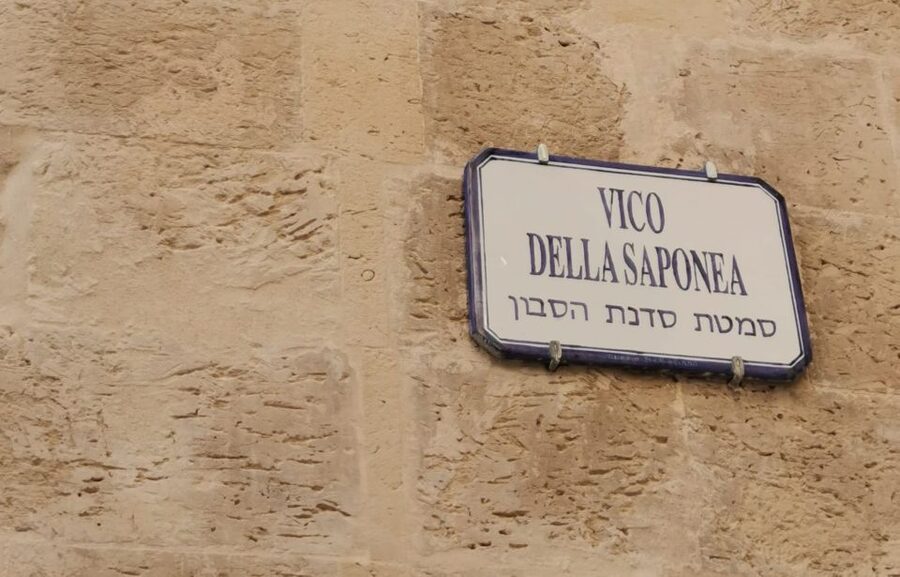
The tour then reaches Vico della Saponea, a narrow alley that adds another layer to the neighborhood’s layout. Small lanes such as this can be hard to interpret on your own. A guide’s explanation turns an ordinary passage into part of the old Jewish quarter and helps you connect the museum’s objects to the city above.
On Via Abramo Balmes, you encounter a street named for one of Lecce’s most important Jewish figures. This is a particularly useful stop for visitors who want names and individuals, not only broad statements about a vanished community. The street gives a person a place in the modern city, even though the surrounding area has changed.
The route is short, so do not expect to examine every lane or receive a full architectural survey. Its purpose is to give you a readable outline. Afterward, you can return to the streets that caught your interest and explore them at your own pace.
Going below the city to the synagogue remains
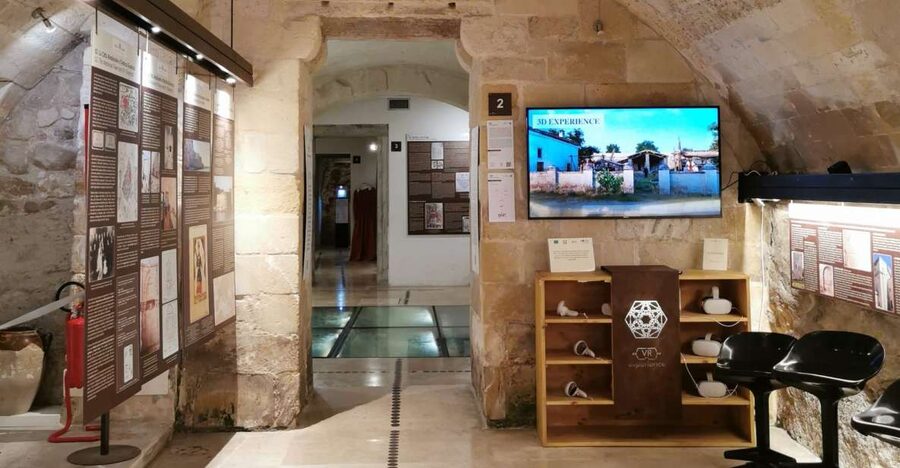
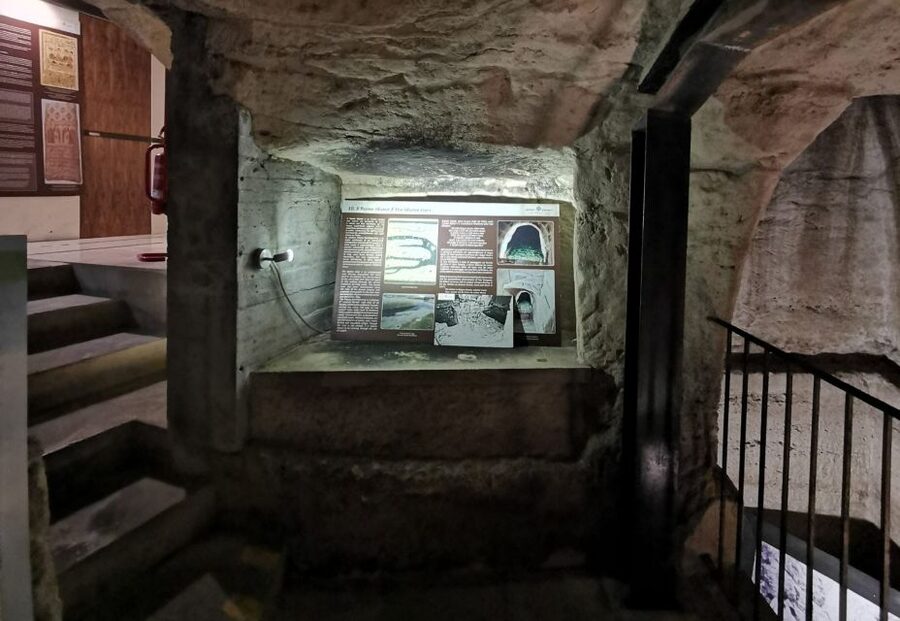
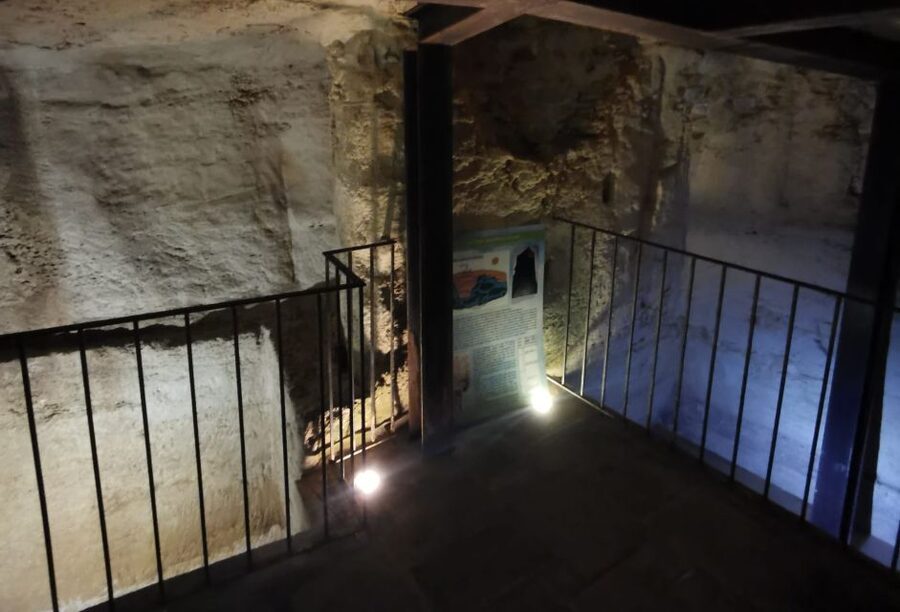
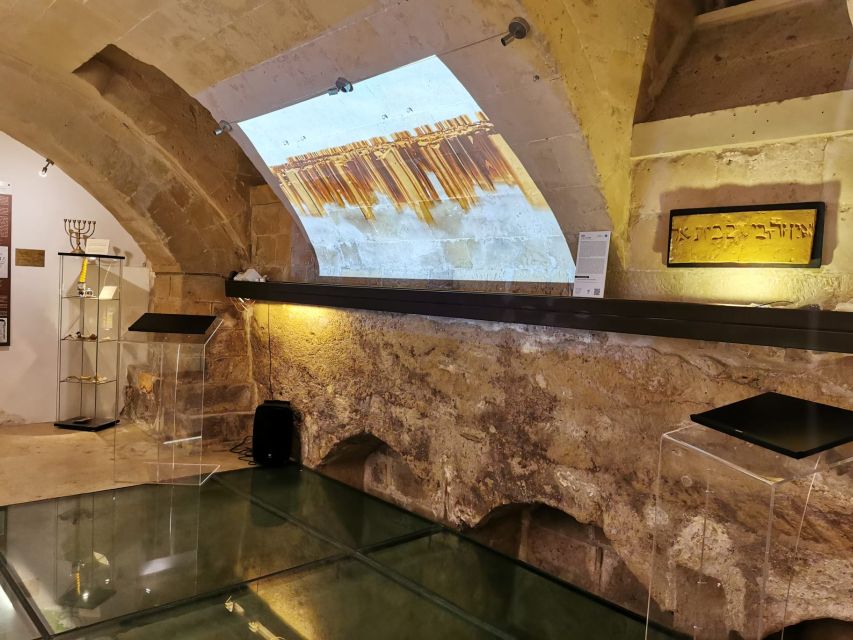
The underground section is the emotional center of the experience. The Jewish Museum occupies an area built over the remains of the former synagogue. Here you can see traces connected to Jewish religious life, including a mikveh and a mezuzah.
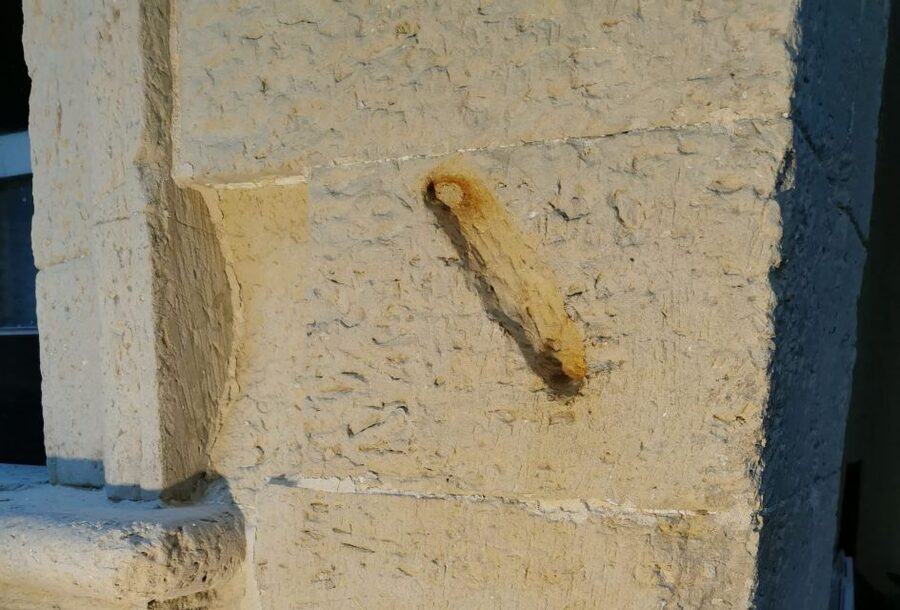
A mikveh is a ritual bath, while a mezuzah is associated with the door of a Jewish home or institution. You do not need specialist knowledge to understand why these objects matter. They make the community tangible. Instead of hearing only that Jewish families once lived in Lecce, you encounter physical reminders of how they worshipped and marked their daily lives.
The underground setting also changes your sense of time. Above you is the Lecce most people come to see, with its Baroque facades and busy sightseeing route. Below is an older layer, tied to a community that was later forced to leave. The contrast is sharp without needing dramatic staging.
The museum also covers why Jews were forced out of Lecce, with the key period falling around 1540 and the wider upheavals of the 1500s. The guide explains the causes and consequences in a way that places the local story within the political and religious changes of the era.
Because the historical evidence is limited, the experience does not pretend to reconstruct every detail. That restraint is important. You are given what can be supported by the surviving material, along with the meaning of what has been lost. If you want a long academic treatment of medieval Jewish life, this hour will feel short. If you want a clear introduction grounded in a real site, the underground museum does the job well.
More Jewish Heritage Tours in Italy:
- Padua: Jewish Heritage Museum and Synagogue Tour
★ 4.9 · 109 reviews - Ferrara: Medieval Ferrara and the Jewish Ghetto Walking Tour
★ 4.7 · 70 reviews - Budapest Jewish Heritage Memorial Walking Tour & Synagogue Entry
★ 5.0 · 568 reviews - Budapest: Jewish Heritage Guided Tour with Synagogue Ticket
★ 4.8 · 533 reviews
The later story of Jewish life in Salento
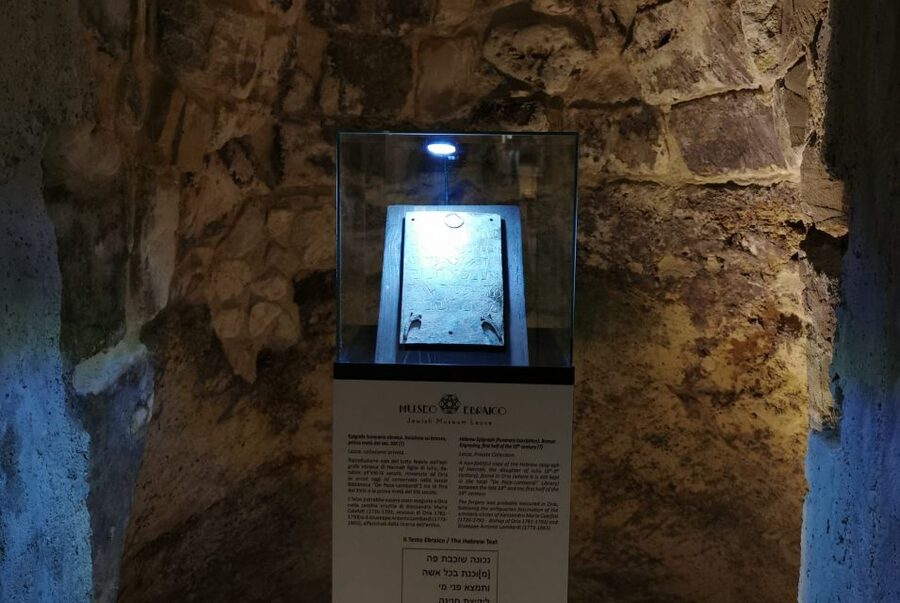
One of the tour’s more unusual strengths is its attention to the 20th century. The story does not end when Jews were driven from Lecce in the 1500s. The museum and guide also discuss Jewish displaced persons after World War II and the welcome they received in Salento communities.
This later chapter broadens the tour beyond archaeology. You hear not only about a Jewish population that disappeared, but also about people who arrived in the area during another period of crisis. The story includes the experiences of those displaced after the war and the local communities that helped them.
The film about three women returning to Lecce from Israel, after being born in the area following World War II, gives this part a personal focus. It can be an emotional moment, particularly because it links a local museum to people whose lives continued far beyond Salento.
I appreciate this balance. A tour focused only on expulsion could leave you with a narrow picture of Jewish history in the region. By including the postwar period, the experience shows both rupture and renewal. It also makes the tour meaningful for people of any faith, not only for those tracing Jewish family roots.
How the guides shape the experience
The guide makes a big difference in a one-hour tour. Diletta is praised for presenting the material with care and energy, while Chiara is described as involved and informative. Elena is noted for her command of the subject, and Sarah for her friendly manner and clear explanations. Francesco is also singled out for being helpful with questions.
Those individual names matter because the tour’s subject calls for sensitivity. The history includes forced departure, erasure, displacement, and the survival of memory. A guide who simply recites dates would miss much of the experience. You want someone who can explain what is certain, what has been recovered recently, and why the material matters now.
The strongest guiding style here appears to combine street orientation with museum interpretation. You first learn the framework, then see the locations, and finally connect the places to the wider history of Salento. Questions are welcome, but keep your expectations realistic. The hour allows for useful answers, not an extended seminar.
English and Italian are available. If you have a particular interest, such as medieval Jewish life, World War II displacement, or the archaeology of the synagogue, ask early in the tour so the guide can spend time where it helps you most.
Is $29 a fair price for one hour?
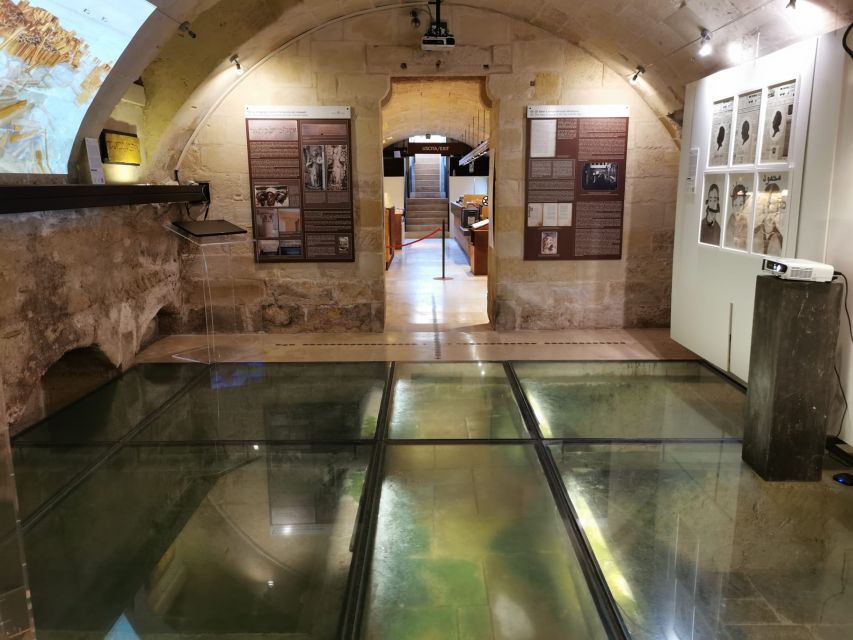
At $29 per person, this is not the cheapest way to spend an hour in Lecce. The price includes the guide, admission to the Jewish Museum, a guided walk through the former Jewish neighborhood, and a map of Lecce and Salento.
The museum entry is important when judging the value. You are not paying only for a short walk past street signs. You receive access to the underground synagogue remains and the museum’s audiovisual material, along with an explanation of how the sites fit together.
I would consider it good value for anyone specifically interested in Jewish heritage, minority history, archaeology, or the less visible layers of Lecce. It is also a sensible choice if you have limited time and want a focused activity between visits to the city’s better-known Baroque sights.
For a general sightseeing itinerary, the price may feel higher because the tour covers only one hour and a small area. You could walk the streets independently, but you would miss the context behind the names and the underground museum’s interpretation. In this case, the guide is the main reason to pay rather than simply wander.
The reserve-now-and-pay-later option gives you some flexibility, and cancellation is free up to 24 hours in advance. Those terms are useful when you are arranging a trip around weather or changing plans, though the tour itself goes ahead in rain or sunshine.
Who will get the most from this tour?
I would recommend it to anyone who has already seen some of Lecce’s famous churches and wants a different way to read the city. The tour gives you a break from Baroque architecture while still keeping you in the historic center.
It suits visitors with Jewish family connections, but you do not need any religious background. The guide explains the subject for a general audience, and the themes of displacement, memory, and community are broad enough to speak to people from any culture.
It is also a good choice for history-minded parents with older children, though the short duration may be best for children who can follow a museum presentation and a historical walk. The underground setting and physical remains may help younger visitors understand the subject more easily than a long talk.
You may want to skip it if you are looking for a large museum with many artifacts, a long walking route, or an exhaustive account of Jewish life in southern Italy. This is a compact introduction. Its strength is focus, not scale.
The route is listed as wheelchair accessible, but the experience takes place in historic streets and an underground museum area. If you have specific mobility needs, confirm the current route and access arrangements when booking. The tour runs rain or shine, so bring suitable clothing and footwear.
My recommendation: book it for a different side of Lecce
Book this tour if you want to understand what existed in Lecce before its Baroque makeover, or if you are tired of seeing the city only through its churches and ornate facades. The former synagogue site, mikveh, street names, and postwar refugee stories give you several distinct ways into the subject.
I especially recommend it early in your Lecce stay. The walk can change how you notice the old center afterward, and the map of Lecce and Salento may help you place other sites in the region. Just keep your expectations in line with the one-hour schedule. You will leave with a strong outline and several memorable details, not a complete course in Jewish history.
If your main interest is Jewish heritage or overlooked local history, $29 is a reasonable price for the museum admission and focused guiding. If you want only the major Baroque sights, spend your hour elsewhere. For everyone in between, this is one of the more meaningful short walks in Lecce.
FAQ
Where does the Lecce Jewish History Walking Tour start?
The tour starts at Infotab, inside the Jewish Museum of Lecce. The meeting point is inside the museum rather than simply outside on the street.
How long does the tour last?
The activity lasts one hour. The museum visit takes about 25 minutes, followed by roughly 35 minutes of guided walking through the former Jewish area.
What places does the tour visit?
The route includes the underground Jewish Museum, the remains of the former synagogue, a mikveh, a mezuzah, Via della Sinagoga, Vico della Saponea, and Via Abramo Balmes.
Is the tour available in English?
Yes. Live guides offer the tour in English or Italian.
Is admission to the Jewish Museum included?
Yes. The price includes entrance to the Jewish Museum, the guided visit, a local English-speaking guide, and a map of Lecce and Salento.
Is the tour wheelchair accessible and weather dependent?
The activity is listed as wheelchair accessible and operates rain or shine. You can cancel up to 24 hours in advance for a full refund.
Just added around Italy
- Guided Cultural Tour of the Godfather Film in Messina★ 5.0 · 31 reviews
- Guided tour of the Riace Bronzes and the Archaeological Museum of Reggio Calabria★ 5.0 · 44 reviews
- SU NURAXI BARUMINI Unesco World Heritage Site★ 5.0 · 129 reviews
- Brescia the Unexpected: History, Local Stories & a drink★ 5.0 · 31 reviews
- Bolognese Cooking Class with Margherita in the Historic Center★ 5.0 · 26 reviews
- Tower and Power, Virtual tour in Medieval Bologna★ 4.5 · 54 reviews
- Bologna historical art walking tour with hidden gems and tastings★ 5.0 · 108 reviews
- Best of Bologna in one day : Food, architecture, art and history★ 5.0 · 27 reviews
Italy History Tours, compared.
Pompeii: Entry Ticket and Guided Tour with an Archaeologist
Read our review →
Colosseum: Underground and Ancient Rome Tour
Read our review →
Pompeii: Small Group Tour with an Archaeologist
Read our review →Pompeii Small Group Tour with an Archaeologist
Read our review →
Rome: Colosseum with Arena, Roman Forum and Palatine Guided Tour
Read our review →
Venice: St. Mark’s Basilica Guided Tour & VR History Intro
Read our review →
Colosseum with Arena, Roman Forum and Palatine Hill Guided Tour
Read our review →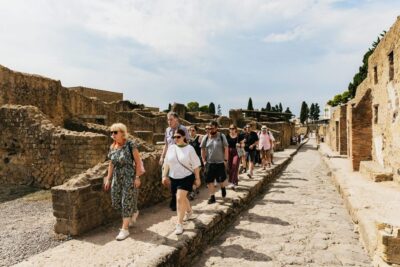
Herculaneum: Skip-the-Line Guided Tour with Archaeologist
Read our review →Browse the lists this tour appears in