
Review · MUNICH
Munich: Third Reich and World War II Segway Tour of the City
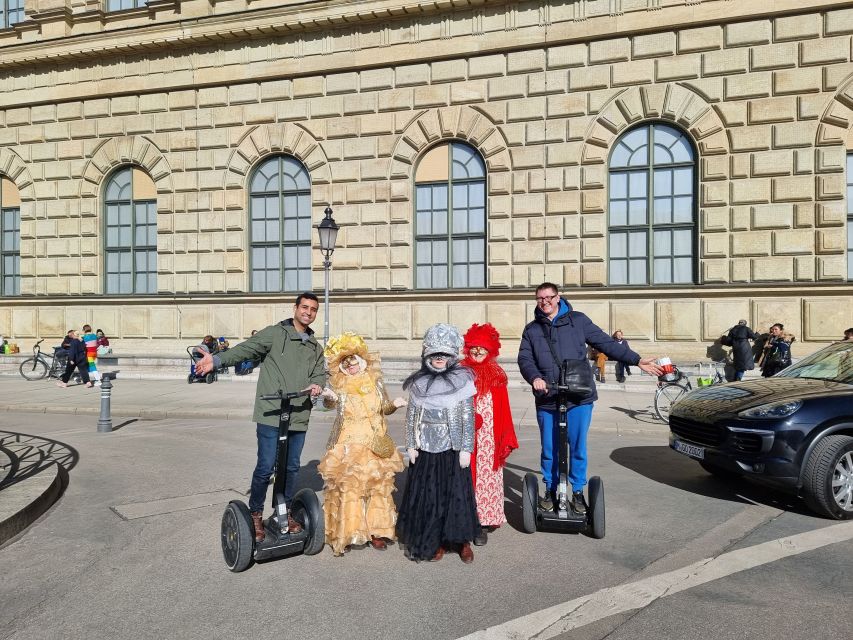
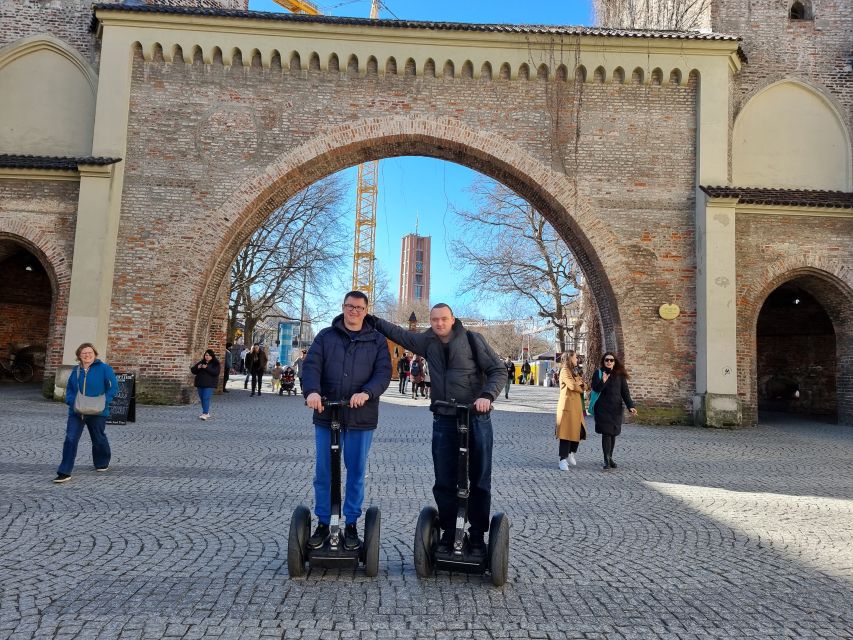
Munich’s difficult 20th-century story comes into sharper focus when you move through the streets where it happened. This three-hour Segway tour links Hitler’s former apartments, the Old Synagogue site, Königsplatz, Odeonsplatz, the Führer’s Building, and the Brown House with stories about Bavaria’s kings and the Nazi rise to power. You cover a lot of ground without spending the day on foot.
I like two things here. First, the small group, limited to 10 people, gives the guide room to help new riders. Second, the tour mixes serious history with a pleasant ride through parks and cycle tracks, then points you toward places worth returning to, such as Hofbräuhaus and Hofbräukeller. The main caution is simple: Segway riding near roads can feel nerve-racking, especially in rain, snow, or busy city traffic.
Key points to know before booking
- Practice comes first: You receive instruction and time to get comfortable with the Segway before leaving the office.
- The tour covers a wide area: It is a useful way to connect Munich’s central sights in three hours.
- The history is focused: Expect a strong look at Hitler’s years in Munich and World War II, with some royal and local history added.
- Abdel and Jamal have guided several outings: Their patient instruction and clear English are especially useful for first-time riders.
- The route includes parks and cycle tracks: These sections are generally more relaxed than riding beside city traffic.
- The group is small: A maximum of 10 participants makes questions and one-to-one help easier.
Why a Segway works well for Munich’s difficult history
This is not a museum visit with a long indoor lecture. You move from one address to another, seeing how political power occupied ordinary city spaces. A former apartment, a square, a beer hall, and a synagogue site can seem disconnected on a map. The Segway helps join them into one readable route.
I also like the practical advantage. Munich’s central sights are spread across several areas, and walking between them takes time. On a Segway, you can see a broader slice of the city in one morning or afternoon, then return to the places that interest you most.
The subject matter is serious, so the ride itself provides a useful change of pace. Your guide can explain the setting, then you move on before one location begins to blur into another. This format suits you if you want historical context but do not want to spend three hours inside a classroom or museum.
The tour is not only about the Nazi period. You hear about Bavarian kings and pass grand squares and buildings that reflect Munich’s older political life. That wider frame matters. It shows that Hitler’s Munich was one chapter in a much longer story, not the whole identity of the city.
More WWII and D-Day Tours in Germany
- Berlin: Third Reich & Cold War Guided Walking Tour
★ 4.9 · 8,378 reviews - Munich: Third Reich & WWII Walking Tour
★ 4.6 · 6,181 reviews - Berlin’s Best: 2 Hour Walking Tour Third Reich and the Cold War
★ 5.0 · 5,486 reviews
Starting at Robot City Segway Tour München
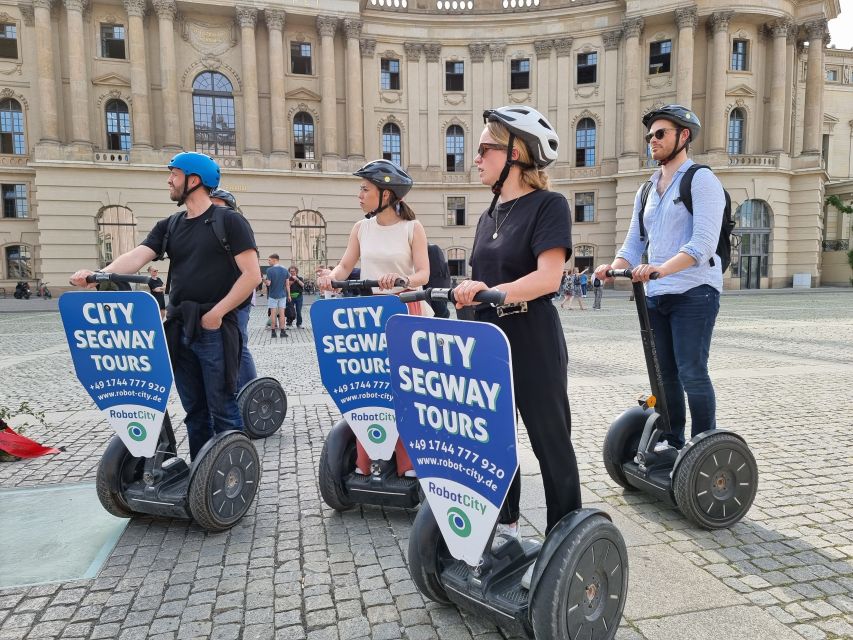
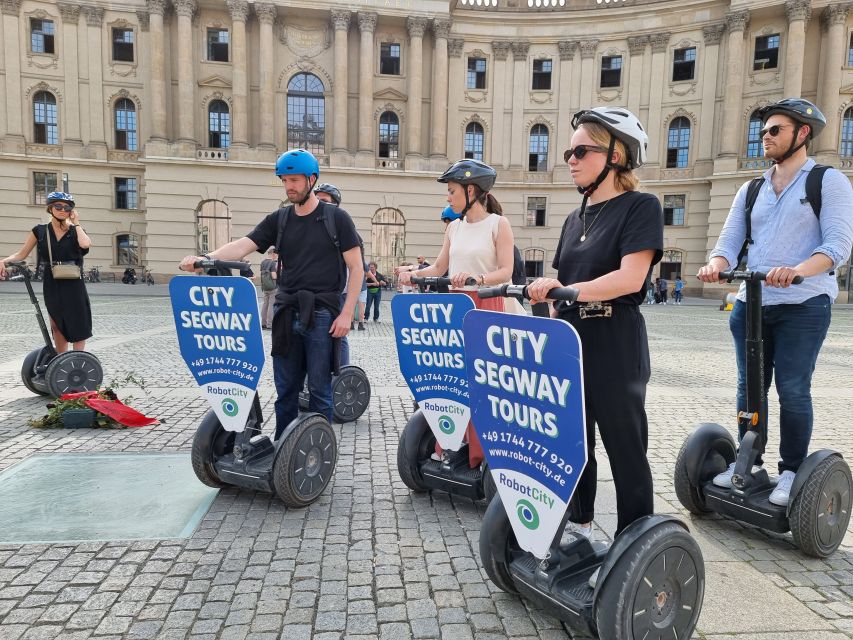
You meet the guide at the Robot City Segway Tour München office. The experience includes the Segway, helmet, guide, and initial instruction. Hotel pickup and drop-off are not included, so you need to make your own way to the meeting point.
Allow a little patience at the start. The first part is not wasted time. You learn how to stand, steer, slow down, and stop, then practice before entering the city. Several people on this tour had never used a Segway before, and the training made the transition easier.
That preparation matters because a Segway responds to your balance and body movement. It is not difficult for everyone, but it is different from riding a bicycle or walking. A careful guide can make the first few minutes much less tense.
Guides named Abdel and Jamal have been singled out for being patient, friendly, and attentive during this stage. Abdel, in particular, has led outings for first-time riders and is noted for giving people time to gain confidence. If you feel unsure, say so early. The guide can help you practice before the group sets off.
The tour is offered in English or German. If language clarity is especially important to you, confirm your preferred language when booking. One participant had a communication mix-up and needed an interpreter, though the guide arranged help.
Königsplatz and Odeonsplatz: Munich’s grand public spaces
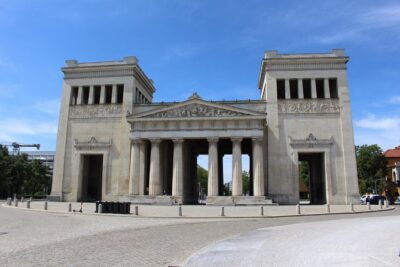
Once you are moving, the route brings Munich’s central squares into view. Königsplatz is one of the city’s most imposing open spaces, with grand classical buildings and a strong connection to Nazi public spectacle. Its scale makes sense of how architecture and public gatherings were used to project authority.
Odeonsplatz offers another important setting. The square is tied to major events in Munich’s political history, and its buildings give the guide a useful backdrop for explaining the city’s changing power structure. You are not simply ticking off a plaza. You are seeing the spaces where civic life, ceremony, and politics met.
The Segway is useful here because you can move between these large spaces without tiring your feet. Still, you should expect stops rather than constant riding. The guide needs time to explain what you are seeing, and you need to listen safely without trying to balance while distracted.
Busy periods can affect the pace. During Oktoberfest season, central Munich may be crowded, but the small group and Segway format can still make it easier to cover ground than walking. That does not mean every section will be smooth or empty. You should be ready for people, bicycles, and changing road conditions.
Hitler’s Munich addresses and the rise to power
The tour visits the locations associated with Hitler’s time in Munich, including his apartment from 1920 to 1929 and another apartment connected with 1933. These stops are valuable because they place familiar historical dates on actual city streets.
You hear about Hitler’s years in Munich and the steps in his rise to power. The addresses themselves are not presented as attractions to admire. Their importance comes from understanding how an ordinary urban setting became part of a political movement that changed Germany and Europe.
The tour also passes the Führer’s Building and the former Brown House, both connected with the Nazi party leadership in Munich. These sites help explain the city’s role in the movement’s organization and public image.
Expect outdoor interpretation rather than a full museum treatment. You see the buildings or sites from the street, listen to the guide, and continue through the city. If you want extensive documents, artifacts, or a detailed account of the war’s military campaigns, you will need to add a museum or memorial visit separately.
That limitation is also part of the tour’s strength. The guide keeps the story connected to place. You learn what happened here, then see how the surrounding streets look today.
Same city, a different century:
- Leipzig: City History Canal Sightseeing Tour on a Motorboat
★ 4.7 · 7,671 reviews - Third Reich Berlin: Hitler and WWII Walking Tour
★ 5.0 · 3,301 reviews - Leipzig: 1.5-Hour Historical Walking Tour in German
★ 4.7 · 2,217 reviews - Nuremberg: Medieval Dungeons Guided Tour
★ 4.8 · 2,214 reviews
The Old Synagogue site and the city’s wartime memory
A stop outside the site of the old synagogue adds a necessary Jewish perspective to the route. It shifts the focus away from Nazi leaders and toward the people and institutions harmed by persecution.
This stop can be brief, depending on the group and the guide’s pacing, so listen closely. The value is not in a long physical visit. It is in recognizing that Munich’s wartime history includes destroyed communities and erased places, not only party offices and government buildings.
A guided explanation is particularly useful at a site where little may be obvious to the unprepared eye. You might pass the location on your own without understanding why it matters. Here, the guide gives the address historical weight.
The route’s treatment of World War II is focused on Munich and the Nazi movement rather than trying to explain the entire conflict. That makes the material manageable within three hours. It also means you should not book this as a complete World War II study tour.
Schelling-Salon and the everyday city
Schelling-Salon provides a different kind of historical stop. This pub remained open throughout World War I and World War II, offering a glimpse of continuity in a city shaped by political upheaval.
A place like this helps balance the monumental squares and official buildings. History did not happen only in government offices. It also unfolded in restaurants, pubs, apartments, and ordinary neighborhoods. The stop gives the tour a more human scale.
The guide may also point out places to return to after the tour. Hofbräuhaus am Platzl, the famous beer hall first built in 1589, is one recommendation. Hofbräukeller, which serves traditional Bavarian food, is another.
These suggestions are useful because you can turn the tour into a first look at Munich rather than an isolated activity. Mark down the places that interest you, then come back later when you have time to sit, eat, and explore at your own pace.
Riding conditions, weather, and comfort
The riding experience changes with the route. Parks and cycle tracks tend to feel more comfortable, especially once you have learned the controls. One participant particularly enjoyed the English Garden section and wished there had been more time to ride there.
Road sections are a different matter. If you are new to Segways, riding near traffic can feel intimidating. The guide’s job is to keep the group together and help you stay safe, but you still need to pay attention to traffic, pedestrians, and your own balance.
Weather also matters. The tour can operate in rain, cold, or snow, as long as conditions allow it, and one winter outing continued in freezing, snowy weather. That can create a memorable city ride, but it is not the warmest way to see Munich.
Wear clothing suited to the forecast and shoes that feel secure. The provided helmet is required equipment, but the tour does not promise indoor shelter along the route. In wet weather, the practical side of the experience becomes more important than the sightseeing pace.
The ride is not suitable for children under 14 or pregnant women. The age restriction makes sense because balance, attention, and control are part of the activity.
Is $100 good value for three hours?
At about $100 per person, this is not Munich’s cheapest sightseeing option. You are paying for a guide, the Segway, a helmet, instruction, and a small-group route lasting three hours.
The value improves if you want both transport and commentary. Instead of paying for a separate city overview and then walking between historic sites, you get a moving introduction to central Munich in one booking. The tour also saves physical effort if long walks are not your preference.
The price is harder to justify if your main goal is a long, relaxed Segway ride. Much of the time is spent stopping, listening, and moving through streets rather than racing through parks. You are buying access to a guided historical route, not simply three hours of recreational riding.
I would see it as a strong first-day activity for a short visit. It helps you learn the layout of the center, identify places for later, and decide which museums or memorials deserve more time. The free cancellation up to 24 hours ahead and reserve-now, pay-later option also make planning easier, provided you follow the booking conditions.
Who will enjoy this Munich tour most?
You should consider booking if you want:
- A quick way to see several central Munich districts
- A history-focused introduction with an outdoor format
- A small group rather than a large coach
- Help learning to ride a Segway
- A guide who can connect Nazi-era sites with older Bavarian history
- Recommendations for beer halls and traditional food after the tour
It is especially well suited to couples, friends, and families with teenagers aged 14 or older. First-time riders should not rule it out. The instruction is a major part of the experience, and guides such as Abdel have shown patience with nervous beginners.
You may want a different activity if you dislike balancing devices, feel uneasy near traffic, or want a quiet walking tour with long stops at each site. It may also feel too light for a serious World War II specialist who wants archival detail or extended time at memorials.
The tour is offered to a maximum of 10 people, which is a useful middle ground. You get the energy of a shared outing without the scale of a big sightseeing group. Private group size is not promised, although smaller bookings can sometimes feel almost personal.
Should you book the Third Reich and World War II Segway Tour?
I would book this if you have three hours, want to cover a lot of Munich, and like your history connected to real streets and buildings. The best parts are the patient Segway training, the efficient route, and the clear focus on Munich’s role in Hitler’s rise.
Go in with realistic expectations. The historical commentary depends on the individual guide, and the stops are viewed from outside. The ride can be uncomfortable in poor weather or on traffic-heavy sections. If you accept those limits, the tour gives you a lively first orientation and a practical way to reach sites that are spread across the center.
For the strongest experience, choose suitable clothing, arrive ready to spend time practicing, and treat the tour as an introduction. Then return on foot to the places that deserve a slower look.
FAQ
How long is the Munich Segway tour?
The tour lasts three hours. Starting times vary, so you need to check availability when booking.
Where does the tour meet?
You meet your guide at Robot City Segway Tour München in Munich.
What is included in the price?
The price includes the guide, Segway, and helmet. Hotel pickup and drop-off are not included.
Which languages are available?
The tour is offered in English and German.
How many people can join the tour?
The tour is limited to 10 participants, making it a small-group experience.
Do I need previous Segway experience?
No previous experience is stated as a requirement. You receive a safety briefing, instruction, and practice before setting off.
What historic sites does the tour visit?
The route includes the old synagogue site, Königsplatz, Odeonsplatz, the Führer’s Building, the Brown House, Schelling-Salon, and Hitler’s former apartments from 1920 to 1929 and in 1933.
Who cannot take this tour?
The activity is not suitable for children under 14 or pregnant women.
More History Tours by Bike, Segway and Tuk-Tuk in Germany
- Berlin: Cold War & Berlin Wall History Guided Bike Tour
★ 4.8 · 422 reviews - Berlin: Guided Bike tour of the Berlin Wall and Third Reich
★ 5.0 · 160 reviews - Berlin Wall History Small Group Cycling Tour
★ 4.9 · 152 reviews - Berlin Wall and Cold War Bike Tour in Small Groups
★ 5.0 · 114 reviews
Just added around Germany
- Berlin Food & Cultural Tour: Must-Try German & Berliner Classics★ 5.0 · 51 reviews
- Berlin Half-Day World War II Walking Tour★ 4.5 · 48 reviews
- Small-Group Historical Bike Tour in Berlin★ 4.5 · 103 reviews
- Historic center of Berlin – Tour in Italian★ 5.0 · 143 reviews
- Berlin Cold War & World War II Third Reich Walking Tour★ 4.5 · 30 reviews
- Private Taxi Tour City East & West History and Architecture 3-4h★ 5.0 · 42 reviews
- Berlin Wall and Cold War Bike Tour in Small Groups★ 5.0 · 114 reviews
- Private Tour: Jewish Heritage Walking Tour of Berlin★ 5.0 · 29 reviews
Munich History Tours, compared.
Munich World War II Sites Including Dachau Concentration Camp
Read our review →
Munich: Guided Tour of the historic Town Hall on Marienplatz
Read our review →
Munich and Nazi History Combination Day Tour Small Group
Read our review →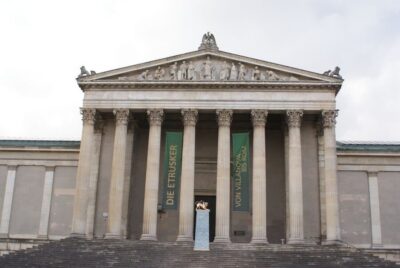
Munich: Nazi History 2-Hour Small Group Walking Tour
Read our review →Browse the lists this tour appears in