
Review · SPLIT
Split: Historical & Gastro Treasures Tour with Green Market
Split’s best introduction may be the one that starts with a bite of prosciutto at the Green Market and ends with black risotto in a neighborhood-style tavern. This three-hour tour links Diocletian’s Palace with the food that still shapes daily life in Dalmatia.
I like the way the tour mixes major sights with small, local tastes, especially soparnik pie, peka bread, grappa, seafood, and Brač wine. I also like that guides such as Hani, Olga, Christina, Vicky, Lucia, and Darko bring personal stories and practical advice rather than simply reciting dates.
The main drawback is the price, $135 per person, and the tour may be more food than you expect. Come hungry. Also check your chosen departure time: afternoon tours do not visit the Green Market, since it is closed later in the day.
Key points to know before booking
- Green Market brunch: Morning departures include prosciutto, cheese, peka bread, soparnik pie, and grappa among the market tastings.
- Three-hour history and food walk: You visit Peristil Square, the Golden Gate, Pjaca, and other parts of Diocletian’s Palace.
- A full tavern meal: Expect seafood, two types of pasta, black risotto, and local wine from Brač Island.
- Guides make the difference: Hani, Olga, Christina, Vicky, Lucia, and other local guides are praised for warm conversation and clear explanations.
- Bring an appetite: Portions are generous, and dessert or gelato comes after the meal.
- Useful first-day tour: The food advice and restaurant tips can help you choose where and what to eat during the rest of your stay.
A market breakfast in the heart of Split
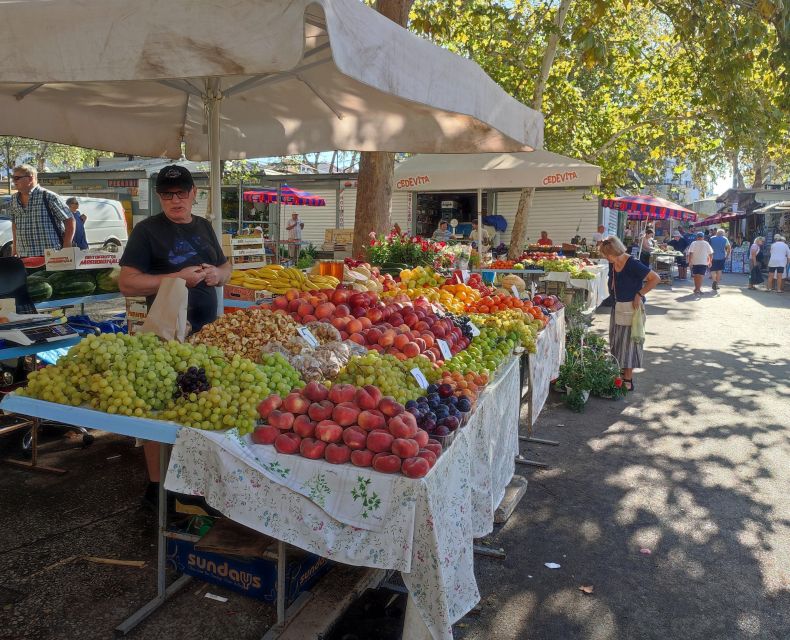
The tour begins at Hrvojeva 1, although the exact meeting point can vary by booking option. From there, the morning route heads toward the Green Market, one of the most useful places in Split for seeing how locals shop and eat.
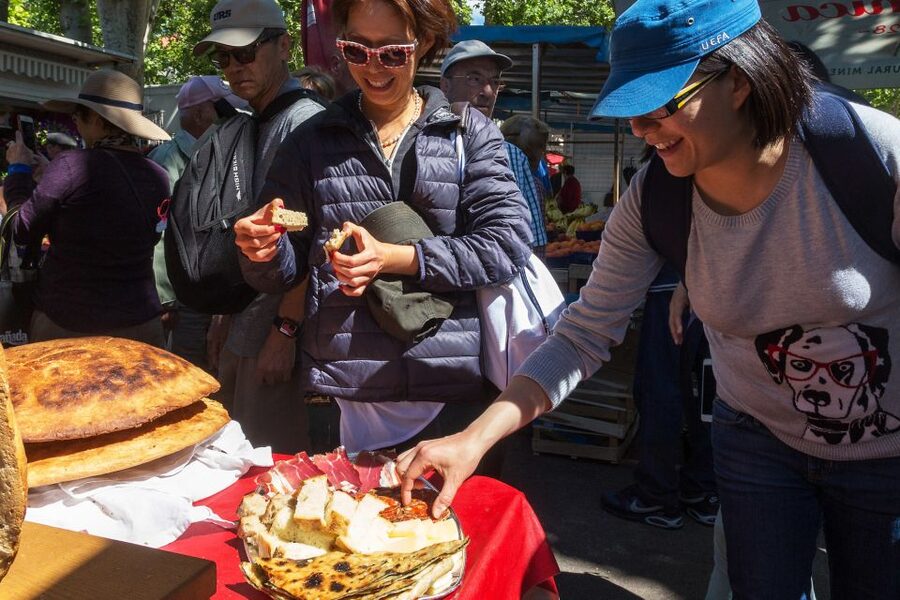
This is not just a quick stop for a photograph. You get a Mediterranean-style brunch built around Croatian staples. Prosciutto, local cheese, peka bread, soparnik pie, and grappa give you a quick education in Dalmatian food.
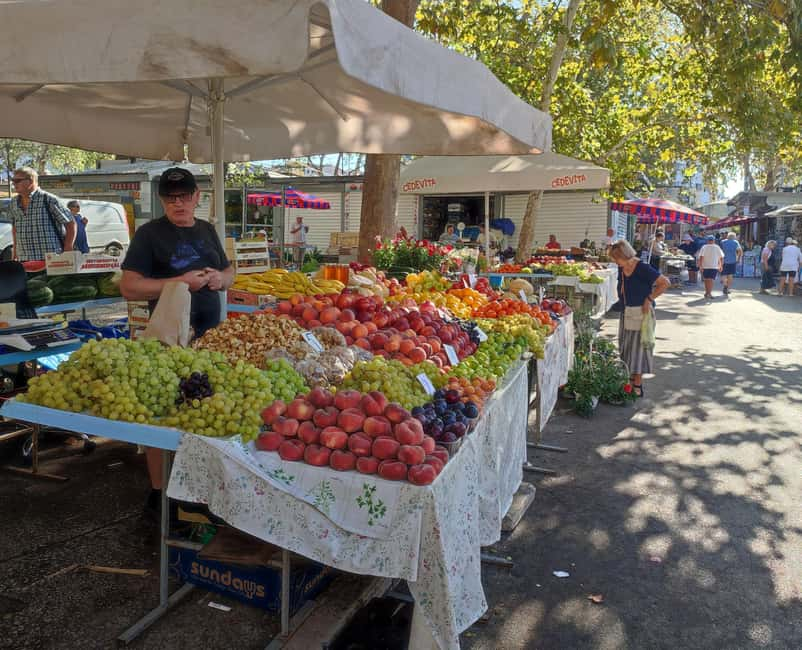
I especially like this opening because it explains food through place. At the market, you can connect the ingredients on the table with the people who sell and use them. The guide also helps explain what you are tasting and why certain foods matter in the region.
Soparnik is a particularly good example. This savory pie is associated with Dalmatia and gives the meal a different character from the usual cheese and cured meat platter. Peka bread adds another traditional touch, while grappa provides a strong finish for anyone who wants to try a local spirit.
The Green Market is also a practical stop for your own trip. You may see produce and regional foods that you would otherwise pass without recognizing. Guides such as Olga have been praised for explaining differences among Croatian foods and for describing what to look for in wine, bread, and cured meats.
The market portion is available on the morning option. If you choose an afternoon departure, the market is not open, so similar foods are tasted at a local tavern instead. That substitute keeps the food element intact, but it is not quite the same as walking through the market and watching everyday shopping take place.
More Market Trips in Croatia:
- Private Excursion to Floating Market and Ayutthaya World Heritage
★ 5.0 · 515 reviews - Private Heritage Walking Tour in Jaisalmer Fort and Old Bazaar
★ 5.0 · 306 reviews - Old Delhi Food-Spice Market-Temples Tour Soon Featured on NETFLIX
★ 5.0 · 304 reviews
Reading Split through Diocletian’s Palace
After the food tasting, the tour turns toward Split’s historic center and the remains of Diocletian’s Palace. The palace is not a sealed-off monument sitting apart from modern life. It forms the core of the city, with homes, shops, restaurants, lanes, and public spaces fitted into and around ancient walls.
Your guide covers major points including Peristil Square, the Golden Gate, and Pjaca, the medieval Venetian square. This part of the tour gives you a useful framework for exploring alone later. Instead of seeing the palace as a maze of stone alleys, you begin to understand how its Roman beginnings and later Venetian and medieval changes shaped the city you see today.
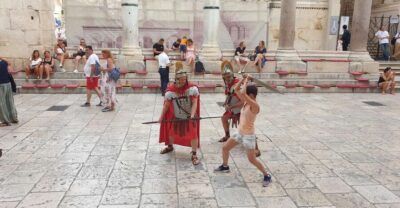
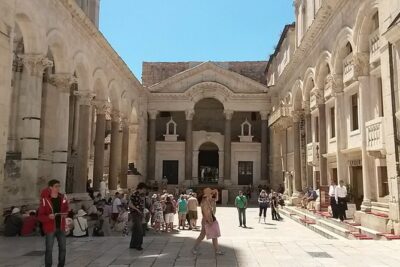
Peristil Square is one of the key stops. It provides a sense of the palace’s formal center and helps you picture how the complex was organized. The Golden Gate gives you a clear example of the old entrances and the scale of the Roman structure.
Pjaca adds another layer. Its Venetian character shows that Split did not stop changing after the Roman period. The tour explains how the palace and surrounding streets developed over time, and how the old center remains part of ordinary city life.
The guides are a major part of this section. Ana is praised for her grasp of Croatian history, while Olga and Darko have been appreciated for connecting the city’s past with its present appearance. Hani, Christina, and Vicky are noted for making the explanations relaxed and easy to follow.
You should not expect a specialist archaeology lecture. This is a food-and-history walk, not a museum seminar. That is a strength if you want clear context without spending the whole morning on dates and architectural terms. It may feel too light if your main goal is detailed Roman history.
A proper meal in a traditional konoba
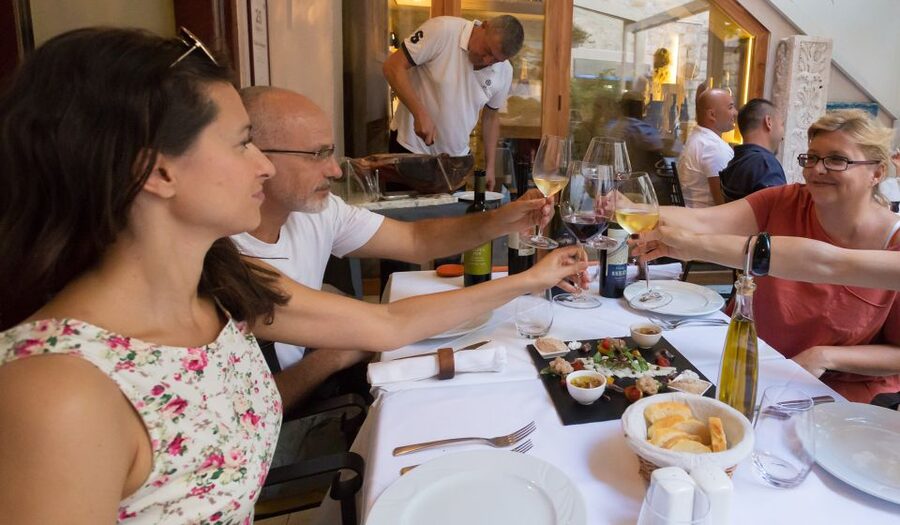
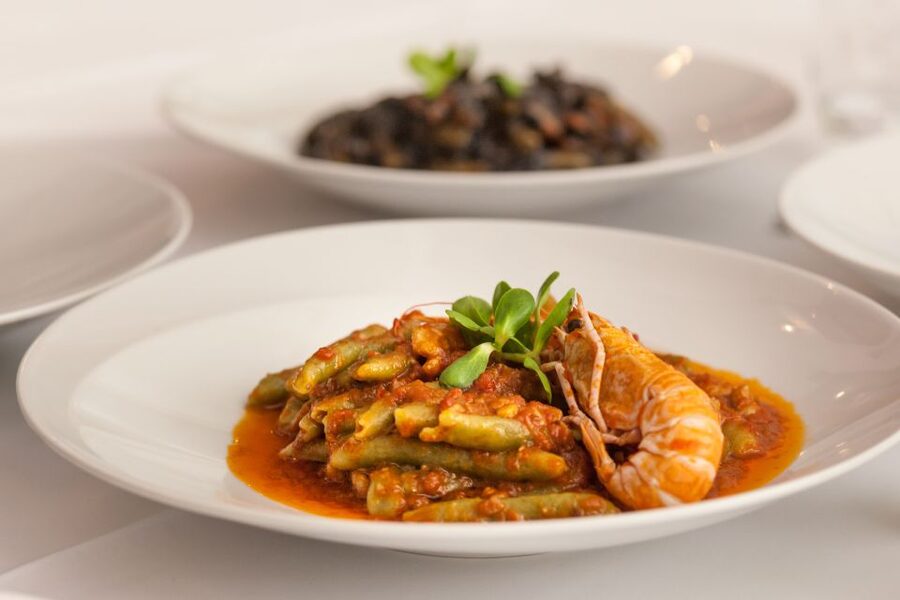
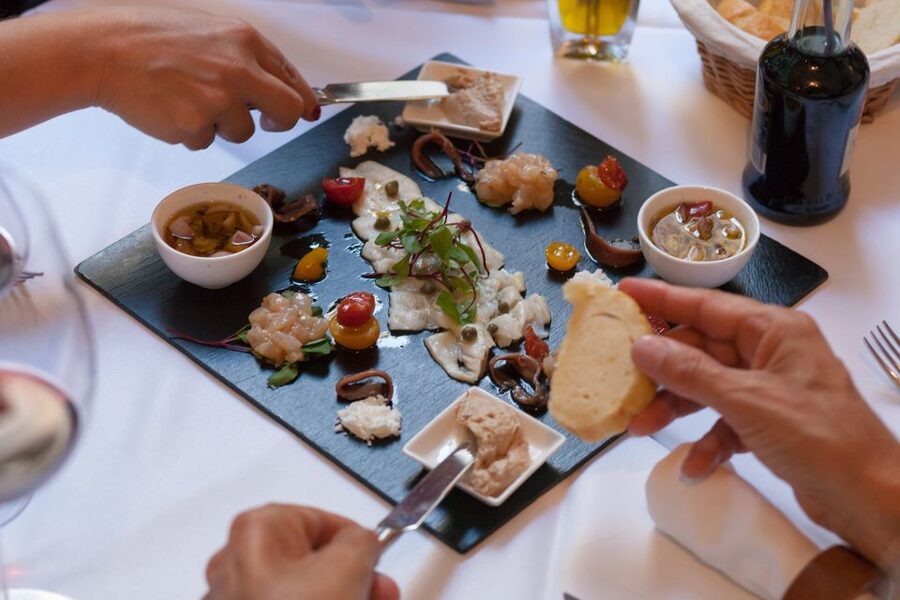
The tour then moves into a konoba, a tavern-style restaurant associated with traditional coastal cooking. This is where the tasting becomes a substantial meal. You are served a seafood starter with white wine, followed by two types of traditional pasta and black risotto with local red wine from Brač Island.
The meal is one reason you should not eat a large breakfast before the tour. The word tasting might suggest a few tiny samples, but the portions are described as generous. Several people specifically advise arriving with a serious appetite, and that is sound advice.
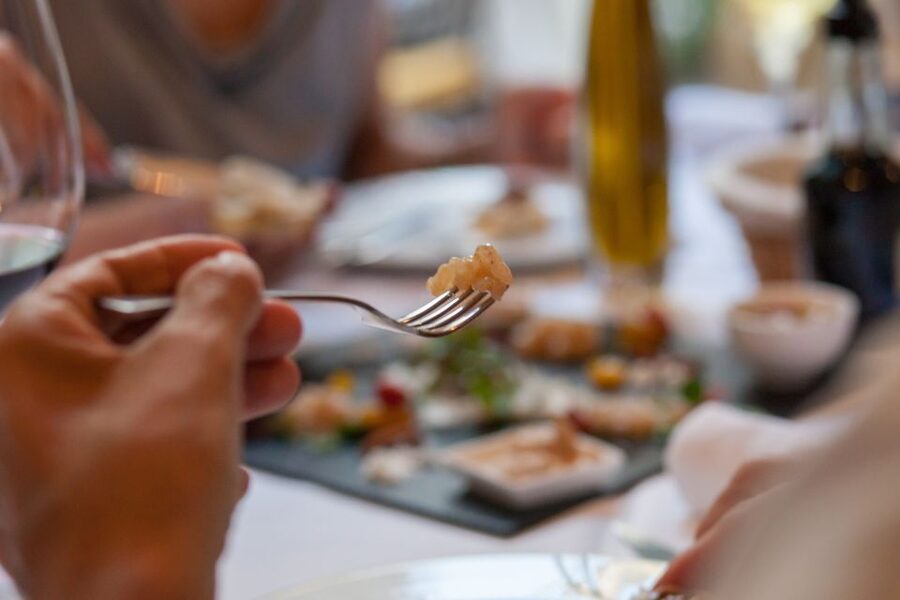
The seafood starter gives you a first look at the Adriatic side of Dalmatian cooking. The pasta courses add a more filling, everyday element, while black risotto offers the boldest dish of the meal. If you do not often order cuttlefish or seafood risotto on your own, this is a useful chance to try them with someone explaining what is on your plate.
One of the strengths here is variety. You are not eating one large dish and calling it a food tour. The meal moves from cured meats and cheese to bread, pie, seafood, pasta, risotto, wine, and dessert. That range helps you see that Dalmatian cooking is not one narrow style.
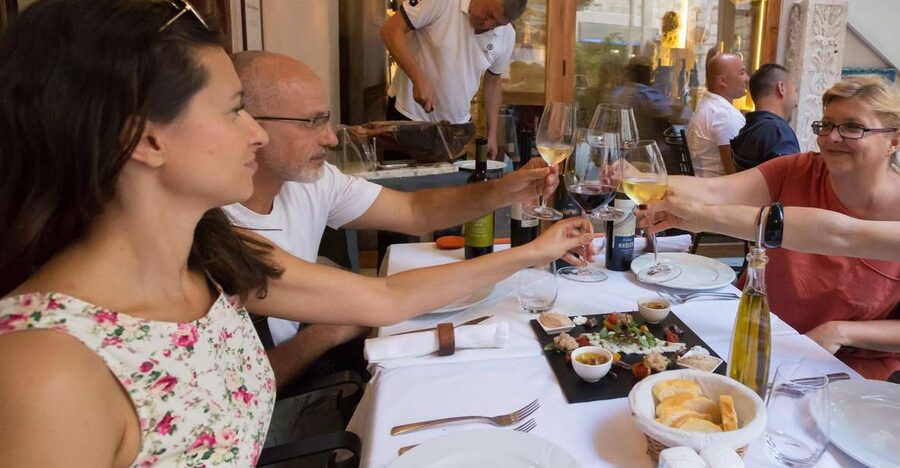
The wine pairings are part of the value. White wine is served with the seafood course, and red wine from Brač accompanies the later dishes. Brandy or grappa appears earlier in the experience. If you enjoy regional drinks, the tour gives you several ways to compare local flavors in one sitting.
There is one important qualification. The listed price includes food and wine, so a person who does not drink alcohol may feel the cost more sharply. One person specifically found the price a little high for a non-drinker. The tour still includes plenty of food and guiding, but the wine portion is part of what you are paying for.
Dessert, conversation, and local advice
The final stop is a light dessert. Depending on the season, you may receive gelato or a traditional dessert. This small seasonal change is worth noting if you have your heart set on trying a particular Croatian sweet. The choice may also depend on what the group prefers, so ask your guide if you want to know what is available.
The social side of the meal matters. Guides are expected to keep conversation moving and include people around the table. The best accounts of the tour describe a relaxed pace, with time to ask questions and share your own impressions of Croatia.
That makes the experience a good fit for solo visitors and couples who want company without joining a formal party built around entertainment. It can also work well for families with older children who are curious about food, though the amount of eating and the wine focus may not suit very young children.
A useful benefit is the advice you receive for the rest of your stay. You can ask about local dishes, restaurants, wine, and customs while the meal is in front of you. Several guides are praised for offering tips that help people decide what to order later. I would book this early in your Split visit for that reason.
More Shopping Trips in Croatia:
- Brooklyn Food Walking Tour: Local Eats & Family‑Run Shops
★ 5.0 · 592 reviews - Old San Juan Historical Walk, Shopping, and Dining w/ Transport
★ 4.5 · 381 reviews - 2 Hour Historic Market Food Tour and Hands-On Biscuit Class
★ 5.0 · 251 reviews - Abu Dhabi Sightseeing Tour: Sheikh Zayed Mosque, Heritage Village & Dates Market
★ 4.5 · 226 reviews
What the $135 price really covers
At $135 per person, this is not a cheap walking tour with a token snack. The cost includes the licensed local guide, all listed food, wine, tastings, the palace walk, and dessert. In three hours, you receive both a guided sightseeing introduction and a substantial meal.
The value depends on what you would otherwise buy separately. A palace walk, a market tasting, lunch with several courses, wine, and dessert could add up quickly. The tour also removes the guesswork of choosing unfamiliar dishes and finding a suitable local restaurant.
Still, the price will feel high if you mainly want to see the palace or if you eat lightly. It is also less attractive for anyone who avoids alcohol, since wine and grappa are central parts of the experience. You should view it as a combined cultural tour and long meal, not as a basic sightseeing ticket.
The cancellation terms are practical: you can cancel up to 24 hours ahead for a full refund, and you can reserve now and pay later. Hotel pickup and drop-off are not included, so you need to reach the meeting point yourself and return from the end point, which is back at the meeting location.
Morning or afternoon: choose with care
The morning departure is the better choice if the Green Market matters to you. You get the market walk, the local produce, and the Mediterranean brunch before moving through the palace and on to the tavern meal.
The afternoon option makes sense if your schedule does not allow a morning start. Just understand that the Green Market is closed then. The food is replaced with similar tastings at a local tavern, so you still receive the culinary portion, but you lose the chance to see the market operating.
The tour is in English. You should tell the operator about food allergies or dietary restrictions when booking. One guide, Olga, is specifically praised for adjusting the experience for dietary needs, but you should not assume every dish can be changed or that every restriction can be accommodated.
The meeting point may vary by the option you book, even though Hrvojeva 1 is given as the starting address. Check your confirmation rather than relying on memory. Since the tour ends back at the meeting point, you can plan another activity from there without arranging transport.
Who should book this Split food tour?

I would recommend it to you if you want a first look at Split that combines the city’s major historic sights with food you might not order by yourself. It is especially useful for first-time visitors who want a local guide to explain both the palace and the customs around the table.
Food lovers will appreciate the range, from prosciutto and cheese to black risotto and regional wine. Curious eaters will have chances to try dishes such as soparnik and seafood preparations that may not be familiar. People who enjoy meeting others over a shared meal should also find the format appealing.
You may want a different tour if you prefer a short, low-cost palace walk, avoid alcohol, have strict dietary restrictions, or dislike large meals. The tour is generous, and that is part of its appeal, but it is not designed for a light snack.
The guides are repeatedly praised for warmth, humor, and personal knowledge of Split. Hani is described as funny and passionate, Christina as lively and attentive, Olga as energetic and well prepared, and Lucia and Vicky as especially good at making people comfortable. Since guide assignments can vary, treat those names as examples of the style you may encounter rather than a promise of a particular person.
Should you book it?
Book this tour if you want to eat your way into Split while getting enough history to understand the palace. The morning option is the strongest choice, since the Green Market adds the most local character and gives the opening meal a real sense of place.
At $135, it is a splurge, but the included food, wine, dessert, licensed guide, and palace visit make the price easier to defend than a simple walking tour. Arrive hungry, mention restrictions in advance, and choose the afternoon only if you are comfortable missing the market.
FAQ

How long does the Split Historical and Gastro Treasures Tour last?
The tour lasts three hours.
How much does the tour cost?
The price is $135 per person.
Is the Green Market included on every departure?
No. The morning option includes the Green Market. The afternoon option does not, because the market is closed later in the day. Similar foods are tasted at a local tavern instead.
What food is served at the Green Market?
The market brunch includes prosciutto, cheese, traditional peka bread, soparnik pie, and grappa.
What food is served at the tavern?
The tavern meal includes a seafood starter with white wine, two types of traditional pasta, black risotto, and local red wine from Brač Island.
Is dessert included?
Yes. The tour ends with either light gelato or a traditional dessert, depending on the season.
Is wine included in the price?
Yes. The cost includes the listed food and wine tastings.
Is the tour offered in English?
Yes. English is the listed tour language.
What should I do about food allergies or dietary restrictions?
Tell the operator about all food allergies and dietary restrictions when you book. Adjustments may be possible, but you should provide the information in advance.
Just added around Croatia
- Split: Local History and Culture 90-Minute Walking Tour★ 5.0 · 194 reviews
- Split: Walking tour of Split with a ‘Magister’ of History★ 5.0 · 110 reviews
- Split: Historical Tour of Salona, Klis Fortress and Trogir★ 4.1 · 108 reviews
- Split: Private Walking Tour in the Historical Town Center★ 5.0 · 25 reviews
- Šibenik: Medieval Night Walking Tour★ 5.0 · 27 reviews
- Šibenik: Croatia in a Day, Vistas, History, Olive Oil, Wine★ 5.0 · 30 reviews
- Dubrovnik: Red History Museum Regular Ticket★ 4.6 · 134 reviews
- Pula: Historic Sites Guided Walking Tour★ 4.8 · 78 reviews
Split History Tours, compared.

Walking Tour of Split with a ‘Magister’ of History
Read our review →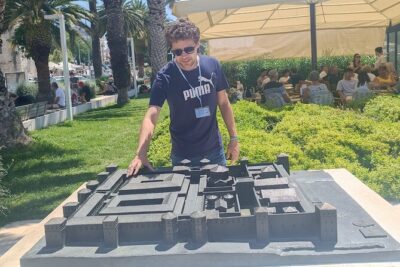
SPLIT-PRIVATE Walking Tour of Diocletian’s Palace & Old Town
Read our review →
Split: Local History and Culture 90-Minute Walking Tour
Read our review →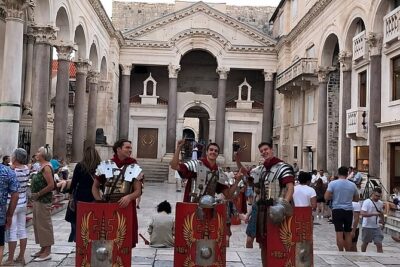
Split: Walking tour of Split with a ‘Magister’ of History
Read our review →
Split: Historical Tour of Salona, Klis Fortress and Trogir
Read our review →Browse the lists this tour appears in