
Review · SPLIT
Split: History and Heritage Walking Tour
Split’s old town is not a museum sealed behind glass. It is a living city built inside and around a 1,700-year-old Roman palace, where laundry, cafés, shops, churches, and ancient stone walls share the same narrow lanes. This walking tour helps you make sense of that wonderfully jumbled setting.
I like two things right away. First, the guides turn Emperor Diocletian’s rise from an ordinary soldier to Rome’s most powerful man into a story rather than a list of dates. Second, the tour connects Roman, medieval, Venetian, and modern Split, so you understand why the city looks the way it does today. The main caution is group size: despite being sold as a small-group tour, one outing reached nearly 30 people, making it harder to hear and slower to move through crowded lanes.
Key points
- Peristil Square starting point: Meet beneath the old Roman arch beside the Tourist Information Office, marked by a yellow shirt or umbrella.
- Roman palace turned city: See how Diocletian’s palace survives as part of everyday Split rather than as a separate archaeological site.
- Story-led guiding: Guides including Antonella, Antonia, Nikolas, and Doris are praised for clear explanations, humor, and strong local context.
- Several centuries in one walk: The route covers Roman remains, Romanesque churches, medieval fortifications, Gothic palaces, and later Venetian influence.
- Good value at $18: The tour includes a guide and group walk, with no separate admission charge listed for the areas visited.
- Practical but weather-proof: Bring comfortable shoes, a hat, and weather-ready clothing. The tour runs in sun or rain.
Starting beneath the Roman arch at Peristil Square
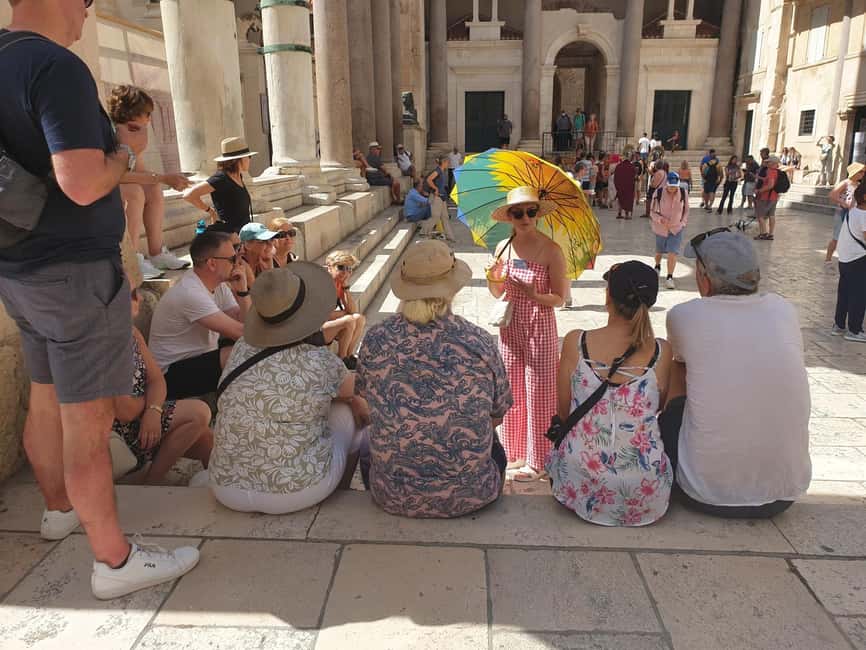
You begin at Peristil Square, the grand central court of Diocletian’s Palace. Look for the guide in a yellow T-shirt or beside a yellow umbrella, near the Tourist Information Office under the old Roman arch on the north side of the square.
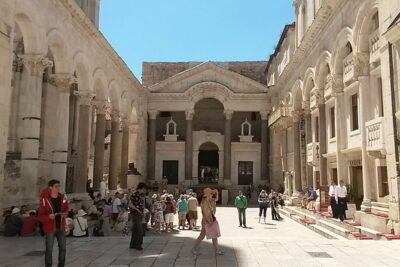
This is a smart meeting point because the square gives you an instant sense of Split’s unusual character. Ancient columns and palace stone frame a place still used as part of the city. You are not simply looking at ruins from a distance. You are standing in the old heart of the palace, with modern Split moving around you.
Your guide sets the basic story here: Diocletian was born in humble circumstances, rose through the Roman military, and became emperor. His decision to build a vast retirement residence beside the Adriatic shaped the entire future of Split.
The opening explanation matters because the palace is large and confusing at first glance. Without a guide, you may see scattered walls, arches, and doorways without understanding how they fit together. The tour gives those pieces a frame.
More History Walking Tours in Croatia
- Dubrovnik Old Town History Walking Tour
★ 5.0 · 1,684 reviews - Dubrovnik: Ancient City Walls & Wars Walking Tour
★ 5.0 · 1,270 reviews - Zagreb: City and WWII Tunnels Walking Tour
★ 4.9 · 1,230 reviews
Diocletian’s Palace as a living city
The palace is the central subject of the walk, but it is not presented as a single preserved building. Much of its interest comes from the way later generations built into it, reused it, and changed its purpose.
You will learn what the palace once contained and what remains today. Roman architecture appears beside medieval buildings and modern shops, often within a few steps of one another. That mix can seem untidy, but it is also the reason Split feels like a real city rather than a reconstructed monument.
I especially like the focus on what survives. A guide can point out the difference between an original Roman feature, a medieval addition, and a more recent change. You get a clearer idea of how the palace developed over roughly 1,700 years instead of treating every old-looking stone as part of the Roman period.
The route also covers important parts of the city beyond the emperor’s original residence. That makes the experience useful for first-time visitors who want a basic map of the old town and for returning visitors who have wandered Split before but missed the historical connections.
Roman architecture and the drama of imperial power
The Roman section gives the tour its strongest sense of scale. Diocletian’s palace was not just a private house. It reflected the status and power of an emperor who had ruled a huge empire.
Your guide explains how a man from an unremarkable background became one of the most powerful figures in the Roman world. That personal rise gives the stones a human storyline. Instead of only hearing about dates and architectural terms, you can follow the ambition behind the project.
The tour is also a good choice if you prefer history with a little personality. Several guides, especially Antonella and Antonia, are praised for enthusiasm, clear language, and a talent for keeping non-history fans interested. That matters in a place where the basic facts can otherwise feel dense.
The explanations are designed for a general audience, not for specialists. You should expect stories, context, and memorable details rather than a technical lecture on Roman construction. If you want an exhaustive archaeological study, you will need a more specialized visit. For a first orientation, the balance works well.
Churches, fortifications, and Gothic palaces
Split’s later layers receive proper attention. The tour includes Romanesque churches, medieval fortifications, and Gothic palaces, showing how the settlement changed after the Roman period.
These buildings help you see that Split’s story did not end when Diocletian’s era ended. Medieval residents adapted old Roman spaces, added their own churches and defensive structures, and created a town with a different scale and character.
The Gothic palaces add another piece to the picture. Their presence alongside Roman walls makes the old town feel less like one period preserved in isolation and more like a long record of changing power, taste, and daily life.
You may also hear about Venetian influence and the arrival of the Croats. The tour links those forces to architecture and city life, helping you understand why Split cannot be explained only through its Roman past.
This part of the route is especially useful if you have already seen the palace but want to understand the wider old town. The guide points out areas you might pass without noticing while wandering alone. Several stops are apparently tucked into the ordinary flow of the city, so keep your eyes open and stay close to the group.
Same city, a different century:
- Zagreb: City & History Walking Tour & WW2 Tunnels
★ 4.9 · 1,202 reviews - Walking Tour of Split with a ‘Magister’ of History
★ 5.0 · 1,122 reviews - Dubrovnik Combo: Old Town & Ancient City Walls
★ 5.0 · 1,019 reviews - Split Walking Tour with Professor of History
★ 5.0 · 926 reviews
A local guide makes the difference
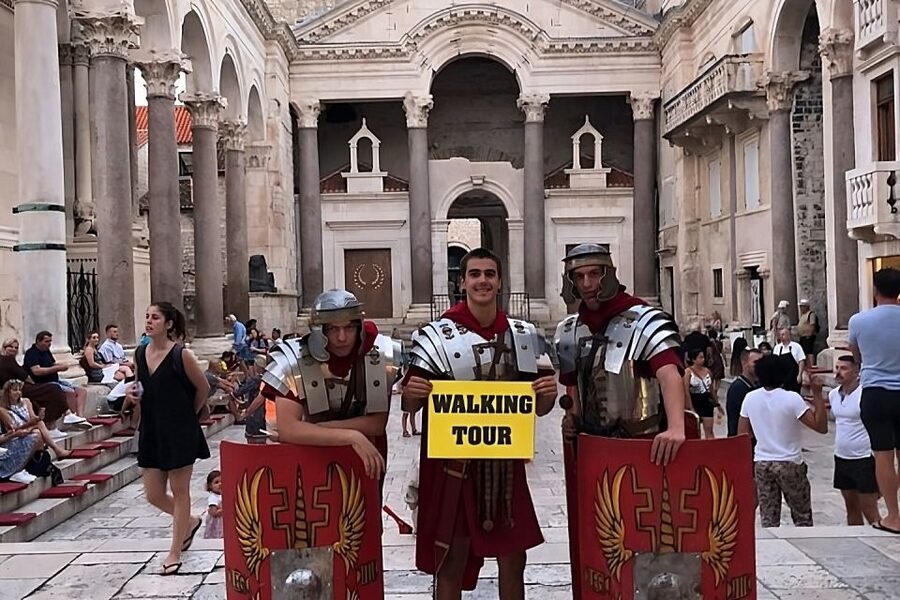
The strongest feature of this experience is the guide. Names that appear repeatedly in the available feedback include Antonella, Antonela, Antonia, Nikolas, and Doris. Spelling may vary, but the pattern is clear: the best part of the walk is the person explaining Split.
Antonella is repeatedly praised for energy, warmth, and the ability to explain complicated subjects in simple language. She is also described as a teacher, which fits the comments about clear structure and keeping the group engaged. Antonela receives similar praise for turning the city’s past into an entertaining story.
Nikolas is noted for explaining the influences that shaped Split and for showing lesser-noticed corners of the old town. Doris helped keep people comfortable during rain by providing an umbrella, a small practical touch that matters on a weather-exposed walking tour.
The guides speak English, German, French, or Russian, depending on the departure. The experience promises licensed and educated guides, but you should understand that the exact guide and language depend on your booking.
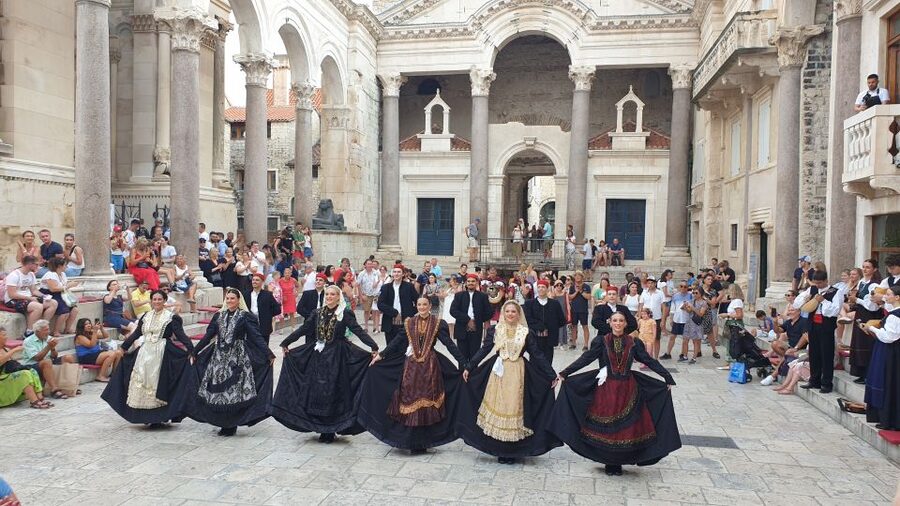
A good guide also leaves room for questions. The feedback describes guides answering questions patiently and adding personal links to Split and Croatian culture. You may encounter traditional singing during the walk, though that should be treated as a possible bonus rather than a guaranteed performance.
Game of Thrones details are an extra, not the main event
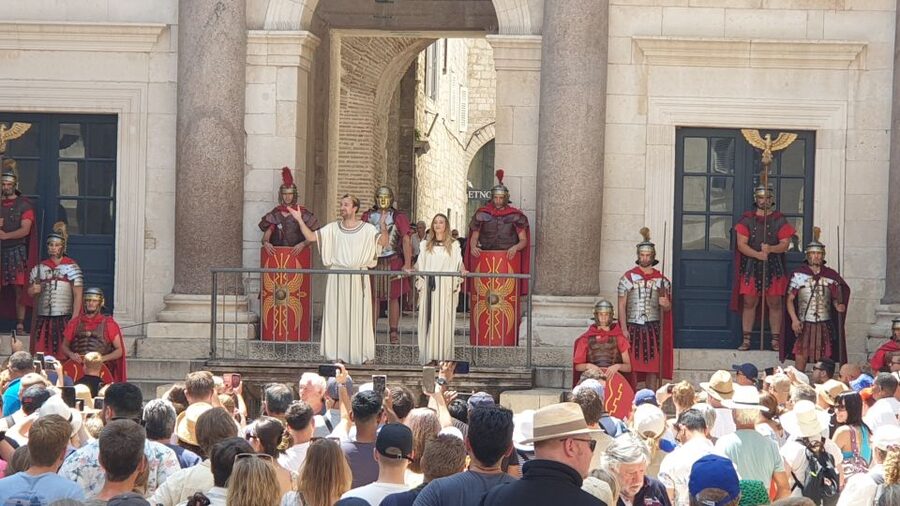
Fans of Game of Thrones can receive information about filming locations as a bonus. That is a nice addition, especially if you recognize the streets and stone courtyards from the show.
Still, this is a history and heritage walk first. The Roman palace, medieval buildings, churches, fortifications, and city development form the main subject. If you book only for television locations, you may find the emphasis broader than expected.
For most people, that is a strength. You get the pop-culture connection without allowing it to replace the actual story of Split. The show may give you a reason to notice a particular corner, while the guide explains why that corner mattered long before television crews arrived.
Why $18 is a fair price

At $18 per person, this is a modestly priced way to get oriented in one of Croatia’s most historically layered city centers. The price includes the walking tour and guide. Hotel pickup, food, drinks, and admission tickets are not included.
The value comes from interpretation rather than transportation or exclusive access. You are paying someone to explain what you are seeing, connect separate periods, answer questions, and lead you to details you might miss alone.
The tour also appears to focus on public areas of the palace and old town, so you should not assume that the price covers entry to every museum, church interior, or paid attraction. If a particular interior matters to you, check whether an admission fee applies separately.
For a short stay, I think the cost makes sense. One person with only 48 hours in Split described the walk as a useful way to learn and laugh while getting a strong base for further exploring. That is exactly how I would use it: take the tour early, then return to the places that caught your interest.
Group size, pace, and hearing the guide
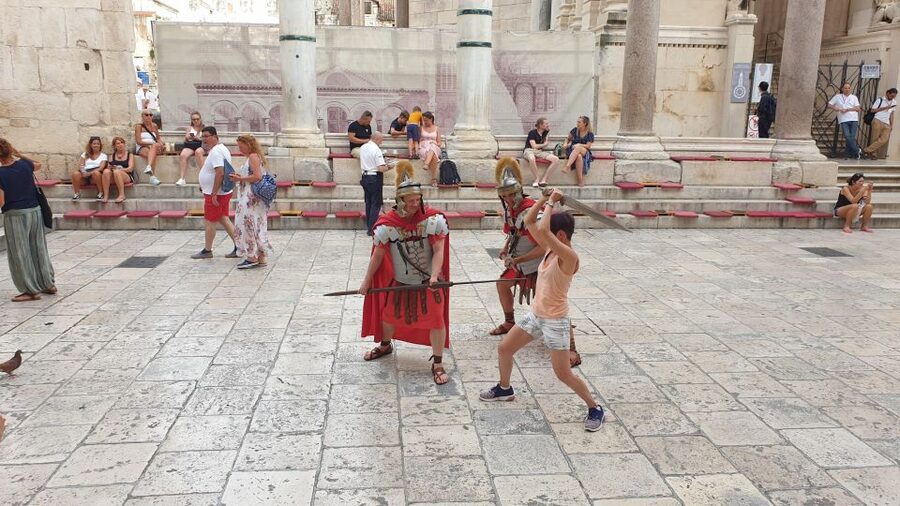
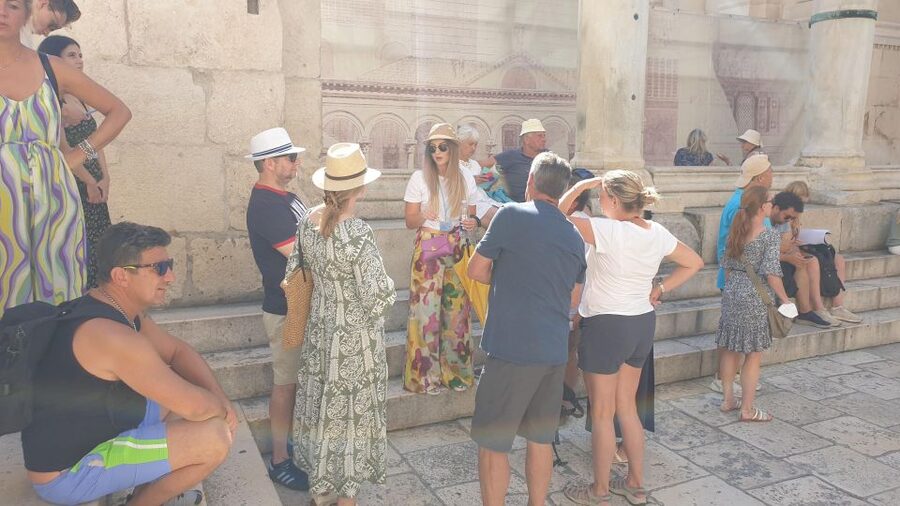
The advertised format is a small-group walking tour, but group size may vary. One outing had almost 30 people, and the guide noted the size several times. In Split’s crowded old town, a large group can slow down at corners and make it harder for people at the back to hear.
That is the main practical weakness. A lively guide cannot fully solve the problem if the group stretches through narrow lanes. Arrive on time, stay near the guide, and avoid drifting behind while taking photographs.
The pace is described as comfortable, with enough time for explanation and views. You should still expect to stand and walk over old stone surfaces. Comfortable shoes are essential, particularly if rain makes the paving slippery.
The tour is listed as suitable for all ages, but it is not suitable for people with high blood pressure or those who are hearing-impaired. The hearing issue is worth taking seriously because a walking group in a busy old town can make it difficult to follow spoken explanations, especially from the rear.
Rain, heat, and what to bring
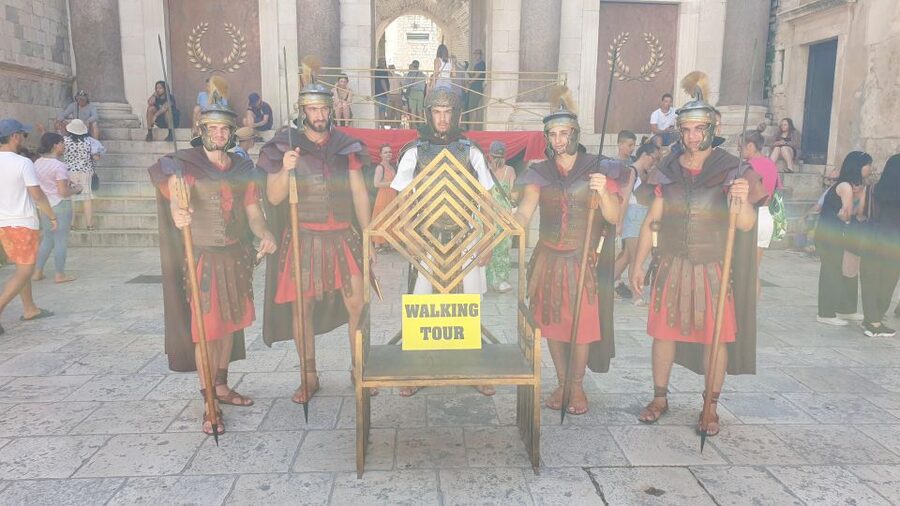
The tour runs in all weather. Split’s bright sun can make an exposed square feel hot, while rain can change the footing and make it harder to hear outdoors.
Bring comfortable clothes, a hat, and shoes suited to walking on old stone. If the forecast looks uncertain, carry rain protection even though a guide may have an umbrella available. Do not treat the weather policy as a promise of comfort. It means the activity continues unless the operator says otherwise.
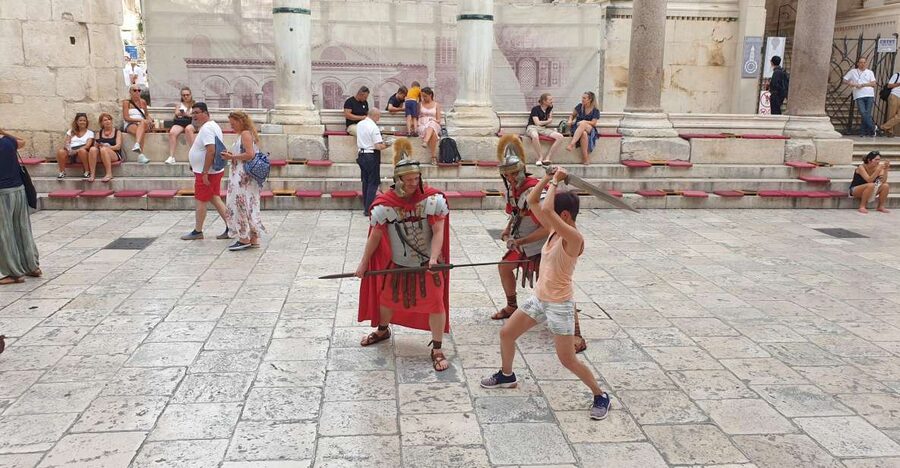
Costumes are not allowed. That rule is unusual enough to note, particularly if you are combining this walk with a themed holiday or a festival visit.
The end is back at the same meeting point. That makes the tour easy to fit into a day of sightseeing, since you do not need to arrange transport from a distant neighborhood.
Who should book this Split walk?
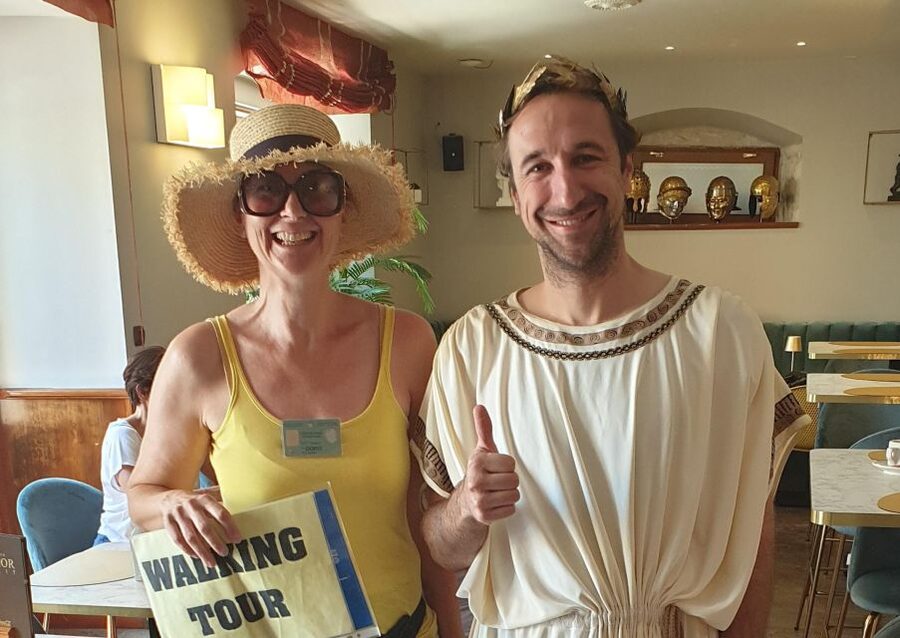
I would choose this tour if you want a clear introduction to Split before exploring on your own. It suits couples, families, and history fans, but the strongest match is anyone who looks at old stone and wants help understanding the story behind it.
It also works well for people who are not history specialists. The most praised guides use humor, stories, and plain explanations rather than speaking only in academic terms. A companion who normally loses interest in historical tours may find this format easier to follow.
You may want another option if you require a very small private group, need guaranteed quiet conditions, or want extensive access to paid interiors. The group can be larger than expected, and admission tickets are not included.
The tour is available in English, German, French, and Russian. You can cancel up to 24 hours ahead for a full refund, and the reserve-now, pay-later option can help if your schedule is still shifting.
Should you book it?
Book this walk if you want Split’s Roman palace to make sense, not just look old. For $18, you get a local guide, a useful historical framework, and a route that connects Roman power with medieval, Gothic, Venetian, and modern Split.
I would book it early in your stay, preferably when you can stay close to the guide and ask questions. Choose it for stories and context, not for private access or a guaranteed tiny group. If you accept that tradeoff, this is a practical, engaging introduction to the city’s most important historic quarter.
FAQ
Where does the Split History and Heritage Walking Tour start?
It starts on Peristil Square, beneath the old Roman arch on the north side of the square, next to the Tourist Information Office. Look for a yellow T-shirt or yellow umbrella.
Where does the tour end?
The tour ends back at the meeting point on Peristil Square.
What does the $18 price include?
The price includes a small-group walking tour and a tour guide.
Are admission tickets included?
No. Admission tickets are not included.
Are food and drinks included?
No. Food and drinks are not included.
Which languages are available?
The tour is offered in English, German, French, and Russian.
Does the tour run in bad weather?
Yes. The tour takes place in rain or sun, so bring suitable clothing and comfortable shoes.
Is the tour suitable for all ages?
The tour is listed as appropriate for all ages. It is not suitable for people with high blood pressure or people who are hearing-impaired.
Can I cancel for a full refund?
Yes. You can cancel up to 24 hours in advance for a full refund.
Just added around Croatia
- Split: Local History and Culture 90-Minute Walking Tour★ 5.0 · 194 reviews
- Split: Walking tour of Split with a ‘Magister’ of History★ 5.0 · 110 reviews
- Split: Historical & Gastro Treasures Tour with Green Market★ 4.9 · 144 reviews
- Split: Historical Tour of Salona, Klis Fortress and Trogir★ 4.1 · 108 reviews
- Split: Private Walking Tour in the Historical Town Center★ 5.0 · 25 reviews
- Šibenik: Medieval Night Walking Tour★ 5.0 · 27 reviews
- Šibenik: Croatia in a Day, Vistas, History, Olive Oil, Wine★ 5.0 · 30 reviews
- Dubrovnik: Red History Museum Regular Ticket★ 4.6 · 134 reviews
Split History Tours, compared.

Walking Tour of Split with a ‘Magister’ of History
Read our review →
SPLIT-PRIVATE Walking Tour of Diocletian’s Palace & Old Town
Read our review →
Split: Local History and Culture 90-Minute Walking Tour
Read our review →

Split: Historical & Gastro Treasures Tour with Green Market
Read our review →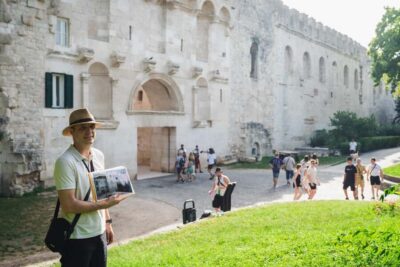
Split: Walking tour of Split with a ‘Magister’ of History
Read our review →
Split: Historical Tour of Salona, Klis Fortress and Trogir
Read our review →Browse the lists this tour appears in