
Review · SPLIT
Split: Walking tour of Split with a ‘Magister’ of History
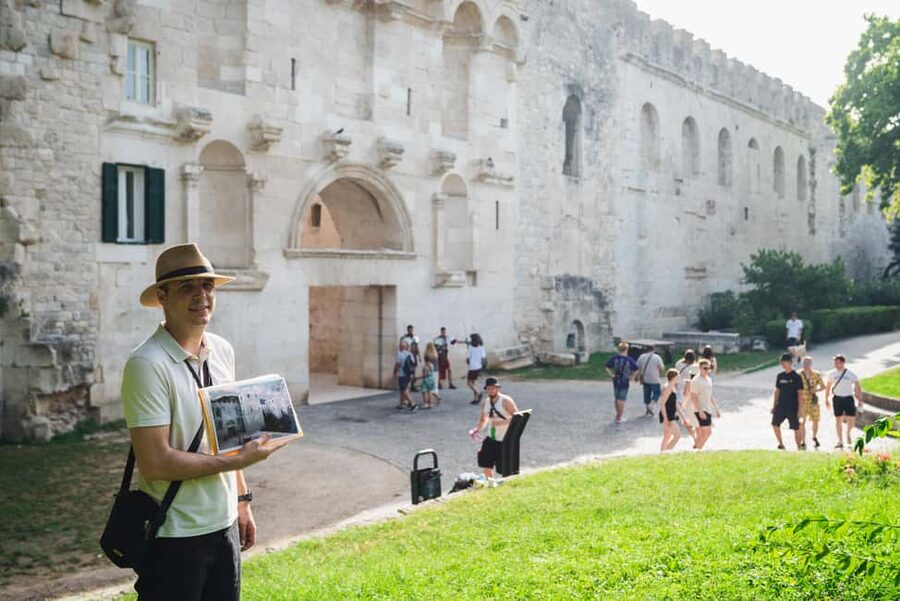
Split’s best history lesson begins with a simple surprise: Diocletian’s Palace is not a sealed-off ruin but the working heart of the city. On this 110-minute walking tour, Toni, a Split-born historian and former teacher, helps you read the palace as a living neighborhood layered over Roman walls.
I like the 3D reconstructions, which give shape to buildings now reduced to columns and fragments. I also like the open question-and-answer style, along with Toni’s care in finding shade and quieter corners when possible. The main consideration is that you do not enter paid museums or monuments, and the route is not suitable for wheelchair users.
Key points to know before you book
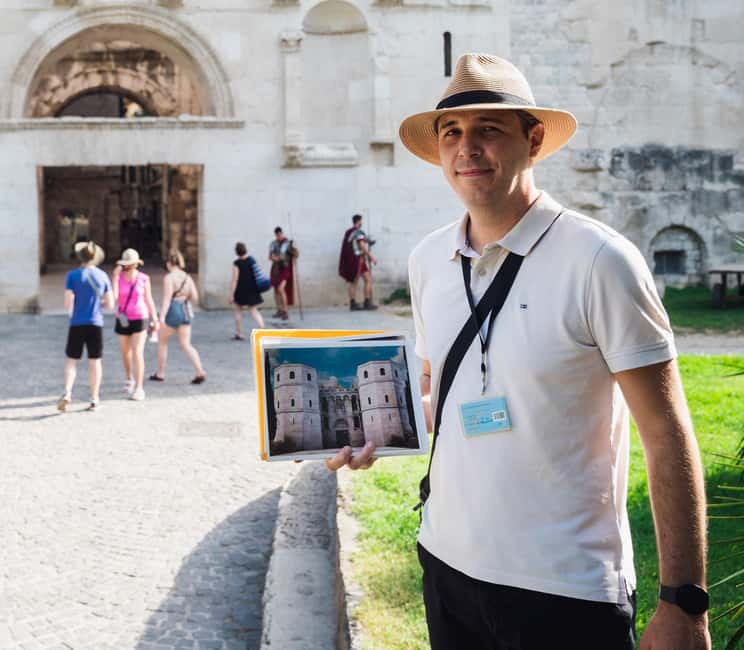
- Toni teaches history through the streets: His background as a former teacher shows in the clear structure, patient explanations, and frequent invitations to ask questions.
- The palace is still part of daily Split: You walk through streets, courtyards, and passageways where ancient Roman remains sit beside later homes and shops.
- Printed 3D images make the ruins easier to understand: You see reconstructions of the palace and compare them with what remains today.
- The tour covers several eras: The route moves from Roman imperial history to medieval and Venetian Split, then connects those periods with the modern city.
- The pace works well in hot weather: The route lasts less than two hours, and Toni makes an effort to use shade and avoid the thickest crowds when possible.
- The $33 price pays for interpretation, not admission tickets: No paid sites are included, but entering the palace streets themselves costs nothing.
Why Diocletian’s Palace needs a guide
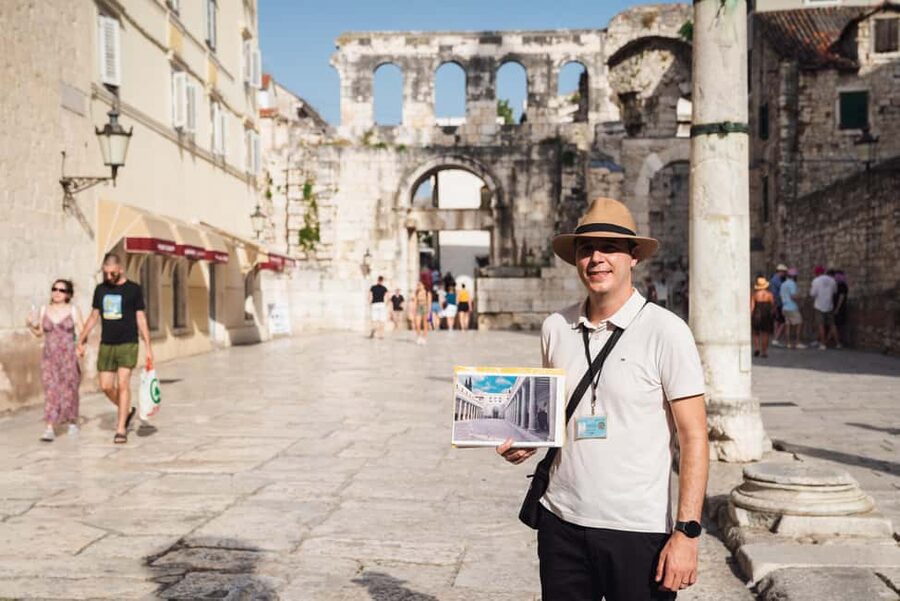
Split’s old center can feel confusing at first. A Roman palace became a medieval town, then a Venetian-era city, and later a modern Croatian center. Walls changed purpose. Private rooms became homes. Ancient passageways turned into streets. Without context, you may see attractive stone but miss the story.
This tour gives you a useful timeline. You begin with Emperor Diocletian and the Roman palace, then move through medieval and Venetian changes before reaching modern Split. That order matters because the city’s character comes from layers rather than one single period.
Toni’s local connection adds another level. He was born and has lived his entire life in Split, so his explanations are not limited to ancient dates. You can ask about the city’s more recent past, local customs, or how historic events still affect Split today.
The format is also more conversational than a speech. Questions are encouraged, and Toni is prepared to adjust his explanations to the group. That makes the experience a better fit if you want to understand what you are seeing rather than simply collect a list of monuments.
More History Walking Tours in Croatia
- Dubrovnik Old Town History Walking Tour
★ 5.0 · 1,684 reviews - Dubrovnik: Ancient City Walls & Wars Walking Tour
★ 5.0 · 1,270 reviews - Zagreb: City and WWII Tunnels Walking Tour
★ 4.9 · 1,230 reviews
Starting at the Riva and the Bronze Gate
The meeting point is the Bronze Gate, also called the Brass Gate, at Obala Hrvatskog narodnog preporoda 22. This is the southern entrance to Diocletian’s Palace, reached from Split’s seafront Riva promenade.
Give yourself enough time to locate the gate. The practical approach is to find the Riva first, then walk along the waterfront toward the southern palace entrance. The meeting point is near the sea, but the old center can be busy and visually crowded, so arriving a few minutes early is sensible.
The Bronze Gate provides a fitting start. It is not simply an entrance to an old monument. It leads into the former imperial complex and shows how the palace connects directly with the waterfront. Toni uses this opening to set up the larger story: Diocletian built a retirement residence, but later residents turned it into the core of Split.
The cellars and the palace’s hidden structure
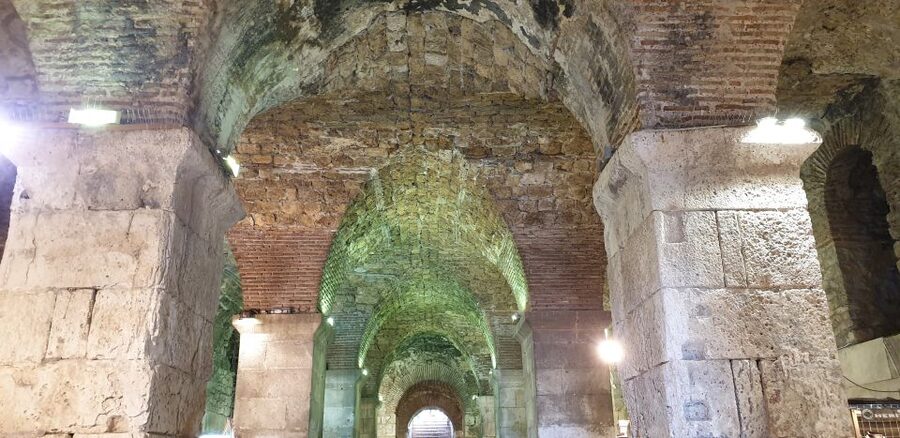
The route continues through the area of Diocletian’s Cellars, with about ten minutes passing through or alongside this section. The underground spaces help you understand the original layout of the palace because their walls often preserve the shape of rooms above.
This is one of the places where the 3D reconstructions are especially useful. Ancient structures can be hard to picture when you see only stone arches or a partial wall. A visual reconstruction lets you compare the surviving remains with the larger Roman design.
The tour does not include admission to paid sites or museums. That point matters here because some parts of the cellars may be associated with ticketed areas, while the general palace complex itself does not require an admission fee. You should not expect a museum visit or a long underground stop as part of this walk.
Still, the cellars help explain a basic fact about Split: the palace did not disappear. It was adapted. Its lower structures survived partly because they supported later construction, while the upper rooms changed over time.
Peristyle, where the Roman palace becomes a city square
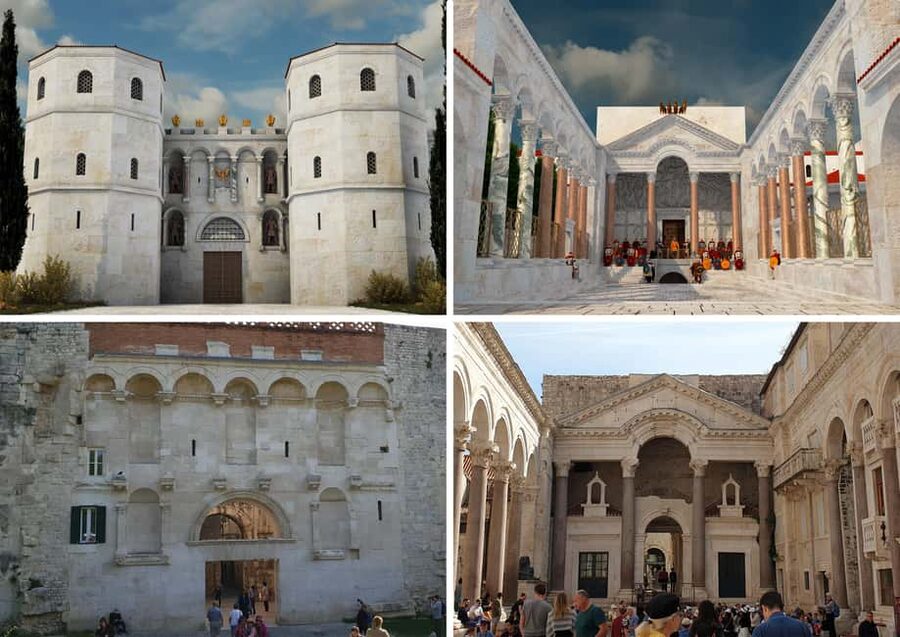
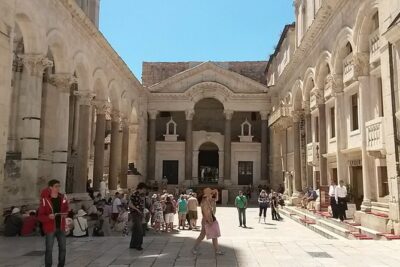
The heart of the route is the Peristyle, the striking Roman square inside the palace. You spend about ten minutes here with guided explanation, though the broader palace visit lasts about an hour.
The square brings several major sights together. Here you see the Mausoleum of Diocletian, the Temple of Jupiter, and the Vestibule. The visual effect is strong, but the historical connections are even more interesting. The Peristyle was designed for imperial ceremony and movement, yet it later became part of an ordinary urban center.
I find this is the point where a guide earns the tour price. You can look at columns and steps on your own, but it takes explanation to understand how power, religion, and palace design worked together. Toni’s background as a history teacher helps him separate the important details from the clutter.
The square can be crowded, especially later in the morning or during the main sightseeing hours. One useful tip is to choose the first available time slot if you prefer more space. The tour lasts 110 minutes, and the crowd may grow noticeably while you are still moving through the palace.
Same city, a different century:
- Zagreb: City & History Walking Tour & WW2 Tunnels
★ 4.9 · 1,202 reviews - Walking Tour of Split with a ‘Magister’ of History
★ 5.0 · 1,122 reviews - Dubrovnik Combo: Old Town & Ancient City Walls
★ 5.0 · 1,019 reviews - Split Walking Tour with Professor of History
★ 5.0 · 926 reviews
The Vestibule and Triklinij
The Vestibule receives about five minutes of guided attention. This round structure once formed part of the route into the emperor’s private quarters. Its shape and acoustics make it one of the palace’s most memorable spaces, though you may appreciate it more after hearing how it fit into the original plan.
Next comes Triklinij, also covered for about five minutes. The name refers to a dining space, and it helps show the difference between the palace’s public ceremonial areas and the emperor’s private residence.
These stops are short, but that is a strength. The tour does not linger at every stone until the pace becomes tiring. Toni uses the time to explain why each location matters, then keeps you moving through the old center.
The 3D material adds value here because private Roman rooms are often difficult to picture from fragments. You can see how a room might have looked in its original setting, then look around at the remains and later construction that replaced it.
Diocletian’s Mausoleum and Jupiter’s Temple
The Cathedral of Saint Domnius is passed rather than entered. Its position within the former mausoleum is one of Split’s clearest examples of changing use. A Roman imperial structure became a Christian cathedral, and the building now carries both identities.
The Temple of Jupiter is also passed for about five minutes. Its connection with the Roman religious program gives you another way to read the palace. Diocletian’s residence was not only a home. It was a carefully planned center of imperial authority, ceremony, and worship.
Because paid sites are not included, this tour is best understood as an exterior walking tour with historical interpretation. If you want to visit cathedral interiors, museums, or ticketed cellar sections, you will need to arrange and pay for those separately.
That limitation keeps the tour focused and affordable, but it also means you should not book it expecting a full museum itinerary. You are paying for Toni’s explanations, the route, and the visual material.
From the Silver Gate to the Golden Gate

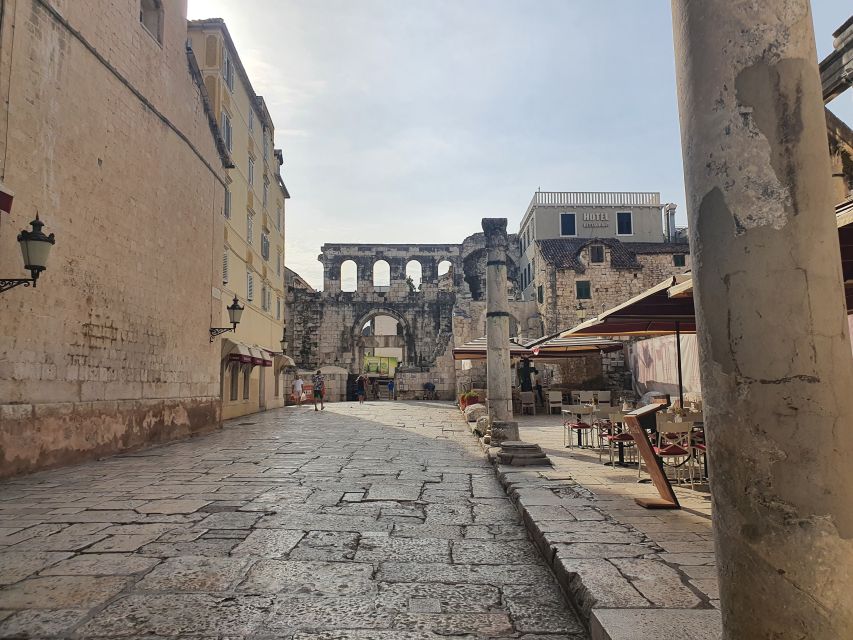
The Silver Gate receives a short guided stop of about three minutes. It is another chance to see how the palace was built as a fortified complex with several entrances and distinct directions of movement.
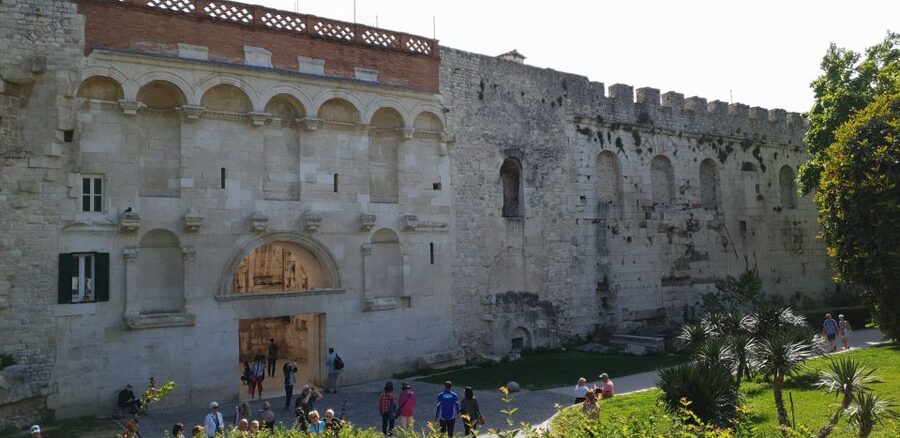
The route then continues to the Golden Gate, where the tour ends after about five minutes of guided attention. The north entrance is one of the most recognizable parts of the palace, and the nearby statue of Bishop Gregory of Nin can be seen along the north wall.
The statue adds a medieval and Croatian layer to a route that began with Rome. From there, the walk connects with Piazza Square and the remains of later Split. This is where the tour’s timeline becomes clear: the city did not replace the palace, it grew through it.
Finishing at the Golden Gate is practical. You end within the old center rather than returning to the Riva. You can continue exploring on your own, find a café, or revisit a place that caught your attention during the walk.
What Toni adds beyond dates and monuments
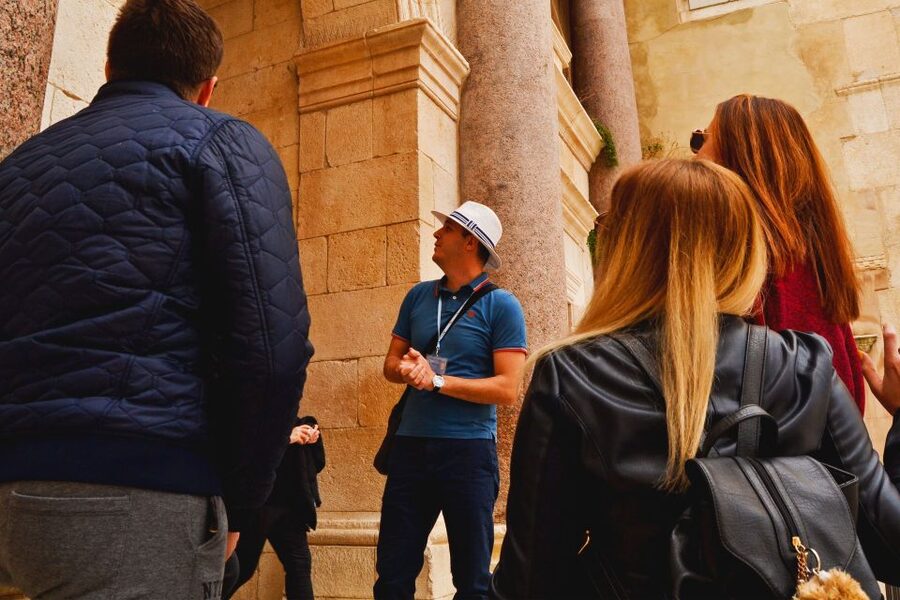
The strongest part of this experience is not simply the number of facts. It is the way Toni links buildings to changes in daily life.
A former history teacher tends to explain cause and effect. Why did this room survive? How did a palace become a neighborhood? Why are medieval houses built against Roman walls? What changed under Venetian rule? These questions make the old center easier to read.
Toni also welcomes questions about more recent history. That matters in Croatia, where the past is not confined to ancient ruins. You can ask about the city’s development, the cultural background of the region, and how earlier events still shape modern Split.
His approach also appears careful about uncertainty. If the evidence does not prove one answer, he is prepared to say so rather than force a neat story. That is a useful habit at ancient sites, where attractive legends can easily take the place of fact.
The personal element is present without turning the walk into a private-life story. Toni’s lifelong connection to Split gives him a sense of place, while his teaching experience keeps the tour organized.
Is $33 a fair price?
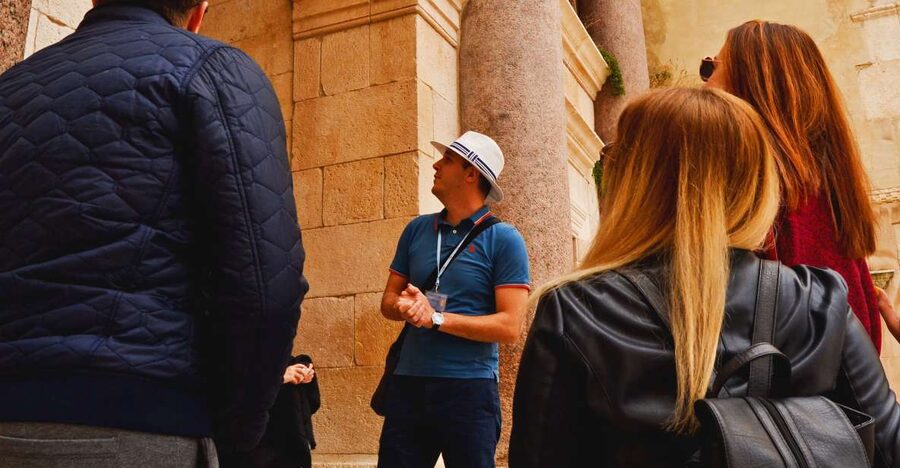
At $33 per person, this is more expensive than a basic group walk that simply points out the main sights. The difference is the depth of interpretation, the former teacher’s presentation style, and the printed 3D reconstructions.
You are not paying for admission tickets. You are paying for 110 minutes with a specialist who helps you understand the palace’s design and the city’s later development. If you would otherwise walk through the old center without knowing what you are seeing, the price is reasonable.
The value is strongest for first-time visitors, history fans, and anyone who likes to ask questions. It is also useful at the start of a Split stay because the route gives you a framework for exploring on your own later.
The value is less clear if you already know Diocletian’s Palace well or mainly want to enter museums and interiors. In that case, a shorter orientation walk plus separate site visits may suit you better.
Pace, weather, and practical comfort
The tour runs rain or shine. Bring water, especially during the warmer months, because the route includes open squares and stone streets that can hold heat.
Toni has been careful to use shade where possible and to steer the group away from dense crowds when he can. That does not make the route cool or empty, and Split’s old center remains an active public area, but the effort helps.
Wear comfortable shoes. The route is a walking tour through ancient and medieval streets, not a flat promenade. Wheelchair users should not book this experience because it is specifically listed as unsuitable for wheelchairs.
The tour is offered in English and is not suitable for people over 95. Free cancellation is available up to 24 hours before the start, and you can reserve while paying later, which is useful if your Split plans may change.
Who should book this Split walking tour?
I would choose this tour if you want the palace explained rather than merely photographed. The combination of local knowledge, teaching experience, open questions, and 3D images gives you more context than a quick circuit of the main sights.
It suits adults, curious teenagers, and families with older children who can handle a 110-minute walk. A 12-year-old has enjoyed the format, and the visual reconstructions should help younger visitors follow the story.
You may want another option if you need step-free access, want a paid museum tour included, or prefer a very short introduction. For everyone else, this is a strong first look at Split, especially if you book an early time slot to avoid the heaviest crowds.
FAQ
Where does the tour begin?
It begins at the Bronze Gate, also called the Brass Gate, at Obala Hrvatskog narodnog preporoda 22. This is the southern seaside entrance to Diocletian’s Palace from the Riva promenade.
Where does the tour finish?
The tour finishes at the Golden Gate of Diocletian’s Palace.
How long does the walking tour last?
The tour lasts 110 minutes.
Who leads the tour?
The guide is Toni, a local historian who was born and has lived his entire life in Split. He has a Master’s degree in history and is a former teacher.
What language is the tour offered in?
The tour is offered in English.
Are paid attractions included?
No. The tour does not enter paid sites or museums. Walking through Diocletian’s Palace itself does not require admission.
Are the 3D reconstructions included?
Yes. The guide provides 3D reconstructions of important palace structures as part of the tour.
Does the tour run in bad weather?
Yes. The tour takes place rain or shine.
Is the route suitable for wheelchair users?
No. The experience is listed as unsuitable for wheelchair users.
Can I cancel the booking?
Yes. You can cancel up to 24 hours in advance for a full refund. You can also reserve now and pay later.
Just added around Croatia
- Split: Local History and Culture 90-Minute Walking Tour★ 5.0 · 194 reviews
- Split: Historical & Gastro Treasures Tour with Green Market★ 4.9 · 144 reviews
- Split: Historical Tour of Salona, Klis Fortress and Trogir★ 4.1 · 108 reviews
- Split: Private Walking Tour in the Historical Town Center★ 5.0 · 25 reviews
- Šibenik: Medieval Night Walking Tour★ 5.0 · 27 reviews
- Šibenik: Croatia in a Day, Vistas, History, Olive Oil, Wine★ 5.0 · 30 reviews
- Dubrovnik: Red History Museum Regular Ticket★ 4.6 · 134 reviews
- Pula: Historic Sites Guided Walking Tour★ 4.8 · 78 reviews
Split History Tours, compared.

Walking Tour of Split with a ‘Magister’ of History
Read our review →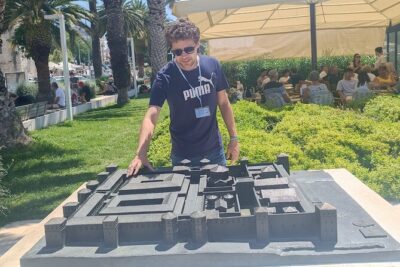
SPLIT-PRIVATE Walking Tour of Diocletian’s Palace & Old Town
Read our review →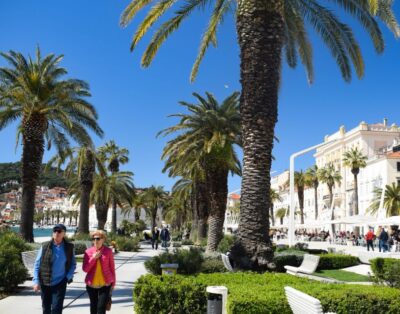
Split: Local History and Culture 90-Minute Walking Tour
Read our review →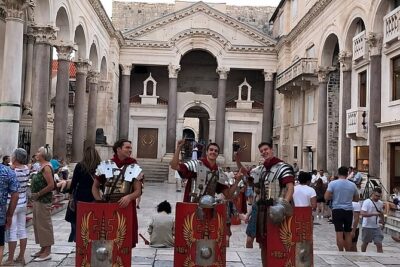

Split: Historical & Gastro Treasures Tour with Green Market
Read our review →
Split: Historical Tour of Salona, Klis Fortress and Trogir
Read our review →Browse the lists this tour appears in