
Review · SPLIT
Split: Private Walking Tour in the Historical Town Center
Split’s old town is not a museum behind glass. It is a living neighborhood built inside and around a 4th-century Roman palace, with laundry, cafés, medieval homes, church bells, and ancient stone sharing the same narrow streets. This private walk with local guide Sanja gives you the basic map and the long story without wasting time.
I like the private format, which makes it easier to ask questions and hear the guide in crowded lanes. I also like the route’s wide historical range, from Roman emperors to Venetian, French, Austro-Hungarian, and Yugoslav rule. The main drawback is that the Palace Substructures require a separate entrance ticket, and the tour is not suitable for wheelchair users.
Key points to know before booking
- A Roman palace became a town: Diocletian’s Palace is not just one stop. Its walls, gates, squares, temples, cathedral, and medieval homes form the heart of Split.
- Sanja brings a local, academic touch: She is a licensed guide with a master’s degree and leads tours in English, French, Italian, and Spanish.
- The Substructures cost extra: The basement level is included in the route, but you pay the entrance fee separately.
- You cover the main old-town sights: The walk includes Peristil, Saint Domnius Cathedral, Jupiter’s Temple, the Golden Gate, People’s Square, Fruit Square, and the Riva.
- You get history beyond Roman times: The walk explains how Venetian, French, Austro-Hungarian, and Yugoslav rule shaped Split.
- The fixed price favors groups: At $153 for up to 15 people, the cost can be sensible for a family or small group, but less attractive for one or two people.
Why Split makes such a good walking tour
The clever thing about Split is that its oldest sights are woven into ordinary city life. You can walk through a Roman gate, turn into a medieval lane, pass a working shop, and arrive at a polished square without ever leaving the historic core.
That can also make Split confusing on a first visit. Diocletian’s Palace is large, but it does not feel like a single, clearly marked monument. Parts of it are open streets. Other parts sit beneath later buildings. A guide helps you understand what you are looking at and why the city developed in such an unusual way.
This 105-minute tour is well suited to your first full day. Canadian guest Stephen found that Sanja’s explanations helped his group understand Split for the rest of their stay, especially because they were staying inside the Palace walls. That is the real value here: you are not just checking off sights. You are learning how to read the old town afterward.
More History Walking Tours in Croatia
- Dubrovnik Old Town History Walking Tour
★ 5.0 · 1,684 reviews - Dubrovnik: Ancient City Walls & Wars Walking Tour
★ 5.0 · 1,270 reviews - Zagreb: City and WWII Tunnels Walking Tour
★ 4.9 · 1,230 reviews
Meeting on the Riva by the bronze city model
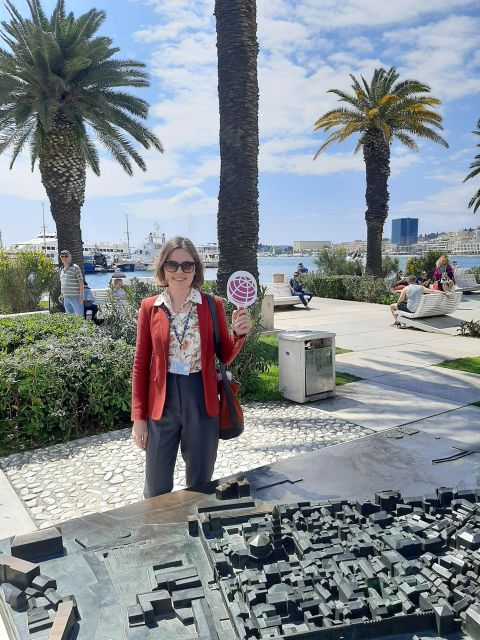
You meet beside the bronze model of Split’s historic center on the Riva promenade, in front of the south entrance to Diocletian’s Palace. This is a practical place to begin because the model gives you a quick visual sense of the Palace’s shape before you enter it.
The Riva is Split’s waterfront promenade, and the tour ends here too. That creates a tidy route with no need for transportation between stops. You should arrive a little early so you can identify the model and avoid searching among the cafés and passing pedestrians.
The walk lasts about 1 hour and 45 minutes. That is long enough for a useful introduction, but short enough to fit beside a museum visit, a ferry connection, or an afternoon of your own wandering. Expect to be on your feet for the whole route. The provided information does not specify seating breaks, so comfortable shoes are sensible.
Entering Diocletian’s Palace

The Palace takes up the first major part of the tour. Built in the 4th century for the Roman emperor Diocletian, it is the oldest part of Split and the foundation for everything that followed.
Do not picture a single empty Roman ruin. The Palace became part of a medieval neighborhood, and later generations built homes, churches, and public spaces into its structure. Sanja explains this mixture of periods as you move through the lanes, so the odd-looking junctions begin to make sense.
The tour’s appeal is strongest here. You learn to separate the Roman plan from the later additions, while also seeing how people adapted ancient walls and rooms for daily use. The result is more interesting than a perfectly cleared archaeological site because the town still functions around the remains.
The Palace section lasts about 30 minutes. That is a substantial portion of the walk, but it cannot cover every corner. If you want a slow look at every inscription or architectural detail, you will need to return on your own.
Seeing the Substructures beneath the city
The Substructures, also called the Basements, are the underground level of Diocletian’s Palace. They are visited during the walk, but the entrance fee is not included in the tour price.
This stop helps you understand the Palace’s original layout. It also gives you a sense of the engineering beneath the rooms and courtyards above. Since the medieval town developed over and within the Roman complex, the lower level is an important piece of the story rather than a minor add-on.
Plan for the extra admission cost before you book. The price is not stated in the supplied information, so you should check the current fee when choosing a date. If you are carefully controlling your spending, this is the one required cost beyond the tour itself.
More Private History Tours in Croatia
- SPLIT-PRIVATE Walking Tour of Diocletian’s Palace & Old Town
★ 5.0 · 467 reviews - Private History Split Walking Tour in English
★ 5.0 · 159 reviews - Dubrovnik Jewish Heritage Private Walking Tour
★ 5.0 · 121 reviews - Private Sibenik Walking Historical Morning or Evening Tour
★ 5.0 · 93 reviews
Peristil and the Cathedral of Saint Domnius
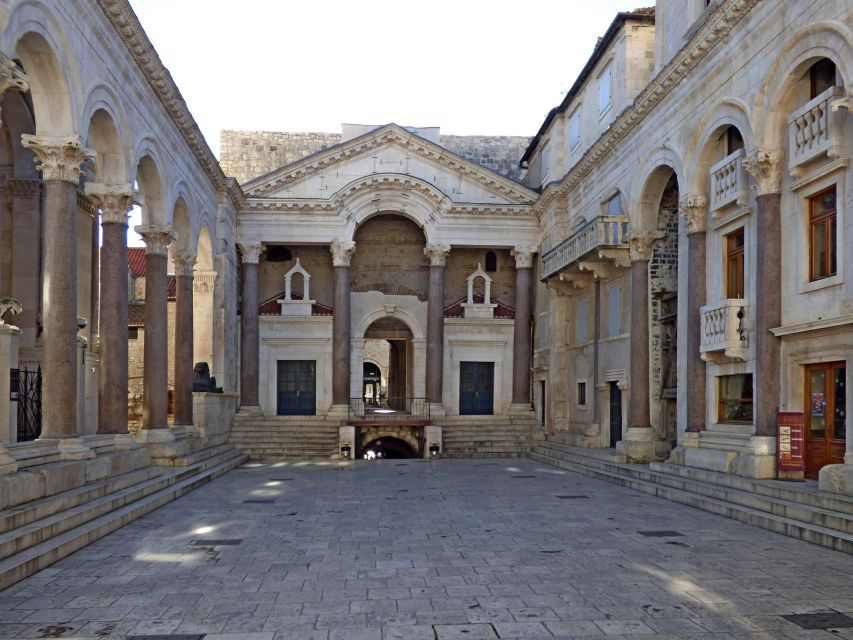
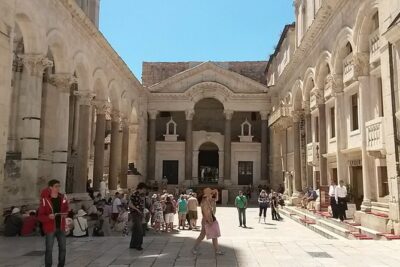
Peristil is the Palace’s main square and one of the key visual moments of the route. It is where the Roman core feels easiest to grasp, with the surrounding stonework showing how public space and imperial power were organized.
The stop takes about 10 minutes. That is enough for an explanation and a look around, but not a long pause. If the square is crowded, your private group should still have an easier time staying together than a large public group.
From Peristil, the tour continues to the Cathedral of Saint Domnius, also known as the Mausoleum of Diocletian. The route includes a guided look and a pass by, but the information provided does not say that interior admission is included. You should not assume that a cathedral entrance ticket forms part of the tour.
The building is especially useful for understanding the change from imperial Roman space to Christian and medieval Split. Sanja connects the architecture to the city’s later development rather than treating the cathedral as an isolated church.
Jupiter’s Temple and the Palace gates
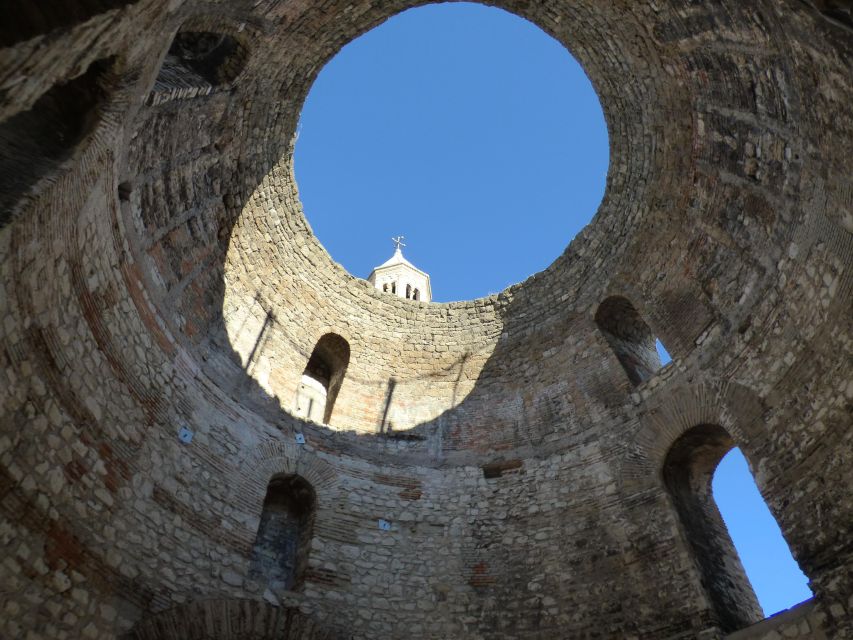
Jupiter’s Temple is visited from the exterior, with no entrance fee included or required for the described stop. Its later use as a baptistery shows how older Roman structures were given new religious roles.
This is a good example of the tour’s main theme: Split changed rulers, beliefs, and public customs, yet its old stone framework remained in use. The stop is brief, about 10 minutes, so you get the context without turning the walk into a long architectural lecture.
The route also visits the Golden Gate, one of the Palace’s four gates. The gates help you understand that Diocletian’s residence was planned as a fortified complex with formal entrances on different sides.
The Golden Gate is a natural place to pause and look at the relationship between Roman planning and the medieval city that grew around it. The tour does not promise a separate visit to all four gates in equal detail, but the Palace walls and four entrances form part of the explanation.
Medieval homes, noble families, and Split’s Jewish quarter
Inside the Palace, you will see medieval houses built among the Roman remains. These homes belonged to noble families and show how the old imperial complex became a place for later residents rather than a forgotten ruin.
You will also pass through a small former Jewish ghetto, including a synagogue that is still active. This is one of the more personal parts of the walk because it brings attention to a community and a living place of worship, not just grand monuments.
The supplied details do not specify whether the synagogue interior is entered, so expect an exterior explanation rather than an indoor visit. Still, its presence adds an important social layer to the route. Split’s story is not only about emperors and rulers. It is also about the communities that made homes and institutions inside the old city.
Pjaca, People’s Square, and the medieval town outside the Palace
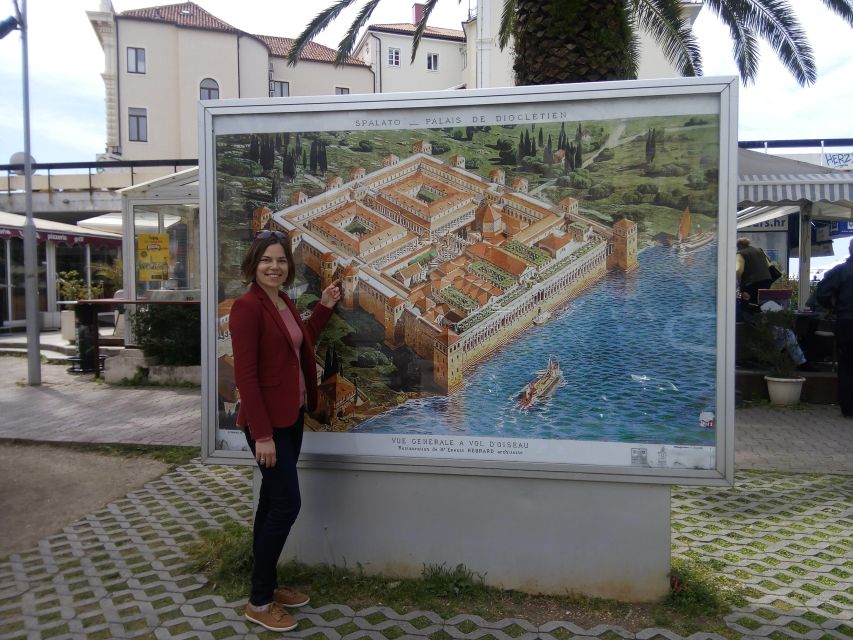
After the Palace, the tour moves into the medieval neighborhood that developed outside its walls. This change matters. You see how Split expanded beyond the Roman footprint and how public life shifted into later squares.
The itinerary identifies People’s Square, also called Pjaca, as a 15-minute stop. The square helps explain the civic side of the city, with architecture shaped by later political and commercial life.
The guide also discusses the social and political changes brought by Venetian, French, Austro-Hungarian, and Yugoslav rule. That range is one of the strongest reasons to choose this tour instead of a walk focused only on Roman remains.
Sanja’s explanation is especially useful if you want to understand why different architectural styles appear close together. Australian guest Robert valued this part of the tour, noting that Sanja explained how the countries that controlled Split affected its architecture. You get a practical way to connect buildings with the powers that shaped them.
Fruit Square and the route back to the sea
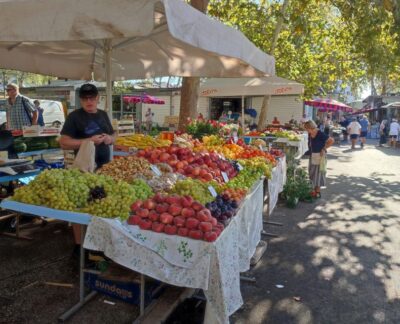
Fruit Square, or Voćni trg, is another short stop, planned for about 10 minutes. Like People’s Square, it shows the later town beyond the Palace and gives you a different setting from the enclosed Roman lanes.
The route then returns toward the Riva. The final 10 minutes take place along the waterfront promenade, where the walk ends near the same bronze model used as the starting point.
That ending is useful because you finish in a clear location with the sea nearby and the old town behind you. You can use the guide’s suggestions to continue exploring, stop for a drink, or return to a sight that deserved more time.
What the private format is worth at $153
The stated price is $153 for a group of up to 15 people. That means the value depends heavily on your party size.
For a group of 10 to 15, the cost works out to roughly $10 to $15 per person before the Substructures admission. That is a fair rate for a private guide, especially if you want to ask questions or need the tour in a specific language.
For four people, the tour costs about $38 per person. For two people, it is about $76 each, before the extra entrance fee. At that point, you are paying for privacy and flexibility rather than the lowest possible price.
The private format is most useful when your group has different interests or when you want a clear introduction at the start of your stay. Stephen’s group of four particularly appreciated how easy it was to hear and follow Sanja. French-speaking guests also praised her clear French and her ability to explain Split’s history in a way that connected with their culture.
The guide’s master’s degree and professional license add some reassurance, but the real question is what you want from the visit. If you prefer wandering without a schedule, this may feel too structured. If you want the city to make sense quickly, the cost can be worthwhile.
Languages, pace, and practical limits
Tours are available in English, Italian, French, and Spanish. French is especially well covered by Sanja, who received strong praise for her clear and fluent explanations. English-speaking groups also found her communication easy to follow.
The route includes streets, squares, Palace spaces, and the Substructures. It is not suitable for wheelchair users, so anyone with mobility concerns should consider that before booking. The information does not provide a detailed accessibility assessment beyond this restriction.
You can cancel up to 24 hours before the tour for a full refund, and you can reserve now while paying later. Starting times vary, so you need to check availability for your chosen date.
The route is not a transport tour. You walk from the Riva through the historic center and back to the waterfront. That keeps the experience focused, but it also means you should plan for uneven historic streets and a steady pace.
Who should book this Split walk?
I would choose this tour for a first visit to Split, especially if you are staying inside or near Diocletian’s Palace. It gives you the city’s basic structure, then adds enough political and architectural context to make later wandering more rewarding.
It also suits families, couples traveling with friends, and groups who want a guide in French, Italian, Spanish, or English. The private setup is helpful when you have questions, young people with short attention spans, or a limited window before another activity.
I would be less likely to book it if I were visiting alone on a tight budget, since $153 is a high per-person cost for one participant. I would also skip it if my main aim were extended interior visits, since some stops are exterior views or brief passes and the Substructures fee is extra.
Should you book Sanja’s private Split tour?
Book it if you want a fast but thoughtful orientation to Split’s Roman, medieval, and later history. The strongest parts are the private attention, the clear explanations, the Substructures, and the way Sanja connects architecture with the rulers who shaped the city.
Before booking, confirm the tour language, check the Substructures admission fee, and consider the size of your group. For a larger party, $153 is good value. For one or two people, you are paying a premium for a private guide, but that may be justified if you want to understand Split quickly and make better use of the rest of your visit.
FAQ
How long does the walking tour last?
The tour lasts 105 minutes, or about 1 hour and 45 minutes.
Where does the tour begin?
You meet by the bronze model of Split’s historic core on the Riva promenade, in front of the south entrance to Diocletian’s Palace.
Where does the tour end?
The tour ends on the Riva promenade by the sea, near the starting area.
Is this a private tour?
Yes. It is a private group tour for up to 15 people.
What languages are available?
The tour is available in English, Italian, French, and Spanish.
Is the Substructures entrance included?
No. The entrance fee to Diocletian’s Palace Substructures, also called the Basements, is not included.
Does the tour enter Jupiter’s Temple?
No. Jupiter’s Temple is an external visit with no entrance fee.
Does the tour visit Diocletian’s Palace?
Yes. The route includes Diocletian’s Palace, its walls and gates, the Substructures, Peristil, the Cathedral of Saint Domnius, and Jupiter’s Temple.
Is the tour suitable for wheelchair users?
No. The activity is not suitable for wheelchair users.
Can I cancel for a refund?
Yes. You can cancel up to 24 hours in advance for a full refund.
Just added around Croatia
- Split: Local History and Culture 90-Minute Walking Tour★ 5.0 · 194 reviews
- Split: Walking tour of Split with a ‘Magister’ of History★ 5.0 · 110 reviews
- Split: Historical & Gastro Treasures Tour with Green Market★ 4.9 · 144 reviews
- Split: Historical Tour of Salona, Klis Fortress and Trogir★ 4.1 · 108 reviews
- Šibenik: Medieval Night Walking Tour★ 5.0 · 27 reviews
- Šibenik: Croatia in a Day, Vistas, History, Olive Oil, Wine★ 5.0 · 30 reviews
- Dubrovnik: Red History Museum Regular Ticket★ 4.6 · 134 reviews
- Pula: Historic Sites Guided Walking Tour★ 4.8 · 78 reviews
Split History Tours, compared.

Walking Tour of Split with a ‘Magister’ of History
Read our review →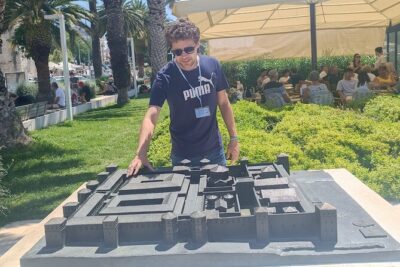
SPLIT-PRIVATE Walking Tour of Diocletian’s Palace & Old Town
Read our review →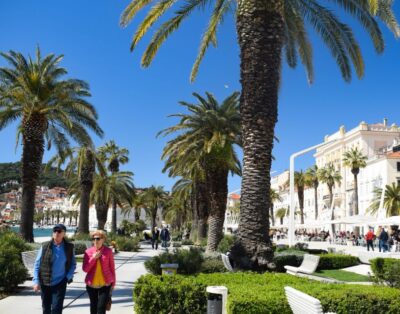
Split: Local History and Culture 90-Minute Walking Tour
Read our review →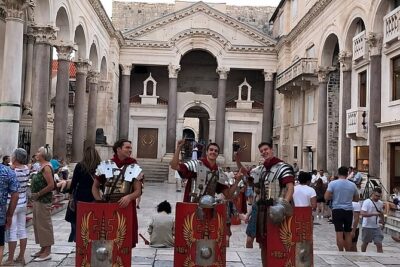
Split: Historical & Gastro Treasures Tour with Green Market
Read our review →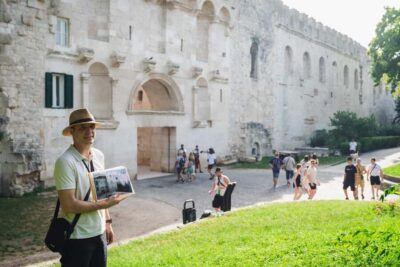
Split: Walking tour of Split with a ‘Magister’ of History
Read our review →Browse the lists this tour appears in