
Review · CROATIA
Pula: Historic Sites Guided Walking Tour
Pula’s ancient center is compact, but its story is surprisingly layered. In 90 minutes, this walking tour links the Roman Arena, Augustus Temple, and Arch of Sergii with the Venetian castle, cathedral, market, and old city gates. It is a brisk way to see the main sights without losing the thread of the city’s past.
I like the clear route and the chance to climb to the castle for wide views over Pula. I also like the guides’ teaching style, especially Sini, who is praised for strong English, humor, and his ability to answer questions. The main drawback is that admission tickets are not included, and the tour is not suited to people with mobility impairments.
Key points to know before you book
- A Roman-to-Venetian history lesson: The route connects ancient monuments with the later cathedral, market, and Venetian fortress.
- The Arena is the starting classroom: You get an informative introduction to Pula’s best-known monument before walking onward.
- Sini is a frequently named guide: His English, stories, humor, and command of ancient history receive especially strong praise.
- The castle adds the best outlook: Built by the Venetians in the 17th century, it gives you a useful visual sense of Pula.
- A good price for a short orientation: At $20 per person, the tour offers a focused introduction, though entry fees are extra.
- Plan for all weather: The tour runs rain or shine, and video recording is not allowed.
Start at the Arena, Pula’s giant Roman calling card
The meeting point is in front of the Amphitheater entrance at Istarska ul. 50. Look for a guide wearing a blue card around the neck and holding an umbrella. That detail matters because the Arena sits in a busy part of town, and a clear marker saves time at the start.
The tour begins with a short explanation of the Arena. Pula’s amphitheater is the largest surviving ancient monument in the city and the natural place to begin a walking tour. You learn how it fits into Roman Pula before moving into the old center, so later ruins have a proper setting.
This opening is especially useful if you have limited time in town. Instead of seeing the Arena as an isolated stone shell, you begin to understand it as part of a Roman city. The guide’s overview also gives you a map in your head for the rest of the walk.
You should not expect an extended interior visit as part of the tour. Entry tickets are not included, and the stated experience is a guided walk rather than a ticketed Arena visit. If you want to explore inside, ask about arranging that separately and allow extra time.
More History Walking Tours in Croatia
- Dubrovnik Old Town History Walking Tour
★ 5.0 · 1,684 reviews - Dubrovnik: Ancient City Walls & Wars Walking Tour
★ 5.0 · 1,270 reviews - Zagreb: City and WWII Tunnels Walking Tour
★ 4.9 · 1,230 reviews
Climbing to the Venetian castle for the big picture
From the Arena, the route continues to Pula Castle, built by the Venetians in the 17th century. This change of period is one of the tour’s strengths. Pula is not only a Roman site, and the castle helps you see how the city developed long after the ancient empire faded.
The guide explains the fortress’s history and its former inhabitants. The castle also provides panoramic views, giving you a chance to look across Pula rather than only at walls and paving stones. That visual pause helps you understand the city’s layout.
The castle stop comes with a practical consideration. A walking tour that includes a fortress and old-town streets may involve uneven surfaces or steps, and the experience is specifically not suitable for people with mobility impairments. Wear shoes that are comfortable for walking and take care on the route.
For most people, this is the point where the tour becomes more than a list of monuments. You are looking down at the city while hearing how different powers shaped it. The Roman beginning and Venetian stop work well together.
The Cathedral and the Roman Forum
After the castle, the walk heads to Pula Cathedral. The cathedral adds a later religious chapter to the route and gives the tour a change of pace after the fortress. It also shows how the old center was used across different periods, not just during Roman rule.
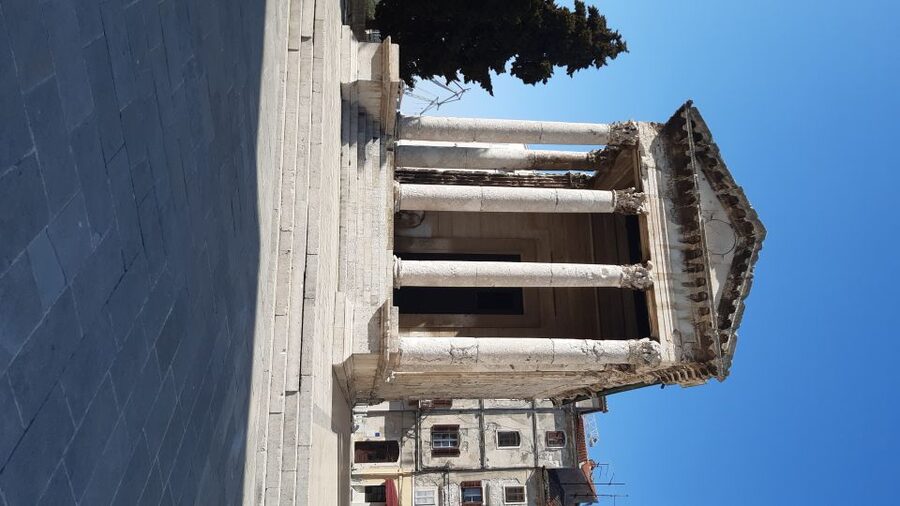
From there, you reach the Roman Forum. This was the civic heart of ancient Pula, and it remains one of the most important places for understanding Roman public life in the city. The forum is not simply another photo stop. It lets you connect the temple, city administration, and surrounding streets.
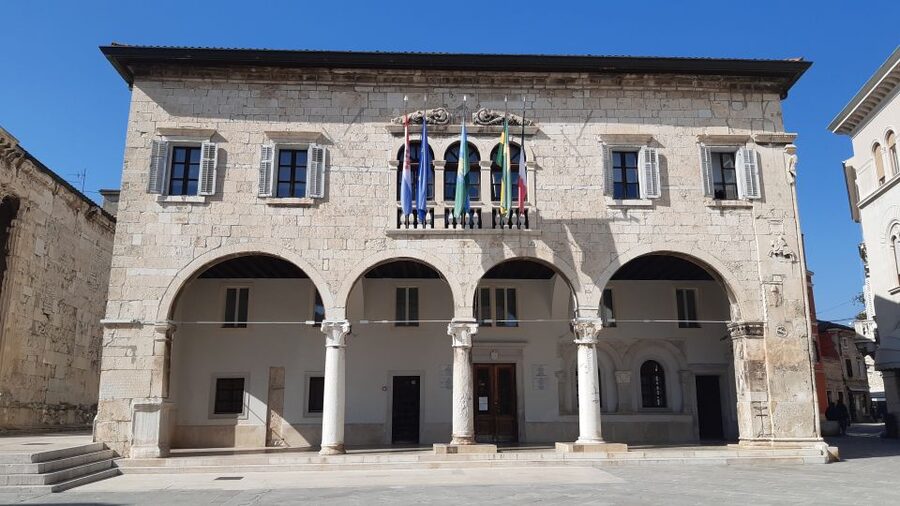
The guide then points out the Augustus Temple and City Hall. The 2,000-year-old temple is the star here. Its age is impressive, but the real value of the stop comes from hearing how it fits into the forum and how the square changed over time.
City Hall sits beside this ancient setting, creating one of Pula’s clearest contrasts. You can see Roman and later civic architecture in the same small area. A good guide makes that contrast easy to read, and the tour puts time into explaining architecture, local culture, and the city’s heritage rather than rushing past the buildings.
Roman mosaics and the Arch of Sergii
As you move through the center, the guide shows you Roman mosaics. These traces can be easy to miss when you explore alone, especially if you are focused on the larger monuments. This is one of the useful reasons to take a local walking tour early in your visit.
The mosaics help bring Roman Pula down to street level. The Arena and temple are grand public structures, while mosaics suggest the smaller details of daily life and private buildings. You get a better sense of a city that was lived in, not just a collection of ruins.
The route also includes the Arch of Sergii. This Roman arch is another major marker of Pula’s ancient past, but its location along the modern route makes the city’s history feel close at hand. The guide explains what you are looking at and places the monument within the wider Roman story.
You might find that these smaller discoveries make the walk feel more personal than a simple monument checklist. The tour covers the famous places, but it also asks you to notice details along the way. That is a strong feature for first-time visitors who want help reading the city.
Same city, a different century:
- Zagreb: City & History Walking Tour & WW2 Tunnels
★ 4.9 · 1,202 reviews - Walking Tour of Split with a ‘Magister’ of History
★ 5.0 · 1,122 reviews - Dubrovnik Combo: Old Town & Ancient City Walls
★ 5.0 · 1,019 reviews - Split Walking Tour with Professor of History
★ 5.0 · 926 reviews
Pula Market and the everyday city
The Pula Market, established in the early 1900s, brings the route into a more recent period. After the Roman forum and ancient gates, the market shows a working part of the city shaped by modern local life.
This stop broadens the tour. You are not spending the full 90 minutes among ancient stones. Instead, you see how the center functions as a place where people shop, meet, and move through town. The market also gives you a useful reference point for returning later on your own.
The tour does not promise a food tasting or shopping time, so think of the market as a historical and urban stop rather than a market activity. You may want to return after the walk if you wish to browse at a slower pace.
Hercules Gate and the finish at Twin Gate
The final section leads to the ancient Gate of Hercules and finishes at Twin Gate. These gates help you understand how people entered and moved through Roman Pula. They also provide a fitting close to a route that began at the city’s enormous amphitheater.
Finishing at Twin Gate gives you a different endpoint from the meeting place. That is convenient if you plan to continue through the old center, but you should note the location before booking if you have a strict schedule afterward.
The route is designed as a complete old-town orientation rather than a return trip to the Arena. You see major sights in a logical order, learn how the city fits together, and finish near another important historic feature.
Why the guide matters on this short route
At $20 per person, the guide is the main product. You are paying for interpretation and orientation, not transportation or admissions. That makes the guide’s delivery important, and Sini is repeatedly identified by name in the feedback, sometimes with the name written as Sinisha or Sinsije.
The strongest praise centers on his command of ancient history, clear English, friendly manner, humor, and willingness to answer questions. One useful detail is that he uses a town diorama to show the route and monuments. That can make the sequence easier to follow before you set off.
The tour seems to work best when you ask questions. The guide encourages them, and the 90-minute format leaves enough time for explanation without turning the walk into a full-day history course. You get a focused introduction, not an exhaustive study of every building in Pula.
Guide quality can vary from one departure to another, so it is sensible to treat Sini’s repeated praise as a helpful indication rather than a guarantee that he will lead every tour. Still, the consistently strong feedback about the guide is the clearest reason to choose this experience over exploring the same streets without help.
What $20 gets you, and what it does not
The $20 price is fair for a 90-minute private? No, the group size is not stated, so do not assume a private tour. What you can count on is a local expert guide leading an English-language walk through the main historic areas.
The value is strongest for:
- A first visit to Pula
- A short stay with limited sightseeing time
- Cruise or day visitors wanting a quick city overview
- History fans who want context for Roman monuments
- People who prefer questions and conversation to a recorded audio guide
The price does not include entry tickets. That is important if you expect to go inside the Arena, castle, or another paid site. The supplied details do not state which stops require admission, so budget separately if you plan to enter monuments rather than view them from the route.
You also receive no transport, meals, or other extras. For a compact historic center, that is not a serious weakness. The whole point is to walk between nearby sights, and the absence of add-ons keeps the price simple.
Timing, weather, and comfort
The walk lasts 90 minutes. That is long enough to cover the key historic sights but short enough to fit around other plans. It is also a useful first activity because you finish with a better idea of where to return for a longer visit.
The tour runs rain or shine. Check the forecast, but do not assume poor weather cancels the walk. Bring suitable clothing, especially in wet conditions, and wear comfortable shoes for old-town walking.
Video recording is not allowed. You can still take photographs if permitted by the guide and site rules, but plan to listen rather than film the whole experience. That may be a minor inconvenience for some people, while others will appreciate a more direct walking tour.
The route is not suitable for people with mobility impairments. The combination of walking, historic streets, and the castle makes this a practical limitation, not a small footnote. If you need an accessible route, contact the provider before booking rather than assuming adjustments are available.
Who should book this Pula walk?
I would choose this tour if you want a fast, well-organized introduction to Pula and you care about the story behind the ruins. The route covers the city’s strongest historic points, while the market and castle keep it from becoming only a Roman archaeology lesson.
It is also a good pick for visitors who enjoy a guide with a sense of humor and enough subject knowledge to handle questions. Sini’s reported style sounds particularly suited to people who want lively explanation rather than a dry list of dates.
You may want something else if you prefer to explore alone, spend long periods inside monuments, or move at a very slow pace. The tour covers a lot in 90 minutes, so individual stops receive an overview rather than unlimited time.
It is less suitable for anyone with mobility concerns, anyone hoping for included admissions, or anyone who cannot commit to walking in wet weather. Those limits are clear, so they are easy to weigh before booking.
Should you book the Historic Sites Guided Walking Tour?
For $20, I would book this as an opening look at Pula, especially if you have only a few hours or want to get your bearings before sightseeing on your own. The mix of Arena, castle, cathedral, forum, Augustus Temple, mosaics, market, and ancient gates gives you a solid view of the city’s main layers.
Book it for the guide-led context, not for included access to monuments. If you want a relaxed, question-friendly walk with strong Roman content and a useful finish at Twin Gate, it offers good value. If you need an accessible route or a tour built around interior visits, choose another option.
FAQ
Where does the Pula walking tour begin?
Meet in front of the Amphitheater entrance at Istarska ul. 50. The guide will have a blue card around the neck and hold an umbrella.
Where does the tour finish?
The walk finishes at Twin Gate.
How long does the tour last?
The guided walking tour lasts 90 minutes.
What language is the tour in?
The tour is conducted in English by a live guide.
Is admission to the monuments included?
No. Entry tickets are not included in the tour price.
Does the tour run in bad weather?
Yes. The tour takes place rain or shine.
Can I record video during the walk?
No. Video recording is not allowed.
Is the tour suitable for people with mobility impairments?
No. The experience is not suitable for people with mobility impairments.
Can I cancel for a full refund?
Yes. You can cancel up to 24 hours in advance for a full refund. You can also reserve now and pay later.
Just added around Croatia
- Split: Local History and Culture 90-Minute Walking Tour★ 5.0 · 194 reviews
- Split: Walking tour of Split with a ‘Magister’ of History★ 5.0 · 110 reviews
- Split: Historical & Gastro Treasures Tour with Green Market★ 4.9 · 144 reviews
- Split: Historical Tour of Salona, Klis Fortress and Trogir★ 4.1 · 108 reviews
- Split: Private Walking Tour in the Historical Town Center★ 5.0 · 25 reviews
- Šibenik: Medieval Night Walking Tour★ 5.0 · 27 reviews
- Šibenik: Croatia in a Day, Vistas, History, Olive Oil, Wine★ 5.0 · 30 reviews
- Dubrovnik: Red History Museum Regular Ticket★ 4.6 · 134 reviews
Croatia History Tours, compared.
Dubrovnik: Ancient City Walls & Wars Walking Tour
Read our review →
Zagreb: City & History Walking Tour & WW2 Tunnels
Read our review →
Walking Tour of Split with a ‘Magister’ of History
Read our review →
Dubrovnik Combo: Old Town & Ancient City Walls
Read our review →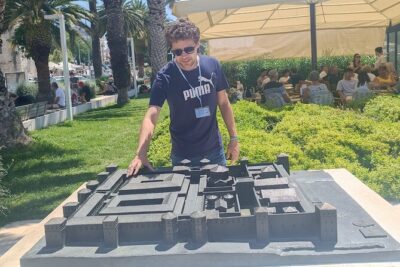
Browse the lists this tour appears in