Review · SPLIT
SPLIT-PRIVATE Walking Tour of Diocletian’s Palace & Old Town
Diocletian’s Palace is not a single ruin waiting behind a gate. It is the working heart of Split, with homes, cafés, shops, squares, and streets built into the Roman emperor’s retirement residence. This private walk helps you read the city’s layers instead of simply looking at old stones.
I like the personal format, especially for families or small groups that want to ask questions and set the pace. I also like the guides’ gift for turning 1,700 years of rulers, wars, religion, and daily life into clear stories, with Joško praised for his humor and strong command of local history.
The main consideration is time. Two hours goes quickly, and the itinerary gives only a short look at several places. The palace cellars and optional interior visits can also add costs, so you should decide in advance which sights matter most.
Key points at a glance
- A private group of up to 12: You are not mixed with strangers, and the guide can respond to your questions and interests.
- Roman palace meets living city: You walk through Diocletian’s Palace, medieval Split, markets, squares, and the Riva promenade.
- Joško and Joseph are praised for lively storytelling: Expect history explained with humor, local insight, and plenty of room for questions.
- The cellars are a major highlight: The substructures are among the best-preserved parts of the palace, but the €10 entry fee is extra.
- Optional paid sights: The cathedral costs €3.50 per person, and the Temple of Jupiter costs €1.50 per person if you go inside.
- Best used as an opening tour: It gives you a map of central Split and useful ideas for what to see afterward.
Why Diocletian’s Palace is more than an ancient monument
The most useful thing to understand before arriving in Split is that Diocletian’s Palace is not an isolated archaeological park. The palace was built in AD 305, yet modern life continues inside and around its Roman framework.
That makes the tour different from a standard stop at a ruined site. You can look from an ancient courtyard into a café, pass through a Roman entrance into a medieval lane, and move from imperial architecture to the city’s everyday squares within minutes.
Your guide’s job is to connect those pieces. The strongest part of this experience is not simply identifying columns or gates. It is hearing why the palace was built, how its purpose changed, and how later residents adapted its spaces over many centuries.
The private arrangement matters here. A group of two, six, or twelve can stop for questions without holding up a large crowd. If you are traveling with children, a history enthusiast, or someone who prefers a slower pace, the format gives the guide more room to adjust.
More History Walking Tours in Croatia
- Dubrovnik Old Town History Walking Tour
★ 5.0 · 1,684 reviews - Dubrovnik: Ancient City Walls & Wars Walking Tour
★ 5.0 · 1,270 reviews - Zagreb: City and WWII Tunnels Walking Tour
★ 4.9 · 1,230 reviews
Starting at the Riva and entering the old city
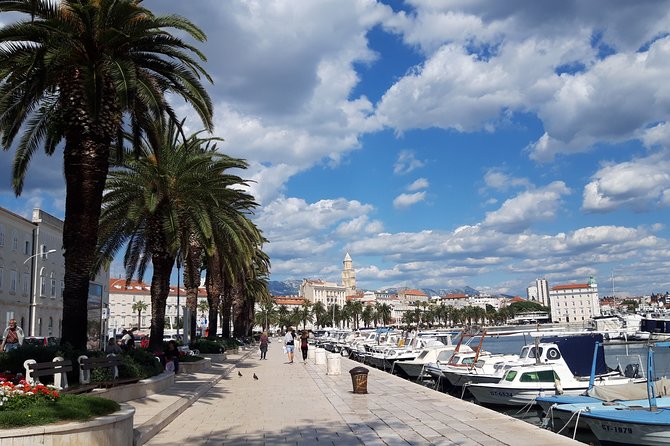
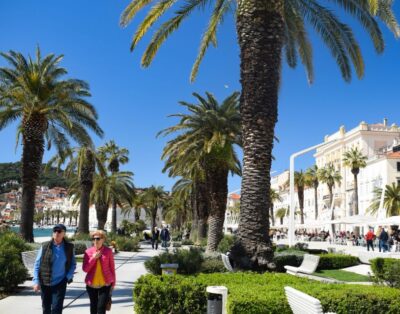
The meeting point is on the main Riva promenade at Obala Hrvatskog narodnog preporoda 22. This waterfront walkway is a practical place to begin because it gives you an immediate sense of Split’s setting before you head into the dense old center.
The tour also finishes at the meeting point, which makes planning easy. You can continue along the waterfront, find lunch nearby, or return to your accommodation without arranging transport from another part of town.
From the Riva, the walk leads toward the palace and Old Split. You should wear comfortable shoes. The route includes old lanes, stone surfaces, and frequent stops rather than one long, steady walk.
The advertised duration is about two hours. That is enough for a strong orientation, but not enough for every sight to receive a long interior visit. Some past tours have lasted closer to three hours, so allow a little flexibility if your schedule is tight.
The Peristyle, Vestibule, and imperial entrance
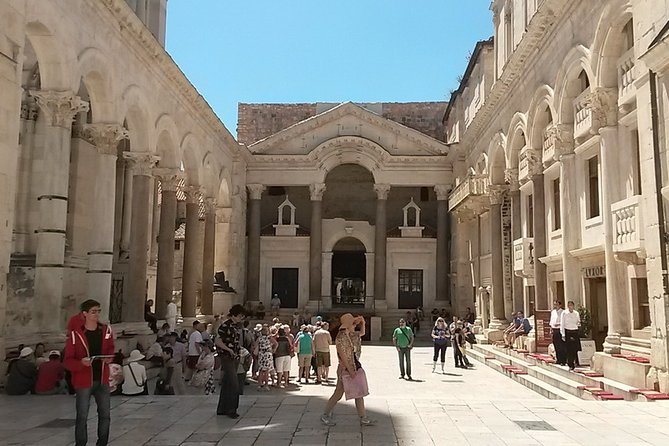
The Peristyle is the symbolic center of Diocletian’s Palace. This former imperial square is where the scale of the palace becomes easiest to understand. It was designed as part of the emperor’s residence, but today it is also one of the city’s most memorable public spaces.
Your guide can explain the relationship between the square, the emperor’s private quarters, and the ceremonial movement through the palace. This is where a good storyteller earns the tour price. Without context, the Peristyle can look like a handsome stone courtyard. With context, it becomes part of a plan built for power, status, and controlled access.
The nearby Vestibule was the main entrance to the emperor’s private residence. Its role helps explain the difference between public ceremony and private imperial life.
The schedule allows only about five minutes at the Vestibule and Peristyle as named stops, although the actual time may shift depending on questions and the guide’s approach. If you care most about architecture, tell the guide early. The private format should make it easier to spend more time on the areas you find most interesting.
The palace cellars and the practical value of paying extra
The Diocletian Palace substructures are among the best-preserved parts of the complex. They are also the one major paid element built into the route, with admission listed at €10 per person.
This is an important detail because the tour price does not include the cellar ticket. The lower level is not an optional footnote for many visitors. It helps you understand the original arrangement of the palace above and shows how much of the Roman plan survived beneath later construction.
The route allocates about 20 minutes to the substructures, so you should not expect an extended archaeological visit. Still, that short time can be worthwhile if you want the clearest physical link to the Roman palace.
One useful tip is to ask about the cellar visit when you book or before the walk begins. The tour can still work without it, but the experience may feel different depending on whether your main interest is architecture, archaeology, or the wider story of Split.
The cellar fee is modest compared with the group price, but it changes the final cost for a family or larger group. Include it when comparing this private tour with other options.
More Old Town and Historic Centre Walks in Croatia
- Dubrovnik Combo: Old Town & Ancient City Walls
★ 5.0 · 1,019 reviews - Dubrovnik: Old Town History Walking Tour
★ 4.9 · 474 reviews - Dubrovnik Old Town: Night tour with History, Wine & Bites
★ 4.7 · 59 reviews - Dubrovnik: Small-Group Guided Old Town History Walking Tour
★ 4.9 · 37 reviews
Old Split, medieval lanes, and the city’s daily life
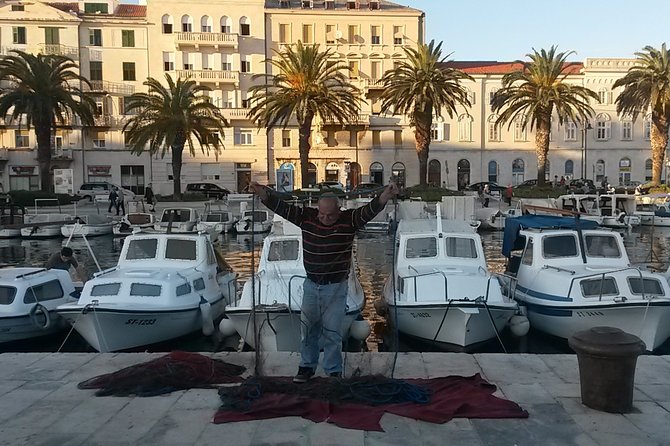
The walk does not stop with Diocletian. It continues through Old Split, where medieval buildings and later additions fill the spaces inside the former palace.
This is where you get your bearings. The old town is compact but not always obvious on a first visit. A local guide can show how major routes connect and point out places worth returning to on your own.
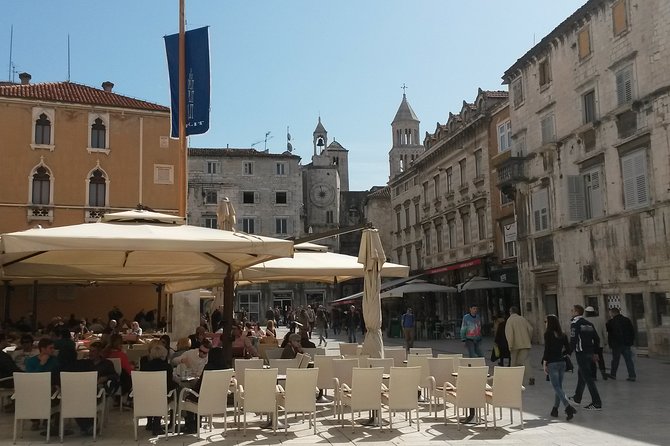
The route includes Fruit’s Square, formally Trg Brace Radic, a former green market with a statue of Marko Marulić, often called the father of Croatian literature. It also includes Narodni Trg, or People’s Square, the largest and liveliest piazza in the old town.
These squares are useful stops because they move the story beyond emperors. Markets, writers, public gatherings, commerce, and ordinary city life all belong to Split’s past. You also get a better sense of how the old center functions today rather than seeing it only as an archaeological site.
One point to keep in mind is that the walk is history-led. If you want a long, relaxed wander through every lane, you may find the schedule brisk. One strong way to use this tour is as an introduction, then return later to the streets and squares that caught your attention.
Saint Domnius and the Temple of Jupiter
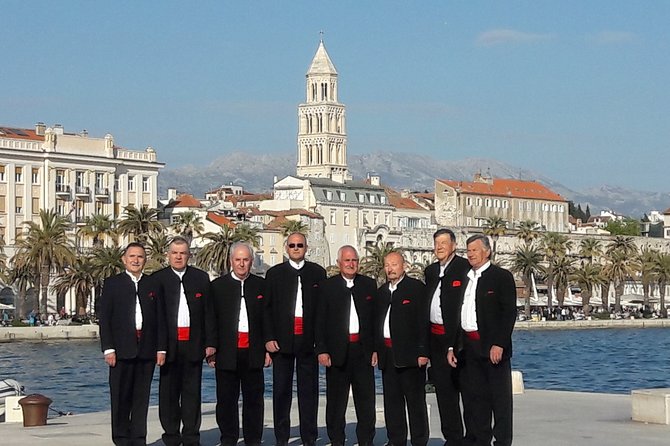
The Cathedral of Saint Domnius is viewed from the outside during the standard route. You may choose to go inside, but admission is not included and costs €3.50 per person.
The exterior stop is brief, listed at about five minutes. That is enough for your guide to explain its place in Split’s story, but not enough for a detailed interior visit. If religious art or church architecture matters to you, ask how much time remains before buying the extra ticket.
The Temple of Jupiter is another short exterior stop. The former Roman temple has an optional interior visit costing €1.50 per person.
These paid options give you control over the tour. You can keep the walk focused and economical, or add selected interiors for a closer look. I would decide based on your interests rather than feeling obliged to enter every site.
For a family with limited patience, the exterior explanations may be enough. For someone who wants to see how Roman and Christian buildings were reused within the city, both optional visits can add useful detail.
Gates, statues, and the clock that marks the old city
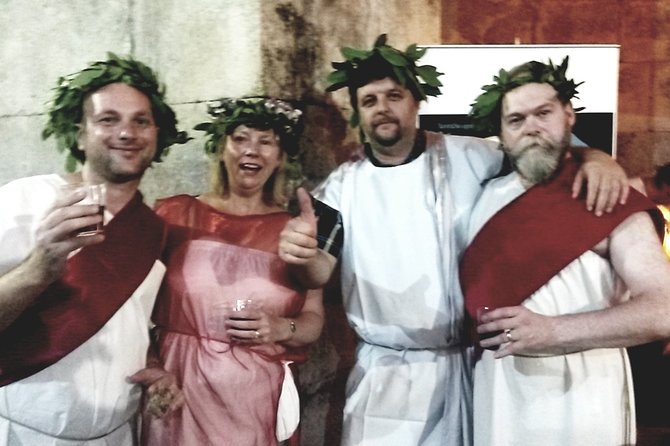
The Golden Gate is described as the main and most beautiful entrance to Diocletian’s Palace. It is a good place to understand the palace as a fortified complex, not merely a royal residence.
The walk also includes the Grgur Ninski Statue, connected with one of Croatia’s important historical figures. Your guide uses this stop to place Croatian identity and local history alongside the Roman story.
At City Clock, you see a 500-year-old 24-hour clock. It is the sort of detail that can disappear if you explore alone, especially when you are focused on major monuments. A guide adds value by drawing your attention to small features that reward a second look.
The stops are short, often around five minutes. That keeps the route moving, but it also means you should ask questions as they come up rather than saving everything for the end.
What the guides do especially well
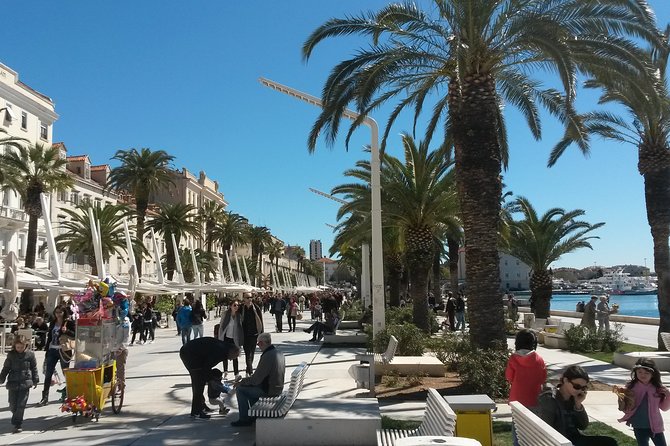
The strongest praise for this experience centers on the guides’ delivery. Joško is repeatedly described as friendly, funny, and highly informed about Diocletian, Roman rule, Split, and the city’s later development. Joseph is also described as kind, well prepared, and able to make the history enjoyable.
That combination matters. A guide can know a great deal and still deliver a dull walk. Here, the emphasis is on explaining complicated timelines in short, memorable sections.
Joško is especially associated with storytelling that keeps children and teenagers involved. Families have found the format useful, and the guide has adjusted the pace for weather, shade, questions, and photographs. Those details suggest a tour that is not locked into a rigid script.
You should still tell the guide what you want. Ask for more architecture if that is your interest. Ask for extra local context if you want to understand modern Split. A private walk works best when you use the chance to shape it.
The guide may also suggest other places to visit during your stay. That can be valuable on a first day because you finish with a clearer idea of how to spend the rest of your time.
Is $240 a fair price for a private Split tour?
The price is $240 per group, with up to 12 people included. That sounds expensive for one or two people, but the calculation changes as your group grows.
For four people, the cost is $60 each. For six, it is $40 each. At the maximum group size, the base price is $20 per person before any optional admission fees or gratuity.
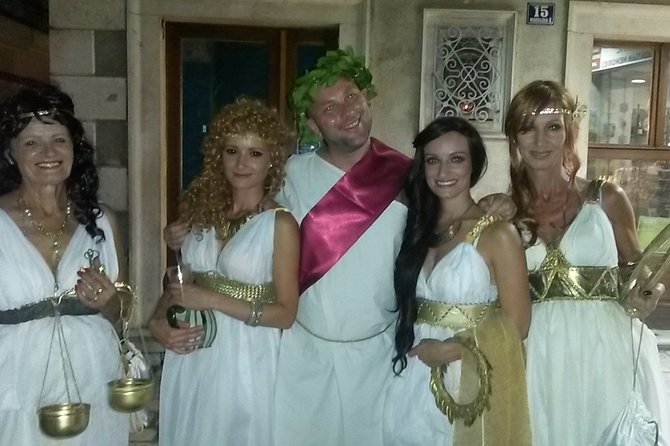
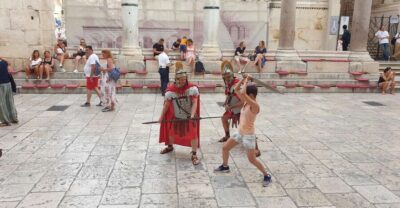
The price includes a private licensed resident guide and a custom-designed itinerary. It does not include tips, the €10 palace cellar admission, the €3.50 cathedral visit, or the €1.50 Temple of Jupiter interior. There is also no costumed theater show or similar performance.
I see the best value for families, couples traveling with friends, or cruise and multi-generation groups that want a private introduction without being tied to a large public tour. For one or two people, a group tour may cost less, but it will not offer the same control over questions and pace.
The tour is also valuable if you are short on time. Two well-explained hours can prevent you from wandering past important details and can help you plan the rest of your stay.
Who should book this walk?
I would recommend it to first-time visitors who want to understand Split before exploring on their own. It suits history fans, families, and anyone who prefers stories and explanation over simply collecting photographs.
It is also a good choice if you want a private guide who can adapt to your group. The feedback points to clear explanations, humor, help with photographs, and flexibility when weather or family needs affect the pace.
You may want something else if your main goal is a long architectural survey, an extended visit inside every monument, or a relaxed three-hour stroll with no fixed stops. The standard route touches many places, but several stops are brief.
Book early if your schedule is fixed. The experience is booked about 39 days ahead on average, and the private format limits availability more than a large group walk would. Free cancellation is available up to 24 hours before the start time. Poor weather or failure to meet the minimum number of participants can lead to a new date or a full refund.
Should you book the Diocletian’s Palace private walk?
Book it if you want Split’s complicated past made clear in a short, personal walk. The best reasons are the private group format, the local guide’s storytelling, and the chance to connect the Roman palace with medieval streets and modern city life.
For the best experience, start with the tour early in your stay. Pay for the cellars if Roman construction is your main interest, and treat the cathedral and Temple of Jupiter interiors as optional additions rather than required expenses.
I would skip it only if you prefer to explore silently at your own pace or already have a detailed plan for the palace. For most first visits, this is a practical way to get your bearings fast and understand why Split feels less like a museum than a city built inside its own past.
FAQ
How long does the private Split walking tour last?
The tour lasts approximately two hours. Some tours may run longer depending on questions, the pace of the group, and the guide’s approach.
How many people can join the private tour?
The price covers one private group of up to 12 people. Only your group participates in the activity.
What is included in the tour price?
The price includes a private licensed resident guide and a custom-designed itinerary with tour organization. Gratuities and several admission fees are not included.
How much does the Diocletian Palace cellar admission cost?
Entry to the Museum of Diocletian’s Cellars costs €10 per person and is not included in the tour price.
Are the cathedral and Temple of Jupiter included?
The cathedral is viewed from outside, with optional interior admission costing €3.50 per person. The Temple of Jupiter is also viewed from outside, with optional interior admission costing €1.50 per person.
Where does the tour start and finish?
The tour starts at Obala Hrvatskog narodnog preporoda 22 in Split, on the main Riva promenade. It finishes back at the meeting point.
More Private History Tours in Croatia
- Private History Split Walking Tour in English
★ 5.0 · 159 reviews - Dubrovnik Jewish Heritage Private Walking Tour
★ 5.0 · 121 reviews - Private Sibenik Walking Historical Morning or Evening Tour
★ 5.0 · 93 reviews - Split: Private Walking Tour in the Historical Town Center
★ 5.0 · 25 reviews
Just added around Croatia
- Split: Local History and Culture 90-Minute Walking Tour★ 5.0 · 194 reviews
- Split: Walking tour of Split with a ‘Magister’ of History★ 5.0 · 110 reviews
- Split: Historical & Gastro Treasures Tour with Green Market★ 4.9 · 144 reviews
- Split: Historical Tour of Salona, Klis Fortress and Trogir★ 4.1 · 108 reviews
- Split: Private Walking Tour in the Historical Town Center★ 5.0 · 25 reviews
- Šibenik: Medieval Night Walking Tour★ 5.0 · 27 reviews
- Šibenik: Croatia in a Day, Vistas, History, Olive Oil, Wine★ 5.0 · 30 reviews
- Dubrovnik: Red History Museum Regular Ticket★ 4.6 · 134 reviews
Split History Tours, compared.

Walking Tour of Split with a ‘Magister’ of History
Read our review →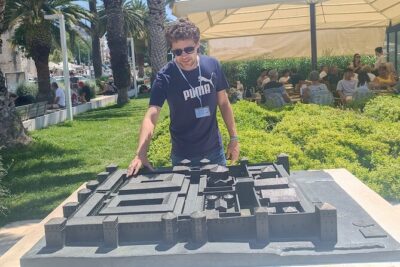
Split: Local History and Culture 90-Minute Walking Tour
Read our review →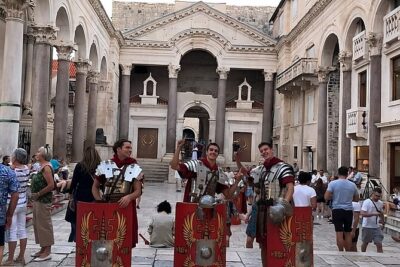

Split: Historical & Gastro Treasures Tour with Green Market
Read our review →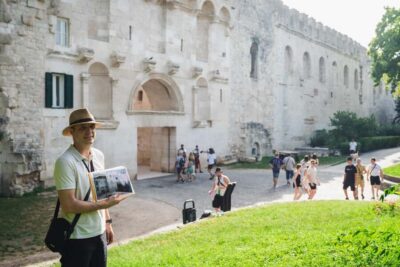
Split: Walking tour of Split with a ‘Magister’ of History
Read our review →