
Review · ITALY
Syracuse: Neapolis Archaeological Park Small Group Tour
The most striking part of this tour is how much ancient Syracuse fits into a short walk. You move from a Greek theater cut into Temenite Hill to a quarry filled with fragrant plants, then into the Ear of Dionysius, where the stone walls create an eerie echo. I like the clear route and the way the guide connects Greek and Roman remains to daily life in Syracuse. I also like the small-group option, which makes it easier to hear explanations and ask questions.
The main thing to consider is the pace. Ninety minutes is enough for the major monuments, but not for a leisurely, independent look at every corner of the park. Meeting arrangements can vary by booking option, and the listed tour language is Italian, with bilingual explanations possible in unusually small shared groups.
Key points to know before you book
- The Ear of Dionysius is more than a quick photo stop: Your guide explains the grotto’s famous shape and unusual echo.
- The Greek Theater gets the longest visit: You have about 30 minutes to take in the theater, its setting, and views toward the bay.
- The guide adds real value: Eva, Federica, Galina, and other guides are repeatedly praised for lively explanations and patience with questions.
- The route covers both Greek and Roman Syracuse: You see the theater, quarry, altar, and Roman amphitheater in one visit.
- The price is modest for a guided archaeological visit: At about $26 per person, it can cost little more than entering alone, depending on the ticket option.
- This is a walking tour with limited spare time: Bring an ID, wear practical shoes, and choose a cooler time of day if possible.
Why Neapolis makes sense with a guide
Syracuse’s Neapolis Archaeological Park is not a single monument you walk into and understand at once. It is a broad collection of quarries, theaters, ritual sites, and Roman remains spread across an old archaeological area. Without context, you can see impressive stone but miss what each space was built to do.
That is where this tour earns its keep. The guide points out the important remains in a sensible order and explains how Greek and Roman Syracuse fit together. You are not simply shown a theater, a cave, and an arena. You get a picture of a city shaped by performance, quarrying, religion, public gatherings, and later Roman use.
The strongest part of the experience is the human explanation. Guides including Eva and Federica are often praised for making the material easy to follow, while Galina is described as engaging and enthusiastic. I especially value that kind of guiding at an archaeological site, where a few dates and names can quickly become a blur.
The tour is listed at about $26 per person. That is a fair price if admission is included in the option you choose, since you are paying for both access and a licensed guide. The value is strongest for first-time visitors, families, and anyone who wants the ruins explained rather than simply photographed.
More Archaeological Site Tours in Italy:
- Pompeii: Entry Ticket and Guided Tour with an Archaeologist
★ 4.8 · 19,459 reviews - Pompeii: Small Group Tour with an Archaeologist
★ 4.8 · 12,264 reviews - Pompeii Small Group Tour with an Archaeologist
★ 5.0 · 6,593 reviews
Starting at Latomie del Paradiso
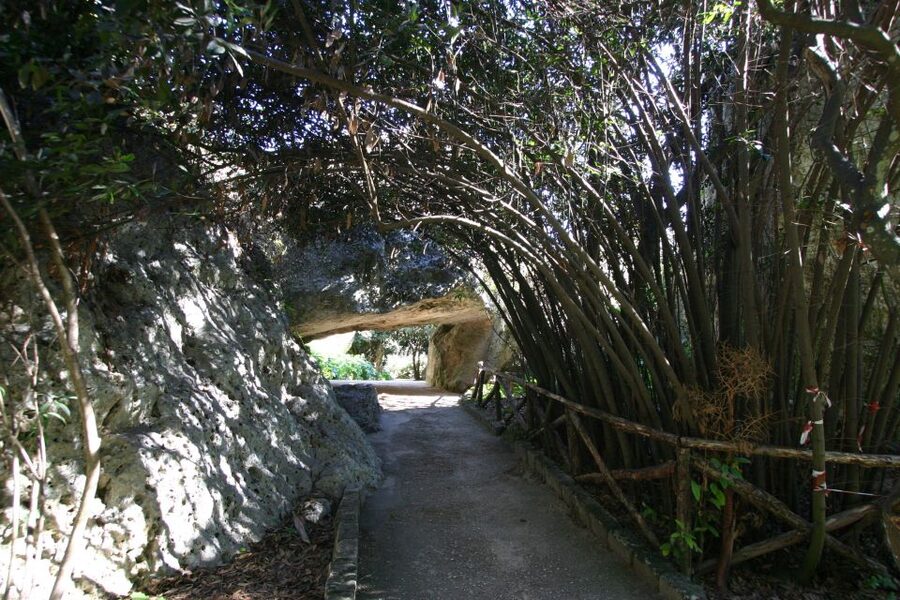
The route begins near Largo Anfiteatro, with the exact meeting point depending on the option booked. From there, you enter the area known as Latomie del Paradiso, an ancient stone quarry with local plants growing among the cut rock.
This opening stop gives you a useful sense of the park’s scale. The quarries were not decorative gardens in their original use. They were working spaces where stone was extracted, and they also had a grim connection to the people held there in antiquity. Your guide supplies the historical setting while you look at the high walls and irregular shapes left by quarrying.
The greenery changes the mood. Orange and lemon blossom can add a pleasant scent in spring, and the plants soften what would otherwise be a stark wall of stone. Bring your camera, but listen closely here. The explanation of how the quarry was used helps the next stop make much more sense.
This portion is scheduled for about 15 minutes. That is enough for an introduction, though you should not expect time to wander through every path.
Inside the Grotta dei Cordari
The Grotta dei Cordari is another quarry space, visited with a guide for roughly 15 minutes. It helps show how these excavated areas continued to have practical uses long after their original cutting.
The name refers to rope makers, and the grotto gives you another chance to see how human activity shaped the stone. The atmosphere is cooler and enclosed compared with the open paths, making it a welcome pause on a hot day.
This is one of the stops where a guide’s eye matters. The shapes in the rock are not always self-explanatory, and the significance of the space can be easy to pass over if you are moving quickly. The tour keeps the explanation focused, rather than turning the stop into a long lecture.
Hearing the Ear of Dionysius
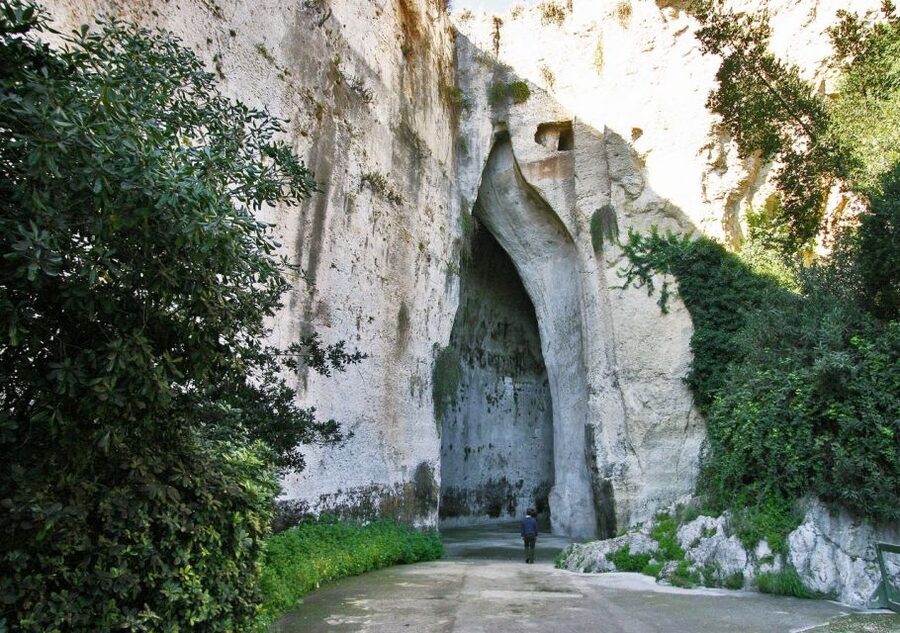
The Ear of Dionysius is the park’s most theatrical natural feature. This tall grotto is famous for its ear-like shape and for the way sound carries inside it.
You will hear about the legends connected with the name, then experience the echoing acoustics for yourself. It is a simple moment, but an effective one. The cave becomes memorable because you can sense its unusual sound rather than only hearing a description.
The stop lasts about 15 minutes. That should be enough to appreciate the form, listen to the echo, and take photographs. It is not a long cave expedition, and you should not expect extensive time inside.
I like this part of the route because it breaks up the more formal archaeology. The theater and Roman amphitheater ask you to imagine crowds and performances. The Ear of Dionysius gives you a direct physical response: sound bouncing through a carved chamber.
More Small-Group History Tours in Italy:
- Pompeii and Herculaneum Small Group Tour with an Archaeologist
★ 5.0 · 1,350 reviews - Herculaneum Small Group Tour and Ticket With an Archaeologist
★ 5.0 · 994 reviews - Paestum: Small-Group Tour with an Archaeologist and Tickets
★ 4.9 · 451 reviews - PompeiI Exclusive Tour with your Archaeologist in a Small Group
★ 4.5 · 363 reviews
Spending 30 minutes at the Greek Theater
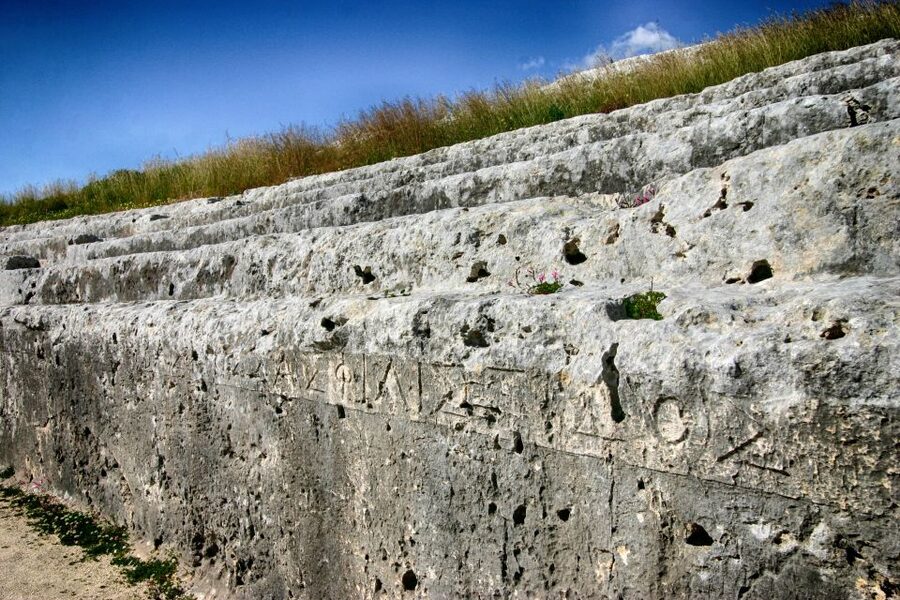
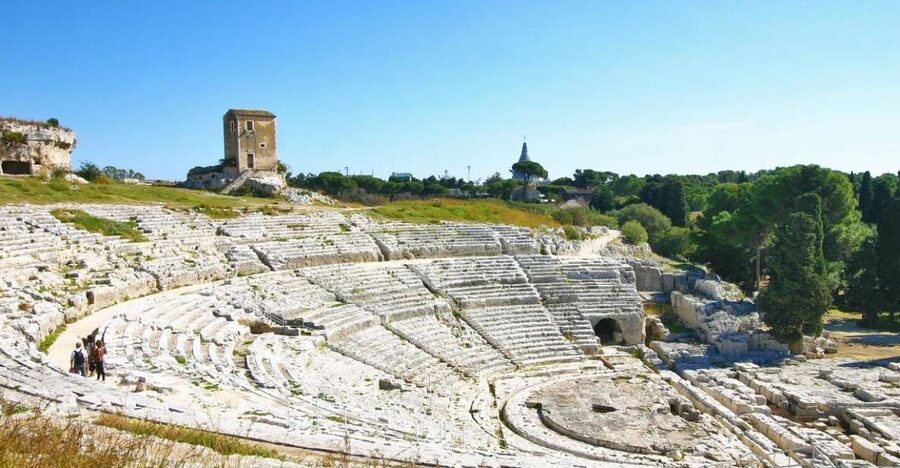
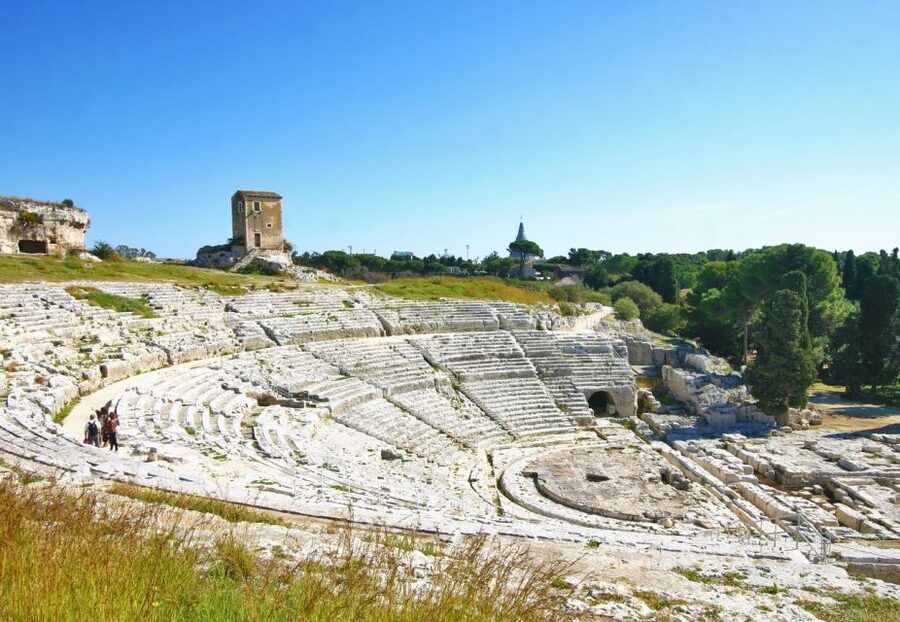
The ancient Greek Theater is the centerpiece of the visit, and the tour allows about 30 minutes here, longer than at any other single stop.
Cut into the rock of Temenite Hill, the theater shows how Greek builders worked with the natural slope. Its setting also gives you broad views toward the bay and the town. The combination of engineering, scale, and scenery makes this the place where you will most likely pause for photographs.
Your guide explains the theater’s role and the wider importance of Syracuse as one of the major Greek colonies. That background matters. A theater is more than a semicircle of stone, and the guide helps you picture it as a public place tied to performance and civic life.
You should allow yourself time to look beyond the guide. The pace is designed to keep the group moving, but the theater deserves a moment without constant note-taking. In warm weather, the open setting can feel intense, so an early or evening departure may be more comfortable. One visitor specifically found an evening tour helpful during a very hot period.
The Greek Theater is also where families may notice the advantage of a good guide. One family reported that even their teenagers stayed interested because the explanation was lively rather than overloaded with facts. That is a useful standard for this site: enough information to make the stones meaningful, but not so much that the visit becomes a history exam.
Pausing for the park’s wider view
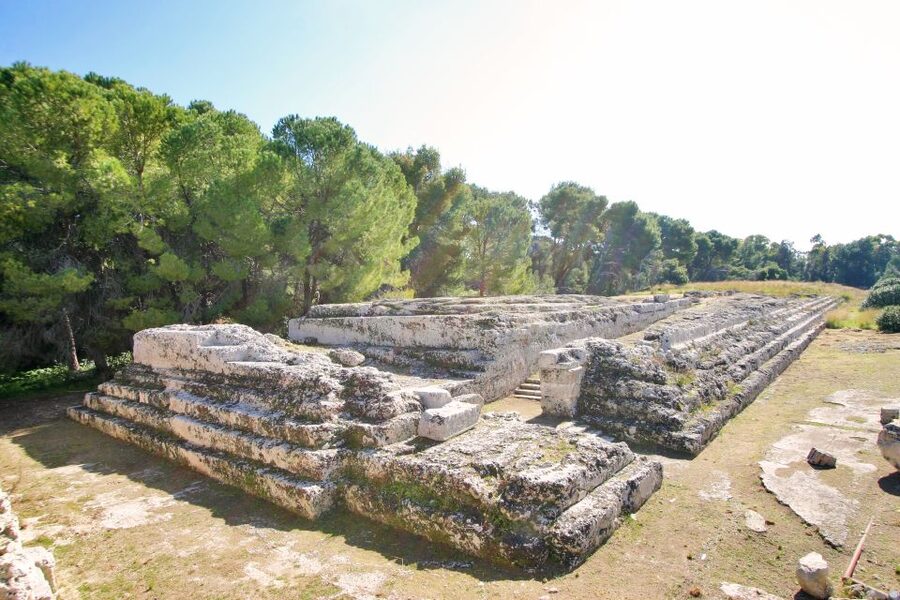
A short photo stop follows at the Neapolis Archaeological Park. This is not a separate attraction so much as a chance to gather the main impressions of the site.
You have already seen quarries and a theater, but the park works best when you understand them as parts of one ancient urban area. The views from the theater and the surrounding paths help you see why Syracuse was such an important settlement. Your guide may also point out modern sculptures around the park, a detail one particularly enthusiastic guide included in the explanation.
This pause is brief, about five minutes, so take photos as you go rather than waiting for one perfect final stop.
Understanding the Altar of Hieron II
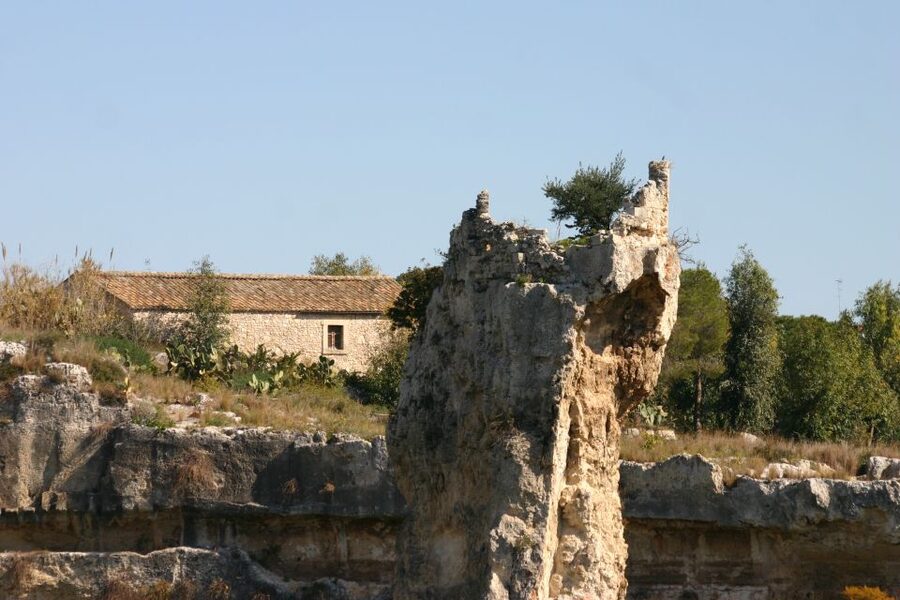
The Altar of Hieron II receives roughly 10 minutes of guided attention. It is a large ritual structure associated with Hieron II, and its scale hints at the public nature of ancient religious ceremonies.
The remains can seem less immediately readable than the theater. Much of what you see is a huge stone footprint rather than a complete building. That makes the guide’s explanation especially useful, since the meaning lies in the scale, purpose, and historical setting.
This stop is short, but it adds an important layer to the visit. The theater shows public culture and the amphitheater shows Roman entertainment. The altar reminds you that religion and civic power were also built into the city’s design.
Finishing at the Roman Amphitheater
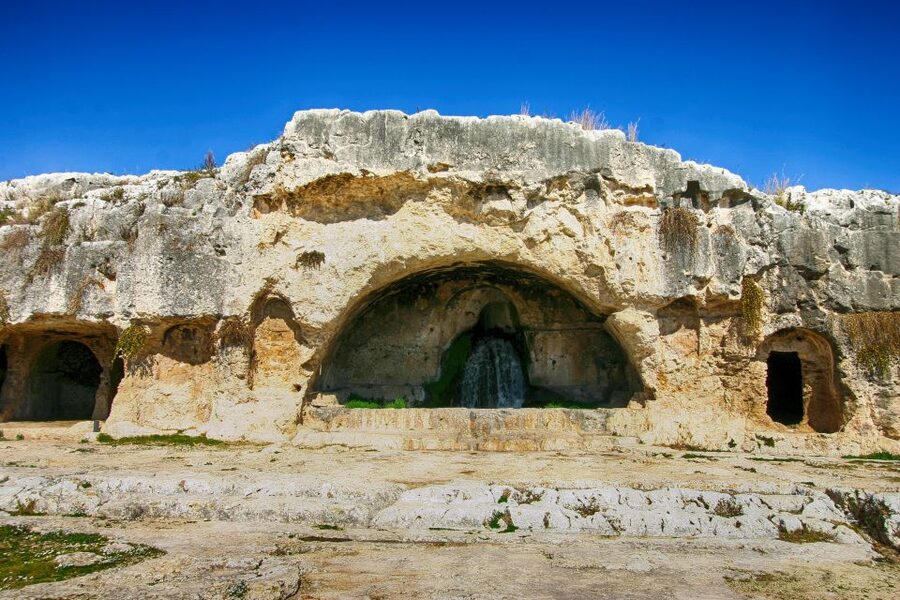
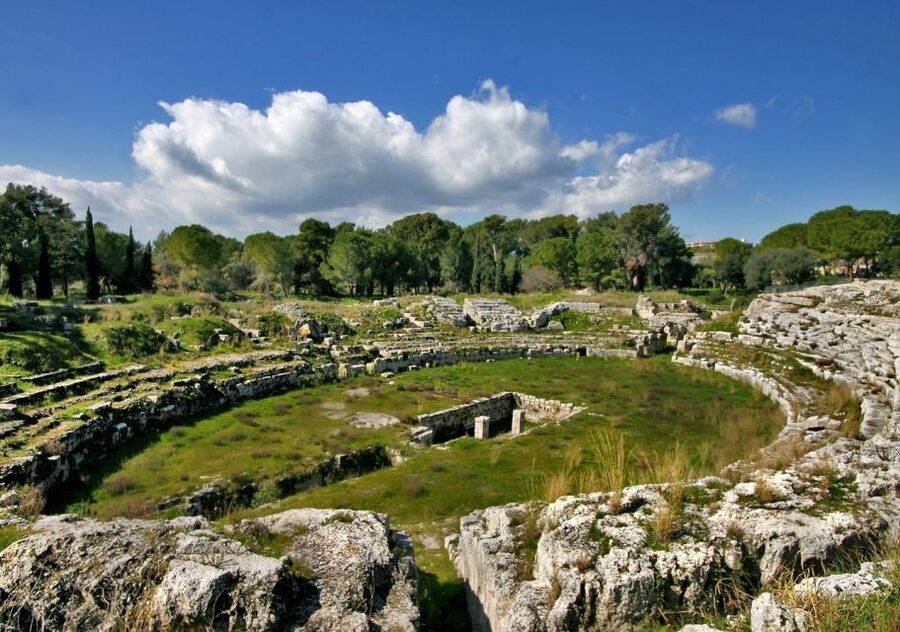
The final major stop is the Roman amphitheater, with about 15 minutes of guided explanation. Its form is different from the Greek Theater, and the contrast helps you see the change from Greek to Roman public life.
The amphitheater is a strong ending because it brings the chronological story forward. You have moved through Greek construction, quarrying, ritual space, and then Roman adaptation. Your guide can explain how the two traditions shaped Syracuse at different points.
Access to this section can occasionally depend on the site’s operating conditions. In one reported case, staff had closed the Roman area early, and the guide worked to get the group inside. That is a useful reminder to keep expectations practical: the guide can help, but access to any archaeological section may still be affected by local closures.
The amphitheater is not as visually complete as a famous modern arena, so do not expect an intact building. Its value comes from understanding its design and place within the park. A clear explanation turns partial remains into a readable public monument.
What the guides add to the visit
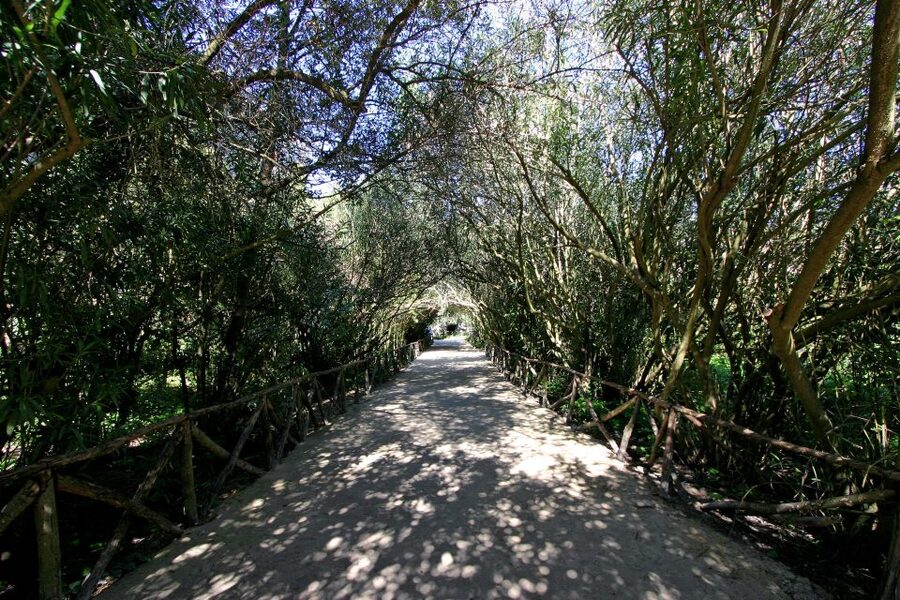
The guides are the tour’s strongest feature. Eva is praised for clear explanations, a patient pace, and the ability to adjust her material for children. Federica is described as warm, energetic, and good at answering questions, while other guides have been praised for humor and strong local knowledge.
That does not mean every departure will have the same guide. Still, the repeated praise for the guiding style points to what you are paying for: structure, context, and the chance to ask about details that catch your eye.
The best guides do not simply recite dates. They explain why a quarry matters, how the Greek and Roman periods differ, and what the ruins tell you about life in Syracuse. Several visitors found that the site made much more sense with a guide than it would have alone. I agree with that assessment for most first-time visits.
If you already have a strong background in classical archaeology and prefer to wander at your own speed, a self-guided visit may suit you better. The organized route leaves less room for long personal stops. For most people, though, the information gained in 90 minutes is worth the small loss of freedom.
Group size, timing, and practical comfort
You can choose between a shared group and a private tour. Smaller groups make it easier to hear and ask questions. A group of around 10 has been described as comfortable, while radio receivers are available for the large shared-group option.
The tour is listed as 1.5 hours, though some experiences have taken closer to two hours. That difference may depend on the guide, group questions, and the exact pace. If you have a train, meal reservation, or other timed activity immediately afterward, leave a buffer.
This is a walking tour, so wear shoes you can manage on archaeological paths. The site is listed as wheelchair accessible, but the route includes open archaeological ground and quarry spaces, so you may want to confirm the exact meeting and route details for your booking option.
Bring a passport or ID card, as requested for the activity. You should also carry water and sun protection, especially in summer, since the Greek Theater and other open areas offer limited shade. Rain can make the visit harder, though one guide continued patiently through a very wet outing.
The listed live tour language is Italian. In rare cases, a very small shared group may receive explanations in two languages. Check the specific option carefully if language is important to your plans.
Free cancellation is available up to 24 hours before the tour, and you can reserve now and pay later. Those policies are useful when your Sicilian schedule is still shifting, but the main booking choice is simpler: shared or private, and whether entry tickets are included.
Is $26 good value?
At about $26 per person, this is a sensible spend if you want the park explained in a compact visit. The site itself contains enough major remains to justify a longer independent visit, but a guide helps you make good use of a short stay in Syracuse.
The value depends on the ticket selection. Entry tickets are included only when the chosen option says they are, so read that detail before paying. If admission is included, the price compares well with the cost of visiting a major archaeological site and hiring a licensed guide separately.
A private tour will usually be the better choice if you want to set the pace, focus on children’s questions, or ask about particular periods. The shared tour is the better bargain for couples and small groups who want expert direction without paying for a guide alone.
Who should book this Neapolis tour?
I would book this tour if you are visiting Syracuse for the first time, have only a morning or afternoon, or find ancient ruins hard to read without a story. It is also a good fit for families, since the route is short and guides have shown they can adjust explanations for younger visitors.
History fans will appreciate the range. In 90 minutes, you cover quarrying, Greek theater design, ritual architecture, Roman public entertainment, and the later story of Syracuse. You do not get every detail, but you get a strong framework for exploring more on your own.
I would hesitate only if you prefer complete freedom, want to spend a long time photographing one monument, or need the tour in a language other than the one offered for your selected departure. The route is focused and efficient, not slow and leisurely.
Final verdict: a smart first look at Syracuse’s ancient core
Book this tour if you want the major monuments explained clearly and you value a guide who can bring the stones to life. The Ear of Dionysius and the Greek Theater are the visual highlights, but the real payoff is understanding how the quarries, altar, theater, and amphitheater belong to one long story.
At about $26, the shared option offers good value, especially when entry is included. Choose private if pace and attention matter more than price. Either way, leave room around the 1.5-hour schedule, bring your ID and water, and try for a cooler time of day in summer.
FAQ
How long does the Neapolis Archaeological Park tour last?
The scheduled duration is 1.5 hours. Some visits may take closer to two hours depending on the guide, questions, and walking pace.
Which sites are included in the route?
The route includes Latomie del Paradiso, Grotta dei Cordari, the Ear of Dionysius, the Greek Theater, the Altar of Hieron II, and the Syracuse Roman amphitheater. There is also a brief photo stop in the park.
Are entry tickets included?
Entry tickets are included only if you select an option that specifies them. Check the exact booking choice before confirming.
Is the tour available as a private experience?
Yes. You can choose between a shared group tour and a private tour.
What language is the tour offered in?
The listed live tour language is Italian. In rare cases, a very small shared group may receive explanations in two languages.
Is the tour wheelchair accessible?
The activity is listed as wheelchair accessible. The meeting point may vary depending on the booking option, so check the specific tour details before arrival.
Just added around Italy
- Guided Cultural Tour of the Godfather Film in Messina★ 5.0 · 31 reviews
- Guided tour of the Riace Bronzes and the Archaeological Museum of Reggio Calabria★ 5.0 · 44 reviews
- SU NURAXI BARUMINI Unesco World Heritage Site★ 5.0 · 129 reviews
- Brescia the Unexpected: History, Local Stories & a drink★ 5.0 · 31 reviews
- Bolognese Cooking Class with Margherita in the Historic Center★ 5.0 · 26 reviews
- Tower and Power, Virtual tour in Medieval Bologna★ 4.5 · 54 reviews
- Bologna historical art walking tour with hidden gems and tastings★ 5.0 · 108 reviews
- Best of Bologna in one day : Food, architecture, art and history★ 5.0 · 27 reviews
Italy History Tours, compared.
Pompeii: Entry Ticket and Guided Tour with an Archaeologist
Read our review →
Colosseum: Underground and Ancient Rome Tour
Read our review →
Pompeii: Small Group Tour with an Archaeologist
Read our review →Pompeii Small Group Tour with an Archaeologist
Read our review →
Rome: Colosseum with Arena, Roman Forum and Palatine Guided Tour
Read our review →
Venice: St. Mark’s Basilica Guided Tour & VR History Intro
Read our review →
Colosseum with Arena, Roman Forum and Palatine Hill Guided Tour
Read our review →
Herculaneum: Skip-the-Line Guided Tour with Archaeologist
Read our review →Browse the lists this tour appears in