Review · BERLIN
Berlin: Guided Bike tour of the Berlin Wall and Third Reich
Berlin’s past comes into focus when you pedal through it. This three-hour ride links the Berlin Wall, Nazi-era sites, Jewish history, and today’s government district, often using quiet parks and cycle lanes to connect places that feel scattered on foot. It is history with movement, not a parked bus and a list of dates.
I like the local guide perspective, especially when guides such as Paul explain life in divided West Berlin from personal experience. I also like the practical mix of city riding and short stops, with a bike basket, helmet, and an easy pace that has worked well for families with children.
The main catch is the flexible route. Free Berlin guides design their own version of the tour, so not every listed stop is guaranteed. If the Holocaust Memorial, Checkpoint Charlie, or a particular Wall site is essential to you, ask about it at the start.
Key points to know before you ride
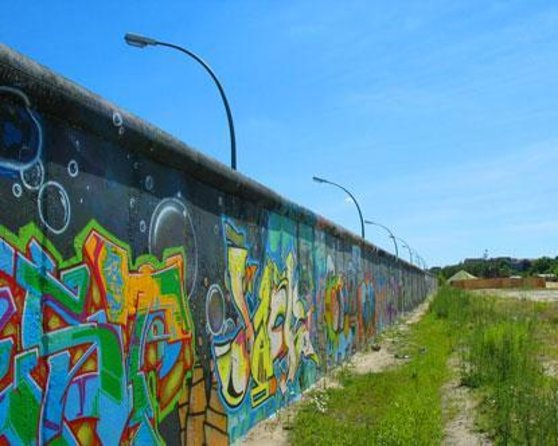
- Berlin’s Wall story comes alive on two wheels: The route can include the Wall Memorial, Mauerpark, Günter Litfin Memorial, Invalidenfriedhof, and former border areas.
- The history reaches beyond the Cold War: Nazi air defenses, Hitler’s bunker, the Reichstag, the Holocaust Memorial, and Albert Speer’s plans may all enter the story.
- Guides shape the experience: Simon, Paul, Juliette, Theo, Constantine, Simone, Peter, Yonis, and Jacob have led versions of this tour, each with a different voice and route.
- The ride is generally manageable: Berlin is flat, and the pace includes frequent stops. One family covered about 13 kilometers with children aged 10, 14, and 17.
- The group can be as large as 15: Some larger bookings have been split into smaller groups, but a group of 12 can still feel busy on city streets.
- English-language details matter: Checkpoint Charlie is specifically included on the English version, while routes in general may change under the Free Berlin concept.
Why this bike tour gives Berlin’s history a clear shape
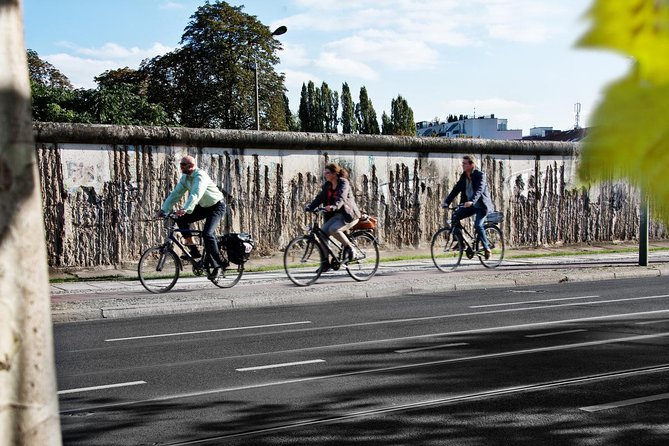
Berlin’s historical sights are spread across a large area. The former Wall line runs through neighborhoods, parks, cemeteries, government blocks, and ordinary streets. A bike lets you cover that ground without spending much of the afternoon waiting for traffic or changing trains.
I find the method useful because the distances are part of the story. You are not just looking at a surviving section of concrete. You are moving between East and West Berlin, crossing old border zones, and seeing how the city grew around an absence that lasted 28 years.
The tour costs about $42.34 per person and lasts roughly three hours. That is fair value if you want an overview with a guide, bike, and helmet included. You are paying for the route planning and historical explanations as much as for the bicycle itself.
It is less good value if you want long visits inside museums or memorials. This is an outdoor orientation tour. Stops are often around five to ten minutes, enough for context and questions, but not enough for a full visit. Plan to return later to any place that catches your attention.
More WWII and D-Day Tours in Berlin
- Berlin: Third Reich & Cold War Guided Walking Tour
★ 4.9 · 8,378 reviews - Berlin’s Best: 2 Hour Walking Tour Third Reich and the Cold War
★ 5.0 · 5,486 reviews - Third Reich Berlin: Hitler and WWII Walking Tour
★ 5.0 · 3,301 reviews
Starting in Nikolaiviertel, Berlin’s rebuilt old town
The ride begins at Poststraße 11 in Nikolaiviertel, near public transportation. This neighborhood is presented as Berlin’s only real old town, though its age needs a little explaining because much of what you see today was rebuilt after wartime destruction.
That makes it a useful opening stop. You begin with a question about what counts as old in a city hit by heavy bombing and later reshaped by decades of division. The guide can set up the basic idea that Berlin’s past is often layered, reconstructed, or partly erased.
You do not need an admission ticket here. The stop is brief, about ten minutes, and mainly helps place you in the city before the ride moves toward Jewish Berlin and the Wall.
The New Synagogue and a story of civil courage
At the New Synagogue, also known as Centrum Judaicum, the guide tells the story of a police officer who helped protect the building during Kristallnacht, the night of anti-Jewish violence in November 1938.
This is a short stop, around five minutes, but it adds a human scale to a subject that can otherwise feel like a list of laws and dates. I appreciate that the tour includes an example of individual courage alongside the wider story of persecution.
The building is discussed from outside, so you should not expect a museum visit here. The value comes from the guide’s explanation and from seeing the synagogue in its city setting.
Seeing the Wall as a system at Bernauer Strasse
The Berlin Wall Memorial is one of the most useful parts of the route. The tour description calls this one of three places where the Wall is still alive, meaning that the layout gives you a better sense of how the border worked than an isolated piece of concrete can.
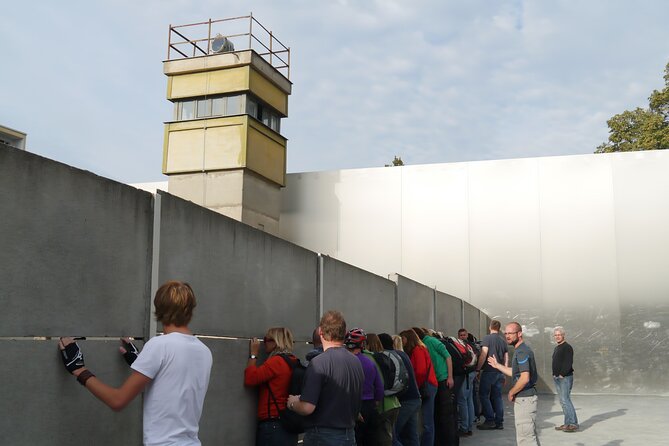
Here, the important point is not only the wall itself. You learn about the space between barriers, the danger of escape, and the way the border cut through homes, streets, and daily life. The stop usually lasts about ten minutes, so the guide has to keep the explanation focused.
I would not use this ride as your only visit to the Wall Memorial. If you want time to study the documentation center or memorial grounds, return separately. The bike tour gives you the framework, then leaves you to explore further on foot.
More WWII and D-Day Tours in Germany
- Berlin: Third Reich, Hitler, and WWII Walking Tour
★ 4.9 · 1,757 reviews - Berlin: History of the Third Reich Guided Walking Tour
★ 4.7 · 791 reviews - Hitler’s Germany: Berlin During the Third Reich & WWII
★ 4.8 · 476 reviews - Private Walking Tour Berlin Third Reich Hitler and World War II
★ 5.0 · 360 reviews
Mauerpark and the city’s change in mood
Mauerpark is best known today for its Sunday flea market and public life. Its earlier meaning is more serious: the Wall once ran through this area, and the border left a scar across the city.
The guide uses the park to show how Berlin turned a painful border zone into a place for free expression. That contrast is one of the tour’s appealing traits. You see a city that has not forgotten the Wall, but has also refused to let every former border site remain frozen in sadness.
The stop is short, around ten minutes. If you want the flea market atmosphere, check the day of your ride, since the tour information specifically connects Mauerpark with Sundays.
Humboldthain’s Flak Tower and the Nazi-built city
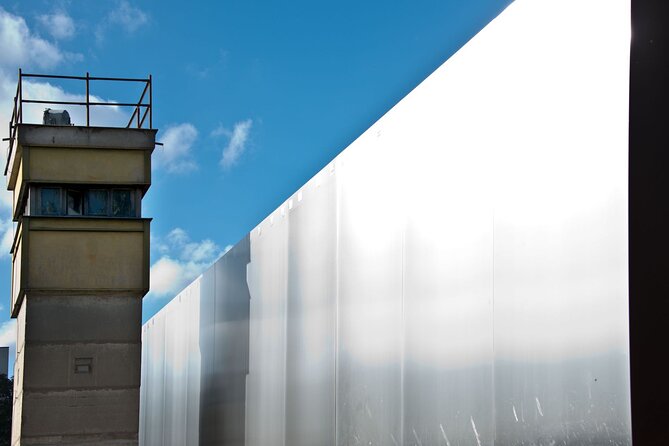
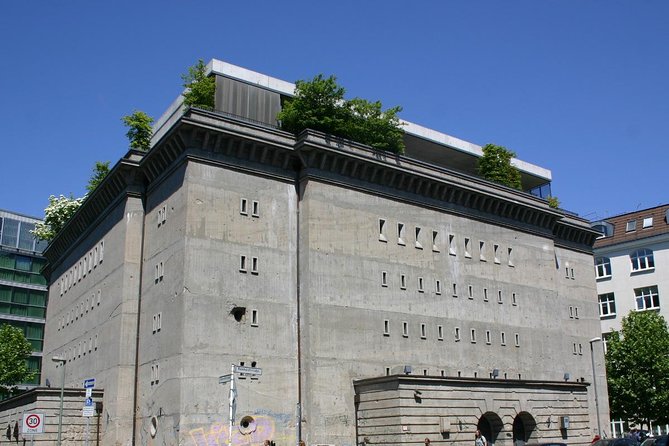
At Humboldthain, the group stops near a huge flak tower. It served as an air defense position and air-raid shelter during the Nazi period. The site also offers a broad view over Berlin and a chance to discuss the scale of Nazi construction.
This is one of the more unusual stops because it joins military architecture with a city panorama. The view helps you understand how Berlin spreads out, while the concrete tower forces you to consider the destructive power behind the regime’s building plans.
The tour allows about ten minutes here. That is enough for an explanation and a look around, but not a long climb or extended visit. Ask your guide how much time the day’s route allows if this stop matters to you.
Günter Litfin Memorial and the personal cost of the Wall
The Günter Litfin Memorial preserves an original watchtower in memory of Günter Litfin, described as the first person shot at the Wall. The stop lasts about five minutes, yet it gives the political story a name and a face.
That is a recurring strength of this experience. The Wall can seem like a large Cold War symbol until you hear about individual people who tried to cross it and paid with their lives. The guide may connect this site with escape attempts and the machinery of border control.
You will not spend long here, so treat it as an introduction rather than a complete memorial visit.
Invalidenfriedhof and escape routes beside the old border
Invalidenfriedhof was created as a burial ground for Prussian military figures. The Wall later cut through it, turning a place of military memory into part of the border story.
This stop is especially useful because it connects several themes at once: Prussian power, German military tradition, the division of Berlin, and escape attempts. Its location near former checkpoints and a canal also helps explain why waterways and cemeteries became part of the geography of the divided city.
The guide allows around five minutes. If you are interested in military history or the practical details of escape routes, note the location and consider returning on your own.
Spreebogenpark, the Reichstag, and a vanished Nazi vision
Spreebogenpark gives you a view toward Germany’s current government district. From here, the guide discusses Albert Speer, Hitler’s architect, and the plan for a Great Hall that could have held 180,000 people.
This is a striking contrast. Modern democratic government buildings sit in a district once targeted for a grand authoritarian redesign. The point is not just architecture. It is the way political power tries to express itself through streets, monuments, and enormous buildings.
At the Reichstag, the guide explains Hitler’s seizure of power and Germany’s democratic development. You stop outside, with no time to enter the building. That is important to know if you want to visit the dome, since you will need to arrange that separately.
Holocaust Memorial and the Fuhrerbunker site
The Holocaust Memorial, formally the Memorial to the Murdered Jews of Europe, is one of the most powerful stops on the ride. The field of concrete slabs invites different reactions, and the guide may give you time to think and discuss what the design means.
The experience does not turn the memorial into a quick photo stop. Its location near other central sites makes clear how close the story of Nazi murder is to the heart of present-day Berlin.
Nearby, the tour stops at the former Fuhrerbunker site. Today, you see a parking area. The guide explains why the place was not preserved as a grand historical attraction and tells the story of Hitler’s final weeks and suicide there.
That absence is the point. You are looking at an ordinary modern setting over a place tied to catastrophic decisions. The stop lasts about five minutes, so it is concise and factual rather than an extended memorial visit.
The itinerary also refers to memorials for other major victim groups of the Holocaust. Exact coverage can depend on the guide’s route, so ask which memorials you will see if this part of the history is a priority.
Checkpoint Charlie and the English-language Cold War route
Checkpoint Charlie is listed for the English version of the tour. It was the best-known border crossing associated with the United States and Soviet Union, and the guide explains how tensions there once brought the world close to a much wider conflict.
This stop can be useful, but it comes with a practical warning. The present-day site is a busy tourist location with reconstructed elements and commercial activity. It is not a perfectly preserved border station. The guide’s historical explanation is likely to be more valuable than the modern props.
Because the route is flexible, confirm at the beginning that Checkpoint Charlie is included. One disappointing experience arose when a rider expected this stop and several central memorials but received a different route. The company’s Free Berlin approach means guides can choose alternate locations, but that flexibility requires clear communication.
The ride itself: bikes, roads, pace, and weather
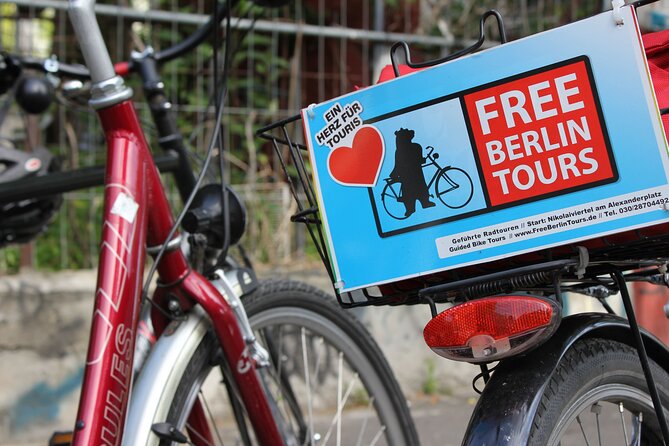
The bicycles and helmets are included. Bikes have baskets or basket carriers, which are handy for a water bottle, light coat, or small bag. Food and drinks are not included, so bring water, especially if the weather is warm.
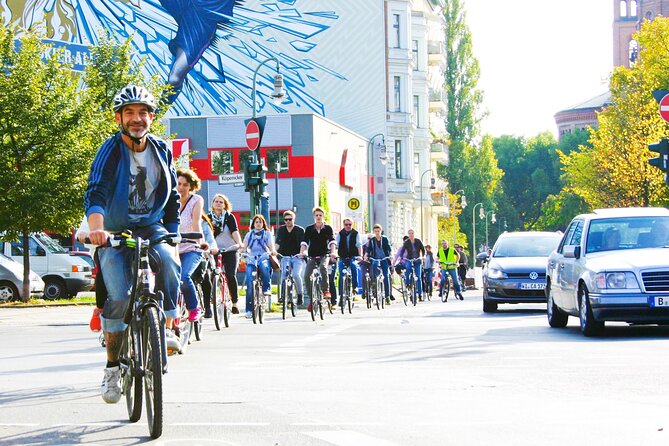
Berlin is flat, and several people have found the cycling comfortable. One family rode about 13 kilometers at an easy pace with many breaks. The guide generally keeps the group together and waits at red lights, but you still need to feel comfortable riding in city traffic.
Some of the route uses main roads and cycle lanes. That can feel daunting if you rarely cycle in a large city. Other sections use parks and calmer routes, and guides such as Constantine have been praised for choosing scenic paths and watching the group closely.
The tour runs in all weather. Dress for rain, wind, or cold, and do not treat the three-hour duration as a guarantee of sunshine. Children are welcome, but they must be accompanied by an adult. Infant seats can be requested.
The group size ranges from a minimum of four to a maximum of 15. A group of 10 can work well, while 12 or more may make riding and hearing instructions harder. Larger bookings have sometimes been split into two groups, but you should not assume that will happen every time.
The guide makes the difference
The strongest part of this experience is the human explanation. Guides including Simon, Paul, Juliette, Theo, Simone, Peter, Yonis, Constantine, and Jacob have each brought different strengths to the route.
Paul has drawn on his experience as a native of West Berlin, explaining the differences between East and West both before and after the Wall fell. Simon has been described as personable and good at answering questions. Simone has connected historical facts with personal stories and questions about memory.
Theo has been praised for clear instructions in traffic, while Constantine has kept apprehensive riders comfortable on park routes. These examples show why you should expect variation. The tour is not delivered from one fixed script by one permanent guide.
That variation can be a benefit if you enjoy a personal approach. It can also mean the historical sequence feels less linear. One rider found the information disjointed and felt that a group of 12 was too large for easy cycling. If you prefer a tightly ordered lecture with every stop guaranteed, this may not be your ideal format.
Who should book this Berlin ride?
I would choose this tour if you want a broad first look at Berlin’s twentieth-century history and like learning while moving. It suits families, active adults, and visitors who want to cover more ground than they could comfortably walk in three hours.
It is also a good choice if you want local perspective. Guides may add personal memories, explain how the Wall shaped neighborhoods, and adjust the route for weather, road closures, or major events such as the Berlin Marathon.
I would be more cautious if you need a fixed itinerary. The advertised sites are examples within the Free Berlin concept, not a promise that every stop will appear. Ask about your must-see locations before setting off, and schedule separate visits for the Wall Memorial, Reichstag interior, Holocaust Memorial documentation, or any museum you want to study closely.
The tour returns to the starting point at Free Berlin Bike Tours & Rental, Poststraße 11. Confirmation arrives at booking, and free cancellation is available up to 24 hours before the start time. The experience requires at least four participants, so a cancellation for low numbers can result in another date, another experience, or a full refund.
Should you book it?
Book this bike tour if you want context, distance, and a human guide rather than a slow visit to one museum. At $42.34, the bike, helmet, three-hour route, and historical commentary make good sense for a first or second day in Berlin.
Before paying, decide how much flexibility you can accept. If your top priorities are the Wall Memorial, Holocaust Memorial, Fuhrerbunker, Reichstag, and Checkpoint Charlie, tell the guide at the start and confirm what can fit. If you want every stop in detail, choose separate visits instead.
For most visitors who enjoy cycling and want Berlin’s divided past explained across the city itself, this is a useful and good-value introduction.
FAQ
How long does the bike tour last?
The tour lasts approximately three hours and ends back at the meeting point.
Where does the tour start?
It starts at Free Berlin Bike Tours & Rental, Poststraße 11, 10178 Berlin, Germany.
Where does the tour finish?
The activity ends back at the same meeting point.
Is the tour offered in English?
Yes. It is offered in English, and the provider also operates tours in German depending on the option selected.
Is Checkpoint Charlie included on every tour?
Checkpoint Charlie is listed specifically for the English version. Since guides design their own routes, confirm at the start that it is included in your ride.
Are bicycles and helmets provided?
Yes. Use of a bicycle and helmet is included. The bikes have basket storage for small items such as a drink or light coat.
Can children join the tour?
Yes. Children are welcome, but they must be accompanied by an adult. Infant seats can be provided on request.
What happens if I need to cancel?
You can receive a full refund if you cancel at least 24 hours before the experience start time. Cancellations or changes made less than 24 hours before the start are not accepted for a refund.
More History Tours by Bike, Segway and Tuk-Tuk in Berlin
- Berlin Wall History Small Group Cycling Tour
★ 4.9 · 152 reviews - Berlin Wall and Cold War Bike Tour in Small Groups
★ 5.0 · 114 reviews - Small-Group Historical Bike Tour in Berlin
★ 4.5 · 103 reviews - Berlin (E)Bike Tour Historical Highlights in Small groups
★ 4.5 · 24 reviews
More Cold War and Communism Tours in Berlin
- Cold War, Berlin Wall, Spies and the East Side Gallery
★ 5.0 · 1,024 reviews - Berlin: Cold War Walking Tour on Berlin Wall Route
★ 4.8 · 437 reviews - Berlin: Cold War & Berlin Wall History Guided Bike Tour
★ 4.8 · 422 reviews - Cold War, Berlin Wall, Spies and the East Side Gallery
★ 4.8 · 254 reviews
Just added around Berlin
- Berlin Food & Cultural Tour: Must-Try German & Berliner Classics★ 5.0 · 51 reviews
- Berlin Half-Day World War II Walking Tour★ 4.5 · 48 reviews
- Small-Group Historical Bike Tour in Berlin★ 4.5 · 103 reviews
- Historic center of Berlin – Tour in Italian★ 5.0 · 143 reviews
- Berlin Cold War & World War II Third Reich Walking Tour★ 4.5 · 30 reviews
- Private Tour: Jewish Heritage Walking Tour of Berlin★ 5.0 · 29 reviews
- Private Taxi Tour City East & West History and Architecture 3-4h★ 5.0 · 42 reviews
- Berlin Wall and Cold War Bike Tour in Small Groups★ 5.0 · 114 reviews
Berlin History Tours, compared.
Berlin: Third Reich & Cold War Guided Walking Tour
Read our review →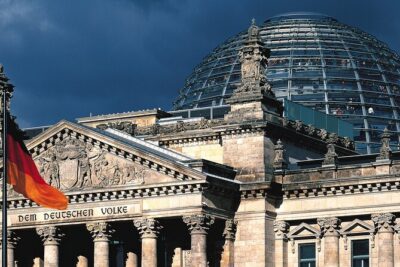
Berlin’s Best: 2 Hour Walking Tour Third Reich and the Cold War
Read our review →
Third Reich Berlin: Hitler and WWII Walking Tour
Read our review →
Berlin: Third Reich, Hitler, and WWII Walking Tour
Read our review →
Berlin: 3-Hour World Heritage Cruise to Potsdam
Read our review →
Cold War, Berlin Wall, Spies and the East Side Gallery
Read our review →
Berlin: History of the Third Reich Guided Walking Tour
Read our review →